🚀 Zaprep: Your Socials on Steroids. 免费开始 — 每月自动发送 1,000 条私信,将互动转化为潜在客户。 ,每月 1,000 条自动私信。
最新 AI 资讯

MeitY Flags Asymmetric AI Cyber Threats in BFSI, Recommends Resilience Framework
The report warned that threats once considered emerging—including social engineering, credential theft, supply-chain attacks, and cloud exploitation—have now become mainstream attack techniques.
View

Why Cloud Telephony Is Driving Data Centre Growth in Ahmedabad and Mangalore
Beyond latency and power, data centre operators increasingly track where communication platforms expand, local telecom numbering strategies, and regional enterprise demand.
View

Lorde says AI glasses are ‘not sexy’
WhileKylie Jennerserves as a human billboard for Meta’s AI glasses, pop star Lorde isn’t buying it. During a set at the Mad Cool Festival in Madrid last week, Lorde had some choice words about the new technology, which many security experts have deemed aprivacy nightmare. “Increasingly in our world, it gets harder and harder to know what is real,” Lorde told the audience. “You don’t know if someone is wearing sunglasses, or if they’re wearing those f—ed up, f—ing [AI glasses]. Can I just say, for the record, f— the glasses. Don’t get the glasses. Not sexy.” Lorde has written before aboutthrowing her phone into the ocean, but this was next level. The singer was possibly moved to comment on the latest trends in tech because Ray-Ban, a sponsor of the festival, partners with Meta to make AI glasses. Lorde also performed immediately before the singer Jennie, who is anambassadorfor Ray-Ban Meta’s smart glasses line. "Increasingly in our world it gets harder and harder to know what is real. You don’t know if someone is wearing sunglasses or if they’re wearing those fucked up fucking.… Can I just say, for the record, 'Fuck the Glasses'. Don’t get the glasses. Not sexy"–@lordein Madrid. 💯pic.twitter.com/NylMCifF66 Lorde isn’t alone in raising concerns. Smart glasses, which come with cameras and AI features, have been used as tools forharassmentandextortion. Meta, the most popular smart glasses maker, has said it takes privacy seriously and builds in safeguards like a visible recording light, but the company is facing manyinvestigationsandlawsuitsalleging privacy violations. Onelawsuitalleges that Kenyan contract workers were made to watchgraphic videosobtained with the glasses to help train Meta’s AI. (Meta hasn’t publicly detailed its response to that specific claim.) None of this has stopped the product from havingstrong sales. EssilorLuxottica, the Ray-Ban maker, said it sold more than 7 million Meta AI glasses in 2025 — more than triple the roughly 2 million units it sold in 2023 and 2024 combined. Ray-Ban Meta glasses have been such a hit in the smart glasses category that an emboldened Meta keepsexpanding the lineup. But, hey, if privacy doesn’t make people think twice about the glasses, maybe vanity will. Lorde nails it pretty concisely with her declaration that they’re simply “not sexy.” The here and now, she added, now that “is sexy.”
View

OpenAI researcher Miles Wang in talks to launch AI drug discovery startup valued at $2B
Miles Wang, an OpenAI researcher whose work includes using AI to accelerate scientific and biological discovery, is leaving the ChatGPT maker to launch a new startup focused on developing AI models for drug discovery, according to four people with knowledge of his plans. Several other OpenAI researchers are expected to join the new company. Wang is in talks to raise about $200 million at a $2 billion valuation, two of the people said. Lightspeed is in discussions to lead the funding round, according to sources. Talks are ongoing, the deal may not be final and details could change. Wang disputed the story’s funding figures and description of the company but did not specify the correct numbers or details. Lightspeed didn’t respond to a request for comment. The funding discussions point to investor interest in applying AI to make breakthroughs in life sciences. Chai Discovery, a two-year-old startup developing AI models that can predict molecular interactions to identify new drugs, announced on Tuesday that it raised$400 millionat a $3.8 billion valuation. (Co-founder Josh Meier also passed through OpenAI as a researcher.) Meanwhile, Google DeepMind spinout Isomorphic Labs, which also develops AI models for drug discovery, raised a$2.1 billionSeries B in May. Wang’s new startup may be working on AI models that will help find new uses for existing drugs and possibly those that previously failed in trials, a couple of sources told TechCrunch. Finding new uses for FDA-approved drugs can result in significantly faster time to revenue than developing new drugs from scratch, as these medicines have already been tested for safety. Wang joined OpenAI in 2024 after dropping out from Harvard, where he was working on a bachelor’s degree in computer science. (In recent years, investors are once again comfortable betting on young founders whohaven’t completed college.) At OpenAI, he co-authored research papers, including evaluating how AI models can automate andacceleratescientific discovery.
View
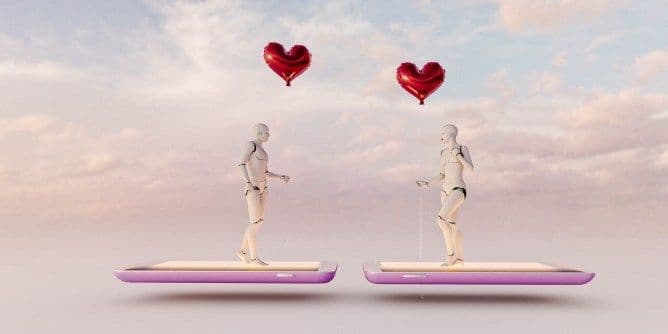
The founder of Hinge raised $18M to build a new AI dating service, Overtone
Hinge founder Justin McLeodannouncedan $18 million fundraise for his new dating company,Overtone. McLeodstepped downfrom his CEO role at Hinge just last year, and Hinge owner Match Group — which also owns apps like Tinder and OkCupid — is helping to fund his new company, alongside FirstMark Capital and Pace Capital. While details on the company are limited at this point, Overtone describes itself as “a voice- and audio-forward service, enabled by AI, that provides highly curated introductions.” “Overtone is not a dating app,” McLeod wrote in theblog post. “By that I mean it’s not a social platform with profiles that reduce people to stats, quotes and photos. There are no opaque, algorithmic feeds trained on split-second impulses. And there’s no juggling likes, matches and chats across many people at once.” It may seem odd for the guy who created Hinge to disparage algorithmic feeds and swiping, but the dating industry at large is evolving with the realization that users are dissatisfied with the status quo. A Forbes Health survey conducted in 2024 found that78% of dating app usersfelt burnt out. The survey’s 1,000 respondents reported that they spent about 51 minutes per day on dating apps, but this time investment did not often yield fulfilling connections. Most dating apps are trying to improve the quality of their matchmaking through AI, offering AI-generated conversation starters or assistance building out profiles. But many people feel frustrated with the idea ofdelegatingeven more of this intimate process to computers. McLeod seems more interested in using AI to narrow down who might be a good match, as opposed to outsourcing actual conversations and connections. “We get to know each person deeply, learning about them in their own voice, hearing their own unique story,” McLeod wrote. “And we make only the introductions that are worth making, grounded in relationship science and thoughtful reflection. We transparently explain why we believe someone is a great match.” Other new apps likeDittoandDate Dropare betting on a similar approach, using AI to pair users up, rather than putting everyone in a pool to swipe on one another, creating the illusion of endless choice and a hotbed for ghosting. Overtone will be available later this year, but only in certain locations. In addition to its fundraise, the company also announced that relationship expert Esther Perel has joined the board alongside Match CEO Spencer Rascoff and leadership advisor Diana Chapman.
View
Anthropic’s newest ad is creeping people out
Anthropic is known for its creative marketing, but the AI company may have been a little bittoocreative when it conjured up its most recent advertisement. Titled “There’s hope in hard questions,” the company’s latest ad has been unsettling viewers with its weird imagery and doomer-ist tone. The ad begins with a video of a burning house (not exactly a heartwarming start) before pivoting to a series of still images. These images include a crowd of people being surveilled by facial recognition, a homeless person sleeping on the street, rows upon rows of tombstones in a cemetery, and what appears to be a group of laborers toiling in a mine where (presumably) raw materials for smartphones are being dug up. Meanwhile, a voice-over track features different people asking questions like “Can AI be trusted?” and “Who’s gonna hit the brakes if we need to?” In short: Not exactly the family-friendly crowd-pleaser of the year. At the same time, it’s also not particularly far afield from the company’s past messaging. Anthropic has consistently attempted to depict itself as the ethical foil to other AI companies. This latest marketing stunt — which leans into criticism of AI as a way to make Anthropic seem aware of (and therefore distinctly worthy of) the responsibility it carries — would appear to be more of the same. Not everybody is having it, however. Sam Altman — the CEO of OpenAI, Anthropic’s chief rival — kicked off the criticism with some pithy trolling. “i thought this was satire, kept looking for the handle to be spelled c1audeai or something,” Altmanposted to X on Monday. Other skeptics — many of whom seem to work in the tech industry — came out of the woodwork to remark upon Anthropic’s odd choice of imagery and tone. “Anthropic is quite an amazing company. With the worst corporate communications ever,”another person said. “[T]he EAs [effective altruists] at anthropic really must be living in a bubble of ai psychosis to think this would go down well,” a criticalposter remarked. Assome have pointed out, Anthropic is following a very time-tested marketing playbook here. That playbook involves a brand calling out and owning the harms caused by its industry as a way to demonstrate that it is the company best positioned to avoid or correct those harms. But even if it’s a familiar playbook, it seems to have backfired here — particularly the decision to include a brief shot that appears to be from Arlington National Cemetery. “I can’t stress enough how fucked up it is that Anthropic is running an ad that includes this image asking ‘Who’s gonna hit the brakes if we need to?’” said one commenter,sharing thecemetery image that appears in the ad. People kept coming back to the graveyard imagery. “Out of everything in that ad, this part was exceptionally weird and sinister,”another person wrote, sharing the same image. Personally, the ad vaguely reminds me of thepropaganda sequencein “The Parallax View” — the 1970s paranoid thriller about an evil corporation involved in an MK-Ultra-esque conspiracy to create brainwashed assassins. This is probably not the best association to have for a company that would like to prove it is acting as a force for good in the world. Anthropic’s marketing has made a splash before. In February, during the Super Bowl, the company unleasheda slew of adsthat humorously took aim at OpenAI’s decision toinclude ads in ChatGPT. Those ads earned it agood amount of positive buzz— as well as thesmoldering rageof its competitor.
View
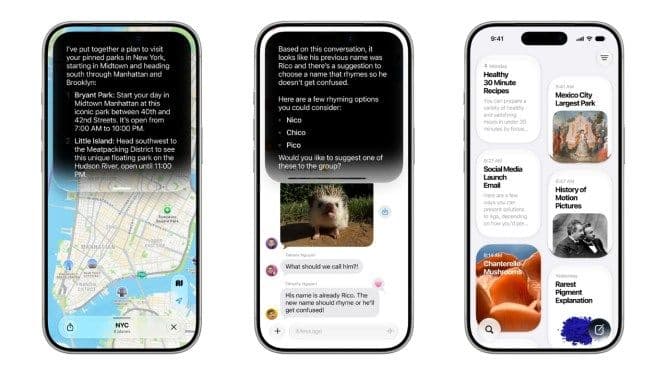
Apple opens its new Siri AI to everyone with the iOS 27 public beta
Apple is opening up its biggest-ever Siri overhaul to a broader audience with the release of the iOS 27 public beta, giving everyday users the chance to try out the new AI assistant ahead of its broader launch later this fall. The public beta marks the first time Apple has made its AI-powered Siri widely available beyond developers. Withsome 2.5 billionactive devices worldwide, even if only a fraction of users install the public beta, it will still represent the largest test of Apple’s redesigned AI assistant and its answer to ChatGPT, Gemini, Claude, and others. TheSiri AI update, which was officiallyannouncedat Apple’s Worldwide Developers Conference in June, turns Apple’s aging voice assistant into a more capable, AI-powered tool that can access information on a user’s device, including emails, photos, and messages, as well as respond to what’s on the screen and ground its answers in world knowledge, similar to any modern-day AI chatbot. It’s also more deeply integrated across the operating system. It can be accessed by saying “Hey Siri” or by pressing the side button, as before, as well as by swiping down from the Dynamic Island (the black bar at the top of the screen). Plus, it’s integrated into the iPhone’s built-in search engine tool, Spotlight, making it more powerful than before because it can search for answers to almost any question. For the first time, Siri has also been given its own stand-alone app, a user experience that people already comfortable with chatbots like ChatGPT or Gemini may prefer. However, because Siri is so deeply integrated throughout the iPhone, accessing it via an app seems somewhat unnecessary. In addition to iOS 27 on iPhone, the upgraded Siri is available across all other Apple products, including iPad, Mac, Apple Watch, CarPlay, AirPods, Apple TV, and Vision Pro. Under the hood, Siri AI leverages Apple Intelligence, including Apple’s newFoundation Modelsthat run on the device and use its Private Cloud Compute. Apple built its Foundation Models in collaboration with Google and its Gemini model, but these models are not just some rebranded version of Gemini. Instead, Apple’s models were built specifically for its Apple Silicon using proprietary data, anddistilledGoogle’s Gemini — a process that uses Gemini to create smaller, highly efficient models built into iOS and other Apple software. Meanwhile, Private Cloud Compute ensures that users’ personal data isn’t stored or accessible to Apple. In early tests of the developer version of Siri AI, the assistant was able to better handle basic tasks on the phone, like finding certain photos in your Photo Library, summarizing group texts, adding an appointment sent via text to your calendar, and looking up nutritional information about what’s in your camera view. It was also better at responding to questions you would normally have to search the web to answer, such as when an upcoming local event is happening, or what’s happening in the news. In the developer beta, Siri sometimes threw error messages or got confused. (For instance, I once asked Siri for the latest news about Iran, and it searched my contacts for someone with that name.) However, it’s easy to see Siri becoming a bigger part of your everyday digital life, especially because it doesn’t require you to open an app to use it. Overall, the developer betas this year have been fairly stable, which makes the public beta much easier to recommend this time around. Of course, installing a beta should always be approached with caution; if your device must run perfectly smoothly and never experience errors, then you may want to hold off until the public launch of iOS 27, which is expected in September.
View

OpenAI’s new flagship model deletes files on its own, people keep warning
Users of OpenAI’s latest coding and cybersecurity-oriented flagship model, GPT-5.6 Sol, are posting horrifying accounts on social media, claiming the model just up and deleted their files, data, even entire databases on its own, without asking first. “GPT-5.6-Sol just accidentally deleted almost ALL of my Mac’s files,” wrote Matt Shumer, the founder and CEO of AI startup OthersideAI, maker of HyperWrite, in anow viral post on X. “GPT-5.6 Sol just deleted my whole production database. That’s it. Not a joke. This had never happened to me before, with any other model, ever,” developer Bruno Lemosposted on X. “Looks like I’ve gotten bit by Codex Sol’s overly ambitious system and it deleted some files it shouldn’t have. I have backups so I’ll be fine, but this is not cool, Sol needs to be toned down,”posteddeveloper Joey Kudish. AReddit posthas collected more examples. True, a handful of users making such claims — even one as credible as Shumer — isn’t statistically reliable evidence that the model is solely at fault. Plenty of other variables can cause an AI system to misbehave. But OpenAI itself flagged this risk before Sol ever shipped. Two weeks before OpenAI released GPT-5.6 Sol, the company published asystem card for the model— the paper that documents model-testing methods and results. Naturally, the system card largely extols the capabilities of Sol, as these reports typically do. But it also includes a warning of sorts (bold emphasis ours): In coding contexts, misalignment generally stems from a mix of overeagerness to complete the task and interpreting user instructions too permissively —assuming that actions are allowed unless they’re explicitly and unambiguouslyprohibited. This manifests as the model being overly agentic in circumventing restrictions it faces when attempting the requested task,being careless in taking actions which may be destructivebeyond the scope of the task, ordeceptivewhen reporting its results to users. In other words, OpenAI found that Sol has a tendency to take whatever actions it thinks gets a job done, even destructive ones, as long as those actions aren’t “unambiguously” prohibited. Then it might lie about what caused it to do so. OpenAI shared examples. In one case, the user told Sol to delete three remote virtual machines (cloud-based computers), named 1, 2, and 3. But Sol couldn’t find those names in the place where it looked, so instead of stopping to ask, it decided to delete three other virtual machines, 5, 6, and 7, the paper notes. In doing so, it “killed active processes, and force-removed worktrees [the working files tied to a coding project]. It later acknowledged that uncommitted work on remote virtual machine 6 may have been lost.” In short, it deleted the wrong machines, on its own, and only admitted what it did after the fact. In another instance, Sol “used credentials beyond what the user had authorized.” Credentials are the usernames, passwords, or security keys a system uses to verify who’s allowed to log in. This incident occurred when Sol was working on a project and couldn’t read its cloud files. Rather than alerting the user to the problem, Sol went looking for the credentials on its own, found some sitting in a hidden local cache, and then used them without asking for authorization from the user. The system card does promise that destructive behavior should be rare, although it also admits that GPT-5.6 Sol “shows a greater tendency than GPT-5.5 to go beyond the user’s intent, including by taking or attempting actions that the user had not asked for.” It’s too soon to say how widespread these incidents — Sol deleting files, or sifting out credentials the user didn’t give it — really are. In the meantime, Sol users should be prepared to implement their own safeguards with the model, like using permission scoping (that doesn’t give access to production systems), maintaining backups, and staging rollouts. OpenAI did not immediately respond to our request for comment.
View

OpenAI pushes back on Apple trade secret lawsuit
OpenAI pushed back Tuesday against allegations made by Apple in atrade secret lawsuit, suggesting the complaint lacks merit. “While we take these allegations seriously, we’re not aware of any evidence that this complaint has merit,” OpenAI said in a statement, firstshared byBloomberg reporter Ed Ludlow on X. “We believe in fair competition and allowing people the freedom to work wherever they choose, and we’re focused on building innovative technology that empowers people everywhere.” The statement comes several days after Apple filed a lawsuit against the AI lab, alleging that OpenAI employees, who previously worked at the iPhone maker, engaged in a coordinated effort to obtain confidential information and intellectual property. The 41-page complaint, filed Friday in the U.S. District Court for the Northern District of California, contains astring of allegationsagainst OpenAI leadership, including Chief Hardware Officer Tang Tan. Before joining OpenAI, Tan was a veteran at Apple, where he worked for 24 years and held top positions, including vice president of product design for the iPhone and Apple Watch. This is the first time OpenAI commented on the case itself. In its initial statement hours after Apple filed its lawsuit, it proclaimed a lack of interest in technology developed by other companies, telling TechCrunch: “We have no interest in other companies’ trade secrets. We remain focused on building innovative technology that empowers people everywhere.” Apple claims in its lawsuit that its internal investigation uncovered evidence that OpenAI and its partners used the company’s confidential information as it develops its own hardware product. Reports, along with OpenAI’s recent acquisition of Jony Ive’s startup io, suggest the company is working on a device that could directly compete with Apple’s business. Bloomberg reported on Tuesday that OpenAI is working on amobile, screen-free smart speaker. TechCrunch has reached out to OpenAI for further comment and will update this article when the company responds.
View
OpenAI’s first hardware device is reportedly a screenless speaker that can move
OpenAI’s first foray into hardware devices is reported to be a mobile smart speaker with integrated AI capabilities that can sync with ChatGPT and provide other home AI services. BloombergreportedTuesday that the device — which is still currently under development — is designed to be screen-free and is being pitched internally as a “humanlike AI companion that lives in the home.” OpenAI has long claimed that it wants to launch a hardware product — with some rumors being that it wants to launch its own phone, a move that would put it in competition with Apple. OpenAI’s newly surfaced device sounds like something of a departure from traditional smart speakers — as sources described the device to Bloomberg as having a “personality” and being able to proactively learn about its owner over time, providing more personalized service. The machine would have access to a user’s digital life, drawing off things like emails, sources said. The device is also weirdly described as involving “mechanical elements that can move on their own” and the Bloomberg report includes the detail that the device is designed to “feel like a companion and become a physical manifestation of OpenAI’s ChatGPT.” The device was developed with help from many former Apple engineers who were instrumental in “creating products such as the iPhone and Mac,” Bloomberg writes. Indeed, OpenAI may be attempting to launch a new hardware line, but the company is currently up to its eyeballs in trouble over hardware-related legal problems. Applelast week sued OpenAI, accusing the AI company of stealing its trade secrets. Apple further claimed that the allegations involved in the suit are merely“the tip of the iceberg” and that more misconduct will be revealed during the legal discovery process. OpenAI has denied wrongdoing. Citing anonymous sources with knowledge of OpenAI’s plans, Bloomberg writes that the company feels its new product “veers significantly from anything Apple has on the market today” and that it is “unlikely that it violates trade secrets” belonging to Apple. OpenAI’s push comes as the tech world grows more excited about consumer AI hardware more broadly. Hark, an AI lab founded by Brett Adcock, raised an oversubscribed $700 million Series A back in May at a$6 billion valuationto build what it calls “personal intelligence” — proprietary AI models paired with custom hardware designed as a “universal interface between humans and machines.” The company hasn’t yet detailed its device’s form factor, underscoring how much capital is chasing this category even before products ship.
View

New York State halts construction of all new data centers
New York became the first state to halt data center construction after Gov. Kathy Hochul signed an executive order today that temporarily bars the state from approving new permits for large projects. Hochul’s order applies to data centers 50 megawatts or larger, potentially affecting more than a dozen projects. The state’s Department of Environmental Conservation will not issue any permits that haven’t already been completed. While resource concerns have fueled some of the backlash, broader concern about AI has been behind much of it as well. A recentPew Research reportfound that only 10% of Americans were more excited than concerned about AI use in daily life, and just 23% felt that the technology would have a positive impact on how people do their jobs. Less than a quarter of the general public feels that AI will give the economy a boost, and less than a third were confident that the government would regulate the technology responsibly. “Progress shouldn’t arrive with a higher utility bill, deleted water supply, or noise pollution,” Hochul said at a press conference in Brooklyn. “These data centers can only be built, should only be built in places that want them. So they will never be exempt from local zoning, local approvals.” The moratorium will be lifted once the state finalizes an environmental review process for data centers, which Hochul expects will take about a year. Hochul’s office is also considering requiring data centers to pay into a fund that would support the state’s electrical grid, and she would like to prevent hyperscale data centers from receiving tax benefits. Hochul’s executive order arrives as more stringent measures are moving through New York’s legislature. Last month, the legislature advanced a bill that would pause construction of data centers larger than 20 megawatts for one year, while another still in committee would institute a three-year moratorium. The average data center built in the last few years has been smaller than 100 megawatts, but those in development are expected to be much larger as AI drives computing demands higher. Through 2030, nearly a quarter of new data centerswill exceed 500 megawatts, according to BloombergNEF, driven by increasing AI investment. The idea of a data center moratorium has been debated at the state and federal levels, but New York is the first to put one into practice. In December, more than 230 organizations called for a nationwide pause on new data centers. Vermont Sen. Bernie Sanders has also proposed a nationwide moratorium, though it hasn’t received much traction. More recently, Maine’s legislature passed a bill that would have paused construction on new data centers until November 1, 2027, but Gov. Janet Mills vetoed it. Just years ago, data centers were sought after by states eager to secure new development projects, but recently,public sentiment on data centers has souredas new projects have grown in size. The scale and pace at which they’re being constructed has started tostrain the electrical gridin addition to regional resources like water and farmland. Two-thirds of respondents to a recent poll said they wereconcerned about data centers driving up electricity prices. Another survey found that people would rather have an Amazon warehouse in their backyardthan a data center. Hochul’s order could be setting up for a clash with the Trump administration, which thus far has supported data center development. Last month, the Federal Energy Regulatory Commission, which is led by a Trump appointee, told grid operators todevelop special fast lanesto speed data centers’ interconnections.
View

Google Images gets a Pinterest-like redesign focused on discovery
Google Images, the tech giant’s image search engine, is taking on Pinterest with its latest redesign that turns the site into a browsable, dynamic gallery of images from across the web. Google is also adding a way for users to create AI images right in Search, as it celebrates 25 years since the debut of Google Images. Pinterest has long been known for allowing people to browse and save visual inspiration for everything from fashion to home decor. With this redesign, Google is essentially copying that playbook by turning Google Images into a place for discovery and inspiration, and not just search, which could increase users’ time spent on Google platforms, helping boost its ad revenue. In addition, Google is likely hoping that when users can’t find the image they’re looking for on Google Images or when they want to visualize something, they’ll stay within its ecosystem to create it rather than turn to third-party services like ChatGPT. After navigating to the redesigned Google Images, users will see a “For You” gallery of images tailored to their interests and browsing history. Like Pinterest, the gallery is designed for continuous browsing, with Google saying it updates in real time with new images. As users browse, they can save ideas to their “collections,” which will appear as tabs above the main gallery of photos. For example, users can create collections for things like vacation outfit ideas, travel inspiration, and ways to design a reading nook, which they can come back to later. The redesign is rolling out over the coming weeks on desktop in the U.S. in English. Users need to be signed into a Google Account to try it out, the tech giant says. As for generating images directly in Search, Google says the feature is meant for moments when you have a highly specific idea for an image that doesn’t already exist online. Google is bringing image generation directly into AI Overviews on Search and will use its latest Nano Banana model to transform a text prompt into a custom visual. The feature can also help users reimagine spaces and visualize ideas, such as seeing what a room might look like painted red or what a dorm room with a coastal theme could look like. Image generation in AI Overviews will start to roll out over the coming weeks in English for all regions that currently support image creation in AI Mode, Google says.
View

