🚀 Zaprep: Your Socials on Steroids. 免费开始 — 每月自动发送 1,000 条私信,将互动转化为潜在客户。 ,每月 1,000 条自动私信。
最新 AI 资讯
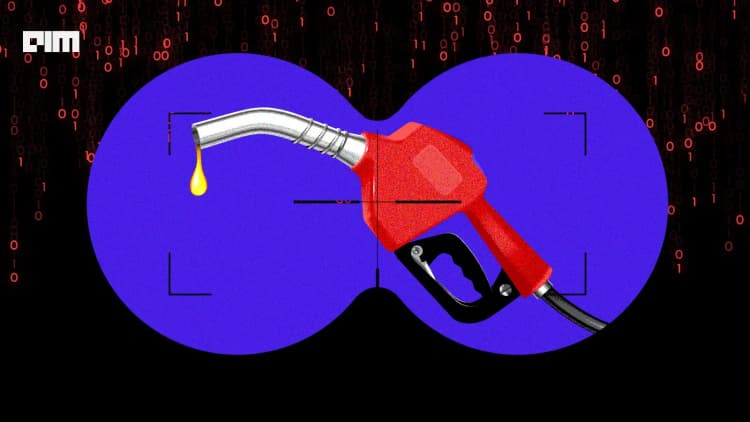
This Startup is Building the Data Layer for India’s Fuel Stations
Noida-based startup Nawgati’s AI stack helps taxi drivers track CNG pumps while also helping oil and gas companies analyse operational metrics.
View

When Every Employee Can Talk to Data, Governance Becomes the Deciding Factor
As Indian banks and NBFCs swap static dashboards for conversational AI, data governance has become the industry’s central concern. Experts explain how regulated enterprises can adopt natural-language analytics without compromising compliance or data control.
View

Bengaluru Beats Singapore on Startup Exits. But Liquidity Doesn't Mean Depth
Bengaluru's record startup exits signal momentum, but investors argue that funding depth, talent, and predictable deeptech exits, not headline valuations, define ecosystem maturity.
View
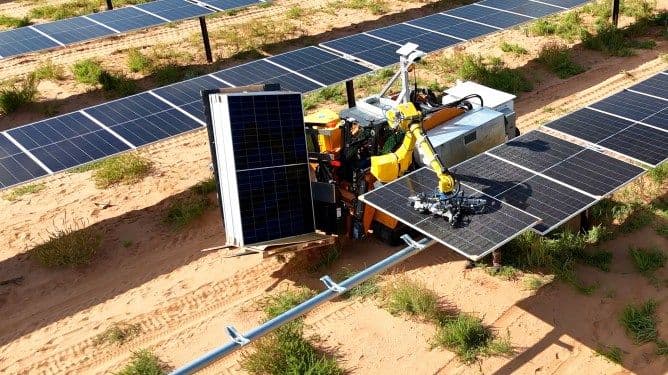
Gritt exits stealth with $34 million for robots to build solar plants—then, everything else
One of the most important things happening on Earth today is the solar energy build-out. Around the world, companies and countries are racing to deploy solar and batteries to achieve energy independence and limit the effects of climate change. That build-out, though, is running into a labor market challenge, with a limited supply of workers to meet a growing demand for installation. Robots could be an answer, but industrial robots have historically struggled in unstructured environments, at least until now. The latest generation of AI models may have changed that equation. That’s the driving idea behindGritt, a start-up founded by two Carnegie Mellon-trained roboticists, CEO Puneet Puri and CTO Vishal Dugar. The company exited stealth Tuesday morning with a $26 million Series A round of funding led by Obvious Ventures with participation from Union Square Ventures and Active Impact Investment. That brings its total funding to $34 million, following an earlier seed round backed by First Round Capital, Climactic, Congruent Ventures, and VSC Ventures. The startup is building an intelligent system to “help civilization build infrastructure faster,” in Puri’s words. “Our thesis is that if we truly want to speed up construction,” Puri tells TechCrunch, “you need an intelligence which can work in the outdoor, chaotic environments of these construction sites, and it has to be generalizable enough that it can work in these varied environments.” Rather than building its own robots from scratch, Gritt uses off-the-shelf hardware—thus far, rented skidders and robotic arms built by companies like Kawasaki—to build platforms that are controlled by its AI models. The first job its systems handle is unloading large, glass solar panels, carrying them toward the metal frames where they need to be installed, and positioning them on the frames with sub-millimeter accuracy so workers can fasten them. “There are people who used to build rockets that went into space and had infinite budget for the smallest little part, and then there are people who know what it means to get into dirty, dull, and dangerous jobs and scale them like mad,” said Andrew Beebe, the partner at Obvious Ventures who led Gritt’s Series A round. “These guys are in the second camp, and that’s a special kind of entrepreneur that has the technical chops, the AI, and the machine vision skills to make it work.” Gritt has two systems currently deployed in the field, using the data they collect to improve their behavior. Puri says that a typical eight-person crew workers can install 800 panels a day, but the same crew working with Gritt’s systems can install 3,000 to 4,000 panels each day. Now, the company says it is contracted to help install 2.8 gigawatts of solar panels in the next 18 months, and that its customers include three of the top 10 US power construction companies. The company hopes to be operating 48 of its systems within the next six months. TechCrunch spoke to one Gritt customer who declined to be identified for competitive reasons, but who was enthusiastic about the system’s ability to improve his work. He expects it to be easier to work at remote sites where it is difficult to attract workers, and anticipates a reduction in injuries since workers won’t have to repeatedly lift 100-pound panels overhead. Gritt is competing against companies with their own panel-installing robots likeLuminous Robotics,Cosmic, and China’sTrinabot. Those companies are building their own hardware, rather than focusing on off-the-shelf vehicles and arms like Gritt, a difference that could shape who grows faster and with a leaner cost structure as demand grows. Gritt wants to add new manipulation tasks to its system so it can fasten the solar panels, drill posts, and even build the racks they sit on. Longer term, it also wants to move into other common, labor-intensive construction tasks, like tying rebar before concrete is poured over it. What’s enabled the startup to pursue this vision? Mainly, the rise of new AI models, the founders say. “Making a system for one solution was still possible to some extent five years ago, right?” Puri said, but AI is now making that work generalizable — the same underlying pipeline can be reused and improve across tasks. As an example, he noted that training the system to stack cinder blocks took weeks, while a similar demo with rebar tying took just a day using the same software. But training new tasks is just the beginning of Gritt’s vision. The founders believe the suite of sensors and intelligence its systems bring to worksites can do more than install panels; it can boost management and decision-making. For instance, they imagine their system noticing a trench is open while a storm approaches, allowing it to alert workers to cover it before rain damages components, or flagging missing inventory. “Gritt becomes now this layer of physical AI, which is doing this dextrous, labor-intensive task, plus it can help you take decisions on the site,” Puri said.
View

Indian Clinicians Trust AI More Than Global Peers, But Adoption Still Lags, Reveals Report
While only 42% of Indian clinicians currently use AI at work, the Elsevier report reveals higher trust, better AI governance, and stronger digital readiness than global averages.
View

Samsung Sets Up Robotics Division to Drive Humanoid Push, Says Report
This new division will report to the CEO and lead Samsung’s global robotics strategy and commercialisation efforts.
View

From CCTVs to Body Scanners, Indian AI Now Powers Real-Time Threat Detection
Indian firms are now deploying screening systems, crowd-monitoring platforms, and traffic sensors at airports, metro networks, etc to make surveillance intelligent.
View

TCS Acquires Land in Vizag, Pune for OpenAI Data Centres
The two sites are expected to support OpenAI’s infrastructure expansion in India as the company scales its computing capacity to serve growing demand for AI services.
View

Google to Develop Frozen v2 Chip to Improve Gemini Efficiency
Google has expanded its custom silicon efforts over the past decade to reduce reliance on third-party AI hardware.
View
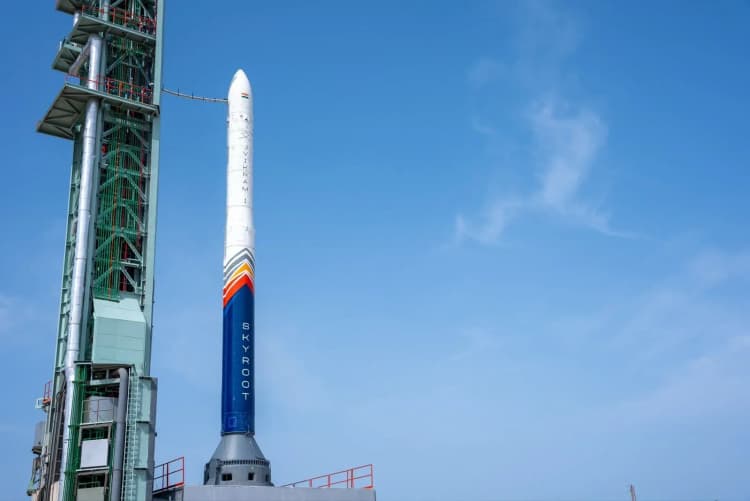
How 104 Seconds at Sriharikota Changed the Course of Indian Space
Skyroot Aerospace’s Vikram-1 launch shifts India’s private space sector from promise to proof.
View

Accenture Names Ex-McKinsey Partner Pradeep Prabhala to Lead India Business
Prabhala succeeds as lead of Accenture’s India Market Unit at a time when the consulting and IT services major is sharpening its focus on AI-led enterprise transformation.
View

The Simple Habits in Chess That Separate Winners From Everyone Else
Winning rapid chess isn't about deep calculation, but avoiding blunders and following fundamentals.
View

