🚀 Zaprep: Your Socials on Steroids. 免费开始 — 每月自动发送 1,000 条私信,将互动转化为潜在客户。 ,每月 1,000 条自动私信。
最新 AI 资讯
![[Exclusive] Ex-GitHub CEO Targets Indian Developers for AI-Native Venture](/_next/image?url=https%3A%2F%2Fteenyfy-assets.s3.us-east-1.amazonaws.com%2Ftemp_exclusive_7029b81548.jpg&w=750&q=75)
[Exclusive] Ex-GitHub CEO Targets Indian Developers for AI-Native Venture
Former GitHub CEO Thomas Dohmke's startup Entire has launched an India region for its Distributed Git Network to meet data residency requirements.
View

ServiceNow bets $40 million on Indian banking software specialist to expand its financial services push
ServiceNow, the U.S. enterprise software company known for automating workflows like IT service management and HR operations, is betting on an Indian banking software specialist to deepen its push into global financial services. The company has invested $40 million inBusinessNext, valuing the 24-year-old Indian firm at $700 million and taking a roughly 5% stake. The deal gives BusinessNext access to ServiceNow’s global sales network as the companies expand their partnership in AI for financial services. ServiceNow’s investment reflects BusinessNext’s growing profile beyond India. The profitable, Noida-based company, which generated about $32 million in revenue in its latest financial year, serves more than 70 banks across India, Southeast Asia, the Middle East, and the U.S. Its customers include the Reserve Bank of India, the country’s central bank, and State Bank of India and HDFC Bank, which are India’s largest public- and private-sector lenders, respectively. About half of BusinessNext’s revenue comes from outside India, with overseas markets expected to drive much of its future growth, founder and CEO Nishant Singh said in an interview. The company chose ServiceNow over potential financial investors to accelerate its expansion by tapping the U.S. software group’s global reach. Singh told TechCrunch that the partnership would help BusinessNext “borrow” its go-to-marker “machinery” — referring to ServiceNow’s sales infrastructure — in markets where it has a limited presence. “Think of it as a strategic partnership, which is cemented with funding,” he said. BusinessNext’s software, Singh said, manages customer-facing banking workflows, while ServiceNow is stronger in workflow automation and back-office systems, a combination the two companies plan to sell jointly to financial institutions. “India’s financial services sector is at an inflection point — institutions are moving from digital experimentation to full-scale AI-led operations,” Kulmeet Bawa, ServiceNow’s group vice president and managing director for India and SAARC, said. He added that the partnership combines ServiceNow’s enterprise workflow platform with BusinessNext’s banking expertise. Founded in 2002, BusinessNext — known as CRMNext until 2022 — has spent several years building what Singh calls an “autonomous banking” platform, using AI agents to automate banking workflows while keeping sensitive customer data on private AI infrastructure to meet regulatory and privacy requirements. Singh told TechCrunch that AI was built into the company’s platform from the outset rather than added later. “We actually renamed our company and we kind of rewrote our stack to put that fundamentally at the core,” he said. BusinessNext employs more than 1,300 people across its operations and waslast valued at $181 millionin 2021, per private market intelligence platform Tracxn. It has raised more than $60 million in external funding and counts Avataar Ventures, Norwest Venture Partners, and Ascent Capital among its existing investors. The deal comes as established enterprise software vendors face pressure from customers who are questioning whether traditional SaaS tools are worth paying for when AI-native alternatives are emerging. For ServiceNow, the deal builds out its position in banking by partnering with a company focused on AI-driven banking software, as it expands its enterprise software portfolio through acquisitions, investments, and partnerships.
View

AI is Becoming the Recruiter’s Lie Detector
As candidates lean on generative AI to polish resumes and rehearse answers, recruitment platforms are deploying their own AI to tell the authentic from the artificial, and to stop human bias creeping back into the process.
View

AI4Bharat Builds 4,000-Test Benchmark, Finds AI Judges Fail Half the Time
AI4Bharat has created FOCUS, a benchmark designed to measure how well evaluator VLMs detect mistakes across both image-to-text (I2T) and text-to-image (T2I) tasks.
View

GitHub Tightens Bug Bounty Rules as AI Changes Security Research
GitHub is introducing a VIP bug bounty tier and limiting new researchers' submissions as it seeks to curb low-quality, AI-generated vulnerability reports.
View

ServiceNow Invests $40 Mn in BUSINESSNEXT to Accelerate Autonomous Banking
The companies said the investment will be used to expand autonomous banking capabilities and private AI deployments for banks and financial institutions.
View

India Has ‘No Chance’ of Building a Mythos Model From Scratch
Experts say India should focus on adapting open foundation models first, even as the government explores sovereign AI for cybersecurity.
View
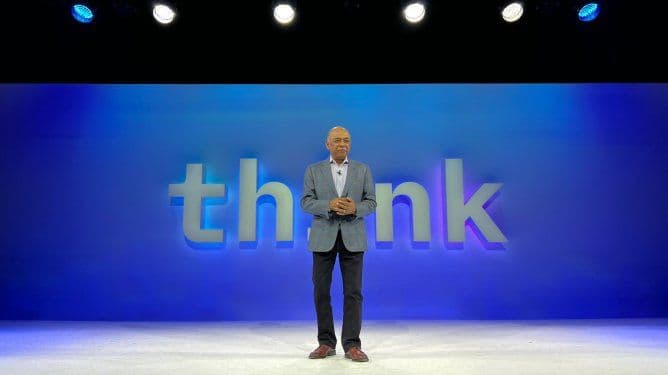
After shocking quarter, IBM insists that AI isn’t killing the mainframe
On Wednesday, IBM officially reported earnings and the news was as bad as everyone knew it would be. While the 115-year-old company still generates boatloads of cash — $17.2 billion in revenue, $9.9 billion in gross profit, nearly 58% margins, and $2.2 billion in net earnings for the quarter — its results fell well short of Wall Street’s expectations. It was such a bad miss that IBM CEO Arvind Krishna and the board took an unprecedented step of warning investors ahead of time that the earnings “was worse than our expectations,” offering everyone a sneak peek. He publisheda “letter to investors,”last week sharing preliminary results. It warned of abysmal revenue in the company’s all-important “infrastructure” category and said that profit margins were also going to take a hit. The company’s stock instantly tanked 25%,it’s biggest single-day decline ever. Until then, the stock had performed well under Krishna’s six years of leadership, buoyed by the AI data center boom that had been lifting all boats. On Wednesday, IBM also lowered its full-year growth forecasts, meaning this horrible quarter would impact the rest of the year. The culprit? IBM’s cash-cow mainframe business was down 42%. That’s a cascading problem, because as CFO Jim Kavanaugh explained on the quarterly call with investors, IBM earns $3 in software revenue for every $1 of mainframe hardware it sells. However, the CEO and CFO spent the call insisting that this was a temporary blip and all would be well soon. What happened, they said, was that “tens” of customers that were due to buy a new mainframe during the quarter opted not to do so. That may not sound like a lot of customers, but mainframes are systems that cost hundreds of thousands to millions of dollars, and with maintenance contracts and software, generate many millions more. The same AI boom that lifted IBM’s boat also sank it. Instead of buying a new mainframe, these clients bought other hardware, Krishna explained. They were faced with astronomically high cost increases of 15% to 30% for data center gear and PCs. “When they were faced with that issue, then they decided to move budget to those areas where they were having that extreme price,” Krishna said. Enterprise hardware makers like Dell and HP have warned that rising costs on components like memory, caused by the AI build-out boom,have forced them to raise prices.Apple has said the same. But Krishna promised that those customers will still buy their new mainframes eventually — along with their new software contracts. In fact, he said some of them have already done so this quarter. “We see no evidence of clients moving off the mainframe,” he said. We’ll have to wait and see. But the tech industry has predicted the death of the mainframe for many decades now. Maybe even AI won’t kill it.
View
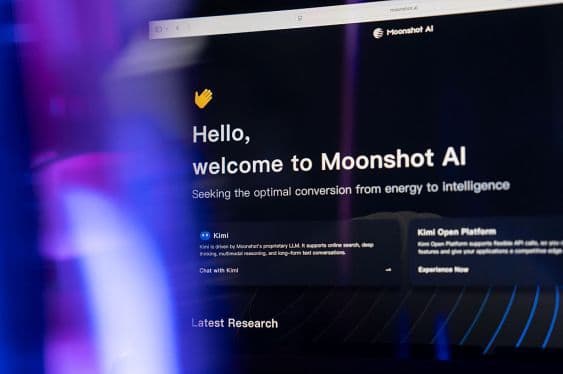
Treasury threatens sanctions after White House claims Moonshot distilled Anthropic’s Fable
U.S. Treasury secretary Scott Bessent doubled down on hiswarnings to Chinese AI companieson Wednesday, saying that sanctions remain on the table after a White House official accused Moonshot of improperly distilling Anthropic’s Fable model. Model distillationis a common AI training technique in which a smaller model learns from the outputs of a larger one. While this process can infringe on intellectual property rights, it’s also widely used as a legitimate optimization method. “Open source is not open season on American IP,”Bessent posted on X. “When [Chinese] firms conduct covert, industrial-scale distillation attacks that cross the line into IP theft, sanctions and Entity List designations will be on the table.” Earlier this week, Bessent stated that the U.S. government would examine open source models from China for signs of intellectual property theft and impose sanctions if found. Bessent’s latest remarks come hours after the White House’s science and technology policy chief Michael Kratsiosaccusedthe China-based Moonshot of conducting large-scale distillation against U.S. models. He alleged that Moonshot had acquired Nvidia’s “GB300-equipped servers and has accessed GB300s in Thailand, likely to train its AI models,” raising questions about whether the firm violated U.S. export-control rules. The GB300 servers are part of Nvidia’s Blackwell generation, which are banned from being sold to Chinese companies. Some experts dispute the idea that Kimi K3 could have been developed primarily through distillation from Fable, which has only been publicly available since July 1. Moonshot released K3 last week as an open-weight model, and its advanced capabilities have called into question the underlying business models of leading U.S. AI labs, casting doubt on whether they can continue to justify the enormous capital requirements underpinning the frontier AI race. The episode has also intensified a broader debate in Washington over the influx of Chinese open models. Some, including former White House AI adviser and current OpenAI Head of Strategic Futures, Dean Ball, have argued that the U.S. should restrict or effectively ban the use of Chinese open-weight models to preserve America’s technological advantage and mitigate potential national security risks. TechCrunch has reached out to Moonshot and the Treasury for comment.
View
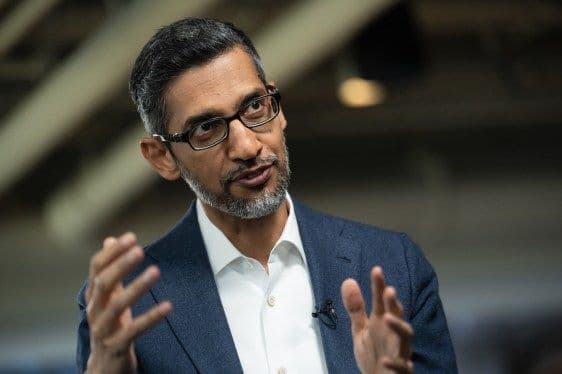
Google justifies its massive AI spending with a booming cloud business
Alphabet investors havevery publicly worriedthat the company’smassive AI spendingisn’t worth the money. With the company’s latest earnings report, those investors should be able to relax a little. The takeaway: Google’s cloud business — driven largely by enterprise AI adoption — is booming. The search giant saw Google Cloud revenue spike 82% from where it was this time last year, climbing to $24.8 billion. That’s well above last quarter’s generous year-over-year growth, which showed a revenue jump of 63% to $20 billion — and it handily beats what Wall Street analysts expected for this quarter’s growth (theexpectation was $22.46 billion). Those cloud gains were driven largely by enterprise AI solutions and enterprise AI infrastructure adoption, the company said, while also noting that its backlog of cloud contracting work — that is, work that it hasn’t yet converted into revenue — had climbed to $514 billion. The company’s profit hit $112.1 billion, which is a massive jump from this time last year, when the company reported $28.1 billion in profit, the company’s earnings report shows. Meanwhile, Alphabet’s overall revenue grew 24% year-over-year during the past quarter to $119.8 billion. The company also saw Google Services revenue jump 15% to $94.5 billion. “Our AI investments are redefining what’s possible across every part of our business,” said Google CEO Sundar Pichai during Wednesday’s earnings call. “We have exciting momentum across the board.” More people are also adopting Gemini, Google’s AI chatbot, as the app currently enjoys 950 million monthly active users, the company said. In Q4 of 2025, Googlereported thatthe app had 750 million users. It’s worth noting that spiking revenue isn’t unusual for Google. This marks the company’s 12th consecutive quarter of double-digit revenue growth. But even by that standard, this quarter represents a particularly bountiful period for the tech giant. Alphabet’s spending is still hefty, with its capital expenditures — the money it spends building data centers, buying chips, and expanding infrastructure — estimated to be between $180 billion and $190 billion for the year — a fact not lost on analysts during Wednesday’s earnings call. Several pressed Pichai on when, and how much, those investments will pay off. “I think our compute capacity investments in ’27,” he said. “We are seeing strong demand indicators, including long-term deals,” he continued. “I think, if anything, the dynamics look healthier than where we were about a year ago, so that’s what gives us the confidence to undertake those investments,” he said.
View

AMD and Kimi Deliver 3.2× Lower Latency for Coding
AMD and Moonshot AI rebuilt the inference software behind Kimi's coding model for AMD GPUs, reporting up to 3.2× lower tail latency and 7.7% higher token throughput on agentic workloads.
View

Uber Co-Founder’s Startup Raises $1.7 Bn Led by a16z
The funding consolidates Travis Kalanick’s businesses under a single equity structure as Atoms expands its industrial AI strategy across manufacturing, mining, transport and food.
View

