🚀 Zaprep: Your Socials on Steroids. 免费开始 — 每月自动发送 1,000 条私信,将互动转化为潜在客户。 ,每月 1,000 条自动私信。
最新 AI 资讯
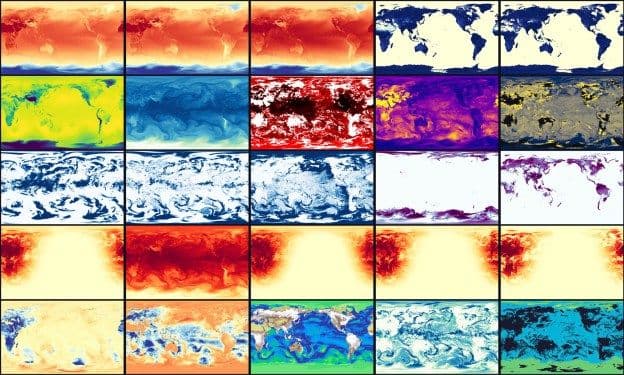
AI makes weather prediction better. Can WindBorne make it lucrative?
The new deep learning techniques behind LLMs have also given us weather simulations that can run on laptops instead of supercomputers, changing meteorology. But the bigger task for AI may be making it easier for people and organizations to put those forecasts to work. WindBorne Systems, a startup that collects data with the world’s longest-flying weather balloons and feeds it into apowerful forecasting model, has raised a $37 million Series B round to take on that challenge, CEO John Dean told TechCrunch. The new round was co-led by Khosla Ventures and Galvanize, with additional investments from TransLink Capital, Lux Capital, and previous investors, and values the company after this round of funding at $250 million. Founded in 2019, WindBorne started with a plan to acquire a novel set of weather data with its low-cost weather sensors and endurance balloons. The development of AI weather forecasting models in the last four years has allowed them to make their own forecasts, something that wasn’t previously possible for most private companies because of the cost of the supercomputers previously required to simulate the atmosphere. Today, the company has 20 launch sites around the world and about 600 balloons in the air at any given time, collecting data in hard-to-reach areas, like theeye of a typhoon. Now, the company is beginning to deploy aerial sensor packages that can fall into the ocean and continue collecting measurements as floating buoys. The proprietary data set generated by this “planetary nervous system,” as Dean likes to call it, creates a moat for their weather model, which also ingests data sets generated by government weather agencies around the world. “We demonstrated that when you add balloons to the forecast, you get more accurate forecasts, and the value per data point is much stronger than satellites,” Dean said. “We’ve also been growing revenue while we’re doing that, so that de-risked the demand signal to VCs.” The company’s main customers today are government agencies. The U.S. National Weather Service purchases the company’s data, while the U.S. Air Force and U.S. Navy are paying WindBorne through research partnerships, including an effort to develop forecasting models that can be run onboard ships that may have intermittent connections to the rest of the world. What’s next is commercial business — right now, that’s mainly focused on investment funds that use weather data to predict commodity prices and other business outcomes. Besides spending on compute and an effort to replace the balloon network’s satellite communications with a mesh radio network, this round will let WindBorne build out its go-to-market team to expand its customer base in the private sector. That’s not always easy. In the last decade, a variety of startups have tried to scale up sensing businesses like earth observing satellite networks, but found it difficult to break through to the private sector because extracting value from that data requires experience and established workflows. Most turn to government agencies that are used to employing that data already. Private weather forecast companies do exist, but make most of their money repackaging or refining government forecasts for the news media, specialized needs like plane de-icing and ship routing, or the above-mentioned speculators. That, however, may change as AI tools makes data crunching more efficient. Saloni Multani, a partner at Galvanize who co-led the round, said that the private weather market has been limited because “integrating weather forecasts into broader business decision-making has traditionally been expensive and difficult. We think AI changes that equation. Better forecasts make the effort worthwhile, and AI makes it much easier to connect those forecasts to the decisions businesses are trying to make.”
View
NVIDIA Commercialises Its Autonomous Driving AI Model
NVIDIA’s Alpamayo 2 Super model can generate driving trajectories, reasoning traces, and training labels.
View
Sarvam Unveils Circle Programme to Scale Enterprise AI Adoption
Sarvam’s AI stack now powers over 2 million voice conversations and around 10 million API calls every day.
View
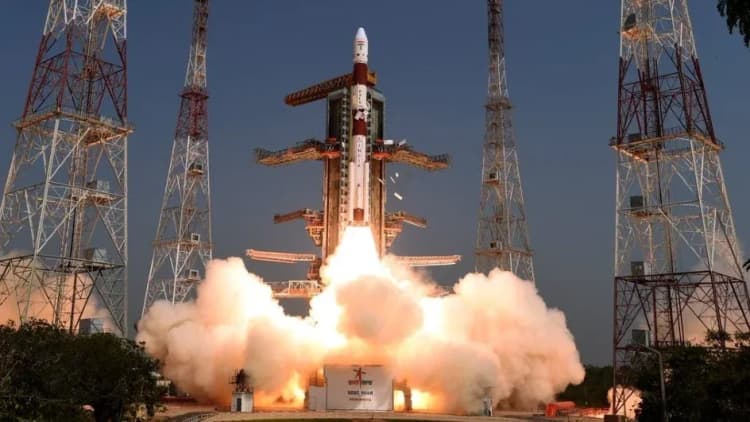
Are Space Tech Startups Poaching ISRO Scientists? Well, It's Complicated
Startups such as Skyroot Aerospace, founded by former ISRO scientists, along with firms like Pixxel and Agnikul Cosmos, have emerged as attractive destinations for scientists.
View
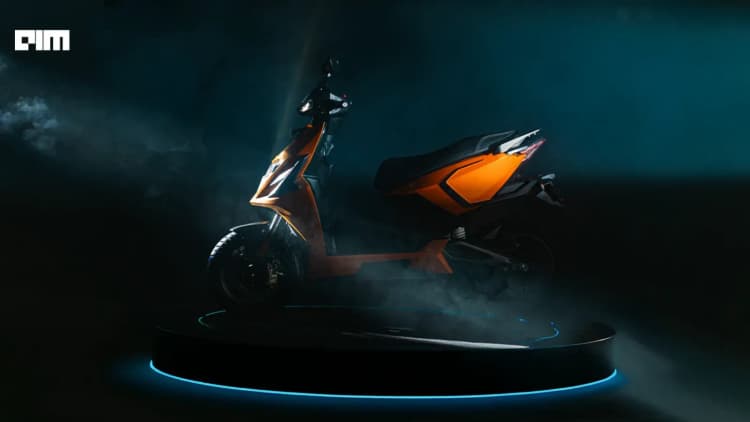
India’s Simple Energy Deepens Siemens Partnership to Speed Up EV Engineering
The move comes as Indian EV manufacturers increasingly invest in digital engineering infrastructure to support larger product portfolios
View
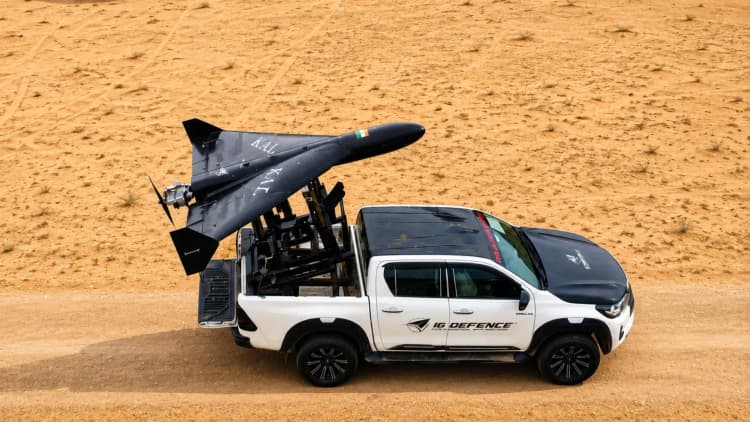
IG Defence Eyes Global Drone Exports Amid Gulf Tensions
The drone company plans to export its indigenous long-range attack drone after securing government approvals.
View

Why Food Processing Could Be India’s Most Underrated AI Opportunity
Expanding value-added food processing could unlock benefits across the entire agricultural value chain. This is where AI can help.
View

AI, Industrial Investment & Skilling Get Big Push in Tamil Nadu Budget 2026-27
Tamil Nadu Finance Minister N Marie Wilson set out a raft of measures aimed at attracting investment, building an artificial intelligence ecosystem and expanding skills training for young people.
View
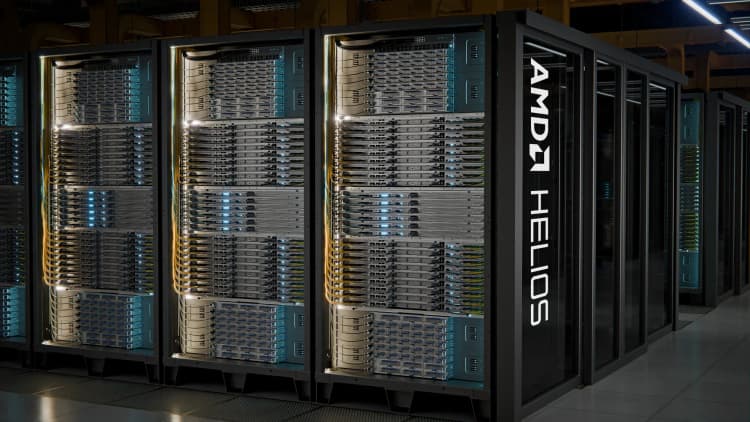
AMD Forecasts Over 70% Server CPU Growth in 2027 After Record $11.5 Bn Quarter
Helios enters production this quarter as AMD expands capacity to ease server CPU supply constraints.
View

SpaceX Targets $100 Bn ARR Backed by AI, Starlink, Starship
SpaceX plans to end the year with more than 2 GW of AI compute capacity while preparing to launch its first operational Starlink V3 satellites.
View
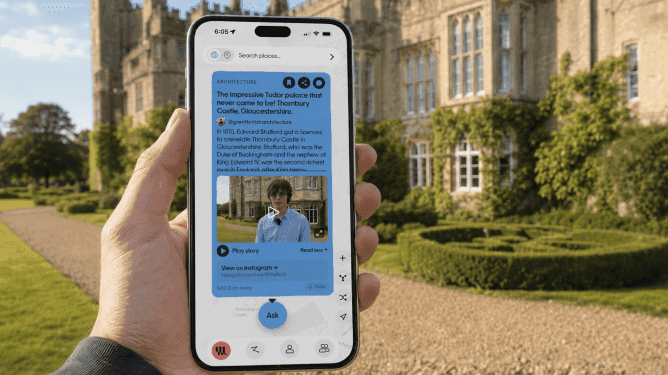
Meet Wrinkles, an app that uncovers the hidden stories of the places around you
A new app calledWrinklesuses your location to automatically surface stories about the places around you. Wrinkles, available on bothiOSandAndroid, essentially acts as an AI-powered audio tour guide that reveals hidden history and local stories. The idea behind the app is to allow you to move through the world while hearing the places around you come to life without having to stare at your phone. As you explore, Wrinkles can tell you the secrets behind a building, the history of a street, and other local lore. Wrinkles was founded by David Stemler, a longtime advertising executive, and Ryan Hansan, who previously founded ScratchDC, a meal delivery service, and TasteLab, a shared commercial kitchen that helped independent food businesses launch and grow. The pair have known each other since middle school and say travel has always been a defining part of their friendship. They began taking trips abroad together as teenagers and continue to travel together today, now with their families. Over the years, many of their business ideas have grown out of long conversations while traveling and questioning how the experiences around them could be improved. Wrinkles was born from that same curiosity. Stemler came up with the idea for Wrinkles while visiting the British Museum in London and using its official app for a self-guided tour. Although he believed the app was well designed, Stemler found the experience frustrating. “I spent the entire visit heads-down, matching numbers on the walls to lists on my phone instead of taking in my surroundings while learning about them,” Stemler told TechCrunch in an email. At the end of his trip, he called Hansan from the airport and asked, ”If the phone in my pocket knows exactly where I am, shouldn’t the places in front of me be able speak?” The startup has built a global foundation of 1.3 million Wrinkles, or points of interest, across 177 countries. Beyond this foundational content, historians, museums, creators, and brands can add their own stories and experiences to the map. Users can discover these stories as they move through the world or explore them remotely by searching and browsing the map. To make the experience feel like a traditional tour, users can ask questions as they explore. For example, while learning about how the Trevi Fountain was built, you could ask a question like, “Where does this water actually come from?” There’s also a social aspect to Wrinkles, as users can follow friends, family, creators, and organizations, then save and share Wrinkles or organize them into custom maps and guides. Users can personalize their Wrinkles, too, by attaching family memories, photos, videos, and recordings to specific places. Families can collaborate on these histories to preserve stories tied to places like a childhood home, a first date location, or a hometown. Hansan and Stemler see Wrinkles as more than a travel app. While it can help spontaneous travelers discover the stories behind new places, they believe it’s also designed for people who want to learn more about the buildings they pass every day or rediscover their own hometown. “The common thread isn’t travel — it’s curiosity,” Hansan said. “A travel app gets used on one trip a year. Wrinkles gets used on your commute, at the botanical garden, at the zoo with your kids, leaving a permanent legacy for a loved one, and on the trip to Spain.” While the duo has experimented with a freemium model, they say they’re committed to keeping the app free for users. Wrinkle’s revenue primarily comes from the supply side, with museums, tourism boards, universities, and hotels using Wrinkles to create location-based experiences for visitors without having to build their own apps. Creators and media partners can build sponsored place-based guides, while businesses can promote Wrinkles connected to their locations. Partners can also add links for users to book tours, reserve tables, buy tickets, or visit businesses, with Wrinkles earning a share of those transactions. As for the company’s long-term vision, the duo sees Winkles becoming a normal part of how people navigate places, whether that means discovering the history of a college campus, learning more about their own city, exploring a map while planning a trip, or getting a deeper understanding of a city they’re visiting for the first time.
View

Anthropic signs $10B deal with AI cloud startup Volta
Anthropic has been on a cloud partnership spree in recent months, and its latest move is reportedly a $10 billion deal with AI cloud startup Volta. Bloombergoriginally reportedthat Volta,founded earlier this year, will provide cloud compute to the Claude maker over a six-year period. Volta has a partner in this deal, Bitdeer, a crypto-mining company that will help develop the data center to provide the compute capacity. That facility will be located in Norway and will deliver a 133 megawatt capacity. It will be fueled byNvidia’s Vera Rubin systems, the chipmaker’s state-of-the-art AI chip architecture. Volta is part ofNvidia’s Cloud Partner program, which is a consortium of AI cloud providers that use Nvidia’s GPUs in their data centers. Volta had spoken about a deal with an AI lab but hadn’t named the specific company it was working with. Bloomberg originally cited anonymous sources familiar with the deal. TechCrunch reached out to Anthropic for more information. Anthropic has sought to aggressively expand its compute capacity over the last several months as it wages a corporate battle with its competitors. The company also recently announced new compute deals with the likes ofSpaceXandAmazon.
View

