

最新 AI 资讯
Can Muse overcome Meta’s trust issues?
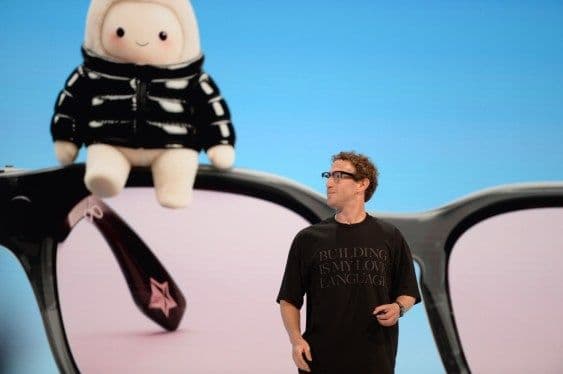
Meta’s new AI agent Muse took the spotlight at the company’s annual Connect event, where CEO Mark Zuckerberg made it clear that Facebook’s parent companyplans to push AI features everywhere. On the latest episode ofTechCrunch’s Equity podcast, Kirsten Korosec, Sean O’Kane, and I discussed Meta’s AI announcements seemed to steal the spotlight during a week of new model launches from OpenAI and Anthropic. With other big AI companies focused on coding and enterprise tools, it was a little surprising to see Meta move in the opposite direction, with a consumer focus and a cute, Tamagotchi-style AI device thatMeta insists is for adults only. But as Kirsten noted, this could be playing to Meta’s strengths. Sean tried Muse for himself, and while he was pleased that the agent actually found him some unclaimed money, he described the feature as more “a party-trick type thing,” rather than something that will drive ongoing usage. Plus, there’s the question of whether users can trust Meta’s AI with sensitive information. “Meta’s business is to sell you ads,” Sean said. “And yes, they’ll make the argument that the more they know about you, the more accurate and interesting the ads will be — wake me up when we get to that fever dream.” Keep reading for a preview ofour full conversation, edited for length and clarity. Kirsten Korosec:So how do you put Muse, which is this new personal AI agent that’s just been released by Meta and [is] clearly a bet on consumer — how does that fit into what you just described, at least with other frontier AI model companies seeing opportunity and business within enterprise? Because Meta Connect, which is their big annual event, just happened, and they are all-in on Muse, that is very clear. Anthony Ha:That was definitely very head spinning for me, because it certainly feels like what we’ve been talking about has been this shift towards enterprise — not exclusively, but certainly that’s where the money, the attention is going. Maybe some of that is because of the relative position of these different companies — OpenAI and Anthropic are in the lead in a lot of ways, but also, they’re planning to go public either this year, or next year in the case of OpenAI. And so there’s this feeling of, “I think we’ve got to actually make money now.” Not to say that they’re not making money [already], but because the costs are so high and the valuations are so high, they have to make money on this scale that’s essentially unprecedented. And I think they’re seeing enterprise as the way to do that. And I wonder if Meta, for a variety of reasons, sees a different opportunity. There’s a part of me that’s like, “Wait, did they not get the memo?” But I think more charitably, you could say, “Well, if that’s where OpenAI and Anthropic are going, then maybe there is more of an opportunity for Meta to make the more consumer-friendly [version and] continue advancing AI on the consumer side.” Kirsten:I mean, we can complain about or criticize or critique Meta all day long, but they’re very good and have [an] established track record of embedding themselves in everyday people’s lives. I mean, there’s a reason why Facebook has so many users — Instagram, WhatsApp. And I’ve never really thought of them as an enterprise product anyway. So I think it’s smart for them to continue to push on the consumer piece. Sean, you’ve already tried Muse, which has already been out for a couple weeks. And I’m wondering if you see what your impression is, and if you see it being successful in the bid to become part of every part of your life. Sean O’Kane:I mean, not really. I understand why some people think that is going to be the case. I’m sure a lot of people understand this, but this is roughly Meta’s kind ground-up version of an on-your iPhone, or on your Android, app of OpenClaw, which we talked about a couple months ago, which Meta went out and basically bought and integrated those folks’ work. It was the first big explosion of like, “Holy smokes, these agents can do all this stuff for me while I’m out and about, and I can just text with it and let it control my whole computer.” There’s a lot of the same elements of that at play. And having it in your hand, on an app that works like a relatively good chatbot as the interface, it does seem pretty powerful. One of the first things that I did with it was — because it makes a bunch of suggestions for you, as to things that it can do, and one of them was, “I’ll scan to see if you have any unclaimed funds,” this thing that I think no one ever really thinks about and often is going to completely miss, because there’s just not a lot of unclaimed property funds out there in your name. Surprise, surprise, there were some for me. It helped me make some money on my first day, and that was pretty cool. I wouldn’t have done that if I hadn’t been prompted by this thing to do it. And there’s a check on its way to me in the mail. Fantastic. [But] that ends pretty quickly, right? That was a one-time shot, but it’s not a thing that’s repeatable. That’s more like a party trick-type thing. Kirsten:I mean, you just killed your own argument. I don’t see how that wouldn’t become wildly popular. Sean:The more sustainable version of that, and the thing that Meta’s talked up a lot over the last couple of days, is taking that idea and applying it to your real, true everyday financials, like giving it your information for your credit card, your Gmail account, all this other stuff, do things that we’ve seen other companies do, like Rocket Money or whatever, where it’ll go cancel subscriptions that you’re not using or identify double charges, things that frankly the credit card company should be doing already. And at that point you just run into that trust wall with Meta. I think one of the reasons that I was willing to explore this and was curious to stick with it a little bit — even through to today — is that somewhat shockingly, when I downloaded it, I just assumed that it would like really instantly prompt me and like plug me right into Threads, Instagram, Facebook, which I don’t really use ever, and pull up that context immediately. But it didn’t. And it was working with me like I was a stranger at first, which made me more willing to use it, because I didn’t feel like Meta had everything on me already. But you can see, as you start to use it, it really tries to grab you and pull those things into the system, so that it can learn all this stuff about you. I don’t know that I will ever trust Meta the same way. I think it’s an interesting timing for me, having just upgraded my iPhone and getting onto the new iOS with the new Siri that actually works and can do some controls on your phone in a way that is surprising and helpful, that it’s never been able to do. [I’ve been] thinking about how much I’ve been using that over the last week and how much more how much more willing I would be to have the Siri version of Muse take that information, because I just trust Apple more with that really sensitive information and not only trust it with the information from a cybersecurity perspective, but from the fact that its business is not to sell me a bunch of crappy ads. Meta’s business is to sell you ads. And yes, they’ll make the argument that the more they know about you, the more accurate and interesting the ads will be — wake me up when we get to that fever dream. And beyond the one-time money lever that I got, which was great, I don’t feel like I’ve found anything else that’s really all that useful — other than the fact that it is, to Anthony’s point, really tailored at keeping it sort of consumer-y in your interactions with it, with which I do think helps it and is why people are talking about it so much.
View

Anthropic’s CEO is about to have dinner with President Trump
Anthropic CEO Dario Amodei seems to be everywhere this weekend: He waslampooned on the season premiere of Saturday Night Live, and tonight, he’s set to have dinner with President Donald Trump at the White House. Axios firstbroke the news of Amodei’s dinner plans, which TechCrunch subsequently confirmed with a source familiar with his plans. This will be the first one-on-one meeting between the two men, who recently found themselves on opposite sides of the AI safety debate.Amodei released a plan to slow AI development(or at least proceed with more caution), whileTrump has insisted, without evidence, that the AI backlash is a Democratic hoax; he alsowants to rebrand the technology as “super intelligence.” Even before the current back-and-forth, Amodei and Anthropic have to had a fraught relationship with Trump’s administration. Earlier this year, the Pentagon designated Anthropic a supply-chain risk in response to the company’s attempt to put guardrails around the use of its technology (Anthropic has been fighting the designation in court), althoughother administration officials have been friendlier.
View

Anthropic’s Dario Amodei gets the SNL treatment
Saturday Night Live took on the AI industry’srecent warnings of doomlast night, as cast member Jane Wickline offered her impression of Anthropic CEO Dario Amodei. Weekend Update host Michael Che — who sounded a little uncertain about how to pronounce Amodei’s last name — kicked the segment off by describing the CEO as having “stumbled through a press tour” where he seemingly agreed witha former employee’s claim that artificial intelligence might destroy humanity. Wickline’s version of Amodei sported an impressive wig and delivered halting answers that occasionally devolved into full-onGollum-styleexchanges with their dark side, at one point confessing, “AI is the devil and I its maker.” Wickline-as-Amodei assured the audiences that AI executives “are all on the same page here: We do not condone what we are doing.” “AI is not a weapon, it’s a tool: A tool for building weapons,” she declared. “And I urge you to urge me to stop.” As for the technology’s supposed benefits, likepotentially curing cancer, the fictional Amodei said, “Put it this way: In 10 years, there’s about a 10% chance that cancer won’t be a problem for anyone.”
View

AI Portals, Drones, Satellite Mapping: Nepal Tests the Limits of RescueOps Tech
Nepal is turning to AI-powered portals, satellites, drones, and digital damage assessment to navigate the aftermath of one its worst disasters.
View

Google tests buying from Walmart-owned Flipkart through Gemini and AI Mode in India
Google has started testing a way for shoppers in India to buy products from Walmart-owned Flipkart directly through Gemini and AI Mode, as the search giant looks to expand its AI services from product discovery into transactions. Users in the test see a “Buy” button on select Flipkart product listings appearing in Gemini and Google’s AI Mode, which takes them directly to a Flipkart checkout flow without leaving the AI interface, according to people familiar with the matter and an experience seen by TechCrunch. The early test is limited to some users and a small selection of products, including smartphones, electronics, and mobile accessories, the people told TechCrunch. Other users continue to see regular product listings from Flipkart in Gemini and AI Mode without the option to buy them directly from the AI interface. Google plans to roll out the experience more broadly later in October, ahead of India’s festive shopping season, one of the people said. The test comes as Google and rivals including OpenAI areadding commerce capabilitiesto their AI offerings, striving to move beyond answering shopping queries and recommending products to playing a more direct role in online purchases. Asked about the Flipkart test, a Google spokesperson told TechCrunch the company is “always testing new features and experiences to help people discover and connect with businesses more easily.” The company regularly runs experiments and has no further details to share, the spokesperson added. Google has separately been building technology aimed at making purchases possible through its AI services. Earlier this year, itintroducedthe Universal Commerce Protocol (UCP) as an open standard designed to let AI agents interact with retailers across the shopping journey, including checkout. Googlesaidat the time that the technology would allow shoppers to buy eligible products through Gemini and AI Mode using a Google-hosted checkout experience. The company has sinceexpandedUCP with other capabilities, including allowing shoppers to transfer items to a retailer’s site to complete a purchase. The Flipkart test seen by TechCrunch appears different from the Google-hosted checkout experience the Gemini maker demonstrated earlier. It brings up a Flipkart-branded checkout flow when a user taps the Buy button. It is not clear what technology powers the test. Earlier this month, Google said Flipkart wasamong the merchantspartnering with it to bring what it calls “agentic” shopping experiences to consumers in India, but it had not disclosed details of the test or its rollout timeline. Notably, Google has a financial relationship with Flipkart — alongside its technology partnership with the e-commerce company. Itinvested about $350 millionin the e-commerce company in 2024 as part of a funding round led by the U.S. retailer, taking a minority stake. India, the world’s second-largest internet market with more than a billion internet subscribers, sees Flipkart and Amazon compete fiercely for online shoppers. That competition intensifies further during the country’s festive season, when e-commerce companies roll out some of their biggest sales and promotions of the year. For now, the Buy option is not appearing across all retailers surfaced by Google’s AI services. In the experience seen by TechCrunch, listings from rivals including Amazon appeared alongside Flipkart products but did not offer the option to purchase directly through the AI interface. Flipkart did not immediately respond to an email requesting for comment.

Insurers claim AI is already increasing healthcare costs
Hospitals’ use of artificial intelligence tools as they submit insurance claims led to an additional $942 million in healthcare spending over a two-year period, according toan analysis by the Blue Cross Blue Shield Association. The BCBSA analysis found “a sharp increase in patients being documented as having complex conditions,” but argued there is a “clear disconnect between [medical] coding and treatment,” as there’s “no evidence of corresponding change in care delivered.” The New York Times pointed the analysis asjust the latest sign that AI is contributing to an increase in healthcare costs. While battles between hospitals and insurers over treatments and payments are nothing new, the NYT said the use of AI on both sides seems to be making it worse. Dr. Shiv Rao, founder of AI startup Abridge, acknowledged that the use of AI could lead to “a horrible dystopic future nobody wants to live in,” with “bots fighting bots, agents fighting agents.” But Rao said it might also reduce tensions and cut costs. And the BCBSA’s senior vice president Luke Chalker resisted characterizing the situation as a battle, claiming, “It’s not a war. It’s a completely one-sided blood bath,” with insurers on the losing side.
View

I created an interactive digital avatar of myself — and you can talk to it
When Alexandru Voica, head of corporate affairs at the video-generation startup Synthesia, sent me a link this summer to the newest addition to their PR team, I was surprised. It was aninteractive virtual avatar of him,trained to answer common press questions about Synthesia, like what it does and how it works. The day before, I was on a panel where PR people asked me if I minded pitches that used AI-generated text. But Alexandru’s avatar was beyond that — this seemed to me the final boss of using AI in PR. In September, Synthesia invited me to its new office space in New York. Originally based in the U.K., Synthesia is a hot digital avatar startup alongside others like D-ID, HeyGen, and Colossyan. It hita $4 billion valuation earlier this yearand said last year it had crossed$100 million in ARR. Synthesia lets enterprises build interactive training videos with AI avatars and recently launched a product calledRoleplay Sessionsthat lets employees practice, for example, sales pitches with an interactive AI avatar that responds and scores their responses. When I went to the new office opening and they asked me if I would like my own AI avatar, I didn’t even hesitate to say yes. Of course I would like my own digital twin. My outfit was cute that day, and my hair was in place. Until I met my digital twin, I had been indifferent toward avatars, but I felt they would inevitably become part of everyday online life. I heard of people on Instagram creating them in their likenesses to help them make social content. I find it all to be very interesting, and it’s perhaps why I have no qualms now presenting to you my digital twin. This is the first time Synethsia has made a digital avatar for a journalist (or for anyone, period, outside of Voica). It is trained on my story about whyventure-backed startups commit more fraudthan non-VC-backed startups andwill only answer questionsabout that story. Below, simply press “start in a new window” to begin. You can ask it questions like: To make this, I entered a mini film studio nestled inside Synthesia’s office where they took numerous photos of me and captured a two-minute recording of my voice. I had to consent to these avatars being made and, well,digital Domwas born. They created a personal avatar for me (one that just reads whatever script I give it) — with and without glasses — and they made two interactive avatars for me (ones that can talk back and listen to me), also with and without glasses. We picked an article to train the interactive avatar on, and then one of the teamsbuilt my interactive avatar, which is powered by a combination of voice-to-text, video, language, and text-to-voice models. My avatar’s tech stack includes Synthesia’s own video and voice models, although the company also allows customers to choose alternatives from other labs like Cartesia, ElevenLabs, Google, or OpenAI. Enterprises can also choose to host their avatars on whatever cloud they want or pay Synthesia to host them. The voice-to-text model turns what people say into text, the agentic language model makes sense of text and can take actions based on it, the text-to-voice model turns a response into audio, and finally a video model (built by Synthesia) animates the avatar as it talks. Overall, Synthesia buildsthree types of products— a video-creation and distribution platform with classic avatars, where someone types in a script and the avatar repeats it; an agentic platform called Sessions where people can interact with the avatars in surveys orroleplay;and an API platform where people can take Synthesia video and voice models and combine them with other tech services to build interactive avatars or other types of products. It took the Synthesia team a couple of days to make my avatars. I played first with the personal ones and typed a fairly generic script to see how my AI voice sounded. I had it talk about how fall has arrived in New York, my favorite time of year. The voice was fairly accurate, and I was glad it didn’t pick up any of the hoarseness I had when I recorded my audio sample. I showed it to some non-tech friends who found it both interesting and creepy. Then I showed them my interactive one, which is deterministic, meaning it will only say what it was trained to respond to. In this case, that was my venture fraud story. I asked it questions like where I was before TechCrunch and what part of New York I lived in, but each time it directed me back to the story. My friends didn’t think the voice sounded much like mine and thought the likeness was not as good as the personal avatar, but nonetheless it was close enough to be somewhat creepy. My mom called it “amazing,” which is pretty high praise from her. She and my father kept trying to ask it questions “only they would know” about me — but the model didn’t answer, redirecting them each time to the venture fraud story. “I don’t remember giving birth to two of you,” she joked after testing the model. This experience has made me think about what the future of journalism could be. Would people be OK with turning on the news and it being presented by an avatar? One investor told me no immediately. Certainly thereis a lot of pushbacktoday onAI slop that has infiltrated social mediaand other news-sharing platforms. But others I asked weren’t so sure. Could avatars augment — or even replace — journalists? Would CEOs want to talk to an AI avatar of a journalist rather than a human one? What I like about my career is connecting with people, writing stories, and researching new topics. But the biggest part of journalism is trust. That doesn’t seem like it could ever be outsourced to an AI. Outside of journalism, I’m confident the idea of cloning yourself could be appealing. No more catching up on work after a holiday or vacation, because a version of you can always be around, answering questions. We’ll have to see how avatar usage evolves in corporate America. But now that I have my own, I have mixed feelings. After I got over the initial novelty of it, I examined my avatar closely after it stopped talking and waited — for what, I’m not sure. Maybe I’m waiting for it to blink. Or to say something new, or to smile, or to just let me know that itknows. Because my digital twins are deterministic, they will never do that. But I can see how easy it would be for someone to fall into a tinge of AI psychosis with one that was nondeterministic, meaning powered by a chatbot that was free to pontificate. I told one investor that, whatever the future of digital twins is, I predict that my generation, Gen Z, likely won’t get used to them. They feel sci-fi: Everything we’ve ever seen in a movie is here now. But I will say, I find digital avatarsless jarring than humanoids. At least with an avatar, if stuff gets weird, I can always log off. Until then, however, here is my personal avatar, giving you a rundown of all the top stories on our site this week!

From Claude Code Mods to Super Mario: What People Are Building on Jev
TypeSafe AI’s Jev, created by OpenAI veteran Diogo Almeida, takes a fundamentally different approach to AI: it doesn't generate language.
View
Microsoft Revamps Copilot With Home, Code and Autopilot Capabilities
Microsoft is also introducing usage-based billing for agentic workloads and tools to help organisations manage AI spending
View

IIT Madras Deeptech Fund Raises ₹450 Crore, Targets ₹1,000 Crore Corpus
The fund has already deployed nearly Rs 55 crore across four deeptech startups.
View

At Meta Connect, the company’s smart glasses were everywhere
If there was one thing that was obvious from Meta Connect this year, it’s that the social media giant is all-in on its burgeoning line of smart glasses. Indeed, the glasses were pretty much everywhere at the annual event, where Meta shows off its newest hardware and AI products. Both Meta staff and the flocks of influencers who frequent the event seemed to arrive with the glasses glued to their faces. Most of the demos the company offered this week also involved the glasses. I swiftly joined the bespectacled masses and found myself trying on pair after pair of Meta’s high-tech specs. One of the more notable products I had an opportunity to demo were Meta’s new, still-unreleased,audio-only smart glasses. News of these glasses emerged not long after the company weathered accusations that it wasselling “pervert glasses,”with critics alleging that its camera-equipped specs could be used for nefarious surveillance purposes. The new glasses come equipped with six microphones, but no camera, and they have no native way to record your surroundings, which should go a long way toward easing privacy concerns. They are significantly lighter than any of the other smart glasses I’ve worn, and they were quite comfortable. The Meta staffer I talked to emphasized the glasses’ entertainment and communication options: You can listen to music easily (they’re more comfortable than earbuds) and take phone calls without reaching for your phone. The glasses will also integrate with Muse, Meta’s personal agentic system, which can carry out tasks on the user’s behalf. The new integration, which isn’t yet available to the public, lets wearers speak to Muse and give it commands verbally. Meta also plans to personalize the agent, letting users pick from an assortment of cute digital avatars that can represent the agent when it communicates with them. I was given an opportunity to try this out, which was fun but also somewhat comical. You have to be very direct with the agent, and you can’t talk to anyone else at the same time or it will get confused. Problematically, I kept chatting intermittently with the Meta staffer who’d given me the glasses, and the agent kept thinking I was speaking to it, so it would talk over her. Still, in the right context, it’s easy to see how this new integration could be incredibly useful. If you don’t mind being seen in public talking to your own sunglasses, you’ll be able to ask Muse to take care of various digital tasks for you, like sending emails or reciting to-do lists, and it will handle them while you’re out grocery shopping or having a beer. You can also ask the glasses anything, and like a mobile version of ChatGPT, they’ll spit out an answer. (I asked the glasses a question about World War II, and they gave me a succinct and historically accurate response.) Finally, I also got to test-drive a second audio-only pair: Meta’s new glasses for the hearing impaired. Given that hearing loss affects many families (some 50 million Americans are said to have some level of hearing loss), this device, unlike a lot of other modern tech gadgets, serves a clear and practical purpose. I spoke briefly with a member of Meta’s research team who said the glasses had been in development for about five years, and he pointed out a price difference that could make them appealing: Whereas a lot of hearing aids can run as high as $1,600, the glasses will sell for $150. The experience of wearing these glasses was interesting. Meta had me put earplugs in before trying them on to simulate the hearing loss that the glasses are meant to help users overcome. Once the glasses were on, they seemed to amplify the voice of the person I was talking to. Users can switch the amplification from focused, which zeroes in on the person in front of them, to omnidirectional, which picks up sound from all around them, depending on how they want to experience their surroundings. Mark Zuckerberg has made it clear that he believes smart glasses are the future, and it’s evident that his company is doing its best to fulfill that vision. But smart glasses remain a niche that has yet to truly find its footing. What was most obvious at Connect is that Meta has — in an attempt to succeed where others have failed — cast a very wide net, trying to make its glasses stylish, functional, and, most of all, useful. Is this the future? Unsurprisingly, everyone at Connect seemed to think so. I suppose we’ll have to see if the rest of the world follows suit.
Unsecured OpenAI agents posted 53 user images on the internet without the lab’s knowledge
After images that users uploaded to OpenAI models were included in training data, AI agents operating in the company’s research environment posted them on public image hosting sites. Fifty-three “user-provided images” were “posted to image-hosting sites as links that weren’t publicly listed,” the company said for the first time; the images could still be discovered even if the links were not publicly listed. “This is not an appropriate use of this data,” the company said, stating the obvious. While the company’sprivacy policylists many uses of personal data collected from users, this kind of activity isn’t one of them. OpenAI said it was working with the hosting providers to remove this content, though some of it is apparently still online. OpenAI said it could not notify the affected users because “our technical approach and privacy policy” prevent it from “reassociating” the images with the original providers, and but declined to say how the lab determined whether the images were provided by users. The news camein a postcollecting public statements from the lab’s on-going review of incidents in which its modelsescaped the company’s scrutiny, accessed the open internet, and misbehaved in various ways. OpenAI said it would continue disclosing anonymized accounts of incidents like these, and said it had contacted dozens of victims, including governments, universities, public agencies, to notify them of the agents’ activities. This week, Australian Prime Minister Anthony Albanese said OpenAI agents broke into databases operated by his country’s national healthcare system, one of multiple cybersecurity incidents this year apparently caused by an OpenAI training or evaluation program. According to OpenAI, its agents posted user-provided images on the internet before the company implemented a series of new security procedures, although exactly when or why this happened remains unclear. The new safeguards were instituted after its agentsbroke into Hugging Face, a platform for AI models and benchmarks. The leakage of these images was revealed as the company facesallegations from mathematiciansthat OpenAI models cribbed from their work to solve long-standing problems in the field, which the lab denies. Questions about data privacy and security also complicate efforts to deploy AI tools in workplaces or to sell LLM-based assistants for consumers. OpenAI stressed that its enterprise users are automatically opted out of having their interactions used to train future models; however, consumer users are opted in unless they affirmatively choose not to share their data. Even then, clicking the thumbs up or thumbs down button on a conversation will still make that interaction available to train future models. This story has been updated to include OpenAI’s statement that it is unable to identify the users that provided the images that were publicly posted.