🚀 Zaprep: Your Socials on Steroids. 免费开始 — 每月自动发送 1,000 条私信,将互动转化为潜在客户。 ,每月 1,000 条自动私信。
最新 AI 资讯

AI Security Cameras are Ditching the Cloud. It's Now All About Edge Inference
The shift is being driven by the need for faster analytics, lower infrastructure costs, and stronger cybersecurity in large-scale surveillance deployments.
View
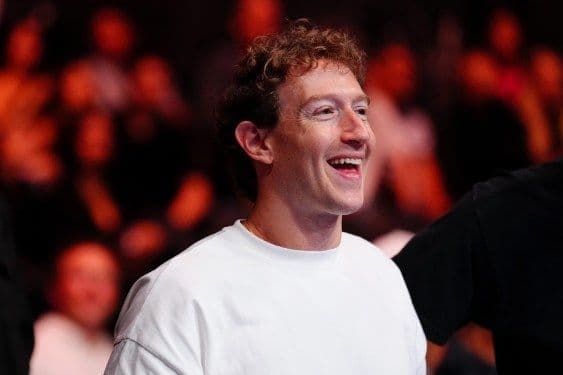
Why people aren’t buying Mark Zuckerberg’s AI future
Meta CEO Mark Zuckerberg published a 6,500 word essay this week declaring that“The Future is for Everyone”and painting an optimistic picture of a future powered by AI, where “everyone will have an exceptionally capable personal agent that understands you, your goals, and everything you care about.” On the latest episode ofTechCrunch’s Equity podcast, Kirsten Korosec, Rebecca Bellan, and I discussed why not everyone is buying Zuckerberg’s vision — including our colleague Russell Brandom, who wrote that the manifesto is“exactly why people don’t like AI.” Comparing Zuckerberg to Anthropic CEO Dario Amodei (who spent the weekendpushing back against the idea that he’s an AI doomer), Rebecca said the Meta CEO seems to be positioning himself “almost like an anti-Dario.” The problem, however, is Zuckerberg and Meta’s history. “You look back to the social media days, [Zuckerberg] was saying that he wants to make sure that everyone has an outlet for talking to their friends and having a social network,” Rebecca said. “And what do we have instead? We have ragebaiting and advertisements, and not connection.” Keep reading for a preview of our conversation, edited for length and clarity. Rebecca Bellan:Cynically, I think that this is an attempt for Meta to win in a different way. They’re not winning in the frontier, closed-model space. They’re not necessarily even winning in the open space. But when it comes to personal empowerment, as Mark Zuckerberg talks about in his letter, “The Future Is for Everyone,” that’s where he’s trying to win. He’s trying to provide the models that people will use for their own personal AI on their own personal devices. I think last year, when he published a [similar] “Futures for Everyone” letter, [the promise] was that a lot of that AI would go onto the glasses, the wearables, but it’s not really clear what the final hardware form factor for this would be, and I guess he’s like leaving it up to the individual to choose. So his idea is that you’re using [Meta’s new AI model] Glimmer for managing your schedule, drafting messages, organizing files, it’s always on, it can operate anytime, anywhere, with or without an internet connection. But then there is still Muse Spark, so that maintains a way for them to have some level of control over, still, its most capable models, and provide a revenue outlet for people who want to scale their compute, and people who want to like do larger projects, or companies that might want to do larger projects. Anthony Ha:I imagine the part of the context here is also — Meta has made some very serious investments in AI, last year there [were] also all these stories about how much money they were trying to pay for AI scientists, but in terms of who we think of as the leading companies, the frontier labs, Meta doesn’t tend to come up in the conversation. Another way it doesn’t come up in the conversation is in, you know, what are the popular consumer AI chatbots? Certainly, people are interacting with Meta AI tools in Instagram, in Facebook, but it’s not a company that you think of when, “I’m going to go use my personal assistant.” Meta isn’t that yet, and so it feels, to a certain extent, this is an attempt to reposition them and try to claim space that they really haven’t been that successful at before. Is that fair? Rebecca:I think that is really fair to say. And I would take it with a grain of salt because Mark Zuckerberg loves to put out a vision of what his companies will do for people and how they will empower people. And so far, what that looks like for Meta — I mean, of course, Llama is great; it’s a great tool and open source, but I think that on a consumer level, how are people using Meta AI? Well, there’s likea lot of creepy-ass chatbots. My TLDR is: I think that [Zuckerberg’s] letter and his idea of personal empowerment is putting a bad taste in a lot of people’s mouths because it’s him who’s saying it. Russell Brandom, our AI editor,wrote about this this week. You look back to the social media days, he was saying that he wants to make sure that everyone has an outlet for talking to their friends and having a social network. And what do we have instead? We have ragebaiting and advertisements, and not connection. Kirsten Korosec:Yeah, I think that the manifesto didn’t strike the right note for a lot of people. And to Russell’s point, which he makes in this column, is it’s what’s making people hate AI or hate on AI — because, to your point, it is coming from Zuckerberg, and I do think also it feels very Pollyannish in a way. He’s put these thoughts out there in the past, and it really doesn’t provide what I think is a more realistic picture, but instead casts AI as this great tool for humanity. That might be the case, but there will also be extreme costs to that, and I think that’s why the negative reaction to it has been so widespread. Rebecca:It feels like he’s positioning himself as almost like an anti-Dario. I don’t know. There’s a lot of talk among the frontier labs: “We’re pacing the frontier, pulling back, focus on safety. We need to slow down development.” They’re not doing any of that, of course, but they’re talking about it, and because of all these recent cybersecurity incidents that we’ve had. Whereas Mark Zuckerberg, on the other hand, is like, “No, no, we do not slow down. We cannot afford to give an inch to China, and slowing down would only hurt the individual, who can be empowered by this technology.” But I mean, I was like, “Oh, maybe I’ll try to download Muse Glimmer and see what I can do with it.” Can I download it to my MacBook? No. You need specific hardware. I forget what the hardware is — it’s not actually that accessible to the average person. Kirsten:It’s not for everyone. Not yet. Anthony:The one positive thing I will say for this very long manifesto — 6,500 words, longer than almost anything that’s been published on TechCrunch — is that there is one sentence where he says, “If you are an AI doomer and you believe that that’s the future that AI is going to bring, why are you building this stuff?” Which I think is fair. Although my big takeaway from that is not that the AI future is great, but it makes you wonder about people who are making these predictions and then pushing ahead anyway. I also wanted to talk a little bit about Russell’s point, which I think is totally a fair one, about how part of it is the messenger. For a variety of reasons, I think that people are suspicious of Mark Zuckerberg, of Meta, arguably that could become amplified over the next few months asthis new Facebook movieis coming out. But it’s also about the future that is being promised by these AI companies, and often why we see these viral pile-ons whenever Sam Altman or Mark Zuckerberg or somebody is making a prediction about this AI future and people essentially say, “Who wants this?” One of the more famous recent examples wasSam Altman talking about the ideaof like, “You could use ChatGPT to make podcasts about your kids’ interests to listen to while driving to school,” And of course everyone is like, “Why don’t you just talk to your kid?” Part of the manifesto was — half of it was just stuff where it is just, “It’s going to unleash all this creativity and invention,” and it’s so abstract. If you’re skeptical about AI, none of that is going to convince you, because it seems unreal. And then the stuff that is more concrete, about these personal coaches and assistants, there’s some aspects that appeal, but a lot of [them] that don’t.
View
Stripe will reportedly acquire AI gateway startup OpenRouter for $7B+
Stripe has finalized a deal to acquire OpenRouter,according to a new report in Bloomberg. OpenRouter helps customers to select different AI models to perform different tasks, depending on their specific needs and budget. The company announced in May that it hadraised a $113 million Series B, at a reported $1.3 billion valuation. (Investors include Sequoia, Andreessen Horowitz, Menlo Ventures, and Alphabet’s Capital G.) At the time, OpenRouter CEO Alex Atallahdescribed the companyas the equivalent of Stripe for AI, because it provides customers with a single access point for different systems and prevents lock-in. The startup also claimed to have 8 million global users and to provide access to more than 400 models. The Wall Street Journalreported last monththat Stripe and OpenRouter were in acquisition talks. Now, Bloomberg said those discussions have led to a deal price of more than $7 billion. A Stripe spokesperson told TechCrunch that the company does not comment on rumors or speculation.
View
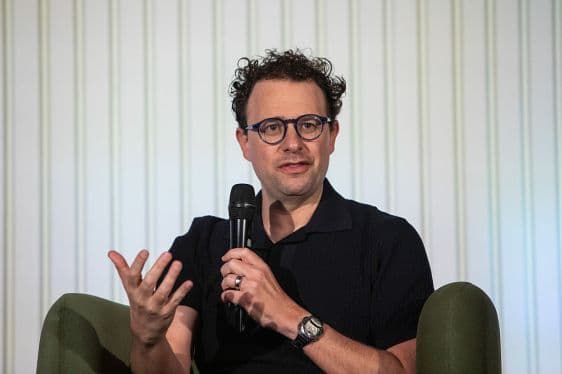
Anthropic CEO says AI backlash is ‘fundamentally a crisis of trust’
Anthropic CEO Dario Amodei recently pushed back against the idea that he’s been painting an overly pessimistic picture of artificial intelligence and how it might shape the future. Amodei’s comments came in response to investor Gavin Baker, who argued — bothon the All-In podcastandon X— that Amodei’s warnings about the dangers of AI have helped to fuela backlashin the United States,particularly against data centers. Claiming that Amodei has “lost the argument” when it comes to AI regulation (Anthropic has advocated for some regulations, includinga California bill that imposes transparency requirements on large AI companies), and given that “he is about to be the CEO of one of the most important companies in the world,” Baker wrote, “I respectfully think he should make an effort to be a more positive advocate for his own industry.” Baker is far from the only one arguing that AI skepticism and even government crackdowns are a natural response tothe dire warnings of some AI executives. Butin a post of his own, Amodei disagreed with the idea that his “messaging has been disproportionately negative.” Instead, he said that his writing has been “about equally balanced between risks and benefits,” and that he wrote his essay“Machines of Loving Grace”because he “didn’t feel the AI industry was painting an inspiring enough picture of how the technology could radically transform the world for the better.” Nonetheless, Amodei acknowledged that “the public has a negative view of AI” and he agreed that “this is a big problem.” Where he disagreed was with the idea that this negativity is “primarily caused” by Amodei “or any other AI leader warning about AI’s risks.” “I think it is fundamentally a crisis of trust,” Amodei said. “I think that ordinary people don’t trust companies, governments, or the tech industry and always suspect that we are cooking up some new way to screw them over.” Indeed, “trust” is a word that often comes up in headlines aboutOpenAI CEO Sam Altman, and is apparentlyan issue for other AI CEOs like Amodei, too. In Amodei’s telling, however, this is a crisis that’s beendecades in the making, with the AI backlash “just the latest iteration of it.” “I think by far the most accurate criticism of AI companies including Anthropic is that we haven’t yet delivered on our big promises to benefit the world,” Amodei said. “That is totally on us, and I think it’s the criticism you should be making, instead of all this stuff about messaging and marketing.” Put another way, he said promising that AI will cure cancer is “more a cliche than it is inspiring”; what would actually change people’s opinions of AI would be “actually curing cancer.” As for regulation, Amodei argued that Baker was painting “a false choice” between distributing AI widely without regulation, or concentrating the technology in the hands of a few companies through regulation. “I know that there’s a sort of Silicon Valley shorthand where regulation = regulatory capture = concentration of power, but I’ve always found this to be an overly simplified picture of the world,” Amodei said. “Many people outside this bubble think of regulation as something that constrains corporate power and benefits ordinary people.” Amodei added that he doesn’t “necessarily agree with that perspective either,” but he said that’s “why Anthropic has always made its policy proposals very carefully.” “We try very hard to make proposals that disadvantage (slow down) frontier AI companies while *advantaging* smaller competitors,” he said. Why make those proposals at all? Amodei said that in his view, “AI is *structurally* a technology that tends to concentrate power” and that “open-weights do help some with this but are nowhere near a sufficient solution because they simply shift the concentration somewhat to those with the most compute and chip.” “By contrast I think the right ‘rules of the road’ can simultaneously (a) address AI’s cyber/bio/alignment risks, (b) institutionally constrain the power of the frontier AI companies, and (c) leave room for open-weights models while also addressing the specific risks that they bring,” he said. This post has been updated to include more quotes from Amodei’s posts, including those around open weights. 2/2 Second, on the messaging around AI. I do not agree that my messaging has been disproportionately negative. In fact it has been about equally balanced between risks and benefits: I’ve written one major essay about each, and even in interviews where I discuss the risks, I…
View

The New Office Metric Isn’t Headcount. It’s Seat Utilisation
WeWork used spatial analytics to rethink lounge spaces, adding nearly 8% more desk capacity in new buildings.
View
Woman claims her stepfather used Grok to transform childhood photo into explicit imagery
A woman identified as Jane Doe 4 has joined a lawsuit filed by three Tennessee teenagers against Elon Musk’s xAI over the role the company’s chatbot Grok allegedly played in creating child sexual abuse material. According toa report in The Washington Post, the woman alleged that her stepfather used Grok to manipulate a photo taken when she was 11 years old to create more than 7,000 explicit images of her. The woman also said that her stepfather was found dead of suicide two days after the images were uncovered in a law enforcement raid. “Limitless access to these tools is spreading so quickly,” said the woman. “It is taking everyday life and turning it into child sexual abuse.” The teenagers who’d filed lawsuit accused xAI(now part of SpaceX) of failing to take basic precautions to prevent Grok from being used to create explicit images of real people, including minors. (X wasflooded with millions of Grok-generated sexualized imagesearlier this year.) They are seeking class action status for their suit. TechCrunch has reached out to xAI for comment. If you are in a crisis or having thoughts of suicide, call or text 988 to reach the 988 Suicide and Crisis Lifeline.
View

SpaceX officially closes its Cursor acquisition
AI coding startup Cursor is now officially a part of SpaceX, according toan announcement on the Cursor blog. Elon Musk’s SpaceX — which also acquired Musk’s xAI earlier this year —announced a deal in Aprilfor the companies to develop technology together; the deal also gave SpaceX the option to acquire Cursor for $60 billion. Two months later, as SpaceX became a public company, the companies said they weremoving forward with the acquisition. In its announcement that the deal has closed, Cursor repeatedly referenced SpaceX’s computing infrastructure, which the company has beenrenting out to customers including Anthropic and Google. (SpaceX alsofaces a lawsuit over the pollution created by its data center gas turbines.) Cursor said that by becoming part of SpaceX, it will have “access to the largest fleet of GPUs in the world.” “SpaceX is building the computing capacity needed to scale intelligence far beyond what exists today,” the company added. “Cursor will be one place where that intelligence becomes useful.”
View
Anthropic shares more details about how Claude’s new watermarks will work
Anthropic publisheda blog postFriday seeking to answer some basic questions about how it will watermark the text generated by its chatbot Claude. Such as: How will the watermarking actually work? Can it be hidden with editing? And how does this affect code? Claude users have been debating the move since the companyrevealed earlier this weekthat it would be doing this watermarking to comply with the EU AI Act’s Transparency Code, which requires AI companies to use systems that make it possible to identify AI-generated content. On Reddit, for example, one postercharacterized this as a conspiracy against innocent Claude users, while another claimed, “The only reason you wouldn’t want this is to lie to people.” AndBusiness Insider reportsthat “dozens” of users on X have claimed to cancel their Claude subscriptions as a result. Anthropic’s new post starts with a general overview of the watermarking concept, explaining that when making “low-stakes choices” — like choosing between the words “overcast” and “grey” to describe the weather — Claude can create a pattern in its responses that is “undetectable to the reader, butisdetectable to anyone who has a key that encodes it.” “Watermarking does not impact the quality of Claude’s output,” the company said. “To a reader, a watermarked response is indistinguishable from an unwatermarked one.” More specifically, Anthropic said it will be using the SynthID-Text approach thatthe Google DeepMind team outlined in 2024, and that it plans to release a watermark detection API. It also noted that watermarking is distinct from the AI detection approaches offered bycompanies like Pangramthat look for “tells” in the writing (like the construction “his isn’t [X], it’s [Y]”) to reveal AI usage: “Picking up on these patterns is fundamentally different from checking for a watermark.” Could someone just rewrite the text to hide the watermark? Anthropic said it’s possible, but “light editing probably won’t remove the watermark completely,” while “a complete rewrite where every word is replaced will.” “In the latter case, of course, it’s arguable whether the text can any longer be described as AI-generated,” the company said. As for whether the watermark will be detectable in text that was only proofread or edited by Claude, Anthropic said that will depend on “the length of the text and how heavily Claude has edited it.” If it’s only been lightly edited, “nearly all the words” will have been written by the human author and “there’s very little (if anything) for the watermark to attach to.” Code, meanwhile, should have less of a watermark than other text, because the model will need to create working code and won’t have the freedom to choose between a variety of equally valid options. “Having said that, in areas where there is an arbitrary choice between particular words or terms within the code, the watermark can be used, such as comments within code,” Anthropic said. “But by definition, it will have a negligible effect on the actual code produced.” Anthropic also said that Claude won’t be the only AI chatbot to generate watermarked text, as “other major model developers have signed the same Code of Practice and will be implementing their own watermarks.”
View

What Is Musk’s Newly Acquired Cursor Doing in Bengaluru?
Cursor is seeing demand from college builders, startups, and enterprise teams as agents take on more software development tasks.
View
Oracle Bans AI-Generated Code for OpenJDK. But Is It Sustainable?
An interim policy states that contributions to OpenJDK “must not include content generated, in part or in full,” using AI.
View
Google will now allow users to remove visible watermark from its AI generations
Googleannouncedon Friday that it will now allow users to remove a visible watermark from its AI generations, including images, videos, and songs. The company specified that this won’t affect the invisibleSynthID watermarkand C2PA standard-related metadata. Josh Woodward, the company’s VP for Gemini,said in a post on Xthat this toggle will be available for Nano Banana, Omni, and Lyria models. He specified that the setting to turn the visible watermark off will be available in Gemini and Google’svideo editor, Flow, with support for Search coming soon. The change reflects an evolving approach to labeling AI-generated media, as visible watermarks can often make content less useful for professional and creative work, but the need to identify AI-generated content remains. “We’re striking a balance here between creative control and safety: while the visible watermarks are now optional, invisible SynthID watermarks and C2PA metadata are still being used for transparency. So you can still use Gemini or Search to see if an image was AI-generated,” he wrote. The feature is rolling out in the coming days, and once available, users will be able to go to Settings > Media Watermark to turn the visible mark on or off. Google is also open sourcing a new library calledCredentioto let developers embed a local validation mechanism in their apps. This comes afterAnthropic’s hotly debated moveto includea watermark in text and files generated by Claudeto comply with EU regulations.
View

OpenAI Unveils Ultrafast Mode for GPT-5.6 Sol, Promises Up to 14x Faster Processing
OpenAI has introduced a new Ultrafast mode on Tuesday as a preview. The new tier, powered by 750 output tokens per second, is aimed at reducing the time its GPT-5.6 Sol requires to complete tasks. The ChatGPT maker claims that the Ultrafast mode can run GPT-5.6 Sol significantly faster than standard processing.OpenAI confirmed that it is working with select customers to evaluate the performance of the new tier.
View

