🚀 Zaprep: Your Socials on Steroids. 免费开始 — 每月自动发送 1,000 条私信,将互动转化为潜在客户。 ,每月 1,000 条自动私信。
Agentic AI is the tech industry’s newest success story, and companies like OpenAI and Anthropic are racing to give enterprises the tools they need to create these automated little helpers. To that end,OpenAI has now updated its agents software development toolkit (SDK), introducing a number of new features designed to help businesses create their own agents that run on the backs of OpenAI’s models. The SDK’s new capabilities include a sandboxing ability, which allows the agents to operate in controlled computer environments. This is important because running agents in a totally unsupervised fashion can beriskydue to their occasionally unpredictable nature. With the sandbox integration, agents can work in a siloed capacity within a particular workspace, accessing files and code only for particular operations, while otherwise protecting the system’s overall integrity. Relatedly, the new version of the SDK also provides developers with an in-distribution harness for frontier models that will allow those agents to work with files and approved tools within a workspace, the company said. (In agent development, the “harness” is a term that refers to the other components of an agent besides the model that it’s running on. An in-distribution harness often allows companies to both deploy and test the agents running on frontier models, whichare considered to bethe most advanced, general-purpose models available.) “This launch, at its core, is about taking our existing Agents SDK and making it so it’s compatible with all of these sandbox providers,” Karan Sharma, who works on OpenAI’s product team, told TechCrunch. The hope is that this, paired with the new harness capabilities, will allow users “to go build these long-horizon agents using our harness and with whatever infrastructure they have,” he said. Such “long-horizon” tasks are generally considered to be more complex and multi-step work. OpenAI said it will continue to expand the Agents SDK over time, but initially, the new harness and sandbox capabilities are launching first in Python, with TypeScript support planned for a later release. The company said it’s also working to bring more agent capabilities, like code mode and subagents, to both Python and TypeScript. The new Agents SDK capabilities are being offered to all customers via the API, and will use standard pricing.
View

DeepL, a translation company best known for its text tools, released a voice-to-voice translation suite today that covers use cases like meetings, mobile and web conversations, and group conversations for frontline workers through custom apps. The company is also releasing an API that lets outside developers and businesses build on top of DeepL’s tech for customized use cases, such as call centers. “After spending so many years in text translation, voice was a natural step for us,” DeepL CEO Jarek Kutylowski told TechCrunch in an interview. “We have come a long way when it comes to text translation and document translation. But we thought there wasn’t a great product for real-time voice translation.” Kutylowski said that the challenges in creating a real-time translation product center on striking a balance between reducing latency — the delay between someone speaking and the translated audio playing back — and maintaining accurate results. DeepL is releasing add-ons for platforms like Zoom and Microsoft Teams, where listeners can either hear real-time translation while others are speaking in native languages or follow real-time translated text on screen. This program is currently under early access, and the company is invitingorganizations to join a waitlist. The company also has a product for mobile and web-based conversations that can take place in person or remotely. DeepL also lets allows users participate in a group conversation in settings like a setting like training sessions or workshops, allowing participants to join through a QR code. DeepL said that its voice-to-voice tech can also learn and adapt to custom vocabulary, such as industry-specific terms and company and personal names. Kutylowski said that AI is reimagining what customer service will look like in the coming years. He noted that a translation layer helps companies provide support in languages where qualified staff are scarce and expensive to hire. The company said that it controls the entire voice-to-voice stack. However, the current system converts the speech to text, applies translation, then converts that back to speech. DeepL believes that since it has worked on text translation for years, it has an edge in translation quality. Going forward, the company wants to develop an end-to-end voice translation model that skips the text step entirely. DeepL faces competition from several well-funded startups working in adjacent corners of the space. Sanas, which last year raised$65 millionfrom Quadrille Capital and Teleperformance, uses AI to modify a speaker’s accent in real time — a tool aimed primarily at call center agents. Dubai-based Camb.AI focuses on speech synthesis and translation for media and entertainment companies Amazon Web Services, helping themdub and localize video contentat scale. Palabra, backed by Reddit co-founder Alexis Ohanian’s firm Seven Seven Six, is building a real-time speech translation engine designed to preserve both the meaning and thespeaker’s original voice, putting it in more direct competition with what DeepL is now building.
Salesforce’s approach moves development beyond writing static code to orchestrating dynamic, intelligent agents.
View

This in-person developer meetup in Mumbai will explore how AI teams can build, fine-tune, and scale generative AI applications efficiently using NVIDIA DGX Spark.
View

The company said the system supports streaming up to 5K at 120 frames per second and up to 1080p at 360 frames per second, depending on the plan.
View

From co-living spaces to hotels, Aliste is using IoT tech to reduce energy waste and improve efficiency across sectors.
View

Sources from the company have revealed that it has not shut operations at the Nashik centre.
View
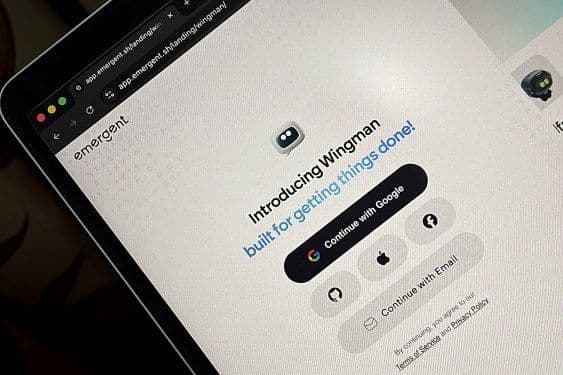
Emergent, an Indian startup known for its vibe-coding platform, has launchedWingman, a messaging-first autonomous AI agent, as it expands into a growing category of software that runs in the background to complete tasks — popularized by tools like OpenClaw and Claude from Anthropic. The Bengaluru-based startup initially gained attention for its vibe-coding platform, which competes with tools like Cursor and Replit and lets users without technical backgrounds build full-stack applications via natural-language prompts. With Wingman, Emergent is now pushing beyond creation into execution, aiming to let AI agents handle routine tasks across tools and workflows. “The obvious next step for us was, can we help them not just build the software, but actually operate more autonomously through it?” said Mukund Jha, co-founder and CEO of Emergent. “You move from software that supports the business to software that can actively help run it.” Emergent said more than 8 million builders have used its vibe-coding platform to create and deploy software, with over 1.5 million monthly active users. Founded in 2025, the startupraised $70 millionin January at a valuation of $300 million, with backing from investors including SoftBank, Khosla Ventures, and Lightspeed Venture Partners. Wingman is designed to operate through messaging platforms like WhatsApp and Telegram, allowing users to assign and monitor tasks through chat. At the same time, the agent runs in the background across connected tools such as email, calendars, and workplace software. It can carry out routine actions autonomously but seeks user approval for more consequential steps, the startup said. The launch comes as autonomous AI agentsemerge as a key battlegroundin the industry, with a growing number of companies racing to build tools that can complete tasks on behalf of users. Projects likeOpenClaw— previously known as Clawdbot and Moltbot — have gained traction among early adopters, while players includingAnthropicandMicrosoftare working toward addressing this space with their own agent-based systems. Emergent is attempting to differentiate by embedding Wingman into messaging platforms such as WhatsApp, Telegram, and Apple’s iMessage, allowing users to interact with the agent via chat rather than adopting a new interface. The startup also introduced what it calls “trust boundaries,” enabling the agent to carry out routine tasks autonomously while requiring user approval for more consequential actions. This aims to address concerns around fully autonomous systems. Jha told TechCrunch the decision to build Wingman inside messaging platforms was driven by how people already work. “A lot of real work already happens through chat, voice, and email — asking for something, following up, sharing context, making a decision,” Jha said. “Increasingly, they’ll be the main ways we work with agents too.” Like many emerging AI agents, Wingman still faces limitations. Jha said the system struggles “around consistency in really ambiguous situations, messy edge cases, unclear goals, or workflows where a lot of human judgment is needed.” Wingman is being rolled out with a limited free trial, after which access will be paid, with existing Emergent users able to use the agent through their accounts.

When Grammy-nominated singer-songwriterAloe Blaccgot COVID despite being vaccinated and boosted, he tried to fund research for a better solution. What he quickly found out? You can’t just write a check in biotech. Regulators require a commercialization plan, and philanthropy doesn’t move science through clinical trials or get you a license on university IP. Now, he’s bootstrapping a cancer drug platform targeting pancreatic cancer, a disease that kills 90% of its patients, and intentionally waiting to raise from his network until peer-reviewed papers can make his case. On this episode of TechCrunch’sEquitypodcast, Rebecca Bellan sits down with Aloe Blacc to talk about what happens when a creator decides to build instead of just invest, how Aloe is watching AI reshape both the biotech and music industries in real time, and his thoughts on who actually wins. Listen to the full episode to hear: Subscribe to Equity onYouTube,Apple Podcasts,Overcast,Spotifyand all the casts. You also can follow Equity onXandThreads, at @EquityPod.
View
Googleannouncedon Wednesday that it’s introducing a native Gemini app for Mac, catching up to rivals like OpenAI and Anthropic, which have had Mac apps for quite some time. “Now, you can bring up Gemini from anywhere on your Mac with a quick shortcut (Option + Space) to get help instantly, without ever switching tabs,” Google explained in its blog post. “Whether you’re drafting a market report and need to verify a date or building a budget in a spreadsheet and need the right formula, you can get an answer and get right back to work.” When using the new app, you’re able to share anything on your screen with Gemini to get help with what you’re looking at in the moment, including local files. For example, if you’re looking at a complex chart, you could ask “What are the three biggest takeaways here?” and receive a summary. The app also supports the ability to generate images with Nano Banana and videos with Veo. The native macOS app is available to all Gemini users on macOS versions 15 and up, globally, starting today. It’s available for download atgemini.google/mac.
View

After helping lead the lawsuit that bankrupted media firm Gawker, Aron D’Souza says he saw something broken in the American media system: People who felt harmed by coverage had little recourse to fight back. His solution is software. D’Souza says his latest startup,Objection, aims to use AI to adjudicate the truth of journalism. And for the price of $2,000, anyone can pay to challenge a story, triggering a public investigation into its claims. (D’Souza is also the founder of theEnhanced Games, an Olympics-style competition that allows performance-enhancing drugs and is set to debut in Las Vegas next month.) Objection launched on Wednesday with “multiple millions” in seed funding from Peter Thiel and Balaji Srinivasan, as well as VC firms Social Impact Capital and Off Piste Capital. Thiel, whofunded the Gawker lawsuitpartly in defense of the individual right to privacy, has long been critical of the media. D’Souza says his goal is to restore trust in the Fourth Estate, which he argues has collapsed over decades. Critics, including media lawyers, warn Objection could make it harder to publish the kind of reporting that holds powerful institutions to account, particularly if that reporting relies on confidential sources. Anonymous sources have played a key role in major award-winning investigations into corruption and corporate wrongdoing. These are often people who are at risk of losing their jobs or facing other retaliation for sharing important information. It’s the journalist’s job — alongside their publication’s editors, peers, and lawyers — to ensure that those sources are reliable and not acting out of pure malice and to verify the information they provide. But that’s not enough for D’Souza, who said “using a fully anonymized source who hasn’t been independently verified” would lead to a lower evidence and trust score on Objection. Under the platform’s rubric, primary records like regulatory filings and official emails carry the most weight, while anonymous whistleblower claims are ranked near the bottom. Those inputs are collected in part by a team of freelancers — former law enforcement agents and investigative journalists — and are ultimately fed into what Objection calls an “Honor Index,” a numerical score the company says reflects a reporter’s integrity, accuracy, and track record. “Protecting a source’s information is a vital way of telling an important story, but there’s an important power asymmetry there,” D’Souza told TechCrunch in an exclusive interview. “The subject gets reported upon, but then there’s no way to critique the source.” His solution presents a lose-lose for journalists: either divulge sensitive source information to Objection’s “cryptographic hash” that determines “if it’s high quality reporting,” or face demerits for protecting sources who share important information at great personal risk. If technology like Objection takes off, it could chill whistleblowing, experts argue. Jane Kirtley, a lawyer and professor of media law and ethics at the University of Minnesota, says Objection fits into a long pattern of attacks that erode public trust in the press. “If the underlying theme is, ‘Here’s yet another example of how the news media are lying to you,’ that’s one more chink in the armor to help destroy public confidence in independent journalism,” she said, adding that clearly journalists need to do their part to be as transparent as possible in their reporting. Kirtley pointed to existing journalistic standards, like the Society of Professional Journalists’ Code of Ethics, which advises reporters to use anonymous sources only when there is no other way to obtain the information. She also cited longstanding industry practices like peer criticism and internal editorial review as built-in accountability methods. More broadly, she questioned whether Silicon Valley entrepreneurs who are not steeped in journalistic traditions are equipped to evaluate what serves the public interest. D’Souza says Objection is not an attempt to silence whistleblowers: “It’s an attempt to fact-check; it’s the same as [X’s] Community Notes. The wisdom of the crowd plus the power of technology to create new methods of truth-telling.” When asked if Objection could make it harder for media to publish important stories holding power to account, he said “If it raises the standards of transparency and trust, that’s a good thing.” He calls Objection a “trustless system” with transparent methodology that relies on a jury of large language models from OpenAI, Anthropic, xAI, Mistral, and Google, prompted to act as average readers and evaluate evidence claim by claim. The company’s chief technologist, ex-NASA and SpaceX engineer Kyle Grant-Talbot, leads the technical development on the platform, which D’Souza says is designed to apply scientific rigor to disputes over facts. The proposal comes as AI systems themselves face scrutiny over bias, hallucinations, and transparency — all of which could complicate their use as arbiters of truth. While Objection can be applied to any published content, including podcasts and social media, D’Souza’s focus remains largely on legacy and written media outlets. “Each objection is limited to a single factual allegation,” D’Souza said in a follow-up email. “This means that even where reporting is long and complex, an objection will be limited to a narrow factual issue within it. A user may choose to file multiple objections to different parts of the same article, but these will all proceed independently of each other.” Objections cost $2,000, a steep price for most Americans but relatively minor for wealthy individuals or corporations that might otherwise turn to the courts. D’Souza said he expects the platform to serve people who feel misrepresented in the media. But critics note that those who are most able to use Objection are likely to be the same powerful actors who already have other avenues to push back. “The fact that this is a pay-to-play kind of system … tells me that they are less concerned about providing helpful information for the general public and much more concerned with giving the already powerful a means to basically browbeat their journalistic opponents,” said Kirtley. First Amendment and defamation lawyer Chris Mattei was even more blunt, saying the platform “seems like a high-tech protection racket for the rich and powerful.” “At a time when so many try to obscure the truth, we should be encouraging whistleblowers with knowledge of wrongdoing,” said Mattei, who is a leading litigator. “The purpose of this company seems to be the opposite.” The system also only evaluates evidence submitted to it, including party submissions and material gathered by its investigators, raising questions about how it handles incomplete or undisclosed information, which is common in investigative reporting. When asked how he would prevent misuse, such as companies targeting unfavorable coverage or the system itself lacking sensitive evidence, D’Souza said journalists can submit their own evidence to protect their reputations. That effectively requires reporters to participate in a system they didn’t opt into, one that could further put their credibility on the line. If they don’t, the system may return an “indeterminable” result, potentially casting doubt on reporting that is accurate but difficult to verify publicly. Even when Objection finds no issue with a story, a companion feature called “Fire Blanket” can still introduce doubt about its credibility. The tool, currently active on X via platform APIs, flags disputed claims in real time by posting warnings — injecting the company’s own “under investigation” labels into public conversations while the claim is still under review. Eugene Volokh, a First Amendment scholar at UCLA, said the platform itself would not likely violate free speech protections, framing it instead as part of the broader ecosystem of criticism that surrounds journalism. He compared the concept to opposition research that’s aimed at reporters instead of politicians, and dismissed the idea that it would have a chilling effect on whistleblowers. “All criticism creates a chilling effect,” he told TechCrunch. Whether anyone adopts it, or simply tunes it out, may determine whether Objection reshapes journalism or fades into the growing ecosystem of tools attempting to do so. Or as Kirtley said: “Why would you believe that AI would necessarily give you more reliable information about the truth or fals[ity] of fact than a journalist who had researched and written the story? I mean, why would you just assume that? I wouldn’t assume that at all.” Editor’s note: Because D’Souza’s proposal centers on transparency and accountability, we have publisheda link to the full transcript, edited lightly for length and clarity.

Since its launch in 2021,Gizmo, anAI-powered learning platformthat transforms students’ notes into interactive study materials, has attracted more than 13 million users across over 120 countries. This is a significant jump from the more than 300,000 users the platform had when TechCrunch last covered it in 2023. And, as user adoption increases, investor interest is following suit. The company recently secured $22 million in Series A funding, according to itsannouncementon Tuesday. The funding will go toward expanding Gizmo’s engineering and AI teams, as well as expanding its presence in the U.S. college market. The company, which had just seven employees prior to the raise, plans to scale to around 30, CEO Petros Christodoulou tells TechCrunch. The company’s momentum comes at a time when student behavior is shifting. Academic performance in the U.S. has hit a historic low, according to the2025 National Assessment of Educational Progress. Excessive screen time and reduced attention spans have been noted inprevious studiesas contributing factors. Plus, with many young learners drawn to platforms like TikTok and YouTube, the biggest challenge for edtech startups is how to sustain engagement. Gizmo is betting that gamifying learning may be the solution. Designed for teenagers and young adults, Gizmo believes that its appeal is the use of game mechanics to drive engagement. Features like leaderboards, streaks, limited daily lives for incorrect answers, and the ability to challenge friends are designed to keep users coming back. Other micro-learning platforms have also gained traction in recent years, such as Anki, Quizlet, and Nibble, alongside newer entrants such asYunoandKnowt, which have all attempted to redirect screen-time habits into productive learning. However, for a young learning app like Gizmo to grow this much interest in just a few years is notable. For comparison, Yuno touts 1 million app downloads, and Knowt has more than 7 million users. The Series A round was led by Shine Capital, with participation from Ada Ventures, Seek Investments, GSV, and NFX, which previously led Gizmo’s $3.5 million seed round.
View
View
View
View

