🚀 Zaprep: Your Socials on Steroids. 免费开始 — 每月自动发送 1,000 条私信,将互动转化为潜在客户。 ,每月 1,000 条自动私信。
最新 AI 资讯

OpenAI and Anthropic Have a Zero Data Retention Dilemma—and Trap
Data retention is becoming harder to enforce as models move from answering individual prompts to performing long-running, multi-step tasks.
View
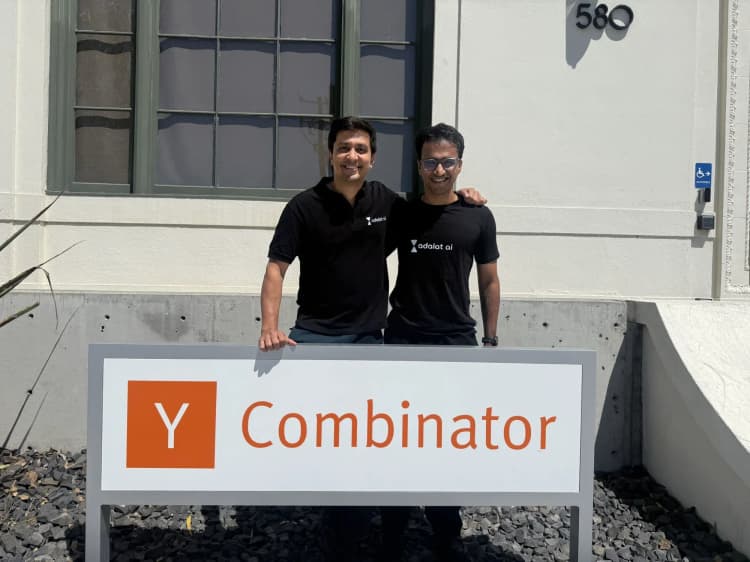
Indian Legal Tech Nonprofit Adalat AI Joins Y Combinator’s Fall 2026 Batch
The organisation will use the accelerator’s backing to expand its speech recognition, case management and paperless courtroom tools across India and other low-resource legal systems.
View

Indian Banks Turn to Observability as AI Moves From Promise to Production
As Indian financial institutions scale AI across hybrid cloud environments, observability is becoming critical to control costs, manage risk and ensure trustworthy digital services.
View

Slack Launches Slack Code to Bring AI Coding Into Team Workflows
The company said the feature lets teams collaborate with coding agents, including Claude, Devin, Copilot, and ChatGPT, in dedicated code channels.
View

Anthropic Tops OpenAI’s Annual Revenue on the Way to the Wall Street: Report
The company is projecting up to $200 billion in revenue by 2028 as it ramps up spending on AI infrastructure and talent.
View
Can Gujarat Turn Its Manufacturing Powerhouse Into a GCC Advantage?
Gujarat aims to attract 250 new GCCs by 2030. However, talent remains the biggest bottleneck.
View

Scaler Launches Forward Deployed Engineer Programme, Commits ₹25 Crore to Train 10,000 Enterprise AI Engineers
According to the company, demand for FDEs has grown 729% year-on-year.
View

Indian IT’s Revenue Per Employee is Rising. But is AI Getting Too Much Credit?
The growth in revenue per employee is raising questions over whether the sector is witnessing a genuine structural shift or simply getting leaner.
View

How Hex Thinks Shared Context Will Unlock Enterprise AI ROI
As enterprises move beyond AI pilots, shared context and open infrastructure will determine whether intelligent agents deliver measurable business value at scale.
View

GitHub Adds 3 Million CPU Cores Post Outage, Monthly Commits Double Since April
Monthly commits have more than doubled from 1.4 billion in April to 2.9 billion in August, while GitHub has accelerated its migration to Microsoft Azure.
View

AI data startup Micro1 reaches $500M gross run rate amid AI training boom
The near-bottomless demand for unique AI training data from top labs and corporations is driving a massive boom for a cohort of data-labeling startups. One of these fast-growing businesses is Micro1, a four-year-old startup that expanded its gross annual run rate from $100 million to $500 million over the past eight months, according to a person familiar with the company. Like its peers that hire domain experts such as doctors, lawyers, and scientists on a contract basis, Micro1 retains roughly 60% to 70% of that figure, putting its net annual run rate between $150 million and $200 million. While Micro1 still lags competitors like Mercor (which hit$2 billionin gross annualized revenue this summer) and Handshake (which reached$1 billionearlier this year), the startup’s revenue growth shows that there is more than enough demand to support multiple players supplying AI training data. The rapid growth is bound to continue, with some researchershypothesizingthat future AI spending on data could rival spending on compute. That outlook bodes well for Micro1, which is seeing its contract sizes grow at an accelerated pace and expects its margins to expand over time. The startup is increasingly generating synthetic data without human involvement, such as by creating automated descriptions of video content. Additionally, some of the data it generates can be sold to multiple customers, driving gross margins for this “off-the-shelf” data as high as 80% to 90%, a person familiar with the startup’s finances told TechCrunch. Selling the same datasets to multiple clients has sparked recent controversy, withcritics arguingthat distributing off-the-shelf data to Chinese AI developers helps make their models as powerful as top U.S. models. Micro1’s founder, Ali Ansari,said last month on Xthat unlike some of its competitors, the startup doesn’t sell its data to Chinese model makers. “Some human data companies work with foreign adversaries. [A]nd the results show today in Kimi K3. We believe it’s shameful to claim American AI dominance desires while selling millions worth of data to countries that we are in adversarial competition with.” Like Mercor, Micro1 began as an AI recruiting startup. But after noticing that data-labeling clients were using his AI platform to vet and recruit engineers for annotation, Ansari decided to pivot and enter the data-labeling business, too. Ansaripreviouslytold TechCrunch that in addition to having its experts evaluate model outputs — a concept known as reinforcement learning gyms — the company is building a robotics pre-training dataset by having hundreds of generalists record everyday object interactions in their homes. Micro1 raised its Series A at a$500 millionvaluation last September, and TechCrunch understands that the startup may have recently raised another round at a significantly higher valuation. Micro1 didn’t respond to a request for comment.
View

OK, can we actually cool data centers with our pee?
In acheeky marketing campaign, Liquid Death teamed up with former Philadelphia Eagles star Jason Kelce to share a solution to mitigate theenvironmental impactof AI data centers, which require massive quantities of water to prevent servers from overheating. “AI data centers waste millions of gallons of water,” Kelce quips in the video campaign. “That’s why Liquid Death and Garage Beer have teamed up. We want your pee to cool these data centers.” Then, as a crowd of people walk through a field sipping their branded beverages, they sing in unison: “Let’s pee on computers together to save humanity!” It’s a funny commercial. What’s even funnier is that Kelce has unwittingly stumbled upon a real tactic for cooling down data centers. “The Liquid Death commercial is funny and tongue-in-cheek,” Michael Obradovitch, vice president of Data Center Global Accounts at Ecolab, told TechCrunch. “But in reality, there is a fair amount of alternative water sources already being used to a similar extent to cool these data centers.” These alternative water sources, when used in data centers, at least partially offset the demand for potable drinking water. One such alternative water source is recycled water, which is made by treating wastewater and sewage water so that they’re safe to use again. Wastewater and sewage water contain many things, including — you guessed it! — human urine. “You wouldn’t just use pee, but you can clean it and make it into useful water, and that’s what we advocate,” Bruno Pigott, executive director of the WateReuse Association and former acting assistant administrator in water for the U.S. Environmental Protection Agency (EPA), told TechCrunch. To be clear: You should not actually contribute gallons of your pee to help cool data centers, as Kelce facetiously suggests. But just for the sake of the thought experiment: What would happen if youdidtry to cool a data center with a steady stream of pee? “Pee contains all sorts of stuff. It contains salts, it contains urea, bacteria, organic matter of all sorts that can leave mineral deposits. If you just put that into a cooling tower or something else, it would require constant cleaning,” said Pigott. “One of the methods of cooling is called evaporative cooling, where hot air is passed through water to remove heat through evaporation. Can you imagine if you just poured urine through hot air?” We do have the technology to turn our urine into potable drinking water — that’swhat astronauts do in space, since they can only bring so much water with them on their spacecraft. But that isn’t efficient at a large scale, and even if it were, it’s not like scientists can just access millions of gallons of pee at will (well, not unless Kelce really commits to the bit). Instead, our toilet water ends up in wastewater and sewage. That’s where water treatment facilities come in, providing recycled water to spare us from the smell of evaporated urine. These facilities use membrane bioreactors, reverse osmosis, ultraviolet light, and other processes to treat water until it’s clean enough for industrial use. In some cases, this water can even be treated to the point that it’s drinkable. “We use recycled water for cooling for all kinds of industries, and we have for decades,” Dr. Greta Zornes, practice leader for water reuse at the engineering firm CDM Smith, told TechCrunch. “So this is only one application, but definitely, there’s been a boom in recycled water for data center cooling.” Though Zornes has worked on water reuse technology for more than two decades, her day-to-day work has shifted with the rising demand for data centers. “Every day right now, I’m working on recycled water for data centers,” she said. When data centers use more recycled water, they don’t pose as much of a burden to the local potable water supply. But industries can only pivot to recycled water use when there is proper infrastructure in place to treat millions of gallons of water every day. “You have to be somewhat near a waste water treatment facility that’s sizable enough that you have enough water to use,” Zornes said. “So when data centers go out into rural areas, a lot of times the wastewater treatment plants just aren’t big enough — they’re not treating enough water for them to be able to take it and treat it and use it.” Loudoun County, Virginia, located outside of Washington, D.C., is home to more than 250 data centers, withplansto construct at least another two dozen. As of 2025, Loudoun data centers collectively used about200 million gallonsof recycled water each day, but the water footprint of these data centers is so extreme that this only accounts for 43% of daily data center water usage in the area. The other 260 million gallons, or 57% of daily data center water usage, come from potable water supplies, according toLoudoun Water. “There’s a lot of infrastructure that has to be built out and usually isn’t existing today, and that takes time,” Zornes said. “That’s one of the problems — it’s just the time that it takes to get that done.” Obradovitch thinks that the AI industry could even drive resources toward building out this kind of infrastructure to scale water treatment. Meta, for example, will investat least $270 millionin wastewater infrastructure projects near its data centers (the company also losesabout $4 billioneach quarter on its Reality Labs division). “That’s where data centers can actually come in and be anchors of water infrastructure,” Obradovitch said. “There’s a number of cases and examples where data centers, as part of their engagement with communities, have committed funding and capital to some of these municipalities to help in addressing some of those exact challenges.” On the policy side, Pigott is advocating forlegislationthat would provide a 30% tax credit to help industries scale their recycled water infrastructure. “We think it would greatly accelerate the pace with which data centers and other industries entered into this area,” he said. While there’s some unintentional science behind Liquid Death’s joke, the commercial and its virality serve as a reminder to the tech industry that the environmental demands of data centers have become a mainstream concern. According to arecent Gallup poll, about seven out of 10 Americans oppose data centers in their communities, and AI products continue toface backlashfrom consumers who feel as though the technology is being forced into their lives. “I’m glad that people are concerned about water, and anything that raises awareness of water, however crude it may be, could actually be beneficial,” Pigott said. “It gives us a chance to educate the public about what we’re doing today.”
View