🚀 Zaprep: Your Socials on Steroids. 免费开始 — 每月自动发送 1,000 条私信,将互动转化为潜在客户。 ,每月 1,000 条自动私信。
最新 AI 资讯

Truecaller now lets you hang up on scammers — on behalf of your family
Caller identity platform Truecaller recently launched a new feature that lets one person become an admin of a family group, get alerts about fraud calls received by other members, and even end a call on their behalf if they suspect a family member might get scammed. The company, which has over450 million users, firstlaunched the feature in Decemberin a handful of countries like Sweden, Chile, Malaysia, and Kenya. Truecaller said that after seeing promising results, it decided to roll it out worldwide, including in India, the company’s biggest market. The feature is free, and users can create groups even if they are not on a paid Truecaller plan. With this feature, the tech-savvy member of a family or friends group can become the admin of an up to five-member group. Once the other members join the group, the admin can get alerts about potentially fraudulent calls those members receive. If the admin believes that the call could harm the member, they can remotely end the call as well. While the admin can get alerts for fraud calls when a member is using iOS or Android, they can only end calls for members on Android. On Android, members can also grant permission to the admin to detect real-time activity such as walking or driving, battery level, and phone sound settings (to check if the phone is in silent mode). Truecaller said this is helpful for admins to keep tabs on elderly members and to only call them when they are not walking or driving. The admin can also block certain numbers and international calling codes, and share a blocklist with group members. Truecaller noted that the admin can’t see the non-spam call history or SMS history of group members. “I think, unfortunately, all of us know somebody or another in our families or friends who have been impacted by fraud,” Kunal Dua, Chief Product Officer, at Truecaller, told TechCrunch over a call. “In that sense, it’s a fundamental shift for Truecaller in terms of what we’ve been focusing on as a problem,” he added. Last year, Truecaller introduceda voicemail feature for Indian usersfeaturing an AI assistant that listens for calls when a user is unavailable and provides a summary of the transcript. The company is exploring a similar AI approach for family protection to potentially alert the admin about what kind of fraud call a group member is receiving. The company is also exploring using AI to screen calls and automatically disconnect them when certain words associated with scams are detected, such as “digital arrest” — a tactic in which perpetrators impersonate law enforcement officers to extract information or money from call recipients. In India, scam calls have risen over time and caused financial losses across the country. Truecaller said that it identified over 7.7 billion fraud calls last year. Indian authorities have launchedmultiple initiatives, including acontroversial policycalled SIM binding that could hamper the working of apps like WhatsApp and Telegram. Truecaller is facing headwinds. Its stock has dwindled by over 80% in the last 12 months. During its Q4 2025 report, the company said that its EBDITA– a measure of operating profitability — dipped 49% year-on-year, with ad revenue declining 31%. The company is also facing challenges from India’sCaller Name Presentation(CNAP) system, which displays the name of the caller as registered with their phone carrier. Truecaller has maintained that just displaying a caller’s name won’t reduce spam calls, arguing that its platform goes further by offering community-based reports. “In India, there has been much talk about the imminent rollout of CNAP,” Truecaller CEO Rishit Jhunjhunwala said during the Q4 2025 earnings call. “CNAP is partially rolled out, and so far, the impact on our user growth is limited. As we have said in the past, we expect that CNAP might have some impact on user growth, but that remains to be seen as CNAP reaches a full rollout.” Continued Jhunjhunwala, “Our focus continues to be on delivering a superior product, and as you are aware, the consumer can choose to have CNAP and Truecaller in parallel, where we provide a lot more information and a lot more context and various other solutions, for the consumer.”
View
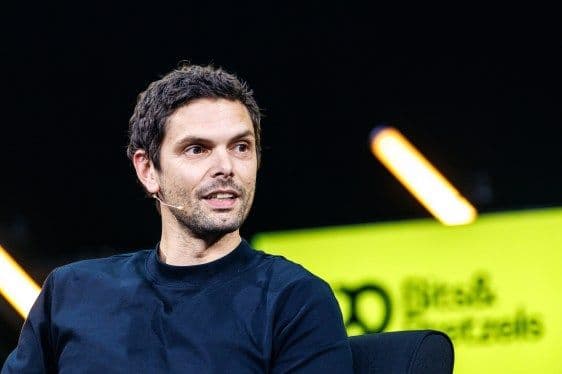
Before quantum computing arrives, this startup wants enterprises already running on it
Eighteen months after selling his startup to chipmaker AMDfor $665 million, Finnish entrepreneur Peter Sarlin hasleft his role as CEOof the unit now known as AMD Silo AI. He is now chairman at two new ventures: physical AI labNestAI, andQuTwo, an AI startup aimed at helping companies prepare for the era of quantum computing Currently fully funded by Sarlin’s family office,PostScriptum, QuTwo describes itself as “an AI lab for the quantum era.” Rather than waiting for quantum computing to mature, however, it is already working with enterprise customers — including European fashion retailer Zalando, with which it is developing what the two companies call “lifestyle agents,” AI tools designed to go beyond product search and proactively suggest products and experiences. QuTwo is built on the premise that AI is hitting an efficiency wall that quantum computing may eventually help solve. But the company is not betting on when that will happen, Sarlin told TechCrunch. Instead, the startup is building QuTwo OS as an orchestration layer that allows companies to shift from classical to quantum computing — making use of hybrid computing along the way. Sarlin invested in Finnish quantum companiesIQMand QMill through PostScriptum, and is one of a growing number of investors who believe it willeventually outperform classical computersin a wide range of industry applications while easing AI’s energy demands. But he also thinks that initial use cases will require mixed hardware environments, and that enterprises would rather focus on their business problems while QuTwo OS takes care of the routing. In that respect, the potential advantage of the middle ground known as “quantum-inspired” computing is that it is already viable today, because it uses classical hardware while simulating quantum behavior, working around the hurdles that still hinder quantum hardware. Meanwhile, QuTwo OS is designed to be flexible, supporting quantum or non-quantum algorithms and chips alike. QuTwo’s team brings experience on both sides of the quantum-AI divide. On the quantum side, there’s IQM cofounder Kuan Yen Tan and board member Antti Vasara, also chair at SemiQon, a Finnish semiconductor startup focused on quantum chips. The enterprise side is equally represented, by Sarlin himself and Kaj-Mikael Björk, one of his former cofounders at Silo AI. Pekka Lundmark, the former CEO of Finnish telecom giant Nokia, also joined QuTwo’s board. Across both areas, the team counts over 30 quantum and AI scientists, and Sarlin is clear where the company stands. “We’re building for the quantum world, but QuTwo is an AI company,” he said, meaning that QuTwo is “pushing AI workloads from classical to quantum.” This also means that its customer base could be quite broad. Beyond Zalando, QuTwo also launched a joint quantum AI research initiative with OP Pohjola, a major Finnish financial services provider. From the outset, QuTwo has been commercially minded and already has “large design partnerships which are in the tens of millions,” Sarlin said. Design partnerships — in which a vendor co-develops its product alongside enterprise customers — are a way for QuTwo to learn what those customers expect as it builds its product. They are also a bet from enterprises looking to establish early footing when and if quantum computing does arrive.
View

NVIDIA Pumps $2 Bn in Nebius to Scale Hyperscale AI Cloud Infra
Nebius plans to deploy more than 5 GW of AI computing capacity by 2030, powered by NVIDIA’s computing technologies.
View

Mozilla Wants the World to Have 7 Billion AGIs
CTO Raffi Krikorian believes Mozilla is best positioned to make open-source AI systems more accessible, like how it did with Firefox.
View

Meta Delays Launch of AI Model ‘Avocado’: Report
Meta has postponed the release of text-based LLM Avocado to May or June as performance lags behind rivals.
View

Alexa+ gets a new ‘adults only’ personality option that curses but won’t do NSFW content
Amazon’s AI assistant Alexa+ is getting another new personality. On Thursday, the company announced it’s expanding its lineup of personality styles for users to choose from to include a “Sassy” option, which is for adults only. Notes Amazon, before opting to use the Sassy personality, users will be required to go through additional security checks in the Alexa app. The personality style will also not be available when Amazon Kids is enabled, Amazon says. The new option joins others like Brief, Chill, and Sweet, launched last month. When you toggle on the option for Sassy in the Alexa mobile app, you’re warned that the Sassy style uses explicit language, which is why it requires a security check. On iOS, this involved a Face ID scan. The AI assistant explained its style to us like this: “The Sassy style is built on one premise: help first, judge always. Every answer comes wrapped in wit and a well-placed roast — it’ll answer your question; it’ll just make you feel something about it first. Expect reality checks delivered with charm, compliments that somehow sting, and warmth you didn’t see coming. Equal-opportunity irreverence, zero apologies. Honest, sharp, and funny — and somehow that’s more helpful than helpful.” Alexa’s app also had warned that the style could contain “mature subject matter.” However, further investigation discovered this is not Amazon’s version of something likeGrok’s adult AI companions. The AI assistant said the new option won’t get into areas like explicit sexual content, hate speech, illegal activities, personal attacks, or anything that could cause harm to oneself or others. The move is the latest example of how Amazon is trying to make Alexa+ more customizable, as it revamps the assistant for the generative AI era. By offering the assistant different personalities — including one positioned as more adult — Amazon is borrowing from a broader trend in AI, where companies have been experimenting with tone, style, and personas to make their assistants more engaging and personalized to the individual users’ choices.
View

Bumble introduces an AI dating assistant, ‘Bee’
Dating app maker Bumble is venturing into generative AI. During the company’s fourth-quarter earnings on Wednesday, Bumble introduced a new AI assistant it’s calling “Bee,” designed to become a personal matchmaker that learns users’ “values, relationship goals, communication style, lifestyle, and dating intentions” through private chats. It then uses those insights to help find the user more relevant matches. Currently, Bee is in the pilot phase and being tested internally, Bumble founder and CEO Whitney Wolfe Herd told investors, but it’s launching into beta soon. With Bee, the company envisions being able to capture much more information about Bumble users, as it learns more about each individual’s story and what they really want. This could differentiate Bumble’s app from others like Tinder, which also just underwent an overhaul as the dating app market has fizzled with Gen Z users. Bumble says users will interact with Bee much like they do with other AI chatbots, through typing and speaking in a more conversational style. Initially, Bee will be used to power a new dating experience called “Dates” that uses AI to recommend matches, but in the future, Bumble says Bee will move into other areas, like offering date suggestions or requesting anonymous feedback from your prior matches. In “Dates,” Bee will first learn about the user through a private, onboarding conversation. It then identifies two people who have shared intentions, values, and relationship goals. Both users are notified in the app with a description of why they make a great match. The addition is part of a broader tech and AI-focused overhaul of the dating app, which to date has marketed itself as more focused on women’s needs. The company pioneered features like “women message first,” body-shaming bans, and tools that blurred unsolicited explicit images, among others. Now it’s looking to use AI to return to user growth amid a dating market that sees younger users, particularly Gen Z, growing tired of the swipe. In fact, Herd said that Bumble would experiment with removing the long-popular swipe mechanism in select markets to see how users react. Instead of prioritizing swipes as a binary “yes” or “no,” Bumble is looking to leverage other features, like new “chapter-based” profiles where members can connect with one another on different parts of a user’s life story. This will give Bumble more data to feed into its AI system and algorithms. “We will be introducing more dynamic ways for somebody to express interest in your story, rather than just your profile, and this is going to drive more dynamic engagement, spark better conversation, and ultimately drive better KPIs across the board — like engagement and chances to get better conversations going,” Wolfe Herd said. “You will also see us take a much more deliberate approach to getting people offline versus just in what people refer to as dead-end chat zones.” The company is also looking into other ways to better cater to Gen Z, a cohort that often prefers group socializing over one-on-one dates to get to know people. The company has been working to add AI to its app for years, rolling out changes likeAI photo selectionandfeedbacktools, for instance, as well as in areas likesafety. Wolfe Herd told investors that Bumble’s back-end infrastructure had been overhauled as the app infused itself with AI. The company reported better-than-expectedearningsin Q4, withrevenueof $224.2 million and average revenue per paying user up 7.9% to $22.20. The stock rallied some 40% on the news.
View

Sales automation startup Rox AI hits $1.2B valuation, sources say
Rox, a startup developing autonomous AI agents to boost sales productivity, has raised a round valuing the company at $1.2 billion, according to multiple sources. The funding included a lead investment from returning backer General Catalyst, two of the people said. Rox AI and General Catalyst did not respond to TechCrunch’s request for comment. At the time of the fundraise, which closed last year, RoxAI was projected to close 2025 with $8 million in annual recurring revenue (ARR), according to two people familiar with the deal. In November 2024, Rox announced it had raised a total of$50 million, including a seed round led by Sequoia and a Series A round led by General Catalyst, with participation from GV. Rox was founded in 2024 by former chief growth officer of New Relic, Ishan Mukherjee. Mukherjee joined New Relic following its acquisition of Pixie, an observability startup he co-founded. The startup positions itself as an intelligent revenue operating system that plugs into a company’s current software setup—from Salesforce to Zendesk, and then deploys hundreds of AI agents. These agents monitor existing accounts, research prospects, and update the CRM. By consolidating these functions, Rox aims to replace and consolidate numerous fragmented software solutions currently used by sales teams. “Rox’s unique system of AI agents levels up the CRM experience. These agents work constantly behind the scenes to monitor customer activity, identify potential risks and opportunities, and even suggest the best course of action,” GV investorDave Munichiello wrote in a 2024 blog postwhen announcing the Series A round. Rox’s competition spans several categories, including established revenue intelligence providers like Gong and Clari, as well as AI sales development platforms such as 11x and Artisan. Plus, there seems to be a steady stream of new AI-native, all-in-one CRM competitors joining the field, such asSam Blond’s new startup, Monaco, launched out of stealth last month. According to Rox’s website, the company’s customers include Ramp, MongoDB, and New Relic.
View

How to watch Jensen Huang’s Nvidia GTC 2026 keynote
Nvidia kicks off its annual GTC developer conference in San Jose, California, next week with CEO Jensen Huang’s keynote scheduled for Monday at 11am PT / 2pm ET. GTC — which stands for GPU Technology Conference — is Nvidia’s flagship annual event, where the chipmaker typically uses the spotlight to announce new products, champion partnerships, and lay out its vision for the future of computing. Huang’s keynote will focus on Nvidia’s role in the future of computing and AI. You can watch the two-hour address in person at theSAP Centerorlivestream the talkon the event’s website. The broader three-day event is focused on what’s coming next for AI across industries including healthcare, robotics, and autonomous vehicles, among others. On the software side, it’s rumored that Nvidia will release an open source platform for enterprise AI agents, dubbedNemoClaw, as originally reported by Wired. The platform would give businesses a structured way to build and deploy AI agents (software that can carry out multi-step tasks autonomously) and would position Nvidia to mirrorsimilar offeringsfrom companies like OpenAI. On the hardware side, the company is also rumored to be releasing anew chip designed to accelerate the AI inference process— the process by which an AI model applies what it has learned to generate responses or make decisions, as distinct from the initial training process, which requires far more computing power. Faster, cheaper inference is widely seen as one of the last bottlenecks to scaling AI applications broadly. The chip, if confirmed, would represent Nvidia’s latest bid to dominate not just the training market, where it already commands an estimated 80% share, but the inference market as well, where competition from custom chips built by Google, Amazon and others is fast intensifying. Kevin Cook, a senior equity strategist at Zacks Investment Research, told TechCrunch that attendees should also expect to learn what the company plans to do with its relationship with Groq, the inference company Nvidia reportedly paid $20 billion late last year to license its technology. There’s a lot of curiosity around this tie-up, given that Jonathan Ross, Groq’s founder, Sunny Madra, Groq’s President, and other members of the Groq team agreed to join Nvidia to help advance and scale that licensed tech. There will, of course, also be a range of partnership announcements and demonstrations showcasing Nvidia’s AI capabilities across industries.
View
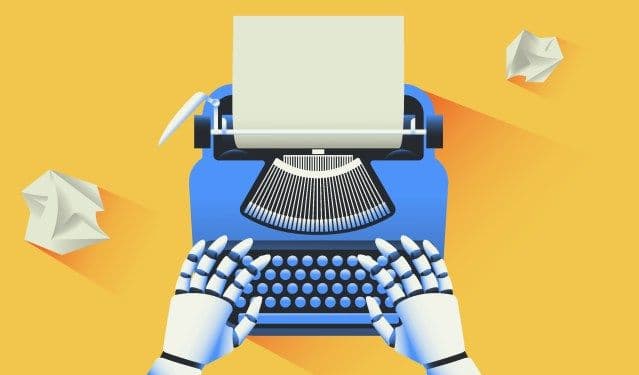
A writer is suing Grammarly for turning her and other authors into ‘AI editors’ without consent
Grammarly released acontroversial featurelast week that uses AI to simulate editorial feedback, making it seem like you’re getting a critique from novelist Stephen King, the late scientist Carl Sagan, or tech journalist Kara Swisher. But Grammarly did not get permission from the hundreds of experts it included in this feature, called “Expert Review,” to use their names. One of the affected writers, journalist Julia Angwin, has filed aclass action lawsuitagainst Superhuman, the parent company that owns Grammarly, arguing that the company violated the privacy and publicity rights of her and the other writers it impersonated. A class action lawsuit allows writers to join Angwin in her case. “I have worked for decades honing my skills as a writer and editor, and I am distressed to discover that a tech company is selling an imposter version of my hard-earned expertise,” Angwin said in astatement. The situation is more than a little ironic — Angwin has spent her career leading investigations into tech companies’ impacts on privacy. Other critics of this kind of technology, like renowned AI ethicistTimnit Gebru, were also included in Grammarly’s “Expert Review.” The “Expert Review” feature, available only to subscribers paying $144 a year, predictably fails to deliver on the promise of thoughtful feedback. Casey Newton, the founder and editor of the tech newsletter Platformer and another person impersonated by Grammarly,fed one of his articlesinto the tool and got feedback from Grammarly’s approximation of tech journalist Kara Swisher. Grammarly’s imitation of Swisher produced “feedback” so generic that it raises the question of why the company would go through the rigmarole of using these writers’ likenesses in the first place. Here is what Grammarly’s approximation of Kara Swisher told him: “Could you briefly compare how daily AI users versus AI skeptics articulate risk, creating a through-line readers can follow?” Newton relayed the message from the AI approximation of Kara Swisher to the actual, real human being, Kara Swisher. “You rapacious information and identity thieves better get ready for me to go full McConaughey on you,” Swisher texted Newton (referring to Grammarly). “Also, you suck.” Grammarly has since disabled the “Expert Review” feature, according to aLinkedIn postby Superhuman CEO Shishir Mehrotra. While Mehrotra offered an apology, he continued to defend the idea of the feature. “Imagine your professor sharpening your essay, your sales leader reshaping a customer pitch, a thoughtful critic challenging your arguments, or a leading expert elevating your proposal,” he wrote. “For experts, this is a chance to build that same ubiquitous bond with users, much like Grammarly has.”
View

Bumble to launch an AI dating assistant, ‘Bee’
Dating app maker Bumble is venturing into generative AI. During the company’s fourth-quarter earnings on Wednesday, Bumble introduced a new AI assistant it’s calling “Bee,” designed to become a personal matchmaker that learns users’ “values, relationship goals, communication style, lifestyle, and dating intentions” through private chats. It then uses those insights to help find the user more relevant matches. Currently, Bee is in the pilot phase and being tested internally, Bumble founder and CEO Whitney Wolfe Herd told investors, but it’s launching into beta soon. With Bee, the company envisions being able to capture much more information about Bumble users, as it learns more about each individual’s story and what they really want. This could differentiate Bumble’s app from others like Tinder, which also just underwent an overhaul as the dating app market has fizzled with Gen Z users. Bumble says users will interact with Bee much like they do with other AI chatbots, through typing and speaking in a more conversational style. Initially, Bee will be used to power a new dating experience called “Dates” that uses AI to recommend matches, but in the future, Bumble says Bee will move into other areas, like offering date suggestions or requesting anonymous feedback from your prior matches. In “Dates,” Bee will first learn about the user through a private, onboarding conversation. It then identifies two people who have shared intentions, values, and relationship goals. Both users are notified in the app with a description of why they make a great match. The addition is part of a broader tech and AI-focused overhaul of the dating app, which to date has marketed itself as more focused on women’s needs. The company pioneered features like “women message first,” body-shaming bans, and tools that blurred unsolicited explicit images, among others. Now it’s looking to use AI to return to user growth amid a dating market that sees younger users, particularly Gen Z, growing tired of the swipe. In fact, Herd said that Bumble would experiment with removing the long-popular swipe mechanism in select markets to see how users react. Instead of prioritizing swipes as a binary “yes” or “no,” Bumble is looking to leverage other features, like new “chapter-based” profiles where members can connect with one another on different parts of a user’s life story. This will give Bumble more data to feed into its AI system and algorithms. “We will be introducing more dynamic ways for somebody to express interest in your story, rather than just your profile, and this is going to drive more dynamic engagement, spark better conversation, and ultimately drive better KPIs across the board — like engagement and chances to get better conversations going,” Wolfe Herd said. “You will also see us take a much more deliberate approach to getting people offline versus just in what people refer to as dead-end chat zones.” The company is also looking into other ways to better cater to Gen Z, a cohort that often prefers group socializing over one-on-one dates to get to know people. The company has been working to add AI to its app for years, rolling out changes likeAI photo selectionandfeedbacktools, for instance, as well as in areas likesafety. Wolfe Herd told investors that Bumble’s back-end infrastructure had been overhauled as the app infused itself with AI. The company reported better-than-expectedearningsin Q4, withrevenueof $224.2 million and average revenue per paying user up 7.9% to $22.20. The stock rallied some 40% on the news.
View

Atlassian follows Block’s footsteps and cuts staff in the name of AI
Australian productivity software company Atlassian held layoffs as the company looks to funnel more money into AI. Atlassian announced it’scutting 10% of its workforce, around 1,600 people, on March 11. The company said this decision allows it to spend more funds on AI and enterprise sales and to strengthen its finances. More specifically, Atlassian said that it’s doing well but is choosing to adapt to market conditions. “The bar for what ‘great’ looks like for software companies — on growth, on profitability, on speed, on value creation — has gone up,” Atlassian CEO Mike Cannon-Brookes wrote in a press release related to the layoffs. TechCrunch reached out to Atlassian for more information regarding which types of roles were cut and what happens next. Atlassian declined to comment beyond the release. This news comes just a few weeks after a similar, albeit more drastic, statement was made by Block CEO Jack Dorsey. In February, the payments company announced it wascutting more than 4,000 employees, nearly half of its 10,000 employees at the time. Dorsey said the cuts were being driven by the fact that AI could automate a lot of the work these employees were doing and predicted that many other companies would come to the same conclusion. Several enterprise-focused VCs predicted to TechCrunch that2026 would be the year that AI would start to take a meaningful toll on labor. So far, their prediction has come true.
View

