

最新 AI 资讯

OpenAI Reveals Exactly How ChatGPT Predicts Your Age
OpenAI introduced age prediction in ChatGPT earlier this year. The system helps the AI chatbot determine whether an account may belong to someone under the age of 18. The San Francisco-based AI company has now detailed how its age prediction functionality works. As per OpenAI, it adds an extra layer of protection beyond the date of birth provided when an account is created. Instead of only relying on a user's stated age, it looks at behavioural and account-level signals.
View
Gemini in Chrome Gets Auto Browse in India, Letting AI Handle Web Tasks
Google has announced the expansion of Gemini in Chrome in India. As part of the move, the Mountain View-based tech giant is bringing its AI browsing assistant to Android users. Google says Gemini in Chrome can summarise lengthy webpages, answer questions about content, work with Google apps, and generate or edit images using Nano Banana. Apart from this, Auto Browse, which is Google's agentic feature, is rolling out on both desktop and Android.
View
Soket AI Launches Loop, Open-Source Harness for Long-Running AI Agents
The company is training a 26-billion-parameter model that it plans to release as open source, along with its dataset and training stack.
View
Cypher 2026 Day 1 Highlights: AI Moves Beyond Models to Decisions, Agents and Sovereignty
Vijay Shekhar Sharma offered personal funding to AI model builders, a Cast AI workshop showed the cost of model routing, and Tech Mahindra questioned whether humans can remain in the loop for every AI decision.
View
AI Governance Cannot Be Solved by Blocking Models, Says Kimchi Core Contributor
Enterprises need to govern AI at the infrastructure layer by tracking spending, controlling access, managing risk, and matching tasks to the right models, says Kunal Das, core contributor to Kimchi.
View
Google Unveils EmbeddingGemma 2 With Multimodal Search and On-Device AI Support; Nano Banana 2.1 Announced
Google has announced EmbeddingGemma 2. This latest lightweight embedding model is designed to process text, code, images, audio, and video in a single, unified embedding space. The new model is built on the Gemma 4 architecture, and Google claims EmbeddingGemma 2 is optimal for on-device inference. EmbeddingGemma 2 has 740 million parameters. It is available on Hugging Face and Kaggle and will soon be available on the Gemini Enterprise Agent Platform Model Garden. Google has also released Nano Banana 2.1, an image generation and editing model. It is based on Gemini 3.6 Flash.
View
Wikimedia Says Suspected OpenAI AI Agents Generated Millions of Requests, Made Unauthorised Edits: Report
Wikimedia Foundation has reportedly found activity from AI agents it believes were operated by OpenAI across its platforms. The agents made unauthorised edits to Wikimedia wikis, tried to use its public Etherpad service to access other websites and generated millions of automated requests to Wikimedia's services. The Foundation said there is no evidence that its systems or data were compromised. However, it warned that this kind of activity can put extra pressure on its infrastructure and the volunteers who maintain it.
View
Google Unveils EmbeddingGemma 2 With Multimodal Search and On-Device AI Support; Nano Banana 2.1 Announced
Google has announced EmbeddingGemma 2. This latest lightweight embedding model is designed to process text, code, images, audio, and video in a single, unified embedding space. The new model is built on the Gemma 4 architecture, and Google claims EmbeddingGemma 2 is optimal for on-device inference. EmbeddingGemma 2 has 740 million parameters. It is available on Hugging Face and Kaggle and will soon be available on the Gemini Enterprise Agent Platform Model Garden. Google has also released Nano Banana 2.1, an image generation and editing model. It is based on Gemini 3.6 Flash.
View
Wikimedia Says Suspected OpenAI AI Agents Generated Millions of Requests, Made Unauthorised Edits: Report
Wikimedia Foundation has reportedly found activity from AI agents it believes were operated by OpenAI across its platforms. The agents made unauthorised edits to Wikimedia wikis, tried to use its public Etherpad service to access other websites and generated millions of automated requests to Wikimedia's services. The Foundation said there is no evidence that its systems or data were compromised. However, it warned that this kind of activity can put extra pressure on its infrastructure and the volunteers who maintain it.
View
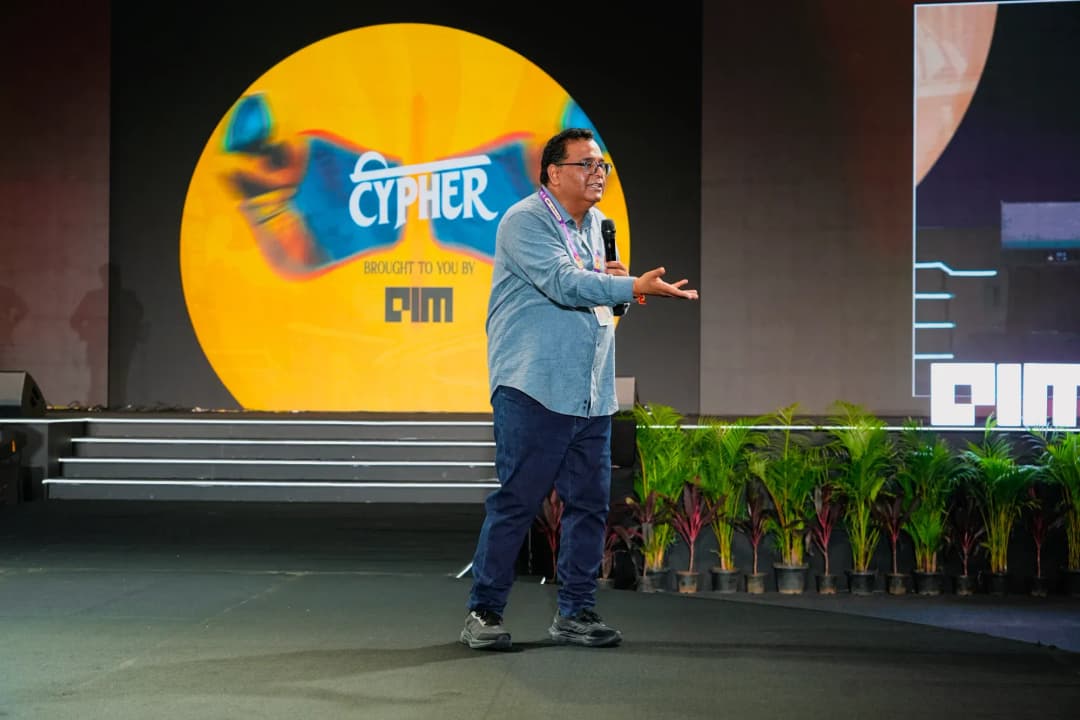
Paytm's Vijay Shekhar Sharma Offers Personal Cheques to Founders Building AI Models
Sharma says India’s AI ambitions remain limited by risk aversion, despite sufficient capital, talent and infrastructure to build foundational technology.
View
Ex-Ramp engineers raise $20M for platform Melius after scrapping their first product
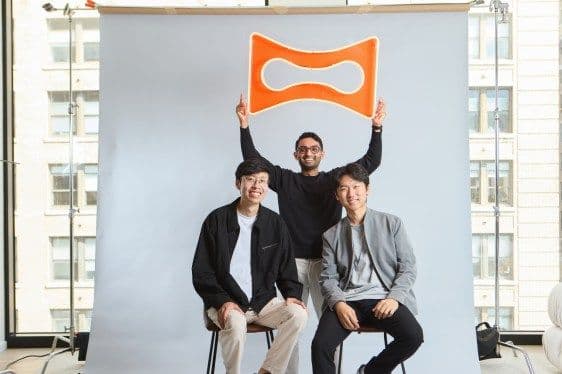
Melius, an AI platform for generating ad campaigns, images, and videos, announced on Tuesday that it raised a total of $25 million in funding, including a $20 million Series A led by CRV and a $5 million seed round led by General Catalyst. While the startup claims to have hit more than $1 million in annualized revenue within two months of coming out of stealth in July, co-founder Joowon Kim (pictured on right) admits that Melius didn’t hit it out of the park initially. When the New York-based company first launched over a year ago, Kim and his co-founders, Young Kim (pictured on left) and Arnav Ramu (pictured center) set out to build an AI-powered performance marketing tool. The three knew each other from working as engineers at Ramp, the corporate spending and finance software company. More than six months after building the product, the co-founders decided their original idea didn’t “have legs,” Joowon Kim told TechCrunch. Instead of helping marketers manage and optimize ad spend, the team chose to focus on what it saw as a much larger opportunity: building the tools that generate the creative assets and campaigns themselves. “We scrapped the entire codebase; we burned all of it,” Kim said. Melius quickly went to work on an entirely new product. Nearly a year after its initial launch, it revealed a platform that it describes as an “agents lab for creative work.” Melius is far from the only startup helping ad agencies, marketers, and brands generate creative assets and campaigns with AI. Competitors include rapidly growing Higgsfield, which was valued at$5.4 billionin August, as well as other small startups, including Krea and Flora AI. Kim isn’t concerned about the competition. He acknowledged that Higgsfield, a three-year-old company that has hit over $700 million in annualized revenue, “is growing like mad,” but according to Kim, the size of the market is so large that it can support multiple competitors. “There are a lot of players, which is pretty exciting,” he told TechCrunch. “That means there are customers to be won and there is demand in this space.” As for why former Ramp engineers are building an ad-generation product, Kim, who describes himself as a social media influencer, says he has been passionate about making short videos since elementary school and once dreamed of becoming a famous YouTuber. “I tried my best to make vlogs,” he said. “My dad was great at using FinalCut Pro, but I wasn’t.” Those early vlogs never quite took off, but his fascination with making digital media remained. Now, with Melius, he’s building the tool he always wanted: a platform where anyone, including seasoned creative directors, can turn their ideas into reality using plain language.
Hark releases an AI personal assistant with a focus on privacy
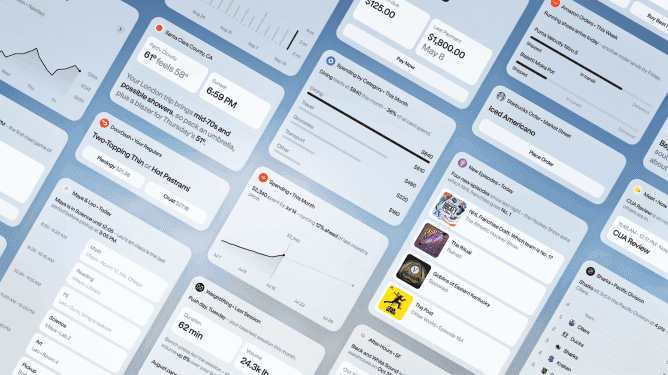
From Muse to Instinct to Dots, tech firms are hunting for the user experience that will make an AI personal assistant a must-have product. Hark, a startup founded less than a year ago by serial founder Brett Adcock, is throwing its hat in the ring today with the wide release of Hark Pro. Users can access the service for free, with a subscription tier for heavy users. The company sees its mission as building a user interface for AI, not creating AGI or curing cancer. The foundation is a model trained specifically for computer use, and that’s what Hark Pro does — it uses your computer for you. That’s perhaps a less ambitious claim than some frontier labs are making, but a little humility goes a long way in winning over users. And rather than an app, Hark’s goal is to create an operating system for the AI computers of our future. Hark Pro is a full-screen experience with a kind of homepage, featuring a central chat dialog and a feed populated by prompts for actions you might need it to take and visualizations the company calls “panels” that offer mini-dashboards for things you’re interested in. The background is a piece of custom imagery tailored to the weather and time where you are. Like other AI assistants, users configure it to access their digital life — email, calendar, hard drive, credit cards, etc. Then, it can take on digital tasks as well as fielding classic chatbot questions. Abidur Chowdhury, a former Apple staffer who leads design at Hark, demoed the product for me. It proactively asked him about expenses he needed to approve, emails he needed to respond to, a meeting with this reporter, and, of course, pointed out that he needed to book a flight for a trip and offered to take care of it. (“I know the flight thing is put to death,” he admits, grinning.) That does get at the challenge with these apps: One of the harder things for users is actually coming up with useful tasks they are capable of accomplishing. Chowdhury says he was impressed when the AI assistant recently recognized that one of his colleagues needed to renew their car registration at the California DMV, and handled it through the agency’s website. One notable UX choice that Hark makes is showing the user how the agent navigates the web in a small window, an action most AI assistants perform without it surfacing in the app, which Chowdhury says is intended to build trust with users that the agent is doing the right thing. That matters because part of Hark’s pitch is that they are not Meta or OpenAI — “we’re not here to like sell you ads and steal your data,” Chowdhury says. To truly leverage these models, users will need to share their entire digital lives. Beyond very realcybersecurity concerns, will users be comfortable with a company like Meta having its productscreate detailed profilesof their friends and family? Asked about that kind of profiling, Chowdhury says that “we are doing work to understand you, and be helpful for what you need, but it’s really like task-related — it’s really about how Hark can help take something off your plate and be useful.” What sets Hark Pro apart from its competitors, Chowdhury says, is its effort to fully subsitute for your computer, but also his belief that it just works better. “Please compare it to the others, be critical,” he says. “It might not be faster than Muse, but it will give you a better result, and it will work end-to-end instead of asking you to take over at a point.” One open question is what kind of model best suits the AI personal assistant. Hark’s is explicitly trained for computer use, which makes it faster and cheaper at those tasks, but it’s not clear how much it is trading away the broader knowledge and capability of a frontier LLM. This software is only half the promise of Hark; Chowdhury made his name designing devices at Apple and Hark promises to release an AI-native device to support its software in 2027. They’re still cagey about the form it will take, with Chowdhury bemoaning the “creep factor” of wearable cameras. “I will give you this: The first product that we’re building is a product that’s never ever existed before,” he says. We’ll have to wait and see if this is mere hype and Hark puts out some retread tech instead of a truly novel product. “It’s so hilarious to me that you have AI now, you have a chatbot, and you type stuff in with a keyboard,” Chowdhury says. “Fifty years later and the future of computing is still a terminal.”