🚀 Zaprep: Your Socials on Steroids. 免费开始 — 每月自动发送 1,000 条私信,将互动转化为潜在客户。 ,每月 1,000 条自动私信。
最新 AI 资讯

Sam Altman’s thank-you to coders draws the memes
If you need a cathartic release from the news thatAmazon laid off 16,000 workers,Block choppednearly half its workforce,Atlassian pared back 10%of staffers, and Meta is reportedly considering anothermassive round of layoffs, all in the name of AI, then we invite you to browse the responses to a recent Sam Altman post on X. Altman, the CEO of OpenAI, shared this on Tuesday: “I have so much gratitude to people who wrote extremely complex software character-by-character. It already feels difficult to remember how much effort it really took. Thank you for getting us to this point.” Altman shared on Tuesday. I have so much gratitude to people who wrote extremely complex software character-by-character. It already feels difficult to remember how much effort it really took.Thank you for getting us to this point. The problem with that sweet sentiment is that Altman’s company ushered in the AI now being used as an excuse for developer layoffs andfewer junior developer jobs. And it did so by training on massive volumes of code written the old-fashioned way — by the very people he’s now thanking. His post implies that developers’ genuinely difficult-to-master craft is now like a rotary telephone: outdated and unnecessary. Naturally, Altman’s comments attracted memes and responses richer than his post. While some were straight-upangry, (“You’re welcome. Nice to know that our reward is our jobs being taken away”), much of the internet did what it always does: cracked jokes. There are thousands of comments. Some of our favorites: “Sam’s eulogyfor software engineers”“It’s times like this when I reallymiss the Sam Altman parody account” “Dear devs You will lose your jobs foreverand be forced to work in the coal mines But you can rest easy knowing sam Altman is grateful. ❤️ 🙏” “Billion dollar app idea: AI that reads billionaire tweets before they post them and says ‘this is going to make you sound incredibly out of touch, are you sure?’” “I have gratitude to OpenAIfor doing all the AI work so I can have free Chinese open source AI models to use 🙏” “This reads like somethingthe Mayans would say right before the ceremony starts.” And finally, another reason to trot out this meme: pic.twitter.com/YLn5U8Fqx5
View
Sequen snags $16M to bring TikTok-style personalization tech to any consumer company
At Etsy,Zoë Weilhelped to drive a billion-dollar increase in gross merchandise volume within a single year by improving the online marketplace’s AI ranking systems. With her new startup,Sequen, she aims to bring her and her co-founders’ years of AI research and product development to other businesses in the consumer space. The company, which just closed on $16 million in Series A funding, offers real-time personalization technology and ranking infrastructure — technology used by the world’s biggest tech firms but that has been inaccessible to other large consumer businesses because of the massive datasets required. While those outside the tech industry may not understand what this technology involves, anyone who’s used consumer apps like TikTok, Instagram, or YouTube has been the target of these systems. Explains Weil, Sequen CEO, “Modern tech isn’t really recommending content anymore. It’s bending your will in subtle ways over time to make you actually want things. And, in fact, the tech has gotten so good that a lot of people suspect platforms are eavesdropping on their conversations,” she says. Weil credits this phenomenon to something called the large event model. While large language models (LLMs) used by chatbots like ChatGPT generalize text, large event models generalize streams of events and human behavior in particular. This technology has use cases that go beyond building a better algorithm. Weil believes that Sequen could eventually replace the cookie — a tracking technology that personalizes web experiences for end users, but in a way that has raised privacy concerns andtriggered regulation. “Our large event models learn from live user actions, not just clicks and scrolls, but also hovers, conversations, and stuff within a given session — not static profiles or third-party cookies,” Weil says. “That’s how you personalize in real time, even with sparse data. So yes, we do unlock TikTok’s algorithms for Fortune 500 companies that don’t have the infrastructure to do it … but I would say we’re taking it a step further,” she adds. Businesses that work with Sequen integrate with the startup’s RankTune platform, which allows them to access Sequen’s frontier ranking models and real-time ranking models through APIs. (Sequen’s customers are already using some kind of in-house API to power their relevance stack, so they just swap out their API for Sequen’s.) What’s more, Sequen’s technology is not as privacy-invasive as the cookie because it’s based on real-time data — the user’s identity is not needed to personalize the results. And it’s fast, with sub-20-millisecond decision-making. “Our large event models are able to generalize to streams of real-time events that they get,” says Weil. “It doesn’t matter who is performing those events — they’re able to understand events and be able to make sense of them without relying on the user’s identity. So actually, the user’s identity is completely irrelevant.” Despite this more privacy-forward aspect, Sequen says its technology can still demonstrate “crazy revenue lift,” Weil claims. In one example, a large furniture company saw a 7% revenue lift after switching to Sequen, when before, a 0.4% lift was considered a win. Another customer, Fetch Rewards, saw a 20% lift on net revenue in just under 11 days. It’s also working with a company in the streaming media space and an online travel agency. The system is priced based on requests per second (RPS), with tiers offering up to 500 RPS or 1,000 RPS and so on, with pricing discounts as the tiers increase. Among its first five customers, contracts are in the seven figures. “What we’ve seen consistently across the board is people opting for the highest tier, because as soon as they see us in one use case, they want to adopt us on their entire platform,” notes Weil. Weil had started her career in this space on the research side of things, but quickly realized she’d rather build products. Most of her time to date has been spent helping companies develop these types of ranking products to generate business value from them, which is what led her to create Sequen. Now, in under 18 months, the company has processed some 10 billion monthly requests and won business at a handful of Fortune 500 companies. Its offering includes proprietary technology, including large event models, ranking models, algorithms, and more. At the startup, Weil is joined byEthan Benjamin, who worked with her at Etsy, and co-foundersMo AfsharandAlexander Thom. Raphael Louca recently joined from Meta to become Sequen’s chief product officer. Based in New York, the company’s 14-person team includes those from DeepMind, Meta, Anthropic, and elsewhere. Sequen’s Series A was co-led by White Star Capital and Threshold Ventures, with participation from its prior investors, including Greycroft, which had led its seed round. To date, Sequen has raised $22 million.
View
This startup wants to make enterprise software look more like a prompt
Every new technology creates a new environment in which we work, but it’s not clear how AI will do that. One possibility is that the interface disappears entirely. That’s the vision of Josh Sirota, who founded the startupEragonback in August and has just raised $12 million at a $100 million post-money valuation to build an agentic AI operating system for enterprise customers. There’s a simple thesis: “Software is dead,” Sirota says. Buttons and dialog boxes and pull-down menus are a thing of the past, and future business will be done by prompt. Eragon is attempting to offer the whole suite of business software — your Salesforces, Snowflakes, Tableaus, and Jiras — through an LLM interface. Sirota, who worked on go-to-market teams at Oracle and Salesforce, admits to suffering a bit of a quarter-life crisis in the lead-up to moving to San Francisco and launching Eragon with a small team from a live-work loft across the street from the Giants’ baseball park. On a recent, sunny Wednesday, the dining room table sports a bottle of Moët, several Mac minis, and a copy of the book Eragon, the Christopher Paolini fantasy novel that gave the company its name — in the tradition of Palantir and Anduril, which also borrowed from fictional worlds. Sirota’s experience implementing the world’s premier corporate software convinced investors of his “founder-market fit.” His backers include Arielle Zuckerberg at Long Journey Ventures, Soma Capital, Axiom Partners, and strategic angels Mike Knoop and Elias Torres. “We see enormous potential for Eragon to become the connective tissue for how modern teams operate and make decisions,” Axiom’s Sandhya Venkatachalam said. Eragon’s technical talent includes Rishabh Tiwari, a Berkeley computer science PhD student, and Vin Agarwal, an MIT PhD; together, they’re building out the company’s tech stack. At Eragon’s customer center of excellence — a battered white sofa — Sirota shows how the company eats its own dog food. Eragon post-trains open source models like Qwen and Kimi on customer datasets, and links to company email accounts and other resources. When Sirota wants bring on a new customer — he demonstrates with Dedalus Labs, which is adopting the tool this week — he asks in a natural language prompt, and the software automatically assigns each new user credentials, spins up a new Eragon instance in the cloud, and begins an onboarding workflow. Sirota expects Eragon to be the software executives ask for analysis on what deals might slip, or for steps to take to improve supply chain lead times, then assign agents to take action. Want a dashboard? Just ask Eragon to spin one up. The demo is compelling, but it’s easy to imagine edge queries that baffle the software, or hard-to-audit failures. Sirota even uses Eragon to demonstrate automatic invoice approval — the system processes invoices as they arrive in his own inbox — which prompted this reporter to consider submitting one, just to see what would happen. (Reader, I did not.) The security concerns raised by AI agents are big, but for now the company is trying to work out the kinks in real workplaces; Eragon is now in use in a handful of large businesses and dozens of startups. Nico Laqua, the CEO of Corgi, an insurance startup that raised $180 million after emerging from Y Combinator last year, called Eragon “the best applied AI for enterprise in the market.” “Most of the data we have needs to remain secure and behind our own cloud,” Laqua said. “Eragon trains state-of-the-art models for us on our data and deploys it in our own environment.” That’s central to Eragon’s pitch: A company’s data stays within its own servers and security environment, and it owns its own model weights — the underlying parameters that define how an AI behaves. Sirota expects models trained on years or decades of corporate data will become valuable assets in themselves. And while frontier labs may have the most capable models, as long as companies must access them via API and without owning their configurations, Sirota believes Eragon will have an advantage in the marketplace. He compares the evolution of AI software to the transition from mainframes to the personal computer: Frontier labs offer powerful, centralized services, but mass corporate adoption will depend on local tools for bespoke purposes. Companies will need agents and models for their specific purposes and will want to control them. A few days later, Nvidia CEO Jensen Huang offers a similar take at GTC, Nvidia’s annual developer conference, arguing that agentic AI tools for enterprise will replace our existing approach to white-collar work: “It is no different than how Windows made it possible for us to create personal computers…every single SaaS company will become Agentic-as-a-Service.” Huang’s comments pertain to Nvidia’s new initiative,NemoClaw, which aims to make it easier for OpenClaw agents to work within secure enterprise systems. It’s a sign both that Sirota is on to something — and that the competition from everyone from frontier labs to model wrappers will be fierce. Sirota is undaunted, saying he expects Eragon to be a billion-dollar company by the end of the year. He knows the oft-cited MIT figure that 95% of AI corporate trials fail to catch on, but he jokes that it’s because senior executives don’t know what their employees do all day. Eragon aims to give them something they can really work with.
View

The leaderboard “you can’t game,” funded by the companies it ranks
Loading the player… Artificial intelligence models are multiplying fast, and competition is stiff. With so many players crowding the space, which one will be the best — and who decides that? Arena, formerly LM Arena, has emerged as the de facto public leaderboard for frontier LLMs, influencing funding, launches, and PR cycles. In just seven months, the startup went from a UC Berkeley PhD research project tobeing valued at $1.7 billion. Watch asEquityhost Rebecca Bellan catches up with Arena co-foundersAnastasios AngelopoulosandWei-Lin Chiangabout how their platform became the go-to leaderboard for frontier AI models, and how they’re trying to build a neutral benchmark even as companies like OpenAI, Google, and Anthropic back the project. They break down how Arena works and why it’s harder to game than static benchmarks, what “structural neutrality” actually means, why Claude is currently topping expert leaderboards in legal and medical use cases, and how the company is expanding beyond chat to benchmark agents, coding, and real-world tasks with a new enterprise product. Subscribe to Equity onYouTube,Apple Podcasts,Overcast,Spotifyand all the casts. You also can follow Equity onXandThreads, at @EquityPod.
View

The Gemini-powered features in Google Workspace that are worth using
Google has been steadily integratingGemini across Google Workspace, embedding AI into Docs, Gmail, Sheets, Slides, Drive, and Meet. With so many updates rolling out, the real question isn’t what Gemini can do; it’s what’s actually useful in day-to-day work. The best Gemini features are arguably the more practical tools that help you manage information faster, such as summarizing, drafting content, organizing data, and tracking all those meetings. Let’s go through all the best ones. What Gemini in Docs does best is automatic summarization. Instead of digging through a long report or research doc, you can ask Gemini for the key points or a quick outline. It’s a time-saver when you’re reviewing something or want to quickly explain the information to a colleague. There’s also a new “Help me create” tool. You can describe what you want, like a newsletter or a report, and Gemini will pull in context from your Drive, Gmail, and Chat to generate a first draft as a strong starting point. On top of that, there are other useful tools like “Help me write,” which can clean up your wording or expand on ideas, and “Match writing style,” which is great when multiple people are contributing to the same document and the tone is all over the place. There’s even a “Match the format” feature that lets you copy the structure of another document, which is handy if you’re working from a template. (These features are currently still in beta.) Gemini inGmailis particularly useful when your inbox gets out of control. The “AI Inbox” feature filters out all the non-important messages and highlights the emails that matter, like a reminder for your upcoming doctor’s appointment or your son’s soccer practice next week. Gemini also summarizes long email threads, which means you don’t have to scroll through a dozen back-and-forth messages just to figure out what’s going on. You can get the key points in anemail summary cardright at the top of the email. “Help me write” is another handy capability. Gemini can generate replies based on the context of the conversation. Whether you want something more formal or shorter, it can rewrite messages quickly in the tone you want. Plus, it goes a bit further with contextual smart replies, which generate longer, more detailed responses. There’s also an “AI Overview” feature, allowing you to ask Gemini a question such as “Who was the plumber who gave me a quote for the bathroom renovation last year?” and the AI will dig through your emails to find the conversation. With a single prompt, Gemini can grab relevant information from Gmail, Chat, and Drive and turn it into a fully structured spreadsheet. It can also help you visualize data by generating charts and graphs. There’s also a “Fill with Gemini” feature that speeds up populating tables, which is useful when you’re starting from raw or incomplete data. For creating slides, Gemini’s strength is formatting, which removes a lot of the repetitive work. It’s especially useful for internal presentations or when you just need a solid first draft quickly. You can give it a prompt like “create a five-slide deck summarizing our Q1 results,” and it will build out a presentationthat matches your theme, pulls in relevant content, and organizes it into slides with bullet points and visuals. From there, you can tweak things by asking it to simplify slides, adjust formatting, or match a specific design style. There’s also a “refine text” feature if you need to shorten a paragraph or rephrase a sentence. A bonus tool: You cantweak images in Slidesusing Nano Banana, Google’s image-editing model. The standoutGemini feature in Meetis automatic note-taking. Instead of trying to listen and write at the same time, you can let Gemini capture the key points, decisions, and action items for you. After the meeting, everything is already organized and ready to share. Gemini also helps out if you join late. You can ask what you missed and get a quick summary without interrupting the flow. There are also practical upgrades like real-time translated captions, improvements to video, and the ability to reduce audio distortion to make meetings easier to follow. Gemini in Drive allows you to quickly search for files, summarize a marketing plan, pull specific targets from a document, or even draft updates based on the latest files in your workspace. Gemini can also generate an “AI Overview” of the most relevant information across your documents, complete with sources. That means you don’t have to open five different files just to find one detail. Plus, with a new beta tool called “Ask Gemini in Drive,” you can now ask complex questions across your calendar, documents, emails, and the web. As for Google Calendar, one of the standout AI-powered features is “Help me schedule.” Instead of manually scanning availability, you can describe what you need, and Gemini will suggest the best times based on everyone’s calendars. It can even take preferences into account, such as avoiding early mornings. Gemini can connect to your Gmail to detect available time slots, rather than proposing times blindly. Gemini also helps with event creation. You can type a simple prompt like “Lunch with Nick,” and it will generate a full calendar event with the right date, time suggestions, and even location details. It also improves rescheduling. If a meeting needs to shift, Gemini can suggest alternative times that minimize conflicts, instead of forcing you to manually recheck everyone’s availability, which is great when you have larger groups. Instead of scrolling through long threads, you can ask Gemini to summarize a space, highlight key decisions, or pull out action items. This is especially helpful in active team channels where important details tend to get buried. Gemini can also draft replies based on the context of the conversation. It also learns from your past conversations, so it can bring up key details and past moments in its chat suggestions to sound more natural. Another useful feature is its ability to connect chats with files. You can ask questions about documents shared in a conversation without opening them. Gemini inGoogle Vidshelps you generate polished video content. Instead of starting from scratch, you can prompt Gemini to generate a rough cut based on a topic or outline. It can suggest scenes, structure your narrative, and draft scripts automatically. Gemini can also handle voice-overs by generating script variations and adjusting the tone. With transcript trimming, Gemini identifies “ums” and any awkward pauses that you want to remove from the recording. There’s also the ability to convert an image to video using Gemini Veo 3, as well as input a script and use anAI-powered avataras the star of the video. Gemini in Forms lets you describe what you want, such as a survey, and generate a complete form with relevant questions and structure. It also helps refine questions. Gemini can suggest clearer wording and better answer formats, and identify gaps in your form that might lead to incomplete or low-quality responses. This is particularly useful when you’re trying to gather actionable data. In addition, Gemini can summarize results as they come in, highlighting trends and key takeaways without requiring you to dig through raw data. Instead of exporting responses and analyzing them elsewhere, you get immediate insights directly within Forms.
View

Rebel Audio is a new AI podcasting tool aimed at first-time creators
You’ve more than likely had that moment where you’re sitting with a friend, the conversation is flowing, you’re making each other laugh, maybe even saying something surprisingly insightful. Then someone says it: “We should start a podcast.” Most of the time, that idea fades as quickly as it came. Not because it’s necessarily a bad idea, but because actually making a podcast has always been kind of a pain. Between recording setups, editing software, and promotion, many argue that the barrier to entry is higher than expected. That’s the gap a new platform,Rebel Audio, is trying to close. Rebel Audio positions itself as an all-in-one podcasting platform designed for first-time and early-stage creators. The idea is simple: Instead of juggling multiple tools, subscriptions, and workflows, podcasters can create their show, record it, edit it, upload cover artwork, create transcripts, clip content for social, and publish, all without ever leaving the platform. Rebel Audio launched a private beta with a waitlist earlier this month, and it recently secured $3.8 million in an oversubscribed seed round, suggesting that investors see real opportunity in simplifying the podcasting process. An official rollout to the public begins on May 30. The timing of the launch makes sense. Podcasting is exploding, with the industry projected to reach$114.5 billionby 2030. According toRiverside, more than 584 million people listened to podcasts in 2025, with predictions that this number will rise to 619 million by 2026. Competitors like Spotify for Creators (formerly Spotify for Podcasters) have already adopted a similar all-in-one approach, offering tools like unlimited hosting, video podcast uploads, audience tools, analytics, and monetization through ads and subscriptions. However, Rebel Audio argues that none of these solutions deliver a truly “360-degree” creation suite in the way its platform aims to. Other popular rivals include Riverside, Adobe Audition, and Descript. Monetization is another core part of the pitch. Rather than treating revenue as something that comes later, Rebel Audio integrates it from the beginning. Creators can tap into advertising, brand partnerships, dynamic ad insertion, and listener subscriptions integrated within the platform. Unsurprisingly, Rebel Audio’s experience is also heavily powered by AI. The platform includes an AI assistant that helps with everything from generating show names and descriptions to suggesting ideas and producing cover art based on a concept. There are also AI-powered transcription, dubbing, and translation capabilities, as well as voice cloning for ad reads. However, building a podcasting platform centered around AI could introduce criticism. The use of AI-generated images and voice cloning remains a sensitive topic across the creative industry. Concerns around training data, originality, and ownership continue to surface, and some creators remain wary of tools that blur those lines. Streaming platforms like Spotify and Deezer have already had to address issues related to low-quality, mass-produced AI content, sometimes referred to as “AI slop.” Rebel Audio told TechCrunch that it has implemented guardrails to address these concerns. Voice cloning is opt-in and requires users to confirm they have the rights to use a given voice, and the platform includes safeguards aimed at preventing deepfake content. Similarly, the company says its AI-generated cover art tools are designed with moderation systems to block inappropriate or non-compliant imagery, particularly anything that could violate distribution platform guidelines. Rebel Audio was developed in partnership with AI consulting firm Lattice Partners. Behind the scenes, the company’s leadership brings a lot of industry experience. Founder Jared Gutstadt previously launched production company Audio Up in 2020. Rebel Audio plans to migrate Audio Up’s catalog onto the platform, including shows involving big names like Machine Gun Kelly, Anthony Anderson, Dennis Quaid, Jason Alexander, and Luke Wilson. The broader team includes veterans from companies like MGM and DreamWorks, and even Mark Burnett has joined as an advisor. Burnett is the producer behind shows “Survivor,” “The Voice,” and “Shark Tank.” Pricing-wise, the platform is structured in tiers, starting with a basic plan ($15/month) that offers AI-assisted production, hosting, and distribution to all major platforms, a Plus plan ($35/month), which includes video hosting, and voice cloning for ad reads, scaling up to a full Pro package ($70/month) that includes dynamic ad insertion, listener subscriptions, translation, and dubbing.
View

Patreon CEO calls AI companies’ fair use argument ‘bogus,’ says creators should be paid
PatreonCEO Jack Conte says he’s not anti-AI. He can’t be. “I run a frickin’ tech company,” he told the audience at the SXSW conference in Austin this week. Still, the founder of the creator platform has limits. Conte doesn’t think AI companies should be able to train their models on the work of creators without compensation, calling their decision to dub this “fair use” a “bogus” argument. Conte’s SXSW talk positioned AI as another moment within the ongoing cycle of disruption that creators have been through many times before in the internet age. Like the transition from buying music on iTunes to streaming, or shifting video to the vertical format favored by TikTok, AI will likely break a lot of the models that creative people have worked hard to build over the years. Still, he believes they will thrive. “I learned a very important thing as an artist, which is that change does not mean death. You can get back up, and you can fucking go again,” said Conte, who created Patreon to solve a problem he had faced as a musician: getting people to pay creators for their work. Similarly, he doesn’t believe that AI companies should be able to scoop up creators’ content to train their models without some sort of compensation. “The AI companies are claiming fair use, but this argument is bogus,” Conte said, reading from a printout of his speech, or rather, his manifesto. “It’s bogus because while they claim it’s fair to use the work of creators as training data, they do multimillion-dollar deals with rights holders and publishers like Disney and Condé Nast and Vox and Warner Music.” If the AI companies’ argument around fair use was legal and sound, then they wouldn’t be paying these large rightsholders, he noted. “If it’s legal to just use it, why pay?” he asked rhetorically. “Why pay them and not creators — not the millions of illustrators and musicians and writers — whose work has been consumed by these models to build hundreds of billions of dollars of value for these companies?” Reading between the lines, it’s clear that Conte would like to tap into some of those payouts, too, for Patreon’s own community of creators. And he’s using Patreon’s scale as a creator community filled with hundreds of thousands of people to make that argument. The founder also clarified that his decision to call out AI companies’ behavior is not because he’s anti-AI or anti-tech or even anti-change. “I accept the inevitability of change, and I feel agency in discovering my next path through the chaos. A part of that challenge even excites me,” Conte said. “Still, the AI companies should pay creators for our work, not because the tech is bad — but because a lot of it is good, or it will be soon — and it’s going to be the future. And when we plan for humanity’s future, we should plan for society’s artists, too, not just for their sake, but for the sake of all of us. Societies that value and incentivize creativity are better for it,” he added. The talk ended on a hopeful note, with Conte expressing his belief that humans will make and enjoy the work of other humans for a long time, despite whatever progress AI makes on this front. “Great artists don’t play back what already exists,” Conte said, referencing large language models’ (LLMs) ability to predict the appropriate output. “They stand on the shoulders of giants. They push culture forward.”
View

Itel Unveils Zeno AI Weaver Voice Recorder in India With Up to 40 Hours Recording Capacity, Live Transcription
Itel has unveiled its first AI-powered voice recorder in India, dubbed Zeno AI Weaver. The new device is confirmed to be launched in the country and will be available for purchase via an e-commerce platform in a single colourway. The Hong Kong-based tech firm positions the device as an AI companion that can record, transcribe, and summarise voice notes, which can then be viewed on the user's phone. It also supports one-tap recording. Moreover, it features a small screen on the front to notify users that the device has started recording. However, Itel is not the only tech firm with an AI voice recorder. Plaud Note, another AI voice recorder, is currently available in select global markets.
View

DOD says Anthropic’s ‘red lines’ make it an ‘unacceptable risk to national security’
The U.S. Department of Defense said on Tuesday evening that Anthropic poses an “unacceptable risk to national security,” marking the agency’s first rebuttal tothe AI lab’s lawsuitschallenging Defense Secretary Pete Hegseth’s decision last month tolabel the company a supply chain risk. As part of its complaints, Anthropic had requested the court temporarily block the DOD from enforcing its label. The crux of the DOD’s argument, made in a40-page filingin a California federal court, is the concern that Anthropic might “attempt to disable its technology or preemptively alter the behavior of its model” before or during “warfighting operations” if the company “feels that its corporate ‘red lines’ are being crossed.” Anthropic last summer signed a $200 million contract with the Pentagon to deploy its technology within classified systems. In later negotiations over the terms of the contract,Anthropic saidit did not want its AI systems to be used for mass surveillance of Americans, and that the technology wasn’t ready for use in targeting or firing decisions of lethal weapons. The Pentagon contested that a private company shouldn’t dictate how the military uses technology. Chris Mattei, a lawyer specializing in First Amendment issues and a former Justice Department attorney, told TechCrunch there has been no investigation to support the DOD’s concerns of Anthropic potentially disabling or altering its AI models during warfighting operations. Without that evidence, the department’s argument fails to adequately explain how Anthropic’s negotiating position rendered it an “adversary,” Mattei argued. “The government is relying completely on conjectural, speculative imaginings to justify a very, very serious legal step they’ve taken against Anthropic,” Mattei said. He added the department failedto “articulate a credible or even comprehensible rationale for why Anthropic’s refusal to agree to an ‘all lawful use’ provision rendered it a supply chain risk as opposed to a vendor that DOD simply didn’t want to do business with.” Many organizations have spoken out against the DOD’s treatment of Anthropic, arguing that the department could have just ended its contract. Several tech companies and employees — including fromOpenAI, Google, and Microsoft — as well as legal rights groups have filed amicus briefs in support of Anthropic. In its lawsuits, Anthropic accused the DOD of infringing on its First Amendment rights and punishing the company based on ideological grounds. “In many ways, the government’s nonsensical arguments are themselves the best evidence that the administration’s conduct was plainly a retaliatory punishment for Anthropic’s refusal to agree to the government’s terms, which, contrary to the government’s brief, is a form of protected expression,” Mattei told TechCrunch. A hearing on Anthropic’s request for a preliminary injunction is set for next Tuesday. Anthropic did not immediately respond to a request for comment. This article has been updated to include information from Chris Mattei, a constitutional rights lawyer.
View

The PhD students who became the judges of the AI industry
Artificial intelligence models are multiplying fast, and competition is stiff. With so many players crowding the space, which one will be the best — and who decides that? Arena, formerly LM Arena, has emerged as the de facto public leaderboard for frontier LLMs, influencing funding, launches, and PR cycles. In just seven months, the startup went from a UC Berkeley PhD research project tobeing valued at $1.7 billion. On this episode of TechCrunch’sEquitypodcast, Rebecca Bellan catches up with Arena co-foundersAnastasios AngelopoulosandWei-Lin Chiangto determine how a team like theirs can build a neutral benchmark when the companies they’re ranking are also their backers. Listen to the full episode to hear: Subscribe to Equity onYouTube,Apple Podcasts,Overcast,Spotifyand all the casts. You also can follow Equity onXandThreads, at @EquityPod.
View
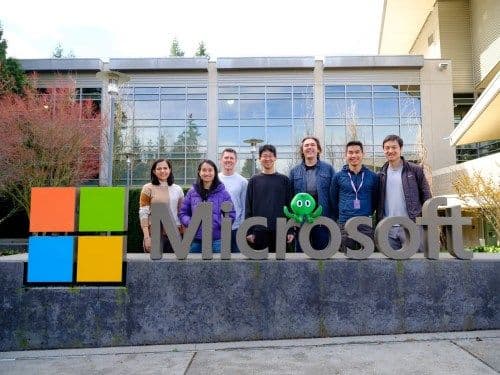
Microsoft hires the team of Sequioa-backed AI collaboration platform, Cove
The team behindCove, a Sequioa-backed startup that was working on an AI-powered collaboration board, has joined Microsoft, according to an email sent to customers informing them that Cove’s service is shutting down. Cove was founded in late 2023 by Stephen Chau, Andy Szybalski, and Mike Chu, who worked on Google Maps features like Street View. The startupraised $6 million in a seed roundfrom Sequoia Capital, Elad Gil, Homebrew, Adverb, Scott Belsky, and Lenny Rachitsky in 2024. Its tool was an infinite whiteboard that let users use AI to generate different blocks for tasks like trip planning. The founders felt that the chat interface for AI was not editable, and a canvas provided more flexibility when going in different directions with prompts. Cove also allowed users to use a built-in browser, PDFs, and images to give more context to its AI, which could create new cards, tables, and lists. The startup competed with the likes ofMiro,TLDraw, andKosmik. The company said in an email to customers that the entire Cove team is joining Microsoft and the product will shut down on April 1, and all user data will be deleted. Cove mentioned that it has refunded all subscriptions for March and is offering adata export process. “When we started Cove, we set out to reimagine how people collaborate with AI. As model capabilities have accelerated, our conviction in that mission has only grown stronger. We’re thrilled to continue this work at Microsoft AI, where we’ll have the opportunity to pursue an even bigger vision,” the companysaid in a blog post on its site. In addition, the company said that “the ideas behind it [Cove] will live on” within Microsoft. Notably, Microsoft added Copilot to its own collaboration product,Whiteboard, in 2023. TechCrunch reached out to Microsoft to understand how it plans to integrate Cove’s technology within its ecosystem, but did not immediately hear back.
View

India’s Data Centre Capacity Quadruples to 1,500 MW as Submarine Cable Expansion Gathers Pace
Mumbai and Navi Mumbai account for the largest share at 790 MW, followed by Chennai at 305 MW.
View

