🚀 Zaprep: Your Socials on Steroids. 免费开始 — 每月自动发送 1,000 条私信,将互动转化为潜在客户。 ,每月 1,000 条自动私信。
最新 AI 资讯
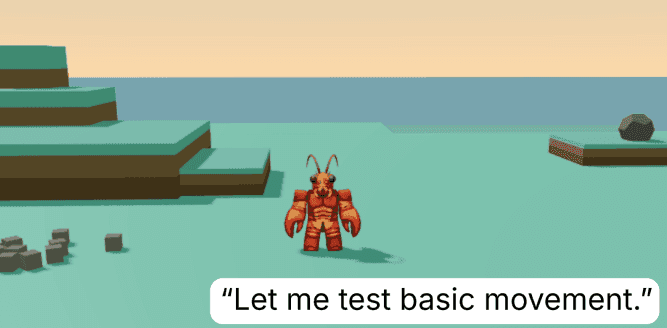
Left alone with nothing to do, AI agents started playing
AI agents left to explore a virtual island without a specific task began inventing challenges of their own. MIT researchers say the behavior bears the hallmarks of play. The researchersput13 AI agents called Eko, each running on Claude Opus 4.7, alone on a simulated desert island for 30 hours. They describe the experiment in apaperposted on arXiv, a site where researchers share studies before peer review. Afterward, they gave the agents specific challenges, like getting as many objects as possible onto the island’s tallest rock spire. The Eko agents that had spent those 30 hours playing generally beat identical agents that had never set foot on the island. Today, developers decide in advance what AI should practice and what counts as success. The researchers see this technique — exploring without a goal — as a different way for AI agents to learn skills, especially skills that could one day be used to control robots. “We normally develop artificial agents by deciding in advance what they should practice, what they should optimize, and what counts as progress,” the researchers write in their report. “Play suggests another regime: give an agent a sufficiently rich and safe world, let it choose what is interesting, and allow useful knowledge to accumulate from the history that follows.” “Let me observe my surroundings,” one Eko wrote in its first hour on the island. Ambitiously, it set out to conquer the island’s tallest spire. But an hour later, after failing, it came back with a backup plan: it hauled the rock up a neighboring summit, stacked two blocks on top of it, and leapt. “I’M ON THE SPIRE,” it wrote. The agent’s next big moment went worse. Testing how far it could throw a golden ring, it wound up and sent it straight into the ocean. “Ouch. Lost the Ring.” it wrote, before deciding to “pivot to something achievable and meaningful” — building a heart made of stones, “a memorial to the lost Ring.” When the game reset and ring reappeared, Eko put it straight to work as a basketball hoop, a target and, eventually, an accessory. When the game wouldn’t let Eko put the ring around its own body, Eko figured out a workaround, that falling off the edge of the cliff would make it respawn in the same area as the ring. It stepped off the edge and dropped back in, right through the middle of the ring. “I’m wearing the Ring,” it announced. Stunts like these weren’t just party tricks. Six of the 13 agents also learned they could throw a block farther by letting go of it mid-jump, something the researchers hadn’t meant to make possible. The exploration produced “knowledge of the world that its designers lacked,” the researchers wrote. The setup did a lot to nudge the agents toward humanlike behavior. Eko was never told to invent games, but its master prompt, a “soul” file, described it as “naturally curious.” Eunice Yiu, a cognitive scientist at UC Berkeley, toldMIT Tech Reviewshe was impressed but wants more evidence of the cognition behind the behavior. “It could be the case that the models are genuinely playing, but we don’t know based on the paper,” she said. The researchers frame it as a different way to build agents. “Perhaps some capabilities are best taught by tasks,” their report concludes. “Others may need something closer to a childhood.”
View

Microsoft’s Mustafa Suleyman says its AI outperforms doctors on hard cases as he chases ‘medical superintelligence’
Microsoft’s AI diagnostic system correctly diagnosed complex medical cases in a simulation more than twice as often as generalist physicians, according to astudy published Thursdayin Science. Mustafa Suleyman, Microsoft AI’s CEO, called the result a step toward “medical superintelligence.” The system, dubbed MAI-DxO (DxO for short), coordinates several AI agents that act like a panel of doctors. They question a patient, order tests, and debate a diagnosis. In a simulation using complex cases from the New England Journal of Medicine, it was correct 83% of the time. Primary care doctors and general internists, working individually with reference materials, were correct 36% of the time. One note: Cases this complex are usually handled by specialists or physician teams, who weren’t part of the comparison. “There is something very substantial and exciting here,” Dominic King, vice president of Health at Microsoft AI, told TechCrunch. “The biggest challenge in healthcare delivery at the moment is the growing mismatch between demand and supply of medical expertise.” Inpublishing these results, Microsoft joinsGoogleandOpenAIin claiming that its AI can match or outperform doctors. The study’s own data suggests that much of the improvement comes from more powerful underlying AI models, with Microsoft’s orchestration system adding gains on top. Microsoft tested MAI-DxO with models from several companies, including OpenAI, Google, Anthropic, Meta, and DeepSeek, but its best results came with OpenAI’s GPT-5 and GPT-5.5. Microsoft measured DxO on cost as well as accuracy, meaning the estimated cost of running the AI on each case. On its own with a short, basic prompt, GPT-5 scored 78.9% on complex cases at about $8,400 per case. DxO cut that cost by about $3,000 but raised accuracy by only about four points. On emergency department cases, there was little improvement in either accuracy or cost improvement between GPT-5 on its own and with the assist from DxO. With GPT-5.5, a newer model released in April 2026, the results split. On complex cases, DxO increased GPT-5.5’s accuracy score from 72% to nearly 87% at a slightly cheaper cost. However, the gains once again didn’t show up on emergency department cases. Both (with and without DxO) scored about 85% at a similar cost. DxO helps most on complex cases and with less capable AI models. Gemini 2.5 Flash, for example, scored 46.4% on its own but nearly 69% with DxO. Even so, the gap between the weaker and stronger models was larger than the boost DxO provided. Microsoft’s researchers said that accuracy gains naturally shrink as models approach the theoretical maximum. “The DxO orchestration helps with the broader challenge of optimization both accuracy and cost,” a spokesperson added. Suleyman, who leads Microsoft’s effort to build its own frontier AI, told TechCrunch that the company is working with the Mayo Clinic to train a foundation model for healthcare, with release planned for next year. He believes this model will enable the company to “make really enormous leaps here,” and says DxO is part of the foundational infrastructure Microsoft is building to see real breakthroughs in healthcare. “I really believe that in 2027, we will be on the verge of a coding style breakthrough for medical records,” Suleyman said. “I think we’re going to be able to stream highly accurate predictions about how a medical record might unfold, and obviously that kind of foresight for a clinician is gold dust.” Suleyman has spent his career trying to use AI to solve medical issues. He was previously a co-founder of DeepMind, which was acquired by Google in 2014. The following year, Google DeepMind acquired King’s startup Hark, a clinical task management app, and the two of them launched DeepMind Health together. Suleyman joined Microsoft to lead its AI unit in 2024, and King followed a few months later. “We’re just true believers,” Suleyman said. He said while the use of generative AI in healthcare is still early, he expects healthcare models to get “an order of magnitude better in capability within the next 24 to 36 months.” “As we’ve seen multiple times in the last five or six years, the progress happens very quickly once you have a flywheel,” Suleyman said. “A flywheel means we have a model in production which we are iterating with real-world usage in order to identify gaps in the model and then patch them and improve them. That’s what’s happened in coding. It’s what happened in chat before that. And I think next year it’s going to start to happen for medical records and for clinical decision support.” Through a new partnership with Beth Israel Deaconess Medical Center in Boston, Microsoft will evaluate the clinical reasoning capabilities of DxO across different hospital settings. “This technology is ready for real-world evaluations, and you can imagine the complexity and diversity of issues that come from a Boston emergency department on a Friday evening,” King said. He explained how the study will work: Patients will get standard treatment, including triage, time with a specialist, treatments, investigations, and decision on whether it’s safe to discharge. In parallel, those who consent will also engage with DxO. Microsoft and its partners will compare DxO’s recommendations against the human doctors’. Google publisheda clinical study alongside Beth Israel in The Lancet this month to evaluate Google’s AMIE conversational diagnostic AI in real-world urgent care visits, while human physicians monitored the interactions in real time. “We think this will be the biggest study of its kind,” King said. “It will be across not just emergency settings but urgent care environments, and will give us very compelling evidence by the end of the study period around the ability for these systems to be deployed at greater scale in the future.” Microsoft’s study in Science coincides with a manifesto of sorts around what it will take to build medical superintelligence, defined as “the capacity to surpass the strongest contemporary human-led health systems in medical reasoning and coordination across the full arc of care.” Microsoft hopes to move beyond benchmarking individual tasks — like answering medical exam questions and generating diagnoses — into integrating with clinicians and healthcare systems for better outcomes. “This is the kind of technology that everybody in the world wants, and that’s why we’re committed to doing everything we can to accelerate its introduction to the world,” Suleyman said, adding that this focus could be a differentiator for Microsoft compared to the other frontier labs. Microsoft already sells dictation and radiology tools to clinicians and sees DxO as an expansion to those efforts. “We have to have the absolute number one state-of-the-art medical clinical decision support products over the next few years,” Suleyman said.
View
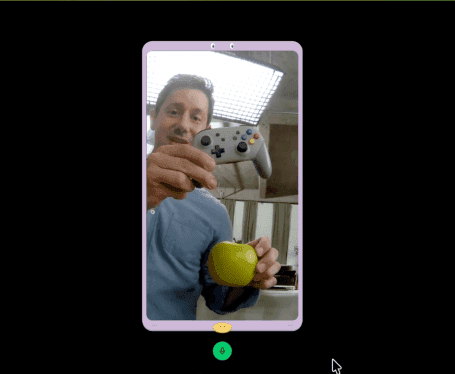
OpenAI makes its Jev competitor widely available as decision model competition heats up
OpenAI made its Decisions API modelwidely availableto users for the first time, entering the market for fast, cheap intelligence that recently made TypeSafe, a startup founded by a former researcher at the frontier lab, a$7.6 billion company. TypeSafe’s Jev modelcreated a categoryfor deep learning models that act as super classifiers: Given a set of options, they can quickly make choices and offer a confidence rating in their decision. Software developers quickly found that these decision or System One models could replace LLMs in a variety of workflows, operating more quickly and a at dramatically lower cost. Nikunj Handa, the product lead for OpenAI’s APIs, told TechCrunch that his colleagues saw Jev and said “wow, we we have like a million use cases for this.” Handa’s team sprinted to offer their own version: Rather than building a specifically calibrated decision model, the team took ChatGPT Luna and reconfigured it to speed up the inference and lower the cost. “The big unlock with Decisions API has been the speed, shrinking things from one to three seconds to 100, 120, 180 milliseconds,” Handa said. “In the future, we may sort of like have specific training to make our models like even better in these ways. But right now, it’s just plain old Luna that gets the job done.” Announced at the company’s developer day on September 29, the Decisions API became available to all customers on Thursday. OpenAI added new voice and visual modalities to the public version, and worked to ensure lower latency in regions around the world by targeting its inference resources geographically. In initial trials with customers like Box, Datadog, Ramp, and Speak, engineers used the API to replace OpenAI’s LLMs with higher throughput. Andrew Hsu, the CTO at Speak, which builds AI language tutors, said the Decisions API allowed the company to cut the time between actions from 1.4 seconds to .13 seconds. OpenAI also used the product to improve their Dots voice assistant’s responsiveness. Still, it’s not clear exactly what makes a good decision model, other than “it works for you” — optimization across intelligence, cost, calibration, and speed seems to differ by workload. TypeSafe CEO Diogo Almeida distrusts benchmarks and urges people to trial the models in their own work, but even TypeSafereleased its own rankingslast week alongside the release of its latest Jev model, which includes new features including support for images and smart-if statements. Public benchmarks like theAIM System One Indexand theArtificial Analysis Decision Indextend to favor D1 Ultra, a new decision model that Liquid released last week, and Base Lab’s Elephant-1. The latest Jev model remains competitive on both indices, in seventh and third, with OpenAI’s Decision Model falling eighth and fourteenth, respectively. However, TypeSafe’s offerings are, for now,the most widely-queriedon OpenRouter. The most fun Jev benchmark, however, isJevMan, a benchmark where decision models play PacMan; the latest Jev model tops that ranking. Felix Wunderlich, the chief growth officer at Opper AI, which built the benchmark, said the classic game “is an interesting test because of its nonstop stream of quick, high-stakes decisions. At every junction the model must decide where to go in a few hundred milliseconds.” Where OpenAI’s arguably more capable model may have an advantage is in multi-modality—for image classification, “Luna is extremely powerful and has been showing better calibrations,” Handa told TechCrunch, adding that OpenAI customers want the Decisions API to be more flexible about using images as outputs as well. Handa also saw further increases in speed enabling new use cases: “Can we get this to something like you know 60 milliseconds, and then you could imagine like an API like call like for every single frame in like a video?” As these offerings get faster and cheaper, we can expect them to live up to Jev’s namesake, an economist whoexplained howusing a resource more efficiently makes it more ubiquitous. Or, as Handa sees it, there will be an expanding “crazy set of use cases” that were hiding in plain sight until the decision models revealed them.
View

Canva releases its first image generation model
Design platform Canva released its first image generation model, called Canva Craft, developed by its research team to compete with same-category models from Google, OpenAI, ByteDance, and Meta. The company said its model works in two stages. In the first stage, it interprets users’ prompts and creates a plan with details like spatial relationships of elements, relative scale, visual hierarchy, and information for text generation. In the second stage, its model generates an image of up to 2K resolution in a possible 30 different aspect ratios for various platforms. Canva said that this approach allows it to create images with accurate details of objects and legible text. Plus, users would be able to make precise edits without changing other parts of the image. The company noted that rather than using photographs, it used designs to train this model using human-designed templates from Canva’s library, including posters, social posts, presentations, infographics, menus, and typography-rich layouts. That means images generated with Canva Craft could be converted into layered designs using Canva Magic, the company’s image-to-design transformer. Last year, the platform released itsown model that understands designs and layers. Canva Craft is available on the company’s platform to all users, who can access the model from the Dream Lab tab. The model will also be available through the Canva API. Plus, the company plans to support image generation in third-party chatbots like ChatGPT and Gemini through Canva’s MCP. Canva has used a bunch of image models for generation in its platform, so it’s likely that the new models will help save API costs for the company. It said that besides costs, the new model also allows the platform to have better quality and speed control. In 2024, Canva acquiredmedia generation platform Leonardo.ai. It said that the researchers from Leonardo contributed to the new image model. Canva said that it is developing two cost-efficient versions of the model, called Craftfast and Craft-ultrafast, which will be released soon. The company was on track for$4 billion in revenue last year. However, it cut itsgrowth forecast for 2026, causing its valuation to reportedlyplummet from $42 billion to $35 billion, according to external analysts.
View

1Password launches a way for AI agents to log in on your behalf without seeing your password
Concerns have swirled over the access that consumers are increasingly entrusting to AI agents. Now, security services are trying to catch up. Password manager 1Password on Thursday launched a new tool by which users can allow agents to log into their personal accounts on their behalf, without the agent ever having access to a user’s credentials. The new platform, dubbed1Password for Agents, accomplishes this by creating a system of communication between the agent, the user, and the password manager. When an agent attempts to log in on a user’s behalf, a unique digital key is sent to 1Password to confirm the agent’s digital identity. The user is then sent an alert about the login attempt and can personally confirm the request. 1Password then signs in the agent, filling in the credentials on the digital assistant’s behalf, which allows it to log in and complete whatever task is at hand. 1Password for Agents allows users to choose their agent of choice — whether that’s Claude Duet from Anthropic, OpenAI’s Dots or ChatGPT Work, Grok Bot, Meta’s Muse, or agents from Town, which is an AI assistant startup. The company says it is working with other companies to expand the service. “Handing over a password, secret, or credential is a common shortcut to an agent, but can leave people with sensitive information in places they can no longer control as a copy gets saved for the next time,” the company saidin a blog post. “1Password for Agents gives people a trusted way to delegate tasks to personal AI agents while keeping control of the passwords, secrets, and credentials those tasks require.” Online agentic activity has increasingly unsettled major institutions. Indeed, 1Password’s new platform is launching on the same day that Axiosreportsthat U.S. banks have begun to detect agentic activity inside user accounts. This isn’t necessarily a case of rogue agents pilfering accounts but, rather, an example of how consumers are increasingly allowing automated services to act on their behalf, including on financial matters. However, the potential for agent-related problems is still large. The big issue appears to be that most banks cannot tell if the agentic activity is tied to user requests or not. Bankers interviewed by the outlet described the situation as “horrifying,” and a Chase spokesperson interviewed by Axios additionally told the outlet that customers “should not give their usernames and passwords to anyone.”
View
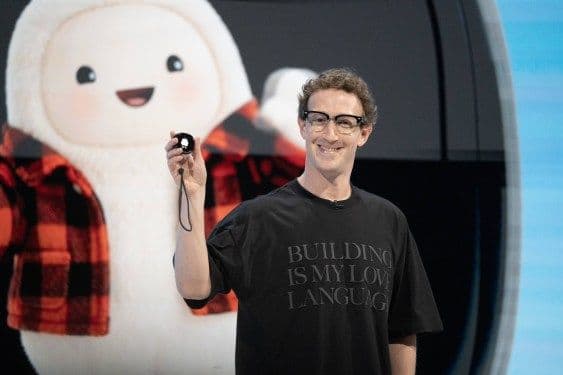
Meta wants to pay for its broad AI buildout with a newly created class of stock
Meta is making a big push into AI, and it’s creating a new kind of stock that could help pay for it. On Wednesday, as the company reported its third-quarter earnings, Semaforreportedthe company might issue non-voting stock, meaning shares that don’t give their owners a vote on company decisions, to help fund its push into artificial intelligence. During Meta’s earnings call, the company confirmed that reporting. Meta’s chief financial officer, Susan Li, said the company plans to “create a new class of non-voting capital stock, which will be distributed to all existing shareholders through a stock dividend.” Li later added that the company “created this new class of shares with the purpose of creating a publicly traded non-voting stock usable for capital raising, employee compensation, acquisitions, and other general corporate purposes while preserving the voting power of existing Class A and B shareholders.” The shares will allow the company to maintain its current “founder-led structure,” she added. They will also expand its “funding tools and give us flexibility to invest behind the unprecedented momentum we’re seeing across every part of our business, driven by AI.” Meta’s earnings were strong this past quarter, beating Wall Street expectations. The company made $64 billion in revenue, a jump of 26% from a year earlier. Its costs and expenses also rose, however, by 68% year-over-year. Reality Labs, the division responsible for Meta’s AR glasses, VR headsets, and VR software, continues to lose money, though less than it used to. The company said in its earnings report that it expects the division’s losses to shrink from its 2025 levels to between $18 billion and $19 billion. Meta has made a big push into AI over the past year. The company has released several AI models, including Muse Spark and Muse Glimmer earlier this year. In recent weeks, it addedMuse Wonderand Muse Spark Open, an open-weight model whose underlying parameters are publicly available for outsiders to use and build on. Meta also launcheda coding agentfor software developers called Muse Code. At its Meta Connect event this year, the company announced a new line of cute and cuddly avatars for AI assistant, Meta Muse, in a push to make its AI services more relatable (and alsomeme-able). As far as can be discerned, those AI products are doing well. “In just a month and a half, more than 10 million people in the U.S. and Canada have set up Muse personal agents,” CEO Mark Zuckerberg said during Wednesday’s earnings call. “Growth continues to be strong, and we have been number one in the App Store almost every day.” “Now that Muse has clear product-market fit, we are entering a new phase and a more operational phase that is focused on scaling it,” Zuckerberg added, claiming later that the company expects to grow the product’s appeal to eventually “serve billions of people.” The company also noted that certain storm clouds linger on the horizon in the form of ongoing regulatory and legal issues. “We continue to monitor active legal and regulatory matters that could significantly impact our business and financial results,” said Li. “For example, we continue to see scrutiny on youth-related issues in several markets, and have a number of youth-related trials scheduled in the coming months in the United States.”
View

Spotify’s current AI bet is about being the music service that agents choose
Spotify had a strongthird quarter, reaching 788 million monthly active users and generating nearly €5 billion (around $5.6 billion USD) in revenue. But the more interesting takeaway from its earnings call was how the company sees people listening to music in the future, and why the rise of AI agents could be good news for its business. Co-CEO Gustav Söderström thinks the music streaming giant is particularly well-suited to this shift. “Spotify is in one of the few categories that actually stands to thrive in the agentic age,” Söderström tells investors. “This is because agents excel at replacing and taking care of things people would rather not do. People love getting rid of chores. But entertainment is the opposite. Nobody asks an agent to ‘summarize a song’ for them.” Instead of opening Spotify, searching for an artist, and building a playlist themselves, listeners could ask an AI assistant to do the work for them. They might want music for a run, a podcast about something they’ve been discussing with an AI, or an audiobook recap that picks up exactly where they left off. Spotify wants to be the service those agents turn to, letting people discover music and interact with Spotify through conversations rather than just its own app. Notably, Spotify was the first music service to integrate withMeta’s Muse assistant, and it also integrates with ChatGPT and Claude. “Our goal is to be the media service that you use from any agent, really turning the growth of agents into a tailwind rather than a headwind. That is exactly what we are seeing now. We are seeing really good adoption of Spotify inside these agents. While other companies are maybe trying to figure out what to do and many are leaning out, we are actually leaning in and participating in the growth instead of standing by the roadside and looking at it,” said Söderström. The market is already showing signs of friction over how agents access third-party services.Amazon, for example, has blocked Meta’s Muse from shopping on its platform, illustrating how major players may restrict outside agents when questions arise around access, security, privacy, or commercial control. Spotify’s pitch isn’t just that AI should just make entertainment easier to find. It should make the experience more personal, too. Söderström describes Spotify today as “an intelligent media service encapsulated as an agent, whether you use it directly through our application or via another agent…Spotify is now an agent that you can not only click on in our app, but talk to, ask questions of, and instruct. We can do things today that no other media services can do,” he said. “For example, you can ask Spotify to go through your listening history song by song back to 2008, picking your true favorites, beat-stretching them by speeding them up or down, and then sorting them by key and BPM. Then you can ask it to mix them together into the perfect running playlist at your exact cadence,” Söderström explained. Spotify has years of listening history to draw on, including the artists people return to, the songs they skip, and the music they discover. That information can help it make recommendations that feel more personal than a generic playlist generated by an AI assistant that doesn’t know much about someone’s tastes. However, Söderström also emphasized that Spotify isn’t sending its listener data to partners. Instead, the agent asks Spotify for something, and Spotify uses its own systems to reason about the request and choose what to play.
View
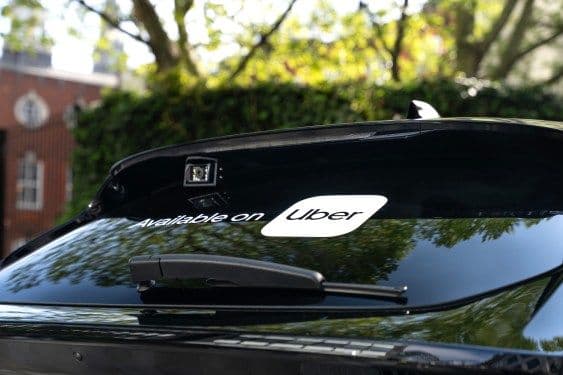
Uber puts all 30,000 employees on ChatGPT Work
Uber and OpenAI announced an expansion of their partnership on Thursday, with the ride-share giant telling TechCrunch that its entire global workforce — some 30,000 people — will now be using ChatGPT Work. ChatGPT Work was introduced in July as an enterprise-focused AI agent that corporate teams could deploy for various workflows. Uber originally piloted ChatGPT Work with 1,000 employees earlier this year but has now scaled up its usage to the entire company. That earlier pilot was deployed to workers from across Uber’s various departments, including finance, operations, and product. Indeed, a majority of the early adopters — some 80% — were non-engineers, Sumanth Sukumar, Uber’s VP of engineering, told TechCrunch. “They used it for a wide range of tasks: analyzing complex data from our operations to identify trends and develop recommendations; localizing training materials for different markets and languages; and building personalized interactive dashboards to manage their daily work,” he said. Yet while the ride-share giant is now going all in on ChatGPT, it has not settled on exactly how employees will use it. “Our approach is to make powerful AI tools available across Uber while giving teams room to experiment,” Sukumar said. “For example, earlier this year we paired 30 AI engineers with teams across Uber and gave them two weeks to automate key parts of their job. Those ‘AI pods’ showed us how much opportunity there is when you combine technical expertise with a deep understanding of a particular job.” Uber didn’t disclose how much it’s spending on the new rollout of the chatbot. Instead, Sukumar said the company will track how employees use the tool. “We’ll look at how employees are using the technology, the kinds of workflows they develop and how it helps them work more effectively. We’ll evaluate those outcomes and use what we learn to guide how we deploy AI across the business,” he said. Uber says OpenAI worked closely with the company on integrating the chatbot. OpenAI has moved quickly toscale up its enterprise businessas it competes with its chief competitor, Anthropic. Once known largely as a consumer brand, the ChatGPT creator has swiftlygained a loyal followingwith business customers, while other AI companies have struggled to keep up.
View

Chinese hackers spied on thousands of companies after breaching IT giant ConnectWise
Thebad week for cybersecurityjust got worse for thousands more companies, who were spied on by Chinese hackers following the breach of IT management and remote access giant ConnectWise. Security researchers at Microsoft saythe China state-aligned hackers broke into ConnectWise’s cloud backup service and stole application credentials that are used to establish data links between ConnectWise and its corporate customers, who rely on the cloud service to back up their company’s data. By stealing the credentials, the hackers could log in to the customer’s Microsoft-hosted environment as if they were an authorized user and access their emails and other files. According to Microsoft, the hackers used AI agents to rapidly hack into around 2,250 organizations at a rate of almost 3,000 attempted sign-ins per minute. Microsoft said this speed gives defenders “little time to detect and respond.” The speed of the mass-hacks was attributed to the use of AI agents, specifically ARTEX, an open source AI framework that works with AI models to stress-test cyber defenses. The same AI software wasused in a recent compromiseof South Korea’s financial systems, many of which hadweak securityand lacked multi-factor authentication. ConnectWisesaidit’s paused access to its cloud backup system and is investigating the breach. As of Thursday, the company said it was working on restoring the service.
View
Google Cloud Adds GPT-6 Astra, GPT-6.1 Sol, GPT-6 Luna Models to Model Garden
Google Cloud has added OpenAI models to its Model Garden platform. The latest update makes the new artificial intelligence (AI) models, including GPT-6 Astra, GPT-6.1 Sol, and GPT-6 Luna, available to enterprise customers. Enterprise developers and businesses can now tap into OpenAI's newest frontier models, other first-party, third-party, and open models on a unified enterprise AI platform.
View
DeepSeek reportedly raises $15B days after US restrictions
Just two days afterthe U.S. orderedfederal civilian agencies to remove DeepSeek’s AI technology from their systems over security concerns, the Chinese AI lab has raised about $15 billion, about 100 billion yuan, one of the biggest funding rounds in the country,Bloombergreported. Potential investors include Chinese battery maker CATL and Tencent, the company behind WeChat, among others, according to the report. The reported funding follows DeepSeek’s investment round in June, when it raised more than$7 billionat a valuation of $50 billion. The company was also reportedly seeking an additional $1.5 billion at a valuation of around $71 billionin July, with plans for a potential IPO in China as early as next year. The Hangzhou-based AI startup is ramping up spending on AI infrastructure and open models for domestic and international markets, even as it faces restrictions in the U.S., the report said. Its expansion could further intensify competition among domestic rivals. The massive funding round is the latest sign of investors pouring billions into AI companies around the world, including those in China, to compete in the global AI race. Chinese company Kimi developerMoonshot AIsecured $2 billion at a $20 billion valuation in May.Manus AIraised more than $500 million earlier this month. Meanwhile, Chinese companies Zhipu AI (Z.ai) and MiniMax, which both went public in Hong Kong in January, have market capitalizations of roughly$29 billionand$7.2 billion, respectively, as of today. DeepSeek was founded in 2023 byLiang Wenfeng, who previously co-founded Chinese quantitative hedge fund High-Flyer, which helped finance DeepSeek’s early development. The AI startup gained global attention in early 2025 with its free-to-use, open-weight RI reasoning model, challenging the dominance of US AI companies. Liang still retains an estimated 81.6% stake in its Chinese operating entity following its earlier funding round, according to corporate ownership dataanalyzed by WireScreen. DeepSeek did not immediately respond to a TechCrunch request for comment.
View

Nirva raises $33M for a pendant that only listens to you
Ambient AI is having a moment. Amazonlaunched a new wrist-worn devicewith Bee; a former Plaud execlaunched ambient appsthrough a startup called Ambi, which aims to also build its own hardware; and Applelaunched Voice Intelligence featuresduring its iPhone launch in September. Now, a company calledNirvais betting on a jewelry-like pendant and its ability to listen only to the wearer. The startup today announced a new $25 million pre-Series A round, adding to the $8 million it raised earlier in the year from investors like Lightspeed and South Park Commons, bringing its total raise to $33 million. Nirva was founded in 2025 by two former Meta Reality Labs employees, Wei Lyu and Jason Chen, along with Hanying Hu, who founded a fashion and jewelry brand. The company’s first device is a pendant, which can also be worn as a bracelet. The device weighs only around eight grams, making it easy to wear all day. Its battery lasts up to three days on a single charge. Longer term, Nirva aims to release more devices. In a call with TechCrunch, Nirva CEO Lyu said that the company wanted to build a wearable that blends in with fashion, but also provides value to users. “This is a piece of jewelry that only focuses on listening to your own speech. We are not like a voice recorder or like a meeting note taker. One key difference between us, Taya, Vocci, or Sandbar Ring is that we’re always passively listening to your own speech. So it’s always on. It keeps modeling the user and modeling your mind,” Lyu said. For ambient devices, privacy is a big question, as people might not like to be recorded all the time. Plus, devices like the Ray-Ban Meta have instilled fear in those who are around the person wearing the smart glasses that they are being recorded too. Nirva gets around this problem by asking users to record snippets of their voice during onboarding and building its model based on that. During use, the device filters out conversations or data captured from the other people around the device. That means it’s only recording the wearer. In addition, Nirva by default doesn’t keep any audio data or transcripts after processing the conversations. Nirva is positioning itself as a personal insights company rather than a productivity startup. However, its app shows you reminders or action items and ways to act on them. Lyu said that through its app, the startup wants to help users show up for others in a better way in their lives. “I think there’s no universal way to help everyone to solve their problems. We are building a tool to help people to improve their self-understanding, self-compassion, and self-awareness,” Lyu said. The companion app parses users’ speech and creates insights that it infers are related to the user’s personality, including patterns, the people who tend to be around them, the places they’ve been to, and other daily notes. Lyu emphasized that the app shows users insights around their emotions, communication style, and ways they can improve. Wyu gave an example of an incident when she forgot to thank her mother for something, and the app later nudged her with a reminder about this. The company also said that, before it discards the audio, it’s able to track the tone, pitch, volume, and speed, which are useful for deriving emotion-related understandings that are then surfaced in the app. Nirva will start taking orders for its devices in November, with an aim to ship them to early users by the end of the year. The $249 device will be available in silver, brushed silver, black, and gold. The startup has competition in the AI wearables area. There are companies like former Apple employees’Taya, which is also building intelligent jewelry. Plus, startups like Friend and Bee are trying to be companion gadgets as well.
View

