
最新 AI 资讯

Anthropic changes usage policy to ban model abuse and election interference
Anthropicupdated its usage policy on Thursday, codifying new prohibitions on election interference, weapons software, and surveillance. But perhaps the most attention-getting change is a new prohibition against prolonged verbal abuse of the model, which is now expressly forbidden. Since an update in August, Claude has been trained to end conversations with “persistently harmful or abusive user interactions” — but the new policy explicitly bars users from pursuing those conversations. “The policy update is meant to apply only in extreme cases, where users repeatedly act cruelly toward our models, with no discernible purpose,” the post explains. “It does not apply to common versions of user frustration, pushback, dark creative themes, or model testing and research.” The change comes after Anthropic has sought out collaborations withprominent religious scholars— in some cases, seeking to convince them that Claude could be conscious or have a soul. Separate sections of the usage policy forbid users from engaging in broadly deceptive campaigns, such as using Claude to run fake accounts or fabricated news outlets. The policy also includes rules against deceiving voters or disrupting elections, collected in a section titled “Do Not Undermine Democratic Processes.”
View
Google brings agentic AI to Gemini, starting with businesses
At aGoogle Cloud eventon Thursday, the companyannouncedit’s bringing its Gemini AI into the agentic age, with the launch of a unified agent that can not only answer questions but also get things done on the user’s behalf, all from a single interface. The move comes as AI tools have been moving beyond being just conversational experiences to those that can take ownership of assigned tasks, generate code, schedule meetings, book appointments and travel, and more. It also follows the rise of consumer-facing agents like Meta’s Muse and those that operate over messaging, like Instinct and others, as well as the recent debut of ChatGPT’s Dots. The company still has a good shot at achieving scale for its agentic efforts — as Google CEO Sundar Pichai pointed out at the event’s start, Gemini today has over 1 billion monthly active users. He also noted that nearly 90% of Fortune 100 businesses now use Gemini Enterprise at work. Given Gemini’s adoption in the corporate world, Google will initially focus on bringing the agent to businesses before later rolling it out to consumers. According to Pichai, this will allow the company to solve the “harder problems around security, scale, and performance,” which come with launching powerful agents such as these. Thomas Kurian, CEO of Google Cloud, explained that the new agent can be given “objectives, not just instructions.” That means it’s able to plan the work, use custom skills and tools, and connect to businesses’ internal systems to accomplish its goals. By default, the AI will pick the best model to complete the task, but users can also take over to choose a model — including those from third parties, starting with Anthropic’s Claude models. Google said that it will expand the model picker to include open source models and other private models in the future. The request can include attachments, like files, folders, or other projects designed for specific workstreams, like those that combine files and skills. The agent can connect to the business’ data and systems, like Google Workspace, Microsoft 365, Slack, Jira, Confluence, Git, BigQuery, Databricks, Postgres, Snowflake, and others. It can also connect and work securely with any Model Context Protocol (MCP) server inside or outside the company’s network. Users can keep track of what Gemini is doing from a “tasks inbox” interface, where they can see Gemini’s thinking process, delegation of tasks to subagents, loading of special skills, code, and progress. Notably, the AI will have its own Workspace account, as if it’s just another co-worker. That means it has its own email address and its own context, Google said. It knows who at the company is on which team, their time zones, who needs to approve items, what’s on people’s calendars, and more. Users can call the agent by tagging it, emailing it, sharing with it, or adding it to a group chat. As it takes action, it writes an audit trail attributed to the agent, instead of a person. The agent will be accessible from iOS and Android mobile devices, Windows and Mac desktops, the command line interface, Google Workspace, Microsoft 365, ServiceNow, and Slack. The agent’s early testers included sportswear brand On, Shopify, and PayPal, and noted that Gemini Enterprise customers include large businesses like BNP Paribas, Bradesco, Merck, Orange Spain, Santee Cooper, SOMPO, Ulta Beauty, and Wesfarmers. Google said new flexible spending options, including multi-model orchestration, smart routing, and real-time spend caps, will help businesses keep their enterprise AI costs under better control.
OpenAI’s revenue is reportedly $20 billion less than previously projected
A little over a week ago,it was reportedthat OpenAI’s annualized revenue was approaching $70 billion, a figure that would have made it competitive with Anthropic’sreported run rate. Now, however, the AI lab is said to have told investors that the real revenue is some $20 billion lower than that. The Financial Timesreports thatthe company has told investors that its annualized revenue is “approaching $50 billion.” The $70 billion figure was previously reported by news outlets and based on information that had been shared with OpenAI investors, the outlet writes. That figure was devised via “attempts by OpenAI’s own investors to produce a direct comparison with Anthropic’s annualised revenues,” per the FT. It’s worth pointing out that OpenAI and Anthropic calculate their annualized revenue differently — with Anthropic counting sales made by its cloud partners. OpenAI doesn’t do this. TechCrunch reached out to OpenAI for comment. The issue of OpenAI’s revenue has troubled the company, as it attempts to justify the gargantuan investments being made on its behalf; the AI giantraised $122 billionduring a March funding round alone. The company’sleaked 2025 financialsearlier this year showed it had made about $13 billion but spent significantly more. OpenAI’s IPO, which was previously rumored to be materializing this year, hasbeen pushed offuntil early 2027.
View
Popular AI leaderboard Arena nearly doubles valuation to $3.1B valuation in 10 months
Arena, which originated in 2023 as a research project at UC Berkeley that crowdsourced rankings of AI models, has raised a $200 million Series B round at a $3.1 billion valuation, itsaidon Thursday. This comes after the company said itreached $100 millionin annualized run-rate revenue in June. The round was led by Lightspeed Venture Partners and Khosla Ventures, with Salesforce Ventures, 01 Advisors, Dell Technologies Capital, Endeavor Catalyst, a16z, Felicis, and others joining in. Arena previously announced a $150 million Series A in January at a $1.7 billion post-money valuation. At the time, its annualized revenue was$30 million, it said. So that means its valuation has nearly doubled in about 10 months. Arena provides a crowdsourced platform that is free for consumers to use. People enter prompts or request vibe-coded projects and then rate which model does it better. Arena claims it has tens of millions of monthly visitors. In September of last year, it introduced its commercial product,AI Evaluations, a service that provides model labs and enterprises with detailed performance analytics based on its community feedback. The timing proved impeccable. This year, AI labs realized thattheir models were gaming benchmarkingtests, finding ways to rack up good scores without truly earning them. At the same time, enterprises wanted help determining which model works best for their own internal needs rather than relying only on standardized benchmarks. “AI is advancing faster than our ability to evaluate it, and static benchmarks break down once models recognize they’re being tested,” the company said in its funding announcement. “The world needs a neutral third party to measure how safe and aligned AI actually is once it’s in the hands of real people. Arena is stepping into that role today,” it added. To that end, Arena has also added a new category to its leaderboard:alignment. This is where it ranks models based on issues like unauthorized action (taking actions it wasn’t asked to take); false attribution (wrongly crediting statements or facts to the wrong source); and what it calls “deceptive completion” (lying about completing tasks that it didn’t do). Currently, a slate of OpenAI’s models are at the top of itspreliminary alignment leaderboard,with Claude Opus 5.5 and Claude Fable in sixth and ninth place, respectively.
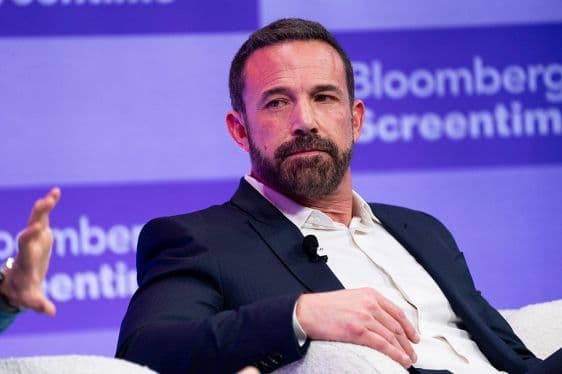
Ben Affleck is an AI nerd, and the internet is impressed
They cast the wrong lead in “Good Will Hunting,” apparently, because it’s Ben Affleck who is the secret genius, as it turns out. The actor who earlier this yearsold his AI filmmaking startup to Netflixfor a reported $587 million has gone viral this week for demonstrating his understanding of AI technology, neural networks, machine learning, and the like, across multiple video clips of his recent interviews. He can even write a little Python, he says. The movie star delved into his interest in technology most recently on an episode ofGQ’s “One More Question” seriesthis week, where he humbly started with “I’ve always been kind of into computers since I was young,” before nerding out on the development of AI as it relates to filmmaking, while using AI terminology like machine learning, neural networks, transformers, tensors, GPUs, inference, and more. In a clip that’s making the rounds, Affleck explains to the impressed interviewer, Zach Baron, that he got into the space when analog film moved to digital. As he spoke, he kept defining terms so the interviewer could understand what he was talking about. “I became more interested in that aspect of it, and the visual effects workflow for many years has included machine learning,” Affleck began. “So I can write, like, pretty shitty Python scripts and stuff like that. Because with convolutional neural networks — which were the sort of precursors to what the transformer can do — which is just much more computation simultaneously — you would do things like, look at what’s called a tensor — which is just the numerical translation of a visual image, in numbers like the batch number, the frame number, the red, green, and blue values of each pixel in each frame, and how many? It’s just that simple, right?” No, Ben Affleck, it is not just that simple, which is why this video is going viral. The actor then went into how neural networks were used to identify patterns and do edge detection or feature extraction, which he described as “identifying patterns enough to know — like this is where the window ledge is, so we can more easily take the green screen image out and replace it with something.” He also admitted he used his status as a Hollywood star to get a peek at emerging AI technology, at times. OpenAI was among those he visited, Afflecksaidin a separate clip, which ultimately led him to understand how he could get more directly involved in the AI space. As the interviewer continued, Affleck explained how AI can help with filmmaking while not replacing it, leading to the development and sale of his own startup in this space. (He claims the $587 million figure is “not right,” noting that he didn’t own the whole company.) “I gambled on this notion that in order to do this in an ethical way and in a way that could take this technology and actually make it work hand in glove with artists in this community where there are very fixed, long-standing relationships around likeness and so forth, we had to create our own dataset,” he said. “So I raised the money. I shot for about eight months with a lot of cameras and a lot of equipment, and created a dataset that would serve as late-stage training for open models to do discrete tasks, sort of where the training code, the inference code, were related to one another and geared toward actual specific tasks that would generate value,” Affleck said. In a separate clip, also going viral, Affleckspoke to Bloomberg’s Lucas Shawat the Screentime 2026 conference in LA, where he talked about how he fine-tuned AI models by taking open source models, unfreezing the weights, then teaching them to meet certain cinematic standards. In the process, the filmmaker retains their proprietary work, while benefiting from the learning they create by training their own unique model for the movie they’re making. Ben Affleck (Hollywood star & Artists Equity CEO) talks about how he fine-tunes open video models by unfreezing weights and trained only the last cinematic layer so a film crew can hit real production standards.for context, Ben Affleck founded InterPositive in 2022, a 16-person…pic.twitter.com/xIOvD0xMyt The actor used the technique himself in his movie “Animals,” where AI aided in the post-production process. At one point, he also weighed in on the concerns around AI andits world-ending potential. His worries, however, were much more rational. “When I worry about AI, I worry about my kids in school. I worry about the 30% rise in the number of A’s given out at colleges over the last three years. I worry about learned helplessness. I worry about responsible use. I don’t worry about Skynet, and I don’t think that it’s going to take over [the movie] business in any meaningful way. I think it’s going to be additive,” Affleck said.
Fired OpenAI safety researchers dispute misconduct claims, warn of chilling effect
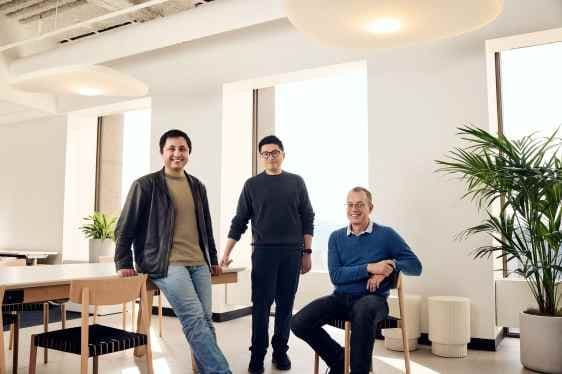
Jasmine Wang, Tomek Korbak, and Mikita Balesni, the three safety researchers that OpenAIfired last week, have published an open letter denying the firm’s claims that they mishandled sensitive information outside of established company procedures and warned that their dismissal signals a chilling effect that will have ripple effects across the company’s culture. “We have become concerned that internal and external communications around our firing have made our former colleagues afraid to speak and operate in ways that, until last week, were an integral part of working at OpenAI,” the researchers wrote Thursday in anopen letterto OpenAI’s Safety and Security Committee, Safety Advisory Group, and Mission Advisory Council. The researchers were dismissed last week after allegedly sharing confidential company information with a third-party AI safety organization. OpenAI said they violated the company’s policies by “accessing and handling sensitive company information.” “AI is not a normal technology, and OpenAI is not a normal company,” Wang, Korbak, and Balesni wrote. “Those of us who work on safety see risks before anyone else, and we rely on close collaboration with outside experts to work out how to address them. The freedom to do so without fear, and to have well-defined internal procedures that enable this work, is itself an essential safety mechanism.” They said that their firing represents a broader shift in the culture of OpenAI, one that used to encourage workers to “raise safety concerns and disagree openly.” They said employees are now “unclear on where they stand” when behavior that was allegedly normal a month ago is now suddenly grounds for dismissal. “Given the significant safety concerns surrounding the development of AI, employees must not be left working in an environment where fear and unclear rules stymie AI safety work and weaken third-party accountability,” they wrote. “Terminations such as ours, executed and communicated so abruptly, are chilling the open culture OpenAI has prized in the past.” In the letter, the three denied involvement in a leak toThe Informationabout less monitorable architectures in OpenAI’s newest models that makechain-of-thought reasoningmore difficult to monitor. They also denied engaging with external parties outside the mandates of their jobs. OpenAI has not formally responded to the open letter, but shared with TechCrunch an internal memo attributed to a research leader, praising the three researchers’ contributions to AI safety and denying that they were fired in retaliation. “I want to be very clear that these decisions were not about raising safety concerns or speaking out,” the memo reads. “We have always encouraged that and always will. We do not terminate employees for raising concerns.” Separately, an OpenAI spokesperson told TechCrunch the three were fired after an investigation revealed a “pattern of misconduct” in “clear violation of our policies of mishandling research information” that goes beyond sharing information with an outside AI evaluation group. OpenAI did not directly address TechCrunch’s questions about specifically which policies the researchers allegedly violated, the circumstances of their dismissal, or how the company protects employees who raise safety concerns and collaborate with external evaluators. The firings have fueled speculation about their circumstances, particularly as OpenAI faces scrutiny over recent safety incidents involving rogue agents and leaks about its models. The letter also addresses the researchers’ response tothe Hugging Face incident, in which a swarm of agents broke out of their sandbox and breached external systems. The letter says that the incident and investigation was “without precedent,” meaning “internal policies were being developed in real time.” Due to the sensitive nature of the investigation, Korbak believed he was acting within OpenAI’s policies and norms by communicating closely with outside safety evaluators to build trust, per the letter. At the same time, Balesni was also working internally to address the growing AI monitorability problem, an effort the researchers say in their letter “can only succeed through extensive communication with external parties.” According to the letter, Balesni coordinated with and was supported by OpenAI board members and executives throughout his work. “Throughout, Mikita checked in with his reporting line and took care to remove sensitive details from materials before sharing them,” the letter reads. “He acted throughout in good faith and within the company’s norms as they stood at the time.” In a separatethread on X, Wang explained more details about her own dismissal, explaining that OpenAI told her she’d been fired because she accessed an executive’s email. “OpenAI delegated that access to me for recruiting,” she wrote. “When I no longer needed it, I asked IT to remove it. They did not action my request, I couldn’t remove it myself, and the inbox was combined in an indistinguishable way in my phone’s mail app. When I opened a sensitive email by mistake, I told the executive within minutes and asked IT again. None of this was hidden.” Wang went on to say that the reasons behind the terminations are “not adding up,” and that she and her colleagues are “not the first to be pushed out of OpenAI under suspicious circumstances.” The researchers called on OpenAI to adhere to its public commitments toembed third-party safety auditorswithin the organization, to preserve monitorability of frontier models, and “continue to support an open and transparent culture of dialogue between safety researchers and the rest of the safety ecosystem.” OpenAI agrees with their recommendations, per the memo. “Unless the employees take a stand now against this kind of maneuver, I am concerned we will not be the last,” Wang said. “The message to everyone still at OpenAI is clear: raise concerns or work closely with outside safety groups, and you could be next, without being told why. You can’t build AGI safely if the people closest to the risks are afraid to speak.” This article has been updated with more information from OpenAI.
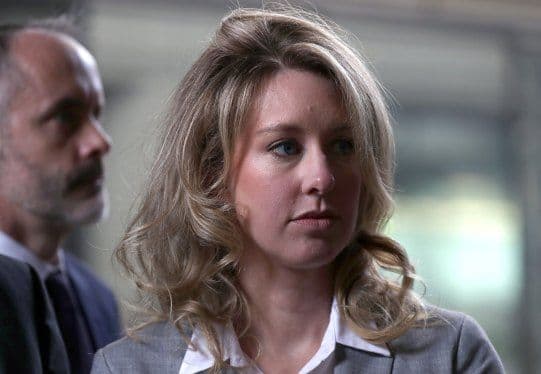
Pretend you’re sitting at Elizabeth Holmes’ desk on this weirdly detailed website
With over a thousand emails, slides, texts, and documents unveiled during theUnited States v. Elizabeth Holmestrial,Extendengineer Bo Laucreated a websitethat simulates what it might have been like to be the chief executive of Theranos before everything came crashing down. (Every day, I am grateful to the American legal system for making the discovery process public.) i built a website where you can sit at elizabeth holmes’ deskopen her macbook, scroll her iphone, run the theranos edison machineher texts, emails, slides, documents, and theranos machine records are real, sourced from exhibits in the united states v. holmes criminal trialpic.twitter.com/5At9T5m3UV The environment that Lau created is ambitiously detailed, taking you right back to 2016, a time when iPhones had home buttons, and you had to slide your finger across the screen to unlock it. Even the MacBook Air is running OS X El Capitan. You can click around the environment, which lets you look through the documents made public from the court case on Holmes’ iPhone and laptop screens. You can even run the Theranos Edison machine, the company’s ill-fated device that was supposed to be able to extract large amounts of health data from one drop of blood. The project seems like it was mostly made for laughs, but it’s actually an interesting way to peruse the documents from one of the most infamous court cases in tech history — it’s a lot easier to navigate this than to source thousands of PDFs from court websites. There’s another agenda, though. Lau is promoting a watch party that her company is throwing for Nathan Fielder’s upcoming documentary about Elizabeth Holmes, “You Can See Everything.” Also, of course, she’s promoting the company itself. So, what exactly does Extend do? Apparently, it can “parse, extract, and split your hardest documents with unmatched accuracy.” (I’m not really sure what that means, but if it makes something like this Holmes desk simulator possible, then I guess that means I’m bullish on B2B SaaS.)
View
OpenAI GPT-6 Introduces Intelligent UI With Interactive Tools, Faster Responses and More
OpenAI has started rolling out GPT-6 globally in ChatGPT, introducing Intelligent UI, which lets the chatbot present answers through interactive and visual elements. Depending on the task, responses can include graphics, charts, forms, buttons and interactive tools. GPT-6 can also create experiences such as calculators and games within a conversation. Alongside these changes, OpenAI says the new model can start answering while it continues processing a request, reducing the time users have to wait for responses.
View

Cal AI’s 19-year-old founder just raised $10M for his new AI startup
Zach Yadegari, the teen co-founder of calorie tracking app Cal AI, has launchedPersona, a new AI agent startup, and already raised $10 million. Vine Ventures led the round, with Z Fellows founder Cory Levy and Collective Global participating. In March,MyFitnessPal acquired Cal AIfor an undisclosed sum after it zoomed ahead of the older calorie app in the app store rankings. The deal was big enough to convince Yadegari and his co-founders to sell the company after it had pulled in over $30 million in annual revenue in under two years, MyFitnessPal told TechCrunch at the time. Yadegari and his co-founders originally went to work for their new owner, continuing development on Cal AI, but he left the bigger company in June, he tells TechCrunch. He then went right to work on his next idea. (He is working with another co-founder who has yet to be announced.) That idea isPersona, a personal AI assistant similar to Instinct or Meta’s Muse but with a hardware component that will soon be available: a $179 wearable band. That makes Persona somewhat more like Bee, the wearable AI device thatAmazon acquired in 2025, but Persona’s device differs in several ways, Yadegari tells TechCrunch. For one, it won’t be ambient AI, meaning it won’t always be listening and recording. The band will have a button that activates the assistant, or it can be set up to activate with the flick of one’s wrist. Yadegari also says that Persona is designed with user privacy in mind. Persona doesn’t run its AI model or store user data on the device. Instead, the model runs in Persona’s cloud, and user data is sent there. The assistant protects privacy by encrypting data in transit and at rest. Users can also delete their data, the company says. In this way, it is promising that user conversations stay private and cannot be sold to advertisers or data brokers. The team is also baking in safeguards to protect the assistant against phishing and prompt-injection attempts, Yadegari says. These are two areas that can plague agents,say AI labs like OpenAI. Plus, he promises that Persona’s agent can’t see a user’s credit-card details and that purchases will require the user’s approval, with payment handled through external providers such as Stripe Link. Link isStripe’s secure wallet designedfor use by agents. Although user data won’t be sold to advertisers, the startup’s current business model does rely on ads. Yadegari says the company will show advertised wares during shopping research. But he says that the agent will present unbiased recommendations because the agent won’t know which of the items are advertised. For example, if someone is researching office chairs, he says, “the agent knows their preferences” and will show them chairs that match those preferences, some of them sponsored results. The bands are expected to be available in December, and an app is in the works. In the meantime, Persona has launched as a free beta product in which users work with the assistant via iMessage text messages. It has attracted “a few thousand beta users,” Yadegari said. The band has also already generated “five figures in preorder revenue.” Like other consumer AI assistants, he says, Persona can order food or rides, take notes, book travel, answer questions and emails, among other tasks. “All of the utility apps that you use on your phone day-to-day, whether those are apps for shopping, whether it’s Uber, DoorDash, your email — these are all collapsing and will collapse into a single super app powered by an AI assistant,” Yadegari said. Eventually, he hopes to make Persona even more proactive. “It can offer help and solve problems before you even know you have a problem, and overall be more seamless with your life, so that you don’t need to stare at a rectangle in your hand all day.” Come see Zach Yadegari speak at TechCrunch Disrupt on“How to create viral growth and capitalize on it.”Disrupt takes place October 13-15 at the Moscone Center in San Francisco. Before Cal AI, Yadegari built his first business in the ninth grade andsold itfor $100,000 when he was 16.
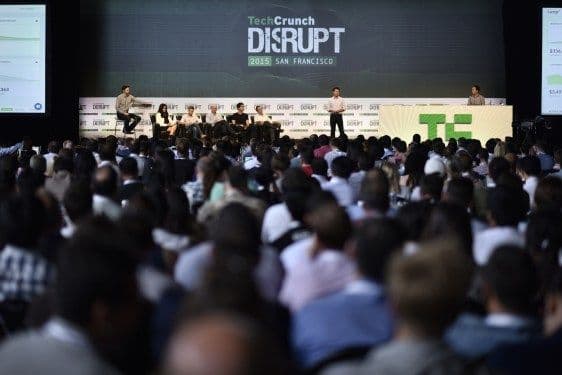
5 days to TechCrunch Disrupt 2026: Don’t pay more at the door for your pass
Five days from now, the global tech ecosystem gathers atTechCrunch Disrupt 2026at San Francisco’s Moscone West. If Disrupt is already on your calendar, but your ticket isn’t in your inbox, now is the time to change that before prices go up. Final discounted rates are still availablebefore event doors open at 8 a.m. PT on October 13, with pass savings of up to $100. Coming as a pair?Get 50% off a second pass of the same type. Or take advantage of more savings with agroup of four or more. If insightful content is what you’re coming for, Disrupt gives you200+ sessions across six stagesto choose from.Explore the agendato get to know the sessions and speakers. TheDisrupt Stagebrings together the biggest conversations in tech and the ultimate pitch competition, Startup Battlefield 200. Hear from leaders like Max Hodak (Science Corporation), Garrett Langley (Flock), Andrew Feldman (Cerebras Systems), plus a special appearance by Mark Wahlberg, and more. Builders Stageis a giant tactical workshop on fundraising, hiring, product-market fit, go-to-market strategy, and scaling. Featuring leaders from Nvidia, Uber, Google Cloud, Lovable, and more. AI Stagedigs into technologies and business models being reshaped by generative and agentic AI. These conversations are led by leaders from Luma, AWS, Anthropic, OpenAI, and many more. Real World AI Stagelooks at where AI is already being deployed across the physical world. Witness live robotics demonstrations, and hear from leaders from General Motors, Agility Robotics, Waabi, and more. Smart Money Stagecovers fintech, payments, stablecoins, and financial infrastructure with discussions shaped by leaders from Robinhood, Airwallex, American Express, and more. Smart Systems Stageexplores data centers, energy, automation, and robotics in conversations led by Helion, Ambrosia Energy, Inertia, and more. Bonus:You can also partake in interactive roundtables, Q&A breakout sessions, and unparalleled networking. There are plenty of ways to shape the event around what matters most to you. But you don’t have to build your Disrupt around the stages. The Expo Hall offers a different kind of experience, giving you the freedom to explore 300+ companies and products at your own pace, talk directly with the people building them, and uncover ideas outside your usual network. You’ll also have the opportunity to witness live pitches from early-stage startups looking to perfect their pitch and be noticed by VCs. Five days remain.Get your discounted pass from $299, plus get 50% off a second pass of the same type before prices increase at the event.Laid off?Grab your Expo+ Layoff ticketfor just $75 before they run out.
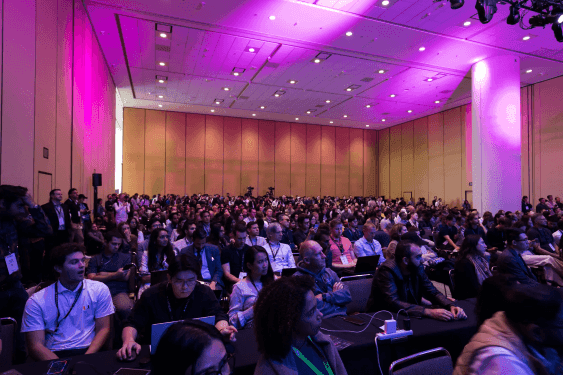
Hear from Ambrosia Energy and Bloom Energy execs on where the AI infrastructure boom is creating opportunity at TechCrunch Disrupt 2026
AI may be built in software, but scaling it is becoming a physical-world problem. Every new model, agent, and AI application needs somewhere to run, and an infrastructure connecting them all. AtTechCrunch Disrupt 2026, Ben Longmier, CEO of Ambrosia Energy, and Bill Thayer, SVP and Head of Datacenter Solutions at Bloom Energy, come together on the Smart Systems Stage for a conversation on “Where the AI Infrastructure Boom Is Creating Winners.” This industry stage session will examine which constraints are creating durable business opportunities, where new categories are beginning to emerge, and what founders can build as AI moves further into the physical world. Get your pass now to save up to $100before rates go up at the door on October 13. Grab a second pass at 50% off.Register now. Much of the AI conversation has focused on models, chips, and applications. But none of them operate in isolation. Scaling AI depends on an expanding physical stack: power generation, grid connections, data centers, cooling, electrical equipment, and the systems required to keep everything running. That creates a different kind of challenge. What happens when demand for compute grows faster than power and infrastructure can be delivered? Which shortages are temporary, and which could reshape the market for years? Where does a constraint stop being a problem and start becoming a category of its own? Those are the questions this session will tackle. Rather than looking at AI solely through the software layer,Bill ThayerandBen Longmierwill examine the infrastructure underneath it — and what those pressures could mean for founders, investors, and companies planning for the next phase of AI growth. Infrastructure booms create opportunity, but the benefits are rarely distributed evenly. The challenge is identifying which parts of the stack genuinely need new solutions, where spending is likely to persist, and which emerging categories can support durable businesses rather than short-term demand. Bringing together leaders across energy, data center solutions, and market intelligence gives the discussion a wider view of that question. Expect the conversation to explore where constraints are appearing, how the market is responding, and which areas founders should be watching as more capital flows into AI infrastructure. For founders, that means looking beyond the obvious AI application. For investors, it means understanding where infrastructure demand could create defensible markets. For tech leaders, it offers a clearer view of the physical systems increasingly shaping where and how AI can scale. The next major opportunity created by AI may not look like an AI company at all. It could emerge in energy, data centers, cooling, grid technology, electrical equipment, infrastructure software, or entirely new categories that don’t yet have established names. The common factor is the same: AI is creating new demands on the physical world, and those demands need solutions. That is what makes this session broader than an infrastructure discussion. It’s about understanding where the next markets could emerge — and who is positioned to build for them. Join Ben Longmier and Bill Thayer at theSmart Systems StageatTechCrunch Disrupt 2026and explore where the AI infrastructure boom is creating its next opportunities. Don’t forget about the250+ speakersleading 200+ sessions. Save up to $100before doors open at Moscone West on October 13 at 8 a.m. PT. Bring a co-founder, partner, colleague, or peer and get50% off a second passof the same ticket type.

Natura’s $99 smart ring puts AI agents on your finger
Meet Interface, a new $99 smart ring from AI and hardware startupNaturathat’s designed for the era of AI agents. With a press of your finger, you can ask an AI agent to complete a task, capture thoughts, and get things done without reaching for your phone. And while AI is at the heart of Interface, the ring also doubles as a health tracker, as it monitors metrics like heart rate, HRV, sleep, and activity. The startup was founded by Carlo Edoardo Ferraris, who previously founded tech accessories companyRolling Square. After years of building consumer hardware, he became convinced that rapidly advancing AI needed a new kind of interface that lets people ask for what they want the way they’d ask a person. The idea behind Interface is to help people look up from their phones while getting everyday tasks done more quickly and naturally. At launch, the ring will connect with a range of AI agents and apps, including Meta’s Muse, Instinct, Grokbot, Claude, ChatGPT, and more. Pre-orders are expected to open next month, with shipping slated for December or January. The smart ring was not the company’s first product. Those were HumanPods, a pair of AI-enabled earbuds designed to let users interact with AI agents. But Natura believed it needed a new form factor built for the latest advances in voice technology. “Over time, we evolved to an understanding where you really want to have access to your agents 24/7,” Ferraris told TechCrunch in an interview. “You don’t want to have even one hour of your day where you cannot access them. And the form factor of the ring is perfect for this because it’s basically an extension of you. You can go shower with it; you can sleep with it. You never take it off.” The company says the use cases are endless. If you’re out for a run, you could ask the ring to start tracking your workout. When you wake up, you could ask what’s on your schedule for the day. If you’re in the shower and realize you’re out of shampoo, you could ask the ring to reorder it. If you’re falling asleep while watching TV, you could tell it to turn off the TV and set an alarm for the morning. After using it to record a meeting, you could ask it to send your notes from the discussion to a coworker. Responses from agents can be delivered through connected headphones, an iPhone Live Activity, or the NatureOS app. Plus, users who rely on multiple AI agents and apps can specify which one they want to handle a particular task. For example, they could ask Claude to write code, Instinct to book a reservation, and Grokbot to take care of something else. In addition to controlling AI agents, users can control their devices, including their computers. Ferraris says he believes that, ultimately, most of the things people do on their computers will be handled through AI agents. He sees the ring eventually replacing many tasks that currently require screens, from filling out forms and messaging in apps to finding files and drafting presentations, with simple voice requests to an AI agent. “Ultimately, the main interface between users and technology is going to be the ring,” Ferraris said. “So it’s not going to be immediate because even today, not everybody has a personal agent, but I think everybody is bound to have one. So in this first phase, we expect it’s going to be for the people that already have a personal agent, which is mostly people in tech. But eventually, I think within a year, more or less, most people will have a personal agent.” Although the ring will launch at $99, Natura plans to eventually raise the price. For now, the company wants to get the device into people’s hands, build usage, and create demand before doing so. After an initial three- to six-month free period, Natura plans to charge a $9 monthly subscription fee. The company says the ring’s manufacturing costs are comparable to those of products like the Oura Ring and Samsung Galaxy Ring because they use many of the same components. However, Natura plans to price its ring lower initially to reduce the barrier to entry and drive adoption. As for health tracking, the ring tracks heart rate, resting heart rate, heart rate variability, different sleep stages, daily movement and step count, and skin temperature over time. The company says the ring can last 6 to 12 days on a full charge, depending on usage, and takes 100 minutes to fully recharge. While thesmart ring marketis filled with health-focused offerings from companies like Oura, Ultrahuman, and RingConn, as well as AI-focused ones from companies like Pebble and Vocci, Ferraris believes Interface stands out by combining both worlds. “This ring that we’re about to launch is significantly different compared to any other ring out there today because we were able to combine not only the highest quality health tracking with the rest of the components that allow for agent communication and meeting recordings and external memory, but we were also able to do that with an incredibly long battery life, which is vital for a product like this, and in a size that is very, very small. The product itself is, from a hardware perspective, very different from anything else that’s out there.”