🚀 Zaprep: Your Socials on Steroids. 免费开始 — 每月自动发送 1,000 条私信,将互动转化为潜在客户。 ,每月 1,000 条自动私信。
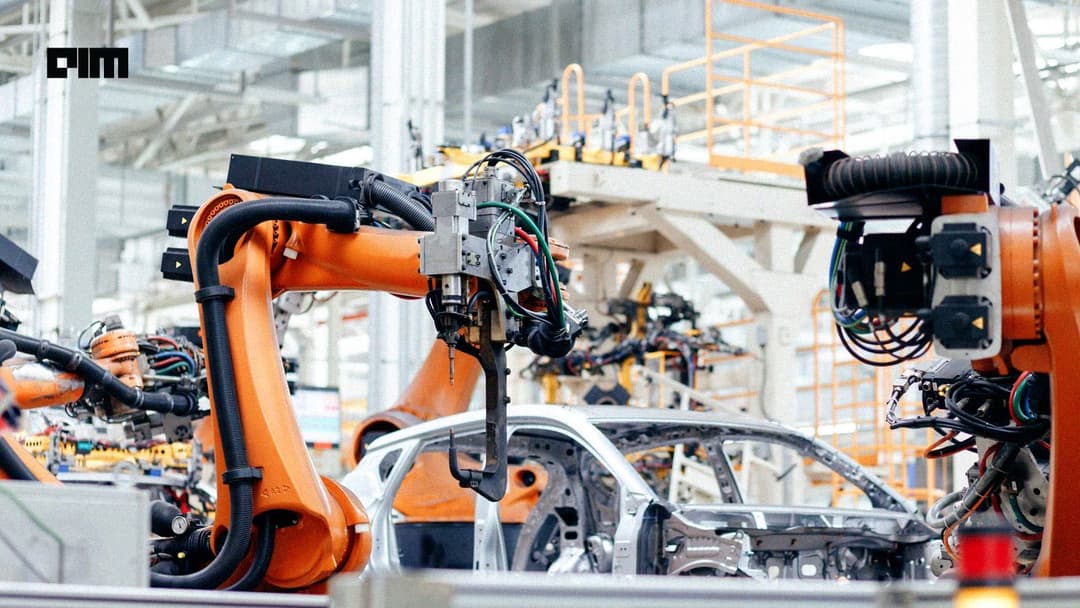
Tata AutoComp Systems is deploying AI across its 61 manufacturing plants to automate quality inspection, predict equipment failures, and retrain its workforce.
View

Netflix recently began rolling out a new way for viewers to search for shows and movies on its platform. While we can search for content online via voice dictation, it merely presents results based on keywords. However, the new native AI-based voice search tool will provide contextual search results, taking the intent of the user's query into account. Currently available to a small set of users in beta, the content streaming company is asking users to test the new functionality and provide feedback on how it can be refined, while also pointing out the bugs and issues. The company has yet to announce when the stable version of the AI search tool will be rolled out to a wider global user base.
View

The chip-making companies of the world are facing a strange conundrum currently. While they cannot ignore the financial incentive to provide their best memory components and processors to artificial intelligence (AI) companies, they also cannot overlook the consumer market, which has been their primary source of revenue for decades. There are challenges, but the AI era has also led to new opportunities for companies, provided they can build use-case-specific products and scale them effectively.
View

The year 2026 can be largely related to the widespread adoption of Artificial Intelligence (AI) and the year of agentic AI. We have seen all the major brands building new AI agents, whether it be Meta, OpenAI, Google, Anthropic, and more. However, only a handful of players are focusing on the hardware that can power the new AI features. A few years down the line, the conversation around chips used to be fairly simple: faster cores, better cameras, longer battery life, and more.
View

Reliance held the 49th edition of its annual general meeting (AGM) with shareholders on Friday. The Indian conglomerate unveiled various new artificial intelligence (AI) innovations that its telecom service provider (TSP) arm, Reliance Jio, plans to join in the coming months in the country. Among the many announcements, the company revealed its plan to integrate AI directly into its network. The company claims that this will allow the TSP to introduce a voice-based AI call agent for its subscribers. During the presentation, the company demonstrated the AI agent's capabilities, showing that it will be able to transcribe calls and generate call summaries without asking users to download a standalone app.
View

Samsung announced a new artificial intelligence (AI)-powered pet care solution at VivaTech 2026 in Paris on Wednesday. The feature is being developed in collaboration with startup Lifet. Part of Samsung's broader connected healthcare vision, it would allow Galaxy smartphone users to monitor health issues in their pets using just a photograph. It is claimed to be capable of analysing photos for signs of potential conditions like cataracts, dental diseases, and patellar luxation.
View

ChatGPT continues to be the world's most popular artificial intelligence (AI) assistant, but it now faces intense competition in the generative AI space. According to a recent market analysis, the AI chatbot's market share has slipped below the 50 percent mark for the first time since its launch in late 2022. The report mentions that users are increasingly looking towards rival AI apps like Gemini, Claude, and Grok. The move reportedly indicates a shift in consumer behaviour, with external events affecting user loyalty.
View

Reliance Industries Limited (RIL) announced several AI-powered initiatives for its media and entertainment business at the 49th Annual General Meeting (AGM) on Friday. The company outlined new features for JioHotstar, including JioStar GenAI Media Studio (JAMS), which is designed to streamline the content creation process. AI Snapshot, Content Commerce, and Multiview were also announced, with the aim of transforming how users discover, consume, and interact with content. During the annual meeting, RIL also highlighted the growth of its media ecosystem involving JioStar, Jio Studios, Network18, and JioHotstar.
View
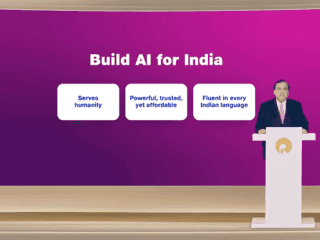
Reliance hosted its 49th annual general meeting (AGM) of shareholders on Friday. During the keynote presentation, the Indian conglomerate showcased new AI innovations coming to its platforms. Reliance has announced that it will launch five new AI platforms in India, namely JioBharat IQ, AI Vyapar, JioHealth IQ, JioLearn IQ, and JioKrishi IQ. On top of this, the company has also revealed that it is integrating AI directly into the Jio network to bring an AI-powered agent, which can be triggered with a voice command during calls. The AI agent will be available in all regional languages in the country. Additionally, the company has also unveiled the Jio TeleFrame, its new family of AI agents.
View

A joint warning was issued by intelligence and cybersecurity agencies from Australia, Canada, New Zealand, the UK, and the US on Monday. In a statement, the alliance, commonly known as the Five Eyes, said that AI has the potential to dramatically accelerate cyberattacks in the coming months. The agencies have warned against frontier AI models that have developed the capability of both offensive and defensive actions sooner than previously anticipated, claiming that cybersecurity cannot be treated as a purely technical issue anymore.
View

Mozilla introduced a new Shake to Summarize feature on Firefox for iOS last year, allowing users to get a summary of a webpage with a simple shake or tap gesture. Now, the browser maker is bringing a similar feature to users with Android devices. The latest Firefox version for Android includes a Page Summaries feature that can generate an overview of a webpage. This is useful for users dealing with lengthy articles to get key points without having to read the entire content. Users can manually enable or disable the feature through the browser's settings menu.
View
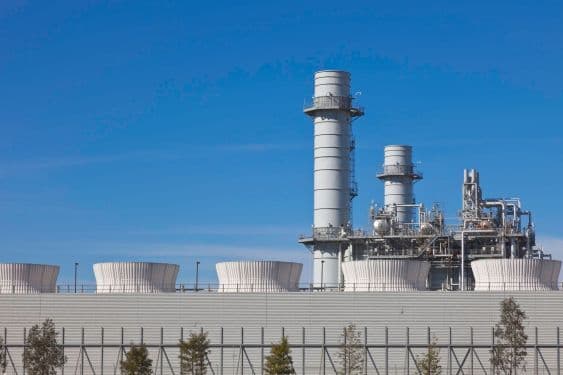
Nvidia just announced a warm-water cooling system that it says can dramatically reduce the amount of water a data center uses — eliminating “pretty much all water usage” inside the data center, according to an Nvidia executive in apress release. “The water consumption challenge for data centers is largely solved,” Josh Parker, chief sustainability officer at Nvidia, recentlytoldAxios. But that’s only part of the water story. As long as AI data centers run on fossil fuels — a choice tech companies areincreasingly making— the savings stop at the data center’s walls. The core issue is how Nvidia measures data center water use. According to its blog post, the company essentially draws a line around the data center. Anything inside gets counted, and anything outside gets ignored. To be fair, Nvidia’s system does appear to deliver on its facility-level promise — the coolant runs in a closed loop, filled once and recirculated for the life of the facility, meaning no new water is consumed to cool the chips. In favorable climates, the company says, that can amount to a 100% reduction in on-site water use. TechCrunch has asked Nvidia to clarify the matter, and we’ll update this article if we receive a reply. The problem is, water use outside of the data center — primarily in electricity generation and chip manufacturing — candoubleortriplethe total water footprint of a facility. That means Nvidia’s solution addresses about a quarter to a third of AI data centers’ total water consumption. The new system is clever, pumping coolant into racks at 45°C (113°F). That’s hot for humans but not for computer chips. After passing through a server, the coolant emerges at 55°C (131°F), Nvidia said, bringing a significant amount of heat away from the hardware. At that temperature, the outside air in most climates can draw heat off passive radiators without evaporative cooling or, in some cases, fans. A data center without fans or chillers would not only use less water, but it would also be more efficient and quieter. But no data center can operate without an electricity supply, and many types of power plants are themselves major water consumers. Fossil fuel power plants are one of the largest water users in the U.S., consuming 2.7 billion gallons per day,accordingto the U.S. Geological Survey — most of it for evaporative cooling. Natural gas power plants use 1.17 liters of water for every kilowatt-hour of electricity they generate, according to arecent study. Coal plants are even more water-intensive, using 2.2 liters per kilowatt-hour. Fossil fuel power plants collectively generate about half of all data center power today,accordingto the IEA. Hydropower dams, which supply around 10% of data center power, don’t consume water in the same direct way, but evaporation from their reservoirs amounts to 6.8 liters lost per kilowatt-hour generated. Geothermal, a source that tech companies are starting to explore, varies widely — it can be higher or lower depending on the specific technology. Some enhanced geothermal startups, like Fervo, havepledgedto use mostly “degraded” water that would otherwise go unused. Wind and solar power, on the other hand, use vanishingly small amounts of water, about 0.01 liters and 0.03 liters per kilowatt-hour, respectively — figures that include the water needed for manufacturing and cleaning solar panels. While renewables are providing a growing share of new electricity capacity, natural gas and coal are expected to provide more than 40% of new electricity needed to meet data center demand through 2030, the IEA projects. Without major changes to that trajectory, data centers will still consume large amounts of water, regardless of what Nvidia does inside its walls.
View

