🚀 Zaprep: Your Socials on Steroids. 免费开始 — 每月自动发送 1,000 条私信,将互动转化为潜在客户。 ,每月 1,000 条自动私信。

Developed by Baseten, the API serves Z.ai’s GLM-5.2 at over 280 tokens per second, targeting high-volume coding and agentic AI workloads.
View

Z.ai’s latest open-source model, GLM 5.2, has gained attention for its performance in coding, reasoning, and agentic workflows.
View

At the company’s 45th annual general meeting, Nilekani argued that closing the gap between AI’s promise and its enterprise reality is exactly the work his firm was built to do.
View

Gautam Adani says infrastructure and intelligence will be the twin pillars of growth as the group expands its digital infrastructure footprint.
View

Flipkart has built a centralised chaos engineering platform using LitmusChaos, a CNCF-hosted open-source project that deliberately injects controlled faults to identify system weaknesses.
View

SpaceX's blockbuster IPO and a looming wave of AI listings are igniting interest on Wall Street, and India's top brokerages are rushing to make the most of it.
View

The University of Southampton Delhi offers UGC-approved, world-class UK degrees locally, combining global academic standards with extensive industry employability.
View

Aampe's AI technology will be integrated into MoEngage's platform, enabling brands to implement seamless, individual-level decision-making.
View

Founded by media artist Refik Anadol, DATALAND combines artificial intelligence, sound, scent, and wearable technology to create immersive experiences that challenge traditional ideas of art and authorship.
View
The multi-year mandate will see Infosys manage applications, infrastructure and service desk operations for the semiconductor manufacturer.
View

Indian customer engagement software firmMoEngage, which serves brands across global markets, has acquired San Francisco-based startupAampein an all-cash deal, betting that AI agents that make decisions for individual customers will become the future of marketing. MoEngage did not disclose the financial terms of the transaction, but a source familiar with the matter told TechCrunch that the all-cash deal was worth tens of millions of dollars. Founded in 2020, Aampe develops software that assigns a dedicated AI agent to each customer,allowing brands to personalize messagingbased on individual behavior rather than traditional audience segments and campaign rules. The startup has more than 30 customers across the U.S., Europe, and Asia-Pacific, and grew annual recurring revenue by 150% over the past year, MoEngage co-founder and chief executive Raviteja Dodda said in an interview. Dodda told TechCrunch that the acquisition will help it win customers using rival marketing platforms such as Salesforce and Adobe. “A large part of our growth is driven by migrations of enterprise customers from Salesforce Marketing Cloud and Adobe Experience Cloud,” Dodda said. MoEngage recently signed three to four multimillion-dollar annual contract value deals with customers that switched from Salesforce, Dodda said. He’s hopeful that the Aampe acquisition will help him win more of such customers. The acquisition comes as software companies race to embed AI deeper into enterprise applications, moving beyond tools that generate content or assist employees toward agents making autonomous decisions. In marketing, that includes deciding which customers to target, what messages to send, and when to send them. Aampe’s technology is used by brands such as Swiggy, Grab, and Taxfix, some of which also use MoEngage’s customer engagement platform. The acquisition comes over six months after MoEngageraised $280 millionthrough a mix of primary and secondary transactions. Around 20 Aampe employees will join MoEngage, taking the company’s workforce to roughly 820 people. MoEngage said it serves more than 1,350 consumer brands across 75 countries, including customers in sectors such as retail, financial services, media, and food delivery. Founded in 2020, Aampe has raised about $28 million across three funding rounds. The startup counts Peak XV Partners, Z47, and Theory Ventures among its investors.
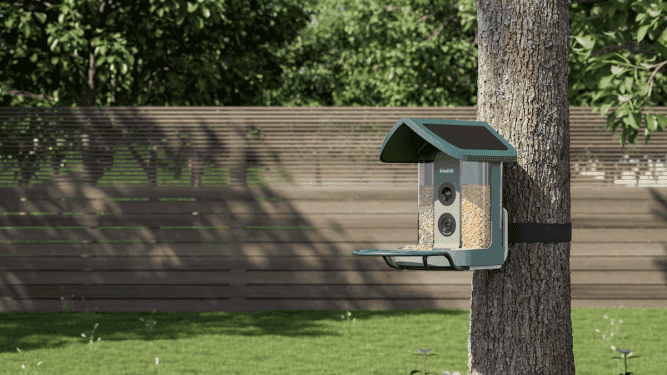
Earlier this month, I got my hands on theKiwibit Bird Feeder 2 4K AI Camera, and it has become my favorite backyard accessory. Setting it up is pretty straightforward. Multiple mounting options allow you to place the feeder on a pole, window ledge, or tree. Its dual seed compartments are designed for easy refills and cleaning. The solar panel on top ensures you don’t have to worry about batteries running low. Durability and camera quality are also strong points. Other specs include support for 2.4 GHz Wi-Fi, cloud storage, built-in two-way audio with a microphone and speaker, and a 130-degree wide-angle lens. As soon as I installed it in the backyard, I connected the feeder to the companion Kiwibit app on my phone. This is where you can be notified when a bird stops by, watch recordings, and track all the visits. A few weeks into testing is when the real fun started. My phone buzzed with a notification every time a new visitor showed up, and I found myself eagerly waiting for updates. Even on extremely rainy days, I managed to entice a few birds, including a stunning northern cardinal that I’ve now come to anticipate seeing every morning. As of this writing, the device has successfully recorded visits from six species. I’ve been addicted ever since. I find myself eagerly checking the app every morning to see which feathered little guy stopped by. I show off the videos to almost everyone I know as if they’re my own pets. One amusing notification I keep receiving is “a nuisance animal detected” when squirrels raid my birdseed stash (which happens as often as you’d expect). The app uses Kiwibit’s proprietary bird-identification algorithm to identify over 10,000 bird species, such as blue jays, ravens, and mourning doves. The Activity tab is particularly useful, as it tracks the number of “visits” captured, videos recorded, and total species observed. You can also navigate through the calendar to view specific days. The Birds tab offers in-depth information on each species, featuring detailed descriptions from Wikipedia. However, I did notice that the system — which typically costs between $179.99 to $249.99 depending on the model — occasionally has trouble accurately counting “visits.” For example, if a house sparrow is feeding in front of the camera for several minutes, the AI might record it as multiple visits, even if the bird hasn’t moved that much. More expensive models are currently available at a discount forPrime Day at Amazonorvia Kiwibit themselves. Overall, testing the Kiwibit Bird Feeder 2 has been delightful. If you’re looking for a way to connect with nature while having some fun collecting bird species like Pokémon, give this smart feeder a try. Just be prepared for all the squirrels to visit, too. This post originally published May 29 and has since been updated to reflect new promotional pricing.
View
View

