

最新 AI 资讯

95% of NVIDIA’s Grace Blackwell GPUs Yet to Be Deployed: Report
Air Street Capital estimates that only 100,128 of the world’s 1.66 million announced NVIDIA Grace Blackwell GPUs had been deployed as of July.
View

Why Indian Data Centres Have a Long Way to Become AI-Ready
Nxtra and Deloitte believe that investments in sovereign digital infrastructure will be central to India's AI economy.
View

Microsoft Wants You to Know Xbox Layoffs are Not Due to AI
Microsoft’s Xbox division will eliminate around 3,200 roles during FY27, as 1,600 jobs were cut immediately.
View
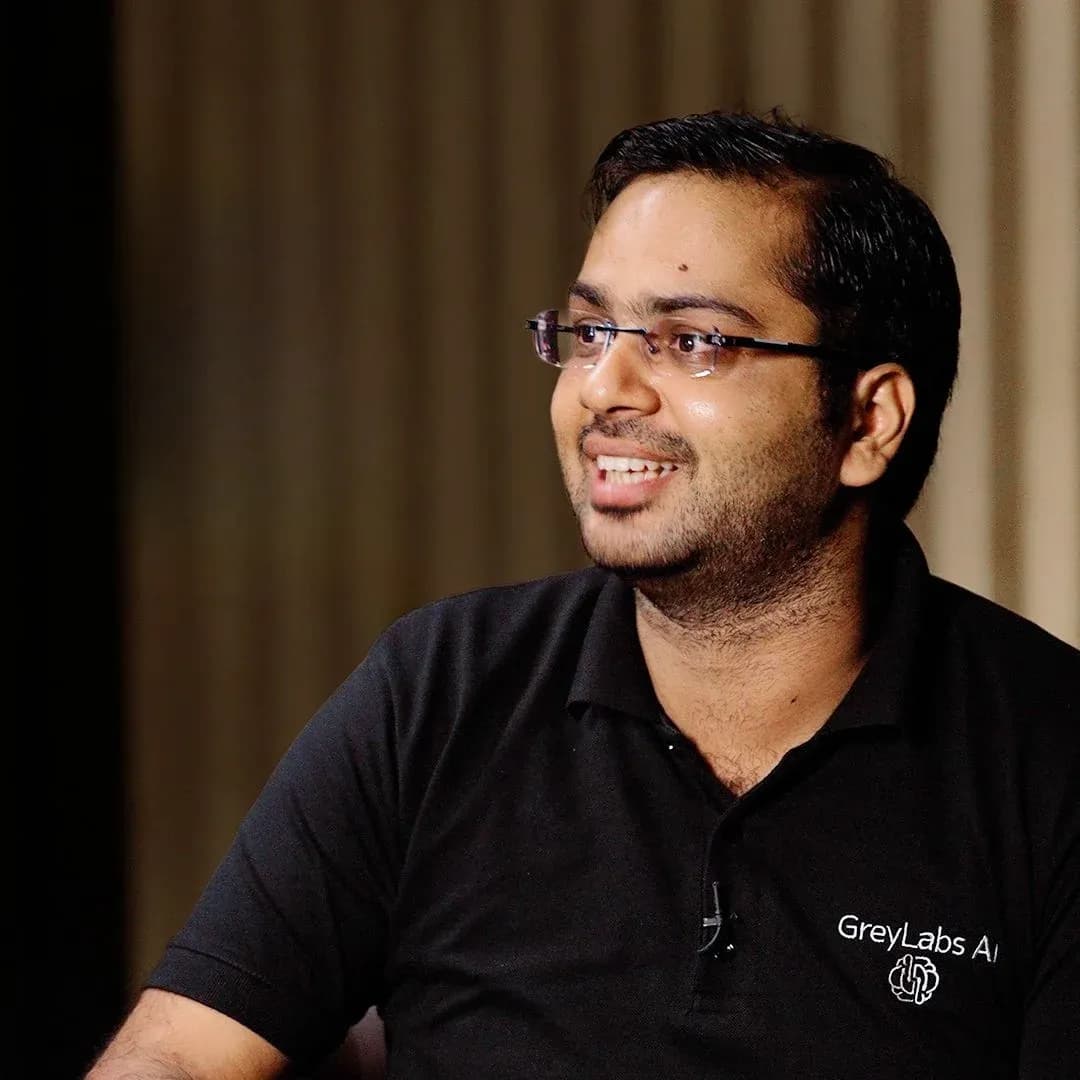
Axis Max Life Partners with GreyLabs AI to Improve Sales Conversions
Axis Max Life has analysed over 6 lakh customer calls using voice AI software to identify high-intent customers and reshape its sales strategy.
View

Magnum Opens New R&D Centre in Bengaluru to Accelerate Ice Cream Product Innovation for India
The centre will support innovation across brands, including Kwality Wall's, Cornetto, Magnum, Carte D'Or, Feast, and Twister
View

GalaxEye’s Mission Drishti Satellite Hit by Solar Storm After System Validation
GalaxEye says the maiden OptoSAR mission validated key systems and plans to launch two new OptoSAR satellites within the next 24 months.
View

Telangana Govt Strengthens Life Sciences Ecosystem With ₹800 Cr Oncology Pharma Facility
The project is expected to generate around 500 direct employment opportunities.
View

Samsung Projects 19-Fold Jump in Q2 Profit Amid Strong AI Memory Demand
Despite the strong earnings guidance, Samsung’s stock dropped as much as 7.9% in early trading.
View
Cult.Fit Heads to Public Markets With ₹950 Cr Fresh Issue, Investor Exits
The DRHP filing follows reports that Eternal-backed Cult.fit was targeting an IPO fundraise of ₹3,500 crore to ₹4,000 crore at an estimated valuation of around $2 billion.
View

Zeta Co-Founder Bhavin Turakhia Launches Neo With $30 Mn Personal Bet on Enterprise AI
Neo will roll out Tasket for AI-led task delegation, Friday for AI assistants and agents, Studio for knowledge management, and Drive for human-agent file collaboration.
View

US investors will soon get access to SK Hynix, another memory maker riding the AI boom
South Korean memory chipmaker SK Hynix, rival to Samsung and U.S.-basedMicron, is planning to sell nearly 17.8 million shares in a U.S. IPO, the companysaid on Monday. Should its shares sell well (and there’s indication that they will), the company could raise around $28 billion, based on SK Hynix’s closing share price last Friday in Seoul,Bloomberg reports. SK Hynix will be offering American depositary receipts (ADRs), a type of certificate that lets U.S. investors buy a foreign stock without trading directly on an overseas exchange. Each ADR will represent a tenth of a common share. It is expected to price those securities on Thursday and begin trading on Friday. Like Micron, SK Hynix is riding an AI-fueled boom credited to AI in both sales and stock price. Its first-quarter revenues were up nearly 200% over the same quarter last year, it said, and its stock is up about 260% so far this year. This is because systems that run AI are very memory intensive. As hyperscalers like Amazon, Microsoft, Google, and Oracle race to build out so-called AI factories, and as new AI data centers multiply nationwide, demand has outpaced supply, creating a shortage of memory chips — including high-bandwidth memory (HBM), DRAM, and NAND (the different types of chips that store and move data inside AI systems). The situation has been called “RAMageddon.” Apple executives said the shortage is forcing it to raiseprices on Mac computers and iPads. South Korean tech companies, led by SK Hynix and Samsung, have vowedto spend over $550 billionon building out new manufacturing capacity to keep up. That’s actually a risky venture. By the time those facilities are built, memory needs for AI may change, leaving them with more supply than the market wants and, potentially, crashing prices. But for now, Wall Street is looking for another Nvidia, andmemory chipmakers are among the closest optionsthat they have. Micron, the closest U.S. comparison, has shot up nearly 700% over the past year to a more than $1 trillion valuation, fueled by record AI-driven memory demand and revenue.
View
The ‘first’ AI-run ransomware attack still needed a human
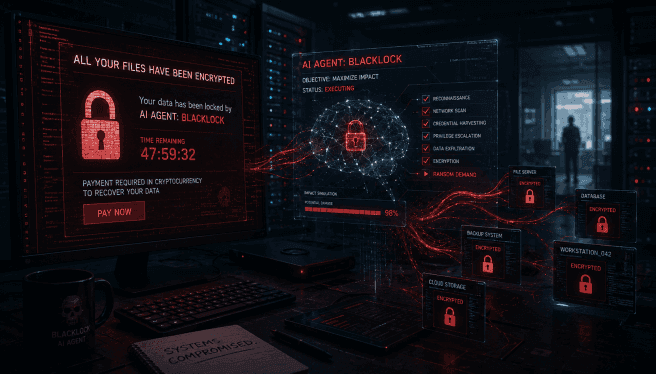
Last week, researchers at cloud security firm Sysdig said they’d documented the first known case of “agentic ransomware.” It was an extortion operation, dubbed JadePuffer, in which an AI agent — not a human — handled the technical execution of a real-world cyberattack from start to finish. The agent broke into a vulnerable server, stole credentials, moved through the target’s network, encrypted files, and even wrote its own ransom note, adapting to obstacles along the way like a human hacker would. Coverage of the funding described it as run “without any human oversight,” with “no human at the keyboard.” That’s not quite thefullpicture. In aninterviewon Monday with CyberScoop, Sysdig’s Michael Clark, the company’s senior director of threat research, clarified that a human was still very much involved — just not in the technical execution. “A human still set up and pointed the operation and provisioned the infrastructure behind it, the command-and-control server, the staging server used for the stolen data and chose a victim,” Clark said. The credentials used to break into the victim’s database, he added, weren’t harvested by the AI agent itself; someone obtained them separately, through a prior compromise, and handed them to the operation. None of this contradicts Sysdig’s original claim, and the technical details of the attack remain notable on their own — wild, even. The agent got in through a known bug inLangflow, a popular open-source tool for building LLM apps, then moved on to a production MySQL server and exploited another known flaw to gain admin access. It encrypted over 1,300 configuration records and not only left behind a ransom note that it wrote itself but it left a Bitcoin address where the ransom could be sent. Sysdig hasn’t disclosed who was targeted. The techniques were fairly ordinary apparently, what stood out was the speed and transparency involved. The agent fixed a failed login in 31 seconds, narrating its own reasoning in natural-language code comments the whole way. One detail that initially seemed to muddy the picture has since been clarified. Clark had told CyberScoop that Sysdig found “multiple models were used in the attack,” citing harvested keys for OpenAI, Anthropic, DeepSeek, and Gemini — language that left open the question of whether several models actively powered different stages of the intrusion. Asked to clarify, Clark told TechCrunch that those keys were simply part of what the agent stole, not evidence of what was driving it. “The agent swept the Langflow host for anything valuable — provider API keys, cloud credentials, cryptocurrency wallets, and database configs — and those provider keys were part of the loot,” he said via email. “They are indicative of what the attacker considered worth taking, but they do not tell us which model was making the decisions.” On the model actually running JadePuffer, Clark said Sysdig “was not able to identify the specific model driving the agent” and has no visibility into its system prompt or configuration. Microsoft researcher Geoff McDonald’s theory,offered on LinkedInseveral days ago, is worth revisiting in that light. McDonald suspected an open-weight model with safety training stripped out, rather than a frontier model, was behind the attack, based on his own red-teaming experience showing frontier labs’ safety layers hold up well. Sysdig’s own account doesn’t confirm or rule that out. McDonald’s post also warned that ransomware campaigns are now bounded primarily by attacker budget rather than human effort, raising the possibility of “thousands or tens of thousands of simultaneous campaigns.” That concern is a little harder to square with what Clark described Monday. (If a human still has to choose each victim, provision infrastructure, and obtain database credentials for every operation, that’s a bit of a bottleneck, at least.) Either way, Clark told CyberScoop, while Sysdig hasn’t seen the same operation hit other victims yet, given how cheap it is to run an agent, he expects that to change.