🚀 Zaprep: Your Socials on Steroids. 免费开始 — 每月自动发送 1,000 条私信,将互动转化为潜在客户。 ,每月 1,000 条自动私信。
最新 AI 资讯
Anthropic is letting METR researchers look under the hood with employee-level access
Anthropic is giving employee-level access to six researchers fromMETR, a nonprofit that tests frontier AI models, to independently assess Anthropic’s models, safety practices, and risk management, the company said in ablog poston Thursday. The arrangement comes at a time where incidents of AI agents acting outside their instructions have beendisclosedeveryweekortwosince late August. The incidents have sharpened calls for independent checks on AI companies. “We want to be publicly accountable for the decisions we’re making,” Anthropic said in the blog post. “We aim to close the gap between what evaluators understand about a frontier AI company’s systems and what the company itself understands.” Under the new arrangement, the METR team has Anthropic-issued company laptops, office space, and access to internal tools roughly on par with what Anthropic’s own risk assessment teams use. “Anthropic employees are encouraged to share information with them just as they would with a fellow employee working on alignment risk” the company said. Anthropic compared the arrangement to banking, similar to how regulators place resident examiners inside the largest banks. METR will publish its own assessments of Anthropic’s risks, incidents, and practices, and the company has given up the right to block them. “Anthropic can’t veto publication, but we can require them to redact information if it falls into narrow, pre-defined categories,” the company said, such as customer data, anything attorney-client privileged, or relating to information about its model architectures. “METR is free to characterize our redactions publicly, and say whether it believes the redactions were justified, as long as it does so without revealing the redacted information” Anthropic added. METR is the only evaluator so far at the top of a three-tier system Anthropic is building. Evaluators in the bottom tier, like biosecurity nonprofit SecureBio, run narrow reviews and require Anthropic’s approval to publish. The middle tier gets more information and can publish without approval, while the top tier adds METR’s employee-level access. Thursday’s announcement makes good on a promise Anthropic CEO Dario Amodei madein a September essay, where he proposed embedding outside evaluators inside AI labs as a first step toward slowing the technology’s development.OpenAI quickly pledged the same, and both companies, along with Google, Meta, Nvidia, and xAI, have since signed a White House accord committing to independent review.
View
Amazon devices chief Panos Panay sees a future where AI devices replace the need to use apps
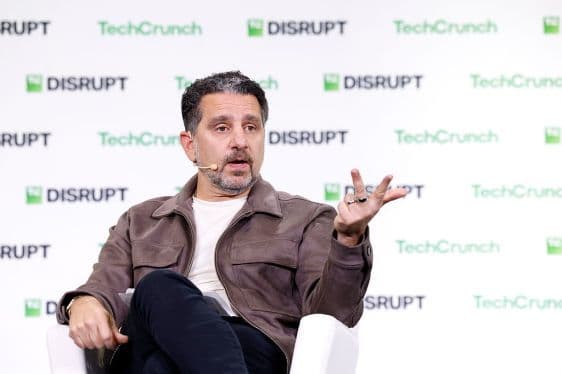
Amazon is placing its bets on ambient computing, not apps, as the future of personal AI. Alongside thelaunch of the company’s new AI wearables from Bee, Panos Panay, who serves as Amazon’s SVP of Devices, Alexa & Leo, took the stage atTechCrunch Disrupton Thursday to talk more in depth about where he sees personal computing headed. “A lot of times, what you’re doing right now — what we all do right now — is we have to remember what we’re asking our tool to do for us,” Panay began, explaining that this is how we engage with our modern smartphones. “It’s like point, shoot, return,” Panay continued. “I think where we’re headed is a world [that] starts with ambient devices.” By “ambient devices,” he means those that work quietly in the background, using sensors and AI to help you figure out what needs to be done, instead of the other way around, where you’re telling the device what you need to do. “As it works in the background, you’re able to stay more present. You’re able to get more done. You’re about to spend more time with people … you’re not afraid if you miss something. It’s incredibly powerful,” Panay said. Amazon’s biggest entry into this space is the set of new Bee devices it introduced on Thursday, which include a band you can wear on your wrist or detach to wear as a pendant, as well as a new credit-card-sized device that attaches magnetically to the back of your smartphone. These gadgets passively record audio and take notes about your day, finding the to-dos, reminders, and insights you may later need to refer back to. To balance the need to be useful with user privacy, Bee’s devices don’t actually store the raw audio from your conversations; they process the audio in real time and then delete it when done. Transcripts of conversations are encrypted using keys that your device creates and controls. That means no one else, including Amazon employees, can access those files unless you intentionally share them. Panay said that privacy was a key consideration for how these new ambient devices should work. “You have to give customers that control,” he said. “Every product is different, but for Bee specifically, as an example in the ambient space like that, you have to design with privacy in mind. And that’s what we do. That’s critical.” The executive, who came to Amazon after 19 years at Microsoft where he oversaw the development of Surface devices, has spent a lot of his life thinking about how personal computing will evolve. With Bee — and ambient computing more generally — Panay also envisioned a future where the idea of interacting with apps becomes less important, as more tasks are handled via AI. “Do I think we have a future where there’s a bit of a balance — a whole generation that doesn’t say ‘give me the app’ for that, but says it should just understand what I need? Yeah, I do. I think that transformation is coming. I think that is the next generation,” he said. That doesn’t necessarily mean the smartphone itself won’t continue to be an important personal computing device (as much as Amazon would like it to be an Alexa tablet or Echo smart speaker), Panay pointed out. Rather, he believes a new crop of devices will emerge that use sensors to understand users better, and to bring intelligence to the world around you. “I’m not a proponent that says one form factor is going to replace another. I don’t think that’s the case,” he clarified. “I think there’s an intelligence layer that connects it all … and it has to be useful.”
View
Meta launches an open-weight AI model that runs on Macs
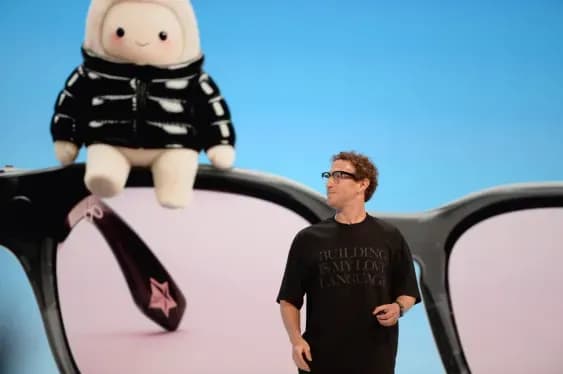
Meta haslaunchedwhat it calls the “most capable” open-weight model in the United States. Dubbed Muse Spark Open, the model also has the distinction of having been designed to work with Macs. The new model, which leverages 816 billion parameters and a 1 million token context window, claims to offer superior performance to other popular open-weight models, according to evaluation results released by Meta on Thursday. Muse Spark Open is natively multimodal and built for complex coding tasks and agentic labor. It has also been designed to run locally on Apple’s computers. However, you will still need a lot of power to run the model locally, with a requirement of at least 1 terabyte of RAM,per Engadget. The model will run best via the Mac Studio that comes equipped with the M5 Ultra chip. Still, if you can muster the memory, Muse Spark Open may prove a significant work horse for coding and other desktop tasks. Meta says that it paired the model with Muse Code, its AI coding terminal, and deployed it to various agentic workflows, including coding fixes for a Mastodon client that included “bug fixes, new features, [and] full build.” The company says it also deployed it in the service of running DaVinci Resolve, the high-end video editing software, revealing that the model was capable of reviewing and cropping footage. Open-weight models provide a number of distinct industry advantages that aren’t afforded by closed and proprietary models. Open-weight models can be significantly more cost-efficient and can also offer transparency and flexibility that closed source models don’t allow. Meta is making the new model available now through a number of different API platforms.
View

TechCrunch Disrupt 2026: Last day
The final day ofTechCrunch Disrupt 2026has arrived, and the week is ending on a high note. As 10,000+ founders, investors, and technology leaders gather at San Francisco’s Moscone West, Day 3 features some of the conference’s most practical and future-focused discussions. Explore sessions covering the next wave of AI innovation, startup growth strategies, fundraising, emerging technologies, and lessons from the entrepreneurs and investors defining the future of tech. Add in Startup Battlefield excitement, peer networking, and countless opportunities for serendipitous connections, and it’s one final opportunity to maximize your Disrupt experience. Don’t miss your chance to be part of the conversations everyone will be talking about after Disrupt.Grab your passnow at 75% off the original ticket price and join us for Day 3. Stop by the registration desk in the Level 1 lobby of Moscone West to register in person or pick up your scannable event badge. The badge features Klik technology, which makes it easy to exchange contact information with people you scan your badge with. Using the event app, you can access and keep those contacts even after the event ends. Explore 320+ exhibiting startups showcasing cutting-edge technologies across industries. This is the center of Disrupt, where 10,000+ attendees converge to discover new breakthroughs and spark new connections. Haven’t registered yet? You still can — but don’t wait, or you will miss out.Grab your ticket nowand walk straight into the action: six industry stages, interactive roundtables, Q&A breakouts, hundreds of exhibiting startups, investor-founder meetings, AI-powered matchmaking networking, and Side Events lighting up the Bay Area tech scene all week long. Make your way to the Pitch Showcase Stage at the back of the Expo Hall to experience one of the most electrifying formats on the conference floor: rapid-fire, one-minute lightning pitches from some of the most promising startups representing their home countries and regions. Startup Battlefield 200 Fast Pitches – Health Startup Battlefield 200 Fast Pitches – Consumer Check out the full Disrupt agenda for all oftoday’s sessions. Yes, It’s Hard to Be a Founder: An Honest Conversation: Nell Daly, Revenge Capital; David H. Rosmarin, Harvard Medical School; Jack Withinshaw, Airspeeder M&A Is Now an Early-Stage Strategy: Karl Alomar, M13; Lindsey Mignano, Mignano Law Group; Ryan Yi, Onchain Group How to Create Viral Growth and Capitalize On It: Zach Yadegari, Cal AI The First 90 Days: How Startups Build Toward $10M ARR: Luke Arno, Lovable; Ben Broca, Polsia; Tomasz Tunguz, Theory Ventures Winning Pre-Seed Without a Product: Austin Clements, Slauson & Co.; Sandhya Venkatachalam (Axiom Partners) Building AI Startups Worth Betting On: Nader Khalil, Nvidia; Sydney Sykes, Nvidia Ask the Investors: Karl Alomar, M13; Stacy Brown-Philpot, Cherryrock Capital; Dayna Grayson, Construct Capital What Comes After the Smartphone?: Panos Panay, Amazon Can Social Start Over?: Toni Schneider, Bluesky Social; Rose Wang, Bluesky Social Can You Bank Your Biology?: Dr. Nabiha Saklayen, Cellino After Startup Battlefield: What Happens Next?: Piotr Byrski, Molecule.one; Kevin Damoa, Glīd; Demetri Maxim, Nephrogen Startup Battlefield Final: Karl Alomar, M13; Stacy Brown-Philpot, Cherryrock Capital; Chi-Hua Chien, Goodwater Capital; Dayna Grayson, Construct Capital; Alexa von Tobel, Inspired Capital Everyone Can Build Software Now. What Happens Next?: Amjad Masad, Replit Beyond the Check: The Power of Access: Bruce Lee, Keebeck Wealth Management; Mark Wahlberg, MUNICIPAL Announcing the Winner of the Startup Battlefield 2026 Build an AI Product in the Age of Agents (Certification Included): Dr. Marily Nika, AI Product Academy Building a Growth Engine in the AI Era: Lessons from a Bootstrapped Unicorn:Patrick Burke, Hostinger Physical AI Isn’t a Model Problem. It’s an Execution Problem: Ethan Batraski, Venrock; Ivan Poupyrev, Archetype AI; Ian Rountree, Cantos Talent as the Operating System: How High-Performance Teams Scale in the AI Era: Nomi Khedawala, Reddit The Agent Security Problem Nobody Is Talking About: Gavriel Cohen, NanoCo; Ric Smith, Okta Rewriting SaaS: Why AI Breaks the Old Business Model: Cathy Gao, Sapphire Ventures; Aaron Jacobson, NEA; Barr Moses, Monte Carlo Before You Let AI Do the Job, How Do You Know It Actually Can: Irene Solaiman, Hugging Face The $63 Billion Case for Storagemaxxing Your AI Stack: Kevin Cochrane, Vultr; Jake Lee, L2 Point Management; Pinaki Mukherjee, Wasabi Technologies; Stephanie Walter, HyperFRAME Research What Comes After the Chatbot:Alexander Embiricos, OpenAI The GTM Engineer: How AI Created Tech’s Next Big Job Category: Kareem Amin, Clay Model Behavior: How Top Startups Get Real Value From AI Adoption: Kareem Amin, Clay; David Hershey, Anthropic; Grant Lee, Gamma Proxy, Host, Operator: Who Can Read Your Agent’s Prompts?: Richard Rizk, Blackbox AI Securing the AI Enterprise: Why the Cloud Just Got a Lot More Complicated: Rudy Mitra, Amazon Web Services; Katie Moussouris, Luta Security; Wendy Nather The Enterprise Isn’t Broken. Your Assumptions About It Are: Arsalan Tavakoli-Shiraji, Databricks I Built Before the Internet. AI Is Different: James Joaquin, Obvious Ventures AI-Native Won’t Work for the Enterprise: Naren Krishna, Balerion; Travis Skelly, Pruven Capital Sandboxes Are Dead, Give Your Agent a Private Cloud:Praveen Akkiraju, Insight Partners; Vasek Mlejnsky, E2B Berkeley Connect: Experience the World’s #1 Startup Ecosystem: Maryanne Alhallak, Lumeria; Anthea Guo, Lumeria; Keith McAleer, UC Berkeley SCET The Next Logistics Stack: Autonomy, Infrastructure and National Resilience: Kofi Asante, Bluecore Energy; Kevin Damoa, Glīd Autonomous Intelligence: Investing in the Companies Redefining Work: Parul Singh, 645 Ventures AI Infrastructure & Power & Decarbonization in Dialogue: Investor + CVC Perspective: Jane Ge, Vectors Capital; Elias Habbar-Baylac, Cisco How Not to Ruin Your Co-Founder Relationship: Dr. Jessica Gold, Bliss Science; Tevye Krynski, Digital Wisdom From Silicon to Software: Building Efficient AI Inference at Scale: Anush Elangovan, AMD; Junchen Jiang, Tensormesh There’s still some time left to register for your pass and explore all these activations.Get your ticket nowat 75% off the original prices. Tickets are available through this final day. Secure yours now and be part of the future of tech. Act today, or you’ll have to wait until next year.
View
Google’s Universal Cart shopping tool launches in the US
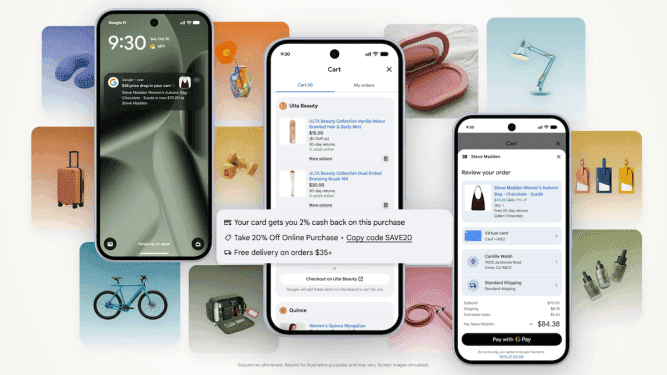
Google on Thursdaysaid“Universal Cart,” a tool that lets users collect and monitor products they find across search and in the Gemini app, is now available to U.S. users. The company firstpreviewed the toolat Google I/O in May. The idea is to make online shopping easier to manage. Find something you like, save it to your cart, and move on. When you return later, your items and shopping progress are still there, so you don’t have to hunt down the same products or start over. Universal Cart can collect items from multiple retailers, turning it into a central hub for browsing and keeping track of potential purchases. Google says the cart can also help shoppers stay on top of deals and availability. The tool can send notifications when a saved product’s price drops or when an out-of-stock item becomes available again. The tool is also designed to offer more tailored help during the shopping process. Google says it can take credit card perks into account when helping users choose how to pay, and also surface relevant promo codes. Checkout is tied to Google’s Universal Commerce Protocol, or UCP, an open standard the company introduced earlier this year. UCP is designed to help AI agents and retailers work together across different parts of the shopping journey, including checkout. Google is already deeply invested in AI-powered shopping, and Universal Cart is its latest effort to make the experience more convenient. It joins features such as conversational product discovery in Search’s AI Mode and Google’s“Let Google Call”tool, which uses an AI agent to contact nearby stores and check whether an item is in stock. Google isn’t the only company bringing AI into e-commerce.Amazon,OpenAI, and other rivals have added agentic commerce features as companies look for ways to make chatbots useful beyond answering questions.
View
AI agents are coming to Rivian’s cars
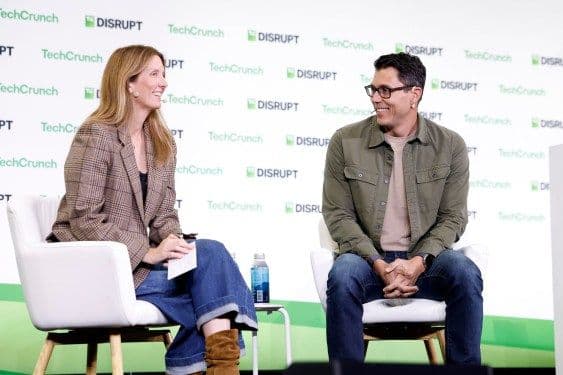
Rivian recently rolled out an AI assistant that lets drivers and passengers interact with the company’s electric vehicles just by talking to them. But the carmaker’s founder and CEO, RJ Scaringe, said at TechCrunch Disrupt this week that, in the future, Rivian’s cars will be able to run AI agents made by other companies like Anthropic. “That’s where it becomes magical,” Scaringe said onstage. Scaringe didn’t say when Rivian would implement this, and the company declined to offer more details, pointing instead to the “AI & Autonomy Day” event it’s hosting in December. But it’s not hard to imagine how Rivian might integrate something like Claude, OpenAI’s Dots, or Meta’s Muse assistant into its software. The company has developed its in-car software from the ground up, instead of leaning on Apple CarPlay or Android Auto, and built a lot of its own applications, like navigation (though it has worked to integrate popular in-car apps like Apple Music). Rivian says it has created its own in-house agentic framework that understands what action a person wants to take when they talk to the vehicle, and routes it to the right part of the car’s software. Most of the time, that involves what you’d expect: asking the car to turn down the temperature, activate the seat warmers, or summarize the news. “Think of it as like a traffic light. So if you ask the vehicle something, it decides what model it’s going to use. It can use a local model that’s running on the edge and the vehicle. If it’s a more complex question, it can go up to the cloud. And then even for that, we have different models that we use,” Scaringe said. As of May of this year, the agent could access external apps like Google Calendar. And Scaringe said at Disrupt the next step would be to add products from the frontier AI companies, though making them work in the car won’t be easy. “There’s a lot of plumbing behind the scenes we have to do to make sure that that works, and it’s not just within Rivian. That’s also a lot of coordination with the labs to make sure they enable that plumbing,” he said, adding that putting this kind of software near safety-critical systems means Rivian has to be extremely careful. “You wouldn’t want an agent to determine, ‘hey, it’s time to apply the brakes, or time to steer the vehicle.’ So anything that’s vehicle-level controls are not being handed to an agent,” he said. Instead, he thinks the implementation will look more like an extension of how people currently use these agentic apps. That would mean Rivian would have to find a way to connect the vehicle to all of the context that apps like Muse collect on their users. For example, Scaringe said, a driver could ask the Rivian assistant to turn on the ventilated seats before going deeper. “And then simultaneously say, ‘We were talking yesterday about this meal. I’m planning to have guests over on Friday. Can you help me think through what we’re going to make?’,” he said. The car could then pull the driver’s context from a conversation they had with the assistant on another device. Of course, Rivian wouldn’t be the first American car company to add AI agents to a car’s software. Earlier this year, Tesla added a feature that let users talk to both SpaceX’s Grok chatbot and also its Grok Bot assistant.
View

Amazon’s Bee launches two new personal AI devices, starting at $75
Amazon’s personal AI wearable maker,Bee, is announcing its first new products since beingacquired by the retail giant last year. The tech company on Thursday introduced the Bee Frontier, the next generation of its device that can be worn on the wrist or pinned to clothes, along with Bee Eclipse, a credit-card-sized device that magnetically attaches to the back of your smartphone. The latter puts Bee into more direct competition with AI devices like the Plaud Note or Pocket, but at a lower price point — the Bee Frontier is $74.99, compared with $159 for thePlaud Note(or $189 for the Note Pro), or $129 for thePocket AI device. The Bee Frontier will come in Onyx, Lavender, and Sage, while the $99.99 Bee Eclipse will be offered in Silver, Midnight, Honey, and Blush. Like the original Bee, the idea with the new devices is to leverage AI to take notes from your everyday conversations, allowing you to remember the important things that were said, and then turn those into actionable to-dos, summaries, and insights. For instance, if you discussed making plans with friends, the Bee would remember the date and time you agreed on, then create a calendar invite. You could also use the Bee to take lecture notes in class, or to jot down the care plan you discussed with a doctor, among other things. All Bee devices can create conversation summaries and recaps for free, and offer 14 days of memory. With an $11.99 per month Bee Pro subscription, users receive unlimited conversation summaries and integrations with Amazon.com, Alexa+, and third-party applications. Pro users also get suggested to-dos, daily memories, a personal chat assistant, and conversation templates. To make all this possible, Bee devices use a private computing security architecture, which doesn’t store the raw audio from your conversations. Instead, audio is processed in real time and then deleted. Transcripts of the conversation are encrypted using keys that your device creates and controls, which means no one else, including Amazon employees, can access those files unless you manually and intentionally share them. In addition, you can opt to connect the Bee to Alexa, allowing your Echo device to use its ability to identify your voice, a feature called Voice ID, to recognize when you’re speaking. It can then record your conversations to provide Bee’s insights. (This aspect of Bee is optional, and Amazon notes you can delete transcripts and summaries at any time.) With its new connections to Amazon.com and Alexa, Bee users can make purchases from Amazon or ask Alexa for their Bee insights, summaries, or to-dos hands-free. Bee also works with your existing productivity software, like Gmail, Google Calendar, and Microsoft Outlook, so it can draft emails, set up meetings, surface action items, and more. Plus, you can upload photos to Bee or connect it with Apple’s HealthKit to add a picture of your overall wellness to be integrated into your provided insights. The Bee Frontier and Bee Eclipse both have just one button that turns the device off and on, and include an indicator light when it’s summarizing a conversation. The Frontier also offers IP67 water resistance, up to seven days of battery life, USB-C charging, and dual microphones with advanced noise filtering. All Bee devices come with a companion mobile app, which has also been newly redesigned, plus a new desktop app. The Bee Frontier is available now on Amazon, and the Eclipse will be available soon thereafter.
View
Cypher 2026: AIM’s Best Firm Awards Spotlight 22 Companies Shaping India’s AI Workforce
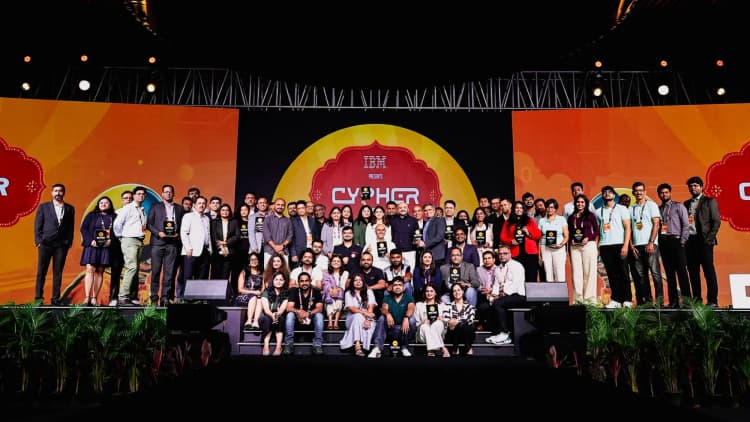
The Best Firm Awards recognised 22 companies across five categories: forward-deployed engineers, women in tech, data scientists, AI professionals, and data engineers.
View

Can Naav AI Break English’s Hold on Indian Literature? Vikram Sampath Thinks So
The startup uses AI to translate books across Indian and foreign languages, with human experts refining the output to preserve the author’s voice and cultural context.
View

Wipro’s Large Deals Tumble 59% as IT Services Revenue Stays Flat
Wipro's operating margin widened sequentially, while operating cash flow rose 61.3% to $553.6 million from the June quarter.
View

Google Brings AI-Powered Crop Research & Business Tools To India
The company is expanding AI initiatives in India across agriculture, education and small-business development, including $15 million in funding for MSME solutions.
View

Before Approval, Not After: NITI-Frontier Tech Hub's Data-Centre Framework for States
The framework aims to shift competition among states from attracting investment announcements to demonstrating investment readiness, infrastructure quality and measurable economic benefits.
View

