

最新 AI 资讯
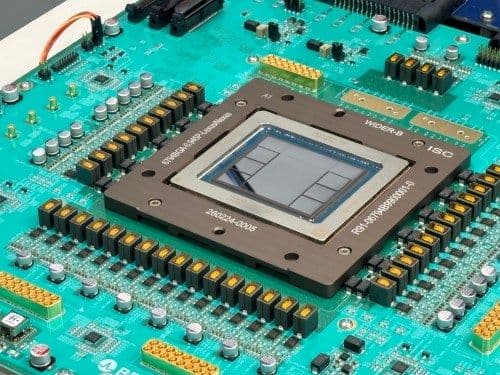
OpenAI’s Jalapeño chip is built for fast inference at scale, benchmarks show
At the Hot Chips conference on Tuesday, OpenAI shareda more detailed look at Jalapeño, including the first batch of benchmark results for the new system. Tested on SemiAnalysis’ InferenceX benchmark, Jalapeño registered both more tokens per user and more throughput per kilowatt than the currently available state-of-the-art inference processors. “The bottom line is that the results show a very, very significant performance advance over state of the art,” said Richard Ho, OpenAI’s head of hardware, in a press call. “Jalapeño can serve more AI work per unit of power, while also returning responses more quickly. It’s very efficient to serve a lot of customers, but it can also be very low latency.” Notably, that comparison is against an Nvidia Blackwell system — but by the time Jalapeño reaches full deployment, the competition may have advanced significantly. Ho estimated that Jalapeño would deploy at the end of 2026 “in very small volumes,” with more significant deployment coming in 2027. First announced last October, Jalapeño was developed by OpenAI in close collaboration with Broadcom, with OpenAI’s own models assisting in the development process. The company plans to make Jalapeño a multigenerational platform, allowing AI products, models, chips, and memory all developed in concert. Because of that full-stack approach, OpenAI was able to address specific phases in the inference process that often cause friction during inference processing. In particular, Jalapeño is designed to minimize delays during the prefill and communication phases of processing, which OpenAI says often act as bottlenecks. “We designed Jalapeño to minimize data movement and communication delays,” the company said in a blog post presenting the results. “This means that model state, including the KV cache used while generating a response, can be explicitly placed and kept local while the system activates the right combination of compute, memory, and networking for each inference phase.”
View
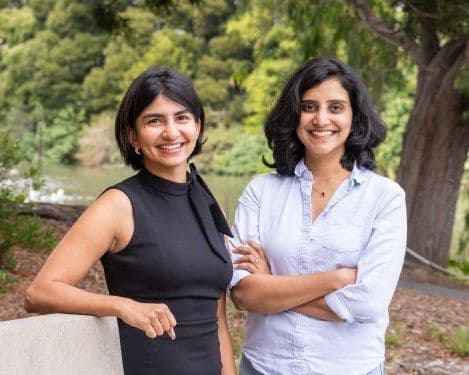
Gamma acquires Accel-backed design startup Lica
Presentation startupGammahas acquired Accel-backed design startupLicain a bid to build out its own design research lab, TechCrunch has exclusively learned. Lica’s co-founders will lead the effort. Lica started off as an app that could turn screenshots and recordings into project presentations and videos. Founded by Priyaa Kalyanaraman and Purvanshi Mehta in 2023, the company a year later raised $4 million from investors including Accel, South Park Commons, and Village Global. Over the past couple of years, it has focused on working with e-commerce sites to create marketing videos that adhere to brand guidelines. Kalyanaraman said Lica wanted to build AI models around communication methods, including video and design, and the founders were familiar with Gamma’s CEO, Lee Grant, as both companies are backed by Accel and South Park Commons. Those conversations eventually led to the acquisition. “We have a very similar North Star vision of wanting to make visual communication easy. We focused a lot on frontier research and making sure that became accessible to users. But that’s just one part of the solution. Gamma had focused a lot on building distribution, taking the application to 100 million-plus users. Given how fast things are moving, we decided to join forces,” Kalyanaraman told TechCrunch. Gamma will continue to focus on helping people build presentations, but like other design companies, it’s also started offering image generation. The company says it now wants to explore different formats of communication with the new research division. “Presentations for us are today a core use case, but how do we expand what presentations look and feel like, and how do people engage with them in the future? What visuals are possible? How interactive are they? These [questions] all require us to think deeply about the core responsibility of communication. This is why we’re excited to invest in this area, because we don’t think anybody else is thinking at that level,” Lee said. Lica’s Mehta said the new research division would work on customizing the presentation and communication styles of AI models for different audiences and tastes. “The point of the presentation is to communicate a large goal. We are thinking about building a platform where these two goals can be personalized to such an extent that you just get a really good output, and then you’re able to edit for different audiences,” she said. Gamma didn’t reveal what products it plans to build as a result of this acquisition, but it did say that it wants to create fluid, multimodal presentations and other communication modalities. AI presentation startups have received tons of investor attention and money over the last few years. Prezent raised$50 million in two rounds; Gamma raised$68 million at a $2.1 billion valuation; andPresentations.ai was also backed by Accel. We’re even starting to see some consolidation in this category: Earlier this month,OpenAI acquired NextSlide.

Why India’s IT Giants Need Mexico When AI Shrinks the Team
Indian IT services firms are using Mexico for customer-facing work as AI reshapes global engineering and delivery.
View

OrbitAID to Demonstrate Satellite Life Extension Mission in 2027
The Bengaluru-based company will test inspection, docking, refuelling and orbital repositioning in a single mission.
View

ChatGPT Gets New Sticker Maker for Personalised iMessage, WhatsApp Packs
OpenAI has introduced a new feature that lets ChatGPT users create personalised sticker packs for messaging. Users can turn their own ideas, photos and inside jokes into stickers and use the results in conversations on iMessage and WhatsApp. The feature adds another way to use ChatGPT for creating personalised images, with users able to customise the stickers before sharing them. It is available globally to mobile ChatGPT users, giving them a simple way to create stickers without relying on pre-made packs.
View

‘The world seems to be ready’: An interview with OpenAI head of product Thibault Sottiaux
Users of OpenAI’s software engineering tool Codex might know Thibault Sottiaux as the guy whoresets their token limitswhenever the product hits a growth milestone. Now, OpenAI is trying to bring that dopamine hit to the rest of us with ChatGPT Work, a platform for white collar workers to leverage AI agents. I spoke to Sottiaux forour feature on the productand its challenges, but we wanted to share more of that conversation with our readers. Here’s a lightly edited and condensed version of our interview about winning over skeptics, discovery as a product design philosophy, and the cost of intelligence. TechCrunch:I know you’re a member of the technical staff. Is it right to say that you’re the product lead for Codex and Work? Sottiaux:I lead all of core products—that is API, agent infrastructure, enterprise, all of ChatGPT, which includes ChatGPT Work, but also ChatGPT classic, and then everything that is Codex as well. Q: Am I right in thinking you report to Greg Brockman? Sottiaux:Yeah, Greg. I like to say that everyone reports to Greg at the end of the day. Q: Why is ChatGPT Work so important to OpenAI? Sottiaux:We wanted to bring the power of coding agents to everyone, and so this is an exercise in taking something that was made for technical people, and then packaging it in a way that is like safe and delightful to use, but also you can use on the go on mobile, on web, and making it available to as broad of a population as possible. This is why we launched it as part of the Plus plan as well, which is only $20 a month, and the amount of value you get out of it is quite incredible. So it’s like that’s like what we were pursuing. It’s like “make this technology available to the broadest population possible.” Q: Analysts say that there’s an important economic motivation here, that OpenAI needs to own the application relationship with the user. Sottiaux:The more value and the more utility that we generate for users, the more they will be willing to also pay for some part of that utility, and that’s how we’ve always seen ChatGPT as well. It’s like I’m bringing so much utility to you as a user that you just sort of sit there and you’re like, “of course I want to pay $20 bucks a month for this,” because you know the value that you get is so much more. Q: How important could this technology be, in terms of winning over public opinion towards AI? Sottiaux:The way that I view it is, we have a role in bringing everyone along with this technology, and so there’s this: how do you do diffusion? Codex was built for a forgiving technical audience, where we were making some of these capabilities available very early on, and now we are at a level of maturity of this technology where we feel it is the right step to diffuse it to a much broader audience, and then teach everyone … this is much more than getting help on writing or getting help on some personal advice. In this new factor, ChatGPT can actually do entire very complicated tasks for you all autonomously in a way that is delightful and safe. The mission of OpenAI is to bring everyone along. TC:How you think about that transition and when the moment is right to let the model take the lead versus putting buttons or a user interface in front of people? Sottiaux:The essence of what we’re trying to do is building extremely capable models, and then figuring out the most simple and delightful way to bring them into your life so that you get tremendous utility from it. And in order to do that, you need to get out of the way, almost, of the model, and you need to just let it express itself and be able to harness all of the utility that it can provide to you. … [A] minimal product surface, just delightful simplicity, a way to engage with humans that is very natural. We had text before, but now we’ve launchedChatGPT Voice, which has seen a lot of growth. It is super natural to just talk to it, right? The way that we’re talking now, just have an engaging conversation. The progression of this technology is going to become more natural over time. It adapts to humans. You don’t have to do the reverse, where you have to learn how to use this application. TC:Isthe model there? I was reading Ethan Mollick, who is a Wharton professor who studies these tools,sayingthat ChatGPT Work tries to be magic, and Claude Cowork puts A/B tests in front of you and has you make more choices. Do you think workers generally are ready for that level of magic? Sottiaux:We definitely see that the world seems to be ready. This is why we’ve had incredible adoption. We just announced, we hit 20 million users. We managed to launch it in a way that is … simple but powerful, simple but uncompromising. TC:My brain kind of breaks when I think about building a product that’s meant to do everything. Do you think about a minimum viable product? Do you think about discrete problems? What are you evaluating? Sottiaux:It is almost like a product of discovery as well. As we push on the frontier of capabilities of models, we also discover what it’s capable of, and we sort then lean into the things that it is the most capable of, and then you know build great products around it. There’s this element of discovery of the capabilities as well, including for us. And that’s always a very magical, fun experience. For example, GPT 5.6 was a step up in general work: being able to process a large amount of documents, generating quality slides, generating quality reports, doing deep research, things that a professional will do. We then lean into that, and then we capture feedback, and then we continue to improve. And this is also part of iterative deployment of these capabilities. It’s learning from the community, learning from real use, and then continuously improving it. TC:There’s a big gap between what I’m paying on the Plus plan and the amount of tokens I’m using. How do you think that plays out? Should I be worried about that? Should CFOs be worried about that? Sottiaux:We are working every day to push the frontier on efficiency. We announced major price cuts with Luna, 80% off. This is a permanent price correction… so the current level of frontier capabilities become cheaper and cheaper over time. This is something that will continue. Our goal is to, over time, include more utility in the same dollar amount. So if you want to do more, you know, it’s like of course you can pay more to do more, but in terms of what is capable today, it’s like you wake up six months from now, you should be able to do all of the same with less spend. TC:What do you say to someone who is stressed out about giving it access to their e-mail, giving itaccess to iMessages, which you just rolled out today? Sottiaux:It’s important to pick models that are safe and aligned. And a very, very big part of our investment is in the safety stack, the safety approach, publishing honest benchmarks on these things. And our models are world-class at these topics.

Can Mohali's Cost Arbitrage Put Punjab on the Global GCC Map?
Mohali and the greater Tricity region have attracted approximately ₹7,000 crore, or around 34% of new investment in Punjab, this fiscal year.
View

$203,000 H-1B Visa Fee? New Proposal Adds to Trump’s Separate Payment
US Department of Homeland Security proposes new $103,000 H-1B fee to recover immigration system costs
View
Alibaba Launches Wan3.0 AI Video Model as AI Investment Accelerates
The model can turn documents, spreadsheets, presentations and web pages into videos of up to 30 seconds, as Alibaba expands its multimodal AI capabilities.
View

Ryanair is Using AI-Generated Videos for Staff Training & Passenger Updates
The European low-cost carrier is using Synthesia’s AI products to cut costs and speed up content production.
View
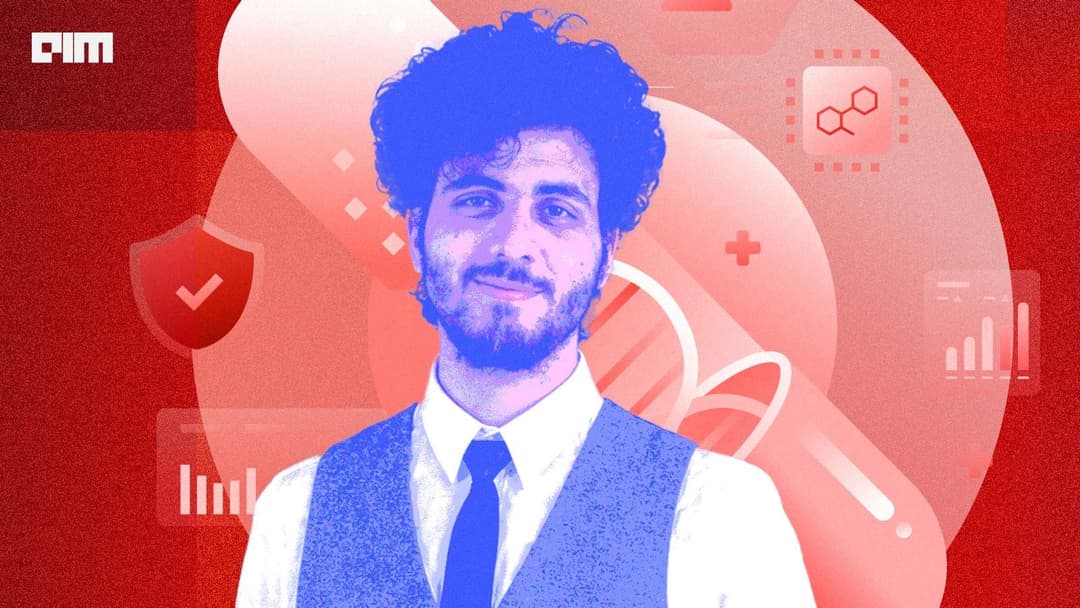
This Bhubaneswar-Based Startup Wants to Manufacture Medicines in Space
Research shows that crystallising Merck’s blockbuster cancer drug, Keytruda, in microgravity could help move it from an intravenous formulation towards a subcutaneous one.
View
AI Ecosystem Provider ESDS Software Solution to Launch ₹720 Cr IPO on August 28
The company has set a price band of ₹408 to ₹429 per equity share, with investors to bid for a minimum of 34 shares.
View