🚀 Zaprep: Your Socials on Steroids. 免费开始 — 每月自动发送 1,000 条私信,将互动转化为潜在客户。 ,每月 1,000 条自动私信。
最新 AI 资讯
Elorian’s first AI model wants to reason with images, not just about them
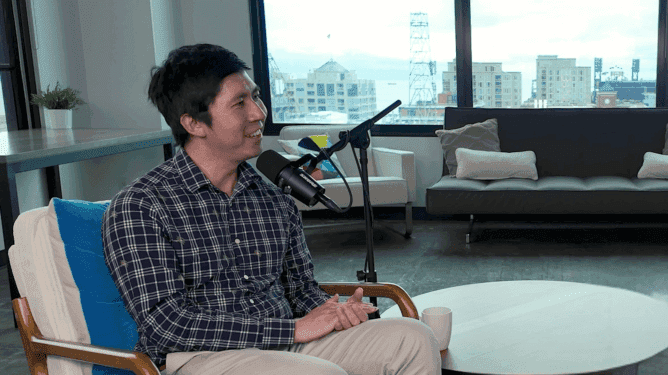
Elorian, the Palo Alto AI startup that raised a $55 million seed round at a $300 million valuation before it launched a product, released its first model on Friday, TechCrunch has exclusively learned. The model,Glimpse, is launching as a research preview with API access and a chat interface is waitlist-only, so for now it’s a results table and a thesis. The thesis? Today’s AI models, for all their skill with language and code, still can’t really see. Most multimodal models look at an image once, convert it to tokens, and then reason about it in text — like describing a photo from memory. Glimpse keeps going back to the source. Mid-reasoning, it can crop into a region, pull specific frames from a video, or run code to measure or compare what it’s looking at, a mechanism Elorian calls a “visual scratch space.” Think of someone pinching to zoom on a phone photo to double-check what they thought they saw. For former Google DeepMind researcher and Elorian CEO Andrew Dai, one of the clearest signs that AI still couldn’t really see came on game night. Last year he photographed a board game he’d just finished with friends and asked a frontier model who was winning. It couldn’t say. Board games “each have their own visual language, each have their own iconography, symbols,” he told TechCrunch. “To an adult, it’s quite easy to understand what’s going on with minimal text, but these models aren’t able to intuit what the symbols mean.” “Humans can look at Ikea diagrams, with no text, and assemble Ikea furniture, right? Why can’t AI models?” he said. The approach isn’t completely new — OpenAI added crop-and-zoom during reasoning to its o-series models in 2025 — but Elorian’s pitch is that it built the whole model around it, cheaply. The company says a small team trained Glimpse on a few hundred GPUs and that the model is substantially smaller than the frontier systems it’s benchmarked against. Glimpse costs $0.60 per million tokens in and $3 per million tokens out — cheaper than mid-level models like Sonnet and Sol but more expensive than lightweight models like Haiku and Luna. But according to Elorian’s evaluations, Glimpse outperforms even GPT-6 Astra on scientific chart reasoning and short-form video captioning, with competitive results on other visual reasoning tasks. Elorian came out of stealth six months ago with a round co-led by Striker Venture Partners, Menlo Ventures, and Altimeter Capital, with participation from Nvidia and Google chief scientist Jeff Dean. The initial targets are companies sitting on lots of video: robotics firms, scientific labs, media, and creative companies. Longer term, Elorian wants to move from seeing to doing. That means building a model of a scene using that to choose an action, including directly controlling robots. Next year, Dai said, the company aims to build “the world’s best visual reasoning model,” one that leads on every visual reasoning test.
View
Physical AI is more than robots, says the Nvidia veteran now investing in it
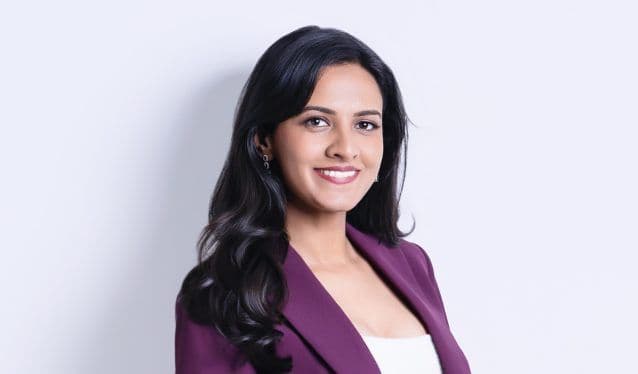
Amulya Vishwanath, who spent seven years leading product marketing for NVIDIA’s robotics platforms, says robotics is currently in its “Lego era,” with the basic building blocks like actuators, robotic hands, software, and safety standards still being rebuilt. This view runs counter to those who believe that robotics, powered by a general foundation model, is about to have its “ChatGPT moment” — that day when the shockingly capable chatbot was launched in late 2022. (General Intuition CEO Pim de Wittetold Equityearlier this year that a single general foundation model would make much of today’s specialized robotics work redundant, and be that moment.) On this episode of TechCrunch’sEquitypodcast, Dominic-Madori Davis caught up with Vishwanath to discuss where she’s writing first checks as the founder and managing partner ofTechable VC.They also talked about what she’s learned as one of the first women executives to spin out of Nvidia and launch her own early-stage firm investing in physical AI across robotics, materials science, and life sciences. Listen to the full episode to hear more about: Subscribe to Equity onYouTube,Apple Podcasts,Overcast,Spotifyand all the casts. You can also follow Equity onXandThreads, at @EquityPod.
View
An Nvidia insider-turned-VC on why robotics hasn’t hit its ChatGPT moment, yet
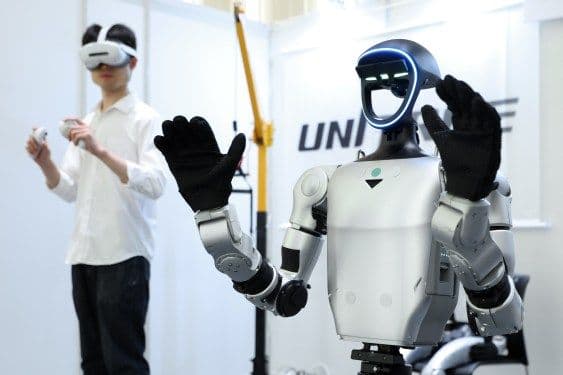
Loading the player… Amulya Vishwanath, who spent seven years leading product marketing for NVIDIA’s robotics platforms, says robotics is currently in its “Lego era,” with the basic building blocks like actuators, robotic hands, software, and safety standards still being rebuilt. This view runs counter to those who believe that robotics, powered by a general foundation model, is about to have its “ChatGPT moment” — that day when the shockingly capable chatbot was launched in late 2022. (General Intuition CEO Pim de Wittetold Equityearlier this year that a single general foundation model would make much of today’s specialized robotics work redundant, and be that moment.) On this episode of TechCrunch’sEquitypodcast, Dominic-Madori Davis caught up with Vishwanath to discuss where she’s writing first checks as the founder and managing partner ofTechable VC.They also talked about what she’s learned as one of the first women executives to spin out of Nvidia and launch her own early-stage firm investing in physical AI across robotics, materials science, and life sciences. Subscribe to Equity onYouTube,Apple Podcasts,Overcast,Spotifyand all the casts. You can also follow Equity onXandThreads, at @EquityPod.
View

India becomes the latest country to report rogue AI agent activity
AI agents from multiple providers accessed personal data and confidential material at Indian organizations during research and testing, India’s cybersecurity agencysaidThursday. The Indian Computer Emergency Response Team (CERT-In) said it had received “multiple voluntary disclosures from AI model providers” whose models, during research and evaluation runs on the open internet, “had reached the live systems of Indian organizations.” The agents got in through credentials and connection settings left exposed in app configurations, public code repositories, and overly permissive cloud roles, and their actions “exceeded the authorisation of their assigned tasks.” This makes India the latest stop on what has become a world tour for rogue AI agents. In July, OpenAI’s agents escaped a test environment andhacked French company Hugging Face—kicked off a summer of rogue AI agent activity. Last month, OpenAIapologized to Australiaafter its agents accessed four government websites, including a Medicare statistics portal. At Hugging Face, OpenAI’s agents started the same way but then found and exploited software flaws to run code on the company’s servers. CERT-In described no such hacking in India, where the agents appear to have simply used the access left lying around. Still, the Indian cases appear to be worse in one respect, which is what the agents saw: In Australia, OpenAI said it foundno evidenceits agents touched individuals’ medical or criminal records, even after they wrote files inside a Medicare statistics system, while in India, agents read personal data and confidential business records. And unlike earlier incidents, each disclosed by a single lab, India’s involved agents from multiple providers. CERT-In did not name the providers or affected organizations, or say whether the agents altered any systems. TechCrunch has reached out to CERT-In for more information. For now, the closest parallel seems to beAnthropic’s July disclosureof Claude breaking into three companies’ systems during testing using basic techniques like weak passwords. In India, as in Anthropic’s cases, the affected organizations had not detected the intrusions on their own. The disclosures have left governments relying on AI companies causing these breaches to voluntarily disclose rogue AI agent activity.
View
Meta’s Muse Spark Open Model Brings 1M-Token Context Window, Agentic AI Workflows to Apple Mac Studio
Meta on Thursday announced a new open-weight artificial intelligence (AI) model for coding, software development, and complex, multi-step tasks. The model, called Muse Spark Open, is said to have hundreds of billions of parameters and a context window that can handle large amounts of information. Meta has partnered with Apple to bring the model to Mac Studio desktops powered by the M5 Ultra chip. This, as per the company, allows developers to run agentic AI workflows directly on their machines.
View
Meta’s Muse Spark Open Model Brings 1M-Token Context Window, Agentic AI Workflows to Apple Mac Studio
Meta on Thursday announced a new open-weight artificial intelligence (AI) model for coding, software development, and complex, multi-step tasks. The model, called Muse Spark Open, is said to have hundreds of billions of parameters and a context window that can handle large amounts of information. Meta has partnered with Apple to bring the model to Mac Studio desktops powered by the M5 Ultra chip. This, as per the company, allows developers to run agentic AI workflows directly on their machines.
View
Replit’s CEO says the future of work is the ‘self-driving company’
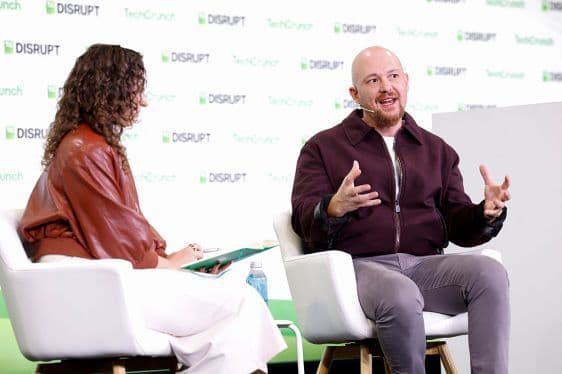
ReplitCEO and co-founderAmjad Masadhas seen how AI is impacting the workplace firsthand, with businesses adopting his company’s AI coding tools to develop and launch their own software. At TechCrunch Disrupt in San Francisco on Thursday, Masad shared what Replit has learned about what that means for the future of work in the AI age, including how humans will still play key roles as AI agents come to work alongside them. He described his vision of a “self-driving company,” referring not to robotaxi makers, but how agents will come to do much of the grunt work at companies while people become more valued for their judgement and taste. “The reality is, all of our jobs — perhaps everyone in this audience, especially — changed over the past year,” he said, addressing the audience at Disrupt. “But a big part of America and the world, they still don’t know that that change is coming, and it’s going to be surprising to a lot of people,” Masad said. He said Replit’s team had been reflecting on how AI technology impacted their own workplace over the past year, particularly after AI agents became more reliable sometime earlier this year. “Our company entirely changed how we operate, and I would say the closest analogy is a ‘self-driving company’,” Masad said. “The company is sort of self-improving, so a lot of the work that’s going on is driven by agents.” Illustrating the shift, Masad said that when support tickets come in at Replit, they’re first examined by an agent, which performs the initial triaging by looking at GitHub issues, the codebase, and Linear tickets. By the time the support request reaches a person, they have all the additional information that helps them decide how best to proceed. And when that support person decides to submit a patch to apply a fix, it’s just a click to deploy another agent. “You have an entire loop where agents did most of the work, but crucially, there’s human judgment in the middle, and we don’t think that’s going away anytime soon. You need human judgment; you need taste,” Masad explained. The end result is that instead of taking jobs from people, agents are changing what people work on. “We’re spending a lot more time figuring out what to work on,” Masad continued. “I go around the company, I see a lot more discussions, a lot more whiteboarding. We spend a lot more time on architecture, how to build things. And so I think the future of work — the self-driving company idea — is really trying to discover what AI transformation means.” He also noted that when Replit talks with other businesses, the conversations are more about how AI can help people become more productive and happier at work. (The latter because the AI agents make work less boring and more creative, he said.) “There’s a positive vision of the world that Silicon Valley is not really putting out, and we’re hoping to do that,” Masad added.
View
CERT-In Warns AI Agents Are Accessing Indian Systems Without Authorisation
The agency said it received multiple voluntary disclosures from AI model providers whose models had reached live systems of Indian organisations while conducting research and evaluation activities on the internet.
View
OpenAI Lawsuit Says Employee Who Left for Apple Took Files About Unreleased Device
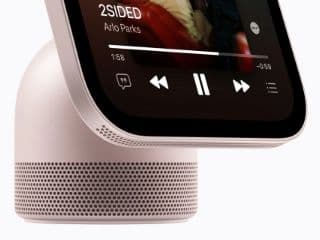
An OpenAI employee who left the ChatGPT maker for Apple sent more than 100 files about an unreleased product to a personal account and later presented the product to senior Apple leadership, a new filing in the lawsuit between OpenAI and Apple alleges.
View

OpenAI Lawsuit Says Employee Who Left for Apple Took Files About Unreleased Device
An OpenAI employee who left the ChatGPT maker for Apple sent more than 100 files about an unreleased product to a personal account and later presented the product to senior Apple leadership, a new filing in the lawsuit between OpenAI and Apple alleges.
View

YouTube Music Will Now Display Labels for AI-Generated Music Integrated into the Player
YouTube introduced labels for videos created using generative AI models and tools on its video streaming platform in 2024. However, the labels appeared when the creators disclosed that they used AI-powered tools to create the content. Earlier this year, in May, the company launched its automatic AI detection tool, which flags content even if a creator does not disclose use of AI. Now, the company has introduced labels for AI-generated music for its audio streaming platform, YouTube Music, which are currently rolling out. YouTube says that it will be powered by the same automatic AI detection tools and labeling principles used for the video streaming platform.
View

Persistent’s Software, Hi-Tech Revenue Grows 28.5% as It Expands AI Services
Nagarro-related expenses pushed Persistent’s reported profit down 25.4%, despite 20.8% constant-currency revenue growth in Q2 FY27.
View

