🚀 Zaprep: Your Socials on Steroids. 免费开始 — 每月自动发送 1,000 条私信,将互动转化为潜在客户。 ,每月 1,000 条自动私信。
最新 AI 资讯

Gemini Spark, Google’s agentic assistant, is now available on Mac
Gemini Spark, Google’s AI agent that can help with aspects of your digital life, is now available on Mac. The company on WednesdaysaidSpark is being added to the existing Gemini desktop app, as well as several updates and new features, including the ability to stay up to date on topics in real time, and connect to more apps like Google Tasks and Google Keep. The macOS launch allows Gemini Spark to better compete with desktop AI agents like Claude Desktop, Microsoft’s Copilot, OpenClaw, and others, as it will be able to work with files on the computer, and later, handle remote tasks. Though not available at launch, Google says users will “soon” be able to assign multi-step tasks to Spark on their phones, such as calling up the desktop agent to pull information from a file on their Mac. In the meantime, you can use Spark to sort and organize files, or use files on your computer as the source for a new Google Workspace doc or spreadsheet. For instance, Google suggests Spark can turn invoices on your computer into a budgeting worksheet. Gemini Spark for macOS (beta) is available only to Google AI Ultra subscribers in the U.S. for the time being. When Spark was launched last month, wespecifically called out the lack of an integration with Keep, Google’s notes app, as a big point of frustration during our early tests. It makes sense that short lists and other notes belong in apps like Google Keep, not in Google Docs, which seems like overkill for something like a simple vacation packing list. Clearly we weren’t the only ones to suggest this, as Google has now added support for Tasks and Keep. Spark now also integrates with other third-party apps, including Canva, Dropbox, Instacart, OpenTable, and Zillow Rentals. That will allow Spark to perform all sorts of tasks, like reserving tables, ordering weekly groceries, designing flyers, or booking apartment tours. In addition, Gemini Spark can now track topics and react to events in real time, which will improve its performance for tasks that involve things like tracking sports scores, stock movements, or breaking news. Plus, it means Spark will be able to keep an eye on other areas, like social media, blogs, online shopping, and weather. Plus, Google says it’s rolling out support for custom Model Context Protocol (MCP), which will allow you to connect your favorite apps directly into Spark to build an assistant better tailored to your needs.
View
Venice AI becomes a unicorn with $65M Series A as its privacy-first AI platform takes off
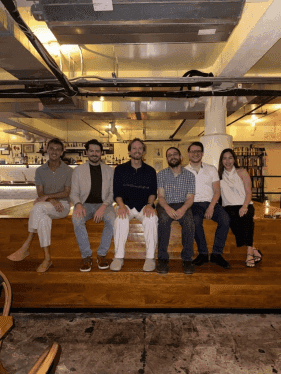
Concerns over the impact of AI chatbots onmental health, personalsafety,harassment, anddisinformationhave forced AI developers to implement safeguards to better control how and what their AI models are allowed to respond or do. But concerns and worries can’t erode demand. AI offers a lot of promise, and people don’t want a faceless tech company to restrict their access to that potential. And if they can preserve their privacy while they use AI models however they want, why not? Venice AI, which offers access to more than 200 AI models while allowing users to retain their privacy, is raking it in thanks to that demand. Just two years in, the company already has more than 850,000 unique visitors to its website, and serves more than 3 million active users and an average of 1.7 million API calls per day. The startup hosts “uncensored,” open-source models on its own data centers, and routes queries to closed-source models, such as those by OpenAI or Anthropic. All user input is encrypted and unencrypted client-side, and routed through an external proxy before it is processed and returned, with no data stored on Venice’s own systems. It also provides end-to-end encryption on some models, though you have to pay for a subscription to get that feature. The company is already profitable, with annualized run-rate revenues of over $70 million, its CEO Erik Voorhees (pictured above, in the center) told TechCrunch during an exclusive interview. Understandably, investors have flocked to get a piece of that traction. Venice AI on Wednesday said it had raised a $65 million Series A at a $1 billion valuation, its first external fundraise. The round was led by crypto-focused venture firm Dragonfly, with participation from Coinbase Ventures, North Island Ventures, and others. The overlap between Voorhees, Venice’s focus on privacy, and its new crypto investors is hard to miss, especially given the CEO’s background and past work. An early bitcoin advocate, Voorhees has founded a few crypto companies, including bitcoin gambling siteSatoshi Diceand cryptocurrency exchangeShapeShift, and has long advocated in favor of preserving users’ privacy. In fact,when a Wall Street Journal investigation accused ShapeShift, which initially didn’t require its users to identify themselves, of processing millions of suspect funds, Voorhees reportedly said: “I don’t think people should have their identity recorded to catch an occasional criminal.” He struck a similar note when asked how Venice AI thinks about offering access to AI models in light ofrecent cases of AI psychosisand resulting harm, saying his team treats their service as a “neutral tool or a neutral platform.” “This is the same principle that you have in Bitcoin, where Bitcoin, as a neutral protocol, works the same way for all people,” he said. “I think it’s actually quite dangerous from a safety perspective, for the world to enter this next phase and have everyone be constantly watched. To me that is actually much more dangerous than any particular person asking a controversial question or something that might be considered bad.” There’s a considerable focus on giving users agency, too. Users can freely choose from AI models that can generate text, images, audio, and video — all of which vary in their performance, quality, and the amount of censorship applied. The website prominently features several AI “characters” that you can customize and chat with, and the company proudly states it offers an “uncensored” experience. “We’re optimizing for freedom and actually respecting users as adults, which is, I think, rare these days,” Voorhees said. The founder said Venice also works on some open models’ system prompts to instruct them to answer more openly, though it doesn’t add any restrictions to the models. Unsurprisingly, there are two crypto tokens associated with the effort. Venice launched a token called “VVV” in early January, in a bid to attract users, Voorhees said, and in August last year added another, called “DIEM.” Users can buy VVV and then stake it to mint DIEM, which generates $1 worth of AI credits per day that you can spend on Venice. However, Voorhees said only about 8% of the company’s users pay with crypto. The founder credited the company’s growth to the good performance of the crypto tokens, though he said the strongest driver was getting close to feature parity with ChatGPT. “When we launched, we were very far away from what ChatGPT could do, but people would use us because it was private. And today, we’re very close to what ChatGPT can do […] so as we’ve closed that gap, it’s become an increasingly compelling alternative,” he said. Looking forward, Venice AI wants to use the fresh cash to start buying GPUs and building its own data centers so it can stop leasing GPUs and increase its gross margins.
View
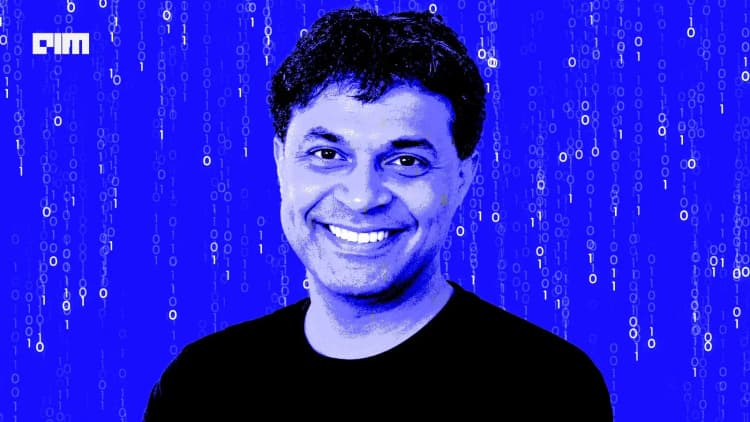
India Should Build ‘Frontier Minus One’ Models, Says Sarvam’s Vivek Raghavan
Sarvam co-founder Vivek Raghavan says India cannot expect 7-billion-parameter models to deliver comparable performance for strategic applications.
View

IIT (ISM) Dhanbad, AGI Partner to Build AI Models for Critical Mineral Exploration
The partnership aims to accelerate critical mineral exploration by combining AI with geological, geophysical and GIS data analysis.
View

Healthcare Co Roche to Launch Second India Technology Hub in Hyderabad
The new facility will support digital applications and IT services, with operations set to begin in early 2027.
View
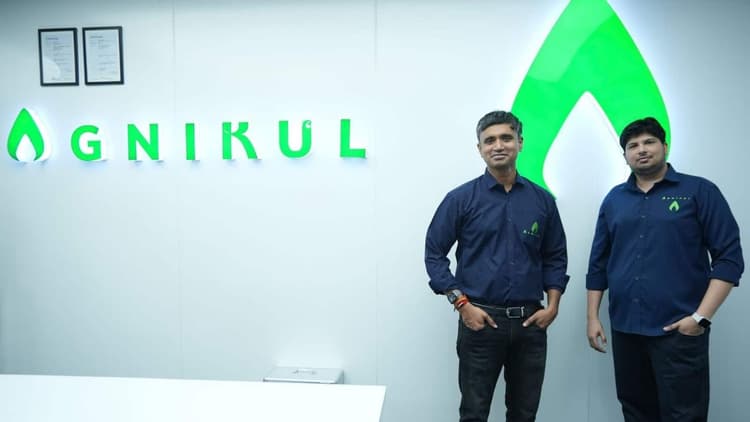
Agnikul, Finland’s ICEYE Partner for India’s SAR Satellite and Launch Capability
The partnership aims to combine satellite manufacturing and launch services to support sovereign Earth observation programmes.
View
Meituan Open-Sources LongCat-2.0 Model Trained Entirely on Chinese AI Chips
The model supports a one-million-token context window and introduces a new sparse attention architecture for coding and agentic workloads.
View

Google Expands Personalised Gemini AI Image Creation to US Users; Nano Banana 2 Lite Unveiled
Google introduced Gemini's personalised image generation feature in April this year. During the announcement, the company confirmed that the AI image generation feature is limited to paid Google AI Pro and Google AI Ultra users. That is changing now, as Google confirmed that personalised image generation is rolling out to more users. The feature can be accessed by all users aged 18 and above who are signed in with a personal Google account. Currently, the feature supports a few languages.
View
Hexaware Launches Agentic AI Platform for Enterprise IT Operations
The Tensai for Reasoning Ops platform uses AI agents to analyse operational data, recommend actions and help enterprises shift from reactive IT support to preventive operations.
View

AI-Focused Fintech Spense Bags $2.8 Mn to Build Asset-Backed Credit Infra
Spense has raised $2.8 million, with plans to build an AI-based infrastructure and intelligence layer for asset-backed credit.
View

Only 14% of Indian Companies Have Full Visibility Into AI Agents: Okta Research
Okta research shows most Indian organisations are preparing for AI-powered digital experiences, but only a small share have full visibility or control over AI agents operating in their systems.
View

Anthropic Introduces Claude Science for End-to-End Scientific Research
Anthopic’s new platform helps researchers analyse data, generate scientific outputs, and manage large-scale computing jobs from a single interface.
View

