🚀 Zaprep: Your Socials on Steroids. 免费开始 — 每月自动发送 1,000 条私信,将互动转化为潜在客户。 ,每月 1,000 条自动私信。
最新 AI 资讯

Claude Cowork expands to mobile and web
Claude Cowork— Anthropic’s Claude Code-style agent for general knowledge work — is coming to your phone. Claude Cowork launched as a desktop app in January, but starting Tuesday it is available on web and mobile for Max subscribers. With the update, users can start a task from their desk, get status updates on their phone, and pick up the finished output later — even if their laptop is closed. The product expansion is a signal that Anthropic wants Cowork to feel less like a coding tool for dummies and more like an agentic administrative coworker: something that can work in the background, tag along across devices, and request human input when a decision pops up only the user can make. In other words: The coding agent wars are spilling into the rest of the office. The move comes as AI firms try to push their products beyond chatbots into the everyday surfaces where work actually happens. OpenAI has madea similar move with Codex,which began as a software development tool but is increasingly being used by non-developers for reports, spreadsheets, presentations, research, data analysis, and more. For both labs, the bet is that success will depend less on who has the best chatbot and more on who owns the space where work gets done. That push also extends to other apps.Anthropic recently launched Claude Tag, an always-on Claude that lives in Slack and acts as an AI teammate. Beyond the benefits of one specific interface, launching Cowork as a multi-platform app means that the agent can continue running tasks in the background without a device online, the company says. One example from Anthropic reads: “Set Monday’s client prep for 6 am: Claude works through the email threads, transcripts, and recent news, builds the briefing doc, and leaves the follow-up email drafted but unsent. Review it over coffee.” The desktop app will remain the place for deep work, where Claude can access local files and the browser. But bringing Cowork to web and mobile means people who didn’t install the app can also use it. Anthropic says chat and Cowork will be unified in web and desktop to start, with projects and artifacts living together across both. Anthropic also released early Cowork data, which suggests the clearest use case for the tool is the “work around the work” that keeps companies functioning, handling what Anthropic calls the “tasks that are part of a broad swath of jobs, but are rarely a person’s core responsibility.” The study sampled 1.2 million anonymized and aggregated Cowork sessions from more than 600,000 organizations over the last two weeks of May. The largest category at 33.4% was business process operating: pulling scattered updates into a single report, building onboarding checklists, and reconciling spreadsheets. Anthropic said the tasks are common among roles in finance, HR, and administration. The next largest category at 16.4% was content creation and copywriting: tasks like drafts, slide decks, social posts, proposals, and other communications work that is usually performed by marketing and management positions. Software development, by comparison, only accounted for 8.7% of Cowork usage. “While coding is still — understandably — one of the uses of AI that gets the most attention, the use of AI for everyday business work is on the rise, and the kinds of tasks people are finding it most helpful for are coming into focus,” Anthropic said in a statement. “Our goal is to make this a reference point for people who are figuring out how to integrate AI products into their daily work, and to show where value is most concentrated.”
View
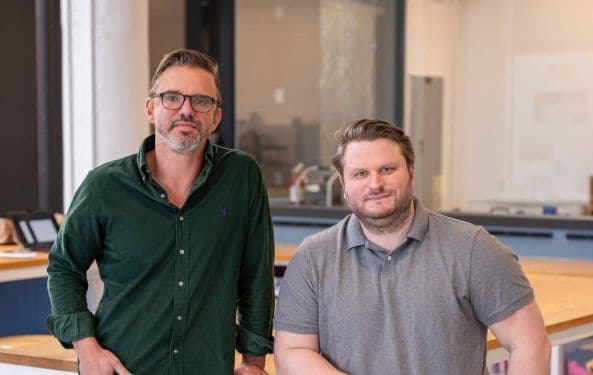
Savi’s app aims to protect consumers from realistic AI scams like kidnappers demanding ransom
Brothers Patrick and Ryan Coughlin, each with impressive careers in the tech industry (Patrick worked in national cyber defense, and at Splunk and Cisco; and Ryan with consumer products at Apple and Spotify), have launched a new kind of security startup. Savi Securityseeks to protect everyday folks from the new crop of incredibly convincing AI-generated scams, whether they’re routed via text, emails, or phone calls. The company just raised $7 million in seed funding, and is launching its app for iPhone and Android on Tuesday. The round was led by Acrew Capital, with participation from Magnify Ventures, TTCER, and Resolute Ventures. The inspiration for the company came from a horrifying incident involving the founders’ mother. About two years ago, Patrick Coughlin’s mom called him, distraught, saying she had just received a phone call from a man saying he had kidnapped Coughlin’s sister. He was senior vice president of security products at Cisco at the time. (He landed there after Splunk bought his cloud security startup TruSTAR for a reported $82 million in May 2021. In 2024, Cisco bought Splunk.) Her mobile phone rang with the caller ID of her daughter, Coughlin recounted. During that call, “she thinks she hears my sister’s voice saying, ‘Mom, they’ve got me.’ There’s a blood-curdling scream, and then my sister says, ‘You’ve got to do what they tell you.’ And then a man comes on the phone and says, ‘If you don’t pay us $1,200 right now, we’re going to kill your daughter in the parking lot of the local Walmart,’” he continued. The scammer had accurately spoofed Coughlin’s sister’s number, her voice, and referenced the location of the Walmart she frequented. Fortunately, the mom kept her wits, called the daughter, and discovered that she was fine. The kidnapping was an AI-generated scam. Coughlin, like his mom, was shaken. “What I was thinking, after calming my mom down is: What has fundamentally changed in the underlying cybercriminal economy that we are now able to lever the same kind of sophistication that I had seen pointed at government agencies, and then later at Fortune 500 companies? And now we’re deploying that sophistication at the consumer?” The answer is, of course, cheap and powerful LLMs and other generative AI tools. Before AI, pursuing such grifts on consumers was not financially worth it. It would require in-depth research on the target, tech to spoof voices, and so on. Such attacks were primarily aimed only at deep pockets, like enterprises or governments, as was the tech to defend against them. “There’s something that’s happening right now to consumers with AI in the hands of cyber criminals,” Coughlin says. The costs to perpetrate such swindles have become negligible, and the research material, easily available. “You can clone a voice off three seconds of audio, off a publicly available social media post. So we’ve all got these traces of stuff that’s out there in the ether — like where we’re talking or narrating; commenting on a kid’s football game while videotaping it, and putting it on Facebook.” The FTCsaidlast month that people reporting online crimes collectively lost $3.5 billion to imposter scams in 2025, triple the amount in 2020. While the majority of people reporting such scams are older Americans, some research implies Gen Z is also highly susceptible. Research from 2025 by Malwarebytes, a maker of antivirus and anti-malware tools, reported that Gen Z was targeted more often with text scams than other generations, andfell for them about 25% of the time. The Coughlin brothers’ idea was to develop a real-time intervention tool. They tested their idea, and the AI scam detection model they were building, by launching a free website calledScam Wise. It is anonymous, no registration required. Just upload any suspicious texts, photos, or emails, and Scam Wise will determine if it’s likely to be bogus. “We launched that about four months ago. We’ve had 50,000 submissions, and it grows now every week by about 10,000 submissions or more,” Coughlin said. Scam Wise proved a source of in-the-wild data to help train Savi’s scam-detection AI model. The startup is currently mostly using Google’s Gemini, but has built its software on an AI gateway, which allows it to tap other AI models as needed, like voice detection-specific options. On Tuesday, Savi launched a paid product, an iOS and Android app for consumers, that can screen texts, voicemails, and incoming calls for scams. Such features are available in a lot of different products (such as Malwarebytes), but Savi’s most impressive feature is live-call monitoring. During a suspicious phone conversation, a user can opt to add the app’s live agent as a listener. Savi listens for behavioral tells that can identify if the situation is a grift while the call is in progress. Savi’s fees are also a bit unusual. It charges $8/month, discounted to $63/year, to cover an entire family, and puts no cap on the number of users. So one plan can cover a person’s kids, spouse, parents, and that uncle who always seems to need tech support. Or whoever else that the primary account holder wants to add and provide administrative support to. AI has changed the conditions for “how accessible being a fraudster is,” Coughlin said. “We’re creating fraudsters because we’re bringing down the barrier of deceiving people. So not only do we have the organized criminals and the syndicates behind this, but everyday people are sort of being tempted into playing fraud.” Savi Security’s answer is like a new generation of anti-virus-like software: one that uses AI in real time just like the bad guys do.
View
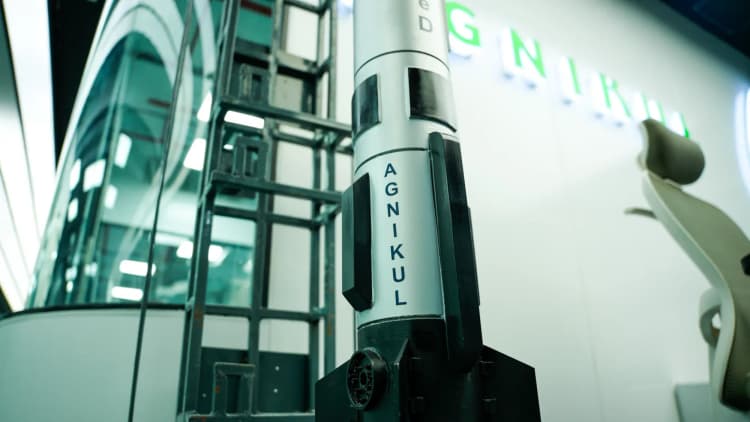
Inside the Chennai Factory 3D-Printing India’s Rocket Engines
At IIT Madras Research Park, Agnikul Cosmos is building rocket engines and even custom machines using additive manufacturing.
View

How to Escape 'Islands of Automation' Before Enterprise AI Stack Breaks
Sri Mookiah, Founder of LOWCODEMINDS, explains how foundational process redesign and strategic orchestration unlock true digital transformation and autonomous knowledge work.
View

DeepSeek Developing AI Chip to Wean Off From NVIDIA, Huawei: Report
The project began about a year ago, and DeepSeek has been holding discussions with multiple companies in the semiconductor industry supply chain.
View

Only 25% of Indian Organisations Feel Workforce Ready for AI, Kyndryl Report Finds
Kyndryl survey finds Indian firms are adopting AI quickly, but few yet say their workforce is ready for the change.
View

After Anthropic Partnership, DXC Technology Opens Bengaluru AI Centre
DXC Technology signed a multi-year Anthropic partnership and opened a Bengaluru facility for AI development and customer collaboration.
View

Why Big Tech is Spending Billions on Forward Deployed Engineers
From AWS to OpenAI, AI companies are investing billions to turn enterprise deployments into their biggest competitive advantage.
View

iOS 27 Beta 3: Apple Lets Beta Testers Customise Siri Voice ‘Pace’ and ‘Expressivity’ Weeks After WWDC 2026
Apple released the first beta version of the new iOS 27, iPadOS 27, watchOS 27, and macOS Golden, among other 27 series OS versions for its devices during the Worldwide Developers Conference (WWDC) 2026. On Monday, the Cupertino-based tech giant began rolling out the third beta version, which enables features that were showcased during the keynote presentation of the event. The iOS 27 beta 3 update reportedly introduces new customisations for Siri Voice. It allows users to adjust the speed of Siri's response and tweak how the voice assistant responds to user queries. On the other hand, the new watchOS 27 beta 3 update reportedly brings the standalone Siri AI app to select Apple smartwatches.
View

The first American autonomous ground vehicles are fighting in Ukraine
Forterra, a US builder of autonomous vehicles, revealed today that more than 100 of its self-driving ATVs have been deployed in conflict zones in Ukraine for the past nine months, in what the company believes is the largest deployment of autonomous ground vehicles in combat by any US defense tech company. “I believe this to be true of every defense technology that’s ever been created—until you hit the realities of combat, you’re just not going to know,” Scott Sanders, Forterra’s chief growth officer and a former US Marine officer, told TechCrunch. Funded by US defense dollars, the mission is part of growing effort to transform the US military through its support of Ukrainian resistance to Russian invaders. While aerial drones have garnered much of the attention in the fight, the dynamics they’ve created — extensive no-go zones where surveillance can lead to death from above — have led Ukrainian strategists to seek ground-based autonomy as well. “There’s nowhere to hide,” Sergeant Major Corey Wilkens, who leads a program developing autonomous vehicles and tactics for the US Army, explained. “You become very, very vulnerable to be able to be attacked by [first-person view drones], other sorts of drones dropping munitions, artillery, mortar, the full range of things that they have.” Ukraine is already building its own uncrewed ground vehicles (UGVs) to help move supplies and munitions, or evacuate wounded soldiers, but they are typically battery-powered and can only carry up to 250 kilograms, according to a soldier in the Ukrainian army who has worked with the vehicles and who TechCrunch won’t identify for security reasons. Forterra’s Lancer vehicles, based on Polaris ATVs and equipped with a custom-built sensor and compute stack, are gas-powered and can carry 750 kilograms of cargo, making them more versatile and useful. “The bottom line is that this UGV for logistics and just maintaining our defense is the most important UGV in Ukraine,” the soldier said. “It’s fucking fantastic, and we are dying to get more.” They didn’t feel that way at first. The Ukranian Armed Forces have had have mixed experiences with Western contractors bringing new tech to the battle, and at first Forterra’s offerings felt a little too geared for the high-end requirements of the US Army. Modifying the vehicle for the situation—particularly, by adding a Starlink satellite internet antenna—made it a huge value add. Since arriving in Ukraine last October, the vehicles have driven more than 2,500 miles across more than 1,100 missions, carrying 777,440 pounds of total weight and completing 52 casualty evacuations. Some has been lost in combat, particularly if they get stuck in deep mud or other terrain where Russian forces can target them at leisure. Forterra has learned some useful lessons — about electronic warfare, updating their software from afar, how to maneuver in challenging conditions, and ensuring their vehicles don’t break down. The company, which has raised more than $500 million in venture funding from funds like XYZ Venture Cpaital and Moore Strategic Partners, is now better positioned to compete for lucrativenational security contracts. They’ve also seen the limits of autonomy: For now, Ukranian soldiers have mainly been teleoperating the vehicles in combat zones, in part because they’re too valuable to lose and in part because autonomous vehicles aren’t quite ready for the realities of war. While, for example, the vehicles can navigate autonomously across diverse terrain, they’re not quite at the point where they can identify unexpected enemy forces and react appropriately. “We actually need to be able to respond to the enemy threats, live, while it’s in front of the enemy, which the autonomy doesn’t know how to do yet,” the Ukrainian soldier explained. Forterra, which began work on autonomous vehicles 20 years ago, is working on how to combine the kinds of algorithms that gave us self-driving cars with newer generative AI software that allows machines to react to their surroundings in a generalized way. As with other autonomous systems, one of the key obstacles is gathering the right data. “There’s a lot of things you have to do that aren’t available in an open source model because they’re not things that humans do, whether that’s figuring out how to navigate a minefield or [operating] a weapon system,” Sanders told TechCrunch. “You need to be able to turn the dials and some things more of a classical robotics approach, and then leverage AI where you need to.” Competitors in this space are solving similar challenges,like Scout AI, which raised $100 million earlier this year to train foundation models and develop a suite of autonomous platforms for the military that includes UGVs. Other startups like Field AI and Overland AI are trialling UGVs with the US military. Even with the limitations on UGVs, American military experts are convinced that its time to invest in these tools. “Ground autonomy is achievable now and we’ve seen it,” Wilkens said. Scott Philips, the chief innovation officer at Forterra, visited a Ukranian unit’s operations center to see the vehicles in action first-hand, winning respect from the unit for visiting an area in range of Russian attacks. “What struck me most was seeing exactly where the seams are: which steps are still manual, where data has to be re-entered or re-verified by hand, and where the team has already found ways to automate or speed things up,” Philips told TechCrunch. “That’s the kind of ground truth you can’t get from a slide deck because it shows you precisely where better tooling could take pressure off the people doing this work in real time.”One challenge issued by the Ukrainians: Make it cheaper. Forterra’s Lancers aren’t expensive for their category, thanks to relying on Polaris’ commercial supply chain for the vehicle itself, but they are still too valuable to be deployed as freely as UAVs can be. “Attrition is just a fact of this battlefield, and we have lost a few at this point, and it hurt, and we need more, and therefore we need them cheaper,” the Ukranian soldier told TechCrunch.
View

Broadcom, Apple Extend Custom Chip Partnership Through 2031
New multi-year agreements cover the development and supply of custom ASIC silicon for multiple future generations of Apple products.
View

95% of NVIDIA’s Grace Blackwell GPUs Yet to Be Deployed: Report
Air Street Capital estimates that only 100,128 of the world’s 1.66 million announced NVIDIA Grace Blackwell GPUs had been deployed as of July.
View

