🚀 Zaprep: Your Socials on Steroids. 免费开始 — 每月自动发送 1,000 条私信,将互动转化为潜在客户。 ,每月 1,000 条自动私信。
最新 AI 资讯

Anthropic, OpenAI, and SpaceX are bigger than the last 25 years of tech exits
We’ve talked before aboutthe hot IPO summer, but with SpaceX just launched to public markets and Anthropic and (maybe) OpenAI soon to come, it can be easy to miss the sheer scale of what’s happening. We got a good reminder of it in Wednesday’s NCVA-PitchbookVenture Monitor report. Not surprisingly, all of the money in private markets is flooding into AI — but one particular figure stood out. Taking the measure of the pending OpenAI and Anthropic IPOs, the report drops this nugget: “Along with the SpaceX IPO, these exits will generate more value than all U.S. VC-backed exits since 2000.” That’s quite a claim, and when you add up the numbers, it’s hard to disagree. SpaceX has already gone public at a $1.77 trillion valuation, and with both Anthropic and OpenAI pushing into the trillions it’s likely the trio together will land somewhere north of $4 trillion. By comparison, the U.S. Securities and Exchange Commissioncounted just $70 billionin US-based IPO proceeds last year. Careful readers will notice a few caveats in the language. It doesn’t include non-U.S. companies like Alibaba, and we’re measuring “value created” as opposed to strictly liquid cash. A lot of the major tech developments happened at companies that had already gone public (the iPhone, the debut of Android, and the launches of YouTube and Instagram), so they wouldn’t be captured in the IPO figures. Still… that was a pretty eventful 25 years. Among other things, that period saw IPOs from Google (2004), Tesla (2010), and Meta (2012), which are now among the most valuable companies in the world. During the same period, LinkedIn, Slack, and WhatsApp were all acquired for more than $20 billion. Uber’s $84 billion IPO seemed like a lot of money in 2019, but it’s less than 5% of what SpaceX just drummed up. One factor here is that companies are staying private for longer. The Google of today probably would have delayed its IPO and gone public at a higher number. Another factor is the capital-intensive nature of AI training, which has pushed labs into intense fundraising and inflated valuations. But the sheer scale of the public offerings is still way beyond anything the industry has ever done, and is already pushing the financial infrastructure to its limit.
View

Anthropic’s new Claude feature is quietly selling you on AI
At a time whenAI backlashand data centerprotestsare making headlines, Anthropic’s Claude is rolling out a new feature that subtly makes the case for why you should keep using it. On Thursday, the company introduced “Reflect,” a built-in dashboard that lets you track and visualize how you use Claude and your broader AI habits. On the surface, it’s an analytics feature that offers insights into what sort of topics you’ve discussed, your overall usage patterns, and what kinds of tasks you tend to turn to AI for help with. But Reflect’s larger purpose is about shaping how users think about AI itself. It does so by framing Claude as both a highly-utilized productivity tool and a part of your everyday workflow, as well as a technology that can be used mindfully. While Claude Reflect doesn’t go so far as to quantify how much time you’ve saved on manual tasks by switching your workflows to AI, there’s something about having all the work Claude helped with laid out in front of you that will likely make you see Claude as a tool you’ve come to rely on, and one very much a part of your everyday life. Meanwhile, Anthropic will push you to think critically about your AI usage, as Reflect will pop up questions from time to time, like “What’s one thing you want to keep doing yourself, even if Claude could do it faster?” The app additionally offers tools to set quiet hours or schedule nudges to take a break from AI, Anthropic notes in itsannouncement— a nod to the potentially addictive nature of working with AI chatbots, which never fail to respond to your questions and prompt follow-ups to keep the conversation going. The idea to add analytics to an app to subtly shape consumer sentiment is not a new one. In 2012,Google promoteda new utility calledGmail Meter, which number-crunched your email inbox, showing you traffic patterns, pie charts of email categories, how much data is in your inbox versus your archive, among other things. While navel-gazing over this type of data is fun for some technical folks, the meter also served as a way to display, in numbers and charts, how Gmail had become central to people’s digital lives. Claude’s Reflect does the same but it then takes things a step further, as it also trains users on how they can better use AI. For instance, Reflect might suggest that instead of re-explaining the context of your work across repeated tasks, you could use Claude’s Projects feature. For Anthropic, this also has the benefit of more deeply integrating your daily workflows with Claude, which helps retain users and discourage them from switching to competitors’ AI tools. Anthropic notes that more sensitive conversations may show up in Claude Reflect, but only at a high level, and any conversation connected to a health integration tool is left out of your insights entirely. None of the data in your insights is used for other purposes, the company also says. This Claude Reflect feature is available in beta for Free, Pro, and Max users who have memory turned on. Later, it will expand to include a view of how much time you’ve spent using Claude.
View

Govt to Study AI’s Impact on GCC Growth as India Bets on Higher-Value Roles
MeitY Secretary and the Chief Economic Adviser say AI could reshape work but need not weaken India’s GCC opportunity.
View

TCS' AI Business Crosses $2.6 Bn Run Rate as Q1 Revenue Jumps 14% YoY
TCS secured a net profit of ₹13,349 crore, a decline of 2.7% sequentially, and its operating margin also declined to 24% from 25.3% a quarter ago.
View
Why Enterprise AI Needs to Move Beyond Traditional RAG
Traditional RAG typically retrieves relevant text from a vector database and supplies it to an LLM as context. Automation Anywhere’s Context Intelligence Graph expands that approach.
View
Cognizant to Train 15,000 Forward Deployed Engineers Under Frontier Workforce Model
Cognizant plans to build a workforce of 5,000 Frontier Certified Engineers and 10,000 Frontier Business Operators by the end of 2026.
View
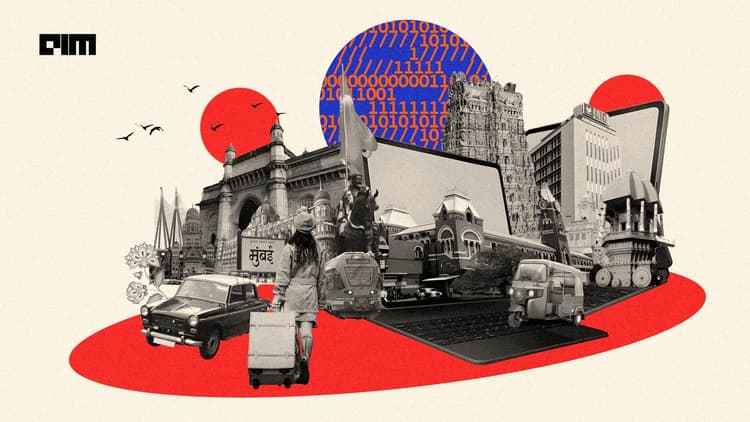
Kerala Software Co IBS Group Unveils Travel-Tech AI Firm, Plans $500 Mn Investment
IBS Group has launched Naviq Technology, an AI company targeting airlines, airports and hospitality firms, with hiring under way in Kochi.
View

NVIDIA’s Warm-Water Cooling Vision Meets India’s Extreme Heat
NVIDIA’s warm-water cooling promises efficiency gains. But the real question is whether the technology can withstand India’s extreme heat, water stress, and policy gaps.
View

ChatGPT Voice Gets GPT Live Upgrade With Real-Time Conversations
OpenAI has upgraded ChatGPT Voice with a new GPT Live system that brings more natural conversations, simultaneous listening and speaking, and smarter responses powered by its latest AI models. The update introduces GPT Live 1 and GPT Live 1 mini, replacing the previous voice experience for users across different subscription tiers. The rollout also extends to ChatGPT on iOS, Android, the web, and CarPlay. OpenAI says the new voice mode supports richer interactions, visual responses, and improved handling of longer conversations.
View
Why China Wants to Trade Open-Source AI for Frontier Leverage
If China restricts the country’s most advanced AI models, it may signal the end of the open-weight era.
View

Federal Official Mentions Cognizant as US Intensifies H-1B Fraud Probe
“We have whistleblowers talking about some of the biggest companies like Cognizant who have been in chatter of issues with PERM and H-1B Visas.”
View

Indian Enterprises Now Fear AI Vendor Lock-In Thanks to US Govt
As AI providers shift to usage-based pricing and governments restrict access to frontier models, Indian enterprises are rethinking their AI architecture.
View

