🚀 Zaprep: i tuoi social a pieno regime. Inizia gratis — automatizza 1.000 DM/mese e trasforma l'engagement in lead. con 1.000 DM automatizzati al mese.
Invia il tuo strumento
PoweredByAI.app è un catalogo di strumenti IA che aiuta persone, aziende e creator a scoprire i migliori strumenti di IA per scrittura, coding, design, produttività e altro.
© 2026 , Prodotto di011BQ. Tutti i diritti riservati.

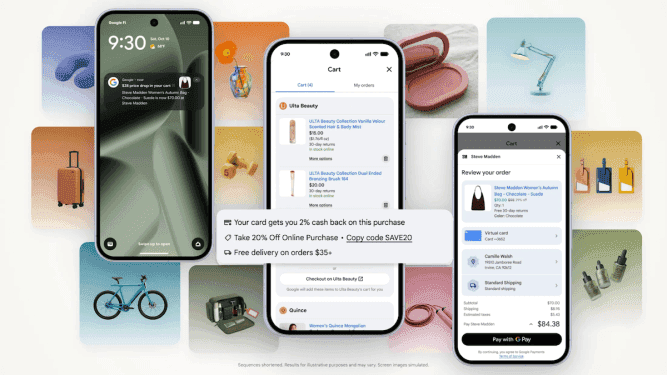
Google on Thursdaysaid“Universal Cart,” a tool that lets users collect and monitor products they find across search and in the Gemini app, is now available to U.S. users. The company firstpreviewed the toolat Google I/O in May. The idea is to make online shopping easier to manage. Find something you like, save it to your cart, and move on. When you return later, your items and shopping progress are still there, so you don’t have to hunt down the same products or start over. Universal Cart can collect items from multiple retailers, turning it into a central hub for browsing and keeping track of potential purchases. Google says the cart can also help shoppers stay on top of deals and availability. The tool can send notifications when a saved product’s price drops or when an out-of-stock item becomes available again. The tool is also designed to offer more tailored help during the shopping process. Google says it can take credit card perks into account when helping users choose how to pay, and also surface relevant promo codes. Checkout is tied to Google’s Universal Commerce Protocol, or UCP, an open standard the company introduced earlier this year. UCP is designed to help AI agents and retailers work together across different parts of the shopping journey, including checkout. Google is already deeply invested in AI-powered shopping, and Universal Cart is its latest effort to make the experience more convenient. It joins features such as conversational product discovery in Search’s AI Mode and Google’s“Let Google Call”tool, which uses an AI agent to contact nearby stores and check whether an item is in stock. Google isn’t the only company bringing AI into e-commerce.Amazon,OpenAI, and other rivals have added agentic commerce features as companies look for ways to make chatbots useful beyond answering questions.
View

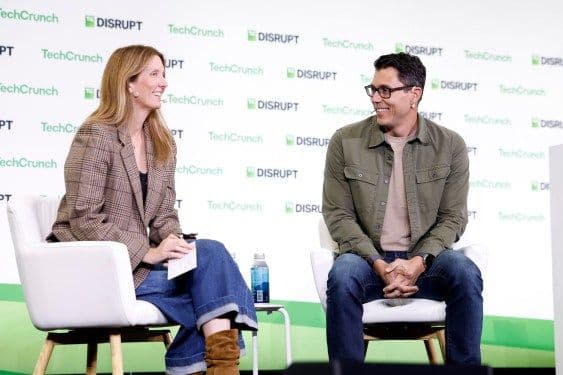
Rivian recently rolled out an AI assistant that lets drivers and passengers interact with the company’s electric vehicles just by talking to them. But the carmaker’s founder and CEO, RJ Scaringe, said at TechCrunch Disrupt this week that, in the future, Rivian’s cars will be able to run AI agents made by other companies like Anthropic. “That’s where it becomes magical,” Scaringe said onstage. Scaringe didn’t say when Rivian would implement this, and the company declined to offer more details, pointing instead to the “AI & Autonomy Day” event it’s hosting in December. But it’s not hard to imagine how Rivian might integrate something like Claude, OpenAI’s Dots, or Meta’s Muse assistant into its software. The company has developed its in-car software from the ground up, instead of leaning on Apple CarPlay or Android Auto, and built a lot of its own applications, like navigation (though it has worked to integrate popular in-car apps like Apple Music). Rivian says it has created its own in-house agentic framework that understands what action a person wants to take when they talk to the vehicle, and routes it to the right part of the car’s software. Most of the time, that involves what you’d expect: asking the car to turn down the temperature, activate the seat warmers, or summarize the news. “Think of it as like a traffic light. So if you ask the vehicle something, it decides what model it’s going to use. It can use a local model that’s running on the edge and the vehicle. If it’s a more complex question, it can go up to the cloud. And then even for that, we have different models that we use,” Scaringe said. As of May of this year, the agent could access external apps like Google Calendar. And Scaringe said at Disrupt the next step would be to add products from the frontier AI companies, though making them work in the car won’t be easy. “There’s a lot of plumbing behind the scenes we have to do to make sure that that works, and it’s not just within Rivian. That’s also a lot of coordination with the labs to make sure they enable that plumbing,” he said, adding that putting this kind of software near safety-critical systems means Rivian has to be extremely careful. “You wouldn’t want an agent to determine, ‘hey, it’s time to apply the brakes, or time to steer the vehicle.’ So anything that’s vehicle-level controls are not being handed to an agent,” he said. Instead, he thinks the implementation will look more like an extension of how people currently use these agentic apps. That would mean Rivian would have to find a way to connect the vehicle to all of the context that apps like Muse collect on their users. For example, Scaringe said, a driver could ask the Rivian assistant to turn on the ventilated seats before going deeper. “And then simultaneously say, ‘We were talking yesterday about this meal. I’m planning to have guests over on Friday. Can you help me think through what we’re going to make?’,” he said. The car could then pull the driver’s context from a conversation they had with the assistant on another device. Of course, Rivian wouldn’t be the first American car company to add AI agents to a car’s software. Earlier this year, Tesla added a feature that let users talk to both SpaceX’s Grok chatbot and also its Grok Bot assistant.

Amazon’s personal AI wearable maker,Bee, is announcing its first new products since beingacquired by the retail giant last year. The tech company on Thursday introduced the Bee Frontier, the next generation of its device that can be worn on the wrist or pinned to clothes, along with Bee Eclipse, a credit-card-sized device that magnetically attaches to the back of your smartphone. The latter puts Bee into more direct competition with AI devices like the Plaud Note or Pocket, but at a lower price point — the Bee Frontier is $74.99, compared with $159 for thePlaud Note(or $189 for the Note Pro), or $129 for thePocket AI device. The Bee Frontier will come in Onyx, Lavender, and Sage, while the $99.99 Bee Eclipse will be offered in Silver, Midnight, Honey, and Blush. Like the original Bee, the idea with the new devices is to leverage AI to take notes from your everyday conversations, allowing you to remember the important things that were said, and then turn those into actionable to-dos, summaries, and insights. For instance, if you discussed making plans with friends, the Bee would remember the date and time you agreed on, then create a calendar invite. You could also use the Bee to take lecture notes in class, or to jot down the care plan you discussed with a doctor, among other things. All Bee devices can create conversation summaries and recaps for free, and offer 14 days of memory. With an $11.99 per month Bee Pro subscription, users receive unlimited conversation summaries and integrations with Amazon.com, Alexa+, and third-party applications. Pro users also get suggested to-dos, daily memories, a personal chat assistant, and conversation templates. To make all this possible, Bee devices use a private computing security architecture, which doesn’t store the raw audio from your conversations. Instead, audio is processed in real time and then deleted. Transcripts of the conversation are encrypted using keys that your device creates and controls, which means no one else, including Amazon employees, can access those files unless you manually and intentionally share them. In addition, you can opt to connect the Bee to Alexa, allowing your Echo device to use its ability to identify your voice, a feature called Voice ID, to recognize when you’re speaking. It can then record your conversations to provide Bee’s insights. (This aspect of Bee is optional, and Amazon notes you can delete transcripts and summaries at any time.) With its new connections to Amazon.com and Alexa, Bee users can make purchases from Amazon or ask Alexa for their Bee insights, summaries, or to-dos hands-free. Bee also works with your existing productivity software, like Gmail, Google Calendar, and Microsoft Outlook, so it can draft emails, set up meetings, surface action items, and more. Plus, you can upload photos to Bee or connect it with Apple’s HealthKit to add a picture of your overall wellness to be integrated into your provided insights. The Bee Frontier and Bee Eclipse both have just one button that turns the device off and on, and include an indicator light when it’s summarizing a conversation. The Frontier also offers IP67 water resistance, up to seven days of battery life, USB-C charging, and dual microphones with advanced noise filtering. All Bee devices come with a companion mobile app, which has also been newly redesigned, plus a new desktop app. The Bee Frontier is available now on Amazon, and the Eclipse will be available soon thereafter.

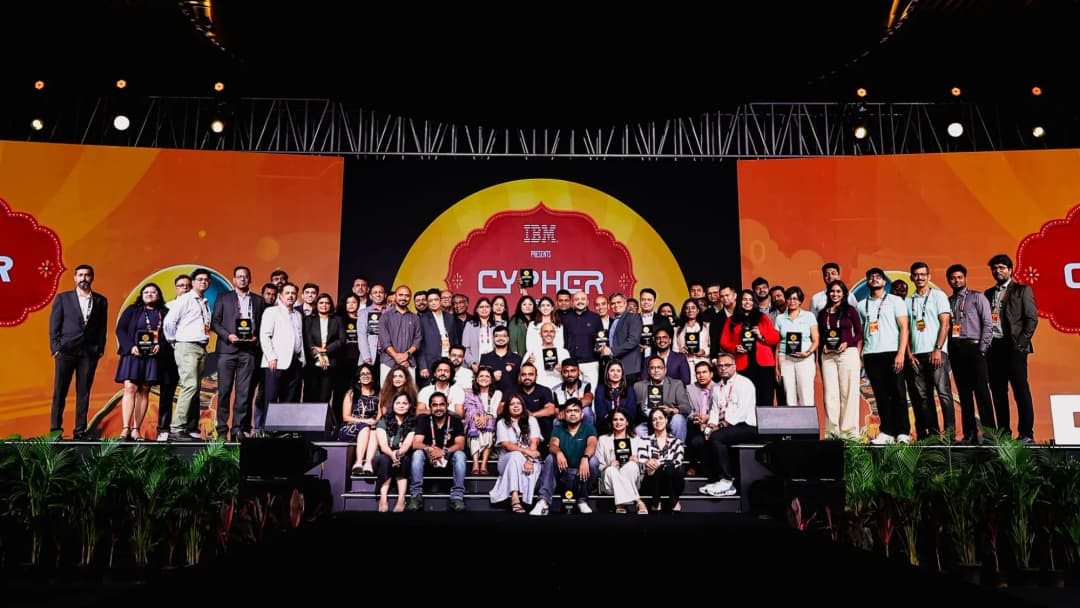
The Best Firm Awards recognised 22 companies across five categories: forward-deployed engineers, women in tech, data scientists, AI professionals, and data engineers.
View

The startup uses AI to translate books across Indian and foreign languages, with human experts refining the output to preserve the author’s voice and cultural context.
View

Wipro's operating margin widened sequentially, while operating cash flow rose 61.3% to $553.6 million from the June quarter.
View

The company is expanding AI initiatives in India across agriculture, education and small-business development, including $15 million in funding for MSME solutions.
View

The framework aims to shift competition among states from attracting investment announcements to demonstrating investment readiness, infrastructure quality and measurable economic benefits.
View

The IT services company booked $1.023 billion in quarterly deals and expanded its EBIT margin to 14.8%, while retaining its 15% full-year target.
View

In a meeting with investors in San Francisco, the company said it was profitable on an adjusted basis and generated positive cash flow during the quarter.
View

He is slated to leave the company on November 15 and continue as an advisor after overseeing major infrastructure deals and the launch of GPT Infra.
View

The new tool provides a task-level view to help companies decide where AI can support work and where employees need to develop new skills.
View
View
View