🚀 Zaprep: Sosialmu Supercharged. Mulai gratis — otomasi 1.000 DM/bulan & ubah engagement jadi lead. dengan 1.000 DM otomatis/bulan.
BlogHow AI Is Improving Healthcare Right Now
How AI Is Improving Healthcare Right Now
 Shashank Jain
9 Okt 2026
5 mnt baca
How AI Is Improving Healthcare Right Now
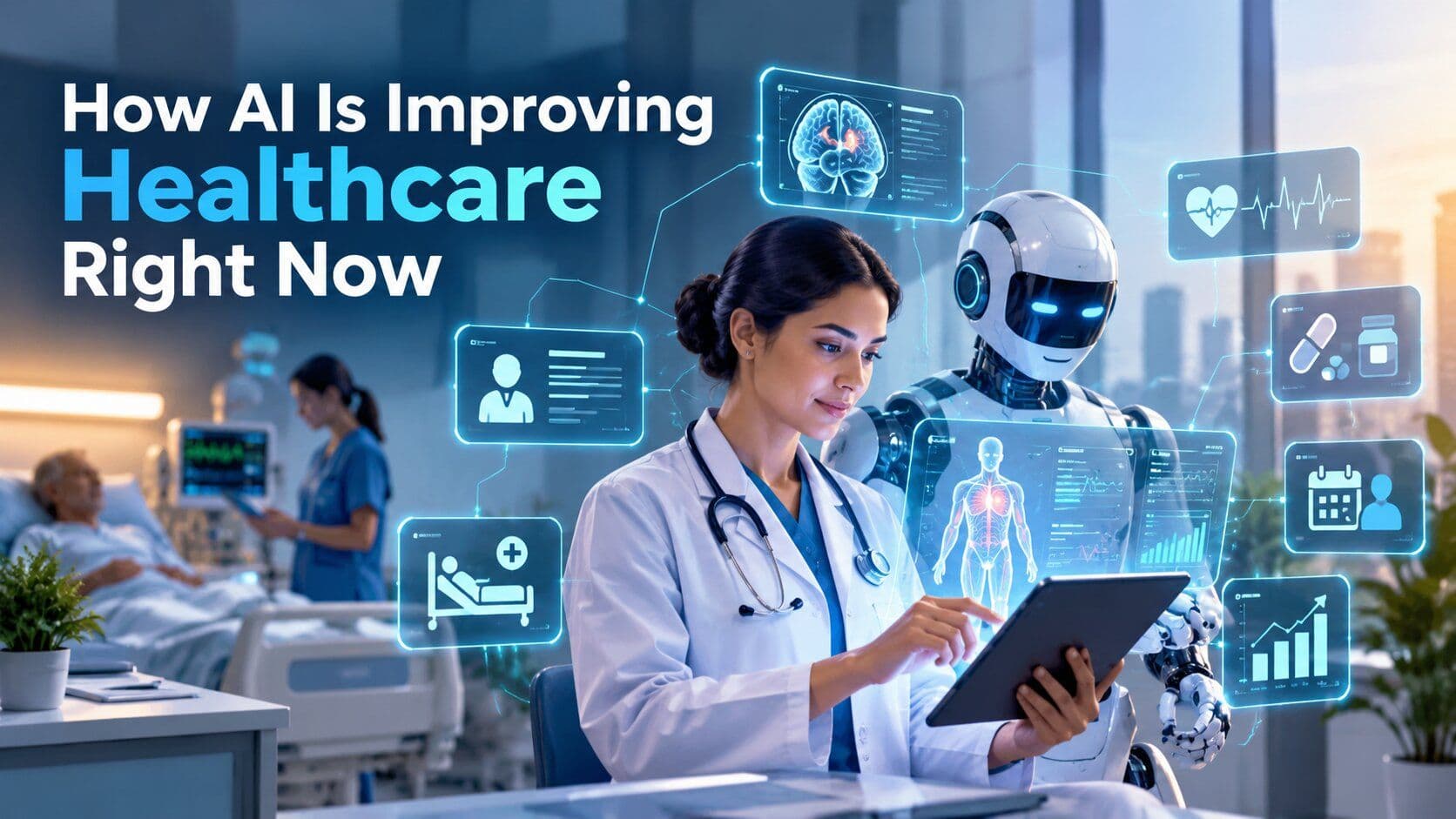
Artificial intelligence spent years as a promise in healthcare. Conference speakers described a future where algorithms would catch disease early, cut paperwork, and give doctors their time back. Much of that future has quietly arrived. It did not show up as a robot physician. It showed up as dozens of narrow, practical tools that handle specific jobs well, and patients are already feeling the difference whether they realize it or not.
What follows is a look at where AI is making a real impact today, where it still has limits, and what patients and providers can reasonably expect from it.
Giving Clinicians Their Time Back
Ask any physician what wears them down and the answer is rarely the medicine. It is the documentation. Doctors have long spent hours each day typing notes, often finishing charts at home after dinner. That burden drives burnout and pulls attention away from the person sitting in the exam room.
Ambient listening tools have changed this faster than almost any other technology in recent memory. The software listens to the visit with the patient's permission, drafts a clinical note, and hands it to the physician for review. The doctor edits and signs off instead of writing from scratch.
The effect in the room is easy to notice. Physicians look at their patients instead of a screen. Conversations run more naturally. Many clinicians who use these tools say they leave work on time for the first time in years, which matters a great deal in a field that is losing experienced people to exhaustion.
Catching Disease Earlier
Early detection is where AI has the longest track record. Image-based specialties were the natural starting point because pattern recognition is exactly what these models do best.
Radiology led the way. Algorithms now flag suspicious findings on mammograms, chest scans, and brain imaging, then move urgent cases to the top of the reading list. A possible stroke or a collapsed lung gets a radiologist's eyes in minutes instead of waiting its turn in the queue.
Other areas have followed:
- Eye screening tools detect diabetic retinopathy from a retinal photo taken in a primary care office
- Dermatology apps help triage skin lesions that need a specialist's attention
- Cardiology software reads ECGs for signs of conditions that a routine review can miss
- Colonoscopy systems highlight polyps in real time during the procedure
Pathology is part of this shift too. As labs scan glass slides into digital images, AI can assist pathologists by counting cells, grading tumors, and pointing out regions that deserve a closer look. Adoption is still early since most labs have yet to go fully digital, but the groundwork is being laid by LIS software companies like NovoPath.
None of these tools replace the specialist. They act as a second set of eyes that never gets tired at the end of a long shift.
Speeding Up Drug Discovery
Bringing a new drug to market has traditionally taken more than a decade and an enormous amount of money. Most candidates fail somewhere along the way. AI is attacking that problem at several points in the pipeline.
Researchers now use models to predict how proteins fold and how molecules will bind to them. Work that once took years of lab experiments can start with a shortlist generated in days. Companies also use AI to search existing drugs for new uses, which can shorten the path to approval because the safety profile is already understood.
Clinical trials benefit as well. Matching patients to trials has always been slow and manual. Software can now scan records to find eligible participants, which helps trials fill faster and reach more diverse populations.
Predicting Problems Before They Happen
Hospitals generate a constant stream of data from monitors, lab results, and nursing notes. A human cannot watch all of it for every patient at once. Predictive models can.
Sepsis is the best-known example. The condition moves quickly and every hour of delayed treatment raises the risk of death. Early warning systems watch for subtle changes in vital signs and labs, then alert the care team before the patient visibly declines. Similar tools estimate which patients are likely to fall, deteriorate, or return to the hospital soon after discharge.
These predictions let staff act earlier. A nurse checks on a patient sooner. A care manager schedules a follow-up call. Small interventions like these keep people out of the intensive care unit.
Smoothing Out the Business Side
A large share of healthcare spending never touches patient care. It goes to scheduling, billing, coding, prior authorizations, and endless phone calls. This is unglamorous work, and it is also where AI may save the most money.
Health systems are using AI to:
- Draft replies to patient portal messages for clinicians to review
- Suggest billing codes based on the clinical note
- Prepare prior authorization requests and appeal denials
- Predict no-shows and fill open appointment slots
- Forecast staffing needs based on expected patient volume
Patients feel the results as shorter hold times, faster answers, and fewer surprise bills caused by coding errors.
Helping Patients Between Visits
Most of life happens outside the clinic. Wearables and home devices now track heart rhythm, blood sugar, sleep, and activity around the clock. AI makes sense of that flood of data and surfaces what matters.
Someone with diabetes can get dosing guidance from a system that learns their patterns. A smartwatch can spot an irregular heartbeat and prompt a visit that prevents a stroke. Chat-based assistants answer routine questions at two in the morning and steer people toward the right level of care.
Where Caution Still Matters
AI in healthcare is not without risk. Models trained on narrow populations can perform poorly for patients who were underrepresented in the data. Documentation tools sometimes write things that were never said, which is why clinician review remains essential. Privacy is a constant concern when sensitive health information feeds these systems.
Trust also takes time. Clinicians want to understand why a tool reached its conclusion, and patients deserve to know when AI plays a part in their care. Health systems that roll out these tools carefully, with clear oversight and honest measurement, will see the best results.
The Road Ahead
The most successful uses of AI in healthcare share a common thread. They take a specific, well-defined task off a human's plate and leave the judgment and the relationship to the people trained for it. That balance is why adoption has accelerated.
Medicine will always depend on human skill and compassion. AI is proving to be a useful partner that handles the repetitive work, watches for what people might miss, and frees clinicians to focus on their patients.
Tag Terkait
AI ToolsKategori Terkait
Alat AITampilkan alat AImu di artikel seperti ini
Jangkau pengguna yang aktif menemukan alat AI di PoweredbyAI dan bangun backlink SEO yang meningkatkan visibilitasmu di Google.
Dipercaya 25,000+ alat AI dan startup yang sedang berkembang
Tampilkan Alat AImu di Blog & Artikel Traffic Tinggi
Tampil di PoweredByAI dan jangkau pengguna yang aktif mencari alat seperti milikmu. Bangun backlink SEO kuat yang membantu ranking di Google dan mendatangkan traffic organik yang konsisten.
Fitur blog tersponsor dengan jangkauan tertarget
Artikel tamu dengan backlink do-follow
Penempatan tautan kontekstual untuk dorongan SEO
Dipercaya 25,000+ alat AI dan startup yang sedang berkembang
Enjoyed this? Talk AI tools with other founders and builders.
Join our Slack communityBlog Terbaru
Kirim Alatmu


PoweredByAI.app adalah Direktori Alat AI yang membantu individu, bisnis, dan kreator menemukan alat AI terbaik untuk menulis, coding, desain, produktivitas, dan lainnya.
© 2026 , Produk dari011BQ. Hak cipta dilindungi.