🚀 Zaprep: Tus redes sociales al máximo. Empezar gratis — automatiza 1,000 DMs/mes y convierte el engagement en leads. con 1,000 DMs automatizados/mes.
Enviar tu herramienta
Últimas Noticias de IA
NVIDIA’s GPU Price Surge May Push Indian Cloud Costs Up 20%
CloudPe expects higher GPU costs to raise cloud pricing as memory supply remains tight through 2027.
View

Anthropic Study Finds AI Can Fix Its Own Safety Flaws
The company said its automated alignment researchers outperformed human-proposed methods across seven alignment failures and generalised to models up to 4.7 times larger.
View

7 Types of AI Conference Attendees. Which One Are You?
After a decade of running India’s largest AI conference, you start to recognise people. Not individuals, but the types of people who show up year after year. Here are seven of them, and what each should do differently this year.
View
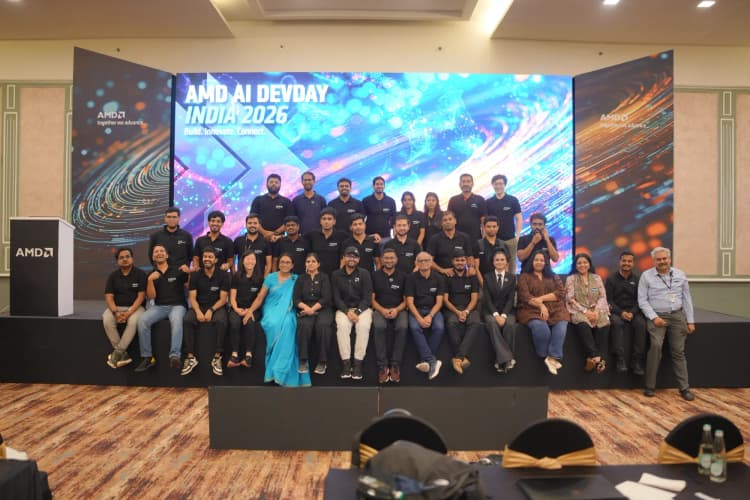
AMD AI DevDay India Brings Developers Closer to the Open-Source AI Stack
Developers gathered in Bengaluru to explore agentic AI, LLM fine-tuning, coding agents and AI workloads running on AMD hardware.
View

Anthropic Cuts Claude Code’s Usage Limits by 17% After Slashing Promotional Boost
The move comes as Claude Code users have grown increasingly frustrated with outages and downtime.
View

This 24-Year-Old From Bengaluru Is Betting Against Expensive AI Drug Discovery
Anindyadeep Sannigrahi founded LiteFold just under a year ago. Now, his startup has released LiteMol-1—a pioneering multi-molecule foundation model.
View
‘AI Can’t Write the TypeScript Compiler’
“Our compiler is also not a typical piece of code. That’s why AI is bad at writing it: it hasn’t seen anything like it in the training set,” reveals Anders Hejlsberg.
View
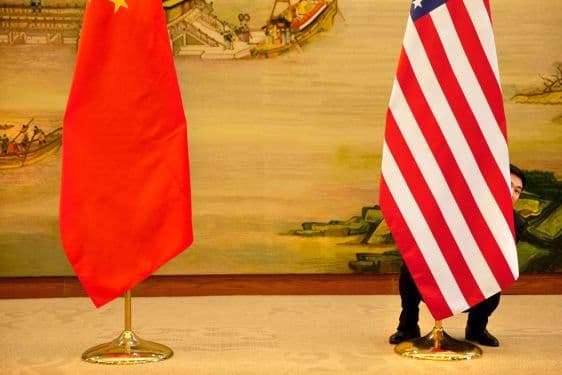
The U.S. is building barriers around drones and robots, but China has scale to get around them
In July and August, Washington tightened restrictions on foreign-madeadvanced robotic systemsand imposedsteep tariffson imported drones and their components, both moves citing national-security concerns. The drone tariffstake effectin September, with additional component tariffs following in 2027. These moves are part of a broader U.S. effort to restrict foreign technology in strategically important industries. The FCC’sCovered List, established in 2021, initially targeted telecommunications and surveillance equipment from companies including Huawei, ZTE and Hikvision before expanding to foreign-made drones and, most recently, to advanced robotic devices. The latest move comes as Chinese manufacturers have built commanding positions in both drones and humanoid robots, often competing at prices U.S. and European rivals struggle to match. Taken together, the restrictions are raising a bigger question for the global robotics industry: If Chinese drones and humanoids are increasingly shut out of the U.S., where does the competition move next? The restrictions may protect parts of the American market, but they don’t directly address China’s global manufacturing scale and cost advantages. Industry analysts and executives who spoke with TechCrunch said the result may be less a clean U.S.-China split than a more fragmented global market, with Chinese companies expanding elsewhere while U.S. and allied manufacturers compete in markets where security requirements matter more. The U.S. and Chinese robotics industries remain deeply connected, but the two countries enter the competition with very different advantages. Unlike semiconductors, robotics does not hinge on a single technology that one country can easily control, said Ankur Saxena, an investment director at TDK Ventures. China dominates global humanoid robot manufacturing, with global shipments hitting 22,000 units in the first half of this year — the vast majority from Chinese manufacturers — according to areport by Counterpoint. U.S. companies, by contrast, are operating at a far smaller scale, said Soumen Mandal, a principal analyst at Counterpoint Research. The world’s five largest humanoid robot makers by shipments — AgiBot, Unitree, Galbot, UBTECH and Leju Robotics — were all Chinese and together accounted for 86% of global shipments in the first half of 2026, according to Counterpoint. That advantage could compound. Lower prices allow Chinese manufacturers to put more robots into use, generating real-world data that can improve their technology. Higher production volumes, in turn, can drive costs down further, Saxena said. Mandal said Chinese humanoid makers are also pushing costs down by bringing more of the technology stack in-house and drawing on China’s existing manufacturing base. Unitree, for example, is developing more components internally, while automakers such as XPeng can draw on their experience in chips and vehicle manufacturing as they move into robotics. “The United States leads in frontier AI, software and semiconductor innovation,” Saxena told TechCrunch. “China leads in manufacturing scale, supply-chain depth and cost.” That manufacturing edge has let Chinese companies cut humanoid prices faster than most U.S. competitors can match. “You cannot sanction your way around a cost curve. You can only out-build it, and America has yet to begin making the decade-long investment that will require,” Saxena said. The answer may increasingly be outside the U.S. Even if Chinese robotics companies lose access to the American market, they still have a large domestic market and room to expand elsewhere, particularly in regions where demand for affordable automation is growing, Saxena said. Chinese robotics companies are already targeting price-sensitive markets with severe labor shortages across Europe, Southeast Asia, Latin America and the Middle East, said Mandal. Mandal expects humanoid makers to follow a path similar to Chinese electric-vehicle companies: build scale at home, expand into overseas markets, and eventually establish local production. Countries facing labor shortages and demographic decline could become early markets for humanoids, particularly in manufacturing, where robots can take on repetitive work. The drone market offers an early glimpse of what that more fragmented robotics landscape could look like. The industry is increasingly splitting into two ecosystems: a U.S.-led market built around American-made, NDAA-compliant systems, and a China-led market focused on low-cost, high-volume production, said Bentzion Levinson, founder and CEO of Virginia-based drone maker Heven AeroTech. Levinson said Western manufacturers are unlikely to beat Chinese companies in the low-end consumer drone market, where cost remains a major advantage. Instead, U.S. and allied companies could increasingly compete in long-range autonomous systems for defense and critical infrastructure, where security requirements carry more weight. Levinson sees the next competitive frontier shifting from the drones themselves to the technology that powers them and the equipment they carry. “The next battleground is over who owns the next-gen energy and payload architecture,” he said, pointing to battery constraints in particular. As drones become more capable, he added, battery limitations could make power systems an increasingly important point of competition. Agility Roboticswelcomedthe FCC’sdecisionin July, saying it could address security concerns around foreign-made advanced robots before they become deeply embedded in the U.S. market, as has happened in the drone industry. The company pointed to its Digit humanoid, which is designed and assembled in the U.S., while also calling for continued access to the tools and technologies needed to advance robotics research. “The alternative to China isn’t a purely domestic U.S. supply chain; it’s a diversified allied one,” Saxena said. That could create opportunities elsewhere in Asia. Japan has decades of experience in industrial robotics and precision manufacturing, South Korea brings strengths in electronics, batteries and automobiles, and Taiwan is a major player in semiconductors. But none can simply replace China, Saxena said, given how deeply Chinese components remain embedded across the global robotics industry. Asian manufacturers could emerge as a middle ground between lower-cost Chinese robots and more expensive U.S. offerings, Mandal said. South Korea’s Hyundai, which owns Boston Dynamics, and Japan’s Toyota are among the automakers investing in robotics, drawing on their expertise in vehicles, manufacturing and autonomous systems as they move into humanoid robots. Yang Fang of Beagle Technology, a California-based agtech startup that uses AI and robotics software to turn conventional farm equipment into autonomous machines, told TechCrunch that robotics is likely to become more regional as companies design machines for the labor needs, working conditions and customers in their home markets. Chinese robotics companies, for example, may focus on products suited to China and nearby markets, while U.S. companies are more likely to build for industries across North America, he said. The result may not be two neatly separated U.S.- and China-led robotics industries. Instead, the restrictions could accelerate the emergence of regional markets: Chinese companies competing on cost and scale across much of the world, U.S. and allied manufacturers gaining ground where security requirements matter most, and manufacturers in Japan, Taiwan and South Korea trying to carve out space between the two.
View
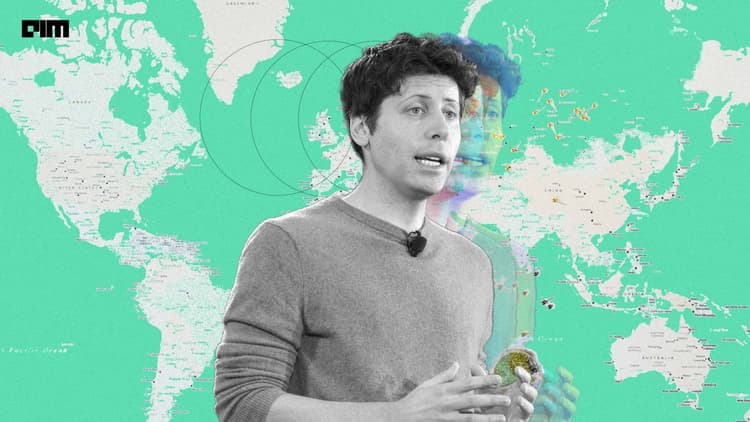
OpenAI Buys Tens of Thousands of Mac Minis, Studios for Reinforcement Learning: Report
Apple has been caught off guard by the level of enterprise demand for Macs for AI workloads.
View

Musk’s faster path to more gas turbines comes with pollution problem
Elon Musk says he’s found a way to solve one of AI’s biggest bottlenecks by making a hard-to-manufacture turbine part himself. On Saturday, Musk confirmed what a secret foundry SpaceX has been building in Bastrop, Texas, is for — an apparent response to a story that was already closing in on the details. Earlier in the day, The Informationpublished a reportciting job listings that explicitly mention a “blades and vanes foundry,” plus findings from Corey Trinetti, a due diligence specialist who authors detailed reviews ofAI infrastructure sitesin his newsletter and who’d reported that SpaceX had bought roughly 830 acres near its existing Starlink factory in Bastrop between March and June. “SpaceX and Tesla are each building 100GW/year of solar production capacity as fast as possible,” Muskwrote on Xon Saturday, “but natural gas will still be needed to supplement and bootstrap solar for several years. The limiting factor for nat gas turbine production is casting the blades & vanes. By doing in-house casting at SpaceX, we can accelerate nat gas turbines coming online by up to 18 months, which is a profound game-changer.” The “why” of all this goes back to one of the biggest challenges facing the AI industry right now. GPU shortages are still an issue — Nvidia’s newest Blackwell chips are still running lead times of several months, for example — but a second constraint has emerged alongside it, which is the physical power grid. The International Energy Agency projects global data center electricity use will roughly double by 2030, and gas turbine maker GE Vernova says it’s essentiallysold outof production capacity through 2030 due largely to AI infrastructure demand. That shortage is why building private gas-fired plants next to data centers, instead of waiting on the grid, has become a ubiquitous strategy for so-called hyperscalers, includingAmazon,Google,Meta,OpenAI, andMicrosoft. After years of prioritizing wind and solar, they’re all now betting on natural gas to get data centers online faster. As for the casting bottleneck specifically, according to The Information, the blades inside a gas turbine’s hottest section run at temperatures around 3,000 to 3,600 degrees Fahrenheit, which is roughly 800 degrees hotter than the melting point of the very metal alloy they’re made from. That’s only possible because of the blades’ internal cooling channels and thermal-barrier coatings, plus thespecific way each blade is cast. Just four companies worldwide have mastered the casting process well enough to produce them at industrial scale, and all of them are tapped out right now. What makes the whole thing especially difficult is that each blade has to be cast as a single, unbroken crystal, grown slowly inside a vacuum furnace, without the microscopic seams that let ordinary cast metal crack under stress. It’s a tricky process even for the smaller blades used in jet engines; the blades in power-plant turbines are considerably larger, which makes producing them at that scale and without defects even harder. If SpaceX pulls this off — and it’s easier said than done, of course — it would mean a Musk-controlled entity holds a manufacturing capability that every other AI infrastructure builder currently depends on a tiny oligopoly for, giving SpaceXAI an edge that’s difficult for any well-funded but non-manufacturing competitor to copy quickly. But it would also mean more gas turbines coming on fast, and turbines in the ground are already drawing federal lawsuits and peer-reviewed health research over the pollution they emit. In Memphis, where SpaceXAI has run gas turbines to power its Colossus data centers since 2024, the NAACP has repeatedly accused the company of operating turbines without the permits or pollution controls required by federal law. The organization’s concern is that turbines like these emit smog-forming compounds andhazardous chemicalslike formaldehyde, pollutants linked to asthma, respiratory disease, and certain cancers. (The site sits near neighborhoods that already face heavy industrial pollution, and University of Memphis researchers said that in their own admittedly limited analysis, air pollution grew “slightly worse” because of the data center.) But Memphis just happens to be the most visible case. The same fight is playing out anywhere gas turbines have become the default fix for data center power shortages. In Virginia’s “Data Center Alley,” astudy commissioned by the Piedmont Environmental Council, using the EPA’s own COBRA health-impact model, found that emissions from a single facility’s eight full-time gas turbines could reachmore than 2.5 million peopleacross multiple counties — with the heaviest impact landing on already-marginalized communities — and cause an estimated3.4 to 6.5 additional premature deathsa year, translating to $53 million to $99 million in annual health-related damages. The list, and complaints, go on.
View
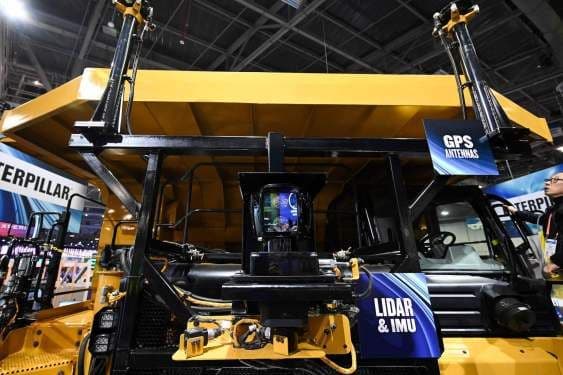
Caterpillar is bringing to AI deployment what it learned from automating mining
Nearly every company that’s trying to deploy artificial intelligence runs into the same problem: it’s hard to integrate the tech into everyday operations. Industrial heavyweight Caterpillar has spent decades dealing with a version of that problem in the physical world, and now it’s using its experience to deploy AI. Caterpillar’s push into the autonomous space started with mining, where labor shortages and hazardous conditions can make automation particularly useful. Today, it sells automated haul trucks, drilling, underground loaders, dozers, remote-controlled construction equipment, and more. It also offers a software command center, fleet management, and even remote terrain intelligence as part of its autonomous toolkit. “Now we’re in this super exciting time where we can take all of that learning from mining and bring it into much more dynamic environments, jobsites, quarries, and construction sites,” the company’s CTO, Jaime Mineart, told TechCrunch on the sidelines of the Ai4 conference in Las Vegas earlier this month. The industrial giant is now applying AI more broadly, including in tools used by technicians and its own employees. One example is theCat AI Assistant, which lets field technicians standing next to a machine use voice commands to pull up repair procedures, troubleshoot potential problems, and identify parts that may be needed before beginning a repair. Mineart said the tool is now being used by customers, operators and technicians. The assistant draws on Caterpillar’s proprietary data, which spans information generated by its connected machines. Mineart said Caterpillar has about 1.6 million connected assets globally and more than 16 petabytes of structured data. The company is also using AI to power software for scanning sites and generating digital twins in manufacturing to analyze operations, she said. And like nearly every other company, Caterpillar is using AI across its enterprise operations, as well as for software development. “We use AI agents to modernize legacy code, generate and test new software, and identify defects earlier,” Mineart said. But Mineart is quick to point out that building the technology is only part of the challenge, as deploying an autonomous machine is not the same as transforming a site to use AI. Companies also have to rethink how people work alongside the technology and how existing processes need to change. “The hard part about autonomy and about physical AI is incorporating that technology into the customer jobsite and into the workflows,” she said. Mineart said the company leans on experienced operators to help train AI systems, leveraging institutional knowledge built over decades. And as machines become more autonomous, some operators may shift from controlling a single machine to overseeing multiple machines from a remote command center. That transition, however, is creating a new challenge for Caterpillar: training its 118,000 employees. Mineart said the company plans to spend$100 million over the next five yearsto train its workforce in AI, autonomy and robotics. That investment is likely being put towards helping the company make the most of the broader boom in AI infrastructure, which is already helping its top-line. Caterpillar’s quarterly revenue reached an all-time high of$20.5 billionin the second quarter, helped by strong demand for power-generation equipment used in data centers. Its power-generation division saw sales spike 72% to $3.10 billion, and CEO Joe Creed said that “no one is slowing down” when it comes to demand for cloud computing and generative AI infrastructure.
View

AI Is Rewriting Hiring. Humans Still Make the Final Call
Modern ATS platforms already incorporate AI, allowing recruiters to organise applications and rank candidates using customised parameters.
View
Enviar tu herramienta


PoweredByAI.app es un directorio de herramientas de IA que ayuda a personas, empresas y creadores a descubrir las mejores herramientas de IA para escritura, programación, diseño, productividad y más.
© 2026 , Producto de011BQ. Todos los derechos reservados.