🚀 Zaprep: Tus redes sociales al máximo. Empezar gratis — automatiza 1,000 DMs/mes y convierte el engagement en leads. con 1,000 DMs automatizados/mes.
Enviar tu herramienta
Últimas Noticias de IA
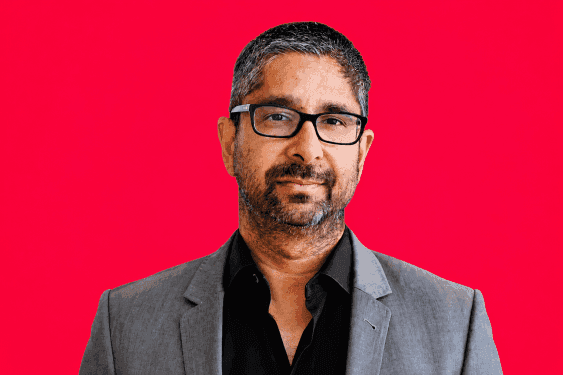
“We’re not doing 30 bets a year”: Vijay Pande on betting small after running $4 billion at a16z
It used to be that Vijay Pande was better known in academic circles than investor circles. That changed pretty abruptly a dozen years ago, when Marc Andreessen and Ben Horowitz — who’d spent their firm’s first five years explicitly avoiding healthcare and life sciences — decided the category was worth betting on after all and handed the keys to Pande. At the time, he was a Stanford chemistry professor who was best known for building Folding@home, the distributed-computing project that turned millions of home PCs into a supercomputer for disease research. Over the next decade-plus, he grew a16z’s bet into a practice managing close to $4 billion. So it was somewhat unexpected when in June of last year, Pande walked away from it all to start something much smaller. In fact, his new firm,VZVC, co-founded with longtime investor Zach Werner, is built around a handful of concentrated bets a year rather than dozens, it has no associates, and it relies heavily on AI for its day-to-day operations. To learn more about Pande’s hard pivot, we talked with him this week about why he’s making just a handful of concentrated bets rather than spreading himself thin in the current market — and about one of the more interesting conundrums in AI-driven biotech: unlike text, biological data can’t be scraped off the internet, so nearly every company ends up building its own walled-off dataset. What does that mean for all the advances AI in medicine has promised, and who actually gets access to them? This conversation has been edited for length and clarity. You can also listen to the fuller conversation (below). You’ve said biology is moving from a “science of discovery” to something you can engineer. What does that mean? For a lot of the way drugs have been developed, there was very much a fortuitous aspect to it. I think what’s shifted is that AI and machine learning allow computers to wrap their type of understanding around something very, very complicated… to try to figure out what targets you want your drugs to hit, for specific diseases, to be able to make those drugs, and now even to help in the clinical trials — which are the most expensive part of the process. I thought clinical trials were getting cheaper because drug developers are using more synthetic data, so not as many people are needed for these trials. That’s, I think, very much an aspiration. The cost and time to get to clinical trials has been shrinking, especially with AI, but it could still cost hundreds of millions of dollars to run a trial, which is why drugs are very expensive. The probability of a drug going successfully from the first trial to the end of the third trial is just 20%. If 8 out of 10 fail, and these things cost hundreds of millions of dollars, the amortized cost gets really high. The reason they fail typically is not that the biologist did something wrong; it’s that all the experiments these drugs were designed on were on animal models like mice, and in the end, animal models are just not very predictive of humans. The AI model is not going to be perfect, but it’s going to be way better than any animal model would be, and once it crosses that bar, that’s where it gets really exciting. [The phase after that is]: Is the drug the right drug forme? You mean personalized medicine. . . The jargon here is so-called precision medicine. If you go to a doctor with something not trivial, they have to guess what’s going on, because there’s only so much they can tell. Then they give you a drug — and if that doesn’t work, they give you another drug, then another drug. This happens in cancer, it happens in lots of different areas. We would all be much better off if the first drug was the right one. Typically, your blood test values are compared to population averages. But really, they should be compared to: is this [result] weird for you? What we’re starting to do also on the medicine side is [the ability] to just understand what would be right for the individual. Would you say the path to this moment has been slow and steady, or did it spike more recently? I think it’s lots of different things [coming together]. So for instance, precision medicine for the longest time was based on genomics. But the reality is your genome is kind of like the blueprint for your house on day one, but your house is fairly different now compared with the moment it was built. So there are many other things that people can now measure in proteomics and so on that are much more relevant for understanding disease and where your body is now. There has also been [a lot of] automation in robotic measurements that is naturally tied into AI, and those two go hand in hand really well. Over the last decade, there’s been this steady clip fforin both AI for biology and AI for chemistry. The biology part is like, how can we treat this disease? And then the chemistry part is, how can we come up with a drug to go after that specific protein? There have actually been very significant advances over those 10 years. You mentioned that biology is one of the few places AI can’t just scrape data off the internet. What does that mean for how the field develops? It’s a place where you don’t have any of this data that people can just all train the same thing, and your data can’t be distilled from one model to another. It’s a really interesting play from just the pure AI sense. Doesn’t that echo a familiar problem in medicine, though — doctors operating in [territorial, often competitive] silos? You’re onto something really big here. Let’s say [someone] has some type of cancer, and it’s both an issue in oncology and endocrinology — those two doctors really don’t sync together very well. What is really intriguing about AI is that it can, in principle, be a specialist in everything, and it can start to see things that really any single human being couldn’t. It would be equivalent to having a team of the very best doctors all clamoring together in that moment. But is there enough data sharing for that vision to actually be realized? I understand why founders and investors want to protect their [respective findings], but . . . I think one of the bigger trends is that we’re starting to see a shift toward building these atlases of biological information — which, from a technology standpoint, are typically foundation models. And as they become more common, I think we’ll see the same thing that’s happened with open-source LLMs, which do very well against the corporate ones: open-source foundation models in biology having a very broad impact. You’re involved with Genesis Therapeutics, which came out of your lab at Stanford, and Insitro, the drug-discovery company launched by Daphne Koller, a former colleague at Stanford. You say you’re also incubating a company with a founder you’ve known for 20 years. What are you looking for in founders, and in what areas? There are two areas that I’ve been spending most of my time on. One is AI for healthcare delivery, which I did a ton at a16z as well, and then AI for clinical trials. One of the things that’s most important to me [about founders] is that we can really trust each other — founders that have high integrity, that do what they say they’re gonna do… I’m expecting this relationship to be 5, 10 years plus into, ideally, their next company. I want to work with people who are thinking long term like that. Ideally, these are people who are not just trying to win and beat other people, but really thinking about the question: how do we win together? What have you gotten right and wrong in your investing career so far? When I started talking about AI and machine learning and technology and medicine and bio 10 plus years ago, there was a lot of resistance and a lot of people saying, ‘Oh, that’s never going to happen. That’s never going to be useful,’ and so on. That resistance is largely gone and seeing this arc is very fulfilling. I think it took me some time to really appreciate that as seductive as the coolest technologies are, it really always comes back to go-to-market. I tell my founders, especially the ones who are coming from the science or the product side, for them to take all their brilliance and creativity and really apply it to the go-to-market side, that the go-to-market part is at least as hard or harder than the technology side. Help us understand how you’re designing this new firm differently, compared with what you were running at a16z. Right now, we’re doing something really quite different… VZ is named after me, Vijay, and my co-founder, Zach Werner — he’s the Z. We’re intentionally really quite small… on the investment side, it’s really just the two of us. We were actually intending on hiring associates, but it turned out, with the agents that we’ve built up, not to be something that we need to do. How concentrated is “concentrated”? We’re [not] driving 30 bets per year… we’re talking about probably five, not a lot of investments — very concentrated. Adding a company at a typical fund is like adding a Facebook friend — that’s something you do pretty quickly. For Zach and I, it’s more like . . . wanting to have another child. This is a big deal for us. With that structure, who are you competing against for deals? The funny thing about this model is that typically we’re not trying to compete for a hot round — people make room for us. It’s a very different thing than trying to get the hot Series A or Series B. Largely, people want us as investors because of what Zach and I can do, and how hands-on we can be. When I look at people who are inspirations, I look at someone like Antonio Gracias at Valor — he’s well-known now because of the SpaceX deal, but he’s been doing what he’s been doing for 20 years. What Thrive has done, with a more concentrated portfolio, is also a real inspiration. Obviously, a16z is sort of in my DNA as well, but I think those other ones are new additions to how we think about things. What’s overhyped right now in AI and biotech? The reality is that AI can find insights that we can’t get from just humans alone. The thing that always gets tricky is when there’s this call that AI is going to cure all everything. The reason for hesitance there is not because of any doubt about AI — it’s about doubt of the data. LLMs work because there’s so much data to learn from. When the data is just simply not there, then AI can’t magically solve that problem.
View
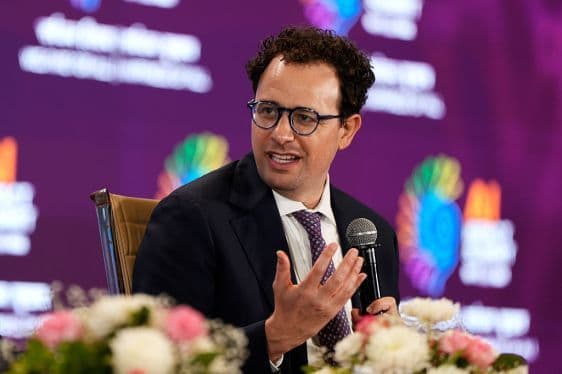
Sony Music, Warner sue Anthropic, alleging a “brazen campaign” of intellectual property theft
Sony Music Publishing, Warner Chappell and numerous other music publishers have sued Anthropic and co-founders Dario Amodei and Benjamin Mann, alleging the AI lab conducted a “brazen campaign of illegally torrenting, scraping, and downloading copyrighted works.” The lawsuit, which was filed late Friday in the U.S. District Court for the Northern District of California, was first reported byMusic Business Worldwide. The publishers accuse Anthropic of “blatant theft” by using thousands of copyrighted works to train its AI model Claude. Anthropic could not be reached for comment prior to publication. TechCrunch will update this article if the company responds. This isn’t the first intellectual property lawsuit Anthropic has faced.Some of the same lawyersbehind this lawsuit also represent Concord Music Group and Universal Music Group in a case filed in January and led theBartz v. Anthropiccase, in which a group of authors accused Anthropic of using copyrighted works to train products like Claude. Anthropic was ordered topay $1.5 billionin the landmark Bartz case after a judge ruled that while it was legal for the AI lab to use copyrighted works, it was not legal to acquire that content through piracy. While the cases make similar arguments, there are key differences. This latest lawsuit is particularly broad and builds off the other cases, including by accusing Anthropic of “flagrant piracy” through illegal torrenting to obtain millions of copies of books, including those that contain lyrics and sheet music.
View

Nvidia’s AI advantage is moving beyond the GPU
Before this week, the dominant story about Nvidia went something like this: For the first few years of the AI boom, Nvidia was the only source for state-of-the-art GPUs, which became immensely profitable as the industry scaled out. In the last few years, hyperscalers like Amazon and Google have started building their own chips, and Nvidia is no longer the only game in town, leading many investors to wonder how durable its advantage really is. It’s a compelling story, and mostly true. After growing its market cap 10x between the start of 2023 and mid-2025, Nvidia shares have been on a more modest trajectory for the past year, driven by concerns about GPU competition. A new narrative has taken shape since the company’s earnings on Wednesday and investors are starting to realize that Nvidia’s advantage goes far beyond GPUs. As AI’s compute grows into the gigawatt scale, orchestration has become an increasingly complex task. Not surprisingly, Nvidia has built much of the state-of-the-art hardware needed to handle it, giving the company a huge advantage in the systems that surround the GPU even as it sees increased competition on the GPUs themselves. For all the talk ofcompute as a commodity, it’s still incredibly difficult to operate a megascale data center at peak efficiency — and as deployments get bigger and faster, that challenge is only growing. You can see some of this just by looking at the details of what Nvidia is actually selling. The company is currently rolling out its Vera Rubin architecture, which pairs the Rubin GPU with a collection of other units, including the Vera CPU, the Groq 3 LPX inference accelerator and similar racks for storage and networking. Over the past week, I’ve been talking to folks at Nvidia about what those systems actually do, and the results have been surprising. Like the Rubin GPU itself, they’re extremely specialized systems, but instead of churning through tokens, they’re making sure everything outside the GPU works as efficiently as possible. If the GPU is the engine, these are the rest of the car. The Vera CPU in particular is focused on the problem of orchestrating data. “Vera is important because there’s only so much memory that you can put in a single server or any sort of compute platform,” Jason Hardy, Nvidia’s VP of storage technology, told me. As data centers have scaled up computing power, memory capacity has scaled up too, which is whycompanies like Micronhave gotten rich in the second wave of the infrastructure boom. But getting that data to the GPU at the right time isn’t straightforward — and as companies look to drive tokens-per-watt lower and lower, they’re realizing how important that kind of traffic direction is. “We saw upwards of 3x improvement in these operations, where the Vera CPU is allowing for acceleration,” Hardy said. “So now we can use our flash to its fullest potential, because we can get all that performance out of it without bottlenecking.” You can see versions of the same problem outside of Nvidia. When OpenAI developed its Jalapeño chip, a major focus was avoiding these challenges entirely by minimizing the amount of data that needs to be moved around. “We designed Jalapeño to minimize data movement and communication delays,” the company said in a blog postearlier this month. “Its large domain allows the entire workload to remain within one connected system, minimizing data movement and helping the complete request stay fast and efficient from beginning to end.” It’s a different approach, avoiding data movement entirely by conducting a workload within one integrated chip. But the overall logic is the same, increasing efficiency with smarter traffic control instead of just more processor cycles. That in turn opens up a whole new layer of infrastructure for companies to compete over. This new focus on data orchestration isn’t automatically a win for Nvidia. The company will have to compete with rival chipmakers and hyperscalers just as it has with GPUs. But the competition has moved to a new layer, where building a rival GPU matters less than being able to make the entire system work efficiently. And at least in the early stages, Nvidia looks to have a commanding lead.
View
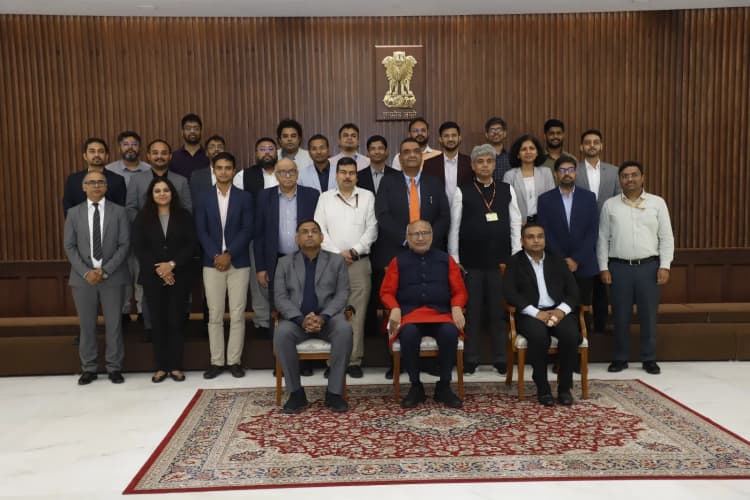
Gnani AI Launches Sovereign AI Stack With 30B-Parameter Model and AI Agents
Gnani AI says its latest stack is designed to keep sensitive data within an organisation’s own infrastructure while reducing the cost of processing Indian languages.
View

India Has a Frugal Approach to Space Flights. But Cheaper Doesn't Mean Cheap
The challenge increasingly is not simply doing space missions cheaply, but sustaining a more ambitious space programme.
View
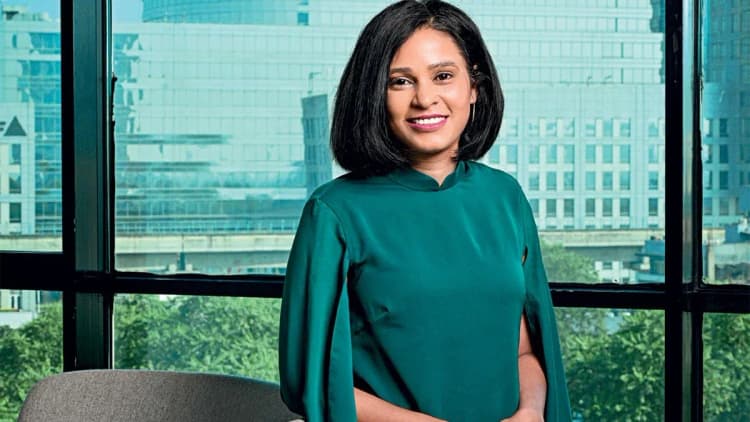
Meta India Veteran Sandhya Devanathan Joins OpenAI
After a decade at Meta, Devanathan will lead OpenAI’s business and partnerships across Southeast Asia and Australia.
View
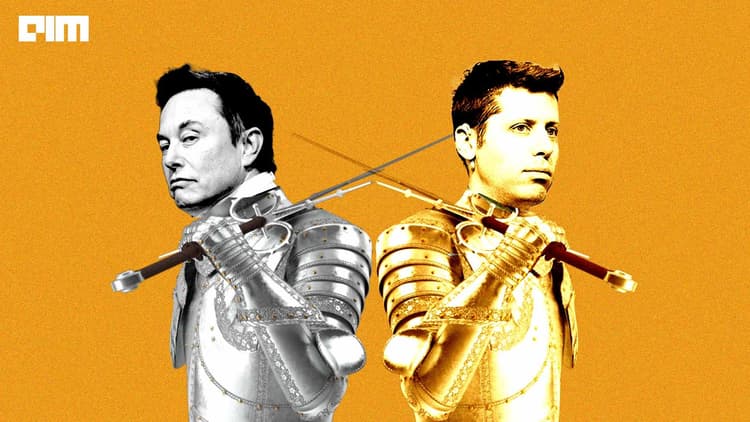
OpenAI to Remove Models From Cursor, Fearing Elon Musk May Violate Contract Terms
“We are making this choice because we cannot be confident that SpaceX will use our technology within our terms of service, based on our experience with Elon Musk's companies violating contracts.”
View

Neocloud Lambda secures $1B in debt to buy more chips
Lambda, an AI cloud company that buys computing chips and rents them out to businesses, has raised $1 billion in private, short-dated debt to buy Nvidia’s AI chips that it will lease to Microsoft, Bloombergreports. The terms of the deal, which Bloomberg says was arranged by JP Morgan Chase, signal that Lambda is betting it will be able to quickly deploy the chips and start generating revenue from them, letting it repay the debt fairly quickly using that incoming cash. This is the latest in a string of loans that Lambda is using to fund GPU infrastructure for specific customers. In May, itclosed a $1 billionsecured credit facility, and this week it announced theclosing of a $926 millionloan to fund Nvidia GB300 GPUs, one of Nvidia’s newest chip models, for a deployment it’s under contract to provide Nvidia. The $1 billion private debt deal comes as Lambda is reportedly in talks for a$3 billion pre-IPO round. The company last Novemberraised $1.5 billionin venture capital at a $5.43 billion post-money valuation, per PitchBook data. Lambda isn’t the only one relying on debt to fund the AI boom — according to data Bloomberg compiled, banks and tech companies have raised over $400 billion in AI-related debt globally in 2026 so far.
View

Open-weight AI companies are the Valley’s hottest acquisition targets
Everyone’s waiting for Nvidia to confirm this week’s most interesting tech deal: Areported $13 billion acquisitionof Hugging Face, a platform for sharing open-weight AI models and benchmarks. Now best known as the target for a team of reward-hacking OpenAI agents, Hugging Face is at the center of the ecosystem of developers building and deploying LLMs that aren’t owned by frontier labs. Think of it as a kind of GitHub for the AI era. Rumors of that deal come after Nvidia struck a $6 billion agreement with Poolside, an open-weight model builder, that will see most of its employees move to the chip-making giant. And two weeks ago, Stripe acquired OpenRouter, the top provider of open-weight models to businesses, for more than $7 billion. That’s a lot of capital pouring into a sector based on giving stuff away, and it reflects the latest trends in the AI sector. For Nvidia, there’s a need to avoid further dependence on its deals with the major hyperscalers and frontier labs. That’s particularly the case when major AI model builders like OpenAI and Google are also building their own inference chips, likeOpenAI’s Jalapeño, whose capabilities were announced this week. If model builders are making chips, Nvidia wants a chunk of the model-making business. Nvidia already builds its ownNemotron familyof open-weight models, but their uptake hasn’t been huge. By taking control of the largest U.S. developer space for open models, the company will have access to a mass of users it can drive to its chips and standards. There are also growing questions about the cost of AI inference, which has companies exploring cheaper models built by Chinese companies like Moonshot, DeepSeek, and Alibaba. Right now, adoption is relatively small but growing — just 6% of companies use open-weight models, according to asurvey of spending databy Ramp, or just 2% of software engineersmeasured by Jellyfish, which makes tools for developers. Nik Albarran, the AI product lead at Jellyfish, told TechCrunch that open-weight models are primarily used by companies whose products rely on repeated inference workloads, like those providing customer service chats. Because these are high-volume tasks with a lot of repetition, an open-weight model can be tuned to answer the questions cheaply. That’s certainly how Stripe has framed its OpenRouter acquisition. “Tokens are the central currency for companies building with AI, and it’s clear that the real-world economic potential will depend on making good use of scarce compute resources,” Patrick Collison, Stripe’s co-founder and CEO, said in a statement. For coding and agentic tasks, however, varying requests and more reasoning mean that frontier models often win out, in part because the proprietary labs provide easier access, and in some cases a token subsidy. Albarran says that as companies dial in AI workflows, it will be easier to turn to open models. Still, the main reason companies look to those models now is for control and configurability, not because of spending concerns. “There are not many companies where that is the case yet … [but] if the prices continue to go up from the frontier labs, more and more companies will be forced to at least consider it,” Albarran told TechCrunch. “When your AI-driven workflows are much more mature, that’s when it makes sense to invest in self-hosting models.” Lin Qiao is the CEO of Fireworks, a leading open-weight models router and host for corporate users that is often discussed as a potential acquisition for a tech giant. Qiao says her company processes 40 trillion tokens a day, more than either of Gemini’s or OpenAI’s APIs. Fireworks’ bet is on model diversity: As LLMs proliferate and improve, it will be easier for companies to train them specifically for their needs. “Every single app company should consider hiring an in-house researcher,” she told TechCrunch last week. “They can use their product and product data to build their own model. The future is actually specialized intelligence. Literally, every single company should have their own model per use case, and that will happen automatically.” It’s easy to forget how early we are in the development of AI as a tool and a business. The dominance of OpenAI and Anthropic, however, isn’t inevitable. As the tech giants look to hedge their bets on the biggest labs, the allure of open technology is proving tough to resist.
View

An Anthropic researcher just gave us a peek at self-improving AI
Training AI models with other AI models has become a very popular goal for neolabs — and now, a researcher in Anthropic’s fellows program has given us an early look at what it might look like in practice. On Friday, Anthropic published a new paper titled “Automated Researchers Can Reliably Mitigate Alignment Failures,” detailing how AI systems could reliably improve a model’s performance on a set of alignment benchmarks. When given 10 benchmarks for specific misaligned behaviors, the automated systems were able to improve performance on every single one without degrading overall performance. Led by Anthropic fellow Chen Yueh-Han, the system replicates much of the traditional approach to research. Each automated system searches the available literature, proposes a method, and trains the model using that method for 30 minutes, gradually increasing the benchmark over several iterations. Effective methods are preserved while ineffective ones are discarded, allowing the system to operate quickly and at a great scale. “Overall, these results provide early evidence that automated alignment post-training could become practical in the near term,” the paper reads. The paper is a step towardrecursive self-improvement, which many see as the next significant step in AI progress. If models can improve their own alignment training, it’s plausible they could improve training practices more broadly — at which point, human AI researchers might soon become obsolete. The paper isn’t shy about addressing this idea, explicitly comparing the Automated Alignment Researcher (AAR) to its human equivalent. “The best AAR method beats what experienced humans propose, on average within six hours,” the paper reads. “Human guided research directions do not lead to stronger performance.” There’s even a cost comparison, in case anyone wasn’t convinced. “An AAR costs roughly $4 per hour in API inference against the $150 per hour we pay our human researchers.” In fairness, the paper also points out a few limitations to this approach. The automated system only works insofar as the benchmarks reflect the actual alignment goals, and even then there’s significant work to be done in establishing and maintaining those benchmarks — not to mention maintaining and expanding on the literature the automated researchers are drawn from.
View

Will TikTok and YouTube follow Meta’s new rules for teens?
Earlier this week, Meta agreed topay $18 billionand makesweeping changesto how minors access its social networks to settle a lawsuit brought by 29 states. But the eye-popping settlement figure wasn’t what caught the attention of the Equity podcast team. Instead, it was what Meta did next. The social media giant sent an open letter to TikTok and YouTube asking the companies to join it in setting industry-wide standards for teens, including daily time limits, blocking access to apps at night, and restricting notifications during school hours. But will these other companies follow? The Equity team doesn’t think they will. On this episode of TechCrunch’sEquitypodcast, Rebecca Bellan, Kirsten Korosec, and Sean O’Kane dig into the Meta settlement, what it could mean for other social media companies, and more of the week’s headlines. Listen to the full episode to hear more about: Subscribe to Equity onYouTube,Apple Podcasts,Overcast,Spotifyand wherever you get your podcasts. You also can follow Equity onXandThreads, at @EquityPod.
View
Meta executive leaves for OpenAI as the social media giant faces growing scrutiny in India
Meta’s India and Southeast Asia vice president, Sandhya Devanathan, is leaving the social media giant to join OpenAI, the ChatGPT maker told TechCrunch. Devanathan will be based in Singapore and report to OpenAI’s Asia-Pacific managing director, Kiran Mani. She will oversee consumer growth, enterprise adoption and partnerships, regulatory engagement, and operations across Southeast Asia and Australia, OpenAI said. The executive is leaving Meta after more than a decade at the company, which has been the subject of growing scrutiny over issues such as online safety and content moderation. Devanathan was involved in the company’s decision process in the country, a person familiar with the matter said. Devanathan’s appointment comes days afterPrabhjeet Singh joinedOpenAI as its India head. Singh had spent more than a decade at Uber, where he led its India and South Asia business. OpenAI has been expanding its presence across the Asia Pacific,opening officesin Singapore, Tokyo, Seoul, Sydney, and Delhi over the past two years. Following Devanathan’s departure, Meta’s India managing director, Arun Srinivas, will report directly to Benjamin Joe, the company’s vice president for Asia Pacific, a person familiar with the matter told TechCrunch. Devanathan joined Meta in 2016 and held several leadership roles at the company, including leading its Asia Pacific gaming business, before being appointed vice president for India and Southeast Asia in June last year. Meta has faced growing pressure from Indian authorities in recent weeks. Earlier this month, the companyapologizedafter Instagram mistakenly restricted a post by Prime Minister Narendra Modi in July. The Indian government summoned Meta executives, including its chief global affairs officer, Joel Kaplan, over the incident. New Delhi has also raised concerns over child sexual abuse material on the company’s platforms. Last month, the Indian governmentsought an explanationfrom the company after a BBC reportfoundInstagram advertisements that allegedly offered access to such content. Metasaidin a blog post at the time that it had removed violating ads and accounts, and rejected suggestions that it knowingly targeted such advertisements at users based on inappropriate interests. The company also noted that it had removed 160,000 accounts in India over six months based on signals indicating child-exploitative activity.
View
Enviar tu herramienta


PoweredByAI.app es un directorio de herramientas de IA que ayuda a personas, empresas y creadores a descubrir las mejores herramientas de IA para escritura, programación, diseño, productividad y más.
© 2026 , Producto de011BQ. Todos los derechos reservados.