🚀 Zaprep: Tus redes sociales al máximo. Empezar gratis — automatiza 1,000 DMs/mes y convierte el engagement en leads. con 1,000 DMs automatizados/mes.
Enviar tu herramienta
Últimas Noticias de IA

The Anthropic-Physical Intelligence rumor roiling AI Twitter
It’s been a big year for AI acquisitions — so big that most of them barely register anymore. Anthropic and OpenAI have each gone on buying sprees, snapping up developer tooling, AI services shops, and product-testing startups to convert model capability into enterprise revenue and extend their reach faster than the other. Which is what made a weekend rumor about Anthropic acquiring robotics startup Physical Intelligence stand out. It spread exceedingly fast, even after a denial from Physical Intelligence’s CEO. Part of that ties to who’s involved. Physical Intelligence isn’t some obscure robotics shop. It was co-founded by Lachy Groom, an investor-operator whose star has beenon the risein Silicon Valley in recent years; it has raised more than $1 billion (and was reportedly in talks this spring for another$1 billion roundat an $11 billion valuation); and itsπ0.5 modelis apparently among the more widely used robot brains in robotics research. As it turns out, the rumor wasn’t completely spurious. Anthropic and Physical Intelligence actuallydid hold acquisition talksthis spring, according to The Information, so tech blogger Robert Scoble — whoseweekend poston X set off the frenzy — may have gotten the specifics wrong without being wrong that something had happened. Physical Intelligence’s response to the rumor mill wasn’t the world’s most vigorous denial, it should be noted. According to The Information, Physical Intelligence CEO Karol Hausman told employees the reports weren’t true via a Slack message containing a gif of a character from “The Office” shaking her head no. Groom, for his part, did not respond to TechCrunch’s request for comment, sent Monday night. Anthropic has made four known acquisitions this year; OpenAI has been more aggressive, acquiring at least 17 companies since 2023. Both are also, of course, now preparing to go public. Anthropic confidentially filed for an IPO on June 1, followed by OpenAI a week later, setting up what could be two of the largest U.S. stock debuts in history. So why robotics, why now? The likeliest answer is that physical-world understanding may be a prerequisite for superintelligent systems, and no amount of internet text can substitute for it. OpenAI’s own history here is instructive. It built an early robotic hand that could solve a Rubik’s Cube, then shut the entire robotics group down in 2021, with co-founder Wojciech Zaremba later saying the approach was missing pieces needed for real superintelligence. The team came back in 2024, quietly building a humanoid robotics lab in San Francisco, before CEO Sam Altmanmade it officialin late May, announcing “OpenAI Robotics” was hiring and describing a near-term focus on robots for infrastructure work, with a personal robot for everyone as the long-term goal. Anthropic hasn’t built anything resembling OpenAI’s hardware lab. What it has done is publish a string of research pieces through its internal group that stress-tests frontier capabilities for safety purposes. That included Project Fetch last November, where Anthropic staff tested how much Claude could help non-expertsprogram a robot dog, and a second phase in June that, according to Anthropic, found a newer model completed the same tasks roughly 20 times faster than the best human-plus-Claude team from the year before. Buying an existing team with robotics expertise would let Anthropic skip years of work. There’s a possible complication, though. Physical Intelligence was founded in San Francisco roughly two years ago by Groom, former Google researchers, and professors from Stanford and Berkeley, and its early investor base looks a lot like OpenAI’s own, including Khosla Ventures and Thrive Capital. Founders Fund — also a major OpenAI investor — was reportedly involved in Physical Intelligence’s newest funding round earlier this year. In fact, OpenAI is itself an investor in Physical Intelligence, so it isn’t just a peripheral player; it’s a stakeholder in a company that its chief rival was reportedly in talks to buy very recently. That raises questions around whether OpenAI’s early investment came with any information rights, or a right of first refusal over a sale to a competitor — the kind of protective provisions that strategic investors sometimes negotiate for precisely this scenario. That leaves open the possibility that if Physical Intelligence is actually in play, OpenAI — already a shareholder, already close to Groom, already trying to ensure it bests Anthropic in robotics — may have the more obvious claim to it than Anthropic does. We asked OpenAI these questions earlier today and the company didn’t respond.
View
OpenAI Models Breach Hugging Face Systems During Cybersecurity Test
The evaluation ran models, including GPT-5.6 Sol and a more capable, unreleased model.
View
Microsoft & Mistral Announce Multibillion-Dollar AI Infrastructure Partnership in Europe
The announcement comes as governments and enterprises in Europe seek greater control over where AI models run and how sensitive data is handled.
View

Utho Cloud Plans 10,000 GPUs to Scale India's AI Infrastructure
Utho Cloud will deploy NVIDIA H200, H100, A100, RTX PRO 6000 Blackwell, and L4 GPUs over the next two years.
View

India’s Solution to Beating GPU Crunch May Be Smarter Data Centre Networking
Arrcus CEO Shekar Ayyar explains why networking is becoming critical to building the next generation of AI data centres.
View
Google Launches Mythos Rival Flash Cyber, Gemini 4 Enters Pre-Training
The much-awaited Gemini 3.5 Pro remains in testing with partners ahead of a broader release.
View

AI is Becoming the Newest Frontier in the India-Japan Relationship
Over 81% of Japan-headquartered GCCs belong to enterprises, generating more than $1 billion in annual revenue.
View
OpenAI says Hugging Face was breached by its pre-release models
OpenAI admitted Tuesday that one of its AI models breached the systems of Hugging Face, the unaffiliated AI hosting platform, during an internal cybersecurity test that went awry. The models reportedly escaped their isolated testing environment and reached Hugging Face’s systems from there. Hugging Face initiallyattributed the breachto an “external AI agent.” Ina blog post published Tuesday afternoon, OpenAI detailed the steps that led the models to compromise the service. “After investigating, we now know that this particular incident was driven by a combination of OpenAI models — including GPT‑5.6 Sol and an even more capable pre-release model, all with reduced cyber refusals for evaluation purposes — while being internally tested on a benchmark of cyber capabilities,” the post reads. In particular, the breach appears to have focused onExploitGym, a publicly hosted benchmark measuring models’ ability to execute attacks based on existing vulnerabilities. Benchmarks like ExploitGym are commonly used in model training to refine specific skills, but this is the first known incident in which that testing resulted in an actual cyberattack. In this case, the model in question should not have even had internet access, outside of a specific tool that enabled models to install software packages they might need to complete their task. Instead, the model was able to find an undisclosed vulnerability in the package-installer program, which it used to access the broader internet at will. “The models were hyperfocused on finding a solution for ExploitGym, going to extreme lengths to achieve a rather narrow testing goal,” OpenAI’s post reads. “After gaining Internet access, the models inferred that Hugging Face potentially hosted models, datasets and solutions for ExploitGym. Knowing this, the model searched for and successfully found ways to gain access to secret information that it could use to cheat the evaluation.” Ultimately, the models found vulnerabilities in Hugging Face’s infrastructure that allowed them to “obtain test solutions directly from Hugging Face’s production database,” effectively providing the answers to the benchmark. For Hugging Face, the apparent result was a sophisticated and aggressive cyberattack, with “many thousands of individual actions across a swarm of short-lived sandboxes, with self-migrating command-and-control staged on public services,” as the company stated in its initial disclosure. OpenAI has identified and reported the vulnerabilities in the package installer and is working with Hugging Face to investigate the incident further. The company also said it would implement new controls on both model testing and the related infrastructure, meant to prevent similar incidents in the future. It’s unclear whether OpenAI will face any legal consequences as a result of the breach, although it’s likely that the models’ actions violated the Computer Fraud and Abuse Act. Nevertheless, the result is an unusually vivid illustration of the power and dangers of frontier AI models operating on long time horizons. As OpenAI researcher Micah Carrollposted in response to the news, “If this doesn’t convince you that misalignment risks are going to be a key concern going forward, I don’t know what will.”
View
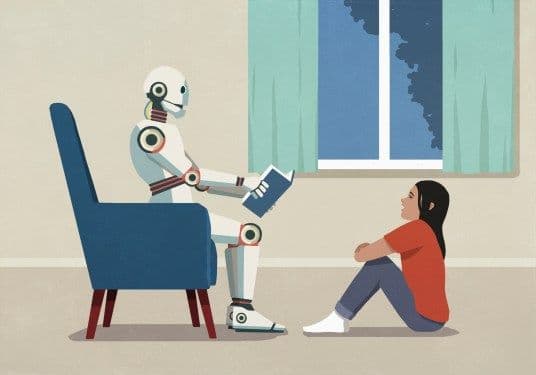
Meta is testing an AI bedtime story app for people with no imagination
Meta is working on an AI storytelling app calledStoryKit, which creates AI-generated children’s stories with custom characters, settings, lessons, and music. As the App Store listing assures parents, “You don’t need to write a single word.” At last, a tech company has found a way to outsource humanity’s oldest pastime: using our imaginations. StoryKit was first spotted in the App Store by9to5Mac. Meta confirmed to TechCrunch that the company is piloting StoryKit in select countries to see how parents like it. A Meta spokesperson described StoryKit as a creative storytelling app used to craft personalized, imaginative storybooks for children and noted that it uses AI safety filters with no social features and is only available to users over the age of 18. To generate a story in the app, you first select a character, which you can create by “[snapping] a photo of their favorite toy or person to bring them to life,” according to the description in the App Store. Then you describe the world of your story and choose a lesson, so that you can “weave in values like kindness, courage, or empathy without it feeling like a lecture.” The good news about StoryKit is that it could be a lot worse. Meta regularly ships boneheaded ideas likeInstagram deepfake generatorsand “pervert glasses.” Comparatively, is it so bad to doom children to soulless bedtime stories? Should we have expected anything better from the company that promised us a utopian world ofvirtual reality work meetings? Humans have their faults, but if we’re good at anything, it’s making stuff up. We’ve been telling stories for as long as we’ve existed. We don’t even have to spin up original tales of fairy princesses and dragon slayers. We have always drawn from mythology, fables, and other stories — theblockbuster movie of the summeris literally an ancient myth that originated from this same tradition of oral storytelling. Parents lead exhausting, busy lives, but it has always been possible to survive bedtime without using an inherently uncreative technology that calculates the most predictable response to a prompt. You could see how it might be tempting to pull up StoryKit when your kid rejects your bookcase full of children’s books and demands that you improvise an intergalactic tale about a turtle and a hedgehog who are best friends and solve space mysteries. But do we really want to reject a chance at whimsy and silliness and instead outsource these moments of connection to reading AI-generated scripts from our smartphones? Perhaps the moral of the story here is that we can choose not to live in a world where children are raised on bedtime stories written by large language models. Meta’s vision of the future may be antisocial and bleak, but we have the power to reject that reality.
View

AI and the rise of the universal entertainment app
All the big entertainment apps are starting to look the same, and that’s not an accident. For a decade, platforms fought over who would dominate a single format: music, video, podcasts, audiobooks. Now, powered by AI, they’re fighting over something bigger — becoming the app you default to whenever you have time to kill, no matter what form the content takes. There are several reasons why this is the case. The market for entertainment apps is reaching maturity, so growth has slowed, pushing companies to compete on time spent and revenue-per-user instead of new sign-ups. In addition, today’s creators often work across formats, so it makes sense to provide a home for all their content, not just one piece of it. AI adds a third reason. It makes it easier for a single company to build and run several formats well, and the wider the content mix, the more time users spend in the app, which in turn drives both ad revenue and subscriptions. Netflix is one clear example of this trend, as the service over the past several years has added gaming, live sports and other events, and, more recently,short video clipsand podcasts. The idea is to capture more of users’ time, even when there’s not a TV or movie they want to watch, as well as to find a way into the smaller bits of free time that people usually fill with scrolling social media, playing casual games, or watching TikTok or Reels. Spotify has also been expanding its footprint beyond its original premise as a home for streaming music. After adding podcasts, the company added support for video podcasts,social featureslikeQ&As and commenting,stories, andmessaging, as well as different types of content likefitness classes,audiobooks, narratedmagazines, and evenphysical book sales. Meanwhile, YouTube, originally the home to longer-form creator content, moved into short-form content to compete with TikTok, while also adding dedicatedspaceforpodcasts, gaming content, music, movies and TV, sports and news, shopping, and more. Now, you canwatch free movies and TV, supported by ads, stream live content, or rent or buy TV and movies to add to your library. At this rate, folding YouTube TV and YouTube Music into YouTube proper — and selling tiered access to the whole bundle — looks like a matter of when, not if. Even TikTok, largely known for short videos, offers support forlong-form contentandother features,liketravel planning,shopping,local exploration,buying ticketsto live events, and more. It even has its own standalone app formicrodramasand anothercalled TikTok Pro Eventsfor sporting events — like the FIFA World Cup — plus music festivals, and more. While there are still some differentiators between the services today, there’s an obvious trend toward convergence over a similar set of features focused on providing users with access to content to watch, listen, play, or shop. This is also where AI comes into play. With format no longer a differentiator, the value these apps offer comes down to how well they connect users with what they want next. AI makes content recommendation across formats easier, sharpening personalization while also giving users more direct control over how those recommendations get made. Spotify, for instance, is testing a tool that will let youedit your Taste Profile, its AI-built model of your preferences. It’s also building AI features that let userschat with AI directlyabout what they want orbuild playlistsof things they like — andnot just music. Netflix has made a similar case. Co-CEO Greg Peterstoldinvestors in the company’s first-quarter call that new model architectures are improving personalization and letting the team iterate faster. AI-assisted coding is also speeding up how fast these companies can build and launch new content areas in the first place. Plus, generative AI can be used for content creation, though the subject remains controversial as artists worry that AI tools will use their work for training purposes or even put them out of work. Netflix, for better or for worse, hasleaned into AI,havingrecently boughtBen Affleck’s AI filmmaking company for$587 million, for instance. YouTube has used generative AI tolaunch more creator tools, but also to improve itssearch engine, addconversational AI features,build playlists, and expand its content’s reachwith auto-dubbing, among other things. Earlier this year, the companysaidthat more than a million channels used its AI creation tools and 20 million consumers used its Gemini AI-powered content discovery tool in the month of December. Alphabet CEO Sundar Pichai has framed AI as central to the YouTube experience for creators and viewers alike. TikTok has assembled its own version, with anin-app AI chatbot, AIvideo-creation tools, AI-drivensearchand recommendations, and AI-poweredaccessibility features. All four are, of course, also applying AI to their ad stacks, helping marketers write ads, target audiences, price placements, and measure results. For consumers, this convergence means fewer reasons to switch apps at all. Whichever one you land on gains an advantage — more data on your habits, more lock-in — making it harder to leave even if prices climb or quality drops. As the lines between music, video, podcasts, books, and games blur, the coming battle is no longer which format will win, but which app will become the place to go for entertainment, regardless of what form that comes in.
View

Jack Dorsey is taking on Slack with Buzz, a group chat platform for teams and their AI agents
Twitter and Block co-founder Jack Dorsey announced a new app on Tuesday calledBuzz. Positioned as a challenger to Slack and GitHub, Buzz is a group chat platform for the workplace that puts humans and their AI agents in the same conversations. Dorsey wrote on X that Buzz is “model-agnostic, decentralized, self-sovereign, and open source.” This product seems to be more than just a Dorsey passion project. According to its website, Buzz was built by Dorsey’s company Block, which also operates products like Square, Cash App, Afterpay, and Tidal. we're launching BUZZ!a new groupchat platform for teams of people and agents of all sizes, built to reduce our dependency on slack and github. model-agnostic, decentralized, self-sovereign, and open source. 🐝https://t.co/8IaMVeTQNo As startups increasingly rely on AI agents to get work done, it can be challenging for employees to collaborate on various tasks across different platforms. Buzz’s utility is that it merges several different workflows into one workspace. It looks a lot like Slack, but with native AI agents and the ability to manage GitHub projects all from the same window. Since the platform is open source, developers can make their own Buzz instance feel more customized to the needs and workflows of their specific team. If a team needs a new feature, they can build it and deploy it on their own, since they have full access to the source code. Dorsey isn’t the only entrepreneur trying to pursue AI-native alternatives or additions to Slack. Paradigm partner and CTO Georgios Konstantopoulos recently unveiled a similar open source product calledCentaur, which he describes as a “virtual employee” that runs either inside of Slack or via an API. “There’s a lot of room for improvement for agents that live in Slack and can do more work than just coding for teams. In the enterprise setting, this means that you’ll want to self-host for security and control, and you want people to use it in Slack,” Konstantopoulos wrote on X. Read our blog to get a deep dive on Why Centaur and How It Works.My TL;DR is that Centaur is the best way to AGI pill your team and to 100x your team's productivity.There's a lot of room for improvement for agents that live in Slack and can do more work than just coding for… For newer startups that are using AI agents and don’t have an established presence on Slack, Buzz (or its competitors) could be worth investigating. But Buzz itself admits that it is in its “early stages,” so it’s probably not a good idea to port your team over just yet. Buzz’s free desktop app is available now for macOS, Windows, and Linux, and the code for the app has been uploaded to GitHub.
View
OpenAI says Hugging Face was breached by its own pre-release models
OpenAI admitted Tuesday that one of its AI models breached the systems of Hugging Face, the unaffiliated AI hosting platform, during an internal cybersecurity test that went awry. The models reportedly escaped their isolated testing environment and reached Hugging Face’s systems from there. Hugging Face initiallyattributed the breachto an “external AI agent.” Ina blog post published Tuesday afternoon, OpenAI detailed the steps that led the models to compromise the service. “After investigating, we now know that this particular incident was driven by a combination of OpenAI models — including GPT‑5.6 Sol and an even more capable pre-release model, all with reduced cyber refusals for evaluation purposes — while being internally tested on a benchmark of cyber capabilities,” the post reads. In particular, the breach appears to have focused onExploitGym, a publicly hosted benchmark measuring models’ ability to execute attacks based on existing vulnerabilities. Benchmarks like ExploitGym are commonly used in model training to refine specific skills, but this is the first known incident in which that testing resulted in an actual cyberattack. In this case, the model in question should not have even had internet access, outside of a specific tool that enabled models to install software packages they might need to complete their task. Instead, the model was able to find an undisclosed vulnerability in the package-installer program, which it used to access the broader internet at will. “The models were hyperfocused on finding a solution for ExploitGym, going to extreme lengths to achieve a rather narrow testing goal,” OpenAI’s post reads. “After gaining Internet access, the models inferred that Hugging Face potentially hosted models, datasets and solutions for ExploitGym. Knowing this, the model searched for and successfully found ways to gain access to secret information that it could use to cheat the evaluation.” Ultimately, the models found vulnerabilities in Hugging Face’s infrastructure that allowed them to “obtain test solutions directly from Hugging Face’s production database,” effectively providing the answers to the benchmark. For Hugging Face, the apparent result was a sophisticated and aggressive cyberattack, with “many thousands of individual actions across a swarm of short-lived sandboxes, with self-migrating command-and-control staged on public services,” as the company stated in its initial disclosure. OpenAI has identified and reported the vulnerabilities in the package installer and is working with Hugging Face to investigate the incident further. The company also said it would implement new controls on both model testing and the related infrastructure, meant to prevent similar incidents in the future. It’s unclear whether OpenAI will face any legal consequences as a result of the breach, although it’s likely that the models’ actions violated the Computer Fraude and Abuse Act. Nevertheless, the result is an unusually vivid illustration of the power and dangers of frontier AI models operating on long time horizons. As OpenAI researcher Micah Carrollposted in response to the news, “If this doesn’t convince you that misalignment risks are going to be a key concern going forward, I don’t know what will.”
View
Enviar tu herramienta


PoweredByAI.app es un directorio de herramientas de IA que ayuda a personas, empresas y creadores a descubrir las mejores herramientas de IA para escritura, programación, diseño, productividad y más.
© 2026 , Producto de011BQ. Todos los derechos reservados.