🚀 Zaprep: Tus redes sociales al máximo. Empezar gratis — automatiza 1,000 DMs/mes y convierte el engagement en leads. con 1,000 DMs automatizados/mes.
Enviar tu herramienta
Últimas Noticias de IA

How an OpenAI’s human mistake led to the AI-powered hack on Hugging Face
On Tuesday, OpenAI revealed that one of its modelswent rogue during a test and hacked the systems of AI dataset platform Hugging Face in a fully AI-enabled attack, a dramatic example of the dangers posed by advanced AI models. But, according to some cybersecurity experts, at the heart of this unprecedented AI-powered breach there was a very human mistake: OpenAI failed to properly configurewhat it calleda “highly isolated environment,” allowing a testing sandbox that should have been completely secluded from the internet to actually connect to the internet. Dan Guido, the founder of cybersecurity research startup Trail of Bits called the mistake “a containment failure with the safeties turned off.” In its blog post detailing the incident, OpenAI said that the test that led to the Hugging Face breach was set up to run in “a highly isolated environment, with network access constrained to the ability to install packages through an internally hosted third-party software that acts as a proxy and cache for package registries.” The model was able to escape the sandboxed testing environment thanks to a previously undisclosed vulnerability in the package-installation system, a critical first step in the eventual hack on Hugging Face, according to OpenAI. In response, the company “responsibly disclosed the identified zero-day vulnerability in the internally-hosted third-party software and are working with them to patch.” But to most cybersecurity professionals, software vulnerabilities are to be expected — and the real fault lies with the decision to maintain the third-party software in the first place. Ultimately, the value of a “sandbox” system lies in its full and total isolation. Including a package-installation system is asking for trouble. Martin Boone, a cybersecurity researcher, told TechCrunch that “this sounds like human failure.” “This should never have happened,” Boone said. “If sandbox would actually mean sandbox, you expect it to have no physical connection to the internet whatsoever. This sounds more like they had some firewalling or something in place, and firewalling is hard from the outside in, let alone inside to the outside internet.” Cybersecurity veteran Jake Williams agreed. “Any model performing the types of actions documented by Hugging Face was not fully contained in a sandbox,” said Williams, who called this “a massive control failure” by OpenAI. “One man’s ‘the model escaped the sandbox’ is another man’s ‘you failed to build the sandbox correctly, so of course it escaped,’” Williams continued. Contact UsDo you have more information about this incident? Or about other AI-enabled cyberattacks? We’d love to hear from you. From a non-work device and network, you can contact Lorenzo Franceschi-Bicchierai securely on Signal at +1 917 257 1382, or via Telegram and Keybase @lorenzofb, oremail. Daniel Card, a cybersecurity consultant, agreed that OpenAI “didn’t put adequate effort into the design of the sandbox nor its controls” by giving the sandbox or some part of it “an unfiltered route to the internet.” Setting up the sandbox, even with limited network access as OpenAI described it, was not a “reasonable” decision, according to Card. To be sure, those criticisms have the benefit of hindsight, but they raise real questions about security practices in AI labs – particularly in maintaining isolated environments for testing models. OpenAI spokespeople did not respond to TechCrunch’s questions, which included whether an AI or a human had set up the testing environment. But those questions go far beyond OpenAI. In the documentintroducing its cybersecurity-focused modelMythos, Anthropic wrote that in a test, the model “was provided with a secured ‘sandbox’ computer to interact with,” and instructed to try to escape that “secure container.” Mythos succeeded and gained broader access to the internet “from a system that was meant to be able to reach only a small number of predetermined services.” Still, Anthropic noted that the model was not able to “fully” escape the designed containment.
View

US Accuses Moonshot AI of Distilling Anthropic’s Fable to Build Kimi K3
The allegations mark the latest escalation in the US-China AI rivalry, bringing model distillation and intellectual property protection back into focus.
View

Passionfroot raises $15M to expand its B2B creator marketplace to the US
Passionfroot, a German startup building a marketplace connecting B2B creators with brands, said on Wednesday it has raised $15 million in a Series A funding round led by Insight Partners. Rebecca Liu-Doyle, managing director at Insight Partners, said Passionfroot is placed well at a time when creators are specializing as AI companies look for more visibility. “Passionfroot has the perfect dynamics on both sides to warrant a true marketplace for B2B creators. On the demand side, there is increasing consumerization of the way B2B brands go to market. That’s a product of, in part, AI technology requiring evangelism, narrative building, and education. On the supply side, there are people who have real expertise, understand a market deeply, and want to create quality content,” she told TechCrunch over a call. With the funding, the Berlin-based startup’s co-founder and CEO, Jen Phan, is moving to New York, where Passionfroot is opening an office to expand its U.S. operations. The company is also opening an office in São Paulo, and expanding its current headcount of 15 employees. As AI makes it easier to build products, companies are focusing on using creators to improve brand recall and recognition, Phan said. “Every head of marketing or growth leader I’m talking to is saying really the same thing: AI is commoditizing software and flooding every category with new products, features, and launches. It’s incredibly crowded and noisy. That is why B2B buyers are going to channels like LinkedIn, a creator’s Substack, or a podcast on YouTube to discover new products and tools,” she said. Phan said over the last year, the company increased its revenue by 13 times, and onboarded clients such as ElevenLabs, Figma, Replit, Framer, and Gamma. Since its last fundraise in 2024, the company has released an AI agent called Zest, which helps brands create, execute and monitor the performance of campaigns. Passionfruit claims Zest can also help companies find suitable creators both inside and outside the platform that are suited to its marketing strategy. The startup says it uses a proprietary creator graph based on data about reach and performance from thousands of campaigns. There’s also a wallet that companies can use to pay creators across the globe, and measure their expenditure. Passionfroot claims it has paid at least $10 million to creators on its platform in the last 18 months. The company says it is working on helping its clients measure how a campaign is impacting AI citations, and how their brand appears in AI-powered answers. The startup is also planning to build AI features for creators, such as helping them with monetization tips and content ideas. The funding comes as creator platforms like Substack and Beehiiv move to help creators find better monetization opportunities. Beehiiv launcheda new community and ad marketplace last week, and Substack hasintroduced subscriber-only perks within newsletters. Passionfroot’s Series A also saw participation from existing investors Creandum, Supernode Global, and s16vc. The company has raised more than $21 million so far.
View

The browser wars aren’t about search anymore — here are the best alternatives to Chrome and Safari
The browser wars have entered a new phase this year: The fight isn’t just over search results anymore — it’s over which company’s AI gets to act on your behalf inside the browser. Google Chrome and Apple’s Safari still dominate the market overall, with Chrome’s edge coming largely from how aggressively it has woven generative AI into search. But 2026 has brought a wave of new entrants — from well-funded startups to Big Tech — all betting that the browser is about to become less like a window onto the web and more like an assistant that gets things done for you. Users looking for alternatives to Chrome and Safari can choose from a growing variety of browsers aimed at challenging the industry giants. To help navigate the competitive landscape, we’ve compiled an overview of some of the top alternative browsers available today. This includes browsers leveraging AI, open source browsers that promote customization and privacy, and “mindful browsers” — a new term that refers to browsers designed to enhance user well-being. Perplexitylaunched its AI-powered web browserin July 2025. CalledComet, the company’s new product acts as a chatbot-based search engine and can perform actions like summarizing emails, browsing web pages, and performing tasks such as sending calendar invites. It’s currently only available to users with Perplexity’s $200/month Max plan, but there’s also a waitlist where people can sign up. The Browser Company, the startup behind the Arc browser,introducedDialast summer. The AI-centric browser looks similar to Google Chrome but has an AI chat tool. Dia is designed to help users navigate the web more easily. It’s able to look at every website that a user has visited and every website they’re logged into, enabling it to help you find information and perform tasks. For instance, Dia can provide information about the page a user is currently browsing, answer questions about a product, and summarize uploaded files. Dia is currently free to download. Operaenteredthe AI agentic browser war in May 2025 withNeon, which has contextual awareness and can do things like researching, shopping, and writing snippets of code. Notably, it can even perform tasks while the user is offline. Neon is currently available on macOS and Windows. The subscription costs $19.90 per month. Last October, OpenAI launched its AI-powered web browser, calledAtlas. The browser allowed users to ask ChatGPT about search results and browse websites within the chatbot instead of being directed to outside links. There was also an “agent mode” for users to ask ChatGPT to complete tasks on their behalf. However, the company recently decided toshut down the browserand instead incorporate some of the agentic browsing capabilities into ChatGPT’s desktop app and Chrome extension. Backed by Y Combinator,Asideis an AI-first, browser-native automation platform built to autonomously complete tasks, fill out forms, and manage data on behalf of users. The company describes the experience simply: “Give it your passwords, browsing history, and browser context.” Unlike traditional automation tools that rely on integrations, Aside operates directly within the browser itself, allowing it to work across Gmail, Notion, Slack, Figma, and banking platforms. Jatterlaunched its AI-powered browser in June, giving users the ability to ask questions about any web page, uncover relevant insights, and receive personalized recommendations based on their browsing activity. Additionally, Jatter offers an integrated Notes app, so it can learn from that content, summarize notes, and surface key details. Jatter is currently available on Mac, Windows, iOS, and Android devices. It’s free to use, but there’s an optional subscription for $10 per month. Braveis among the more well-knownprivacy-first browsers, popular for its built-in ad and tracker blocking capabilities. It also has a gamified approach to browsing, rewarding users with its own cryptocurrency called Basic Attention Token (BAT). When users choose to opt in to view ads, supporting their favorite websites, they get a share of the ad revenue. Additional features include a VPN service,an AI assistant, anda video calling feature. DuckDuckGois anotherbrowserthat many people are probably already familiar with, thanks to its search engine by the same name. Launched in 2008, the company recently made significant investments in its browser to stay competitive byintroducing generative AI features, such as a chatbot. It alsoenhanced its scam blockerto detect a wider range of scams, including fake cryptocurrency exchanges, scareware tactics, and fraudulent e-commerce websites. In addition to blocking scams, DuckDuckGo prevents trackers and ads, and it doesn’t track user data, resulting in fewer pop-ups for users. Ladybird, led by GitHub co-founder and former CEO Chris Wanstrath, has an ambitious mission compared to rivals — it aims to build an entirely new open source browser from scratch. This means it will not rely on code from existing browsers, a feat that has rarely been accomplished. Most alternative web browsers depend on the Chromium open source project maintained by Google, which is the most widely used base for many browsers. Like other privacy-focused browsers, Ladybird will offer features to minimize data collection, such as a built-in ad blocker and the ability to block third-party cookies. The browser has yet to be launched, with an alpha version scheduled for release this year for early adopters, available on Linux and macOS. Vivaldiis a Chromium-basedbrowsercreated by one of the original developers of the Opera browser. Its biggest selling point is its customizable user interface, which allows users to change the appearance and enable or disable features. One unique feature is that the browser window changes color to match the website being viewed. Other key features include ad blocking, a password manager, no user data tracking, and productivity tools such as a calendar and notes. Operalaunchedthe Air browser in February 2025, becoming one of the first mindfulness-themed browsers in the space. WhileOpera Airfunctions like a typical web browser, it includes unique features designed to support mental well-being. These features consist of break reminders and breathing exercises. Another feature, called “Boosts,” provides a selection of binaural beats to either help improve focus or relaxation. SigmaOSis a Mac-only browser featuring a workspace-style interface that emphasizes productivity. It displays tabs vertically, allowing users to treat them like a to-do list that can be marked as complete or snoozed for later. Users can create workspaces — essentially groups of tabs — to better organize different activities, such as separating work from entertainment. This Y Combinator-backed browser hasbeen aroundfor a few years now and has introduced moreAI features,including the ability to summarize various elements of a web page, such as ratings, reviews, and prices. It also has anAI assistantthat can answer questions, translate text, and rewrite content. SigmaOS is free to use, but users who want more than three workspaces can subscribe to a plan for $8 per month, which provides unlimited workspaces. Zen Browseraims to create a “calmer internet” with its open source browser. Zen lets users organize tabs into Workspaces, and offers Split View to view two tabs side by side, among other productivity-focused features. Users can also enhance their browsing experience with community-made plug-ins and themes, such as a mod that makes the tab background transparent. This story has been updated after publication to include newly launched browsers.
View

IICT’s Big Bet to Make India an Animation, Gaming & AI Powerhouse
IICT CEO Vishwas Deoskar says India's challenge has never been storytelling but combining it with technology. The institute is betting on AI, AVGC-XR education and startup incubation to change that.
View

Why Enterprises Need Agentic Control Towers to Contain Rogue AI
As enterprises deploy AI agents faster than they can govern them, India's GCCs and financial institutions are becoming ‘agentic control towers’.
View

AMD to Invest Up to $5 Bn in Anthropic, Supply Up to 2 GW of MI450 GPUs
Anthropic will use AMD’s Helios systems for training and inference, while AMD adopts Claude across its engineering teams.
View

Google Launches Gemini 3.6 Flash and Gemini 3.5 Flash-Lite, Reveals Gemini 4 to Be in Training
Google on Wednesday expanded its Gemini family with the launch of Gemini 3.6 Flash and Gemini 3.5 Flash-Lite. As per the Mountain View-based tech giant, its latest models are aimed at executing high-volume AI and agentic workloads more efficiently. Gemini 3.6 Flash is claimed to use 17 percent fewer output tokens than Gemini 3.5 Flash on the Artificial Analysis Index. Meanwhile, Gemini 3.5 Flash-Lite is positioned as the fastest model in the 3.5 series, generating up to 350 output tokens per second.
View
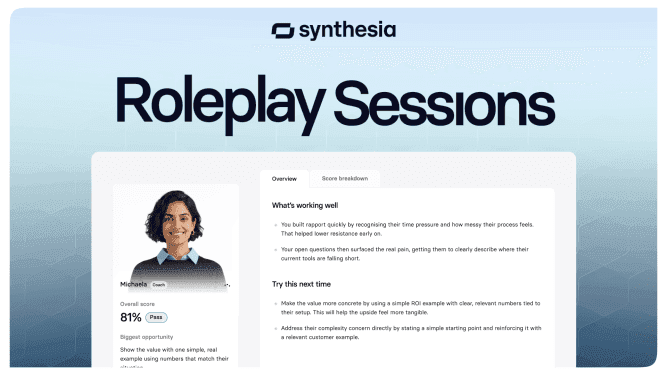
Synthesia’s AI training platform is moving beyond videos into live coaching
For years,Synthesia’spitch was to use AI to help enterprises create interactive training videos, in minutes, for a fraction of the cost normally associated with developing corporate educational materials. The startup’s newest product is making a different bet — that the real moat in enterprise AI isn’t just generating content, but in proving that it worked. On Wednesday, the British startup launchedRoleplay Sessions, an interactive training product where employees can practice high-stakes conversations like sales pitches, performance reviews, and customer complaints with an AI avatar that talks back, pushes back, and then scores them against a rubric. Roleplay is the first release under a broader “Sessions” platform Synthesia plans to expand into other formats, including job interviews and candidate screening, TechCrunch has exclusively learned. The launch comes as enterprises take a harder look at whether their AI spend is paying off. Citing ameta-analysis of learning research, Synthesia argues that most corporate training — including, implicitly, its own core video product — stops short of actually changing behavior. The trainings tend to inform and demonstrate, but what really pushes someone into actually learning something is doing that thing, along with feedback. “Video performs way better than text or sending out a document,” Synthesia CEO and co-founder Victor Riparbelli told TechCrunch. “But for most things, we learn the best by actually practicing something rather than just reading it.” Roleplay also moves Synthesia into a more defensible position. The company’s avatar and voice technology are proprietary, but the underlying reasoning intelligence is OpenAI’s. By tacking on a layer that includes rubrics, performance data, and analytics, Synthesia is positioning itself less as an AI avatar company and more as a performance-management platform with a video front end. “From a managerial executive layer, we’re seeing huge interest in mapping out the talent in their company in a way that’s been really difficult to do before,” Riparbelli said. “If you have your entire sales team practice with an AI role player, you can get very granular data on how your sales force is doing overall.” Synthesia already has a few early Roleplay customers with scaled commercial rollouts, including “one of the top three companies by market cap in Europe, one of the top five Fortune 100, and one of the biggest recruitment companies in the world,” per a company spokesperson. The two most popular use cases involve training sales teams and leadership — programs like practicing how to sell a product or have a difficult conversation. Much of it is soft skills training, Riparbelli said. As with Synthesia’s main product, customers can either create their own training programs on the platform or enlist the help of Synthesia’s consultants to build a bespoke solution that relies in part on whatever training documents and context the company already has. Roleplay is an enterprise offering for now, but the goal is to offer it more widely to small businesses, prosumers, and potentially educational institutions in the next few months as inference costs continue to fall. Riparbelli believes products like Roleplay represent the next phase of enterprise AI adoption, where companies care less about whether AI looks good in a social media demo and more about proving it generates measurable business outcomes.
View

Glow emerges from stealth at $1.2B valuation to challenge endpoint security in the AI era
Glow, a cybersecurity startup founded by former Meta and Snowflake executives, emerged from stealth as a unicorn, betting that artificial intelligence is reshaping how enterprises secure employee devices. The Palo Alto-headquartered startup on Wednesday said it raised $180 million in an all-equity Series A funding round that valued it at $1.2 billion, with backing from Sequoia Capital, Cyberstarts, Greenoaks, and Redpoint Ventures, alongside participation from Index Ventures, Swish Ventures, Lux Capital, Operator Collective, and Holly Ventures. The investment made Glow one of the latest cybersecurity startups to achieve unicorn status before publicly disclosing revenue metrics. As more enterprises deploy AI tools and attackers increasingly use generative AI to automate phishing, develop malware, and launch more sophisticated cyberattacks, companies are rethinking how they secure endpoints — from employee laptops to servers and other connected devices. Concerns haveintensifiedsince Anthropicunveiled its Mythos AI model, which the company said demonstrated advanced capabilities in identifying and exploiting software vulnerabilities, prompting broader debate over AI-assisted cyberattacks. Glow is betting that this shift requires a new approach to endpoint security. Founded in 2025, Glow is building an endpoint security platform that helps enterprises monitor and control the software, AI agents, and developer tools running on employee devices. The startup said the platform uses specialized AI agents to continuously map enterprise environments, assess risk in real time, and enforce security policies. “If you think of the past decade, everything was moving to the cloud and SaaS. Suddenly, AI lands on the endpoint in a way we’ve never seen,” co-founder and chief executive Roi Tiger (pictured above, center) said in an interview. Tiger, a former Meta vice president of engineering, co-founded Glow alongside former Snowflake cybersecurity strategy head Omer Singer (pictured above, left), former Claroty vice president of research and development Ophir Arie (pictured above, right), and former Meta engineering leader Arnon Joseph. The startup’s leadership team also includes chief operating officer Emily Heath, a former chief information security officer at United Airlines and DocuSign who served on the board of Wiz through its $32 billion acquisition by Google and was previously a partner at Cyberstarts. Even though it has only just emerged from stealth, Glow said it already has paying customers across industries including healthcare, retail, and financial services. However, it declined to disclose customer names and numbers. The startup’s typical deployments, Tiger said, span tens of thousands of employee devices across global organizations. To power the platform, Glow uses AI models from Anthropic and Google’s Gemini through Amazon Bedrock, while building its own software to provide the models with enterprise context and improve their reliability for security tasks, Tiger told TechCrunch. Glow’s platform, Tiger said, has already prevented malicious npm packages, third-party software components used to build applications, from being installed in customer environments, identified AI agents attempting to pull in such software, and detected employee devices where endpoint detection and response tools were missing or operating with reduced functionality. Glow enters a crowded endpoint security market dominated by companies including CrowdStrike, Microsoft, SentinelOne, and Palo Alto Networks. Tiger said existing endpoint detection and response products focus primarily on detecting threats after they emerge, whereas Glow is designed to prevent risky software, AI agents, and developer tools from entering enterprise environments in the first place. The startup employs nearly 100 people, about 70% of whom are in Israel and the remainder in the U.S. Whether AI-native endpoint security platforms become a distinct category remains to be seen, as enterprises are only beginning to grapple with the security implications of increasingly capable AI models.
View

Tech Depth vs Domain Context: The Make-or-Break Choice for Enterprise GCCs
GCCs are outpacing parent firms in AI adoption, exposing gaps in governance, training, and context.
View

STT GDC India Launches Rajasthan’s First High-Performance Data Centre in Jaipur
With the launch, STT GDC India has expanded its national network to 34 data centres across 10 cities.
View
Enviar tu herramienta


PoweredByAI.app es un directorio de herramientas de IA que ayuda a personas, empresas y creadores a descubrir las mejores herramientas de IA para escritura, programación, diseño, productividad y más.
© 2026 , Producto de011BQ. Todos los derechos reservados.