🚀 Zaprep: Tus redes sociales al máximo. Empezar gratis — automatiza 1,000 DMs/mes y convierte el engagement en leads. con 1,000 DMs automatizados/mes.
Enviar tu herramienta
Últimas Noticias de IA
Infosys AI Revenue Share Climbs to 8.2% in Q1 Even as it Lowers Guidance on Uncertain Demand
IT major Infosys has named insider Ashiss Kumar Dash as CEO Designate, who will succeed Salil Parekh from April 2027.
View
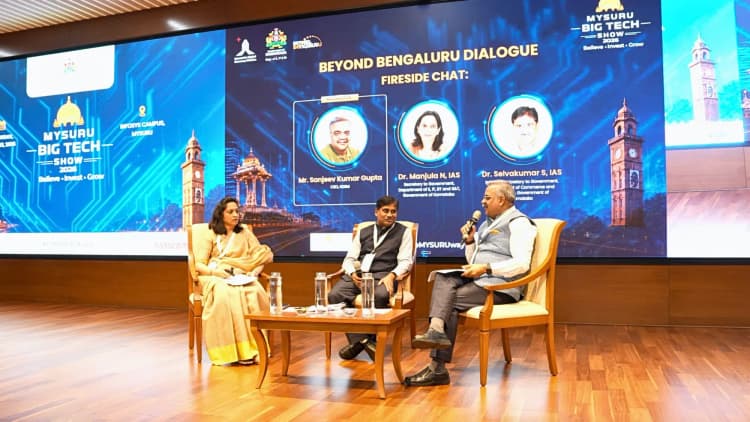
With 650 Startups & 5 GCCs in Sight, Mysuru Thinks Bigger at Big Tech Show 2026
Exclusive remarks from Karnataka’s leadership reveal how the state plans to accelerate Mysuru’s technology ambitions.
View

Experts say exploiting Anthropic’s Fable isn’t how Kimi K3 got so good
White House science advisor Michael Kratsios said that Moonshot, the Chinese company behind the Kimi K3, the largest available open-weight LLM, built its model by copying Anthropic’s Fable LLM while using chips that aren’t cleared for export to China. “Large-scale, covert industrial distillation aimed at stealing proprietary U.S. technology and undermining American research is unacceptable,” Kratsioswrote, amid reported discussions aboutbanning Chinese open-weight modelsthat have roiled the AI sector. Moonshot did not respond to questions about its training process, and Kratsios did not share more details about the sources of his allegations. Kratsios’ tweet echoed comments from Treasury Secretary Scott Bessent that “we are finding watermarks of our U.S. large language models on many of the Chinese models, and that that’s unacceptable.” It’s not clear what those watermarks consist of, and the Treasury Department did not respond to a query. However, experts are skeptical that distillation—the process of querying an LLM to determine its inner workings and copy its capabilities—is responsible for the advanced capabilities that Kimi K3 displays. “I don’t think you get a model this strong and this quickly on the heels of Fable doing strictly distillation,” Braden Hancock, a researcher at the Laude Institute and co-founder of Snorkel AI, told TechCrunch. “There’s just not even frankly time, right? Fable’s only been publicly available since July 1st. You can’t distill that much data, train a model, and release it in two weeks.” “I’ve been of the opinion that distillation has becoming less and less impactful over time as the Chinese models get closer to the frontier and the training regime shifts to [reinforcement learning],” Nathan Lambert, an AI researcher at the Allen Institute for AI, said in apodcastreleased yesterday. “[I]f it were the case, everyone would be easily able to catch up to a GLM or to a K3 by using its data for distillation. But we have not, or we won’t see this, from supervised fine-tuning alone.” Performing distillation requires a lab to systematically query its target model in order to generate data that can be used for post-training. Sometimes this explicitly involves asking the model to articulate its chain-of-thought to understand how it solves problems. Other times, the prompts and responses from a model are used to train a new model in a process called supervised fine-tuning, or SFT. It’s this fine-tuning process that can result in a model ostensibly created by a third party claiming that it is Claude. Fine tuning is where, in Lambert’s view, the “model picks up its manners.” But Lambert says that the benefits of SFT are becoming less important as models become more complex. To distill Fable-like capabilities would likely require reinforcement learning techniques. In many cases, that means having an agent of the larger model grade the smaller model’s responses, and adjusting based on the grade. The more advanced techniques also require more significant infrastructure. Large reinforcement learning runs can require tens of millions of agents. Using a frontier lab’s API to do that “would be insanely expensive and potentially it would probably be a time bottleneck because these models are pretty slow and to be frank might not even give you a performance uplift.” It seems likely that previous frontier models might have contributed to Kimi; Anthropicpublicly accusedMoonshot, DeepSeek and MiniMax of systematically distilling its models earlier this year. Anthropic said it discovered millions of exchanges between its models and users it identified at those companies through IP addresses and other meta data. Those queries were “distinct from normal usage patterns, reflecting deliberate capability extraction rather than legitimate use.” Anthropic didn’t respond to TechCrunch’s queries about Fable distillation. However, distillation is seen as common among AI companies, not just in China. Elon Musktestifiedearlier this year that his company SpaceXAI distilled OpenAI models to develop Grok, and that the practice was common in the industry. The line between distillation and developing synthetic data sets, for example, can be fairly blurry. “[I]n general, Americans are understating the technical expertise of these Chinese teams,” Hancock said. “One of the founders of Moonshot was a CMU PhD student. These are legitimate researchers and engineers doing solid work. …if American models ground to a halt, I think China’s progress would slow, but would still continue. They’re not just riding coattails here.” It’s also hard to disentangle distillation from the second part of Kratsios’ comment — that Moonshot had obtained advanced Nvidia Chips, Grace Blackwell 300s, and also accessed GB300 equipped-servers in Thailand. Those chips are banned from export to China, but a black market exists, according to Sam Bresnick, a research fellow at Georgetown’s Center for Security and Emerging Technology. In May, the founder of Supermicro, a US server builder, was indicted for smuggling advanced chips into China. “I am a proponent of know your customer laws for data centers across the world,” Bresnick said. “If you are letting a company conduct huge training runs on your state-of-the-art hardware, there needs to be a reporting mechanism for who that company is and what they’re doing.” President Joe Biden’s Department of Commerceproposedfederal know-your-customer rules for data centers in 2024, but no further progress appears to have been made under Donald Trump. Exporters shipping advanced chips abroad, however, aresupposed to ensurethey are only used for approved purposes.
View
ServiceNow AI Crosses $1 Bn ACV as Enterprise Demand Lifts Q2 Revenue
The AI annual contract value has topped $1 billion as agentic AI deployments surged ninefold in nine months. The company raised full-year subscription revenue guidance after beating Q2 estimates.
View
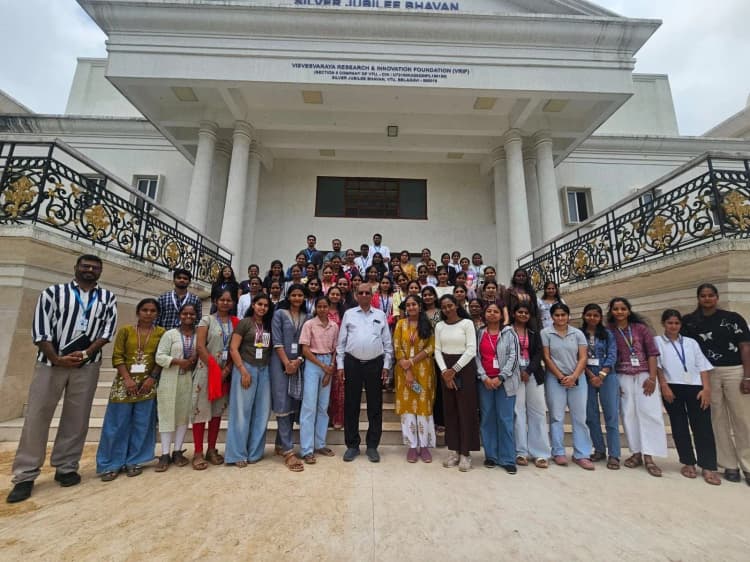
JAN AI & VTU Bring Human-Centred AI Training to Women Engineering Students
The company is training women engineers to use AI to address local challenges instead of focusing solely on automation.
View
![[Exclusive] Ex-GitHub CEO Targets Indian Developers for AI-Native Venture](/_next/image?url=https%3A%2F%2Fteenyfy-assets.s3.us-east-1.amazonaws.com%2Ftemp_exclusive_7029b81548.jpg&w=750&q=75)
[Exclusive] Ex-GitHub CEO Targets Indian Developers for AI-Native Venture
Former GitHub CEO Thomas Dohmke's startup Entire has launched an India region for its Distributed Git Network to meet data residency requirements.
View

ServiceNow bets $40 million on Indian banking software specialist to expand its financial services push
ServiceNow, the U.S. enterprise software company known for automating workflows like IT service management and HR operations, is betting on an Indian banking software specialist to deepen its push into global financial services. The company has invested $40 million inBusinessNext, valuing the 24-year-old Indian firm at $700 million and taking a roughly 5% stake. The deal gives BusinessNext access to ServiceNow’s global sales network as the companies expand their partnership in AI for financial services. ServiceNow’s investment reflects BusinessNext’s growing profile beyond India. The profitable, Noida-based company, which generated about $32 million in revenue in its latest financial year, serves more than 70 banks across India, Southeast Asia, the Middle East, and the U.S. Its customers include the Reserve Bank of India, the country’s central bank, and State Bank of India and HDFC Bank, which are India’s largest public- and private-sector lenders, respectively. About half of BusinessNext’s revenue comes from outside India, with overseas markets expected to drive much of its future growth, founder and CEO Nishant Singh said in an interview. The company chose ServiceNow over potential financial investors to accelerate its expansion by tapping the U.S. software group’s global reach. Singh told TechCrunch that the partnership would help BusinessNext “borrow” its go-to-marker “machinery” — referring to ServiceNow’s sales infrastructure — in markets where it has a limited presence. “Think of it as a strategic partnership, which is cemented with funding,” he said. BusinessNext’s software, Singh said, manages customer-facing banking workflows, while ServiceNow is stronger in workflow automation and back-office systems, a combination the two companies plan to sell jointly to financial institutions. “India’s financial services sector is at an inflection point — institutions are moving from digital experimentation to full-scale AI-led operations,” Kulmeet Bawa, ServiceNow’s group vice president and managing director for India and SAARC, said. He added that the partnership combines ServiceNow’s enterprise workflow platform with BusinessNext’s banking expertise. Founded in 2002, BusinessNext — known as CRMNext until 2022 — has spent several years building what Singh calls an “autonomous banking” platform, using AI agents to automate banking workflows while keeping sensitive customer data on private AI infrastructure to meet regulatory and privacy requirements. Singh told TechCrunch that AI was built into the company’s platform from the outset rather than added later. “We actually renamed our company and we kind of rewrote our stack to put that fundamentally at the core,” he said. BusinessNext employs more than 1,300 people across its operations and waslast valued at $181 millionin 2021, per private market intelligence platform Tracxn. It has raised more than $60 million in external funding and counts Avataar Ventures, Norwest Venture Partners, and Ascent Capital among its existing investors. The deal comes as established enterprise software vendors face pressure from customers who are questioning whether traditional SaaS tools are worth paying for when AI-native alternatives are emerging. For ServiceNow, the deal builds out its position in banking by partnering with a company focused on AI-driven banking software, as it expands its enterprise software portfolio through acquisitions, investments, and partnerships.
View

AI is Becoming the Recruiter’s Lie Detector
As candidates lean on generative AI to polish resumes and rehearse answers, recruitment platforms are deploying their own AI to tell the authentic from the artificial, and to stop human bias creeping back into the process.
View
AI4Bharat Builds 4,000-Test Benchmark, Finds AI Judges Fail Half the Time
AI4Bharat has created FOCUS, a benchmark designed to measure how well evaluator VLMs detect mistakes across both image-to-text (I2T) and text-to-image (T2I) tasks.
View

GitHub Tightens Bug Bounty Rules as AI Changes Security Research
GitHub is introducing a VIP bug bounty tier and limiting new researchers' submissions as it seeks to curb low-quality, AI-generated vulnerability reports.
View

ServiceNow Invests $40 Mn in BUSINESSNEXT to Accelerate Autonomous Banking
The companies said the investment will be used to expand autonomous banking capabilities and private AI deployments for banks and financial institutions.
View
India Has ‘No Chance’ of Building a Mythos Model From Scratch
Experts say India should focus on adapting open foundation models first, even as the government explores sovereign AI for cybersecurity.
View
Enviar tu herramienta

PoweredByAI.app es un directorio de herramientas de IA que ayuda a personas, empresas y creadores a descubrir las mejores herramientas de IA para escritura, programación, diseño, productividad y más.
© 2026 , Producto de011BQ. Todos los derechos reservados.