🚀 Zaprep: Tus redes sociales al máximo. Empezar gratis — automatiza 1,000 DMs/mes y convierte el engagement en leads. con 1,000 DMs automatizados/mes.
Enviar tu herramienta
Últimas Noticias de IA

AMD takes on Nvidia with its Helios AI rack-scale system
Chipmaker AMD is taking aim at competitor Nvidia with its latest hardware release: a rack-scale system designed to power computing needs of the world’s largest AI labs. At the company’s sold-out Advancing AI conference in San Francisco on Thursday, AMD Chair and CEO Dr. Lisa Su promoted the new AI rack system known as Helios — along with its growing list of customers, including Microsoft — as the company prepares to ship it later this year. Su also pitched the company’s newest chips that are designed to feed the compute-hungry dragon that is the AI industry. Rack systems combine many processors into asingle high-powered unit. They are built for data centers, where they train and run AI models and other compute-intensive workloads. Su called Helios the tech industry’s “highest-performance AI rack,” adding that it was “built to train and run the most demanding frontier models in the world at massive scale.” The system will be deployed by leading AI companies at gigawatt-scale, the company said. Nvidia has historically dominated this market with itsVera Rubin and Grace Blackwellrack-scale systems. AMD is clearly looking to get in on the action. And Helios’ performance metrics appear to give it a real chance, beating out Vera Rubin by a number of metrics,The Register reported. Helios, which was revealed in 2025 andshown onstagein January at CES 2026, already has several well-known customers, including OpenAI, Meta, Oracle, Anthropic, and Microsoft, all of whichhave plans to deploythe system. Microsoft CEO Satya Nadellasaid Mondaythat the company would expand its Azure infrastructure with Helios. Meanwhile, Anthropic and AMDannounced a strategic partnershipWednesday to deploy up to two gigawatts of GPUs via the new rack system. AMDalso introducedThursday its Venice-X CPU, which is designed for data centers and to handle high-computing workloads. The Venice-X is expected to launch in 2027. During her remarks, Su commented on the trajectory of the chip industry, claiming that, by the year 2030, chips that power AI will become a massive part of the overall computing market. This is because the industry is “seeing a step change in compute demand” driven largely by the rise of agentic AI, she said. “When you ask the agent to do something, it actually has dozens of steps, and it has to reason, and it has to call tools, and it has to access data, and it has to keep doing it over and over until it solves the problem, and so you need lots of GPUs to do all that,” the executive said. “We’re now expecting that by 2030, the AI accelerator market is going to reach about $1.4 trillion,” Su said. “What that means is, by the end of the decade, the AI accelerator market is going to approach the size of the entire semiconductor market today.” “We do expect that GPUs are going to make up the vast majority of that market because the algorithms are still very much in their infancy, and we’re still continuing to see the workloads change, and that favors programmability in the overall silicon ecosystem,” she added.
View

Meta launched a new AI optimism ad set to a song about human extinction
Meta’snewest advertisementbegins with a black-and-white shot of an eye, showing us what someone sees as they read countless panicked headlines about how AI is going to take our jobs, isolate us, and spark a global crisis. “Some people will have you believe AI is going to make us feel less connected. That it’s going to leave us behind,” a voiceover says. “We couldn’t disagree more.” Suddenly, the video shifts to color, and shows a cycle of different people opening their eyes and smiling. Then, we see a couple dancing on a rooftop, pointing at a rainbow; a group of teens swimming in a lake; a child frolicking in a field; friends embracing after time apart. “Call us optimists. Call us dreamers. Call us whatever the hell you want. But we’re betting on people, and we like those odds,” the voiceover says. “The future is for everyone.” That’s a nice sentiment — pretty convenient for a company betting hundreds of billions of dollars that AI will revolutionize humanity. But the strangest part of the advertisement is not that we’re watching these happy moments play out via Instagram posts. It’s that the soundtrack to the ad is the David Bowie song “Five Years.” If you are not familiar with this song, I urge you togive it a listen,read the lyrics, and think about what it is trying to say. It seems clear to me, but I studied poetry in college, so as a control for this experiment, I asked my brother — a blockchain analyst who loves Claude Code and does not read for fun — if he could tell me what the song is about. “I thought climate change at first, then zombie apocalypse, then an asteroid hitting the earth,” he told me. He is correct. It is a song about the human race panicking after learning they will die in a mass-extinction event in five years. If you’re not familiar with Bowie’s music, this track might sound happy and inspiring, matching the ad’s upbeat tone. The part of the song that is used for the advertisement was probably chosen because it uses the word “people” over and over again, and without the context of the song, it’s not clear what it’s about. But if we look at the lines directly preceding this section: News had just come overWe had five years left to cry inNews guy wept and told usEarth was really dyingCried so much his face was wetThen I knew he was not lying We “had five years left to cry in” and the “earth was really dying.” It’s pretty bleak. It is not reassuring to convince people that AI is going to make the world better while playing a song about the end of the world, and yet, this contradictory musical choice seems to have sailed right past everyone at Meta, including CEO Mark Zuckerberg. “Meta has always believed in giving people the power to share, connect, and shape your world in the ways you want,” hewrotealongside the video. “As we enter this next wave with AI, we continue to believe the future is for everyone. We’re focused on giving every person the tools to reach your full potential and making sure the benefits of technology are distributed to everyone.” Then again, tech leaders are not known for their literary analysis skills. Meta’s Oculus used to give new hires copies of the science fiction novel “Ready Player One,” which is set in a dystopia in which a tech company making virtual reality products becomes overly powerful and evil. OpenAI CEO Sam Altman hasdirectly citedinspiration from the movie “Her,” which warns us about what can go wrong when weuse AI for emotional support. Palantir, a company that builds AI surveillance systems for the government, is named after Palantir, a seeing stone from the “Lord of the Rings” franchise that the Dark Lord uses to spy on his enemies. Elon Musk iscurrently throwing a fitabout the “accuracy” of Christopher Nolan’s blockbuster adaptation of “The Odyssey,” a story with such realistic elements as sea monsters, magic, and divine intervention. These guys make a great argument for the value of studying the humanities. Sci-Fi Author: In my book I invented the Torment Nexus as a cautionary taleTech Company: At long last, we have created the Torment Nexus from classic sci-fi novel Don't Create The Torment Nexus Meta isn’t alone in its recent promotional foibles. Instead of racing to build AGI, the top AI companies seem to be fighting over who can make the creepiest advertisement. A few weeks ago, Anthropic released an eerie video of its own. As my colleague Lucas Ropekdescribedit: The ad begins with a video of a burning house (not exactly a heartwarming start) before pivoting to a series of still images. These images include a crowd of people being surveilled by facial recognition, a homeless person sleeping on the street, rows upon rows of tombstones in a cemetery, and what appears to be a group of laborers toiling in a mine where (presumably) raw materials for smartphones are being dug up. Meanwhile, a voice-over track features different people asking questions like “Can AI be trusted?” and “Who’s gonna hit the brakes if we need to?” Anthropic is trying to convince us that it understands the risks AI poses to society, and therefore, this is the company that people can trust to develop AI responsibly. The message it actually conveys feels closer to the mood of Bowie’s “Five Years.” i thought this was satire, kept looking for the handle to be spelled c1audeai or somethinghttps://t.co/4AVBA93Z27 OpenAI CEO Sam Altmanrespondedto the Anthropic ad, “I thought this was satire, kept looking for the handle to be spelled c1audeai or something.” As these companies spar to control the public perception of AI, their efforts don’t seem to be making much progress. A recentPew surveyfound that only 16% of Americans think that AI’s impact on society over the next 20 years will be positive, and 40% believe it will have a negative impact. Better luck next time, Meta.
View
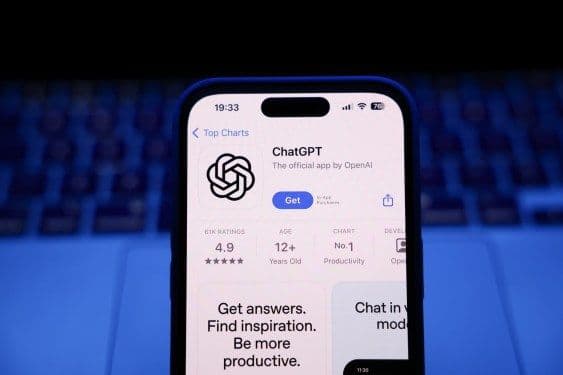
OpenAI makes ChatGPT Health available to all US users
OpenAI said today it is making ChatGPT Health, a feature that helps users with health-related queries, available to all U.S.-based users over 18 across all plans. The announcement comes a day after a Florida-based pastor sued the company for givinga near-fatal suggestion not to consult a doctor. The company started testing the feature through a dedicated hub earlier in January, allowing users to integrate data from other services and their personal information from services such as Apple Health, Function, and MyFitnessPal. At that time, OpenAI said users were asking 230 million health-related queries each week. That number has now gone up to 300 million. Users can also integrate their medical records from hospital systems like Epic and Oracle Health, and health platforms like One Medical and Function Health. OpenAI said earlier that users needed to use the health hub for health-related queries. Now they can choose to draw insights from connected information in the health section in all queries. The company said during the testing it observed that 70% of health-related queries took place outside the dedicated hub. Through this new feature, users can use their health information to get information on food or allergies in the general chat. The company noted that its models have made progress in answering health-related queries. The company noted that the smallest model from its latest release, GPT 5.6-Luna, outperforms GPT 5.5 on HealthBench evaluation, an open source benchmark developed by the company toevaluate large language models (LLMs) on health queries. OpenAI said that it doesn’t use any user data to train its model, and it works with physicians to improve its models on health queries. Despite these performance gains, the company maintains in its terms that its services are “not intended for use in the diagnosis or treatment of any health condition.” The company cited these clauses in response to the above lawsuit, and also toldThe New York Timesthat it is working on making health- or medicine-related answers safer. With the latest roll out, OpenAI said it wants people to verify information and take medical decisions based on professional advice. Severalstudieshave highlighted that AI bots are not reliable for medical advice. However, this has not deterred companies likeAnthropicandGooglefrom launching health-related AI features. Health in ChatGPT is rolling out to logged-in U.S. users with free, Go, Plus, and Pro plans on the web and iOS this week.
View
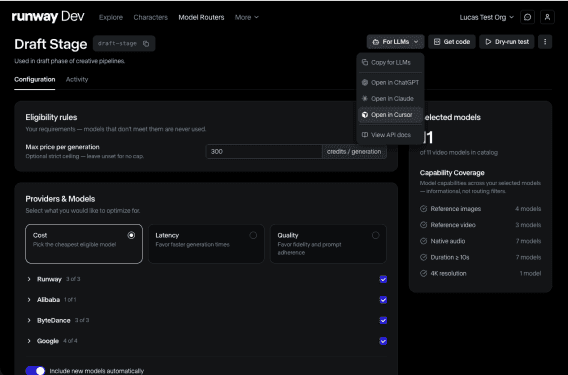
Runway launches AI model router as generative media gets crowded
Runway no longer wants to be justanother AI model company. It wants to become the infrastructure layer for generative media. On Thursday, the startup launched Runway Media Router throughRunway Dev, its developer platform, released earlier this month, that provides API access to a growing roster of third-party image, video, and audio models alongside Runway’s own. The Media Router is a tool that automatically selects the best image, video, or audio generation model for a request based on whether a developer prioritizes quality, speed, or cost. While model routers have become increasingly common in the world of large language models, Runway says this is the first built specifically for generative media. “The routing really fits into that overall promise of being the easiest one-stop shop for developers to integrate with any type of generative media model,” Anthony Maggio, Runway’s chief product officer, told TechCrunch. The launch, shared exclusively with TechCrunch, marks another step in Runway’s evolution from an AI video startup into infrastructure for companies building with generative media. Through Runway Dev, customers including Adobe, Cloudflare, ElevenLabs, Expedia, Shutterstock, and Quora can build media generation directly into their own products using Runway’s API rather than sending their users to Runway’s own app or site. The launch of the router comes as the number of generative media models has exploded, making it increasingly difficult and time-consuming for developers to evaluate new releases. Through the Runway Dev platform, developers can access the latest media models when they’re released. “Most developers are not spending the time to really understand the capabilities of each of these models and where they excel or differ based on various types of outputs across video, image, and audio,” Maggio said. “The unique proposition we’re bringing to the table is all of that intelligence around what the best model is for each different use case, and meshing that with preference you apply around the context of your business.” Maggio noted that Chinese generative media models are becoming increasingly popular. However, many businesses building their own products might not be comfortable working with models that come out of China, so they could, he said, potentially set a preference for American model providers — a preference that may become more common as the Trump administration explores bans andsanctions against Chinese open AI models. That’s just one example of preferences that developers can set, though. Maggio says customers are mainly interested in routing the model to account for token pricing and quality. Token pricing has become a hot topic in 2026 as enterprises that went all-in on agentic AI felt the sting ofhigh token bills. In the world of LLMs, model routing for token pricing has become common, so it only makes sense that routing for generative media would follow. The Media Router launch also comes weeks after Runway replaced its unlimited subscription plans with token-based pricing, a move that drew criticism from some users. On the quality front, deciding which models provide the best quality for any given task isn’t as easy for generative media as it is with language models, Maggio says. That’s where the router’s intelligence layer kicks in. It’s based on the expertise Runway’s in-house creative team has developed in evaluating output across every media type — things like how video models handle motion, how image models handle composition, or how voice models handle lip syncing. Runway had already done a lot of the work building that intelligence layer for its agent product, a conversational AI creative partner thatRunway launched in Mayto help turn text prompts into fully edited multi-shot videos and marketing campaigns. The Runway Media Router, Maggio says, takes the same routing technology Runway built for its own products and packages it for outside developers to use. Runway’s strategy today reflects how fragmented and competitive the current generative media landscape is, and how much the startup needs to expand and pivot to stay competitive. Runway’s last AI video model release — Gen 4.5 — was in December. At the time, the model topped leaderboards,outperforming similar modelsfrom incumbents like Google. In the same month,Runway released its first world model. Aside from an upgrade to its video editing model,Aleph 2.0, in May, Runway hasn’t dropped a new dedicated frontier video model in months. (TechCrunch has asked when the startup plans to release Gen 5.) Today, while Aleph 2.0 ranks among the leading video editing models according to Artificial Analysis, the company’s text-to-video and image-to-video models no longer lead the rankings. In the top 20 spots are models from heavy hitters like Google and China’s ByteDance and Alibaba. Rather than asking developers to bet on a single model staying ahead, Media Router assumes that the best model will continue to change — and it keeps Runway in the game so that it can continue to build on the frontier. If not as the best new AI model, then as the best orchestration layer. Anastasis Germanidis, Runway’s co-founder and co-CEO, acknowledged that the startup has been known for a long time primarily for “that end user piece,” but it had to build a full stack to get there, one that includes a developer platform, a creative tool suite, and an inference layer underneath it all. He says the company has seen increasing interest from companies for Runway to live across every part of that stack. “You need great models underneath, but the orchestration increasingly matters a lot because people are building entire campaigns with those models, or they’re building entire finished multi-scene generations out of those models,” Germanidis told TechCrunch. “It’s something that we increasingly had to build — that intelligence layer that comes on top of the pure pixel models. The router is one way in which the benefits of that come to users.” Or as Maggio put it more broadly: “If you zoom out at the one thing Runway has been doing since 2018, it’s that we’re deeply focused on research, while building for where we think the space is going at the same time.” Got a sensitive tip or confidential documents? Rebecca Bellan is reporting on the inner workings of the AI industry, from the companies shaping its future to the people impacted by their decisions. Contact her securely, and off the record, on Signal at rebeccabellan.491or via email at rebecca.bellan@techcrunch.com from a non-work device.
View
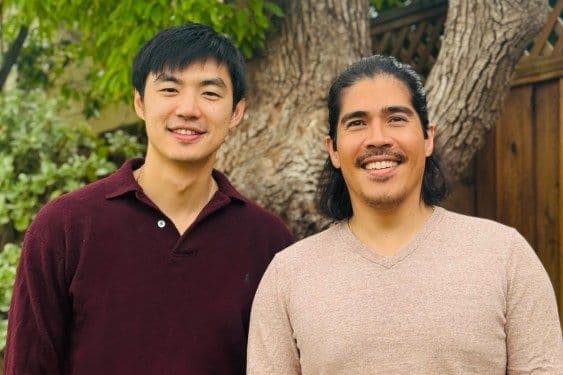
AegisAI, founded by former Google security execs, lands $36M to stop AI-driven spear phishing
Hackers are increasingly using AI to launch attacks on a massive scale, with email emerging as a primary target. AI can quickly aggregate personal information—such as information about coworkers, active projects, and recent travel itineraries—allowing bad actors to instantly craft convincing messages that look authentic. Last year, former Google security executives Cy Khormaee and Ryan Luo, who previously worked on developing safe browsing technology and reCAPTCHA, teamed up to launch AegisAI, a startup that uses AI agents to stomp out these threats, known as spear phishing. With a decade of experience preventing email hacks, the AegisAI co-founders realized that existing rule-based systems for preventing hacks—relying on “if-then” logic—are too slow and limited to catching AI-crafted malicious emails. So they developed AI agents that quickly analyze each message as a human would, paying attention to small anomalies that even the most elaborate checklist wouldn’t catch. Less than a year after its launch, AegisAI says its tech has been adopted by dozens of customers, including crypto payments company Mash, AI startup LangChain, and Google-owned privacy compliance platform Lokker. That demand has just helped AegisAI raise a $36 million Series A led by Battery Ventures, with participation from existing backers Accel and Foundation Capital. The fresh funding brings the startup’s total capital to$49 million. “AI-powered attacks bypass existing controls more than half the time now, which means they’re almost twice as effective as they used to be,” Khormaee told TechCrunch. “They’ve researched you, they understand everything about you, and they’re targeting attacks that are perfectly bespoke to you.” Khormaee claims that AegisAI’s agents can spot threats traditional email security systems may miss entirely. For instance, the startup’s AI can catch malicious PDF attachments that look legitimate at first, including ones with built-in passwords and CAPTCHAs, which are often used to fool standard spam filters. When Dharmesh Thakker, general partner at Battery Ventures, noticed an increase in email attacks, he set out to invest in a startup that could defend against AI with AI, one aiming to replace legacy email security tools with agentic-driven defense. “The bad guys are using email to attack us using AI at a much faster pace than we can keep up with,” Thakker told TechCrunch. “Defending against that is going to be a number one priority for a lot of companies.” AegisAI isn’t the only startup using AI to analyze the context of every incoming email to detect fraud and impersonation attempts. Lightspeed-backedOceanis also trying to displace established vendors like Proofpoint and Mimecast, along with newer players like Abnormal Security. However, given that AegisAI is led by experts who helped secure Gmail, the most popular email system in the world, Thakker believes the startup has the best shot at becoming the leading new hack-prevention company. While AegisAI is starting with email, the startup has its sights on eventually expanding to other areas of defense, such as data security. “The core idea of building customized, highly advanced agents that can do investigations is going to [determine] who becomes the next dominant security company,” Khormaee said.
View
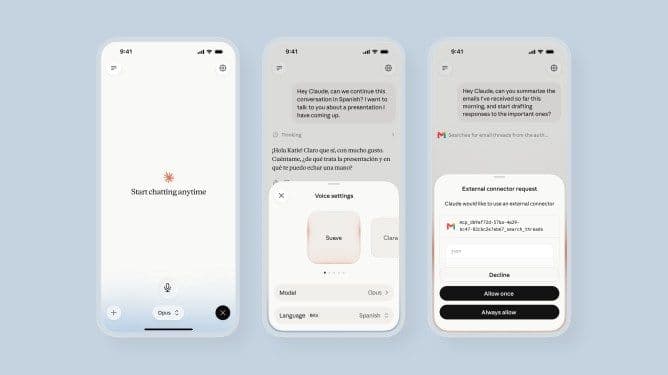
Anthropic updates Claude voice mode with more capable models
Weeks after OpenAI rolled out a new family of conversational models andupdated ChatGPT’s voice mode, rival Anthropic is making its move to make Claude more voice-friendly with a new update. The company said Thursday that users can choose between Opus, Sonnet, and Haiku models. Claude’s voice mode, whichwas released last yearand powered by the Haiku model, provided quick responses, but wasn’t well suited for complex work. The company said that with the new update, voice mode picks the last model people used in the text chat and uses its fastest version by default. Anthropic said that the new voice mode can help users with longer conversations, including providing feedback on their communication style, talking through a pitch to a client, and brainstorming product market research. What’s more, Claude’s voice mode can tap into other apps like Gmail, Google Calendar, Slack, Canva, and Notion. This means that users can ask it to update a meeting slot, draft an email, or create a document in Notion. Notably, this is a big difference from OpenAI’s voice mode, which updated its conversational style but still isn’t able to use different tools to get work done. Earlier this year, Anthropic added multilingual support to Claude’s voice mode in beta. It said that now users can talk in various languages, but they have to manually specify the language. At the moment, Anthropic supports English, French, German, Hindi, Indonesian, Italian, Japanese, Korean, Portuguese (Brazilian), and Spanish (Latin America/Spain). The new voice mode is available to all users in beta across platforms. However, free users will be restricted to using the Haiku model with only one connected app. Anthropic didn’t make any changes to the voice model with this release, and it hasn’t detailed what kind of voice stack it uses. That means, unlike OpenAI’s release, users might not find any coversational improvements such as better interruption handling.
View
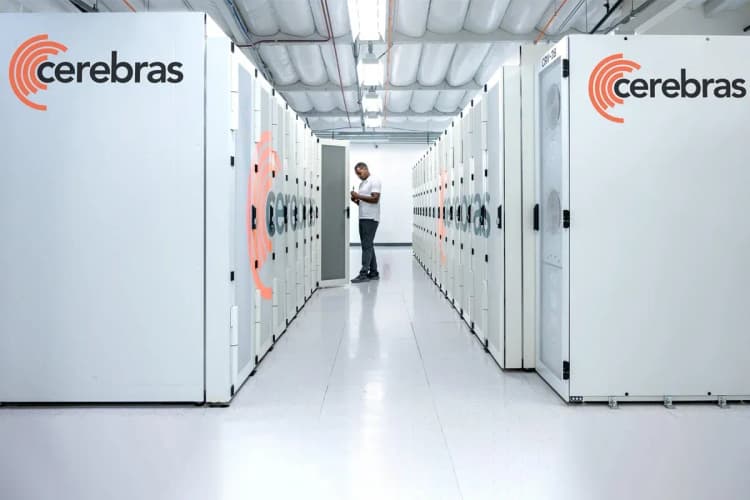
AMD, Cerebras Enter Partnership to Combine Helios and Wafer Scale Engine
By separating inference processing across the two compute platforms, the companies say the architecture can deliver up to 5x higher tokens per second per watt than a Cerebras Wafer-Scale Engine-only configuration.
View

AMD Expands Roadmap Through 2030, Helios in Full Production
AMD confirmed that the Instinct MI500 Series will launch in 2027, followed by the MI600 Series in 2028.
View
Google closes in on another billion- user product with Gemini
Google is about to add another name to its long list of products with more than a billion users, a list that already includes Search, Gmail, Drive, Android, YouTube, and Chrome. The company said during its Q2 2026 call that the AI assistant Gemini now has over 950 million monthly users. The company noted that Gemini users have tripled from last year. Earlier in February, it said that the Gemini app crossed750 million monthly active users. With this growth, Google’s assistant is in line to compete more closely with OpenAI’s ChatGPT, which hit 1 billion monthly active usersin June. “Users love new agentic features like Daily Brief and our personalized agent, Gemini Spark, which is now available in the U.S. and internationally. We’ve been shipping helpful new features like this at an incredible pace,” Alphabet CEO Sundar Pichai said during the call. Apart from users on Android, the Gemini app has found astrong user base on iOS with launches like the Nano Banana image generation model. According to Appfigures, the app has been downloaded over 137 million times on iOS in the last 12 months. Inits latest “State of AI” report, the analytics firm Sensor Tower noted that ChatGPT’s market share among AI assistants fell below 50% for the first time. The report, which looked at H1 2026, also noted that Gemini’s share rose to 27.7%. Many people already use AI assistant apps as a substitute for search. However, Google reported that its search vertical is going strong, partially thanks tothe AI-centric overhaul. During this quarter, its Q&A-style AI mode crossed 1 billion users. The company said that it is driving “an incremental increase” in search queries. Google also noted that through hardware engineering, it has reduced the cost of AI mode for the company, despite introducing new models and features.
View
Nvidia is sending GPUs to the Moon
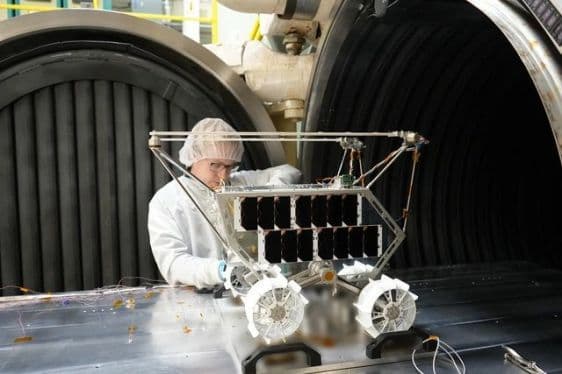
Nvidia’s effort to deploy its GPUs far and wide is aiming at a new target: the Moon. Lunar Outpost, a startup building robotics for space infrastructure, announced on Thursday that its next Moon rover will use Jetson chips to control its LiDAR system. When it does, it is likely to be the first GPU on the lunar surface. “We’re taking the NVIDIA Jetson and comparing it to our flight compute platform that has a little bit more spaceflight heritage,” Lunar Outpost CEO Justin Cyrus said. “[We’re] seeing what the pros are, seeing what the cons are. And we’re really pushing towards trying to adopt these more capable GPU-powered systems in these extreme environments.” NASA has launched a campaign to pay private companies to explore the lunar surface ahead of plans to return human astronauts, perhaps as soon as 2028. The space agency’s program, modeled on its work with SpaceX, asks tech companies to develop vehicles that carry scientific sensors to the Moon to understand its terrain and hunt for substances like water that could prove useful or even lucrative to exploit. Nvidia also recentlyannounceda partnership with Firefly Aerospace, the first private company to safely land a robot on the Moon, that will see the Jetson platform operate on a satellite orbiting the Moon to process imagery. That satellite aims to collect data for scientists trying to map the Moon, but also to track the growing number of robots on the surface. Lunar Outpost’s next rover is packaged onboard a lander built by Intuitive Machines, another Moon-focused tech company. The rover is designed to carry a package of sensors into craters and other places that are difficult to explore from orbit. The following mission will be exploring a place on the lunar surface called Reiner Gamma, where a magnetic anomaly has puzzled scientists. Each mission is expected to take flight on a Falcon 9 rocket before the end of the year. Nvidia’s Jetson platform isn’t as well known as AI workhorses like Blackwell and Vera Rubin, but it’s a vital part of many physical AI systems. Designed to be compact and power-efficient, Jetson lets robotic systems process sensor inputs locally, allowing them to understand and react to the world around them more quickly. “Our autonomy stack was a bit more deterministic five years ago, and now it’s a combination of deterministic and physical AI, which is pretty fun,” Cyrus said. “We still run both in parallel, and then it’s our job to figure out where’s physical AI can actually plug into our stack and help us do things that no one’s done before.” Using GPUs in space is challenging because of the extreme environment. Most space-faring GPUs are in orbit close to the Earth, where they are relatively protected from radiation and dramatic temperature changes. The Moon is more directly exposed to cosmic radiation and swings in temperature as goes through its phases. “Your system has to survive lunar night and has to do so on very low power,” Cyrus said. If they can operate the chips in that environment, Lunar Outpost’s engineers hope that their vehicles will be more capable—able to more quickly process their environment and make decisions. NASA has extensive ambitions for a sustained human presence on the Moon, but that will likely require autonomous systems to pave the way and do the heavy lifting. “What we at Lunar Outpost are currently working on is how do we go from exploration to permanence, how do we actually build that outpost on the moon?” Cyrus said. “We do think combining our deterministic models plus the physical AI layer—that’s what allows us to make a human presence in space sustainable, actually having that robotic workforce.” In the next few years, Lunar Outpost has several smaller autonomous rovers scheduled for launch to the Moon, and one larger one, Pegasus, that is intended to carry astronauts. Pegasus is waiting on a rocket built by Jeff Bezos’ space company, Blue Origin, to carry it to the Moon, but that launch vehicle suffered an anomaly this summer and it’s not clear when it will return to flight. “It does seem like they’re making pretty darn good progress on the pad,” Cyrus said. “I can’t really answer Blue Origin’s timelines or NASA’s timelines on the pad reconstruction, but everything we’ve been told, we’re on the same timeline [for 2028].” That leaves futuristic visions ofspace data centersand fleets of robots at work on the Moon both waiting on the same thing: A bigger rocket.
View

AI chip startup Etched defies skeptics, hits $10.3B valuation from big-name investors
Etched,the AI chip startup founded by three Harvard dropouts in 2022, has closed a $300 million Series C funding round at a $10.3 billion valuation, co-founder and COO Robert Wachen tells TechCrunch. The round was led by Sequoia, with Andreessen Horowitz, SK Hynix, Jane Street, and Diffusion Capital also participating, along with other, earlier investors. Other backers of the company include names like Peter Thiel, Andrej Karpathy, Dylan Field, Amjad Masad, and more. Etched was previously valued at $5 billion in December when it raised a $500 million round, meaning it has doubled its valuation in about seven months. The company says this is the highest valuation ever for a Sequoia-led Series C. Last month, Etched announced that it hadsuccessfully manufactured its homegrown chips, that its first full systems were being tested by clients, and it had already booked $1 billion worth of orders. Etched launched at a time when the idea ofbuilding a chip specifically for AI modelsbased on transformer technology (the architecture behind most modern AI systems, including ChatGPT and Claude) wasconsideredwild if not wacky. The company is still battling the perception that its products — which are sold as full systems, not just chips — involve chips designed to run only specific LLMs. That’s not the case, Wachen explains. The systems can run any AI model, including Mixture of Experts models like DeepSeek and Qwen — an architecture that splits tasks across specialized sub-models rather than relying on one large model — as well as non-transformer designs like Mamba, which is built on a differentunderlying architectureknown as a state-space model. (Interestingly, the idea of etching parts of a specific AI model directly into silicon to boost performance isn’t considered far-fetched anymore. Google is reportedly pursuing the same concept with itsFrozen v2 chipfor Gemini.) Still, Etched’s claim to fame today is that it designed two new components from scratch to speed up inference — the computing process that happens after a user submits a prompt. “Inference is built in two stages,” Wachen says, “prefill and decode.” The “prefill phase” involves understanding the prompt, including context. It’s mathematically and compute-intensive. The “decode” phase generates the output tokens (the actual answer the user sees). It requires less computation but needs massive amounts of memory. Etched created a prefill chip that operates “dramatically” faster, he promises, “by running at a much lower voltage than any other AI chip. We call this low-voltage inference.” Lower voltage generates less heat, which allows the chip to pack in more transistors. For the decode process, Etched created a new type of memory and “interconnect technology that we call cluster scale memory. It allows many chips to connect together and use a shared memory pool at a very, very fast, low latency,” he says. The result, Etched promises, is high speeds but lower costs. Because the startup was launched before most of the tech world (besides Nvidia) understood AI’s specialized compute needs, the founders, CEO Gavin Uberti, Wachen and CTO Chris Zhu, havefaced plenty of skepticswho kept doubting even after announcing the company announced that its first batch of silicon had been successfully manufactured by TSMC. Much of that comes from how few people have had access to the systems. So far, access has been limited to investors and early customers. In fact, that’s how Etched landed its list of famous investors in the first place — by showing them private demos in its office. “Andrej Karpathy from Anthropic, Noam Brown from OpenAI, Geoffrey Hinton, as well as all the investors in the funding round — these are all people who actually tried the hardware and are very excited about it,” Wachen says. Still, it’s been a long, difficult road with more to go until the rack systems are mass produced and delivered. The trio famouslydropped out of Harvardto launch Etched, not knowing then how to raise cash (much less the loads of it they would need) or how to hire. “We had no idea how hard it was going to be,” he said. “I think we still have to be humbled by what it will take to actually get to scale.” Wachen remembers landing in the Bay Area after telling his parents he was leaving school to do a startup, with no office or apartment arranged. He slept on the floor of a friend’s unfurnished house. “I remember staying in my friend’s house that they were about to sell, using a towel as a blanket,” he laughs. The founders eventually set up the servers they needed to run the chip-design tools in the garage of an early employee and “every time it needed to be rebooted, he would call his wife, and she would go and hit the reboot button.” Today, there are 400 people bustling in an office, and Etched operates a 2 megawatt data center. “We’re running tokens in our in our lab today, working with some of the largest AI companies in the world,” he says. Wachen also has a blanket now, and a mattress “and a pillow even. Multiple pillows,” he jokes. More importantly, he and his co-founders never let the doubters stop them. “It’s come a long way. It’s a very, very different world. But I think, when you really think something’s possible, and you just work at it for a long time, you can do it.”
View
Bengaluru Bets on AI to Predict Water Shortages Before They Happen
The Bengaluru Water Supply and Sewerage Board will inaugurate its ₹91.12-crore JICA-backed Integrated Intelligent Water and Sewerage Management Centre under the Cauvery Stage V Project.
View
Enviar tu herramienta


PoweredByAI.app es un directorio de herramientas de IA que ayuda a personas, empresas y creadores a descubrir las mejores herramientas de IA para escritura, programación, diseño, productividad y más.
© 2026 , Producto de011BQ. Todos los derechos reservados.