🚀 Zaprep: Tus redes sociales al máximo. Empezar gratis — automatiza 1,000 DMs/mes y convierte el engagement en leads. con 1,000 DMs automatizados/mes.
Enviar tu herramienta
Últimas Noticias de IA
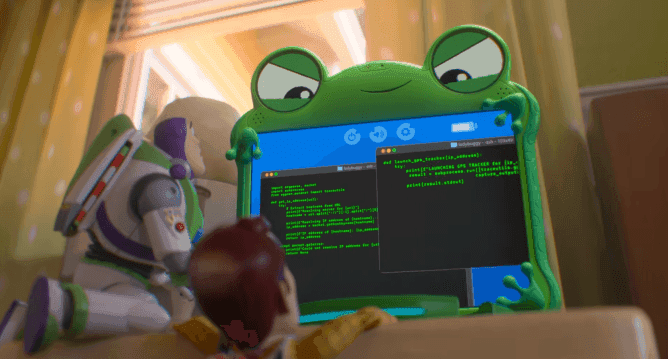
Toy Story 5 takes aim at creepy AI toys: ‘I’m always listening’
When the first Toy Story movie came out in 1995, Google didn’t exist yet and Apple was on the verge of bankruptcy. No one could have predicted that over thirty years later, Pixar would still be making Toy Story movies, nor could anyone have known that the latest installation in the franchise would pit Buzz Lightyear and a balding Woody against an evil AI tablet called Lilypad. But sure enough,Toy Story 5confronts old-school toys like Mrs. Potato Head, Rex, and Slinky Dog against the sinister threat oftechnology. The trailer shows Bonnie, the young girl who inherited Andy’s toys when he left for college inToy Story 2, playing outside with her toys when a surprise package with the Lilypad tablet arrives for her. She becomes completely enraptured by the tablet, not even looking up from the screen when her parents tell her that screen time is over. TheToy Story 5trailer makes the Lilypad — or, Lily — out to be a sinister villain. When Jessie confronts the tablet about Bonnie’s wellbeing, Lily seems not to be paying attention, so the cowgirl demands that the tablet listen to her. “I’m always listening,” Lily says ominously, regurgitating Jessie’s impassioned speech in a computerized tone… and then translates it into Spanish. “Tech’s invaded our house,” Jessie tells Woody. “I’m losing Bonnie to this device.” Woody replies, “Toys are for play, but tech is for everything.” CouldToy Story 5pull at the heartstrings of young children and get them to think twice about the consequences of excessive screen time? That may be a stretch. But at least it gives them something to watch that’s not as mind numbing as Cocomelon.
View

Great news for xAI: Grok is now pretty good at answering questions about Baldur’s Gate
Different AI labs have different priorities. OpenAI has traditionally focused on consumer users, for instance, while its rival Anthropic tends to target enterprises. Elon Musk’s xAI, we discovered recently, has been placing particular emphasis on video-game walkthroughs. On Friday, Business Insider’s Grace Kay publisheda detailed and far-reaching report about xAI, the AI startup recentlyacquired by SpaceX, with particular emphasis on how Musk is making life difficult for employees. But this particular anecdote stood out: In one instance last year, a model release was delayed for several days because Musk was dissatisfied with how the chatbot answered detailed questions about the video game “Baldur’s Gate,” according to people familiar with the matter. High-level engineers were pulled from other projects to improve the responses before launch, they said. Of course, you can imagine the frustration of any respected and experienced engineer who shows up to work thinking he’ll be tackling fundamental problems of knowledge and machine intelligence, only to be sidetracked into helping a 54-year-old man beat his video game. But the anecdote raises an even more pressing question: Did Musk end up getting the gaming skills he wanted? To answer that question, our resident RPG-enthusiastRam Iyerput together a set of five general questions about Baldur’s Gate, which we ran against xAI and the three major models in a kind of quasi-benchmark that I’ve decided to callBaldurBench. In the interest of journalistic transparency, I’ve made all the chat transcripts public, so you can see them here:Grok,ChatGPT,Claude, andGemini. First, the good news: Grok actually gives pretty good information. Its responses were a bit dense with gamer jargon — “save-scumming” instead of saving and “DPS” instead of damage — but the answers were both useful and well-informed, provided you knew what it was talking about. Grok also really loves tables andtheorycraft, which is about what you would expect. There are lots of Baldur’s Gate guides out there and the models were generally drawing from the same ones, so the biggest differences were stylistic. ChatGPT prefers bulleted lists and sentence fragments, while Gemini loves toboldimportant words. The biggest surprise was Claude, which was particularly concerned about giving me information that would spoil my experience of the game. When I asked about good party compositions, it closed the guidance by saying “don’t stress too much and just play what sounds fun to you.” Thanks, Claude! It’s important to bear in mind, this is a subject area we know (thanks toBusiness Insider’s reporting) that xAI has specifically focused on reaching parity. So we shouldn’t read too much into the fact that, after the reported sprint, Grok’s advice turned out about the same as the other models. Still, it’s nice to know xAI can make it work if it tries. Loading the player…
View
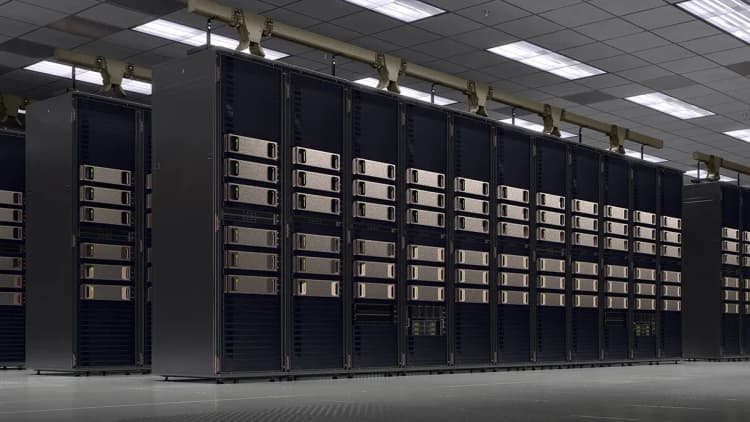
TryfactaConnex Says It Will Invest $7.7 Bn for 1-GW AI Data Centre Campus in Uttar Pradesh
The company said the project will combine compute capacity with dedicated energy generation to support large-scale artificial intelligence workloads.
View
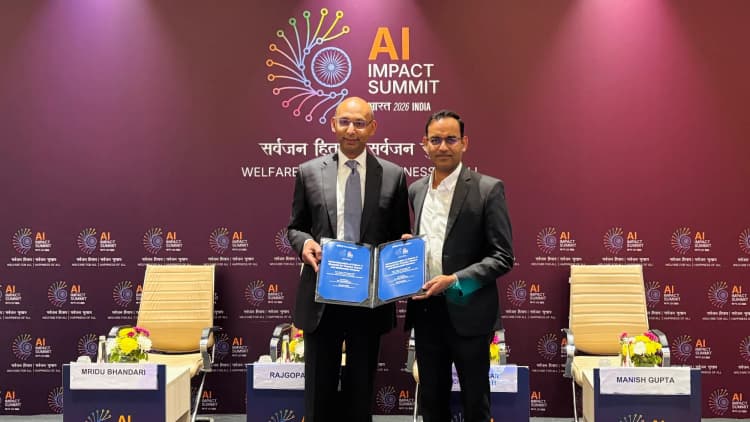
Dell Technologies Launches AI India Blueprint at India AI Impact Summit 2026
The company said the framework is designed to help India move from pilot projects to production-scale AI deployment by treating AI as shared national capability.
View

UAE’s G42 teams up with Cerebras to deploy 8 exaflops of compute in India
Abu Dhabi-based tech company G42 has partnered with U.S.-based chipmaker Cerebras to deploy 8 exaflops of computing power via a new supercomputer system in India, the companies said on the sidelines of theIndia AI Impact Summitin New Delhi. The system will be hosted in India and follow local data residency, security, and compliance rules. The project aims to provide computing resources for AI applications to educational institutions, government entities, and small and medium enterprises. “Sovereign AI infrastructure is becoming essential for national competitiveness. This project brings that capability to India at a national scale, enabling local researchers, innovators, and enterprises to become AI-native while maintaining full data sovereignty and security,” Manu Jain, CEO of G42 India, said in a statement. Abu Dhabi’s Mohamed bin Zayed University of Artificial Intelligence (MBZUAI) and India’s Centre for Development of Advanced Computing (C-DAC) are also part of the project. Last year, MBZUAI and G42 releasedNanda 87B, a Hindi-English large language model built on Meta’s Llama 3.1 70B model, that is purported to understand casual speech in Hindi and English. “Deploying this system in India marks a significant step forward in the country’s computational capacity and sovereign AI initiatives. It will accelerate training and inference for large-scale models, enabling researchers and developers to build AI tailored to India’s needs,” said Andy Hock, chief strategy officer at Cerebras. The India AI Impact Summit this week saw several AI infrastructure initiatives being launched by both Indian giants and international firms. Indianconglomerate Adani pledged $100 billionto build up to 5 gigawatts of data-center capacity in the country by 2035. Reliance alsosaid it would invest $110 billionover the next seven years for gigawatt-scale data centers. OpenAI has teamed up with Tata Group to secure100 megawatts of AI computein the country as part of its Stargate project, and eventually scale it to 1 gigawatts. And India’s technology minister Ashwini Vaishnaw said at the summit that the country plans to attract over$200 billion in infrastructure investmentover the next two years by rolling out a mix of tax incentives, state-backed venture capital, and policy support. So far, U.S. technology giants, includingAmazon,Google, andMicrosoft, have alreadycommitted about $70 billionto expand AI and cloud infrastructure in the country.
View

OpenAI says 18 to 24-year-olds account for nearly 50% of ChatGPT usage in India
OpenAI seems to have found product-market fit with young Indians. The company said on Friday that users between 18 and 24 years of age accounted for nearly 50% of messages sent to ChatGPT in the country, and users under 30 accounted for 80%. The AI lab said Indians use ChatGPT mostly for work, with 35% of all messages relating to professional tasks, compared to 30% globally. In particular, the company’s coding assistant, Codex, is seeing strong traction: OpenAI said Indians use Codex three times more than the global median, and weekly usage has increased by four times since the toolgot a Mac apptwo weeks ago. Users in India are also asking three times as many coding-related questions as the median. This is in line with findings from Antropic, which earlier this week said45.2% of Claude’s tasks map to software-related use casesin India. OpenAI said outside of work tasks, 35% of messages to ChatGPT from Indians requested guidance, 20% concerned questions about general information, and 20% were requests for the bot to produce or help with writing. India is OpenAI’s second-largest market with more than 100 million weekly users, and the company has been actively trying to court Indians for its AI tools and services. The company offersa sub-$5 subscription tierin the country, and last year evenran promotional campaignsto spur adoption. “AI adoption is moving faster than our ability to measure it – and that’s a challenge for anyone trying to make smart decisions. Signals is our way of putting real-world evidence on the table, so India’s AI debate can be grounded in facts, not hype,” OpenAI’s chief economist Ronnie Chatterji said in a statement. OpenAI has had a busy few days in India, which is hosting a majorAI Impact Summitin New Delhi this week. The company is opening new offices in Mumbai and Bengaluru this year, and has signed a major partnership with conglomerate Tata Group tosecure 100 megawatts worth of AI compute capacityand distribute ChatGPT Enterprise within Tata’s IT services subsidiary, TCS. The AI lab has signed agreements withfintech Pine Labs, travel platforms Ixigo and Makemytrip, and food and grocery delivery company Eternal. It has also partnered with educational institutes to distribute its toolsto more than 100,000 students over the next six years.
View

General Catalyst to Invest $5 Bn Over 5 Years to Boost India’s Startup Ecosystem
This commitment, announced at the India AI Impact Summit, will target sectors including AI, healthcare, and fintech.
View

Is SaaS Dead? Salesforce Leaders Think That’s a ‘Lazy Narrative’
Salesforce leaders Srini Tallapragada and Arundhati Bhattacharya talk to AIM about AI bets, digital labour and the future of CRM, on the sidelines of the India AI Impact Summit.
View

Telangana Leads OpenAI Coding Tools Usage, Beating Karnataka, Tamil Nadu
India is the fastest-growing market for OpenAI’s Codex, as per new data called 'OpenAI Signals'.
View
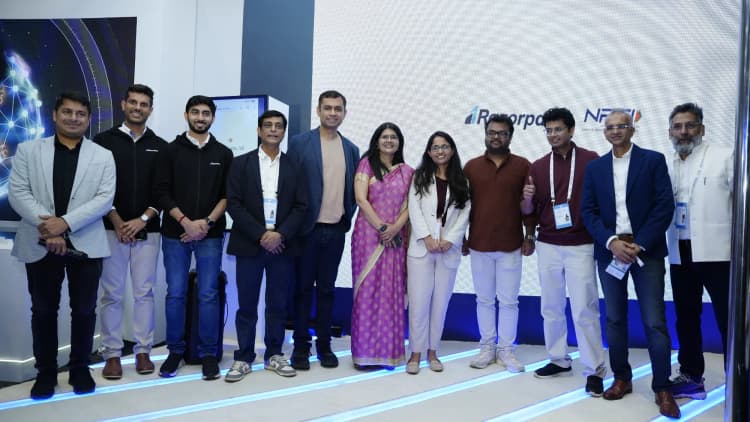
Razorpay, NPCI Enable In-Chat UPI Payments on Claude for Zomato, Swiggy, Zepto
The integration enables Claude to complete transactions on a user’s behalf using UPI infrastructure, including UPI Reserve Pay.
View

US-Based Robotics Startup Skild AI Opens Office in Bengaluru
Skild AI described Bengaluru as one of the strongest ecosystems for AI research, infrastructure, and software engineering.
View
Google Releases Gemini 3.1 Pro With Ability to Execute Complex Tasks; Pomelli Gets New Photoshoot Feature
Google released its most capable Gemini 3 series AI models, dubbed Gemini 3 Pro and Gemini 3 Deep Think, last year. During the release, the Mountain View-based tech giant highlighted that its new AI models outperformed OpenAI's GPT-5.1 on multiple benchmarking platforms. Now, the US-based online search giant has released another AI model as part of the Gemini 3 series. Called Gemini 3.1 Pro, the new AI model builds on the capabilities and functionalities of the Gemini 3 Pro. The company says that Gemini 3.1 Pro is designed to execute more complex tasks. Separately, Google Labs, the company's testing bed for AI experiments, has introduced a new feature for Pomelli, its AI-powered marketing assistant.
View
Enviar tu herramienta


PoweredByAI.app es un directorio de herramientas de IA que ayuda a personas, empresas y creadores a descubrir las mejores herramientas de IA para escritura, programación, diseño, productividad y más.
© 2026 , Producto de011BQ. Todos los derechos reservados.