🚀 Zaprep: Tus redes sociales al máximo. Empezar gratis — automatiza 1,000 DMs/mes y convierte el engagement en leads. con 1,000 DMs automatizados/mes.
Enviar tu herramienta
Últimas Noticias de IA

Google VP warns that two types of AI startups may not survive
Loading the player… The generative AI boom minted a startup a minute. But as the dust starts to settle, two once-hot business models are looking more like cautionary tales: LLM wrappers and AI aggregators. Darren Mowry, who leads Google’s global startup organization across Cloud, DeepMind, and Alphabet, says startups with these hooks have their “check engine light” on. LLM wrappers are essentially startups that wrap existing large language models, like Claude, GPT, or Gemini, with a product or UX layer to solve a specific problem. An example would be a startup thatuses AI to helps students study. “If you’re really just counting on the back end model to do all the work and you’re almost white-labeling that model, the industry doesn’t have a lot of patience for that anymore,” Mowry said on thisweek’s episode of Equity. Wrapping “very thin intellectual property wrapped around Gemini or GPT-5” signals you’re not differentiating yourself, Mowry says. “You’ve got to have deep, wide moats that are either horizontally differentiated or something really specific to a vertical market” for a startup to “progress and grow,” he said. Examples of the deep moat LLM wrapper type include Cursor, a GPT-powered coding assistant, or Harvey AI, a legal AI assistant. In other words, startups can no longer expect to slap a UI on top of a GPT and get traction on their product, like they could, perhaps, in mid-2024 when OpenAIlaunched its ChatGPT store. The challenge now is to build sustainable product value. AI aggregators are a subset of wrappers — they’re startups that aggregate multiple LLMs into one interface or API layer to route queries across models and give users access to multiple models. These companies typically provide an orchestration layer that includes monitoring, governance, or eval tooling. Think: AI search startup Perplexity or developer platform OpenRouter, which provides access to multiple AI models via a single API. While many of these platforms have gained ground, Mowry’s words are clear to incoming startups: “Stay out of the aggregator business.” Generally speaking, aggregators aren’t seeing much growth or progression these days because, he says, users want “some intellectual property built in” to ensure they’re routed to the right model at the right time based on their needs — not because of behind-the-scenes compute or access constraints. Mowry has been in the cloud game for decades, cutting his teeth at AWS and Microsoft before setting up shop at Google Cloud, and he’s seen how this plays out. He said the situation today mirrors the early days of cloud computing in the late 2000s/early 2010s as Amazon’s cloud business started taking off. At that time, a crop of startups sprang up to resell AWS infrastructure, marketing themselves as easier entry points that provided tooling, billing consolidation, and support. But when Amazon built its own enterprise tools and customers learned to manage cloud services directly, most of those startups were squeezed out. The only survivors were the ones who added real services, like security, migration, or DevOps consulting. AI aggregators today face similar margin pressure as model providers expand into enterprise features themselves, potentially sidelining middlemen. For his part, Mowry is bullish on vibe coding and developer platforms, which had a record-breaking year in 2025 with startups like Replit, Lovable, and Cursor (all Google Cloud customers, per Mowry) attracting major investment and customer traction. Mowry also expects strong growth in direct-to-consumer tech, in companies that put some of these powerful AI tools into the hands of customers. He pointed to the opportunity for film and TV students to use Google’s AI video generator Veo to bring stories to life. Beyond AI, Mowry also thinks biotech and climate tech are having a moment — both in terms of venture investment going into the two industries and the “incredible amounts of data” startups can access to create real value “in ways we would never have been able to before.”
View

Microsoft’s new gaming CEO vows not to flood the ecosystem with ‘endless AI slop’
Microsoft announced a major gaming shakeup on Friday, with Microsoft Gaming CEO Phil Spencer departing the company, along with Xbox President Sarah Bond. Spencer will be replaced by former Instacart and Meta executive Asha Sharma. With Sharma’s most recent role as the president of Microsoft’s CoreAI product, these moves suggest that Microsoft might be doubling down on bringing AI into video games. The company had already been experimenting with ways to combine AI and gaming, for exampledeveloping an AI gaming companionandreleasing a buggy, AI-generated level from “Quake II.” Indeed, in an internal memopublished by The Verge, Sharma wrote that Microsoft “will invent new business models and new ways to play” and said that “monetization and AI” will both “evolve and influence this future.” At the same time, she said that the company “will not chase short-term efficiency or flood our ecosystem with soulless AI slop.” “Games are and always will be art, crafted by humans, and created with the most innovative technology provided by us,” Sharma added. That’s just one of three “commitments” Sharma made in her memo. The others involve building “great games beloved by players” and prioritizing Xbox.
View

NeuroDx Unveils MANAS-1, India’s Native AI Brain Model at India AI Summit
In parallel, the company is working on a larger 20 billion parameter foundation model focused on EEG signal analysis.
View
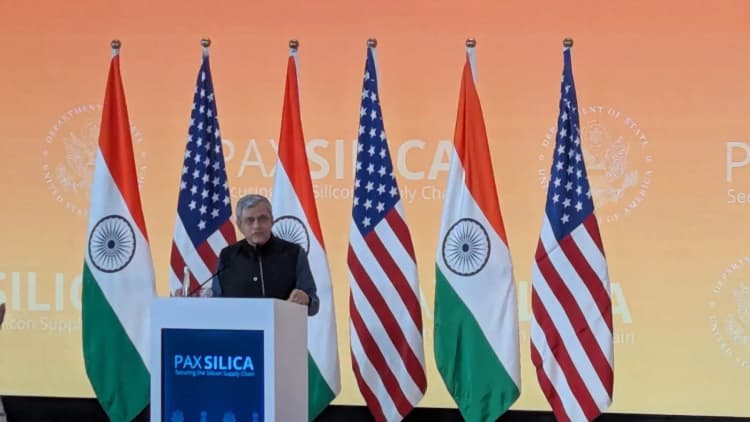
Queues, Quadrupeds & Quoted Pledges: IndiaAI Ends with Big Money and Bigger Intent
After five frenetic days of ambition and uproar, the IndiaAI Impact Summit closed amid spectacle, scrutiny and sovereign dreams.
View
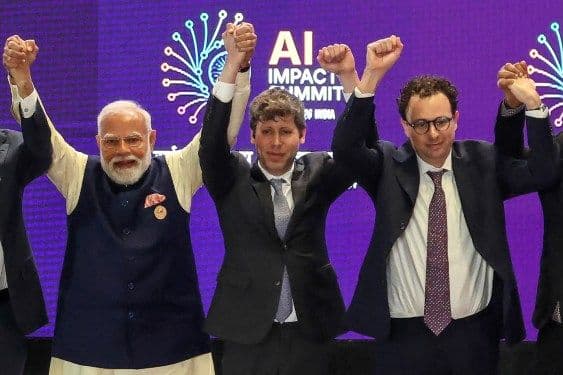
The creator economy’s ad revenue problem and India’s AI ambitions
Loading the player… The creator economy is evolving fast, and ad revenue alone isn’t cutting it anymore.YouTubers are launching product lines, acquiring startups, and building actual business empires. In fact, MrBeast’s companybought fintech startup Step, and his chocolate business is outearning his media arm. This isn’t just one creator’s strategy. For many, it’s the new playbook. On this episode of TechCrunch’sEquitypodcast, hosts Kirsten Korosec, Anthony Ha, and Rebecca Bellan unpack how creators are diversifying beyond ads, whether their model can scale beyond the top 1%, everything happing atIndia’s AI Impact Summit, and more of the week’s headlines.
View

India’s Sarvam launches Indus AI chat app as competition heats up
Sarvam, an Indian AI startup focused on building models for local languages and users, on Friday launched its Indus chat app for web and mobile users, entering a fast-growing market dominated by global players including OpenAI, Anthropic, and Google. The launch comes as India has become a key battleground for generative AI adoption. Recently, OpenAI CEO Sam Altman saidChatGPT has more than 100 million weekly active usersin India, while Anthropic saidIndia accounts for 5.8% of total Claude usage, second only to the U.S. Indus serves as a chat interface for its newly announced Sarvam 105B model, the company’s 105-billion-parameter large language model. The app’s launch comes two days after Bengaluru-based Sarvamunveiledits 105B and 30B models at theIndia AI Impact Summitin New Delhi earlier this week. At the summit, the startup also outlined enterprise initiatives and hardware plans and announced partnerships with companiesincluding HMD to bring AI to Nokia feature phonesand Bosch for AI-enabled automotive applications. Currently available in beta oniOS,Android, and theweb, the Indus app allows users to type or speak queries and receive responses in text and audio. Users can sign in using their phone number, Google account, or Apple ID, though the service appears to be limited to India for now. The app currently comes with some limitations. Users cannot delete their chat history without deleting their account, and there is no option to turn off the app’s reasoning feature, which can sometimes slow response times. Sarvam has also warned that access may be restricted as it gradually expands its compute capacity. “We’re gradually rolling out Indus on a limited compute capacity, so you may hit a waitlist at first. We will expand access over time,” Sarvam co-founder Pratyush Kumarwroteon X, adding that the company is seeking feedback from users. Founded in 2023, Sarvam hasraised $41 millionto date from investors, including Lightspeed Venture Partners, Peak XV Partners, and Khosla Ventures as it builds large language models tailored for India. Sarvam is one of a small but growing group of Indian startups attempting to build domestic alternatives to global artificial intelligence platforms as India seeks greater control over its AI infrastructure.
View
InScope nabs $14.5M to solve the pain of financial reporting
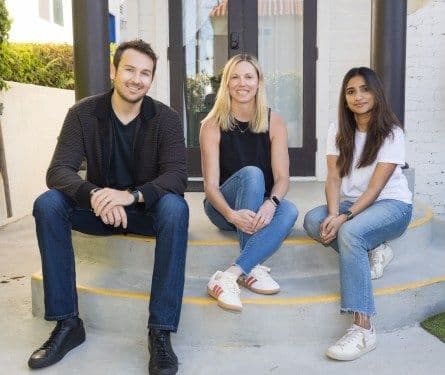
Even without a background in accounting, anyone who has ever glanced at a 10-K or 10-Q can tell that preparing financial statements is a complex, tedious process. While legacy platforms like Workiva and Donnelley Financial Solutions aim to streamline financial reporting, longtime accountants Mary Antony (pictured right) and Kelsey Gootnick (pictured center) found themselves exhausted by various manual hurdles within these tools (co-founder and CTO Jared Tibshraeny is pictured left). The duo met seven years ago at Flexport, where Gootnick served as the company’s controller and Antony served as assistant controller. They stayed in touch even after Antony moved to Miro and Gootnick to Hopin and later Thrive Global. No matter where they worked, Antony and Gootnick kept running into the same manual challenges. “The way financial statements come together, it’s just patched together in a lot of spreadsheets, moved into a bunch of Word documents, emailed back and forth between people,” Antony told TechCrunch. So, in 2023, the pair decided to launchInScope, an AI-powered financial reporting platform that helps companies and accounting firms automate many aspects of the financial statement preparation process. The startup just raised $14.5 million in Series A funding led by Norwest, with participation from Storm Ventures and existing backers Better Tomorrow Ventures and Lightspeed Venture Partners. While InScope isn’t fully automating the generation of income statements and balance sheets yet, it automates a vast amount of the manual busy work, from verifying math to formatting. Simply ensuring that dollar signs and commas are uniform and correctly placed can save accountants up to 20% of their time, according to Antony, InScope’s CEO. Over the last 12 months, InScope has grown its customer base by 5x, attracting significant accounting firms such as CohnReznick, currently ranked in thetop 15 nationally. Of course, it may be a while before accountants — a profession Antony describes as risk-averse — feel comfortable letting AI fully automate financial statement preparation. Nonetheless, that remains InScope’s ultimate goal. Norwest partner Sean Jacobsohn told TechCrunch that he invested in InScope after he heard from multiple clients that the startup’s product saves them a lot of time. Jacobsohn is convinced that InScope stands out because few founders possess the specific expertise required to reinvent financial reporting technology. “It’s a very complex space, and you need to be able to have been in the shoes of the buyer before,” he said. Antony agrees that accountants are not typically the type to launch startups. Fortunately, she and Gootnick developed their entrepreneurial instincts through years of operating within the fast-paced cultures of other high-growth startups.
View
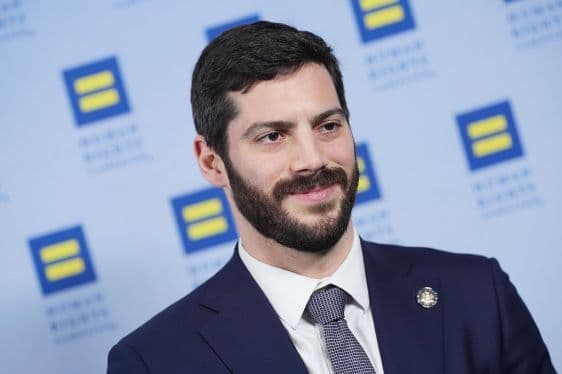
Anthropic-funded group backs candidate attacked by rival AI super PAC
Late last year, New York Assembly member Alex Bores became the target of a campaign by a pro-AI super PAC to thwart his congressional bid. The group,Leading the Future, is armed with more than $100 million from backers including Andreessen Horowitz, OpenAI President Greg Brockman, AI search startup Perplexity, and Palantir co-founder Joe Lonsdale. Bores’ response was simple:bring it on.Now, he’s got the muscle to back that challenge up. Public First Action, a PAC backed by a$20 million donation from Anthropic, is spending $450,000 to boost Bores in the race for New York’s 12th congressional district, reportsBloomberg. Like its rival, the committee is pro-AI, but it’s pitching a different vision, one centered on transparency, safety standards, and public oversight. Meanwhile, the industry-backed PAC,Leading the Future, has already poured $1.1 million into ads attacking Bores, largely because he sponsoredNew York’s RAISE Act,which requires major AI developers to disclose safety protocols and report serious misuse of their systems.
View

Why creators are ditching ad revenue for chocolate bars and fintech acquisitions
The creator economy is evolving fast, and ad revenue alone isn’t cutting it anymore.YouTubers are launching product lines, acquiring startups, and building actual business empires. In fact, MrBeast’s companybought fintech startup Step, and his chocolate business is outearning his media arm. This isn’t just one creator’s strategy. For many, it’s the new playbook. On this episode of TechCrunch’sEquitypodcast, hosts Kirsten Korosec, Anthony Ha, and Rebecca Bellan unpack how creators are diversifying beyond ads, what happens when influence becomes infrastructure, and whether this model can scale beyond the top 1%. Listen to the full episode to hear about: Subscribe to Equity onYouTube,Apple Podcasts,Overcast,Spotifyand all the casts. You also can follow Equity onXandThreads, at @EquityPod.
View
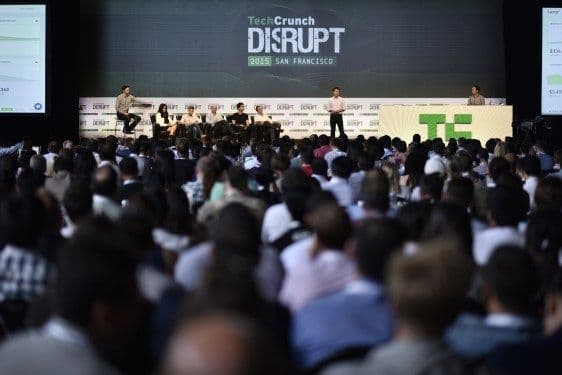
TechCrunch Disrupt 2026 Super Early Bird rates end in 1 week
Super Early Bird pricing forTechCrunch Disrupt 2026ends February 27 at 11:59 p.m. PT. This is your final window to lock in the lowest ticket prices of the year. If Disrupt has been on your must-attend list, now is the time to act. Save up to $680 on your pass or secure up to 30% off with community passes.Register now before prices increase. From October 13–15, San Francisco’s Moscone West will become the global epicenter of tech. Disrupt is a curated, three-day experience built to maximize signal over noise — bringing together 10,000 founders, investors, operators, and tech leaders for 200+ expert-led sessions featuring 250+ influential voices. Across the ecosystem, past attendees consistently point to the same value: AtDisrupt, you’ll explore what’s next as300+ exhibiting startupsdebut new breakthroughs, feel the high-stakes energy of the intense startup pitch-off inStartup Battlefield 200, and engage incurated, high-impact networkingwith the people shaping the future of tech. The 2026 agenda drops soon. Visit theevent pagefor updates. Disrupt isn’t about wandering between sessions. It’s about intentional connections and curated experiences designed for how people actually grow in tech. Founders meet investors actively backing breakthrough ideas. VCs cut through the noise to discover startups aligned with their investment focus. Operators exchange real-world lessons on building, scaling, and shipping what’s next. Aspiring innovators get inspired with a front-row seat to tomorrow’s tech and invaluable insights from those shaping it. If you’re building, investing, or scaling in tech, Disrupt was built for you. Find your ticket match now and secure the lowest rate before it’s gone. Founders and investors can unlock specialized passes designed to support your goals: Founder Pass:Accelerate growth with the right insights, tools, and connections. Investor Pass:Discover standout startups and expand your portfolio through curated access. This deal ends in just one week. Lock yours in before Friday, February 27, at 11:59 p.m. PT.Register hereto saveup to $680on your TechCrunch Disrupt 2026 pass or save up to 30% with group passes.
View
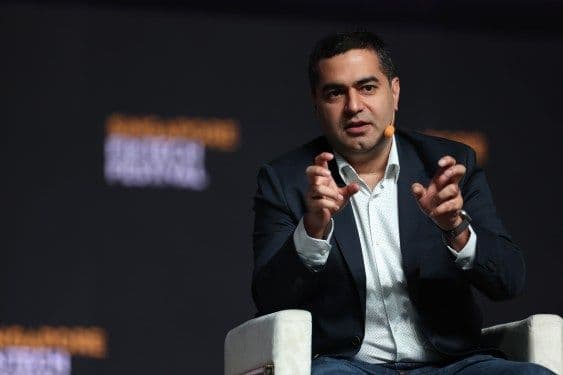
Peak XV raises $1.3B, doubles down on AI as global VC rivalry in India heats up
Peak XVannounced on Friday that it has raised $1.3 billion across new India and Asia-focused funds. The firm, which now manages more than $10 billion in assets, is sharpening its focus on artificial intelligence and cross-border bets amid intensifying competition for deals in the region. The capital will be deployed across its India seed and venture funds as well as its APAC vehicle. A majority is earmarked for India, with the firm expecting to invest the pool over the next two to three years, managing director Shailendra Singh said in an interview on Friday. Peak XVsplit from Sequoia Capital in 2023, in an effort to separate the India-focused portions of Sequoia’s portfolio. The firm now counts more than 450 portfolio companies across fintech, software, and consumer internet, spanning seed to growth stages. The firm’s new fundraise comes as New Delhi hosts theAI Impact Summit, drawing major technology players including OpenAI, Anthropic, and Google. At the event,General Catalyst outlined plans to invest $5 billionin the country over the next five years, sharply increasing its earlier commitment to the market. Singh said Peak XV is not trying to match rivals dollar-for-dollar, emphasizing that the firm’s priority is generating strong returns rather than maximizing assets under management. The firm will continue to size its funds based on where it sees the best opportunity to deliver “high-performing funds,” he said. He added that Peak XV is still building its presence in the U.S. and is selective about where it competes. “In the U.S. market, we are an underdog — and that’s great,” Singh said, adding that the firm is focusing on areas where its experience in software, developer tools, and fintech gives it an edge. The latest fundraise follows a period of leadership changes at Peak XV, including therecent departuresof senior partner Ashish Agrawal and investors Ishaan Mittal and Tejeshwi Sharma. Singh told TechCrunch the firm retains significant experience on its leadership team, noting that five of its seven managing partners have been with Peak XV for more than a decade. The broader Peak XV team includes more than 30 full-time investors, with about a dozen leading investments across its markets. Peak XV has returned more than $7 billion in cash to investors since inception, Singh said, adding that 35 of its portfolio companies have gone public. He declined to specify distributions since the firm’s split from Sequoia Capital. In September 2024, TechCrunch reported that the firm hadreturned about $1.2 billionin the year. Ahead of the current raise, Peak XV’s prior fund wassized at $2.85 billionin late 2021, before the firm split from Sequoia Capital. That figure was later reduced to about $2.4 billion as part of what Singh described as a disciplined approach to capital. The earlier pool included Peak XV’s India growth strategy, and Singh said the firm does not plan to raise a new growth fund until more of that dry powder is deployed. Singh expects to deploy the new capital primarily into AI, fintech, and consumer startups, while also seeing emerging opportunities in deep tech. The firm has made more than 80 investments in AI startups to date. He added that the U.S.-India ties are becoming increasingly important as more founders in the region build for global markets.
View

AI’s promise to indie filmmakers: Faster, cheaper, lonelier
A Filipino man walks through the backyard of his childhood home in rural Hawai’i, his footsteps swooshing through the grass. Birds chirp, contributing to the tropical din, as he approaches a shrine at the base of a starfruit tree. He bends to inspect a framed black-and-white photograph of a woman, her hair in a 1950s side part. Suddenly, a gust of wind shakes the tree’s branches, knocking over the contents of the shrine. The man steps back, trips on a root, and hits his head. When he awakens, he’s in a dark, misty forest, a woman wearing a clay mask standing over him, brandishing a sword. “Who are you who dares to sleep under the sacred tree?” she asks in Ilocano, a Philippine language widely spoken in Hawaii’s Filipino community, while holding the sword at his throat. He replies that he’s lost and turns to flee. She chases, alternating between running and floating through the air. He falls again. She advances, sword held high. He throws a rock at her, shattering the clay mask and revealing half her face. “Mom?” he asks. This is the opening of “Murmuray,” a short film by independent filmmaker Brad Tangonan. Everything about this film felt like his previous work, from the tactile nature shots to the dreamlike desaturated highlights. The only difference? He made it using AI. Tangonan was one of 10 filmmakers to participate in Google Flow Sessions, a five-week cohort that gave creatives access to Google’s suite of AI tools to produce short films, including Gemini, image generator Nano Banana Pro, and film generator Veo. Each film differed in scope. Hal Watmough’s “You’ve Been Here Before” blended hyperreal, lifelike visuals with cartoonish stylization to playfully explore the importance of a morning routine, while Tabitha Swanson’s“The Antidote to Fear is Curiosity”is a more esoteric, philosophical conversation about our relationship with AI and ourselves. None of these short films, which were screened at Soho House New York late last year, felt like AI slop. Each independent filmmaker I spoke to said that, in the case of these films, AI had enabled them to tell a story they otherwise wouldn’t have had the budget or time to tell. “I see all of these tools, whether it be a camera you can pick up or generative AI, as ways for an artist to express what they have in their mind,” Tangonan told me after the screenings. This AI-is-just-another-tool-for-creators argument is certainly the message Google is trying to underscore. Google isn’t wrong; AI will increasingly be part of a creator’s toolkit as video generation products improve. In 2025, companies like Google, Runway, OpenAI, Kling, Luma AI, and Higgsfield progressed far beyond the uncanny, prompt-based novelties of the year prior. The AI video industry, with billions in venture capital dollars in tow, is now moving from prototype to post-production. This era of AI abundance that has provided tools to “democratize access” to the film industry also threatens to erase jobs and creativity, smothering them under an avalanche of low-effort slop. The existential stakes have pitted creatives against one another. Those who engage with AI risk being labeled as complicit; those who don’t risk becoming obsolete. The question isn’t whether the tools belong in the toolkit — they’re coming, whether we like it or not. Instead it is: What kind of filmmaking survives when the industry pushes for speed and scale over quality? And what happens when individual artists use the same tools to make something that actually matters? The arguments against AI in filmmaking are plentiful — and from some of the highest-profile names in the industry. Filmmaker Guillermo del Torosaid last Octoberthat he would rather die than use generative AI to make a film. James Cameron said in a recentCBS interviewthe idea of generating actors and emotions with prompts is “horrifying,” and that generative AI is only capable of spitting out a blended average of everything that’s ever been done by humans before. Werner Herzog said the films he’s seen created by AI “have no soul.” He added: “The common denominator, and nothing beyond this common denominator, can be found in these fabrications.” Cameron and Herzog’s thesis is that AI is taking the wheel of creation out of the hands of humans and couldn’t possibly be used to create a representation of their own lived experiences. “It’s very easy to be angry with AI as a concept in the machine, but it’s harder to be angry with someone that’s made something personal,” Watmough told TechCrunch. Tangonan, who describes “Murmuray” as a “family story,” agrees with that sentiment. “AI is a facilitator,” Tangonan said. “I’m still making all the creative decisions. When people see ‘AI slop’ online, it’s a lot of lowest common denominator stuff. And, yeah, if you hand over the keys to AI, that’s what you’re going to get. But if you have a voice and a creative perspective and a style, then you’re going to get something different.” Using AI in filmmaking doesn’t mean just prompting a film into existence. Tangonan, for example, wrote the script for “Murmuray” without AI and gathered visual references for a shot list. He then fed that content into Nano Banana Pro to generate images that matched his style and served as the foundation for video generation. Filmmaker Keenan MacWilliam also took pains to ensure her short film “Mimesis,” a fictional guided meditation, was a “true extension of [her] visual language, rather than a ‘blender’ of other artists’ work.” MacWilliam wrote the script and recorded her own voice for the mock meditation, which was equal parts relaxing and funny. Onscreen, over a black, watery backdrop, psychedelic images of flowers and plants blended into each other, turned into smoke, morphed into seahorses, and swam away. The images all came from MacWilliam’s own collection of scanned flora and fauna — she travels with her scanner everywhere she goes. “I spent a lot of time learning how to make apps that were built with my own dataset, and then used those as reference points,” MacWilliam told TechCrunch, adding that she worked with her long-time composer and sound designer on the film. “I made a choice to avoid using AI for anything that I could have shot with a camera or ask my collaborators to animate. My goal was to unlock new forms of expression for my established themes and style, not to replace the roles of the people who I like to work with.” That was a common thread among the filmmakers I spoke to at the Google Flow event — the desire to use AI only in cases when it was not possible to rely on other humans, or when the strange nature of AI generations serve the story. For example, Sander van Bellegem’s “Melongray” explored the acceleration of life through trippy visualizations. In one shot, a salamander transforms into a balloon. It wasn’t part of his original storyline, but he was inspired by the way AI allowed him to push the limits of both his imagination and physics. Today’s film studiobudgets are being squeezedby rising filming costs, thepivot to streaming, and risk-averse corporate consolidation. That means big spends are saved for predictable revenue generators (see: the millionth Marvel movie) and originalmid-budget movieshave all but been abandoned. Adding AI to the mix risks exacerbating the scarcity mindset of studios to the point where they might try to replace anything that can be — actors, sets, lighting — art and quality be damned. However, the efficiencies AI brings could also lower barriers and make it easier for film studios to produce original work. Even Cameron noted in his CBS interview that generative AI could make VFX cheaper, which could lead to more imaginative sci-fi and fantasy films — expensive endeavors that are reserved for existing IP like “Avatar.” The shot in “Murmuray” where the woman is flying through the forest would have taken expensive VFX or very complex rigging on set, both out of budget for a short film, according to Tangonan. But even filmmakers who see the benefits in efficiency understand the risks to artistic expression. “I think efficiency in general is not the best friend of creativity,” MacWilliam said. For independent filmmakers, having so many powerful tools at their disposal is a blessing and a curse. It “democratizes access,” sure, but it also means working alone. The more youcando yourself, the less reason there is to collaborate. “I know I’m a one-man band, and I just made all this by myself…but that should never be the way that anyone tells a story or makes a film,” Watmough told TechCrunch, noting that an actor friend of his contributed the voice for his short. “It should be a collaborative process because the more people that are involved, the more accessible it is by everyone and the more it reaches and connects with people.” Directors make creative decisions, but not all of them. The filmmakers I spoke to found themselves suddenly playing set designer, lighting director, costumer — roles requiring expertise they didn’t have. It was frustrating and draining, pulling them away from the work they actually cared about. And upsetting to think about how an entire ecosystem could be upended so swiftly. The filmmakers I spoke to also said they’d rather not replace actors with AI, though some said AI-generated actors are an inevitability for smaller studios. The tools exist, and are increasingly getting better, to generate actors, their emotions, their movements. AI video startups like Luma AI, which last November raiseda $900 million Series C, are even building technology that allows you to shoot an actor’s performance once, and then use AI to change the character, costume, and set. “In an ideal world, I would work with real actors and some cinematographer and department heads and the full crew to make something amazing and use AI and complement that to be able to do things that we can’t do on set, whether for budgetary or time reasons,” Tangonan. “I think making any creative work that uses new technology always requires a certain kind of gut check and a willingness to have conversations around the work,” MacWilliam said. “These are tools,” she added. “How are you going to use the tool? Are you going to be ethical about it? Are you going to ask questions? Are you going to be transparent and share knowledge?” But many don’t see AI tools as neutral. Labor replacement aside, there are still copyright concerns. AI video generation startupRunwayhas reportedly scraped thousands of hours of YouTube videos and copyrighted studio content, while others — including Google, OpenAI, and Luma AI — have faced questions about whether they are doing the same, or training on copyrighted films and stock footage without permission. (Though some tools, likeMoonvalley’s Marey, are trained only on openly licensed data.) Then there are the environmental horrors —some estimates suggestgenerating seconds of AI video can consume as much electricity as hours of streaming. Unsurprisingly, many of the filmmakers I spoke to said they face stigma for experimenting with AI. “Whenever I do post things online, a lot of my filmmaking colleagues have a very knee-jerk reaction to it that we should all hold the line and not use any of these tools,” Tangonan said. “I just don’t agree with that.” If filmmakers are too afraid to discuss how AI can and should be used and what the ethical boundaries are, then the conversation risks being decided for them. Not by artists trying to use it responsibly, but by efficiency-crazed studios that care more about bottom lines than art. “The film industry is floundering because people aren’t innovating and everything costs too much. We need tools like this for it to survive,” said Watmough. “I think it’s essential that people engage with it because if we don’t, then it’s going to become something we don’t recognize, and that’s not sustainable.” Correction: An earlier version of this article mischaracterized Ilocano as a Hawaiian dialect of Filipino. Ilocano is a language from the northern Philippines and is widely spoken among Filipino communities in Hawaii.
View
Enviar tu herramienta


PoweredByAI.app es un directorio de herramientas de IA que ayuda a personas, empresas y creadores a descubrir las mejores herramientas de IA para escritura, programación, diseño, productividad y más.
© 2026 , Producto de011BQ. Todos los derechos reservados.