🚀 Zaprep: Tus redes sociales al máximo. Empezar gratis — automatiza 1,000 DMs/mes y convierte el engagement en leads. con 1,000 DMs automatizados/mes.
Enviar tu herramienta
Últimas Noticias de IA

Salesforce CEO Marc Benioff: This isn’t our first SaaSpocalypse
Salesforce pulled out all the stops to convince investors that the AI revolution won’t be its death when it announced fourth-quarter earnings on Wednesday. Salesforce reported a solid quarter of $10.7 billion in revenue, up 13% year-over-year. For the year, it reported $41.5 billion in revenue, up 10% over the previous year, with both results boosted by its $8 billion acquisition ofdata management companyInformaticalast May. Net income landed at $7.46 billion, and the company offered strong guidance for the year ahead, projecting revenue of $45.8 billion to $46.2 billion — a 10% to 11% increase. It also said its “remaining performance obligation,” or RPO, is over $72 billion. That’s a figure that shows revenue under contact that has not yet been delivered or recognized as earned revenue. The numbers, though, could only do so much. Software-as-a-service stocks, withSalesforce as their poster child, have been getting hammered lately. Investors fear the rise of AI agents will undermine these companies, making their per-employee-seatbusiness models obsolete. The situation has been dubbed the “SaaSpocalypse.” The concept hung so heavily in the air during the earnings call that CEO Marc Benioff mentioned the term at least six times. “You’ve heard about the SaaSpocalypse? And it isn’t our first. We’ve had a few of them,” he said, later adding, “If there is a SaaSpocalypse, it may be eaten by the Sasquatch because there are a lot of companies using a lot of SaaS because it just got better with agents.” In an attempt to convince the world of its continued health, Salesforce threw everything and the kitchen sink into this earnings report. The company increased its dividend by nearly 6% to $0.44 per share. It launched a new $50 billion share buyback program. That’s always a favorite with shareholders because it both creates a sturdy buyer of shares and reduces the number of shares in circulation (which can boost the stock price). The company also revamped the earnings call itself. It was part podcast, part infomercial, and part normal Q&A with a few questions from Wall Street analysts. Instead of running through the numbers, Benioff interviewed three Salesforce customers on camera to testify to their love of its new agentic options: the CEO of home appliance company SharkNinja; the CEO of Wyndham Hotels and Resorts; and, just to hammer the point, the CEO of SaaStr, the software industry conference and media company. We’ll truncate the interviews to the shortest summary: They all love Salesforce’s AI agent products. Salesforce also introduced a new metric for its agentic products: agentic work units (“AWU”). The idea here is that rather than simply counting “tokens” — the standard unit of AI processing volume — AWU attempts to measure something more meaningful: whether an agent actually completed a task, like writing to a record, rather than just generating text. (Salesforce logged 19 trillion tokens last quarter, which sounds like a lot but reallyis notin the AI world.) “You can ask it a question and it can write you a poem, but that’s not really all that valuable in the enterprise world,” Salesforce president and CMO Patrick Stokes said on the call. So AWU is intended to measure when the agent writes to a record or does some other verifiable task. On top of that, Salesforce also presented its own architectural vision of the coming world of agents. It shows SaaS software like itselfowning most of the tech stack, with the AI model makers on the bottom as unseen, interchangeable, and commoditized work engines. This was a direct counter to one of the causes of a SaaSpocalypse sell-off earlier this month, afterOpenAI released its enterprise agent, Frontier. OpenAI’s architectural vision shows OpenAI owning most of the stack, with systems-of-record SaaS providers (the databases and business-software platforms where companies store their core data)on the bottom as the unseen engines. And if all that wasn’t enough to influence investors: Benioff was dressed in a black leather jacket, echoing the signature look of the CEO clearly crushing it in the AI world: Nvidia’s Jensen Huang.
View

The public opposition to AI infrastructure is heating up
Across the country, discontenthas explodedover the ever-growing glut of server farms that have accompanied the AI boom. Anger has grown so loud that it’s begun to shift legislative agendas. Some states and communities are mulling temporary bans on new data center development altogether. Earlier this month, New York joined the club, with a bold new proposal to halt the local cloud build-out in its tracks. A new billin New York State would impose a three-year moratorium on the issuance of new permits for data center construction throughout the state, while local regulators are given a chance to study the environmental and economic impacts the industry is having on communities. The bill’s co-authors, state senator Liz Krueger and Assemblymember Anna Kelles, have called the legislation the “strongest” introduced in the country. While no statewide moratoriums have passed so far, local bans are proliferating fast. Several weeks before Krueger and Kelles introduced their bill, the New Orleans City Councilpassed a moratorium, pausing all new data center construction in the city for one year. In early January, Madison, Wisconsin,passed a similar lawafter protests erupted over regional tech projects. Similar policies have also passed in droves of communities throughout construction hot spots likeGeorgiaandMichigan, as well as in many other regions throughout the country. Environmental activistshave long taken aim at data centers, but the more recent concerns have come from high-level lawmakers, drawing on populist anger at the tech industry broadly. In conservative Florida, for instance, Gov. Ron DeSantis recently announced anAI “bill of rights”that gives local communities the right to limit new data center construction. In liberal Vermont, U.S. Senator Bernie Sanders hassuggested a nationwide moratorium. And in Arizona, where the political milieu isdecidedly mixed, Gov. Katie Hobbs recently said she supportedpulling the industry’s tax incentives. Politicians have even begun to fight over the topics, with the governor of Mississippitaking shotsat Sanders online over his moratorium proposal. The political resistance is coming just as tech companies commit more and more money to building out infrastructure. The four biggest spenders — Amazon, Google, Meta, and Microsoft — plan to spenda whopping $650 billionin capital expenditures over the next year, the vast majority of it going to data center build-outs. Even more spending isplanned in the following years, as the companies race to secure as much compute capacity as possible. But the speed and scale of those projects has made them increasingly unpopular, according to recent polling.A recent Echelon Insights pollfound 46% of respondents would oppose plans to build a data center in their community, compared with 35% in support.A different pollfrom Politico found that, while there is considerable concern about the facilities, many voters don’t have much of an opinion either way — making it possible for public sentiment to be swayed in either direction. The industry is already spending big to attempt to change those numbers — at least in the regions where it matters. In January, the Financial Timesreported thatsome of the industry’s biggest data center operators were planning a “lobbying blitz,” with plans to “boost spending on targeted advertising and engagement” aimed at the communities where they build. Tech companies are also making real concessions, likethe planned Rate Payer Protection Pledgethat would make them responsible for supplying power to any new AI data centers. But it’s not clear those measures will be enough to bring the public around. Dan Diorio, of the Data Center Coalition, argued, in a conversation with TechCrunch, that data centers should appeal to smaller communities because they provide revenue without straining those communities’ limited resources. If the incentives are cut off and companies decide not to build in those places, the revenue also won’t be there. “That’s where statewide policy considerations come in,” he said. “Are you going to limit communities in which these businesses could be a significant benefit for them?” In general, data center moratoriums are meant to give communities breathing room while policymakers study the potential costs and benefits of allowing such facilities to be built in their communities. Therate of constructionin some states has accelerated at such a pace that communities are unsure of how the industry will impact them in the long run. Justin Flagg, director of communications and environmental policy for Sen. Krueger’s office, told TechCrunch that the legislation was driven, in part, by what he called the energy affordability crisis in New York. Said crisis has troubled both rate payers and politicians. A group of 30 state lawmakers recentlycalled uponthe state’s governor, Kathy Hochul, to declare an “energy state of emergency” in New York due to rate increases. While there area diversity of factorsat work in driving up energy prices, there’s aconsensusthat the growth in data centers is making the problem worse, not better. “There’s broad discontent being expressed about energy prices,” Flagg said. “We certainly hear that constantly from our constituents, whose electric and gas rates are going up.” He added that local pushback was also being driven by environmental concerns — which he described as the “water impact and the noise and the local infrastructure impact as well.” In response to those grid concerns, major tech companies — includingMicrosoft, Google, Meta, andOpenAI— have promised topay for their additions to the electrical gridin the communities where they operate, often installing behind-the-meter power sources paired with the new data centers. The Washington Postrecently reportedthat Silicon Valley is increasingly looking to build its own private electrical supply — a kind of “shadow grid” — that can be used to operate the power-consumptive properties that are now fueling the AI industry. The strategy involves standing up massive new private power sources instead of relying on the public grid. One example of this practice comes from xAI, Elon Musk’s AI startup, which — at the site of its massive data center in Memphis, Tennessee,known as “Colossus”— built a series of methane gas turbines that have been accused of polluting the local community. The company’s efforts have already run into significant trouble. xAI hadreportedlytold local officials that, due to a legal loophole, the turbines were exempt from air-quality permits. In January, the Environmental Protection Agencyruled thatMusk’s company was not exempt from the permits, making their previous operation illegal. Environmental activists, decrying the facility’s discharge of “smog-forming pollution, soot, and hazardous chemicals,”announcedearlier this month that they planned to sue the company over it. Musk’s facility has since permitted its turbines. As the xAI example illustrates, if the “shadow grid” strategy purports to solve one problem (public grid overload), it threatens to create a host of new ones — with environmental activists and local communities alikeexpressing concernfor how the new facilities could spew pollution into people’s backyards. At the federal level, the Trump administration — which has made AI one of its top priorities — has also sought to characterize the industry as responsible stewards of the communities in which they build. Indeed, Trump officials havefloated a hypothetical policyto force AI companies to internalize the costs of their additions to local electrical grids, although the details on this policy remain vague. For years, communities have incentivized data center development through tax breaks. Last summer,an analysis by CNBCfound that 42 states throughout the U.S. either have no sales tax or provide full or partial sales tax exemptions to tech firms. Of that number, some 16 states publicly reported how much they had awarded to companies through tax breaks. The forfeited revenue amounted to some $6 billion over a period of five years, the outlet wrote. Now, however, more and more states are thinking about turning off the spigot. In Georgia, for instance,a variety of bills were recently introducedthat would crack down on the industry’s benefits. State senator Matt Brass, who has introduced a bill thatwould nix the server sales tax exemption, told TechCrunch that he doesn’t think tech companies need the extra money, nor does he think dispensing with the benefit will dissuade them from doing business in the state. “In Georgia, if you compare us to other states, our property taxes are low, our property values are low, our overall tax burden is low,” Brass said. “So, you know, our overall business climate is good. That should be the attraction.” Brass, who chairs the state’s rules committee, told TechCrunch that he expects there to be significant support for his policy. A similar piece of legislation passed the Georgia legislature in 2024, but it was vetoed by the governor. Brass added that, were the exemption to be done away with, he believes it could generate hundreds of millions of dollars for the state. In Ohio, a similar policy battle is currently playing out. A group of Democratic lawmakers recentlyintroduced legislationthat would — like in Georgia — move to nix the state’s sales tax exemption. A similar policy was introduced last year, but — like in Georgia — it was defeated by the state’s governor, Mike DeWine. “The most ridiculous tax break on the books currently is for data centers,” one of the bill’s supporting lawmakers, state Sen. Kent Smith,recently said. “That tax break needs to end, for the benefit of everyone who’s got an electric bill.” At the same time, there are still plenty of lawmakers who support the server sales tax exemption. In Colorado, state representative Alex Valdezrecently introduced a billthat would enshrine data centers’ loophole for the next 20 years. Valdez told TechCrunch that the exemption is merely a carrot to get tech companies in the door. Once they set up a base of operations in the state, they become a source of passive revenue that inevitably boomerangs back to benefit the communities in which they operate, he said.
View

Wearable startup CUDIS launches a new health ring line with an AI-fueled ‘coach’
Wearables startupCUDISis launching its newest series of health rings this week. The updated ring comes equipped with a number of features, including an AI “agent coach” designed to keep users on track to attain their fitness goals. CUDIS says it differentiates itself from other wearables by not just delivering health metrics but also incentivizing healthy behavior through a points system. Users garner digital “health points” for healthy behaviors — things like daily sleep, 10,000 steps every day, sports activities, and conversations with the ring’s AI coach — which can then be redeemed through an integrated marketplace for discounts on health supplements and other products. The ring’s AI Agent Coach, meanwhile, is designed to leverage generative AI to aid with healthy programs for exercise and daily health. The company says that its agent generates tailored programs including “daily tasks, recovery protocols, supplement recommendations, and direct referrals to licensed medical professionals.” The ring also tracks a host of body metrics and daily behaviors, such as sleep quality, stress management, movement, and recovery. This helps them see how these metrics affect their Pace of Aging (PoA), showing whether their body is aging faster or slower than their chronological age, the company explains. CUDIS CEO and co-founder Edison Chen told TechCrunch that since his company’s first wearable was launched in 2024, the company has sold over 30,000 units across its first two models. The app’s user base has also grown to 250,000 users across 103 countries, he added. “Our strongest markets so far have been North America, Europe, and Asia,” Chen said. “What we’re good at is pattern recognition for healthy people trying to optimize,” Chen told TechCrunch. “The AI spots when you’re trending in the wrong direction, such as chronic poor sleep, declining HRV, elevated resting heart rate, and either suggests lifestyle changes or connects you to a professional. The control is in the escalation pathway to the right care access,” he said. The company claims that it keeps user data encrypted and secure via the Solana blockchain. It has previouslybeen describedas a “web3 AI wellness company.” (TechCrunch was not able to test the smart ring directly to verify its security claims.) CUDIS announced $5 million of seed funding in 2024. The round was led by Draper Associates and included a number of other investors, including a number of blockchain-associated investor groups like Skybridge, DraperDragon, Monke Ventures, and Foresight Ventures, among others. The company alsoplans to launcha Kickstarter soon.
View
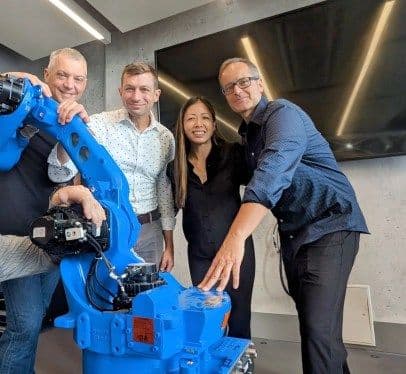
Alphabet-owned robotics software company Intrinsic joins Google
Google is moving further into physical AI by bringing a familiar robotics software platform under its wing. Alphabet-owned Intrinsic, which builds AI models and software designed to make industrial robots more accessible, is joining Google, the companiesannounced on Wednesday. Intrinsic will remain a distinct entity within Google but will work closely with Google DeepMind and will tap into Google’s Gemini AI models and cloud services. Alphabet declined to share information regarding funding or purchase price. Intrinsic “graduated” into anindependent Alphabet-owned company in 2021after five years of development within Alphabet’s X, the company’s moonshot research division. Other companies that have graduated from X include robotaxi company Waymo and drone delivery company Wing. Wendy Tan White has served as Intrinsic’s CEO since its spinout in 2021. The company hit the ground running. A few months after announcing its independence,Intrinsic acquired Vicarious, a fellow robotics software company, in April 2022. While the purchase price wasn’t disclosed, Vicarious had raised about $250 million from VCs and tech bigwigs like Jeff Bezos. A few months later, Intrinsicacquired several for-profit divisionsof Open Robotics, a nonprofit organization that builds hardware and software platforms for the robotics industry. Despite this rapid expansion,Intrinsic laid off 20% of its workforcein January 2023. The company announced its first product, Flowstate, just a few months later. Flowstate is a software platform fordeveloping robotics workflowsaimed at developers that don’t have deep robotics experience — aligning with the company’s mission to make robotics more accessible. Since then, the company has fine-tuned the technology, improved its simulation capabilities, and released its Intrinsic Vision AI model in late 2025. Intrinsic announced ajoint venture with electronics manufacturer Foxconnin October 2025 that entails the two companies working together on general-purpose intelligent robots to transform how electronics are manufactured, with the goal of full factory automation. Now, the company is working toward those goals with closer collaboration with Google’s AI prowess. “Combined with Google’s incredible AI and infrastructure, we’re going to unlock the promise of physical AI for a much broader set of manufacturing businesses and developers. This will fundamentally shift production, from its economics to operations, and enable truly advanced manufacturing,” Tan White wrote in the company’s blog post. This move makes a lot of sense for Google, as many tech leaders, includingNvidia’s Jensen HuangandQualcomm’s Cristiano Amon, see physical AI as the next natural step in the monetization and advancement of AI models and technology.
View

The White House wants AI companies to cover rate hikes. Most have already said they would.
The proliferation of AI data centers plugging into the national electrical grid has helped increase consumer electricity prices, driving up the average national electricity price by more than 6% in the last year. That’s not a good look for the incumbents ahead of this fall’s elections, and President Donald Trump addressed the challenge in his State of the Union speech last night. “We’re telling the major tech companies that they have the obligation to provide for their own power needs,” Trump said. “They can build their own power plants as part of their factory, so that no one’s prices will go up.” The hyperscalers in question don’t need to be told. They have already made public commitments in recent weeks to cover electricity costs by building their own power sources, paying higher rates, or both, part of a broader effort to solve PR problems around data center expansion and win over skeptical communities. On January 11, Microsoftannouncedits policy “to ensure that the electricity cost of serving our datacenters is not passed on to residential customers.” January 26, OpenAIcommittedto “paying its own way on energy, so that our operations don’t increase your energy prices.” On February 11, Anthropic made thesame pledgeto “cover electricity price increases that consumers face from our data centers.” Yesterday, Googleannouncedthe largest battery project in the world yesterday to support a data center in Minnesota. What these commitments means in practice, and who will determine which data centers are responsible for which price increases, remains unknown. The White House has not released the text of the proposed pledge. “A handshake agreement with Big Tech over data center costs isn’t good enough,” Arizona Democratic Senator Mark Kellysaidon social media. “Americans need a guarantee that energy prices won’t soar and communities have a say.” White House spokesperson Taylor Rodgerssaidthat next week, companies will send representatives to formally sign the pledge at the White House. Amazon, Google, Meta, Microsoft, xAI, Oracle and OpenAI are reportedly among those set to attend. However none of the companies have confirmed their attendance. Even if tech companies commit to taking on electricity costs, on-site power plants may not be a panacea—they can still have adverse impacts on thesurrounding environment, and will stress supply chains for natural gas, turbines, photovoltaics and batteries, depending on how companies aim to power their compute.
View
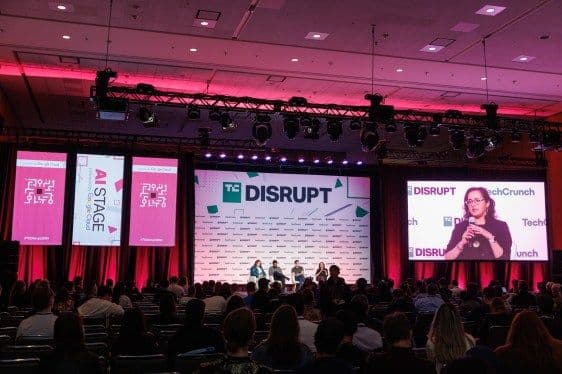
3 days left: Save up to $680 on your TechCrunch Disrupt 2026 ticket
Time is running out! Just 3 days left before Super Early Bird pricing ends on February 27 at 11:59 p.m. PT. This is your last chance to secure the lowest ticket rates forTechCrunch Disrupt 2026. If 2026 is your year to fundraise, hire, scale, or launch, you cannot afford to miss it. Lock in your pass nowbefore prices jump. This is the moment to act. From October 13–15 at Moscone West in San Francisco, 10,000+ founders, operators, and investors gather for three days of high-signal conversations, deal-making, and actionable insights. Disrupt is not just content — it’s access to accelerated growth. You don’t attendDisruptto sit in the audience. You go to gain leverage. Every session, every conversation, and every connection is designed to accelerate your growth and compound your momentum. You’ll get: Last year, more than 20,000 curated meetings took place on-site. In 2026, upgraded tools will make those connections even more targeted and efficient. One conversation can change your trajectory — and at Disrupt, that is the point. Disrupt has long been the stage for founders and investors who define eras. Past speakers have included category-defining leaders and top-tier VCs, such as: In 2025, Disrupt featured 200+ onstage conversations with 250+ tech and VC leaders across AI, hardware, space, startup growth, and venture. Expect the same high-caliber content this year and check theevent pageas the 2026 agenda rolls out. Startup Battlefieldreturns with 200 pre-Series A companies competing for $100,000 in equity-free funding, global visibility, and direct investor access. Alumni include Discord, Cloudflare, and Trello. If you want to see what’s next and hear directly from top VCs on scaling a viable startup, the Disrupt Stage is where it happens first. With300+ startup exhibitors, the venue, especially the Expo Hall, is where deal flow and discovery collide. You won’t just observe trends; you’ll see them before they scale. You’ll be able to: From October 11 to 17, Disrupt Side Events take place across the Bay Area, including breakfasts, cocktail hours, panels, and founder meetups that extend the connections beyond the main stage. The main event is powerful. The surrounding ecosystem makes it even stronger. Super Early Bird pricing ends this Friday, February 27, at 11:59 p.m. PT. If you want to be in the room where capital moves, companies scale, and ideas turn into breakthroughs, now is the time to lock in your discounted ticket. Register now before it’s too late. Save up to $680 on yourindividual pass, or up to 30% ongroup passes.
View

About 12% of US teens turn to AI for emotional support or advice
AI chatbots have become embedded in the lives of American teenagers, according toa reportpublished Tuesday by the Pew Research Center. While the most common uses of AI among this demographic include searching for information (57%) and getting help with schoolwork (54%), teens are also using AI to fill roles that would typically be occupied by friends or family. Sixteen percent of U.S. teens say they use AI for casual conversation, while 12% use AI chatbots for emotional support or advice. Some teens may find solace in talking to chatbots, but mental health professionals are wary. General-purpose tools like ChatGPT, Claude, and Grok are not designed for such uses, and in the mostextreme cases, these chatbots can have life-threatening psychological effects. “We are social creatures, and there’s certainly a challenge that these systems can be isolating,” Dr. Nick Haber, a Stanford professor researching the therapeutic potential of LLMs,told TechCrunch recently. “There are a lot of instances where people can engage with these tools and then can become not grounded to the outside world of facts, and not grounded in connection to the interpersonal, which can lead to pretty isolating — if not worse — effects.” Pew’s survey also shows a discrepancy between teenagers’ self-reported AI usage and the extent to which their parents think they engage with this technology. About 51% of parents said that their teen uses chatbots, while 64% of teens reported using them. The majority of parents are okay with their teens using AI to search for information (79%) or get help with schoolwork (58%), but far fewer parents approve of their teens using AI chatbots for casual conversation (28%) or to get emotional support or advice (18%). In fact, 58% of parents are not okay with their child using AI for such purposes. AI safety is acontentioustopicamong leading tech companies, to say the least. But one popular chatbot maker, Character.AI, made the choice todisablethe chatbot experience for users under the age of 18. This decision followed public outcry and lawsuits filed overtwo teenagers’suicides, which took place after prolonged conversations with the company’s chatbots. OpenAI, meanwhile, made the decision to sunset its particularly sycophanticGPT-4o model, which sparked backlash from people who had come to rely on the model for emotional support. Though a majority of teens use AI chatbots in some way, they have mixed feelings about the impact of this kind of technology on society. When asked how they think AI will impact society over the next 20 years, 31% of teens said the impact would be positive, while 26% said it would be negative.
View
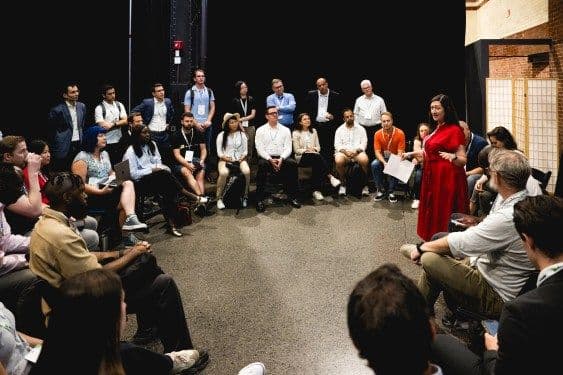
Have hard-won scaling lessons to share? Take the stage at TechCrunch Founder Summit 2026
If you’ve built, backed, or operated inside high-growth startups, your experience could shape how the next wave of founders scales. On June 9 in Boston,TechCrunch Founder Summit 2026will bring together 1,000+ founders and investors for a focused day on the realities of growth. We’re inviting seasoned founders, VCs, and startup operators to lead interactive roundtable discussions rooted in real-world execution — the wins, the missteps, and the lessons that only come from doing the work. Submit your topic by April 17 to be considered.Learn more and apply today. Whether you lead an interactive roundtable or a Q&A-style breakout, every session at Founder Summit is built for depth. Each is a 30-minute, discussion-driven conversation led by two to four speakers, depending on format. No slides. No polished decks. Just candid insight and practical takeaways founders can apply immediately. If you’ve scaled revenue from zero to $50 million, navigated a difficult fundraise, rebuilt a team after hypergrowth, expanded internationally, or redefined your go-to-market strategy, this is the room to share what actually works. Speaking at TC Founder Summit gives you: TechCrunch will also amplify your participation through agenda placement, editorial inclusion on TechCrunch.com, and social promotion across its channels. TC Founder Summit takes place on June 9, and speaker selections are made well ahead of the event. If you have scaling insight founders need to hear, now is the time to submit your topic. Have more than one strong idea? Submit them all. Lead the conversation. Share what you’ve learned. Help founders build smarter.Submit to speakbefore the April 17 deadline.
View

OpenClaw creator’s advice to AI builders is to be more playful and allow yourself time to improve
Peter Steinberger, the creator of theviral AI agent OpenClawwho has sincebeen hired by OpenAI,has some advice for those experimenting with AI technology, including AI agents. From his own experience, the best way to build today is to explore, be playful, and not expect to be an expert at what you do right away. “I wish I could say that I had the unified plan in the beginning, but a lot of it was just exploration,” Steinberger said. “I wanted things, and those things didn’t exist, and … let’s say I prompted them into existence.” The developer was chatting with OpenAI’s Head of Developer Experience, Romain Huet, on the first episode ofthe company’s new Builders Unscripted podcast. Here, he spoke about what OpenClaw was like in its early days and how he didn’t have a plan when he got started. Steinberger explained he began by building a tool that would integrate with WhatsApp, but then set it aside for a bit and focused on other things, as he assumed the AI labs would build something like what he was working on in the near future. “I just experimented a lot. My mission was, kind of like, to have fun and inspire people,” Steinberger noted. By last November, however, the developer was surprised that no AI labs had started to build what he wanted to use. That led him to create the initial prototype of what’s now OpenClaw. “Where it really clicked was where I was at this weekend trip in Marrakesh, and I found myself using it way more because it was so convenient … There was no really good internet. [But] WhatsApp just works everywhere,” he said. The tool made it easy for him to find restaurants, look up things on his computer, send texts to friends, and more. The more he played with the technology, Steinberger realized how good modern AI models have become at problem-solving, much like coders are. “Now they can just, like, actually come up with the solutions themselves, even though you never programmed them at all,” he noted. Throughout the process of building, Steinberger said that his workflow improved — and he stresses to other developers that’s something that can take time, so don’t give up. “There’s these people that … write software in the old way, and the old way is going to go away,” he pointed out. They then decide to try vibe coding but are disappointed with the results. “I think vibe coding is a slur,” said Steinberger, basically suggesting that it’s not as simple a process at first as the term makes it sound. “They try AI, but they don’t understand that it’s a skill,” he said, then compared the process of coding with AI to learning guitar. “You’re not going to be good at guitar on the first day,” he said. Instead, he recommends that people approach learning with a more playful attitude. If he writes a prompt now, he has a gut feeling as to how long it will take, and if it takes longer, he reflects on what may have gone wrong and adapts. “My … advice always is, approach it in a playful way. Build something that you always wanted to build. If you’re at least a little bit of a builder, there has to be something on the back of your mind that you want to build. Like, just play.” This ability to experiment and have fun is what’s most important, especially at a time when people are worried their jobs will be overtaken by AI. “If your identity is: I want to create things. I want to solve problems. If you’re high agency, if you’re smart, you will be in more demand than ever,” Steinberger said.
View
OpenAI COO says ads will be ‘an iterative process’
Last month, OpenAI said that it is going to introduceads to users of the free and Go tiers in ChatGPT. The company rolled out adsto U.S.-based users earlier this monthamid criticism from rivals like Anthropic, which publisheda string of Super Bowl ads. On the sidelines of the India AI summit, TechCrunch askedOpenAI COO Brad Lightcapabout how the company is approaching ads. Lightcap said that the process is iterative and the company has to get user privacy and trust right. “Well, this is going to be an iterative process for sure. This is something we are committed to getting right. What does that look like? It means obviously maintaining user trust at a very high level. It means getting privacy right,” Lightcap said. He also noted that ads can add to the product experience of users if they are done right. He urged to give OpenAI a few months to see how the company fares in rolling out the product. “It means really creating a delightful product experience. We think ads done right can be additive to a product experience. And so it’ll take iteration, it’ll take time, but we’re just starting out. So maybe give us a few months and see how it goes,” he said. Lightcap didn’t specify if the company is thinking about rolling out ads beyond the U.S. market at the moment. Earlier this month, Sam Altman hit back at Anthropic witha long post on Xabout the Super Bowl ads, calling the OpenAI rival “dishonest” and accusing them of making an expensive product that serves “rich people.” “More importantly, we believe everyone deserves to use AI and are committed to free access, because we believe access creates agency. More Texans use ChatGPT for free than the total number of people who use Claude in the US, so we have a differently-shaped problem than they do,” Altman wrote. Variousoutletshave reported that OpenAI is charging $60 for 1,000 impressions, an unusually high rate. Last month, Adweek noted that OpenAI is asking for $200,000 of minimum commitment from advertisers. Earlier this week,The Informationreported that Shopify is allowing its merchants to advertise on ChatGPT through its Shop Campaigns ad network, joining early testers like Target, Williams Sonoma, and Adobe.
View
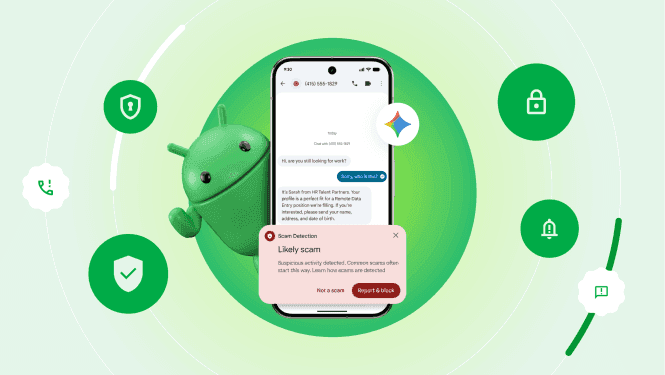
Gemini can now automate some multi-step tasks on Android
Google on Wednesday announced a series of updates to its Gemini AI-powered features on the Android operating system, the most notable being a new way to use the AI to handle multi-step tasks like ordering an Uber or food delivery. These automations join other Gemini improvements shipping today, including an expansion of scam detection for phone calls and Circle to Search updates that now let you identify all the items on your phone’s screen. The automations, explains Google, allow users to essentially offload their to-do list to Gemini. In practice, however, the types of things that Gemini can manage are still limited. The company says that the feature, which is in beta, will initially support select apps in the food, grocery, and rideshare categories. It will also be limited to the Gemini app on certain devices, including the Pixel 10, Pixel 10 Pro, and Samsung Galaxy S26 series. And it will initially be available only in the U.S. and Korea. AI-powered automations could potentially go wrong, of course, so Google has added some protections. For starters, the automations can’t be kicked off without an explicit command from the device’s owner. As they run, you can watch their progress in real time and stop the task if it’s making a mistake or getting stuck. Google notes also that the automations take place in a secure, virtual window on your phone where they can only access limited apps, not the rest of the data on your device. The feature ties into the growing trend of using AI to automate more tasks in users’ personal lives. ChatGPT, for instance, letsusers create tasksthat can be run on schedules or at specific times, as well as offeringan agentthat can complete a variety of computer-based tasks like navigating a calendar, generating a slideshow, or running code.Anthropic’s Cowork, meanwhile, brings the capabilities of its Claude AI to non-coding tasks, letting non-developers automate everyday file and task management. And, of course, an AI tool calledOpenClawrecentlywent viralfor its ability to manage everyday tasks like sending emails, managing calendars, checking into flights, and more. Another Gemini update arriving now is the expansion of a Scam Detection feature for phone calls, which is becoming available on Samsung Galaxy S26 series devices in the U.S. (The feature is already offered on Pixel phones in the U.S., Australia, Canada, India, Ireland, and the U.K.) Google is also using its Gemini on-device model to detect scam texts in the U.S., Canada, and the U.K. on Pixel 10 series devices, and soon on the Galaxy S26 series phones, as well. Finally, Google says its Circle to Search feature, which lets you use gestures like scribbles and circling to initiate searches, can now search for everything you’re seeing on the phone screen, not just a single object. That means you can search every item of clothing and every accessory in an outfit you like, or learn more about a group of things and the related topic on the screen. Google has been steadily releasing Gemini updates to its Android ecosystem at regular intervals through new operating system updates and updates targeted toward its flagship phone, the Google Pixel, via its frequent updatesknown as Pixel Drops. Meanwhile, Apple has beenstruggling to releasea more comprehensive AI feature set, which is set to include an AI-powered Siri — a launch that was recentlypushed back againto later in the year.
View
Perplexity AI Unveils ‘Perplexity Computer’ to Orchestrate Multiple AI Models
The product is available to Perplexity Max subscribers.
View
Enviar tu herramienta


PoweredByAI.app es un directorio de herramientas de IA que ayuda a personas, empresas y creadores a descubrir las mejores herramientas de IA para escritura, programación, diseño, productividad y más.
© 2026 , Producto de011BQ. Todos los derechos reservados.