🚀 Zaprep: Tus redes sociales al máximo. Empezar gratis — automatiza 1,000 DMs/mes y convierte el engagement en leads. con 1,000 DMs automatizados/mes.
Enviar tu herramienta
Últimas Noticias de IA

Netflix buys Ben Affleck’s AI filmmaking company InterPositive
Netflix on Thursday morningsaidit is acquiring InterPositive, a filmmaking technology company founded in 2022 by actor Ben Affleck. The acquisition aligns with Netflix’s approach to the use of generative AI in filmmaking: The company has alreadyused generative AIfor special effects in some original content and hasassured investorsthat it is “very well positioned to effectively leverage ongoing advances in AI.” Affleck wrote in a statement that he began thinking about how AI would impact the future of filmmaking in 2022. He says he wanted to “preserve what makes human storytelling human, which is judgement,” and sought to “protect the power of human creativity.” InterPositive isn’t trying to makeAI actorsor synthetic performances. Rather, the company has created a model that helps production teams work with footage from their own productions to help make edits in post-production, like addressing continuity issues or making lightning adjustments or enhancements to the environment. “Intensive research and development led to our first model, trained to understand visual logic and editorial consistency, while preserving cinematic rules under real-world production challenges such as missing shots, background replacements or incorrect lighting,” Affleck wrote. “We also built in restraints to protect creative intent, so the tools are designed for responsible exploration while keeping creative decisions in the hands of artists — and ensuring that the benefits of this technology flow directly back to the story they’re trying to tell.” Affleck is joining Netflix as a senior adviser as part of the deal. Financial terms of the deal were not disclosed. “Our approach to AI has always been focused on meaningfully serving the needs of the creative community and our members,” Elizabeth Stone, Netflix’s chief product and technology officer, said in a statement. “The InterPositive team is joining Netflix because of our shared belief that innovation should empower storytellers, not replace them.”
View

Anthropic CEO Dario Amodei could still be trying to make a deal with Pentagon
Anthropic’s $200 million contract with the Department of Defense (DOD) broke down last week after the two parties failed to come to an agreement over the degree to which the military could obtainunrestricted accessto Anthropic’s AI. When the DOD made a deal with OpenAI instead, it seemed that the military’s relationship with Anthropic would come to a close — but new reporting from theFinancial TimesandBloombergsay that Amodei resumed negotiations with Pentagon official Emil Michael. These talks are reportedly part of an attempt to compromise on a contract that outlines how the Pentagon can continue to access Anthropic’s AI models. It would be a surprise to see Anthropic eek out a new deal, given how much vitriol has been exchanged among the parties involved. But a compromise could still hold appeal for both sides — the Pentagon already relies on Anthropic’s technology, and an abrupt switch to OpenAI’s systems would be disruptive. The dispute began when Anthropic CEO Dario Amodei voiced concern over a clause that allowed the military to use Anthropic’s AI for “any lawful use.” Amodei asserted that the company would not allow for its technology to be used for domestic mass surveillance or autonomous weaponry and wanted the contract to more clearly prohibit those uses. When Anthropic refused to comply, the DOD turned around andstruck a dealwith OpenAI instead. Since then, figures on both sides have been open about their frustrations. Michael called Amodei a “liar” with a “God complex.” Amodei threw some jabs of his own at the DOD and OpenAI CEO Sam Altman in amessagereportedly sent to Anthropic staff this week, calling the OpenAI deal “safety theater” and the messaging around it “straight up lies.” “The main reason [OpenAI] accepted [the DOD’s deal] and we did not is that they cared about placating employees, and we actually cared about preventing abuses,” Amodei wrote in the memo. Defense Secretary Pete Hegseth has pledged to declare Anthropic a “supply-chain risk,” essentially blacklisting the company from working with any other company that has business with the U.S. military — although he has yet to take any legal action to that effect. This sort of designation is typically reserved for foreign adversaries, and it’s unclear whether it would survive a court challenge.
View

Meta sued over AI smart glasses’ privacy concerns, after workers reviewed nudity, sex, and other footage
Meta is facing a new lawsuit over its AI smart glasses and their lack of privacy, afteran investigationby Swedish newspapers found that workers at a Kenya-based subcontractor are reviewing footage from customers’ glasses, which included sensitive content, like nudity, people having sex, and using the toilet. Meta claimed it was blurring faces in images, but sources disputed that this blurring consistently worked,reports noted. The news prompted the U.K. regulator, the Information Commissioner’s Office, to investigate the matter. Now, the tech giant is facing a lawsuit in the United States, as well. In the newly filedcomplaint, plaintiffs Gina Bartone of New Jersey and Mateo Canu of California, represented by the public interest-focused Clarkson Law Firm, allege that Meta violated privacy laws and engaged in false advertising. The complaint alleges that the Meta AI smart glasses are advertised using promises like “designed for privacy, controlled by you,” and “built for your privacy,” which might not lead customers to assume their glasses’ footage, including intimate moments, was being watched by overseas workers. The plaintiffs believed Meta’s marketing and said they saw no disclaimer or information that contradicted the advertised privacy protections. The suit charges Meta and its glasses manufacturing partner Luxottica of America with conduct that violates consumer protection laws. Meta does not have a comment on the litigation at this time. Clarkson Law Firm, which over the years has filed other major lawsuits against tech giants, includingApple,Google, andOpenAI, points to the scale of the issues at hand. In 2025, over seven million people bought Meta’s smart glasses, which means their footage is fed into a data pipeline for review, and they can’t opt out. Meta told the BBC that when people share content with Meta AI, it uses contractors to review the information to improve people’s experience with the glasses, which is explained in its privacy policy, and pointed toSupplemental Meta Platforms Terms of Service, without specifying where this was noted. The news outlet, however, found that a mention of human review could be found inMeta’s U.K. AI terms of service. Aversion of that policythat applies to the U.S. states “In some cases, Meta will review your interactions with AIs, including the content of your conversations with or messages to AIs, and this review may be automated or manual (human).” The complaint mainly points to how the glasses were marketed, showing examples of ads that touted the privacy benefits, describing their privacy settings, and “added layer of security.” “You’re in control of your data and content,” one ad read, explaining that the smart glasses owners got to choose which content was shared with others. The rise of smart glasses and other “luxury surveillance” tech, like always-listening AI pendants, have prompted a broad backlash. One developer published an appcapable of detecting when smart glasses are nearby. Meta did not have a comment on the litigation itself, as it was just filed. However, spokesperson Christopher Sgro offered the following statement on the overall issue, saying, “Ray-Ban Meta glasses help you use AI, hands-free, to answer questions about the world around you. Unless users choose to share media they’ve captured with Meta or others, that media stays on the user’s device. When people share content with Meta AI, we sometimes use contractors to review this data for the purpose of improving people’s experience, as many other companies do. We take steps to filter this data to protect people’s privacy and to help prevent identifying information from being reviewed.” Updated after publication with Meta’s statement.
View

Cursor is rolling out a new kind of agentic coding tool
As agentic coding spreads, the working life of a software engineer has become dazzlingly complex. A single engineer might oversee dozens of coding agents at once, launching and guiding different processes as necessary. It’s a lot to keep track of, and human engineers’ attention has quickly become the limiting resource. Cursor launched a new tool Thursday aimed at keeping that chaos in check. Called Automations, the new system gives users a way to automatically launch agents within their coding environment, triggered by a new addition to the codebase, a Slack message, or a simple timer. As Cursor describes it, it’s a way to review and maintain all the new code created by agentic tools — without tracking dozens of agents at once. At the most basic level, Automations are a way for engineers to break out of the “prompt-and-monitor” dynamic that defines most agent-based engineering. Instead of launching agents with a human prompt, Cursor’s Automation framework lets you launch agents automatically — and loop humans in whenever they’re needed. “It’s not that humans are completely out of the picture,” Jonas Nelle, Cursor’s engineering chief for asynchronous agents, told TechCrunch in an interview. ”It’s that they aren’t always initiating. They’re called in at the right points in this conveyor belt.” One early example isBugbot, a long-standing Cursor feature that the team sees as a predecessor to the broader Automation system. The Bugbot system is triggered every time an engineer makes an addition to the codebase and reviews the new code for bugs and other issues. Using Automations, Cursor has been able to expand that system to more involved security audits and more thorough reviews. “This idea of thinking harder, spending more tokens to find harder issues, has been really valuable,” said engineering lead Josh Ma. Cursor estimates that it runs hundreds of automations per hour, reaching far beyond simple code review. The system is also used for incident response, with PagerDuty incidents initiating an agent that can immediately query server logs through an MCP connection. A separate automation offers weekly summaries of changes to the codebase on Cursor’s company Slack. “In the abstract, anything that an automation kicks off, a human could have also kicked off,” said Nelle. “But by making it automatic, you change the types of tasks that models can usefully do in a codebase.” The new system comes amid intense competition in the agentic coding space, with bothOpenAIandAnthropichaving made significant updates to their agentic coding tools in the past month. Ramp datashows Cursor’s market share holding steady since May, with roughly 25% of generative AI clients subscribing to Cursor in some capacity. Still, the overall growth of the agentic coding space has kept the company’s revenue increasing at a stunning pace.Earlier this week, Bloomberg reported that Cursor’s annual revenue had grown to more than $2 billion, doubling over the past three months.
View

OpenAI launches GPT-5.4 with Pro and Thinking versions
On Thursday,OpenAI released GPT-5.4, a new foundation model billed as “our most capable and efficient frontier model for professional work.” In addition to the standard version, GPT-5.4 is also available as a reasoning model (GPT-5.4 Thinking) or optimized for high performance (GPT-5.4 Pro). The API version of the model will be available with context windows as large as 1 million tokens, by far the largest context window available from OpenAI. OpenAI also emphasized improved token efficiency, saying GPT-5.4 was able to solve the same problems with significantly fewer tokens than its predecessor. The new model comes with significantly improved benchmark results, including record scores in computer use benchmarks OSWorld-Verified and WebArena Verified. The new model also scored a record 83% on OpenAI’s GDPval test for knowledge work tasks. GPT-5.4 also took the lead onMercor’s APEX-Agents benchmark, designed to test professional skills in law and finance, according to a statement from Mercor CEO Brendan Foody. “[GPT-5.4] excels at creating long-horizon deliverables such as slide decks, financial models, and legal analysis,” Foody said in the statement, “delivering top performance while running faster and at a lower cost than competitive frontier models.” GPT-5.4 continues the company’s efforts to limit hallucinations and factual errors. OpenAI said the new model was 33% less likely to make errors in individual claims when compared to GPT 5.2, and overall responses were 18% less likely to contain errors. As part of the launch, OpenAI has reworked how the API version of GPT-5.4 manages tool calling, introducing a new system called Tool Search. Previously, system prompts would lay out definitions for all available tools when calling the model — a process that could consume a lot of tokens as the number of available tools grew. The new system allows models to look up tool definitions as needed, resulting in faster and cheaper requests in systems with many available tools. OpenAI has also includeda new safety evaluationto test its models’ chain-of-thought, the running commentary given by the models to show thought process through multi-step tasks. AI safety researchers have long worried that reasoning models could misrepresent their chain-of-thought, andtesting showsit can happen under the right circumstances. OpenAI’s new evaluation shows that deception is less likely to happen in the Thinking version of GPT-5.4, “suggesting that the model lacks the ability to hide its reasoning and that CoT monitoring remains an effective safety tool.”
View

EXCLUSIVE: Luma launches creative AI agents powered by its new ‘Unified Intelligence’ models
AI video-generation startup Luma on Thursday launched Luma Agents, designed to handle end-to-end creative work across text, image, video, and audio. Luma Agents are powered by the startup’s Unified Intelligence family of models, with architecture trained on a single multimodal reasoning system. Luma Agents are being pitched as a new way of doing work for ad agencies, marketing teams, design studios, and enterprises. Luma says its agents are capable of planning and generating text, image, video, and audio while coordinating with other AI models, including Luma’s Ray 3.14, Google’s Veo 3 and Nano Banana Pro, ByteDance’s Seedream, and ElevenLabs’ voice models. Luma’s agents are built on the startup’s Uni-1 model, the first of its Unified Intelligence family of AI models. It has been trained on audio, video, image, language, and spatial reasoning, according to Amit Jain, chief executive officer and co-founder of Luma. Jain told TechCrunch that the Uni-1 model can “think in language and imagine and render in pixels or images … we call it ‘intelligence in pixels.’” Other output capabilities like audio and video will come in subsequent model releases, he added. “Our customers aren’t buying the tool; they’re redoing how business is done,” Jain said. Luma has already started rolling out its new agentic platform with existing customers, including global ad agencies Publicis Groupe and Serviceplan, as well as for brands like Adidas, Mazda, and Saudi AI company Humain. Jain said the Luma Agents are a game changer because they can maintain persistent context across assets, collaborators, and creative iterations. They can also evaluate and refine outputs, improving their own results through an iterative self-critique, according to Jain. This sort of check-your-work capability is what has made coding agents so useful, Jain said. “You need that ability to evaluate your work, fix it, and do that loop until the solution is good and accurate.” Jain said the current workflow for using AI tools in creative environments doesn’t have the same acceleration of benefits people in the creative industry expect from AI. Instead, it’s more like: “Here are 100 models. Learn how to prompt them,” he said. He said what makes Luma Agents different is that you don’t need to prompt back and forth for each iteration on an image or idea — the system instead generates large sets of variations and lets users steer the direction through conversation. “With Unified Intelligence, because these models understand in addition to being able to generate, we are able to build a system that is able to do this sort of end-to-end work,” Jain said. Take, for instance, a human architect designing a building. As they draw the lines, they are creating an internal mental representation of the structure, light, spatial dynamics, and lived experience. This, Jain says, is the same principle upon which Unified Intelligence is built. Jain said the system could significantly speed up creative workflows. In a demonstration, he showed how a 200-word brief and an image of a product (a tube of lipstick) led the system to generate various ideas for locations, models, and color schemes for an ad campaign. In another example, Luma Agents turned a brand’s $15 million, year-long ad campaign into multiple localized ads for different countries in 40 hours for under $20,000, passing the brand’s internal quality controls and accuracy checks, Jain said. While Luma Agents is now publicly available via API, Jain said the startup plans to roll out access gradually to ensure users maintain reliable access and avoid workflow disruptions.
View
OpenAI Teases GPT-5.4 AI Model Launch Just a Day After Releasing GPT-5.3 Instant
OpenAI teased the release of the GPT-5.4 artificial intelligence (AI) model on Wednesday. The San Francisco-based AI giant said that the major update to the existing model could arrive soon, making it the fastest launch teaser after the launch of a major model. Interestingly, on Tuesday, the company released the GPT-5.3 Instant to all ChatGPT users. The model focuses on improved conversations and better writing quality. Notably, the developments arrived after a website claimed that about 2.5 million ChatGPT users intend to quit the platform.
View

OpenAI’s Codex App Is Now Available on Windows, Can Be Downloaded via Microsoft Store
A month after launching a dedicated Codex app for macOS, OpenAI has now launched the app to Windows devices as well. On Wednesday, the San Francisco-based artificial intelligence (AI) giant announced that the app is now available in the Microsoft Store, and developers using the Windows operating system can now use the app for agentic coding as well. At launch, users will be able to access all the existing features of the platform, including skills and the ability to run multiple AI agents in parallel.
View
Lio raises $30M from Andreessen Horowitz and others to automate enterprise procurement
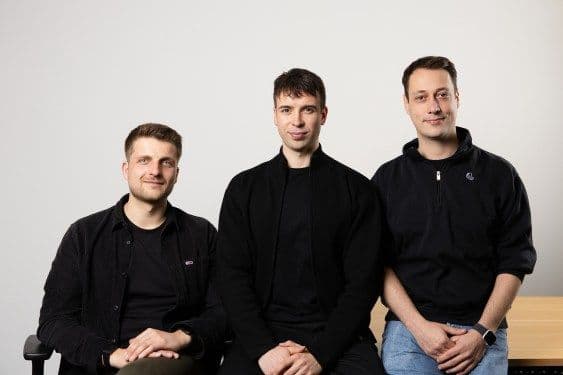
Lio’s co-founders know firsthand that procurement — the process enterprises use to purchase services from vendors — is often a bottleneck. Vladimir Keil, the company’s co-founder and CEO, had experienced this problem as an employee inside a large company and then again while building his first startup. “When we were selling enterprise software, we had to go through procurement ourselves and saw how manual and fragmented the process still is,” he told TechCrunch. Kiel and his team have built an automated platform of AI agents — software that can complete tasks on behalf of humans — to help fix some of those fragmented processes. On Thursday, Lio announced a $30 million Series A in a round led by Andreessen Horowitz. SV Angels, Harry Stebbings, and YC also partook in the round (Lio was part of the Spring’23 batch). The company has raised $33 million in funding to date. Keil said the fresh capital will be used to expand the company throughout the U.S. and increase the capabilities of Lio’s AI agents, which aim to complete the entire procurement process for enterprise customers. Procurement is at the heart of enterprise spending, where companies look to buy everything from raw materials to professional services. Each purchase order requires focus and commitment: One usually has to open some type of Enterprise Resource Planning, or ERP, software, check contract management systems, search the supplier database, run compliance checks, cross-reference budgets, dig through emails, and so on. “Even with modern eProcurement software, most of the real work is still done manually,” Keil told TechCrunch. Companies are left to build large internal teams or outsource this work, resulting in a slow, expensive process. Keil had an idea — if the procurement process is largely unstructured data and repetitive workflows, then surely this is the type of task an AI agent is well-equipped to handle. He teamed up with friends Lukas Heinzman and Till Wagner and in 2023, the trio launched Lio, a virtual procurement workforce. Lio operates an AI-native platform with agentic infrastructure that completes the entire procurement process “Every previous generation of procurement technology was built on the same assumption, that humans will do the work and technology will help them do it faster,” Keil said. “We take a fundamentally different approach. Instead of building software to help humans do procurement work faster, Lio deploys AI agents that execute the workflow themselves.” These Lio agents operate across and on top of enterprise systems to read documents, evaluate suppliers, negotiate terms, and complete transactions. “Processes that once took weeks can now be completed in minutes,” Keil said, adding that the startup is already helping companies manage billions in enterprise spend. “In one case, a global manufacturer was able to automate 75% of its previously outsourced procurement operations within six months.” Lio is among the many companies that have popped up tocompletely redefine enterprise software, aided by agentic AI’s ability to fundamentallyshift how enterprise application software operates. Keil considers Lio’s competitors to be legacy procurement software vendors (such as SAP Ariba and Oracle), Business Process Outsourcing (BPO) providers, and consulting firms that help companies with these operations. “Instead of spending most of their time processing requests and paperwork, teams can run more negotiations, analyze more suppliers, and capture savings opportunities that would otherwise be missed,” Keil said. “In the long run, we think this changes procurement from a back-office function into a much more powerful lever for enterprise performance.”
View

How 1,000+ customer calls shaped a breakout enterprise AI startup
This isn’t David Park’s first rodeo. The veteran founder and TechCrunch Startup Battlefield alumnus has certainly been battle-tested in the enterprise arena. On this episode of Build Mode, Park joins Isabelle Johannessen to discuss how he and his team are intentionally iterating, fundraising, and scaling Narada. This enterprise AI solution uses large action models to automate complex, multistep workflows across enterprise systems. At face value, Narada has everything that would likely have investors banging down its door: a dream founding team of experienced researchers and operators from Stanford and Berkeley, big name enterprise customers, and a product that works. So in 2024, when Narada applied for Startup Battlefield, it surprised the team how little fundraising they’d done. That choice was by design. “We wanted to not waste too much money,” said Park when asked about why they waited to fundraise. “Because I do believe that when, again, when you have too much money in the bank and you are not near product-market fit, you’re tempted to just spend money on things that actually don’t help you evolve the company in the right way. It removes the friction to do a lot of wrong things.” Park previously founded and exited Coverity. That founding experience taught him one crucial lesson that he’s taken with him to Narada: Take the time to talk to your customers before you do anything else. Park said that in the early days, he and his co-founders were not focused on reaching out to VCs, but instead the three of them made over 1,000 customer calls to deeply understand what the pain points were. Once the problem was extremely clear, the solution came into focus. These teams needed an AI product that they could speak to like a person and trust to take on multiple steps at once. “If you want to build a real business, ask the hard questions, right? Spend time with customers, and not just in selling, because when you have that contract and that purchase order, that’s just the beginning, right?” Park advises viewing those early conversations as more than sales calls: “And some of those customers that we bootstrapped with ultimately turned into multimillion-dollar deals, right? And it’s always easier to sell more to a company that has already chosen you and has some level of trust in you.” As a veteran founder, Park has a foundational belief that to build a company the correct way, the customer must be centered in every decision. Because at the end of the day, no matter how trendy, interesting, or well-received your product is by the industry, if people won’t pay for it, it won’t be a winner. Loading the player… Apply to Startup Battlefield:We are looking for early-stage companies that have an MVP. So nominate a founder (or yourself). Be sure to say you heard about Startup Battlefield from the Build Mode podcast.Apply here. Founder Summit 2026:If you want to take these conversations beyond the podcast, then join us in person at the TechCrunch Founder Summit 2026 event on June 9 in Boston. This is essentially Build Mode in real life. It’s a full day focused entirely on founders, builders, and the conversations that actually move startups forward. It’s also a great way to sharpen your story.Get your tickets. TechCrunch Disrupt 2026:We’re back for TechCrunch Disrupt on October 13 to 15 in San Francisco, where the Startup Battlefield 200 takes the stage. So if you want to cheer them on, or just network with thousands of founders, VCs, and tech enthusiasts, thengrab your tickets. Isabelle Johannessen is our host.Build Modeis produced and edited by Maggie Nye. Audience Development is led by Morgan Little. And a special thanks to the Foundry and Cheddar video teams.
View

Lonza to Establish GCC in Hyderabad to Strengthen Telangana’s Life Sciences Ecosystem
The company’s decision follows an extensive evaluation process, during which Hyderabad emerged as the preferred destination.
View

Can AI Make India’s Roads Safer?
ThinnAI targets aspiring drivers aged 16 and above, aiming to reduce road fatalities by training first-time drivers and encouraging safe driving habits.
View
Enviar tu herramienta


PoweredByAI.app es un directorio de herramientas de IA que ayuda a personas, empresas y creadores a descubrir las mejores herramientas de IA para escritura, programación, diseño, productividad y más.
© 2026 , Producto de011BQ. Todos los derechos reservados.