🚀 Zaprep: Tus redes sociales al máximo. Empezar gratis — automatiza 1,000 DMs/mes y convierte el engagement en leads. con 1,000 DMs automatizados/mes.
Enviar tu herramienta
Últimas Noticias de IA

Oracle Plans Thousands of Job Cuts as AI Data Centre Spending Rises: Report
Oracle said last month that it could raise as much as $50 billion in 2026 through a mix of debt and equity offerings.
View
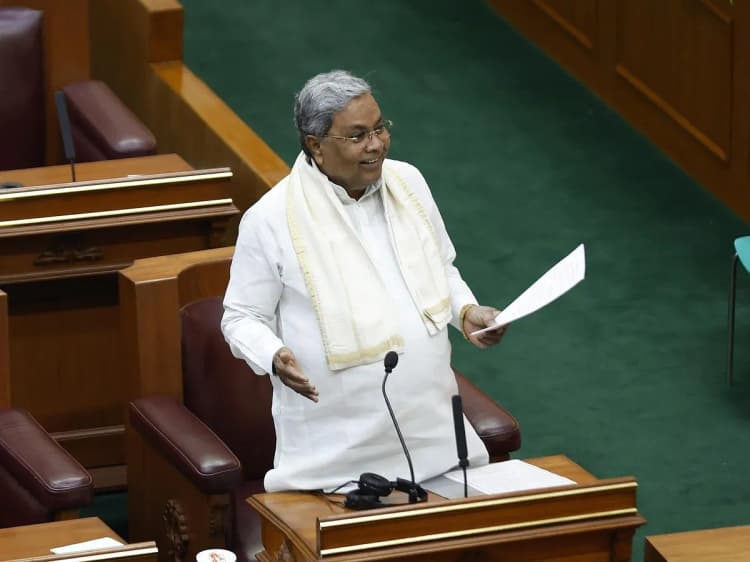
Karnataka Considers Social Media Ban for Children Under 16
Chief Minister Siddaramaiah raised the idea during the presentation of the Karnataka Budget 2026.
View

Meta Faces Lawsuit After Report Reveals Humans Reviewed Ray-Ban AI Glasses Footage
The lawsuit follows a Swedish media investigation that found workers at a Kenya-based contractor reviewing footage from Meta’s smart glasses.
View
AWS Launches AI Agent to Automate Healthcare Administration
The AI agent-powered platform is designed to automate administrative tasks for healthcare providers and integrate with medical records.
View

Karnataka to Introduce AI Courses in Polytechnics, Plans Digital Tutor for 12.8 Lakh Students
Announced in the Karnataka Budget 2026, the state plans AI tutors for 12.8 lakh students and new AI-focused polytechnic courses.
View
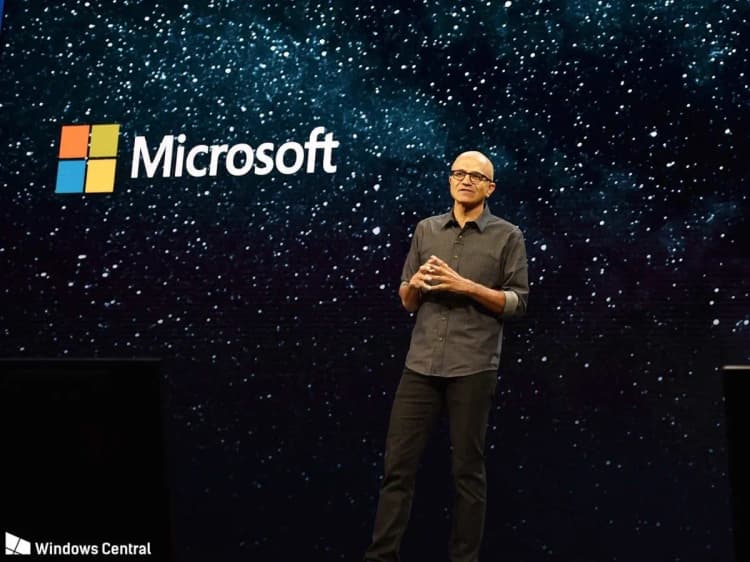
Microsoft Stands by Anthropic for Commercial Clients Despite Pentagon Rift
Microsoft will continue offering Anthropic’s AI across its products for most customers, even as the Pentagon moves to sideline the startup.
View

Karnataka to Provide ₹2 Lakh Loans for AI training to Backward Class Engineering Graduates
As many as 250 students can avail this facility, CM Siddaramiah said in the Karnataka Budget 2026.
View
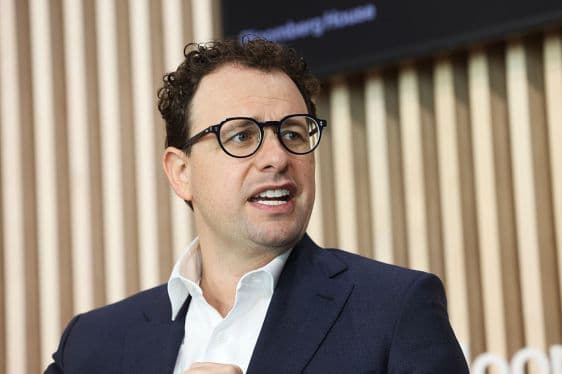
Anthropic to challenge DOD’s supply-chain label in court
Dario Amodeisaid Thursdaythat Anthropic plans to challenge the Department of Defense’s decision to label the AI firm asupply-chain riskin court, a designation he has called “legally unsound.” The statement comes a few hours after the DOD officially designated Anthropic a supply-chain risk following a weeks-long dispute over how much control the military should have over AI systems. A supply-chain risk designation can bar a company from working with the Pentagon and its contractors. Amodei drew a firm line that Anthropic’s AI will not be used for mass surveillance of Americans or for fully autonomous weapons, but the Pentagon believed it should have unrestricted access for “all lawful purposes.” In his statement, Amodei said the vast majority of Anthropic’s customers are unaffected by the supply-chain risk designation. “With respect to our customers, it plainly applies only to the use of Claude by customersas a direct part ofcontracts with the Department of War, not all use of Claude by customers who have such contracts,” he said. As a preview of what Anthropic will likely argue in court, Amodei said the Department’s letter labeling the firm a supply-chain risk is narrow in scope. “It exists to protect the government rather than to punish a supplier; in fact, the law requires the Secretary of War to use theleast restrictive means necessaryto accomplish the goal of protecting the supply chain,” Amodei said. “Even for Department of War contractors, the supply chain risk designation doesn’t (and can’t) limit uses of Claude or business relationships with Anthropic if those are unrelated to their specific Department of War contracts.” Amodei reiterated that Anthropic had been having productive conversations with the DOD over the last several days, conversations that some suspect got derailed when aninternal memohe sent to staff was leaked. In it, Amodei characterized rival OpenAI’s dealings with the Department of Defense as “safety theater.” OpenAI has signed a deal to work with the DOD in Anthropic’s place, a move that has sparked backlash among OpenAI staff. Amodei apologized for the leak in his Thursday statement, claiming that the company did not intentionally share the memo or direct anyone else to do so. “It is not in our interest to escalate the situation,” he said. Amodei said the memo was written within “a few hours” of a series of announcements, including a presidential Truth Social post saying Anthropic would be removed from federal systems, then Defense Secretary Pete Hegseth’s supply-chain risk designation, and finally the Pentagon’s deal announcement with OpenAI. He apologized for the tone, calling it “a difficult day for the company” and said the memo didn’t reflect his “careful or considered views.” Written six days ago, he added, it’s now an “out-of-date assessment.” He finished by saying Anthropic’s top priority is to ensure American soldiers and national security experts maintain access to important tools in the middle of ongoing major combat operations. Anthropic is currently supporting some of the U.S.’s operations in Iran, and Amodei said the company would continue to provide its models to the DOD at “nominal cost” for “as long as necessary to make that transition.” Anthropic could challenge the designation in federal court, likely in Washington, but the law behind the decision makes it harder to contest because it limits the usual ways companies can challenge government procurement decisions and gives the Pentagon broad discretion on national security matters. Or as Dean Ball — a former Trump-era White House adviser on AI who has spoken out against Hegseth’s treatment of Anthropic — put it: “Courts are pretty reluctant to second-guess the government on what is and is not a national security issue … There’s a very high bar that one needs to clear in order to do that. But it’s not impossible.”
View

It’s official: The Pentagon has labeled Anthropic a supply-chain risk
The Department of Defense (DOD) has officially notified Anthropic leadership that the company and its products have been designated a supply-chain risk,Bloombergreports, citing a senior department official. The designation comes after weeks ofconflictbetween the AI lab and the DOD. Anthropic CEO Dario Amodei hasrefusedto allow the military to use its AI systems for mass surveillance of Americans or to power fully autonomous weapons with no humans assisting in the targeting or firing decisions. The Department has argued that its use of AI should not be limited by a private contractor. Supply-chain-risk designations are typically reserved for foreign adversaries. The label requires any company or agency that does work with the Pentagon to certify that it doesn’t use Anthropic’s models. The Pentagon’s finding threatens to disrupt both the company and its own operations. Anthropic has been the only frontier AI lab with classified-ready systems. The U.S. military is currently relying on Claude in its Iran campaign, where American forces are using AI tools to quickly manage the data for their operations. Claude is one of the main tools installed in Palantir’s Maven Smart System, which military operators in the Middle East rely on, according to Bloomberg. Labeling Anthropic a supply-chain risk over this disagreement is an unprecedented move from the Department, several critics say. Dean Ball, a former Trump White House AI adviser, hasreferred to the designationas a “death rattle” of the American republic, arguing government has abandoned strategic clarity and respect in favor of “thuggish” tribalism that treats domestic innovators worse than foreign adversaries. Hundreds of employees from OpenAI and Google haveurged the DOD to withdrawits designation and called on Congress to push back on what could be perceived as an inappropriate use of authority against an American technology company. They have also urged their leaders tostand togetherto continue to refuse the DOD’s demands to use their AI models for domestic mass surveillance and “autonomously killing people without human oversight.” TechCrunch has reached out to Anthropic for comment. In the midst of the dispute, OpenAI forged its own deal with the Department to allow the military to use its AI systems for “all lawful purposes.” Some of the company’semployeeshave expressed concern about the ambiguous phrasing of the deal, which could lead to exactly the type of uses Anthropic was trying to avoid. Amodei has called the actions of the DOD “retaliatory and punitive,” andreportedlysaid his refusal to praise or donate to President Trump contributed to the dispute with the Pentagon. OpenAI president Greg Brockman has been a staunch backer of Trump, recently donating$25 million to the MAGA Inc. Super PAC.
View

US reportedly considering sweeping new chip export controls
How, and if, the Trump administration plans to regulate the export of semiconductors has remained unclear since Donald Trump took office last year. Now, we have an idea of what the administration is thinking. U.S. regulators have allegedly drafted rules that would require U.S. government approval to ship AI chips anywhere outside the U.S.,according to Bloomberg, citing sources. This would give the U.S. significantly more control over companies like AMD and Nvidia. TechCrunch reached out to AMD and Nvidia for comment. A spokesperson for the U.S. Department of Commerce provided the following: “The Commerce Department is committed to promoting secure exports of the American tech stack. We successfully advanced exports through our historic Middle East agreements, and there are ongoing internal government discussions about formalizing that approach. Today there was reporting that we were returning to the AI diffusion rule. We will not. It was burdensome, overreaching, and disastrous.” In these drafted rules, companies and governments outside the U.S. would have to be granted approval by the U.S. Department of Commerce to purchase these chips. The review process would vary based on the size and scale of the potential purchase, Bloomberg reported. For example, a small order by a company outside the U.S. may warrant a basic review while a sizable order could require the company’s corresponding government to get involved. This could, of course, all change before a final announcement or ruling, but the proposal would represent significantly more government involvement thanthe AI Diffusion ruleinstituted under President Joe Biden. The Trump administrationformally rescindedBiden’s diffusion regulation last May, less than a week before it was set to go into effect. While this is the first inkling of what broad export restrictions would look like, it isn’t fully surprising that the Trump administration is looking for more government involvement as opposed to less based on how it has handled Nvidia’s potential exports to China. The Trump administration hasflip-flopped multiple timeson whether or not the company could send its advanced AI chips to the Chinese market before deciding to allow exports if theU.S. Department of Commerce was able to approve the customers. However, this oversight approach may end up hurting U.S. chip companies and the U.S.’s current dominance in the global AI market. If it becomes harder to source chips from the U.S., companies may increasingly turn to other sources, especially as chip companies outside the U.S. continue to develop more advanced chips. In Nvidia’s case, the export regulations already are hurting them. The semiconductor gianthas not seen the return of its customers in Chinaafter nearly a year of uncertainty of whether or not they would keep access to the AI technology.
View

AWS launches a new AI agent platform specifically for healthcare
Amazon Web Services announced Thursday the launch ofAmazon Connect Health. This AI agent-powered platform is meant to help healthcare organizations automate repetitive administrative tasks, including appointment scheduling, documentation, and patient verification, among other things. Amazon Connect Health is HIPAA-eligible and connects with electronic health record (EHR) software. The platform is currently partnered with EHR software providers, data integrators, and patient engagement companies, the company said. This move is not the cloud giant’s first in the healthcare space, and it comes at a time when AWS is increasingly looking to grow its footprint in the $5 trillion U.S. healthcare industry. The company launched Amazon Comprehend Medical, a HIPAA-eligible natural language processor for unstructured medical data, in 2018, and it launched Amazon HealthLake in 2021 which is HIPAA-eligible Fast Healthcare Interoperability Resources (FHIR) infrastructure used to organize health data. The company also launched HealthOmics, a bioinformatics workflow, in 2022. Still, it is its first major product offering AI agents — software that completes complex tasks on behalf of a human — within a regulatory compliant platform. Amazon Connect Health works with existing clinician software to manage the administrative workflow of providers, like medical history reviews, medical coding, and clinical documentation, the company said. Amazon Connect Health currently offers patient verification and ambient documentation. Appointment scheduling and patient insights are in preview, and medical coding and other features are set to roll out to customers later. The software costs $99 a month per user for up to 600 encounters a month — AWS said most primary care physicians have up to 300 encounters a month. An Amazon Web Services spokesperson did not immediately respond to TechCrunch’s requests for additional information regarding testing and timeline. Outside of its cloud business, Amazon has made several large moves into the healthcare space in recent years. The retail giantpurchased online pharmacy PillPack in 2018for around $1 billion andprimary care company One Medicalin 2022 for $3.9 billion. The company has since integrated parts of those businesses into its larger retail and brick-and-mortar operations, includingsame-day prescription deliveryandsame-day virtual doctor visits for kids. Using AI to reduce administrative burden in the healthcare industry — where Amazon Connect Health is focusing — has been a popular target for startups even before the current AI wave. For example,Regard, founded in 2017, uses AI to take notes for doctors during sessions and goes through patient data to help reduce administrative burnout.Notableis another startup founded in 2017 that uses AI to reduce burnout by automating intake and scheduling. Larger AI companies have recently moved quickly into that space. In January, OpenAI releasedChatGPT Health, a version of its chatbot tailored to answer health questions. Anthropic announced its own healthcare-focused product,Claude for Healthcare, just one week later. Like OpenAI’s product, Claude for Healthcare gives medical advice to consumers but more like Amazon Connect Health, it also includes tools for medical professionals. Claude for Healthcare and OpenAI’senterprise healthcare servicesare built to work with HIPAA-compliant products, while ChatGPT Health is consumer-facing and not HIPAA-compliant, according to the companies.
View

DiligenceSquared uses AI, voice agents to make M&A research affordable
A typical merger-and-acquisition process is time consuming and expensive, even for the largest, well-staffed private equity firms. In addition to spending countless hours meeting with senior executives of potential targets and modeling financial outcomes, these groups spend millions of dollars on external advisers: accountants, lawyers, and management consultants. Since expenses for external advisers are not reimbursed if a deal falls through, PE firms wait until they are certain of their interest before engaging costly specialists such as consultants from McKinsey, BCG, or Bain to perform extensive commercial research on the market and the target company. DiligenceSquared, a startup that was part of YC’s fall 2025 cohort, says that with the help of AI, it can provide top-tier consultancy-quality commercial research at a fraction of the traditional cost. The startup’s co-founders, Frederik Hansen and Søren Biltoft, possess deep expertise in private equity due diligence. Hansen was formerly a principal at Blackstone, where he commissioned these reports for multiple billion-dollar buyouts. Meanwhile, Biltoft spent seven years in BCG’s private equity practice leading these types of diligence efforts. Since launching in October, Hansen’s and Biltoft’s industry experience has helped DiligenceSquared complete multiple projects for several of the world’s largest PE firms and mid-market funds, Hansen tells TechCrunch. That early traction convinced Damir Becirovic, a former Index Ventures partner, to lead DiligenceSquared’s $5 million seed round out of his new VC firm,Relentless. Instead of relying on expensive management consultants, the startup uses AI voice agents to conduct interviews with customers of the companies the PE firms are considering buying. DiligenceSquared is applying the same AI-interview model seen in consumer research startups like Keplar, Outset, andListenLabs, which in January raised $69 million at a $500 million valuation. But Hansen and Biltoft argue that their due diligence process and final outputs are fundamentally different from the consumer research produced by these startups. PE firms can pay $500,000 to $1 million for McKinsey, Bain, or BCG to interview dozens of corporate customers, including C-suite executives, and produce 200-page reports synthesizing those insights with proprietary market data, Hansen said. To ensure the quality of the analysis, DiligenceSquared involves senior human consultants who verify the accuracy and commercial insights of the final output. Since AI is doing a lot of the groundwork, the startup claims it can provide the analysis for just $50,000. “We are taking these great insights that were previously reserved for the very big decisions, and now we make them more accessible,” Hansen said. Because of the lower price point, PE firms are now far more willing to engage DiligenceSquared earlier in the process, well before they have high conviction in a deal. DiligenceSquared isn’t the only company trying to disrupt the diligence market. Its main competitor,Bridgetown Research, raised a $19 million Series A co-led by Accel and Lightspeed in February 2026. In addition to Hansen and Biltoft, DiligenceSquared was co-founded by Harshil Rastogi, a former Google engineer.
View
Enviar tu herramienta


PoweredByAI.app es un directorio de herramientas de IA que ayuda a personas, empresas y creadores a descubrir las mejores herramientas de IA para escritura, programación, diseño, productividad y más.
© 2026 , Producto de011BQ. Todos los derechos reservados.