Latest AI News

Gemini’s personalized AI image generation is now free for US users
Googleannouncedon Monday that the Gemini app is now offering its personalized Nano Banana-powered image generation feature to a broader audience. Starting today, all eligible users in the U.S. can access the feature for free, a service that waspreviously only availableto Plus, Pro, and Ultra subscribers. Google initially announced that Gemini’s Personal Intelligence feature would get Nano Banana-powered image generation back in April, allowing users to create images that reflect their unique interests. This means that images can be generated based on Gemini’s understanding of your likes and preferences without you having to specify them in your prompt. Gemini utilizes data from your Google account connections — such as Gmail, Google Photos, YouTube, and Search — to achieve this. For example, instead of saying, “Create an illustration of me and my favorite things, such as coffee and baking,” you can simply request, “Create an illustration of me and my favorite things.” Gemini can also pull actual images of you from Google Photos, so you don’t need to manually upload photos. Google initially rolled out the Personal Intelligence feature earlier this year, making itwidely availableto all U.S. users in March. The company recentlyexpandedthis functionality to users in India and Japan. Personal Intelligence is an opt-in feature, allowing you to decide which apps Gemini can access. Once enabled, it is set as the default for every prompt, but you can disable it using a new toggle in the Tools menu. Additionally, last month, Googleannouncedseveral upcoming updates for the Gemini app, including a new “Daily Brief” feature, a revamped interface, access to AI video model Gemini Omni, and a personal AI agent named Gemini Spark. Notably, Google’s AI chatbot Gemini surpassed 750 million monthly active users (MAUs) earlier this year, reinforcing its position as a major player in the AI space.
View

TIDAL cracks down on AI music by cutting off monetization
Music streaming serviceTIDALis the latest to take aim at AI-generated music with the introduction ofa new policythat will prevent fully AI-generated music from making money on its platform. In addition, TIDAL will use automated tools to remove AI-generated music that attempts to impersonate an artist or a group, the company said. “We are committed to protecting and rewarding organic creativity to avoid compromising an artist’s ability to connect with and build their fandom from TIDAL subscribers. Many have told us they do not want to be exposed to — or prompted to listen to — wholly AI-generated music,” wroteTonyGervino, TIDAL EVP and editor-in-chief, in anannouncement. He clarified that TIDAL’s new policy was not meant to “bash technological advancement,” but rather focuses on protecting and rewarding “organic creativity” from artists. With the changes, fully AI-generated music on TIDAL will be identified and tagged as such, allowing listeners to see an “AI” badge next to any tracks deemed to be 100% AI. These tunes will not be able to be monetized or collect royalties, and will not be eligible for direct-to-fan sales, the company noted. TIDAL’s policy joins others in the streaming music space, where services like Spotify, Apple Music, Deezer, andQobuzhave developed their own policies to address the growing number of AI-generated tracks filling their services. Spotify last yearrevamped its policies to label AI musicand better filter spam, while still acknowledging that AI tools would be used in the music-creation process to varying degrees. Apple Music alsotook the tagging approach. Deezer, which said that44% of all new musicuploaded to its platform daily is AI-generated, has taken a tougher position. It actively removes AI tracks from recommendations and excludes them from editorial playlists. It alsooffers its AI-detection technology to rivalsandprovides a consumer-facing toolthat lets you see if AI music has slipped into your playlists on competing services. TIDAL’s policy could be an interesting test to see if demonetization could be the thing to slow the deluge of AI music, which many listeners aren’t interested in. “Regardless of what you are reading elsewhere, AI’s takeover of the music industry (and your recommendations) isn’t inevitable if we take even greater steps now to monitor and control it,” noted Gervino. The company said the new policy is a “living document,” meaning it’s open to changes as the space evolves. It goes into effect on July 15, 2026.
View

Cursor now has a mobile app for guiding your coding agent on the go
Cursor isn’t lettingthe $60 billion SpaceX acquisitionslow it down. On Monday, the companyannounceda new mobile appfor iOSdevices designed for users who want to prompt coding agents directly from their phone. The app ties into the Cursor 2.0 changesunveiled in October, which shifted the service towards independent coding agents. With the mobile app, users can spin up new coding agents or interact with agents that were initiated from the desktop client. Cursor’s move to mobile follows similar apps from Anthropic and OpenAI, both of which offer ways to interact with their coding tools on mobile. It’s part of a broader shift in AI-based coding tools, which are increasingly abstracting away from written code and towards oversight of code-writing agents. With no need to access large code bases, many developers are switching away from multi-monitor desktop setups in favor of phones, which allow continuous conversations with remote agents. In a recent talk, Anthropic’s head of Claude Code, Boris Cherny, said he had almost entirely switched to mobile AI coding as a result. “Most of my coding now is on my phone,” Cherny said in the talk. “I would have said ‘you’re crazy’ if you told me that six months ago, but yeah, here we are.”
View

Arena, the AI leaderboard everyone uses, is now a $100M business
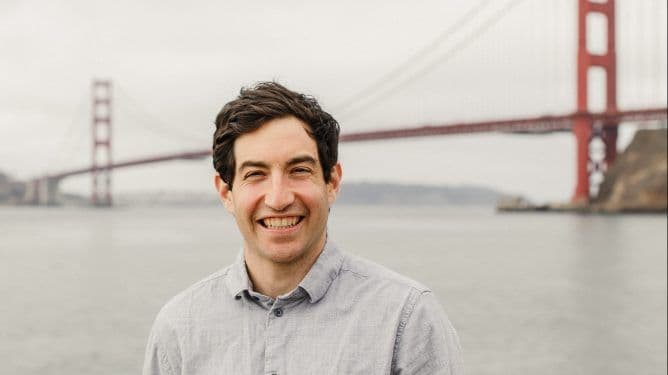
Just eight months after launching its commercial service, AI leaderboard providerArena, which originated as a research project at UC Berkeley in 2023, has reached $100 million in annualized run-rate revenue. Arena is best known for its popular crowdsourced AI model performance leaderboard, generated from over 10 million user evaluations. Its consumer website lets a user type a prompt it sends to two models; afterwards, the user chooses which model did a better job. While Arena’s popular AI model leaderboard is free for public use, the company began generating revenue from its platform in September when it introducedAI Evaluations, a service that provides model labs and enterprises with deep-dive performance analytics gathered from its community. Arena’s rapid revenue growth shows that its commercial offerings are as popular with customers as they are with its community of evaluators, who are frequently drawn to the platform for early access to the latest, often unreleased, AI models. “A lot of people don’t even understand that our business is making any money at all; people still see us as like an open-source project,” Anastasios Angelopoulos, Arena’s co-founder and CEO, told TechCrunch. While Arena calls its revenue milestone ARR, a term that traditionally stood forannualized recurring revenue, Angelopoulos clarified that the company charges customers for “consumption,” which means that its revenue is not recurring. While Arena doesn’t have direct competitors – Yupp, another crowdsourced AI model-picking startup,shut downin March— Angelopoulos said the company competes “for the same dollar” with human labeling startups like Mercor, Surge, and Scale AI, all of which assist model makers in refining their AI during post-training. As AI providers strive to maximize model performance, their appetite for post-training refinement services continues to surge. When Arena announced in January that it raised a $150 million Series A at a post-money valuation of $1.7 billion, its annualized revenue was$30 million. Elsewhere, Handshake’s gross annualized revenue from AI training has nearly doubled since January, climbing from $550 million to nearly $1 billion, The Informationreportedin April. Mercor’s annualized revenue also topped $1 billion earlier this year, up from $500 million last September,accordingto The Information. Arena ranks models on a variety of tasks such as text, coding, vision, and image generation, as well as complex, long-running workflows through its recently introduced Agent Mode. Along with Angelopoulos (pictured left), Arena was co-founded by fellow UC Berkeley postdoctoral student Wei-Lin Chiang (pictured center), who serves as the startup’s CTO. The startup was also co-founded by Ion Stoica (pictured right), the renowned UC Berkeley professor and Databricks co-founder who advised the project before it incorporated as a company in April 2025. Arena has raised a total of $250 million from investors including Felicis, Andreessen Horowitz, The House Fund, LDVP, Kleiner Perkins, Lightspeed Venture Partners, Laude Ventures, and UC Investments.
View

South Korean tech giants commit over $550B to ease ‘ RAMageddon’
The world’s two largest memory chip companies plan to invest $518 billion (~800 trillion won) to build four new memory fabs in southwestern South Korea, a region that has historically attracted little semiconductor investment. The announcement is part of the country’s sweeping national investment plan spanning semiconductors, AI data centers, and physical AI, which was unveiled at a presidential briefing on Monday, with the chairmen of Samsung and SK Hynix in attendance. The plan breaks down into three buckets. In the memory chip bucket is $518 billion for four new memory fabs in the southwest, plus $52 billion for an HBM (high bandwidth memory) packaging hub in the central region. Then there’s another $356 billion (550 trillion won) for AI data centers to be built by Korean tech and energy behemoths such as SK, GS and Naver through 2035. All told, South Korean tech companies have committed to spend over $900 billion on AI and the demands for chips it is creating. With this, the nation hopes to catapult itself into becoming more of an AI power player than it already is. Currently, Samsung and SK Hynix (along with U.S. memory chip maker Micron) are all enjoying record demand from what’s been calledRAMageddon, a worldwide shortage of memory chips caused by the AI buildout. “Semiconductors, physical AI, and AI data centers are the triple axis for South Korea’s next industrial era,” President Jae Myung Lee saidin a televised addressMonday, calling 2026 the year South Korea must establish itself as an “irreplaceable” industrial power. Lee said existing chip facilities in Yongin and Pyeongtaek, the heart of South Korea’s semiconductor belt just south of Seoul, have “already reached their limits,” and urged companies to accelerate investment in the southwest, hoping to spreading the AI wealth beyond the nation’s capital. “We must secure overwhelming production capacity in advance,” he said. Yet, Lee pushed back against media reports that the government had pressured companies into the investments,reportedly sayingthe decisions reflected the companies’ own judgment. “The government’s role is to invest its capabilities so that companies can invest without losses and with better prospects,” he was quoted as saying. Samsungseparately published a press release Monday, announcing plans to invest 2,655 trillion won (~$1.7 trillion) over the next decade, with 425 trillion won earmarked for the Honam region, the southwestern corner of the Korean peninsula. The company cited expected incentives around power, water, workforce, and living conditions as key factors in selecting Gwangju, roughly 300 kilometers south of Seoul, for a new semiconductor fab, alongside an AI data center in Haenam, at the southern tip of the peninsula. That is not an outlandish sum compared to U.S. tech giants Alphabet, Amazon, Meta, and Microsoft, who will collectively spend $650 billion on AI infrastructure this year alone,according to Reuters. Meanwhile, SK Group announced a 2,100 trillion won (~$1.4 trillion) medium-to-long term investment roadmap, 1,100 trillion won to expand semiconductor production capacity and 1,000 trillion won for AI data centers nationwide. SK Hynix, the group’s core semiconductor affiliate, is central to the chip expansion push, while SK Telecom will lead the buildout of 15 gigawatts of AI data center capacity across the country. Whether the ambition translates into execution is another question. Deep tech industries like semiconductors and AI don’t move on political or even customer demand timelines. Fabs take years to build and the risk is that, by the time they are ready, the demand that caused them will have ebbed, leaving companies with oversupply and crashing prices. For now, the world’s AI chip supply chain, especially those hungry for all things memory, will be watching to see if South Korea can pull it off.
View

Anthropic and Gov. Newsom forge deal allowing California government to use Claude at half price
Governor Gavin Newsom (D-CA) and Anthropic havemade a dealthat allows California government agencies to use Claude at a discounted price. This agreement comes at a time when businesses arestrugglingto manage the hefty costs of enterprise subscriptions to AI tools. Under the deal, all state agencies and local governments will have access to Claude, Anthropic’s AI chatbot, as well as training and support from Anthropic. A press release from the Governor’s office says that Claude will help state employees draft documents and analyze information. “AI should not replace the human work of government; it should help our workers move faster, solve problems more effectively, and deliver better results for Californians,” Governor Newsom said in astatement. This deal follows Newsom’s Marchexecutive orderthat intends to accelerate the use of AI “to make government more efficient” while also maintaining stronger safety standards. “While others in Washington are designing policy and creating contracts in the shadow of misuse, we’re focused on doing this the right way,” Newsomsaidat the time. As Anthropic forges a closer relationship with the state of California, the federal government has made an enemy out of the OpenAI rival. Earlier this year, Anthropic and the U.S. Department of Defenseclashedover a contract that would give the government agency permission to deploy Claude for any lawful use. Anthropic sought to explicitly carve out protections that prevent the government from using its technology to surveil Americans or deploy autonomous weapons without human oversight. But Defense Secretary Pete Hegseth refused, and the agency signed a deal with OpenAI instead. The government went as far as to declare Anthropic a “supply-chain risk,” preventing the company from working with any other Pentagon contractors. While the state’s path clearly diverges from the actions of the federal government, California’s CIO and Department of Technology director Chris Giventold POLITICOthat the supply-chain risk designation “just didn’t come up” while negotiating this Anthropic contract.
View

Tech Mahindra Partners With Perplexity to Strengthen AI-Led Sales Operations
Tech Mahindra will roll out Perplexity Enterprise Pro across its sales and customer-facing teams.
View

Omen AI’s plan to optimize data centers is all wet
The AI-driven demand for compute power has data centers looking to squeeze more from every rack of GPUs. One consequence? Bacterial outbreaks. The liquid for liquid-cooled chips is a mixture of water and a substance that inhibits bacteria growth. To run the chips hotter, data center managers can change the mix to include more water, which absorbs heat better, but leads to nasty contamination that clogs the flow. To solve that, they flush the system, which can mean shutting down a rack for five or six hours at a potential cost of millions of dollars. Omen AIhas a solution: A tiny spectrometer that can monitor that fluid health in real time, spotting bacterial growth before it becomes a massive problem. “You’re not risking huge amounts of downtime because you have no insight into what’s going on chemically,” explains CEO and founder Zach Laberge. Today, Omen AI said it raised a $31 million Series A round, led by Nava Ventures and including participation from CRV, Vanderbilt University, Mann+Hummel, Starhill Holdings, and Hard Launch Capital, as well as personal investments from executives at Bridgestone, GM, Johnson Controls, and TensorWave. Laberge founded his first company in 2020 when he was 14, raising $3 million to install sensors on construction equipment and ultimately dropping out of high school. (His father and mother, a former Minister of Education for Ontario, were supportive of his plan to carve his own path.) After that startup shut down, Laberge started Omen in 2024, with the idea of focusing on fluid systems as the key to enabling construction machinery to be smart enough to know when it needed to be fixed. The idea was to replace the time-consuming process of extracting samples and sending them to a lab with real-time awareness. Besides bacterial growth, the device can spot pumps and pumps wearing out if it sees copper or chromium, or seals if it sees silicon. Caterpillar dealerships were a key early customer for Omen’s heavy vehicles business, but Cat is also a major supplier of gas-powered turbines and generators to provide on-premises power for data centers. It didn’t take long for Omen to see where the wind was blowing. “That was kind of the transition,” Laberge told TechCrunch. About six months ago, “a lot of the dealerships were saying, ‘Hey, we’re starting to put sensors on our turbines, can you guys do anything on the building side of things?’” Omen discovered that those buildings are full of fluid, from their HVAC systems to their chip cooling. Spotting a new, fast-growing group of potential customers, Omen began to focus on data centers. “It’s rare to see such a young founder who has the respect of established, large corporations in a space that moves a bit more slowly,” said Cory Rellas, a partner at Nava Ventures who sits on Omen’s board. “For Omen in particular, much of our diligence came through our introductions with large customers which quickly validated their approach.” Omen, which has raised $40 million since its founding in 2024, is working with a dozen data center customers as they build out their offering, including TensorWave, a company building an AI compute cloud on AMD chips. “The fluid running through these massive systems is a critical variable that most of the industry is flying blind on,” Piotr Tomasik, TensorWave’s president, said in a statement. “Omen [sees] the future of infrastructure exactly the way we do, better monitoring to optimally support compute customers.” While many organizations rely on mailing fluid samples to labs for insight, Omen isn’t alone in developing on-premises analytics — Pyxis, an established water-monitoring firm, rolled out its data center coolantmonitoring productearlier this month. The key tech advances that unlocked this approach are recent improvements in both optical technologies and signal processing software. “Hardware is just cheap enough that it makes sense to play at scale, and then signal processing lets us make more sense out of the noise,” Laberge said.
View

Robot hand company settles Tesla trade secret suit and announces $11M raise
Jay Li doesn’t recommend getting sued by Tesla if you’re trying to get a startup off the ground. But he does think his company, Proception, might be better off for having endured the experience. “I think it’s kind of like a resilience test, or pressure test,” he told TechCrunch in an exclusive interview. “People say that what doesn’t kill you makes you stronger, right?” Li, who was a technical lead on Tesla’s Optimus humanoid robot program, wasaccused by his former employer last yearof absconding with trade secrets to start Proception. But after months oftradinglegal blows, he finally reached a settlement with Tesla, which dismissed the lawsuit earlier this month. (Tesla did not respond to a request for comment.) Now Li is free to tackle what he thinks is an even harder problem: making robot hands work like a human’s. To help do that, Proception announced Monday that it has raised an $11 million seed round led by First Round Capital, with contributions from Y Combinator and early stage fund BoxGroup. Proception also announced Monday that it is shipping the first batch of its “high-dexterity robotic hand” to “researchers and robotics companies,” while opening up to wider orders. The goal, Li said, is to become the top hand supplier to other companies that don’t want to spend the time or resources developing what’s known in the industry as “dextrous manipulation.” While there’s been an avalanche of money and attention rushing into the world of robotics, Li believes not enough of that has gone to making robotic hands truly mimic a human’s hands. One of the loudest voices talking about this challenge has actually been his old boss, Tesla CEO Elon Musk, who has said robot hands are one of the biggest engineering problems yet to be solved. While Musk has maintained that Optimus robots could start working in factories in a matter of years, the consensus view is that making robotic hands equivalent to a human’s is still many years away. Kevin Lynch, the director of Northwestern University’s Center for Robotics and Biosystems, told the Wall Sreet Journal last year that his team believes it will be a decade until they are “functional and useful and able to do some of the things that humans do.” Li thinks Proception can do it much faster, in large part because of how they’re collecting data. Most companies training humanoid robots right now are using teleoperators to train their systems. A human wearing a virtual reality headset is able to see what a robot sees and manipulate what’s in front of that robot, then the robot can learn from the commands given by the human. A big drawback to this approach, according to Li, is that the teleoperator is not receiving feedback from the objects the robot is touching. This approach is also limited to the number of robots a company has available at any given moment, Li said. Proception’s solution is a glove laden with sensors. With human testers wearing the gloves (and a headset), Proception and its customers can capture “human hand interaction data without requiring a robot in the loop,” according to Proception’s press release. This same glove also goes on the hand Proception is developing, acting as its sensor-packed “skin.” The hand has 22 degrees of freedom and multiple joints per finger to enable a “wide range of dexterous motions,” according to Proception. Li said this approach will also let Proception and its customers gather finer, more task-specific data that can allow its robotic hands to more accurately resemble a human’s. He also thinks it is better suited to scale up. “You need both hardware and data, and those need to come hand-in-hand to get [dextrous manipulation] to work. A lot of companies solely focus on hardware, or like hardware plus non-scalable data [collection],” he said. “We’re working on this highly dexterous hardware plus highly scalable data. We believe that’s a key combination to solve this problem.” First Round partner Bill Trenchard, who led the investment in Proception, said this was a big reason why he backed Li. “We think they will have the best hand in the market, maybe the most sophisticated hand today, and the underlying data and models to support that,” he told TechCrunch. “Dexterous manipulation is a very, very, very important part of the whole humanoid story going forward, and as many people have said, it’s sort of the last mile of getting these robots to be truly performant.” Trenchard also praised Li’s ability to keep a cool head while being sued by his former employer. “He was very upfront with us when this came out, and I think the team did an amazing job of keeping their heads down,” Trenchard said. “Jay’s a very strong leader.” Li is also confident. After facing down Tesla’s “hardcore litigation department,” he told TechCrunch that he wouldn’t be surprised if the company comes calling for help as Proception grows. “I think it will happen,” he said.
View

Mphasis Joins Microsoft Security Partner Ecosystem Amid Rising Cyber Threats
Mphasis said the membership builds on its existing collaboration with Microsoft across managed security services, cyber fusion centres and advisory offerings, as enterprises step up investments in AI-driven cyber defence.
View

Capgemini to Lead Bentley Motors' Digital Transformation With AI, Intelligent Manufacturing
The facility is being developed as a hub for hyper-personalised, digital, and sustainable luxury vehicle production.
View

Indian IT Wants to Break From Its US Addiction. But It's Harder Than It Looks
Indian IT firms are piling up non-US wins. But after decades of American dependence, the numbers reveal a sector that is moving, just not fast enough to outrun the risk it is trying to hedge.
View