🚀 Zaprep: Tus redes sociales al máximo. Empezar gratis — automatiza 1,000 DMs/mes y convierte el engagement en leads. con 1,000 DMs automatizados/mes.
Enviar tu herramienta
Últimas Noticias de IA

Cursor capitalizes on GitHub frustration, launches rival hosting platform
For as long as anyone can remember, GitHub has been the de facto code host preferred by a majority of developers. However, in recent times, the platform has struggled withwidely reportedoutages and performance degradation and, as it drops the ball, Cursor is waiting to pick it up. The AI startup, which is nowofficially a part of SpaceX, launched Origin this week — a new code-hosting platform designed to do all of the things that developers typically use GitHub for: collaboratively work on codebases, browse and edit them, handle pull-requests (edits made by others asking to be added to the main codebase), and store them in repositories. This seems like a natural next step for Cursor, whose primary focus until this point has been selling automated web development services throughits AI Code Editor. Cursor has also said that “agent native” features will soon be available for Origin, although hasn’t shared many details yet. The company also says it is building a wider “app ecosystem” to support broader coding efforts within Origin. Interestingly enough, using Origin doesn’t require a user to stop using GitHub. Indeed, Origin is designed to allow developers to work alongside GitHub and pass code back and forth between the two in an interoperable manner. “Your GitHub repos can sit alongside the ones Cursor hosts,” Cursorsays in its blog. “Connect GitHub to Cursor, pick your org, and you’ll see the repos you can sync. Select one and Cursor pulls it in.” The launch of Origin coincides withongoing frustrationover a perceived dip in GitHub’s services. Indeed, on the same day that Cursor launched its new platform, GitHub suffered aquite lengthy worldwide outage. For over six hours, the site’s functions werereportedlydegraded, witha nearly 20%error rate worldwide. This isn’t the first time this has happened. either. Earlier this year, after a rash of outages, GitHubannouncednew actions to sate unhappy coders as its availability problems seemed to escalate. More broadly, the platform hassuffered 257 outagesover the past year, a recent analysis by LeadDev states. Such persistent issues have led to “a visible exodus of high-profile users,” writes LeadDev’s reporter Charles Humble. Still, if Cursor wants to compete with GitHub, it will have its work cut out for it. According to GitHub’s own metrics,some 180 million developers use its platformas of last October. The platform, which was founded in 2007 and acquired by Microsoft in 2012,continues to bethe largest source-code host in the world.
View

Why Apple’s camera-equipped AirPods may not be the ‘pervert pods’ consumers fear
Camera-equipped AI wearables today have developed a bit of a reputation problem. Devices like Meta’s Ray-Bans raise concerns about people being recorded without their consent. So the idea that Apple is reportedly preparing to release AirPods with cameras in them seems to conflict with the iPhone maker’s desire to position itself as aprivacy-focusedtech company. But Apple’s now-leaked camera-equipped AirPods may not be as creepy as they first sound. The rumored cameras were reportedlyconfirmed via video footagefound in Apple’s macOS 26.7 RC (short for “release candidate,” or the final test version of the software before it ships publicly). The footage, found by researcherAaron Perris, shows a man holding up a book while wearing AirPods and apparently having a conversation with Siri about it. The audio track accompanying the video says: “With Visual Intelligence, your world becomes savable. See something you like? Just ask me to save it for later.” The addition of cameras to the popular wireless earbuds is further confirmed through code that references a“Hair Detected”error, which would warn users when their hair is covering the AirPods’ camera. The launch of such a device could very easily backfire on Apple if not done right. Some additional info about AirPods Pro 4 with cameras, found in macOS 26.7 RC:If you have long hair that blocks the camera, there will be an error that is titled "Hair Detected" that says "to get the most accurate information about things in your environment, make sure AirPods…https://t.co/hUbWovpsyc For a company whose brand is built on trust, this is a bigger gamble for Apple than one of its typical hardware refreshes. AirPods currently blend as a simple iPhone accessory that people wear all day without a second thought. A change like this could instead push them to the front of people’s minds, making them wonder whether the person opposite them is secretly recording. Apple appears to have thought this through, based on prior reporting. According toan earlier report from Bloomberg’s Mark Gurman, the AirPods with cameras won’t be able to record media. As Gurman put it: The cameras essentially act as eyes for the Siri digital assistant and aren’t designed to take photos or video. These components — located in both the right and left earbuds — allow the device to capture visual information in low resolution. In other words, the goal isn’t to turn one of Apple’s best-selling accessories into a surveillance device (lest they become “pervert pods”). It’s to provide a way for AirPods owners to engage with the newlyupgraded Siri AI,which is set to ship in September withApple’s iOS 27and other software updates. That means an AirPods wearer could look at something — like a book, as shown in the leaked video, or perhaps some ingredients they’re preparing to cook, per Gurman’s earlier reporting — and simply ask Siri for help. The feature could also be useful for turn-by-turn walking directions when navigating an unfamiliar city. For Apple, the bigger strategic bet is that this feature could also push consumers toward, if not a screen-free future entirely, then at least one where there’s less need to pull out an iPhone throughout the day. By baking AI access into a commonly worn and already socially acceptable wearable, Apple’s customers could interact with the world around them in a more natural way than staring down at a glowing screen. There is one wrinkle, though. Gurman also reported that the new AirPods would include an LED indicator that lights up whenever the device is sharing visual data to the cloud. He questioned the light’s visibility, given the AirPods’ small size, but either way, its inclusion could work against Apple. Though it’s the right thing to do from a transparency and privacy perspective, that LED risks visually lumping AirPods in with other AI wearables already facing public skepticism, like theMeta Ray-Bans,Snap’s Specs, orGoogle’s new AI glasses. Apple can control what the cameras do, but it’ll have far less control over what people assume they do.
View

Etched’s valuation doubles to $21B in a month
Etchedon Tuesdayannouncedthat it has raised another $700 million at a $21 billion valuation, led by Jane Street after the famed quant fund tested and bought the startup’s AI hardware. Even by AI standards, this valuation step-up is jaw-droppingly fast. Etched was valued at $5 billion in December. It raised a $300 million Series C at a$10.3 billion valuation in July. Now investors have doubled its valuation to $21 billion, up nearly $11 billion, in a month. Etched delivers its AI tech as full systems that it calls “frontier inference clusters.” (Etched competitor Nvidia calls its full systems AI factories.) Co-founder and COO Robert Wachen told TechCrunch that investors are so enthusiastic because Etched has designed two new components from scratch to speed up inference — the computing process that happens after a user submits a prompt. “Inference is built in two stages,” Wachen said, “prefill and decode.” In the mathematically and compute-intensive “prefill phase,” the system must understand the prompt, including context. In the memory-intensive “decode” phase, the system generates output tokens, meaning the actual answer the user sees. Etched created a prefill chip that operates at low voltage, allowing it to pack in more transistors without the typical heat problems of other high-end AI chips. It can therefore process more tokens faster. Etched created a new type of memory and an interconnect for the decode process that the company calls cluster-scale memory. “It allows many chips to connect together and use a shared memory pool at a very, very fast, low latency,” Wachen said. The result, Etched promises, is higher speeds and lower costs. Etched is still battling the perception from its early days that it etches a particular model into its chips, meaning that each chip is somehow custom-designed to run one frontier model. That was its original intention but is no longer the case. Etched’s systems can run any frontier model. In theblog postannouncing the new round, investment firm Jane Street said, “We tested the chip and are pleased with the early results. Etched’s unique approach to inference delivers the precision we will need to support our most demanding workloads. We’re excited to now have our own rack running in our datacenter.” Other investors in Etched include Kleiner Perkins, Sequoia Capital, Andreessen Horowitz, Peter Thiel, Tiger Global, Bain Capital Ventures, Neo, Stripes, Primary, Positive Sum, Diffusion, Argo, and Blackstone.
View

OpenAI institutes new safeguards after Hugging Face breach
On Tuesday, OpenAI announced a new batch of security policies focused on containing security incidents while models are being tested. The new safeguards include more detailed monitoring of models during the development process, as well as greater emphasis on alignment and security during the post-training process. “As models become more capable, the risks associated with developing and testing them internally also grow,” the company saidin a blog post. “Our standards for monitoring, alignment, and security must stay ahead of those risks.” The new measures are one of the first public changes in OpenAI’s safety practices since the immediate aftermath of the Hugging Face incident, which wasdisclosed on July 21. OpenAI representatives said that the measures are not a direct response to the Hugging Face incident but were also provoked in part by the cybersecurity capabilities of the forthcoming Astra model, as well as the overall pace of progress in AI development. In the same post, OpenAI disclosed that it had paused reinforcement learning (RL) for two weeks following the Hugging Face incident but had since restarted many of the less-risky models. “Our largest planned frontier RL run remains on hold while we conduct smaller-scale training and evaluations to assess model behavior, validate our safeguards, and establish more evidence of alignment before proceeding,” the post reads. Speaking to reporters, OpenAI’s VP of research, Amelia Glaese, emphasized that the strictness of the controls would increase as models became more capable, with the largest models facing the greatest scrutiny. “We have put in place requirements and expectations for safe development,” Glaese told reporters. “Those requirements and expectations vary with the level of risk that we see.” OpenAI has been criticized forpoor network security practicesin the wake of the incident, which saw models escape their training environment by compromising a tool on its network that had access to the internet. The new safeguards include stronger network isolation practices, although the specifics remain vague. Under the new system, the post says, “a single compromise of a workload or supporting service does not, by itself, allow for unauthorized access to the Internet, or other internal networks.” The strongest safeguard is the monitoring system, which will examine tool actions, available reasoning traces, and activity logs for a variety of unauthorized behavior. OpenAI says it aims to issue alerts within 30 minutes of the concerning activity. OpenAI estimates that the compute burden of that monitoring will be roughly 20% of whatever process is being monitored. The company promised further details on the system in a forthcoming blog post. The company’s official postmortem analysis of the event is also still pending.
View

ChatGPT for Teens Launches Globally With Study Mode, Parental Controls and Safety Features
ChatGPT is getting a dedicated experience for teenage users as OpenAI introduces new safety and learning features for people under 18. The new experience will change how younger users interact with the AI chatbot, with additional safeguards and tools aimed at supporting more responsible use. OpenAI will also give parents optional controls over some aspects of their teen's ChatGPT experience. ChatGPT for Teens is now rolling out globally, with availability expanding to eligible accounts over the coming weeks.
View

Perplexity’s free AI offer left it with millions more users in India
Perplexityspent the past year running one of the biggest AI growth experiments,giving its premium service awayto customers of Indian telecom giantAirtel. Now, as the earliest of those free subscriptions expire, the results are starting to emerge, offering an early test of whether bundling paid AI services can create lasting users and revenue after the giveaway ends. In July 2025, Perplexitypartneredwith Airtel, India’s second biggest telecom operator, to offer a free 12-month Perplexity Pro subscription, normally worth about $200, to the Indian carrier’s 360 million customers. New redemptionsended on January 16. However, because subscribers retained Pro for a year from activation, the earliest usersbegan reachingthe end of their free access last month and had to opt out of auto-renewal if they did not want to be charged. Perplexity’s AI giveaway had an immediate impact, as it saw 5.9 million app downloads in India in July 2025, according to data Sensor Tower shared with TechCrunch. That was up 625% from the previous month and more downloads in a single month than the 5.4 million Perplexity had accumulated during the entire first half of the year. This momentum was not limited to the launch month of the Perplexity offer but persisted well beyond it. Perplexity recorded 56 million downloads during the seven months that the offer was available to new users, more than nine times the preceding seven-month period, Sensor Tower estimated. Monthly active users more than doubled to 8.9 million in July and eventually peaked at 22 million in October. India has long been a massive market for downloads for global technology companies, thanks to its vast population, more than a billion internet subscribers, and relatively low mobile data costs. The country is the world’s second-largest smartphone market after China — with over 700 million users — and has similarly emerged as a major source of users for generative AI services. That scale has, however, proved considerably harder to translate into revenue. Specifically for AI companies willing to subsidize access in pursuit of scale, India’s market dynamics have made it an attractive testing ground.Anthropic,Google,OpenAI, and others have increasingly chased Indian consumers withIndia-specific,lower-cost plans, free access, and distribution partnerships, aiming to eventually translate them into paying customers. However, once the window to claim the free Airtel subscription closed in January, Perplexity’s downloads fell sharply. Sensor Tower estimates Perplexity was downloaded 3.3 million times in India between February and July, down more than 90% from the preceding six months. The users Perplexity had acquired did not disappear quite so quickly. Monthly active users, which peaked at about 22 million in October, stood at nearly 14 million in July — down 37% from that high but still more than five times the about 2.6 million monthly users Perplexity averaged in the first half of 2025, per Sensor Tower. “While the time-sensitive nature of this promotion would naturally lead to a decline in adoption after the offer period, ongoing usage has remained resilient,” Abe Yousef, senior insights analyst at Sensor Tower, told TechCrunch. Perplexity, he added, has “significantly more users” in India than it did in the six months before the promotion. More strikingly, Perplexity’s drop in downloads has not been accompanied by a decline in spending. Sensor Tower estimates that Perplexity’s in-app purchase and subscription revenue in India between February and mid-August rose about 60% from the period when the Airtel offer was available to new users, despite downloads declined. That trend has continued even as the earliest Airtel subscribers have started losing their free Perplexity Pro access. From around July 18 through August 12, Perplexity’s average daily in-app purchase revenue in India, per Sensor Tower, was 9% higher than during the preceding 30 days and 27% above the average for the first half of 2026. The increase gives us an early indication that some users may be willing to pay after getting accustomed to the premium service for free. But of course, it does not confirm that Airtel users themselves are deliberately converting into paying subscribers. The free subscriptions were set to auto-renew, requiring users who did not want to continue to cancel their service before the renewal date to avoid being charged. This makes it possible that some of the increase reflects users who did not cancel in time rather than those who actively chose to pay. Sensor Tower cannot distinguish between those scenarios or separate former Airtel subscribers from other paying customers. Appfigures, another app intelligence firm, also found that the Airtel deal dramatically changed Perplexity’s trajectory in India. The data Appfigures shared with TechCrunch indicates the initial growth was specific to Perplexity rather than simply reflecting growing appetite for AI apps overall. “I compared Perplexity’s downloads to ChatGPT and Claude to ensure it wasn’t more appetite for AI, and it wasn’t,” Appfigures co-founder and CEO Ariel Michaeli told TechCrunch. In the week before the Airtel offer launched, Perplexity averaged about 11,200 downloads a day in India, per Appfigures. That jumped twentyfold to nearly 223,000 a day during the first week of the offer’s launch and continued climbing, hitting an average of about 305,000 a day between mid-September and mid-October. To compare, downloads of OpenAI’s ChatGPT and Anthropic’s Claude remained broadly stable. Appfigures also sees signals that Perplexity emerged from the giveaway with a bigger business in India, even though the promotional download boom disappeared. Perplexity’s monthly net mobile revenue in the country, per Appfigures, grew from about $34,000 in January 2025 to $70,000 in December and reached $156,000 in July 2026. The AI company generated an estimated $878,000 in India in the first seven months of 2026, up 16% from all of 2025. Michaeli cautioned against attributing all of that growth to Airtel users becoming paying customers. The enormous visibility generated by the promotion, he noted, may also have attracted paying users who were never part of the giveaway. Perplexity’s experiment has since become part of a much broader wager by AI companies in India. In August 2025, OpenAI made its lower-pricedChatGPT Go plan free for a yearin the country. Google also followed Perplexity with a deal to offer itsAI Pro subscription free for 18 monthsto eligible Reliance Jio users. That makes Perplexity an early test of whether the strategy can work. Its Airtel deal began months before the similar moves by OpenAI and Google. This also means that Perplexity users are among the first large cohort in India to reach the point where free premium AI turns into a product they may have to pay for. India has already emerged as the world’s largest market for generative AI app downloads but remains difficult to monetize. AI companies have beenwilling to trade near-term revenuefor users in this price-conscious market, striving to eventually turn that scale and habit into paying customers. That said, the data cannot yet show how many of Perplexity’s newly acquired users will willingly pay once their free year runs out. That test will play out over the coming months as later cohorts of Airtel users reach their renewal dates. Perplexity did not respond to a request for comment.
View

OpenAI launches a safer ChatGPT for teens — years after teens started using it
Afternumerouslawsuitsover AI chatbots’ lack of safety measures, leading to teens’ suicides and other mental health concerns, OpenAI on Mondayannouncedthe launch of ChatGPT for Teens. The new product promises to include additional safety measures, as well as the educational crisis of ChatGPT-assisted cheating in schools. On the educational side, ChatGPT for Teens introduces a new Study Mode feature and other tools designed to encourage teen users to engage their curiosity and work through problems, not just get quick answers. As OpenAI explainsin a blog post, the Study Mode option will give teens guiding questions and step-by-step support to help them understand the material. Meanwhile, the teen experience will also include homework reminders that appear when a teen appears to be trying to cheat, instead of understanding the material. The AI chatbot will then push the teen to use Study Mode instead. The app will also support quizzes and learning visualizations, and controls that allow parents or guardians to decide when Study Mode is enabled by default, the company says. Still, it’s not clear how difficult it will be for teens to escape these new systems if they decide not to cooperate. Teens are incredibly adept at working around parental controls and other attempts to lock down digital experiences. Until ChatGPT’s teen mode can be put to more strenuous tests, it’s unclear how difficult it will be to work around these safety measures in reality. There’s also the question as to why these protections weren’t part of ChatGPT from the beginning. The AI chatbot first arrived in late 2022 and scaled to900 million weekly usersbefore meaningful safeguards designed specifically for teenage users were added. OpenAI says the age-appropriate protections will now be on by default in ChatGPT for Teens, which are designed to reduce exposure to harmful or developmentally inappropriate content. These measures are based on OpenAI’sUnder-18 Principles in our Model Spec, which the company claims to be informed by “developmental science and guidance from experts.” Parents will also be able to use the family tools and parental controlspreviously introducedto manage settings, receive safety notifications, and set Quiet Hours, among other things. OpenAI announced a partnership with CodeAI to help teens learn more about AI, including how it works, how to direct it or question it, and how to use it. In the classroom, OpenAI already offersChatGPT for Teachersto help provide schools with institution-managed access to AI and support.
View
Warp’s new system is an out-of-the-box software factory for AI development
Companies are still grappling with exactly how software development should work in the AI area, but one early answer is the so-called software factory. Essentially an agent loop that’s built around the traditional stages of software development, the software factory approach has become a popular way for companies to remake their engineering organizations for the AI era. Now, a system from Warp could make that transition a lot easier. On Tuesday, the AI coding company introducedWarp Factories, a new system designed to make building and operating AI software factories as easy as possible. Operating as an infrastructure layer, Warp Factories gives companies a simple environment for deploying agents and a roadmap for how to use them. To be clear, many companies are already having success with the factory model without any help from Warp. Stripe has been particularly public about its technical progress, developinga “minions” systemto automate development within its own codebase. Ramp has madesimilar progress, developing a background agent that can monitor its own code after it is deployed. As Warp CEO Zach Lloyd sees it, the target market for Warp Factories will be smaller companies without the resources to develop a system from the ground up. “[If you look at] things like running your agents in the cloud and steering those agents as they run, or bringing the work that they’re doing into your local environment, or setting up memory that goes across those agents, or setting up evals that go across those agents — it’s actually a huge infrastructure undertaking to do this right,” Lloyd told TechCrunch. In Warp Factories, the architecture is already built out of the box, with many of the most difficult decisions already made. Warp’s system is based on the standard phases of software development (triage, specification, implementation, review, and verification), but the agentic approach means any of those steps can be automated. Users can choose their own coding model and harnesses as necessary; the system works as well with Codex as with Claude Code. It also integrates with ticketing systems like Linear and Jira, and messaging systems like Slack and Teams, in an effort to plug in seamlessly to existing workflows. Beyond just shipping code, Warp Factories will also give managers the tools to track how well the factory is performing. With all the agents running in the same environment, it’s easy to compare performance metrics for different configurations, and to keep an eye on the overall token spend. Warp Factory also allows for self-improvement loops to optimize the overall system, automating management of the process itself. Even so, Warp Factories is not built to completely replace software engineers — just give them an easier way to collaborate with the new agentic workforce. In Lloyd’s own experience, there are still a lot of tasks that require a human at the wheel. “We automate like 30% of our tasks, 30 to 35% on a weekly basis,” Lloyd told TechCrunch, “and as models improve, as the context improves, as the harness improves, I think that that number is going to go up over time.”
View

Retail GCCs Want More AI, But Where is the Talent?
India’s retail GCCs are expanding AI teams, but experienced leaders remain the hardest capability to build.
View
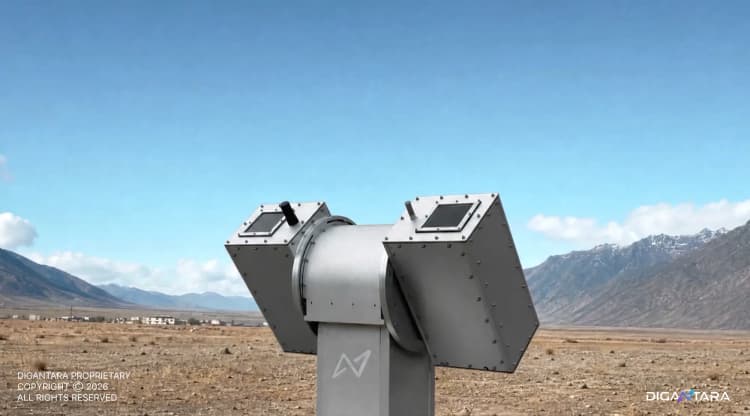
Digantara Unveils Five-Node MOSAIC Network to Track Objects in Orbit
The network will support orbital tracking and celestial navigation in GPS-denied environments.
View

Almost Nobody Is Using Anthropic’s Fable 5
Anthropic’s most powerful model, Fable 5, accounts for just 11.4% of business spending, and its share isn’t growing.
View

Superhealth Appoints Ex-Dunzo Co-founder To Scale AI-Native Hospital Model
Superhealth plans to scale its AI-native hospital model from one Bengaluru facility to 100 hospitals across India
View
Enviar tu herramienta


PoweredByAI.app es un directorio de herramientas de IA que ayuda a personas, empresas y creadores a descubrir las mejores herramientas de IA para escritura, programación, diseño, productividad y más.
© 2026 , Producto de011BQ. Todos los derechos reservados.