🚀 Zaprep: Tus redes sociales al máximo. Empezar gratis — automatiza 1,000 DMs/mes y convierte el engagement en leads. con 1,000 DMs automatizados/mes.
Enviar tu herramienta
Últimas Noticias de IA
Meta Launches Muse Spark as First Step Toward Personal Superintelligence
Muse Spark currently powers Meta’s AI app and website and will roll out to WhatsApp, Instagram, Facebook, Messenger, and AI glasses in the coming weeks.
View

Intel Joins Elon Musk’s Terafab Project to Build Chips for Humanoid Robots and Data Centres
Intel, on Tuesday, announced that it will join Elon Musk's Terafab project, alongside SpaceX, Tesla, and xAI. The chipmaker said that it will bring its domain expertise in designing and fabricating processors to help the billionaire build and scale the aim of developing chipsets for humanoid robots and data centres. First announced in March, Terafab wants to produce more than one terawatt of compute per year. Notably, chip fabrication is considered one of the most difficult ventures, requiring extremely high funds and years of research and development.
View
Atlassian launches visual AI tools and third-party agents in Confluence
Software giant Atlassian announced new AI tools and agents on Wednesday, with a focus on turning data into visual assets and applications. This includes the rollout of the visual tool Remix in open beta. Remix allows enterprises to turn the data and information stored in Atlassian’s content collaboration software Confluence into assets including charts and graphics. Remix will recommend which visual format makes the most sense for the data or information at hand and create these visual assets without requiring the users to open another application or software. The company also announced three new third-party agents that run within Confluence using model context protocols (MCPs). One agent connects Confluence users to the vibe-coding darling Lovable to turn product ideas and data into working prototypes. Another agent connects to app builder software Replit and allows users to convert technical documents into starter apps. The third agent works with AI presentation builder Gamma to build slides and other presentation materials. “With Remix and agents in Confluence, a single page becomes the starting point for whatever comes next: a clear story for leaders, a prototype for builders, or a walkthrough for customers, all from the same source of truth,” Sanchan Saxena, senior vice president of teamwork collaboration at Atlassian, wrote in a blog post announcing the features. “When you remove that friction, teams do more than manage documents; they create the next generation of products and experiences.” The new tools are the latest in Atlassian’s push to incorporate AI agents and tools directly into the apps workers are already using, as opposed to launching new software platforms. In February, the companyadded AI agentsto its product management software Jira. This follows a trend across the industry of companies looking to embed AI tools and agents directly into existing workflows as opposed to launching separate AI-powered software. While Salesforce was one of the first enterprises to launch a separate AI agent management platform,Agentforce, in 2024, it has since released many of its AI innovations through existing software like its recent upgrade that turned messaging serviceSlack’s chatbot into an AI agent. OpenAI is also leaning into this movement through its recentFrontier Alliances initiative. OpenAI partnered with four major consultant firms to task consultants with embedding OpenAI’s tech into their clients’ existing tech stacks and workflows as opposed to just selling them ChatGPT Enterprise subscriptions. “Technology should fade into the background and let people focus on their best work,” Saxena wrote in the company’s blog post.
View

Final 3 days to save up to $500 on your TechCrunch Disrupt 2026 pass
You don’t attendTechCrunch Disruptto sit in the audience. You go to gain leverage. Whether 2026 is a build, fundraise, hire, or scale year, this is where momentum compounds. With just three days left before these steep discounts end on April 10 at 11:59 p.m. PT, this is your opportunity to save up to $500 on your pass and secure your spot at the center of the tech ecosystem.Register here to save. From October 13 to 15 at Moscone West, 10,000+ founders, operators, and VCs will converge for three days of high-signal conversations and deal-making. Disrupt is not just content. It is access. You get: Last year alone, more than 20,000 curated meetings took place. In 2026, upgraded networking tools will make those connections even more targeted and efficient. One conversation can change your trajectory. AtDisrupt, that is the point. Disrupt has long been a stage for founders and investors who define eras. These are the kinds of voices that take the Disrupt stage — candid, tactical, and often unfiltered. Previous speakers have included leaders of category-defining startups and top-tier venture firms: In 2025, Disrupt featured 200+ onstage conversations with 250+ leaders shaping AI, venture capital, hardware, growth strategy, and more. Expect that same caliber of insight in 2026. Keep an eye on theevent pageas the agenda rolls out. Startup Battlefieldreturns with 200 pre-Series A companies competing for $100,000 in equity-free funding, global visibility, and direct investor access. Alumni include Discord, Cloudflare, and Trello. If you want to see what and who is next and hear directly from top VCs on what it takes to scale a viable startup, the Disrupt stage is where it happens. If your startup is ready for TechCrunch coverage, candid feedback from top VCs, and a chance to compete with the newest breakout companies,apply now. Know a startup that should join?Nominate them. More than 300 startup exhibitorswill showcase new products across the venue, especially in the Expo Hall, where deal flow and discovery collide. You are not just observing trends. You are seeing them before they scale. From October 11 to 17, TechCrunch Disrupt Side Events take place across the Bay Area, including breakfasts, cocktail hours, panels, and founder meetups that extend the connections beyond the main stage. The main event is powerful. The surrounding ecosystem makes it even stronger. This discount of up to $500 ends April 10 at 11:59 p.m. PT. If you want to be in the rooms where capital moves, companies scale, and ideas turn into industries, now is the time to lock in these exclusive low rates.Register here.
View

Databricks co-founder wins prestigious ACM award, says ‘AGI is here already’
Databricks co-founder and CTO Matei Zaharia almost missed the email telling him that he was the 2026 recipient of the ACM Prize in Computing. “Yeah, it was a surprise,” he told TechCrunch. Back in 2009, the tech Zaharia developed for his PhD at UC Berkeley, under the tutelage of famed professor Ion Stoica, was launched into Databricks. Zaharia had created a way to dramatically speed the results of slow, clunky, big data projects and released it as an open source project called Spark. Big data was in those days what AI is today and Spark turnedthe tech industry on its ear. The 28-year-old Zaharia became a tech celeb. Since then, he has helmed the engineering at Databricks, growing it into a cloud storage giant and now a data foundation for AI and agents. Along the way the company has raised over $20 billion —valuing it at $134 billion— and hit $5.4 billion in revenue. The Silicon Valley dream. On Wednesday, the Association for Computing Machinery issued him the award for his collective contributions. The award comes with a $250,000 cash prize that he is donating to an as-yet-to-be-determined charity. Zaharia, who in addition to his CTO duties is also an associate professor at UC Berkeley, is looking forward, not back. Like everyone else in the Valley, the future he sees is filled with AI. “AGI is here already. It’s just not in a form that we appreciate,” he told TechCrunch. “I think the bigger point of it is: We should stop trying to apply human standards to these AI models.” A person, for instance, can only pass the bar exam to be a lawyer if they’ve integrated vast amounts of knowledge. But an AI can ingest vast amounts of facts easily. If it answers knowledge questions correctly, that doesn’t equate to general knowledge. This tendency to treat AI like a human can have some profoundly negative impacts. He offers the example of the popular AI agent OpenClaw. “On the one hand, it’s awesome. You can do so many things with it. It just does them automatically,” he said. But it’s also “a security nightmare” because it’s designed to mimic a human assistant that you trust with things like passwords. That leads to the risk of being hacked, or the agent spending unauthorized money from your bank because your browser is logged in. “Yeah, it’s not a little human there,” he says. As a professor and product engineer, Zaharia is most excited about how AI can help automate research on everything from biology experiments to data compilation. Just like how vibe coding made prototyping and programming accessible to anyone, he thinks that accurate, no-hallucinations AI-powered research will someday become universal. “Not that many people need to build applications, but lots of people need to understand information,” he said. Eventually we’ll make AI work better for us by having it lean into its strengths: telling us what every rattle in our car means, or scanning beyond text and images to include radio and microwaves, or, what he’s seeing students do now, simulate molecular-level changes and predict their effectiveness. “The thing that I’m most excited about is what I’d call AI for search, but specifically for research or engineering,” he said.
View
OpenAI releases a new safety blueprint to address the rise in child sexual exploitation
In response to escalating concernsabout child safety online,OpenAI has unveiled a blueprint to enhance U.S. child protection efforts amid the AI boom. TheChild Safety Blueprint, which was released Tuesday, is designed to help with faster detection, better reporting, and more efficient investigation into cases of AI-enabled child exploitation. The overall goal of the Child Safety Blueprint is to tackle the alarming rise in child sexual exploitation linked to advancements in AI. According to theInternet Watch Foundation(IWF), more than 8,000 reports of AI-generated child sexual abuse content were detected in the first half of 2025, a 14% increase from the year prior. This includes criminals using AI tools to generate fake explicit images of children for financial sextortion and to generate convincing messages for grooming. OpenAI’s blueprint also comes amid increased scrutiny from policymakers, educators, and child-safety advocates, especially in light oftroubling incidentswhere young individuals died by suicide after allegedly engaging with AI chatbots. Last November, the Social Media Victims Law Center and the Tech Justice Law Project filed seven lawsuits in California state courts, alleging that OpenAI released GPT-4o before it was ready. The suits claim the product’s psychologically manipulative nature contributed to wrongful deaths by suicide and assisted suicide. They cite four individuals who died by suicide and three others who experienced severe, life-threatening delusions after extended interactions with the chatbot. This blueprint was developed in collaboration with the National Center for Missing and Exploited Children (NCMEC) and the Attorney General Alliance, as well as with feedback from North Carolina Attorney General Jeff Jackson and Utah Attorney General Derek Brown. The company says that the blueprint focuses on three aspects: updating legislation to include AI-generated abuse material, refining reporting mechanisms to law enforcement, and integrating preventative safeguards directly into AI systems. By doing so, OpenAI aims not only to detect potential threats earlier but also to ensure actionable information reaches investigators promptly. OpenAI’s new child safety blueprint builds onprevious initiatives, including updated guidelines for interactions with users under 18, which prohibits the generation of inappropriate content, or encouraging self-harm, and avoiding advice that would help young people conceal unsafe behavior from caregivers. The company recently released a safety blueprint for teens in India.
View

Astropad’s Workbench reimagines remote desktop for AI agents, not IT support
Demand for Apple’s Mac Mini hasskyrocketed,particularly in China, as the small computer has become an ideal platform for experimenting with autonomous AI agents likeOpenClawand others. Now, a company called Astropad is building out a remote desktop solution specifically for this use case. On Tuesday, Astropad CEO Matt Ronge introducedAstropad Workbench, a remote desktop solution for Apple devices that hepitchesas made “for the AI era.” While an AI agent running on a Mac Mini may not need a screen, its operator (the human) will want to log in at times to see what’s happening in order to check logs, monitor outputs, or restart stuck tasks, he says. The new remote desktop solution offers a variety of features, including high-fidelity streaming; the ability to dictate prompts and commands with your voice; plus support for other input methods like the keyboard, Apple Pencil, or touch; and clients for both the iPad and iPhone — the latter essentially putting the remote desktop solution into your pocket for on-the-go access. If you’re running AI agents across multiple Macs, Workbench offers a device chooser so you can move between them. The idea came about because it was something the team at Astropad had wanted for themselves, as had their friends. “We have heavily adopted AI at Astropad, and we’ve been using agents. And sometimes, you have an agent running on a long task, and you want to check on it,” says Ronge. “There’s not a great way to do this…there were existing remote desktop tools, but nothing built specifically for this,” he continues. “There have also been ways where you can use a terminal, or there are things like Telegram chats, but they’re limited. I mean, there are times you’ve got to see what’s happening on your Mac. You’ve got to approve a dialog or save something, or just visually see what’s happening.” Workbench also leverages the company’s proprietary, low-latency display protocol, which it calls LIQUID, which supports the workflows creative professionals use. It retains full fidelity, even at Retina resolutions, Astropad claims, and doesn’t blur lines or pixelate data. The protocol already powers Astropad’s other products, likeLuna Display, which turns your iPad into a second display, andAstropad Studio, which lets you use an iPad as a professional drawing tablet. While monitoring an AI agent may not always need a high-fidelity solution, Ronge points out that it’s something that’s nice to have — especially if you’re approving designs or mock-ups your AI agent made. Of course, remote desktop software has existed for some time, meaning Astropad has well-established rivals like Jump Desktop, RustDesk, AnyDesk, Parsec, VNC-based solutions, and many more. But Ronge suggests that those weren’t designed for the specific needs of using remote desktop software to keep tabs on AI agents. With Workbench, it’s easy to check on the status of logs to see your AI agents’ progress in order to spot issues, restart stalled jobs, and make other changes, but what’s more, you can do this from your iPhone or iPad. “We’ve been doing iPad stuff for years — it’s been, like, our whole company for the past 10 years. So we have a lot of experience in making good iPad apps,” Ronge says. “We know how to make good iOS apps…so we did that, and then we also added a voice model.” The tech uses Apple’s voice model so you can talk to your phone and direct your AI agent to do something with a press of the microphone button. “It’s a very natural way to work with agents. That’s the kind of feature that existing remote desktop [apps] just don’t have — they’re built for more traditional, enterprise-style remote desktop.” As a new release, there will still be some bugs and polishing needed, but the team is continuing to work on the product. Next up, they plan to launch Windows and Linux support and refine the iPhone app. The new software runs on macOS 15 and up and iOS 26,and is available as a free downloadoffering 20 minutes of access per day. For unlimited access, the cost is $10 per month, or $50 per year. Astropad, a bootstrapped and profitable small tech business, has over 100,000 customers, including those who have bought its iPad hardware accessories and its software. With Workbench, Ronge believes the company has the potential to reach both AI enthusiasts and businesses as remote support for AI agents becomes more common. “I totally think businesses are gonna buy it. I mean, just the productivity gains I’m seeing from it myself — this is totally headed to businesses. It’s just too powerful,” he notes.
View

Anthropic Taps Former Google Advisor to Lead India Policy Efforts
Anthropic plans to deepen engagement with policymakers, enterprises, and civil society as it builds a local presence.
View

Rupee Depreciation May Lift Indian IT Earnings Optics, Not Growth
Currency-led gains offer short-term relief, not a signal of recovery in IT demand.
View

Project Glasswing: Anthropic Debuts Claude Mythos Preview, Its First Cybersecurity-Focused AI Model
Anthropic, on Tuesday, announced Project Glasswing, a new initiative focused on artificial intelligence (AI)-powered cybersecurity. Powering the project for the San Francisco-based AI firm is a general-purpose model dubbed Claude Mythos Preview. The company introduces the model as its most capable when it comes to coding and agentic tasks. For now, it is only available to the partners of Project Glasswing and will enable them to detect security flaws and vulnerabilities across their tech stack. The AI firm has also allocated financial resources for the initiative.
View
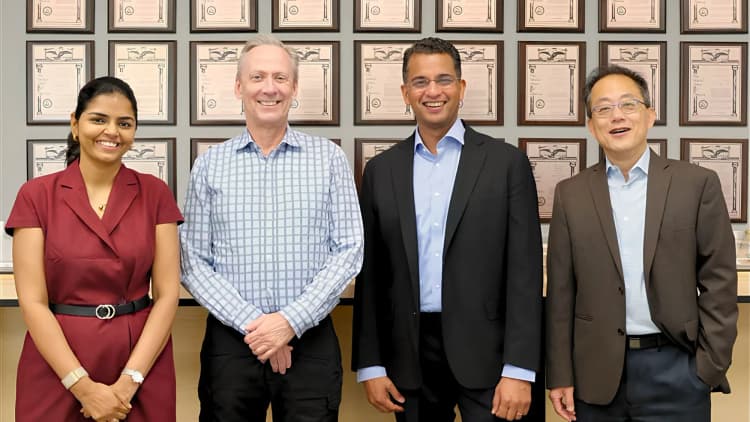
Cyient Semiconductors Completes $85 Mn Acquisition of US-Based Kinetic Technologies
The deal aims to expand Cyient’s global power semiconductor capabilities and strengthen India’s role in chip innovation.
View

The Delve Controversy Reminds One of Builder.ai and the Pitfalls of AI Hype
The recent split between Y Combinator and the AI startup Delve has ignited a firestorm of scrutiny over its compliance practices.
View
Enviar tu herramienta


PoweredByAI.app es un directorio de herramientas de IA que ayuda a personas, empresas y creadores a descubrir las mejores herramientas de IA para escritura, programación, diseño, productividad y más.
© 2026 , Producto de011BQ. Todos los derechos reservados.