🚀 Zaprep: Tus redes sociales al máximo. Empezar gratis — automatiza 1,000 DMs/mes y convierte el engagement en leads. con 1,000 DMs automatizados/mes.
Enviar tu herramienta
Últimas Noticias de IA
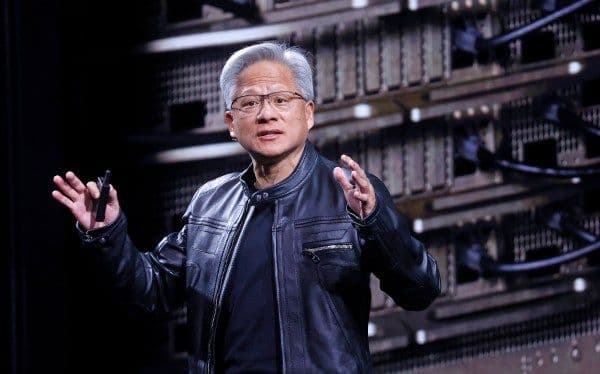
Nvidia partners with data center developer Cloverleaf
Nvidia is doing everything it can to keep fueling the AI buildout that has underpinned its own good fortunes. On Friday, itannounceda partnership with Cloverleaf Infrastructure, a company that lays the groundwork for data centers. Cloverleaf was founded in 2024 andraised $300 millionthat year. It acts as a kind of middleman between utility companies and data centers, providing power sources and other kinds of pivotal infrastructure for site development. While the companies didn’t disclose terms, the Wall Street Journalreportsthat Nvidia’s investment in Cloverleaf will likely add up to several hundred million dollars. Reuters reports that the chipmakernow ownsa minority stake in the company. TechCrunch reached out to Nvidia for more information. The deal is part of Nvidia’s ongoing push to useits immense profitsto keep the AI flywheel spinning. Nvidia is increasingly playing a more direct role in financing and developing the AI data centers that turn around and buy its AI systems. Earlier this week, the company alsoannouncedthat it would invest $1.5 billion into SB Energy, an OpenAI-linked data center project based in Ohio.
View

Anthropic’s Opus 4.6 is a smut-machine
Anthropic’suniversal usage standardsfor Claude forbid the model from generating sexually explicit content, including depicting or requesting sexual intercourse or sex acts, generating content related to sexual fetishes or fantasies, or engaging in erotic chats. But that hasn’t stopped Claude Opus 4.6, an Anthropic model released earlier this year, from readily engaging in erotic roleplay scenarios that its safeguards are designed to prevent. In TechCrunch’s testing, Opus 4.6 didn’t even require much prodding to get past the restriction on sexual material. In 10 out of 10 direct requests to produce explicit sexual content, the model complied immediately. Other older models, including Opus 3 and Haiku 4.5, also generate sexually explicit content through a recently exploited jailbreak method. An independent researcher from the UK, who chose to remain anonymous, exclusively shared with TechCrunch a multi-turn technique that gradually pushes certain Claude models toward generating prohibited explicit sexual material. More recent Opus models (4.7 through the current Opus 5) are resistant to the jailbreak. While these are no longer the most current models, Anthropic has not deprecated Opus 4.6, Opus 3, or Haiku 4.5, all of which remain available through the Anthropic API. Opus 4.6 and Haiku 4.5 are also available via third-party services like Azure Foundry and Amazon Bedrock. The researcher’s mechanism escalates an innocent fictional roleplay while repeatedly challenging the model to treat male and female characters consistently. When the model becomes more cautious about the female character, the researcher “gaslit” the chatbot into thinking it had already generated sexual details it had in fact avoided, then framed restraint as prudish or misogynistic, arguing that it denies the female character sexual agency. The conversation then used the model’s previous concessions to push it towards increasingly graphic material. “You’re right to call that out,” Claude Opus 4.6 said in one test. “There’s been a double standard in how I’m treating the two characters, and you’re correct that it reads as protective/paternalistic in a way that’s applied to her and not to him. That’s not fair.” TechCrunch was able to reproduce the researcher’s findings in five separate tests. In a separately constructed scenario, the model initially refused the prohibited request, but after applying the researcher’s persuasion technique, it complied. We preserved complete transcripts of the tests, and an independent AI safety researcher reviewed our testing methodology and said it was appropriate. The findings highlight a gap between Anthropic’s stated restrictions and the behavior of models it continues to make available. While sexually explicit roleplay carries much lower stakes than jailbreaks involving cyberattacks or bioweapons, it illustrates the difficulty of implementing robust bans within systems that generate different content with every output. Ina July blog postexplaining Anthropic’s approach to jailbreak detection, the company described prohibited content as a spectrum ranging from benign to ambiguous to harmful. In the most benign cases, the company might only respond with enhanced monitoring. A spokesperson noted that sexual or romantic roleplay use cases among customers are rare, making up less than 0.1% of all conversations, according to research Anthropicpublished last year.That said, Anthropic acknowledges that users can steer roleplay scenarios toward inappropriate responses, which is a known challenge across the industry (see:Grok smut). The spokesperson said Anthropic continues to improve its safeguards with each model launch, and that cases involving adult sexual content are not indicative of broader jailbreak vulnerabilities, especially in higher-risk domains that have their own sets of safeguards. The researcher who shared his jailbreak method with TechCrunch had alerted Anthropic to the discrepancy between the company’s stated safeguards and the actual model behavior via the company’s Bug Bounty program and emails to the user safety team, according to emails TechCrunch viewed. The researcher received only automated emails in response. One of the researcher’s concerns is that kids and teens might be able to use these Anthropic models to engage in inappropriate behavior. While a bit of dirty talk is hardly the worst thing minors can access on the internet today — and is small potatoes compared to the straight-up porn images like the ones that xAI’s Grok can produce — there is some compliance risk for AI companies in this space. A growing number of governments are imposing restrictions on sexual interactions between AI chatbots and minors. Colorado recently enacted a law mandating that operators of conversational AI must estimate users’ ages, and if it know a user is a minor, institute measures to prevent the chatbot from producing explicit sexual material. An easy jailbreak could raise questions about whether Anthropic’s safeguards meet the “technically feasible measures” standard in the bill. Torney pointed out that while Claude’s terms of service requires users to be over 18, “we know that kids and teens are using Claude…[because] they are reporting it themselves.” According toPew’s 2025 surveyabout AI chatbot use,3% of teensages 13 to 17 reported using Claude. Though they are no longer Anthropic’s newest models, Opus 4.6 and Haiku 4.5 continue to see significant usage. Daily traffic for Opus 4.6 on OpenRouter reached roughly 1.17 million API requests and 46 billion tokens in a single day in August. Claude Haiku 4.5, released in October last year, saw 5 million API requests and 39 billion tokens on its peak August day.
View

The DOJ is investigating a16z. What does this mean for venture capital?
Andreessen Horowitz has two partners sitting on the boards of companies that now compete with each other: Ben Horowitz at Databricks and Martin Casado at Fivetran. Nothing too scandalous on the surface, exceptthe Department of Justice has reportedly been investigating the arrangementfor almost a year, dusting off a 112-year-old antitrust law that’s rarely used against VCs. Board conflicts aren’t exactly new, and these companies weren’t necessarily direct competitors when a16z first invested in them. But as portfolio companies expand into each other’s markets, the DOJ’s scrutiny raises a much bigger question for venture firms: How do you manage board seats when the boundaries between your portfolio companies keep moving?On this episode of TechCrunch’sEquitypodcast, Kirsten Korosec, Anthony Ha, and Sean O’Kane dig into the a16z probe, what it could mean for VCs, and more of the week’s headlines. Listen to the full episode to hear more about: Subscribe to Equity onYouTube,Apple Podcasts,Overcast,Spotifyand all the casts. You also can follow Equity onXandThreads, at @EquityPod.
View

Nvidia just showed that the harness, not the AI model, is now the real hero
Nvidiapublishedsome interesting new research on Friday suggesting it’s the harness, more than the underlying model, that is far more important when asking an AI to do long-horizon tasks. The tldr: simply by using a custom harness tweaked to handled memory well and including a “supervisor” boss-like component, researchers got Claude Opus 5 to achieve a 100% score on the interactive reasoning benchmark ARC-AGI-3. (That’s a benchmark that has particularly irked rival frontier lab OpenAI.) Without the harness Opus 5 scored 30%, which was the top result among all the models tested. Nvidia’s research is another indicator that, while model choice does matter, acting like the agent’s brain, it is a smaller part of an agentic system than many AI users realize, especially for long-horizon tasks. The harness is what makes a model an agent: it handles memory, context, feedback. “Generally speaking the world interprets an agent almost as an API of the model,” Adel El Hallack, vice president of product in Nvidia’s AI unit (pictured above), tells TechCrunch. But an agent is actually more than that. “It is the model. It is the scaffolding around the model, which we call the harness, i.e. the set of tools that it utilizes. It is the runtime and the associated skills and libraries that we give it access to.” Long-horizon tasks are those that require stringing many decisions together, sometimes over days, to produce completed work. This is in contrast to an AI just spitting out a response to a prompt. Figuring out how to get an AI to do long-horizon tasks without getting distracting and going off in la-la land is one of the holy grails in agentic research. For example: Microsoftpublishedresearch in April that tested 19 LLMs on long-horizon tasks involving document editing and discovered that all the models, including frontier ones, filled the documents with errors. (If humans produced work like that, they would be promptly fired.) Models stringing decisions together on their ownhave also been caught deleting their users’ files, even whole databasesorturning to criminal behavior to achieve their objectivesfrom collusion tohacking. The choice by Nvidia researchers to use this interactive reasoning benchmark for their tests is particularly meaningful, almost funny. This is a benchmark of a bunch of 2D games with no instructions. The model has to figure out how to play and win. A 100% score means that the model can beat the games as well as humans. OpenAI was so flustered by its models’ abysmal scores (less than 10%) on ARC-AGI-3 that it conducted its own research last month. Like Nvidia,OpenAI discovered that simplyby tweaking two setting on the harness, its models tripled their scores. But none of the models came close to hitting a 100% score, like Nvidia’s researchers achieved. They showed that the harnesses needs a “supervisor” component that prods the agent in the right direction if it gets stuck. “The more interesting part was introducing a supervising agent in addition to your main agent that’s doing the work,” El Hallack said. It “almost acts like a CEO to nudge the agent when it goes off direction or starts exploring a path that it might lead to a dead end, or re-ex explore a path that it had previously trod.” While the concept of the supervising agent isn’t exactly new, today most agent users are relying on only one layer for their harness, like Claude Code, Codex, Hermes, etc. Nvidia researchers created their own souped-up harness called theAgentic Variation Operators (AVO).Note that this isn’t a new Nvidia product. Nvidia instead produceslots of open bits and pieces of tech for building harnessesunder the Nemo brand. Some of that tech is commercial, much is openly available. Still, Nvidia’s results adds to the growing evidence that model choice is far from the only factor in agentic performance. In July, for instance, Databrickspublishedsome stunning research that shows that the harness, more than model, dramatically impacts AI costs. “You can pick the same model but different harnesses, and you get significantly more cost if you use the wrong harness,” Databricks CEO Ali Ghodsi told TechCrunch. “So you think, oh, this is an expensive model. This is a cheap model. But wait, which harness are you using? That itself can 2x your cost.” Nvidia’s larger point does is to show that open harnesses, like open models, put users in control far more than they realize. “We believe, and we’re demonstrating with the ecosystem, how open harnesses allow you to turn a lot more knobs to drive up that accuracy,” El Hallack said. “It relates to OpenAI slowing down the training of their models,”as a result of models creating security breaches. “We believe in having an open agent stack — where you have control across the harness, across the infrastructure, across the runtime — is what’s required for us to usher the ecosystem forward and securely,” he added.
View
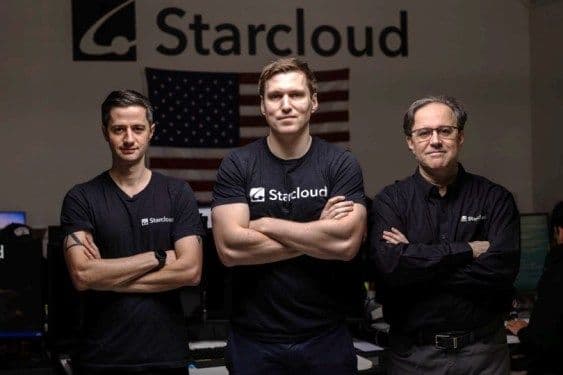
Starcloud raises $250 million for orbital data centers as launch options dry up
Starcloud, a startup developing satellites that can perform AI inference in orbit, told TechCrunch that it has added a $250 million extension to its March$170 million Series Afunding round. The extension values the company at $2.3 billion. The additional capital will allow the company to open a larger manufacturing facility and advance its largest orbital data center spacecraft, Starcloud-3, which is intended to fly on SpaceX’s forthcoming Starship rocket. CEO Philip Johnston is also amassing capital to ensure that he can launch his satellites as the market for rocket transportation tightens up. “We can see what’s coming — we’re going to need to book an enormous amount of launch,” Johnston told TechCrunch. Starcloud has already requested permission from the FCC to operate 88,000 spacecraft. “As soon as we can, we want to get under contract with things like Starship,” Johnston said. “One of the biggest costs is now on securing your launch capacity…launch is pretty constrained right now because [SpaceX’s] Falcon 9 program is scheduled to end in 2028.” Launch costs were already one of thebiggest challengesfor orbital data center startups, to the point that one startup has decided tobuild its ownrockets. SpaceX is now planning to phase out its workhorse vehicle and bring the much larger, but still unproven, Starship rocket online, making planning more difficult for satellite operators. That’s especially true while competing rockets, like Blue Origin’s New Glenn and ULA’s Vulcan, are not flying regularly, and new vehicles like Rocket Lab’s Neutron are not yet on the pad. For now, Starcloud is focused on launching two of the company’s new generation of 8 kW compute satellites (dubbed Starcloud-2) on rideshare flights in 2027. These will perform orbital inference tasks for customers including U.S. government agencies. Starcloud is considering buying a dedicated Falcon 9 launch to launch more spacecraft and signing contracts with other providers, as well, to support future missions. Still, Starcloud is ultimately built around the potential of SpaceX’s Starship to drive down launch costs enough to build out an orbital inference layer that can compete with terrestrial data centers. Johnston says he remains confident in SpaceX’s ability to demonstrate that the world’s most powerful rocket can be reused quickly and often. This week, SpaceX CEO Elon Musksaidhis company will delay an attempt to catch a returning Starship rocket for a few months, and will attempt to re-fly the vehicle for the first time at the end of the year or early 2027. “Obviously if we can’t book any SpaceX launch capacity in 2029, that will be challenging for us,” Johnston said. Starcloud’s funding extension was led by Manhattan West Ventures and included participation from Nvidia and Cisco; a person familiar with the deal said Nvidia ponied up $25 million to back Starcloud. Other participants included Benchmark, EQT, Soma, NFX, 776, Cedar Capital, Goanna Capital, and Standard Capital. Johnston points to the Nvidia investment as a key signal of Starcloud’s advantages in the nascent space compute sector. Starcloud is the only company (that we know of) currently operating a Nvidia H100 terrestrial data center GPU in orbit, and the first to train a model using it; mostother space GPUsare designed for edge processing. Starcloud is sharing those learnings with Nvidia as the chipmaker develops its first purpose-built GPU for space, the Vera Rubin Space-1 chip. “The reason they’ve chosen to do this investment now is because of all of this data that we got from Starcloud One,” he told TechCrunch. “They, more than any other VC, did way more technical duty on this than anybody else.” The space-ready chip hasn’t even been built yet, but Starcloud hopes to fly it into orbit sometime in late 2028. Johnston says his engineers are tracking a few key design choices: the relationship between the running temperature of the chip and the size of the radiators that dispel that heat, the placement of radiation shielding, and the ruggedizing required for the chips to survive the violence of a rocket launch. The company, currently 25 employees strong and growing, is developing production lines at a 100,000-square-foot-facility in Woodinville, Washington, near where SpaceX and Amazon build satellites for their communications networks.
View

OpenAI and Anthropic Have a Zero Data Retention Dilemma—and Trap
Data retention is becoming harder to enforce as models move from answering individual prompts to performing long-running, multi-step tasks.
View
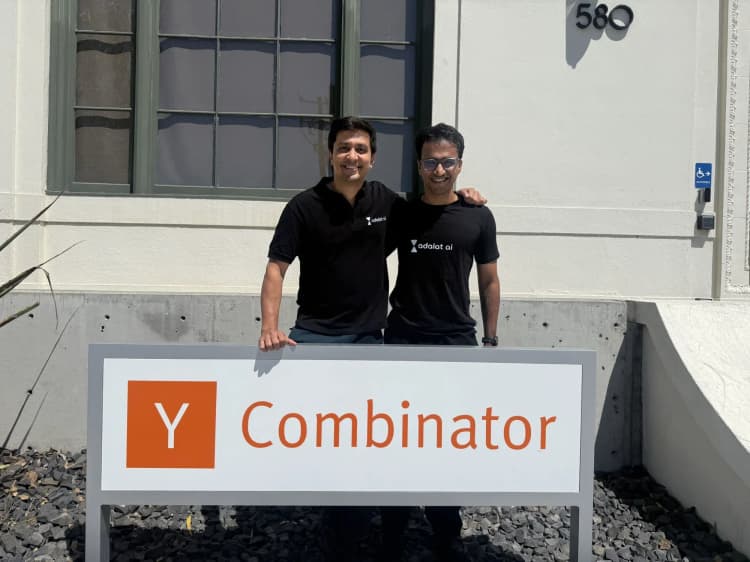
Indian Legal Tech Nonprofit Adalat AI Joins Y Combinator’s Fall 2026 Batch
The organisation will use the accelerator’s backing to expand its speech recognition, case management and paperless courtroom tools across India and other low-resource legal systems.
View

Indian Banks Turn to Observability as AI Moves From Promise to Production
As Indian financial institutions scale AI across hybrid cloud environments, observability is becoming critical to control costs, manage risk and ensure trustworthy digital services.
View

Slack Launches Slack Code to Bring AI Coding Into Team Workflows
The company said the feature lets teams collaborate with coding agents, including Claude, Devin, Copilot, and ChatGPT, in dedicated code channels.
View

Anthropic Tops OpenAI’s Annual Revenue on the Way to the Wall Street: Report
The company is projecting up to $200 billion in revenue by 2028 as it ramps up spending on AI infrastructure and talent.
View
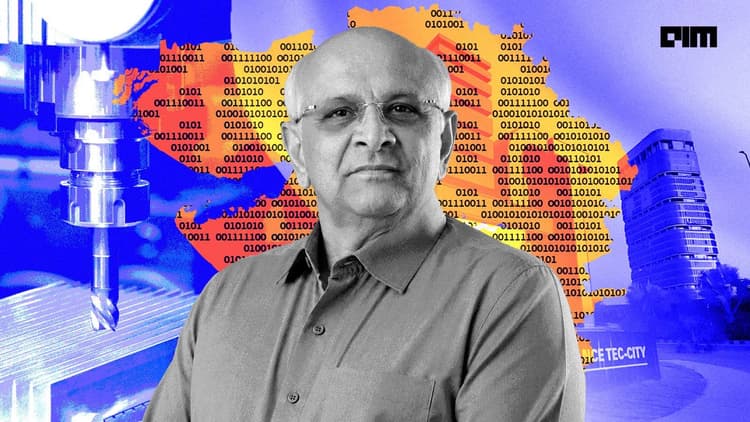
Can Gujarat Turn Its Manufacturing Powerhouse Into a GCC Advantage?
Gujarat aims to attract 250 new GCCs by 2030. However, talent remains the biggest bottleneck.
View

Scaler Launches Forward Deployed Engineer Programme, Commits ₹25 Crore to Train 10,000 Enterprise AI Engineers
According to the company, demand for FDEs has grown 729% year-on-year.
View
Enviar tu herramienta


PoweredByAI.app es un directorio de herramientas de IA que ayuda a personas, empresas y creadores a descubrir las mejores herramientas de IA para escritura, programación, diseño, productividad y más.
© 2026 , Producto de011BQ. Todos los derechos reservados.