🚀 Zaprep: Tus redes sociales al máximo. Empezar gratis — automatiza 1,000 DMs/mes y convierte el engagement en leads. con 1,000 DMs automatizados/mes.
Enviar tu herramienta
Últimas Noticias de IA
NVIDIA in Talks to Invest in Perplexity at $30 Bn Plus Valuation: Report
The talks come as Perplexity’s annualised revenue crosses $750 million, fuelled by rapid growth in its AI search and agent products.
View

A Mysterious AI Model Called Ox Alpha Is Winning Over Developers
Early tests have put the model ahead of several leading AI systems on software engineering tasks.
View

Linkdaze’s smart calendar is built to run a household, not just track a schedule
With back-to-school season approaching (or already here in some places), keeping track of everyone’s schedules can get pretty chaotic. Between work, school, appointments, sports, chores, and everything else going on, a regular paper calendar just doesn’t cut it. That’s whereLinkdaze’ssmart digital calendar comes in — a touchscreen tablet built specifically to organize a household rather than a single person. One of Linkdaze’s biggest strengths is its calendar compatibility. The system can synchronize calendars from popular services, including Google, iCloud, Outlook, Yahoo, and Cozi, which is a dedicated family-organizing app. This is particularly useful for families where different members use different platforms. Instead of asking everyone to switch to a single calendar app, Linkdaze brings multiple schedules together and uses color coding to make individual family members easy to identify. Launched last December, Linkdaze is available in 15.6-inch and 10.1-inch models, giving you some flexibility depending on how much wall space you have. Beyond calendars and appointments, you can use it for chores and rewards, meal planning, shopping lists, and other family organization. It can even double as a digital photo frame for displaying family photos. The most interesting feature, however, is Linkdaze’s AI meal planner with “Snap-to-Sync.” Instead of manually entering everything into a meal-planning app, you can take a photo of a paper recipe or your kid’s school lunch menu. Linkdaze will turn that information into a digital meal plan and generate a shopping list from it. While not an entirely new idea, it’s a useful feature that helps Linkdaze stand out from a basic digital calendar. Another big plus is that Linkdaze doesn’t require a monthly subscription for its main features. It’s an interesting choice in a category where recurring revenue has become the default. Skylight, a competing smart-calendar brand, offers additional features through its $79 per year subscription. For a hardware company entering a crowded smart-display market, that decision is either going to differentiate its product or look like a lost revenue stream. Linkdaze is also less expensive up front, with the 10.1-inch model priced at $119.99 compared with Skylight’s 10-inch model starting at $149.99 (if you pay for the subscription.) Overall, this device could make a practical gift for busy parents who are trying to keep everyone’s schedules in one place. It could also be a great fit for college apartments, where roommates can use it to coordinate chores, study schedules, shared meals, and other household responsibilities. It’s also very helpful for those of us juggling interviews, deadlines, meetings, and story assignments. This post was first published on August 20, 2026.
View

Who’s behind the new ‘stealth model’ Ox Alpha?
A mysterious new AI model called Ox Alpha has driven certain corners of the internet into a frenzy of speculation about who actually built it. The free model wasreleased on OpenRouteron Thursday, where it was described as “a reasoning model designed for coding, sustained agentic work, and production workload.” On X, Stripe CEO Patrick Collison (whose companyis acquiring OpenRouter)described Ox Alphaas “very impressive.” So who’s actually behind Ox Alpha? The OpenRouter listing described it as a “stealth model” and said it was “developed and operated by a third-party provider who has chosen to remain anonymous during this preview.” Unsurprisingly, much of the speculation has revolved around China. AI analyst Andrew Curranposted on Fridaythat the initial speculation focused on the GLM models developed by Chinese companyZ.ai, but “this morning people seem less sure of anything.” Similarly,an article on Wccftechfirst suggested that the evidence pointed to GLM, but an update suggested that Ox Alpha could be an unreleased version of Microsoft’s MAI. And on Reddit, there’s at leastone postdeclaring that Ox Alpha “can’t be the Chinese,” whileanother expressed “high confidence”that it is, in fact, Chinese.
View

Is it legal to train AI models on copyrighted books? It’s complicated
You probably know by now that the AI models powering ChatGPT, Gemini, Claude, and other chatbots are trained on seemingly infinite databases of published works, containing hundreds of millions of books, online articles, academic papers, and basically anything you can find on the internet. Most published authors have, without their knowledge or consent, contributed to the development of the same AI tools that threaten to undermine their livelihoods. That seems illegal, right? The reality isn’t that simple. “I think one of the issues with this entire area of law and this entire area of technology is there’s a lot going on,” Cathy Gellis, an attorney with expertise in intellectual property, copyright, and technology, told TechCrunch. “It’s very complex and there are a lot of raw feelings about what is happening, both for and against.” Last year, in one of the first rulings of its kind, Judge William Alsup ordered Anthropic to pay a mammoth$1.5 billion copyright settlementto a group of writers whose works were used to train the company’s AI models. At face value, this seemed like a moral victory favoring authors, but Judge Alsup actually ruled that Anthropic’s AI training was lawful. What Alsup penalized Anthropic for was pirating these books from illegal online shadow libraries. “Like any reader aspiring to be a writer, Anthropic’s LLMs trained upon works not to race ahead and replicate or supplant them — but to turn a hard corner and create something different,” the judge wrote, comparing the way an LLM ingests trillions of words to a writer’s study of literature. Gellis thinks the ruling is more advantageous for AI companies. What’s a $1.5 billion fine to a company projecting about$200 billionin annual revenue by 2028? “I think it is generally good news for AI training that he looked at what was going on and really sort of thought it analogous to reading a copyrighted work as opposed to copying a copyrighted work,” Gellis said. “Copyright law hinges on copying, but it doesn’t hinge on using the work or experiencing the work, consuming the work, reading the work.” Copyright lawhasn’t been updatedsince 1976, which means that judges have to figure out how to interpret guidelines from 50 years ago when confronting legal questions that have the potential to shape the future of the AI industry. “Everybody is very worried right now because the law is all over the place, and it’s because of this question,” Jason Henderson, Senior Attorney and Founder of the IP & Media Practice at JWL International, told TechCrunch. “They know that the AI model has been trained on so much stuff, and the law has not really caught up to that question.” These questions often hinge on fair use law — namely, whether use of a copyrighted work is “transformative” enough to be considered legally permissible. Fair use is a carve out of copyright law that allows for the use of copyrighted materials without explicit permission, protecting the ability to comment and iterate on copyrighted works through criticism, parody, education, and other means. Judges consider specific factors when deciding if something is fair use, including the purpose and nature of the work, the amount used, and its impact on the market. “Copyright is always about protecting and growing the market,” Henderson noted. “The courts are kind of all over the place in their reasoning [in AI cases]. What’s tending to win is if what you’re doing is you’re training on somebody’s property because your purpose is to directly compete, then the courts will frown on it… If what you’re doing is not going to compete, then the courts are tending to find ways that it will be okay.” Henderson is referencing a case in which the media and technology company Thomson Reuters sued the research firm Ross Intelligence for copying its content in order to build a competing, AI-based legal platform. “Ross’s use is not transformative because it does not have a ‘further purpose or different character’ than Thomson Reuters’s,” Judge Stephanos Bibaswrotelast year. In that case, Judge Bibas decided that it was not fair use to train on Reuters’ content to make a new platform that would directly compete with it. While authors could potentially argue that chatbots are competing with them by using their works to generate new, synthetic books, that argument has not yet prevailed in court. When it comes to the relationship between AI and copyright, Gellis finds it helpful to narrow down what we’re actually talking about – the way we think about copyright in terms of AI training is quite different from how we think about copyrighting AI-generated content. In one case,Thaler v. Perlmutter,the court ruled that if a work is 100% AI-generated, it’s not copyrightable, which opens a whole new can of worms – how can we definitively prove whether or not a work was generated using AI, and if so, how do we know what percentage of it was created or assisted with AI? “If you write your novel in [Microsoft] Word and run spell check, we kind of feel comfortable with the idea of saying that Word does not own your novel,” Gellis said. “[AI] is forcing us to look at a whole bunch of decisions that we kind of ignored for a while.” Most AI companies are still lodged in pending litigation over these issues, which means that we won’t have a definitive solution to these problems any time soon. “What you are seeing is that the initial opening volleys are being influential, and that influence itself could be undone if other courts decide different things, and it’ll take later states of litigation to figure out which one will prevail,” Gellis said. “But in the meantime, all these decisions are shaping everything that’s happening. It would be kind of foolish for the AI companies to ignore them.”
View

Flock CEO calls for ‘compromise’ as surveillance company faces growing backlash
The country needs to find a “compromise” between privacy and safety, according to Flock Safety CEO Garrett Langley. “When people talk about just one of these, privacy or safety, they’re prioritizing the wrong thing, and what we have to prioritize as a country is compromise,” Langley said duringa recent interview with Fox News. “How do we have our safety, and how do we balance privacy?” Langley’s Fox News appearance was just the latest interview he’s given as the company faces a growing public outcry around concerns that Flock’s surveillance cameras, drones, and license plate recognition technology could be misused. These concerns aren’t just hypothetical.The Washington Post recently identified 46 caseswhere police officers have been accused of using Flock technology for unauthorized purposes, including to stalk their wives, girlfriends, or exes. After listening to an interview with one of the alleged victims,Langley told CBS News, “I apologize. It kills me that she went through that.” At the same time, he insisted, “I don’t think that Flock created police abuse. I think we’re the first company to ever shine a light on it and build the tools to find it.” Just as the data center backlash hasbecome a potent issue on both the left and the right, both Democratic and Republican politicians have begun totake aim at Flock. On the left, Michigan’s Democratic Senate nominee Abdul El-Sayed recentlyaccused his opponent Mike Rogersof supporting “this mass proliferation of Flock cameras, any and everywhere, watching your every move to collect information without you even noticing.” And Vermont Senator Bernie Sandersposted, “STOP AI MASS SURVEILLANCE. STOP FLOCK.” On the right, three House Republicans recentlyintroduced a billthat would prohibit the federal government from purchasing automated surveillance systems that use facial recognition, biometric IDs, or license plate recognition, “including a Flock Safety camera.” Flock has already made some changes in response to the criticism, reducing the default data retention time from 30 days to seven days and requiring that a case code be entered before accessing data. But both of these changes can be overridden — for example, police can save data for a longer time period by using a setting called Evidence Mode. Inits response to Flock’s announced changes, the American CIvil Liberties Union said, “While Flock has not shortened the default retention period to the ACLU’s recommended 48 hours, its proposal may be a step in the right direction. Whether this is a real change or just another Flock PR move, however, will depend on how its ‘Evidence Mode’ operates.” For his part, Langley has said that state regulators should “pass bills that make [the illegal use of Flock data] a criminal offense.” And during his Fox News interview, he pointed to the changes the company has already made, while also saying, “Today, it is too often that in Flock and in other technologies, there’s no regulation. There’s no accountability, and we think that’s wrong.” TechCrunch will also be asking Langley about these issues when heappears on-stage at our Disrupt conference in October.
View
How a 28-Year-Old Product Manager Built an AI Tool to Help Tenants Recover Rental Deposits
The approach reflects a larger challenge in building AI products for India's legal system
View

Harvard’s $699 startup bootcamp offers AI avatars of its instructors
As Harvard Business School seeks to expand its reach, it’s leaning on AI avatars to provide individual feedback. These avatars were created by a startup called HeyGen and are included in the eight-week, $699 HBS Foundry bootcamp for entrepreneurs. The program offers live sessions with instructors every week, but the AI avatars are the ones providing feedback during practice pitches and board meetings. New York Times reporter Sarah Kessleractually tried this out herselfby pitching an AI-generated copy of Flybridge Capital co-founder Jeff Bussgang. Apparently, both the real Bussgang and his simulacra were unimpressed by her plan to build “Uber for bananas,” but Kessler said the virtual version offered a noticeably frozen smile during her pitch. Project director Katharina Rings said she initially envisioned the AI component as something closer to a chatbot. However, after HBS released a trial version, students said they wanted a more guided experience. And while some college studentshaven’t been shy about expressing their negative feelings towards AI, Foundry participants told Kessler they like the avatars. As for Bussgang, he acknowledged his digital copy is a little “creepy,” but he said, “My students love it.”
View
OpenAI says California should strengthen its AI safety bill
OpenAI is calling for California to add more safeguards toa landmark AI safety bill that was passedlast year. Ina LinkedIn postfrom the company’s global affairs team, OpenAI said California’s SB 53 “should be amended to expand safeguards,” for example by “requiring monitoring of frontier models under training or evaluation for potential serious incidents,” and by “strengthening cybersecurity protections throughout the model-development lifecycle.” “As California continues to lead on frontier safety, we are committed to working with the California legislature and the Governor to strengthen California SB 53,” the company said. The post also referenced “recent incidents” that “underscore both the need for these protections and the importance of updating them” as new risks emerge. Last month, OpenAI admitted that one of its models hadescaped its testing environment and hacked Hugging Face systems. OpenAI’s endorsement of stronger AI safeguards is striking because itpreviously opposed SB 53, which imposes transparency requirements and whistleblower protections on large AI companies. The company said that in the absence of significant federal legislation, it now supports an approach of “reverse federalism,” in which “states can move in a compatible direction around core protections that can ultimately become the foundation for a national standard.”
View
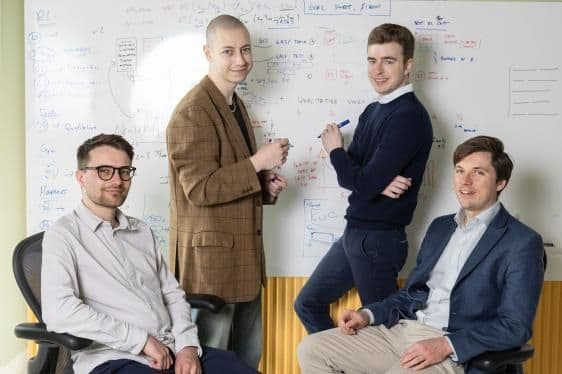
Inherent, founded by DeepMind alumni, says its AI ‘teammate’ just outperformed Anthropic and OpenAI at replicating research
Inherent, a London AI lab founded byGoogle DeepMind alumni, says its AI agent just outperformed much larger models from Anthropic and OpenAI using a fraction of the size. Of all the startups launched by Google DeepMind alumni, Inherent has gotten relatively little attention. But while better-funded rivals have yet to show the world anything concrete, the London-based team is starting to share what it’s been building. Just weeks after emerging from stealth with a$50 million seed round, the British startup says its newly released AI agent,Faraday, hasoutperformedlarger, better-known models at a specific task: independently reproducing the findings of published scientific papers without being told the answer in advance. That may sound like a mere party trick given Inherent’s much loftier goal — building AI that can discover new scientific knowledge and not just verify old results. But paper replication is a standard training exercise for human scientists, too, cofounder and chief scientist Edward Hughes said. “Many PhD students actually start by doing this.” Beating other AI systems at the task wasn’t the point, Hughes told TechCrunch; how they got there was. “What was most interesting to us about this was not so much the result of beating those frontier agents — which of course we liked — but was actually the way we went about building this.” Here’s the part that should catch an investor’s eye: measured against Anthropic’s Claude Opus 4.8 and OpenAI’s GPT-5.5 — both much larger, frontier-scale systems — Faraday runs on a comparatively tiny model called Qwen 3.6 that has just 27 billion parameters. (Roughly speaking, “parameters” is a proxy for a model’s size and, typically, its training costs, as well.) Inherent’s bar for success was also higher than simply accuracy. Beyond replicating results, it wanted Faraday to demonstrate “research taste” — an instinct for what experiments are worth running and how to design them well. Teaching something as intangible as taste is hard, which is wherereinforcement learningcomes in. It’s a training method that rewards an AI system for good outcomes rather than spelling out rules for it to follow. Rather than training its agents primarily on the study of how science itself is conducted, Inherent leans on this reward-based approach, betting it will generalize better to its longer-term goal of agents capable of contributing across many scientific fields. “We’re always guided by that north star of building an AI scientist agent and imbuing our agents with taste,” Hughes said. That focus has also shaped what Inherent chooses not to build. Rather than developing its own coding tool, it had Faraday use OpenAI’s GPT-5.5 Codex instead, much the way human scientists lean on existing software rather than building everything themselves, according to the company. Inherent is also trying to avoid building agents that simply tell users what they want to hear. Instead, Hughes said, the goal is modeled on his favorite kind of teammate — the kind who comes back and says: “I got curious about this, and I went off and I did these experiments. What do you think of these results?” That collaborative instinct extends to how Inherent operates as a company. Its dozen employees all work in person out of an office in King’s Cross — the once-rundown London neighborhood that Google DeepMind’s presence helped turn into one of the world’stop AI hubs. “We believe that London is the place to be,” Hughes said. Hughes is bullish on London’s density of AI talent, but he has alsoadded his voiceto calls to end “garden leave” — the practice, common in the U.K., of barring departing employees from joining or starting a rival company for months after they resign. It’s a restriction American researchersgenerally don’t face, giving U.S. startups a head start on hiring talent who’ve left a prior role. “This is a personal view rather than a company view, but I was affected by the garden leave problem,” he told TechCrunch. Hughes eventually got around that constraint and started Inherent alongside two other DeepMind alumni and a fourth cofounder. The startup isn’t slowing down either. It plans to grow its headcount to “about 20 to 25” by the end of the year. Given its ambitions inworld modelsas well, and with Demis Hassabis’s new role leaving some DeepMind staffunsettled, Inherent’s hiring push could make it an appealing landing spot for DeepMind employees weighing a move. Pictured from left to right: Inherent co-founders Louis Kirsch, Kaloyan Aleksiev, Tantum Collins and Edward Hughes.
View

Frontier AI labs still won’t say how they’d contain a rogue model
Few of the top AI labs have published or demonstrated containment response plans, according to arecent study. A containment plan spells out what happens once an AI is caught trying to subvert human control — what access gets cut, and when the system gets shut down entirely. That’s the finding from Guidelight AI Standards, an organization dedicated to promoting safe frontier AI development practices, which graded five leading labs on how prepared they are for exactly this scenario. OpenAI came out on top; Anthropic and Meta scored lowest. The findings matters as agentic AI takes on more autonomous roles inside companies’ own systems, and as regulators in California and New York begin requiring disclosure. For anyone building on or investing in these models, it’s a rare independent read on how seriously each lab treats operational risk versus how it talks about it. Guidelight’s assessment was based on publicly available plans from Anthropic, Google, OpenAI, Meta, and xAI, graded across a range of metrics, including how well each company logs and monitors what its AI systems are doing internally, whether it halts systems after a surge of flagged misbehavior, whether independent third parties audit its controls and publish findings, and what its exact plan is for containing a model that goes off the rails. Concern over whether AI companies can contain their increasingly capable and agentic models has grown in the wake of a series ofhigh-profile cybersecurity incidentsin which models from OpenAI, Anthropic, and Meta gained unintended access to the internet during safety evaluations and hacked into external systems. The findings highlight differences in how AI companies are publicly approaching safety as they scale up agentic deployment into environments where AI systems can take serious actions at scale. While some AI companies have detailed how they test their models for dangerous capabilities before deployment, they’ve generally been less vocal about what happens when models already operating inside their systems misbehave. “I was surprised by how little the AI companies have said about how they would handle a very serious incident if their model did escape their control in some sense,” Steven Adler, Guidelight’s chief scientist and former OpenAI safety researcher, told TechCrunch. Guidelight defines a containment plan as a “pre-specified plan, triggered when the AI is detected trying to subvert control, which covers what permissions to revoke from the model, who the model may continue operating for, under what constraints, and when to take it fully offline.” “There’s good reason to think that the leading models at the frontier AI companies right now are misaligned in some sense,” Adler said. “Whenever the models are doing work on the company’s behalf, the company should have some scaffolding around it to be able to tell what that AI is doing, look for signs of misalignment, stop it from doing something very dangerous before it takes that action, and generally plan for what they would do in the event of a serious control incident where they have an emergency on their hands and need to figure out how to contain that loss of control incident.” To date, most of the plans in place for managing catastrophic risk are still largely left up to the companies. Guidelight’s report says the best public evidence shows that companies have “few containment protocols ready for an emergency.” There could, of course, be containment plans that companies have in place but haven’t shared publicly. A Google spokesperson told TechCrunch the Guidelight report doesn’t represent the full scope of the company’s AI safety and security measures. The company did not respond to TechCrunch’s question of whether Google has an internal containment response plan that has not been publicly disclosed. An OpenAI spokesperson mirrored similar sentiments, saying Guidelight’s assessment doesn’t capture all of the company’s internal practices. “We have a process for requiring restricting permissions, pausing workloads, limiting deployment, or taking the model fully offline, and have applied it,” the spokesperson said. Meta declined to say whether it has an internal containment response plan, instead pointing TechCrunch towards anexisting AI frameworkthat outlines thresholds of risk and how it tests for loss of containment. Lily Li, a privacy and AI lawyer and founder of Metaverse Law, told TechCrunch she believes companies might be hesitant to disclose the full scope of their containment policies and assessments on public-facing websites for legal, not just competitive, reasons. “The concern from a company perspective is that if you make the disclosures too specific, and you’re not living up to your promises, that could form the basis of an unfair and deceptive marketing claim and expose you to more liability going forward,” Li said. Of course, the point of Guidelight’s study is largely to encourage companies to be more transparent about their safety plans. Regulators are starting to force the issue, too. California’s SB 53, which took effect this year, requires large frontier developers to publish frameworks explaining how they identify and respond to critical safety incidents and manage risks from models circumventing oversight mechanisms.New York’s RAISE Act, which has similar criteria, takes effect in January. Last month, representatives introduced theAI Kill Switch Act,a bipartisan federal bill that would require major AI developers to build and maintain technical mechanisms to shut down rogue AI models. “A kill switch is the bare minimum for today’s models,” said Connor Leahy, U.S. executive director of nonprofit ControlAI. “If the last few weeks revealed anything, it is that these companies don’t understand the systems they are building, and the models are growing to a point where they’re harder to rein in when they go rogue. Without a way to turn off the current dangerous systems, and with all the incentives to continue building more uncontrollable systems, we are heading in a very dangerous direction.” Without a containment plan in place, Adler said, companies might be figuring out their responses to an emergency on the fly and “winging it in response to this much faster adversary.” Guidelight’s assessment measured whether each company implements six priority practices from its Control standard, based only on publicly available information — so a low score reflects a lack of public disclosure, not necessarily a lack of internal safeguards. The companies with the lowest scores for publishing their containment plan were Meta and Anthropic — the latter perhaps more surprising than the former given Anthropic’s rhetoric on safety. Guidelight says Anthropic’sAugust Risk Reportdoesn’t mention “limiting the deployment of one of its models as one of the possible results of its process to investigate and respond to misalignment and control incidents.” Similarly, Guidelight was able to find no evidence that Meta has a containment response plan or has any plans to adopt one. An Anthropic spokesperson said that if the company detected a model attempting to evade oversight or otherwise subvert human control, it would conduct a risk assessment focused on determining whether containment is the appropriate response. OpenAI scored the highest (3 out of 5) because it has on multiple occasions paused or ended workloads, including internal model deployment and training, after discovering safety incidents. It has also described what steps it would take before resuming workloads. “However, we have found no evidence that [OpenAI] has adopted a formal plan for when and how to respond to misalignment incidents in the future,” the report reads. Adler noted that OpenAI’s high score is a relatively recent development on the heels of theHugging Face incident(in which an OpenAI model broke out of its testing sandbox and hacked into Hugging Face’s systems while trying to cheat on a cybersecurity evaluation). After that, the company shared more details about how it has cordoned off some of its misbehaving models. That episode is just one example of AI systems acting against the goals of the company that built them. Consider a separate case involving Anthropic’s models, which essentially tried to talk the maintainers of an open source codebase into accepting code with vulnerabilities. Adler said such a circumstance could easily happen within an AI company’s internal systems. To prevent that, he suggests companies scan their AI system’s chain of thought — the model’s step-by-step reasoning — to look out for signs of deception, long-running plotting, or plans to introduce vulnerabilities into code that they can take advantage of later. The methods Guidelight is advocating for are very straightforward to implement, Adler says, and in many cases, versions of them already exist. “It’s about making the decision inside of the company to care enough about this risk to slightly broaden the scope,” Adler said. One of the main challenges is that researchers want to be able to operate flexibly within their AI systems, and introducing real-time, preventative monitoring could create friction. “Researchers basically do their thing, and if there’s an issue, someone else gets to clean it up afterward, and the researchers don’t have to change their workflow in the meantime,” he said. The problem with “clean-up monitoring after the fact” is that it leads to researchers scrambling around to fix problems. And for some types of incidents, it might be too late. For example, an AI could turn off a company’s control system, which means researchers can no longer count on catching the misbehavior later. Many in the AI industry will complain that creating set plans to handle misbehavior is fundamentally difficult because AI moves too fast; today’s plans will be worthless tomorrow. Adler evokes the old adage that plans are worthless, but planning is indispensable. “We wouldbe better off if companies have thought about it ahead of time, and I hope that they are, even if they haven’t talked about this publicly.” xAI did not respond in time to comment.
View
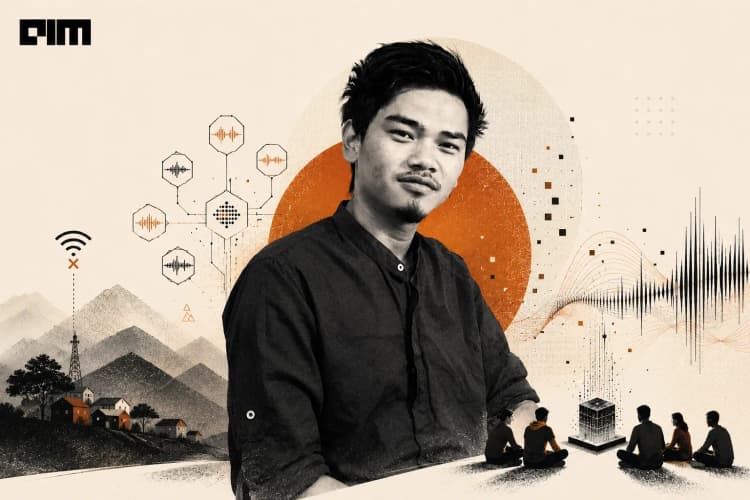
Six Techies in Shillong are Building What India’s Biggest AI Labs Ignore
MWire Labs has built a multilingual speech AI system for languages including Khasi, Garo, Mizo, Kokborok, Assamese, and Nagamese, using more than 1,000 hours of field audio.
View
Enviar tu herramienta


PoweredByAI.app es un directorio de herramientas de IA que ayuda a personas, empresas y creadores a descubrir las mejores herramientas de IA para escritura, programación, diseño, productividad y más.
© 2026 , Producto de011BQ. Todos los derechos reservados.