🚀 Zaprep: Tus redes sociales al máximo. Empezar gratis — automatiza 1,000 DMs/mes y convierte el engagement en leads. con 1,000 DMs automatizados/mes.
Enviar tu herramienta
Últimas Noticias de IA
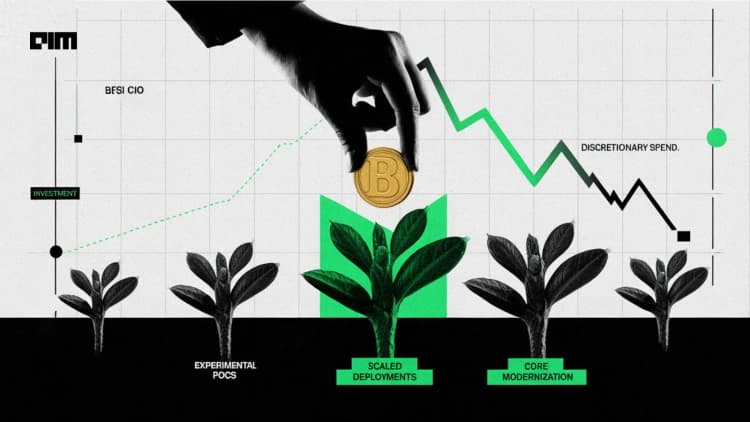
‘BFSI CIOs Must Stop Pumping Money Into More POCs’
Research flags “death by POCs” even as service providers’ data shows a shift to outcome-led AI spend.
View
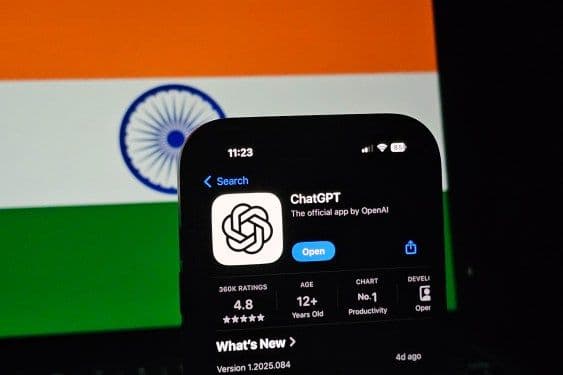
ChatGPT Images 2.0 is a hit in India, but not a big winner elsewhere, yet
India has emerged as the largest user base for ChatGPT Images 2.0 since itslaunch last week, OpenAI said on Thursday. However, third-party data reviewed by TechCrunch points to a more measured global response, with limited overall growth alongside sharp spikes in select emerging markets. ChatGPT Images 2.0, OpenAI’s latest image-generation upgrade, is designed to handle more complex prompts and produce detailed visuals, including accurate text across multiple languages. Early patterns from the company suggest users — especially in India, its largest market — are using it to create personal visuals such as avatars, stylized portraits, and fantasy-themed images. Data shared by Sensor Tower and Similarweb with TechCrunch suggests the rollout has led to a more mixed global response. ChatGPT’s app downloads rose 11% week-over-week following the launch, per Sensor Tower, but overall engagement gains were modest, with daily active users and sessions up only around 1%. Similarweb data also shows a limited increase in ChatGPT’s global web traffic, rising about 1.6% week-over-week during the same period. However, Sensor Tower data indicates some emerging markets — including Pakistan, Vietnam, and Indonesia — saw sharper spikes in ChatGPT’s app downloads, with increases of up to 79% week-over-week during the rollout period. India, meanwhile, remained a major source of activity during the rollout. Sensor Tower estimates show ChatGPT was downloaded about 5 million times in India during the launch week, compared with roughly 2 million in the U.S., though growth remained modest on a week-over-week basis. Similarweb data also points to a limited uptick in engagement, with daily active users in India rising about 3.4% week-over-week during the same period. In India, the early trends suggest ChatGPT Images 2.0 is largely being used as a form of self-expression. Rather than purely functional outputs, users are creating studio-style portraits from everyday photos, social media-ready images, and imaginative visuals that place themselves at the center, OpenAI said. The early patterns also highlight how AI image tools are being adopted differently across markets. While India’s large user base is driving overall scale, sharper spikes in countries like Pakistan and Indonesia point to stronger new-user demand in emerging markets following the launch. OpenAI’s Images 2.0 launch comes amid intensifying competition in AI image generation. Google’s earlier image-focused model, the originalNano Banana, alsosaw strong early tractionin India, indicating how the nation has become an important market for image generation. With the new ChatGPT Images release, OpenAI is pushing further with improvements such as better rendering of non-Latin text, including Hindi and Bengali, and new “thinking” capabilities that allow it to refine outputs and generate multiple variations from a single prompt. Beyond stylized portraits and avatars, OpenAI said early Images 2.0 users in India are experimenting with a wider range of formats — from fantasy newspaper covers to tarot-style visuals and fashion moodboards. Users are also using the AI tool to restore older photos and create cinematic portrait collages, the company said, suggesting early patterns of more personal use.
View
Big Tech is Tokenmaxxing, But Indian Developers are Maxing Out on AI Anxieties
Big Tech is putting up AI leaderboards to encourage developers to spend as many tokens as possible. But in Indian offices, that comes with a peculiar unease.
View
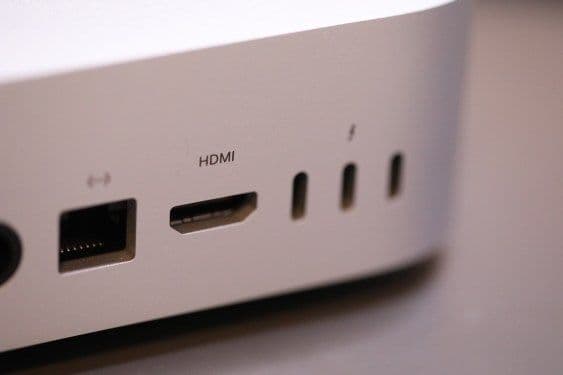
Apple was surprised by AI-driven demand for Macs
Apple’s iPhone sales and Services revenue were the stars of the show in the tech giant’s most recent quarter, but the Mac quietly outperformed — helped by growing demand for AI workloads. Wall Street investors hadexpectedto see Mac revenue in the low $8 billion range, but Applereported$8.4 billion in the second quarter ended March 28 — a notable beat for a non-core segment of the tech giant’s business. In addition, investors ahead of earnings believed that Mac sales would be essentiallyflat year-over-year. Instead, Mac sales were up 6% on an annual basis, the company told investors. The company’s total revenue was $111.2 billion, a 17% increase from the same period last year. Apple chalked up some of the Mac growth to recent product launches, including the well-received MacBook Neo. However, those fun, colorful computers were only on sale for a few weeks after the March 4 preorders began. Realistically, most units shipped mid- to late March, and some demand may have been pushed into April as certain models sold out. Apple CEO Tim Cook told analysts on the company’s Q2 earnings call on Thursday that customer demand for the Neo was “off the charts” and higher than Apple had expected. He also noted that Apple set a record in the quarter for customers new to the Mac, partly due to the Neo. Cook attributed the Mac sales growth to the use of the platform for running local AI models, like OpenClaw — something that took Apple somewhat by surprise as Mac mini and Mac Studio devicessold out in recent weeks. “Both of these are amazing platforms for AI and agentic tools, and the customer recognition of that is happening faster than what we had predicted, and so we saw higher than expected demand,” Cook said of these Mac sales. He also noted that the Mac mini was the top-selling desktop in China — a market that’sbeen in an OpenClaw frenzyas of late. Still, Mac revenue was flat on a quarter-over-quarter basis, suggesting this new demand has yet to scale. Cook said it may take Apple “several months” to reach supply-demand balance on the Mac mini and Studio models. “We’re not at the point where we’re saying this [constraint] is going to end anytime soon. And it’s not because of a problem, per se, other than we just under-called the demand,” Cook explained. Enterprise demand for the Mac was also at play. Apple pointed to a couple of larger companies, including Perplexity, that had turned to Mac as their preferred platform for building enterprise-grade AI assistants. He also said Apple was “supply constrained on the MacBook Neo,” and has even seen school systems, like Kansas City Public Schools, dropping Chromebooks for the Neo.
View
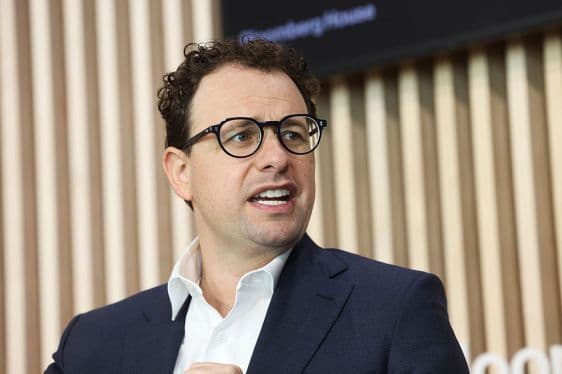
Sources: Anthropic potential $900B+ valuation round could happen within 2 weeks
Anthropic is asking investors to submit allocations for the AI company’s latest fundraise within the next 48 hours, according to sources familiar with the matter. The round, which TechCrunch reported is expected to be roughly $50 billion, is estimated to close within two weeks, the sources said. As we previously reported, Anthropic is targeting a valuation ofabout $900 billion. However, given the soaring demand from investors seeking a stake in the company, the final valuation may well exceed that figure, our sources said. Anthropic declined to comment. Despite the intense demand, some early backers — particularly those who invested in 2024 or earlier — are skipping this round. Instead, these investors are waiting to potentially cash out during Anthropic’s anticipated IPO later this year. The company is raising what is likely to be its last private round before going public to fund its massive computing needs. Anthropic announced this month that its annual revenue run rate has surpassed $30 billion. But as we previously reported, the company’s run rate is currently closer to $40 billion, according to sources with knowledge of the company’s financials. Anthropic raised its last round in February at a$380 billionvaluation. At $900 billion, the company would not only more than double its valuation but would also surpass its chief rival, OpenAI, which closed a record-breaking $122 billion round at an $852 billion post-money valuation earlier this year. Jagmeet Singh contributed reporting.
View

Maintaining momentum and morale during the long road to FDA approval, with Robhy Bustami, BioticsAI
Surviving the long road to FDA approval isn’t just about building great technology — it’s about keeping your team motivated, finding the right investors, and learning how to operate when timelines are uncertain. This week on Build Mode, Isabelle Johannessen sits down with Robhy Bustami, co-founder and CEO of BioticsAI, a Startup Battlefield-winning company building an AI copilot for ultrasound to help detect fetal abnormalities. From a $100,000 prototype to FDA clearance, Bustami shares what it actually takes to build in one of the most regulated industries in the world. In this episode, they break down what it really looks like to build a medtech startup, including where you can’t “move fast and break things” and that every milestone takes time, coordination, and trust. This conversation covers: Subscribe to Build Mode onApple Podcasts,Spotify, orwherever you like to listen. Watch the full videos onYouTube.New episodes ofBuild Modedrop every Thursday. Hosted by Isabelle Johannessen. Produced and edited by Maggie Nye. Audience development led by Morgan Little. Special thanks to the Foundry and Cheddar video teams. Apply to Startup Battlefield:We are looking for early-stage companies that have an MVP. So nominate a founder (or yourself). Be sure to say you heard about Startup Battlefield from the Build Mode podcast.Apply here. TechCrunch Disrupt 2026:We’re back for TechCrunch Disrupt on October 13 to 15 in San Francisco, where the Startup Battlefield 200 takes the stage. So if you want to cheer them on, or just network with thousands of founders, VCs, and tech enthusiasts, thengrab your tickets. Use codebuildmode15 for 15% off any ticket type.
View
Stripe introduces Link, a digital wallet that autonomous AI agents can use, too
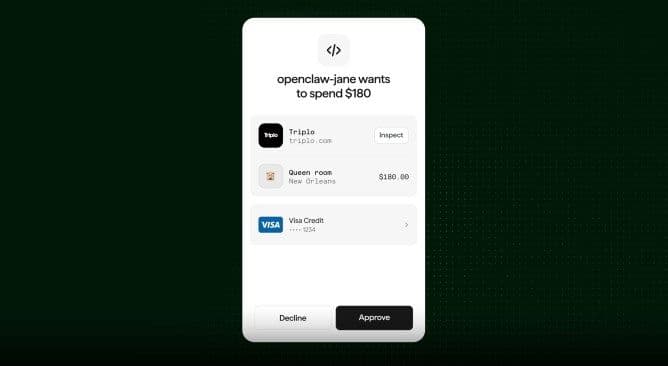
Financial services platform Stripe isintroducinga digital wallet specifically built for the AI era, where autonomous agents can perform tasks that include shopping, paying for reservations, buying tickets, and more. At itsannual conference this week,the company introducedLink, a wallet that allows you to connect various payment methods, track your spending, and view your recurring subscriptions. It also lets you integrate your AI agents so they can spend on your behalf, securely. Link, which is available on theweb,iOS,andAndroid, offers many things that you might expect from a digital wallet. You can connect payment methods, including cards, banks, crypto wallets, and buy now/pay later services, as well as store important details for online checkout like your billing and shipping information. The wallet offers other handy features, too, like the ability to see what you’re spending, and track your recurring subscriptions — even updating the payment method the services have on file, as needed. It also offers 90 days of protection on eligible purchases from select merchants. But what makes Link interesting is its ability to work with autonomous AI agents, likeOpenClawand others. The number of people experimenting with autonomous AI has been booming, to the point thatApple sold out of its base model Mac Minis, a popular platform for running these new, always-on AI agents. However, some people (rightly) take pause at the idea of giving an agent raw payment information, even if it’s providing convenience by automating various bookings. Link is meant to offer a solution, as users can connect their AI agents and give them permission to pay, without exposing their payment credentials. To work, users will first grant their agent access to the Link wallet via an OAuth (standard authentication) flow. The agent can then create a spend request, provide you with the context, and wait for your approval. Currently, it works with traditional payment methods, but Stripe says support for agentic tokens, stablecoins, and other types of payments is coming “soon.” On mobile and web, users will get a notification to approve the spend request, which requires they first review the transaction before the payment credential is shared with the AI agent. In the future, Stripe says it will expand its controls so users can set their own spending limits, or even choose when their agents can act without approval. The wallet has been built on Stripe’snew Issuing for agents, which lets users issue virtual cards for agents to use to make purchases autonomously, with real-time authorization, spending controls, and full transaction visibility. Instead of giving an agent access to your payment credentials, users can either give agents programmatic access to Link, which provides a one-time-use card, or they can use aShared Payment Token(SPT), which is backed by payment cards and banks. Developers and businesses building agents or AI personal assistants can also use Link’s wallet instead of building their own wallet from scratch, Stripe notes.
View

Keeping your team motivated when FDA approval isn’t guaranteed
Loading the player… Surviving the long road to FDA approval isn’t just about building great technology — it’s about keeping your team motivated, finding the right investors, and learning how to operate when timelines are uncertain. This week on Build Mode, Isabelle Johannessen sits down with Robhy Bustami, co-founder and CEO of BioticsAI, a Startup Battlefield-winning company building an AI copilot for ultrasound to help detect fetal abnormalities. From a $100,000 prototype to FDA clearance, Bustami shares what it actually takes to build in one of the most regulated industries in the world. In this episode, they break down what it really looks like to build a medtech startup, including where you can’t “move fast and break things” and that every milestone takes time, coordination, and trust. This conversation covers: Subscribe to Build Mode onApple Podcasts,Spotify, orwherever you like to listen. Watch the full videos onYouTube. New episodes ofBuild Modedrop every Thursday. Hosted by Isabelle Johannessen. Produced and edited by Maggie Nye. Audience development led by Morgan Little. Special thanks to the Foundry and Cheddar video teams. Apply to Startup Battlefield:We are looking for early-stage companies that have an MVP. So nominate a founder (or yourself). Be sure to say you heard about Startup Battlefield from the Build Mode podcast.Apply here. TechCrunch Disrupt 2026:We’re back for TechCrunch Disrupt on October 13 to 15 in San Francisco, where the Startup Battlefield 200 takes the stage. So if you want to cheer them on, or just network with thousands of founders, VCs, and tech enthusiasts, thengrab your tickets. Use codebuildmode15 for 15% off any ticket type.
View

Google’s Gemini AI assistant is hitting the road in millions of vehicles
Googleannouncedon Thursday that it will begin rolling out Gemini to cars with Google built-in, marking a significant upgrade from the current Google Assistant. The move signals Google’s push to bring more advanced, conversational AI into the driving experience. The announcement follows closely behind news fromGeneral Motors, whichrevealedyesterday that Gemini is coming to approximately 4 million vehicles from model year 2022 and newer, spanning brands like Cadillac, Chevrolet, Buick, and GMC. However, today’s announcement didn’t name specific automakers, suggesting that Gemini won’t be limited to GM vehicles. The rollout will begin in the U.S. with English-language support, with availability expanding over the coming months. Notably, Gemini isn’t just reserved for new vehicles, but also for compatible existing cars via software updates. Cars with Google built-in first launched in 2020. Now, according to Google, the new Gemini update enables a more natural, conversational way for drivers to interact with their vehicles. Soon, drivers will be able to speak more freely to complete tasks, explore ideas, or retrieve information. For instance, a driver could say they want to stop for lunch at a highly rated sit-down restaurant with outdoor seating along their route. Gemini can pull relevant suggestions using data from Google Maps, then handle follow-up questions like parking availability or menu options, including dietary preferences. Gemini can also complete tasks like turning on the heat, provide directions, recommend music, retrieve vehicle information, summarize incoming messages, and help drivers respond hands-free. Additionally, there’s Gemini Live, which is currently in beta and allows for more open-ended, real-time conversations. Drivers can activate it by tapping a button in the interface or by saying, “Hey Google, let’s talk,” enabling brainstorming, learning, or general discussion while on the road. Drivers who are signed into their Google accounts in compatible vehicles will be prompted with the option to upgrade. Once enabled, Gemini can be accessed through voice commands, the on-screen microphone, or steering wheel controls. Google says it plans to expand Gemini support to additional languages and regions. Future updates are also expected to deepen integration with services like Gmail, Google Calendar, and Google Home.
View

FDA approval, fundraising, and the reality of building in healthcare according to BioticsAI founder
Founders building in the healthcare space can’t just build fast and break things. Timelines stretch longer, stakes are higher, and success depends on navigating systems that reward rigor over speed. That’s exactly the reality Robhy Bustami, co-founder and CEO of BioticsAI, has been building in. His company is developing an AI copilot for ultrasound that helps detect fetal abnormalities, an area where misdiagnosis rates remain surprisingly high. Bustami joined Isabelle Johannessen on Build Mode to discuss how the company has navigated a highly regulated space and kept the team motivated while cutting through all the red tape. BioticsAI started scrappy. The team built an early, functioning version of the product for under $100,000, an almost unheard-of milestone in the medical device world. That prototype helped themwin TechCrunch Startup Battlefield in 2023, bringing early visibility and credibility. In January, theygained FDA approval, which means they can begin launching in hospitals and growing the business at a new rate. From day one, the team approached product development with FDA approval in mind. Instead of building first and figuring out regulation later, they integrated clinical validation, regulatory strategy, and product development into a single process. That meant working closely with clinicians, collecting large-scale datasets, and running structured clinical studies before ever reaching the submission stage. The FDA process itself is often viewed as a black box, but Bustami emphasizes that founders don’t have to navigate it blindly. Early engagement with regulators, through pre-submission meetings, helped the team align on study design and expectations. Still, risk never fully disappears. For many investors, the biggest question is simple: What if the FDA says no? Internally, those long timelines create a different kind of challenge: keeping a team motivated when the biggest milestone is years away. At BioticsAI, that meant building a culture of alignment across engineers, clinicians, and researchers, ensuring everyone got to see the wins that were happening. “Making sure everyone is completely aligned, even if it’s outside of their technical scope,” Bustami said, “constantly seeing wins on the R&D side,” from clinical studies to new healthcare partnerships. Now, with FDA clearance secured, BioticsAI is entering a new phase: deployment. The company is beginning to roll out its technology in hospitals, with plans to expand beyond obstetrics into broader areas of reproductive health. Loading the player… Building in healthcare is a long game. It requires patience, discipline, and a willingness to operate in uncertainty. For founders willing to take that path, the reward isn’t just a successful company — it’s the chance to build something that genuinely changes how care is delivered. Subscribe to Build Mode onApple Podcasts,Spotify, orwherever you like to listen. Watch the full videos onYouTube. Isabelle Johannessen is our host.Build Modeis produced and edited by Maggie Nye. Audience Development is led by Morgan Little. And a special thanks to the Foundry and Cheddar video teams. Apply to Startup Battlefield:We are looking for early-stage companies that have an MVP. So nominate a founder (or yourself). Be sure to say you heard about Startup Battlefield from the Build Mode podcast.Apply here. TechCrunch Disrupt 2026:We’re back for TechCrunch Disrupt on October 13 to 15 in San Francisco, where the Startup Battlefield 200 takes the stage. So if you want to cheer them on, or just network with thousands of founders, VCs, and tech enthusiasts, thengrab your tickets. Use codebuildmode15 for 15% off any ticket type.
View

Elon Musk testifies that xAI trained Grok on OpenAI models
OpenAI and Anthropic have been on the warpath lately against third-party efforts to train new AI models by prompting their publicly accessible chatbots and APIs, a process known as “distillation.” That conversation has focused on Chinese firmsusing distillationto create open-weight models that are nearly as capable as U.S. offerings, but available at a much lower cost. However, tech workers have widely assumed that American labs use these techniques on each other to avoid falling behind competitors. Now we know it’s true in at least one case: On the standin a California federal courton Thursday, Elon Musk was asked if xAI has used distillation techniques on OpenAI models to train Grok, and he asserted it was a general practice among AI companies. Asked if that meant “yes,” he said, “Partly.” Musk is in theprocess of suing OpenAI, CEO Sam Altman, and Greg Brockman, alleging they breached the original nonprofit mission for OpenAI by shifting the entity to a for-profit structure. That trial began this week, featuring testimony from the tech leader. Musk’s admission is notable because distillation threatens AI giants by undermining the advantage they’ve built by investing in compute infrastructure. This allows other software makers to create models that are nearly as capable on the cheap. There’s no small amount of irony here, given the bending and alleged breaking of copyright rules by frontier labs in their search for sufficient data to train their models. It’s no surprise that Musk’s xAI, which started in 2023, years after OpenAI, would try to learn from the then-leader in the field. It’s not clear that distillation is explicitly illegal, but rather may violate the terms of service companies set for the user of their products. OpenAI, Anthropic, and Google havereportedlylaunched an initiative through the Frontier Model Forum to share information about how to combat distillation attempts from China. These typically involve systematic querying of models to understand their inner workings. To stop the efforts, frontier labs are working to prevent users from making suspicious mass queries. OpenAI did not respond to a request for comment on Musk’s admission at press time. Later in his testimony, Musk was asked about a claim he made last summer that xAI would soon be far beyond any company besides Google. In response, he ranked the world’s leading AI providers, saying Anthropic held the top spot, followed by OpenAI, Google, and Chinese open source models. He characterized xAI as a much smaller company with just a few hundred employees.
View
OpenAI announces new advanced security for ChatGPT accounts, including a partnership with Yubico
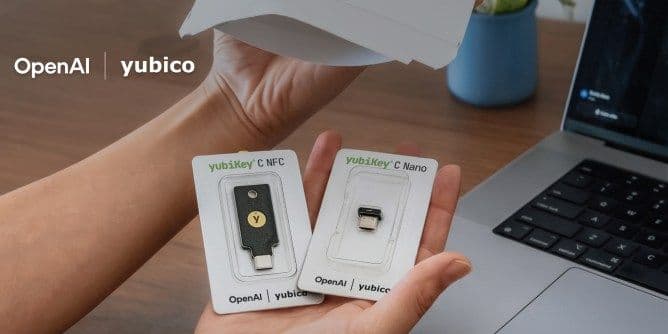
OpenAI is getting serious about account security. The company on Thursday launchedAdvanced Account Security(AAS), a set of opt-in protections for ChatGPT users designed for high-value individuals — but available to anyone who wants them. As part of that new program, digital security provider Yubicoannouncedit has partnered with OpenAI to link two new security key products to ChatGPT accounts. The company said the partnership was designed to protect users from the threat of phishing, which is considered to be a growing threat for chatbot users. The two companies are releasing a pair of “co-branded” YubiKeys — dubbed the YubiKey C NFC and the YubiKey C Nano. OpenAI has suggested that AAS is a good fit for political dissidents, journalists, researchers, and elected officials — people who engage in politically charged and risky work. One would assume that it might make sense for enterprise users, whose corporate secrets are squirreled away in ChatGPT sessions. “Ultimately, our intent is to drastically reduce the threat of unauthorized access to sensitive data in OpenAI accounts worldwide,” Yubico CEO Jerrod Chong said in press release announcing the deal. Security keys are small pieces of hardware that can be tied to digital accounts and enacted through a computer’s USB ports. A unique cryptographic identifier lives on the key, which allows only the person in possession of it to log into a connected account. If the threat of phished ChatGPT accounts may seem somewhat abstract, there is agrowing body of literatureshowing that bad actors are increasingly targeting chatbot users. Cybercriminals are always on the lookout for extortion-worthy information and, given the intimate nature of most chatbot conversations, there is plenty of fodder when it comes to both enterprise and personal-level users. Digital security is also becoming a bigger focus of the AI industry. Several weeks ago, Anthropic announced a newcybersecurity modelcalled Mythos. Perhaps seeking to steal some of its competitor’s thunder, OpenAI has also made a number of announcements related to digital security. Thursday’s news of the Yubico partnership followed OpenAI’sannouncementthat it’s launching a new framework for digital defense. Of course, a security-key-enabled account does offer stronger protection, but it comes with a tradeoff: If the key is lost, OpenAI won’t be able to help recover access. In practice, that means conversations could be lost for good.
View
Enviar tu herramienta


PoweredByAI.app es un directorio de herramientas de IA que ayuda a personas, empresas y creadores a descubrir las mejores herramientas de IA para escritura, programación, diseño, productividad y más.
© 2026 , Producto de011BQ. Todos los derechos reservados.