🚀 Zaprep: Tus redes sociales al máximo. Empezar gratis — automatiza 1,000 DMs/mes y convierte el engagement en leads. con 1,000 DMs automatizados/mes.
Enviar tu herramienta
Últimas Noticias de IA
Meta Reports 33% Revenue Growth, Testing Early Versions of Business AI
The company also confirms employee headcount reduction starting in May.
View
Big Tech is Tokenmaxxing, But Indian Developers are Maxing Out on AI Anxieties
Big Tech is putting up AI leaderboards to encourage developers to spend as many tokens as possible. But in Indian offices, that comes with a peculiar unease.
View
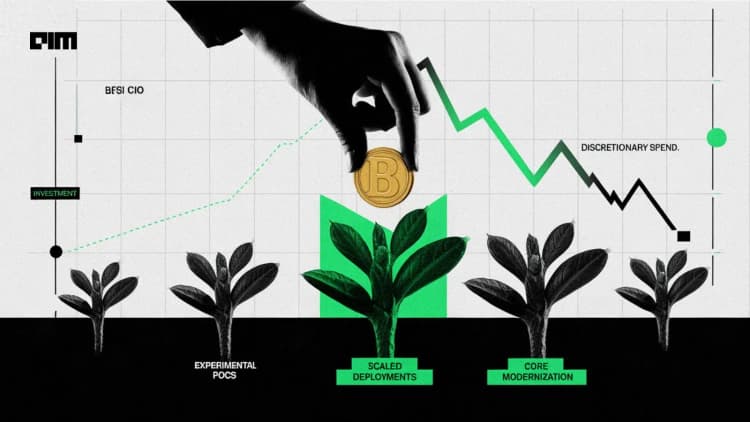
‘BFSI CIOs Must Stop Pumping Money Into More POCs’
Research flags “death by POCs” even as service providers’ data shows a shift to outcome-led AI spend.
View
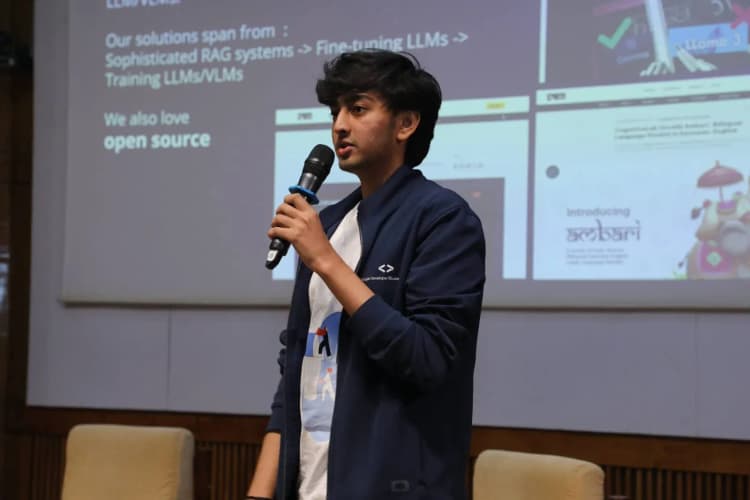
The 22-Year-Old Powering India’s Multilingual AI Moment
Adithya S Kolavi has worked at Apple, collaborated with Microsoft Research, received funding from Meta, and runs a research lab called CognitiveLab.
View

Top Forward Deployed Engineer Certifications and Courses in 2026
Ten certifications and courses for the engineering role every frontier AI lab is racing to hire.
View
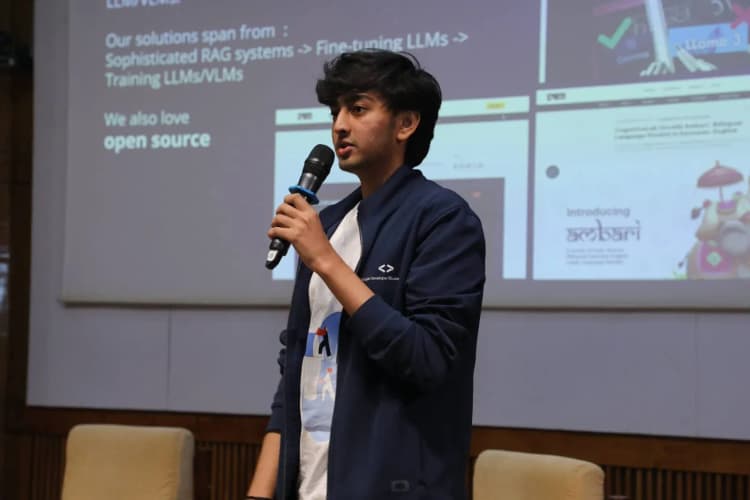
The 22-Year-Old Powering India’s Multilingual AI Moment
Adithya S Kolavi has worked at Apple, collaborated with Microsoft Research, received funding from Meta, and runs a research lab called CognitiveLab.
View
Meta buys robotics startup to bolster its humanoid AI ambitions
Meta has acquired humanoid robotics startupAssured Robot Intelligence(ARI) for an undisclosed sum, the social media giant said. “We acquired Assured Robot Intelligence, a company at the frontier of robotic intelligence designed to enable robots to understand, predict, and adapt to human behaviors in complex and dynamic environments,” a Meta spokesperson told TechCrunch in an emailed statement. ARI’s team, including its co-founders, will join Meta’s AI unit, the Superintelligence Labs research division. ARI had raised an undisclosed seed round from AI seed firm AIX Ventures. The startup was building foundation models for humanoid robots to perform all types of physical labor such as household chores. Co-founder Xiaolong Wang was previously a researcher at Nvidia, and an associate professor at UC San Diego, with alist of prestigious awardsto his name. Co-founder Lerrel Pinto, who previously taught at NYU and co-founded the kid-size humanoid startup Fauna Robotics before Amazonsnapped it uplast month, has also won astring of prestigious awards. ARI will help Meta with its humanoid ambitions. “This team, led by Lerrel Pinto and Xiaolong Wang, will bring a deep expertise in how we can design our models and frontier capabilities for robot control and self-learning to whole-body humanoid control.” Meta researchers havebeen working on humanoid roboticstech for years. A leaked memo from a year ago discussedMeta’s ambitions to build such a robot, including AI models and hardware, aimed at consumers. Even if Meta never releases a consumer humanoid product, many AI experts these days believe that the path to artificial general intelligence (AGI) — the theoretical point at which AI reaches or surpasses human-level intelligence across all domains — will require training AI models in the physical world, where robots learn through direct interaction rather than data alone. The ARI and Fauna deals reflect a broader industry sprint — one where forecasts vary wildly, from Goldman Sachs’ projection of$38 billionby 2035 to Morgan Stanley’s estimate of$5 trillionby 2050 — a spread that reflects both the enormous potential and the uncertainty around tech that’s still finding its footing.
View
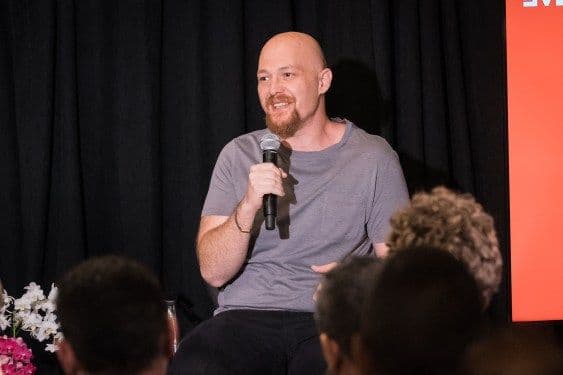
Replit’s Amjad Masad on the Cursor deal, fighting Apple, and why he’d rather not sell
Amjad Masad has been building Replit for a decade, but the last 18 months have been something else entirely. The AI coding assistant company went from $2.8 million in revenue in all of 2024 to tracking toward what Masad describes as a billion-dollar annual run rate. At TechCrunch’s sold-outStrictlyVC eventin San Francisco on Thursday night, we covered a lot of ground in a short time, beginning with the question everyone in the industry is asking right now: in a world where rival Cursor is reportedly in talks to be acquired by SpaceX for$60 billion, is Replit also bound to sell? We also got into Replit’s net revenue retention — a measure of how much existing customers expand their spending — which Masad says is reaching as high as 300%, his willingness to take Apple to court over what he called outright lies in its App Store battle with Replit, and the possibility of the company beginning to invest in its own customers. On the question of independence, Masad was unambiguous. Unlike Cursor, which he said has been operating at negative 23% gross margins, he argued Replit has the economics to make that path viable — even if he stopped short of ruling out a sale entirely. The following has been edited for length and clarity: TC: Cursor’s reported SpaceX deal was the talk of the industry last week. What did you make of it? AM: It’s kind of hard being an independent, smaller AI company that’s building on foundation models, especially if you’re burning a ton of cash. Part of the reporting suggested Cursor has negative 23% margins, and if you’re also wanting to invest in training models, that makes it incredibly hard to stay independent. For us at Replit, partly because we target a different customer set, we’ve been able to run the business more rationally. We’ve been gross margin positive for over a year. We’re slightly more expensive, but we provide a lot more. Our audience tends to be mostly non-technical users who previously haven’t been able to create any software. We provide an end-to-end platform — from the prompt all the way to a deployed application that can scale. We handle security, databases, database migration. And we’ve been doing this long enough that we’ve built a lot of those primitives into the platform. Is Replit for sale? I would assume you are talking with potential acquirers all the time; it’s your fiduciary responsibility. Yeah. We have amazing partners, and they sometimes bring up these topics. But we’re going to try to stay independent. I would love for us to remain an independent company. We’ve been around for 10 years, before it was even accepted that you could make apps just from ideas. We were talking about creating a billion software creators back in 2018 at YC, and people sometimes actually laughed at that dream. Now that dream is possible, and we kicked off this revolution with our agentic coding experience in September 2024. It just feels like we can take it much further. You work closely with Anthropic, Google, and OpenAI. If you had to rank them — who’s doing it best? Anthropic is still undefeated on the core agentic loop. They have the best tool calling; the agent can stay coherent much longer. GPT-5 is catching up quickly. Google’s Flash family of models is just amazing on price-performance. If you want something fast and cheap, they’re actually beating open source right now. We use all three, and honestly I wouldn’t discount the newer labs either. Reflection AI is coming out with open-source models we’re hearing great things about. And the Chinese models are impressive — Kimi is as good as an Anthropic-generation model from January, so it’s only about three months behind. When you’re in a bake-off for an enterprise deal, what wins it for you? Most of our sales are inbound or organic — very product-led. We’ve acquired customers like Zillow and Meta purely through people adopting the product and then raising their hand to buy an enterprise plan. When it does go top-down and there’s a formal bake-off, we usually win on product. But even in cases where we might be missing a feature, once it hits the C-suite and the IT group, Replit wins on security. A lot of vibe-coding tools will generate a website and connect it to an external database — great products, but it makes security much harder, because the database is open to the public and you need to configure row-level security, which is especially difficult for non-technical builders. Replit being full stack, with the database built into the project and not open to the public — that makes the app inherently more secure. We also spent 10 years battling crypto scammers and hackers, so our cybersecurity function is as good as a dedicated cybersecurity startup. Every time you deploy an app on Replit, we create an entirely new isolated project on Google Cloud. We inherit Google’s security model. Can we talk about churn? How long do you hold onto customers if the best prototypes eventually get rebuilt into a company’s existing stack? Churn is very, very low, and net retention is incredibly high — 300% in some cases. What we actually hear from customers is that when engineers get nervous and try to rebuild an app into their own stack, they often make it worse. Once enterprises get comfortable with the full Replit stack — especially when we set up a single-tenant environment for them — they keep the apps on Replit. Bain & Company, for example, replaced Tableau and Power BI with Replit and Databricks. There’s a growing concern about AI bloat — non-technical users generate far more code and burn through far more tokens. That’s good for you [given your usage-based fees]. What about your customers? We don’t have a lot of regrettable spend. Enterprises are very ROI conscious, and they tell us about the returns they’re getting. For the most part they feel the investment is totally worth it — often one, two, three orders of magnitude. If they spend $100,000 a month with Replit, they’re usually generating $2 million, $3 million, $10 million in some kind of return. Let’s talk about Apple. Another rival, Lovable, just got anapp-building appapproved by the App Store this week. Replit has been in App Store purgatory, with Apple blocking your updates for months. How much does that hurt you? It’s not life or death — we could lose the app and it wouldn’t do anything meaningful to our business. But it’s an app people genuinely love. We’ve been on the App Store for four years. Kids in underprivileged communities learn to code on Replit on their Android devices. Executives use it in meetings. The reason Replit got blocked when others weren’t, we believe, is that Replit makes iOS apps. When we launched that capability in December, there were charts going around showing how many apps were getting into the App Store through us. We think Apple feels threatened by that. Apple’s stated reason is that you’re downloading new code to the device [after the approval process], which violates their guidelines. That’s a lie. And we can prove it in court if we have to. Is that going to happen? I hope not. I’m a fan of Apple, and I’d love to collaborate and build something great together. We’re happy to send customers to Xcode [Apple’s own development environment]. But you can’t run a marketplace that a billion people have access to and make decisions that are discriminatory or based on whims. Just wondering if, like Nvidia, OpenAI and others, you’re thinking about investing in your own customers in exchange for equity. We’ve thought a lot about it, and it is a consideration. I’ve personally invested in a few startups that started on Replit before they made any money. Some of them, like Magic School — a teacher decided to take his time during COVID to learn a little bit of vibe coding and built an AI app for other teachers. He found this problem that in America, we burn out a lot of teachers. He wanted to use AI to reduce the workload. He did that, and he made $20 million in the first year. Other companies that started on Replit, I think, are valued at half a billion dollars. The entrepreneurship happening on Replit right now is genuinely exciting. We integrated with Stripe a few months ago, and the transactions flowing through Replit are growing triple digits month over month. Pretty soon, our customers will be making more revenue than we are. You can watch our full conversation with Masad below:
View

Musk v. Altman is just getting started
Loading the player… Elon Musk spent the better part of three dayson the witness stand this weekin his lawsuit against OpenAI, and it’s already getting messy. Emails, texts, andhis own tweetsare surfacing in court, and there are plenty more witnesses to come. Musk’s argument against OpenAI? By converting the company to a for-profit model, Sam Altman betrayed the “nonprofit for the benefit of humanity” mission Musk signed up to fund. As Musk keeps reminding the courtroom: “You can’t steal a charity.” Watch as this episode of TechCrunch’sEquitypodcast discusses what’s actually at stake in the courtroom and what to watch for as Altman and others take the stand, plus deals, defense tech, and what Big Tech’s earnings week revealed about the limits of the AI spending era. Subscribe to Equity onYouTube,Apple Podcasts,Overcast,Spotifyand all the casts. You also can follow Equity onXandThreads, at @EquityPod.
View

Did you know you can’t steal a charity? Don’t worry. Elon Musk will remind you.
Elon Musk spent the better part of three dayson the witness stand this weekin his lawsuit against OpenAI, and it’s already getting messy. Emails, texts, andhis own tweetsare surfacing in court, and there are plenty more witnesses to come. Musk’s argument against OpenAI? By converting the company to a for-profit model, Sam Altman betrayed the “nonprofit for the benefit of humanity” mission Musk signed up to fund. As Musk keeps reminding the courtroom: “You can’t steal a charity.” On this episode of TechCrunch’sEquitypodcast, Kirsten Korosec and Sean O’Kane break down what’s actually at stake in the courtroom and what to watch for as Altman and others take the stand, plus deals, defense tech, and what Big Tech’s earnings week revealed about the limits of the AI spending era. Listen to the full episode to hear about: Subscribe to Equity onYouTube,Apple Podcasts,Overcast,Spotifyand all the casts. You also can follow Equity onXandThreads, at @EquityPod.
View

Pentagon inks deals with Nvidia, Microsoft, and AWS to deploy AI on classified networks
After landing agreements withGoogle,SpaceX, andOpenAI, the U.S. Defense Departmentsaidon Friday that it has signed deals with Nvidia, Microsoft, Amazon Web Services, and Reflection AI that allow it to deploy their AI tech and models on its classified networks for “lawful operational use.” “These agreements accelerate the transformation toward establishing the United States military as an AI-first fighting force and will strengthen our warfighters’ ability to maintain decision superiority across all domains of warfare,” the statement reads. The deals come as the U.S. Department of Defense has accelerated its diversification of AI vendors in the wake of its controversialdispute with Anthropicover usage terms of its AI models. The Pentagon wanted unrestricted use of Anthropic’s AI tools, but the AI lab insisted on guardrails to prevent Anthropic’s tech from being used for domestic mass surveillance and autonomous weapons. The two are fighting it out in court at the moment, though Anthropic in Marchwon an injunctionagainst the Pentagon’s move to brand the company a “supply-chain risk.” “The Department will continue to build an architecture that prevents AI vendor lock-in and ensures long-term flexibility for the Joint Force,” the statement reads. “Access to a diverse suite of AI capabilities from across the resilient American technology stack will give warfighters the tools they need to act with confidence and safeguard the nation against any threat.” The DOD said the companies’ AI hardware and models will be deployed on Impact Level 6 (IL6) and Impact Level 7 (IL7) environments to “streamline data synthesis, elevate situational understanding, and augment warfighter decision-making.” IL6 and IL7 are high-level security classifications for data and information systems that are deemed critical to national security and require that these systems be protected physically, through strict access controls and audits. The Pentagon said more than 1.3 million DOD personnel have so far used its secure enterprise platform for generative AI,GenAI.mil, which provides access to large language models (LLMs) and other AI tools within government-approved cloud environments. It is designed to help primarily with non-classified tasks like research, document drafting, and data analysis.
View

Google’s Gemini AI App Could Soon Start Showing Ads, Company Executive Reportedly Hints During Earnings Call
Google has been showing commercials and sponsored search results under and over AI Overviews answers for months now. Moreover, various reports in the past have highlighted that the Mountain View-based tech giant is also testing ads in AI Mode. Now, the company could be preparing to bring commercials to its conversational AI assistant, the Gemini AI app. During Google's quarterly earnings conference call, a company executive reportedly told company shareholders and journalists that the tech giant is open to showing ads in the app. This comes months after the Sam Altman-led OpenAI announced it had started rolling out ranked ads in its AI-powered chatbot, ChatGPT.
View
Enviar tu herramienta


PoweredByAI.app es un directorio de herramientas de IA que ayuda a personas, empresas y creadores a descubrir las mejores herramientas de IA para escritura, programación, diseño, productividad y más.
© 2026 , Producto de011BQ. Todos los derechos reservados.