🚀 Zaprep: Your Socials on Steroids. Start free — automate 1,000 DMs/month & turn engagement into leads. with 1,000 automated DMs/month.
Latest AI News
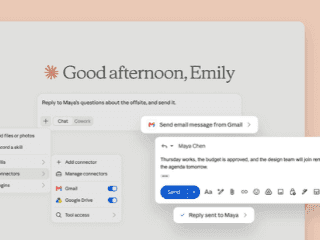
Claude Can Now Take Greater Control Over Gmail, Google Drive With Updated Google Workspace Connectors
Claude users have had the option to connect their Google Workspace apps, including Gmail, Google Calendar, and Google Drive, for a while now. However, the connectors missed a few basic abilities. Now, Anthropic has updated the Google Workspace connectors for its AI chatbot, Claude. The update brings the ability to allow Claude to reply to email threads, send emails, and do more in Gmail. On top of this, with the updated Google Workspace connectors, Claude can now manage files and folders in Google Drive for users. This adds to the existing features that are offered with Google Drive, Gmail, and Google Calendar connectors in Claude.
View

From Kadapa to New York, and Now Raising Millions to Build Voice AI
Maya 2 supports 11 languages, each with a voice native to that language. The first-party API is 8x cheaper than Sarvam’s latest Bulbul v3 model.
View
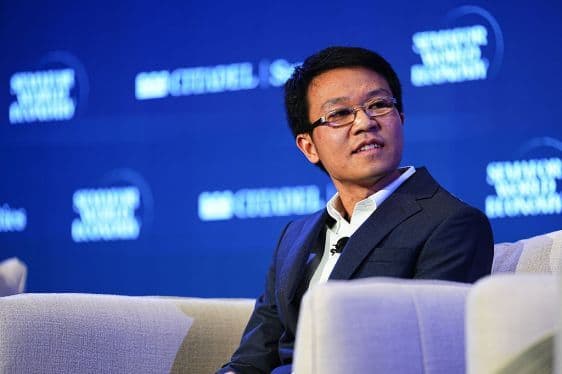
Cognition CEO denies report that SpaceX tried to acquire the startup
Elon Musk’s SpaceX attempted to acquire AI coding startup Cognition as it works to catch up to OpenAI, Anthropic, and Google in the AI race,Bloomberg reported Wednesday, citing sources familiar with the matter. Cognition CEO Scott Wu disputed the report soon after it published, writing on X that the story was inaccurate and that Cognition “is not for sale,” adding that the two companies haven’t been in talks. The report comes a few days after SpaceX’s$60 billion acquisitionof Cursor, another AI coding startup, whose dealclosedlast week. SpaceX acquired Musk’s AI company, xAI, earlier this year. It then went public in ablockbuster IPO inJune, with its market capitalization rising to nearly $2.3 trillion at its peak. SpaceX has sold investors on its AI ambitions, which include eventually buildingdata centers in space. But the xAI business remains relatively early-stage and has fallen behind competitors. It’s also had to contend with its chatbot Grok’s penchant for controversy, including last year’s“MechaHitler”incident and this year’snonconsensual sexual imagery scandals, as it tries to win over enterprise customers. Last week,Musk told SpaceX’s employeesthat in about “four or five years, AI will be 99% of the value” of the company, but achieving that feat will require SpaceX to pull in much more revenue from AI. AI-assisted coding has emerged as one of the clearest ways to monetize the technology. Anthropic’s meteoric growth, fueled in large part by Claude Code, is proof of that. Bringing Cursor into the fold was part of that equation, and the companies were already working together before the acquisition closed. This month, Cursor and SpaceX jointly released Grok 4.6, a new model that scores higher on benchmarks for coding and complex multi-step agentic tasks. Adding Cognition and its coding agent Devin — along with an enterprise customer base that includes Mercedes-Benz, Citi, and Goldman Sachs — would have given SpaceX another way to deepen its push into AI coding and compete for enterprise customers. Bloomberg reports that the deal talks are no longer active, but that the companies are still discussing working together — potentially with Cognition using SpaceX’s computing capacity, which the company isselling to other AI playerslike Anthropic until it needs that capacity for itself. Wu didn’t address this specific claim in his denial. Cognition remains one of the largest independent AI software coding startups that hasn’t yet been gobbled up by a major AI model maker. The company in late May raised a$1 billion roundat a $25 billion post-money valuation, and Bloomberg reports it’s now in early talks for a new round of funding at a$40 billion valuation. Cognition made headlines last year when it acquired the remaining assets of competitor Windsurf afterGoogle DeepMind acqui-hiredthe startup’s CEO and top research in a $2.4 billion deal for talent and licensing rights. After the merger,Cognition laid off 30 employeesand offered buyouts to the remaining 200 Windsurf employees. Those who decided to stay faced strict operational expectations, like a more than 80-hour workweek and six days in the office. That sort of wartime work ethic wouldn’t be out of place in a Musk company. Musk has said he works up to 120 hours a week and often sleeps on office or factory floors. SpaceX and Cognition did not respond to requests for comment.
View

OpenAI seeks to one-up Anthropic with new customer privacy protections
As AI models have become more powerful, the potential for those models to be misused has grown — as has a clamor for safety guardrails that can stop such abuse from happening. AI companies must now walk a delicate tight rope between respecting their enterprise customers’ privacy while also watching usage for possible issues. Sensing an opportunity to one-up its rival Anthropic, OpenAI just announced a privacy-centric safety approach to monitoring for misuse. The companyis previewinga new service to select customers that it calls Private Safety Processing. This is an automated system that watches for potential abuse while simultaneously retaining none of the customer’s data. This system clearly runs counter to Anthropic’srecently announceddata-retention policy. The policy, which has aggravated some customers, enables the AI lab to keep user data (all of their sessions — and the conversations therein) for a period of 30 days, when it comes to “covered models.” Those models include all Mythos-class models and “future models with similar capabilities,” the company says. This policy, which was announced in July, was designed for the purposes of safety, allowing the lab to sift and analyze potential impropriety. However, ithas deeply concernedsome enterprises that handle large amounts of sensitive data and don’t want it harbored (or inspected) by the AI lab. OpenAI — like most other AI companies — already afford customers a relative level of privacy by adhering to a policy known as Zero Data Retention. ZDR uses agents within the OpenAI API to monitor for abuse on a per session basis. In this way, customer data isn’t retained by the company but companies are still able to scan for bad activity without the need for human intervention. It’s worth noting that Anthropic also largely abides by ZDR — except when it comes to “covered models,” like Fable. OpenAI says that Private Safety Processing is a new technology that widens ZDR’s scope. It describes it as a form of long-horizon safety monitoring that assesses the inputs and outputs of multiple conversations — not just one. Again, the monitoring is conducted by an agent, which, if triggered, catches interactions and analyzes them across sessions for signs of potential misuse. The new tech helps OpenAI detect malicious use of AI that takes place over multiple sessions, a spokesperson told TechCrunch. A bad actor — hypothetically someone trying to engineer malware for a cyberattack — may spread out their requests to avoid detection. Private Safety Processing can analyze those multiple conversations for signs of abuse without human review of a user’s conversations. In the case where the system is triggered, it may send a “narrowly defined signal” to OpenAI that warns of a specific type of activity, the company says. Based on that signal, OpenAI can then decide whether “enforcement is necessary,” it says. If so, OpenAI will reach out to the customer for more context or to work with them on the issue and a customer may choose to share data with OpenAI at their discretion, the spokesperson said. By contrast, Anthropic notes that human review of customer data can occur, but only “through a controlled access path” that involves “a small set of approved reviewers.” Every one of those review sessions is “recorded in a tamper-proof log that reviewers cannot suppress or modify,” the company says. The corporate competition between OpenAI and Anthropic is tense at the moment, with both companies looking for any opportunity to gain an advantage on the other. Arecent reportshowed that OpenAI’s Q2 grew more slowly than Anthropic. Anthropic’s annualized revenue run rateis now reportedly $65 billion. Anthropic investors have said itcould IPO at $2 trillion, while OpenAIis also working on its IPO.
View

Stripe didn’t really buy OpenRouter because of the ‘singularity’
Stripeconfirmedon Wednesday that it was buying OpenRouter. While the company didn’t disclose the deal price, sources told the New York Times that it paid $7.5 billion. That’s a huge step up from OpenRouter’s$1.3 billion valuation in May. To put that price in context, the founders alone will reportedly receive $1.5 billion from the sale — more than the startup’s entire valuation just three months ago. Investors will get the remaining $6 billion, according to the NYT. Stripe reportedly had to outbid others interested in the fast-growing startup,including Databricks. But the question is: what does a payments giant want with a startup that routes prompts between different AI models? The short and funny answer, according to a leaked letter from Stripe’s founders to its investors about the deal, is: the singularity. “It’s a fuzzy and perhaps already overworked term but we decided that January 1 marked the beginning of the singularity and we’ve been operating on that basis,” they wrote in the letter,published by Eric Newcomer, and verified by TechCrunch. The singularity is supposed to mean the point at which humans and the tech we’ve created merge to become a new species. This is obviously a tongue-and-cheek reference (as Patrick Collison admitted whenusing the term it at his company’sconference in April). We’re fairly certain Stripe’s founders, the brothers Patrick and John Collison, don’t think humanity started turning into The Borg eight months ago. But they have referred to the economic uptick that AI is bringing to Stripe. With AI, more companies are being launched and more of them are using Stripe’s offerings. Stripe says that 88% of the Forbes AI 50 are using its products, including OpenAI and Anthropic, as do100% of Brex’s fastest-growing startups.No one knows how AI and agents will change the economy of the future, but everyone is certain it will change it dramatically. That still doesn’t explain why Stripe wants a company mostly known for helping developers manage their model usage. Stripe’s founders acknowledged that their customer bases overlap. “OpenRouter is exceptionally useful for any developer and Stripe is one of the world’s largest developer platforms,” the founders write in their letter. No doubt that just using OpenRouter internally will probably offer significant benefits to Stripe and make it easier to roll out future model-agnostic agentic offerings, too. It seems as if OpenRouter will continue to operate independently after the deal closes in a few weeks, or so the startup promised inits own blog post, saying that its “product, mission, and current commitments remain unchanged.” Still, until now, most of Stripe’s large acquisitions have been related to helping people collect and manage incoming cash. Buying OpenRouter looks like a move to other side of the ledger, too: expense management, beginning with AI expenses. This acquisition “is Stripe’s deliberate attempt to embed itself into the middle of capital flows in the AI era,” said PitchBook’s research analyst Franco Granda. It’s joining an unusual assortment of companies also entering token expense management. Databricks developed its ownAI gateway.Rippling just launched one focused onemployee AI spend and ROI. Ramp just launched one,also for AI expense management. And the list goes on. For Stripe, buying the granddaddy of popular AI gateways for developers gives it insight into how coders are using AI. But it also gains a lever on AI demand itself. OpenRouter will grant it “some degree of power over suppliers such as the frontier labs themselves, as well as hyperscalers and neoclouds,” Granda said. It may not be the Borg, but payments plus token expense management and a model router? That’s a lot of power.
View

Meet the startup helping Wall Street put a price on AI compute
Loading the player… The AI buildout shows no signs of slowing. And with hundreds of billions of dollars a year going into data centers and GPUs, compute has become the single biggest cost for anyone building AI products. But for all that spending, there still isn’t a straightforward way to put a price on compute — or for firms to hedge their exposure when the price changes. Silicon Data just closed a $30 million Series A to change that. The startup aims to become the reference price for GPU rental and an index that a Wall Street futures contract would settle against. The company plans to launch its compute futures tradingon the CME October 5th, pending regulatory approval.On this episode of TechCrunch’sEquitypodcast, Rebecca Bellan is joined bySteve Hou, head of research at Silicon Data, to discuss the health of the AI buildout, and why the data is telling a different story than the doom and gloom headlines about depreciating chips andstalleddata centers. Subscribe to Equity onYouTube,Apple Podcasts,Overcast,Spotifyand all the casts. You also can follow Equity onXandThreads, at @EquityPod.
View
Researchers say OpenAI revoked their access to limited cyber program
Several security researchers say OpenAI suddenly revoked their access to a limited-access program that removes some restrictions on using its AI tools for cybersecurity research. OpenAI confirmed that the issue was caused by an error. On Wednesday, multiple researchers on OpenAI’s officialsupportforumsand on X reported having their access to the Trusted Access for Cyber (TAC) program revoked. The people said that when they opened ChatGPT’s Cyberpage, a message appeared saying their identity could not be verified or that their account “is ineligible at this time.” TAC isa special programthrough which OpenAI offers vetted researchers access to the company’s most advanced AI models with fewer cybersecurity guardrails than the models that regular users can access. Anthropic offers a similar program called theCyber Verification Program, or CVP. The idea behind TAC and CVP is to give trusted defenders better models so they can report bugs and vulnerabilities to companies, with the aim of getting flaws patched faster. The goal is also to prevent cybercriminals and malicious hackers from accessing those models and use them to find bugs and develop exploits to hack companies. To get access to TAC, cybersecurity researchers have to submit an ID and be vetted by OpenAI. At this point, it’s not entirely clear why these researchers are getting their access to TAC revoked, nor how many people have had this issue. TechCrunch spoke to five researchers who said they have had this problem. One researcher said OpenAI sent an email saying that their access to Daybreak Blue, the latest vetted tier of TAC, was revoked “due to a technical issue affecting a limited number of users.” “This was an issue on our end, and not the user experience we want to deliver,” read the message, which the researcher shared with TechCrunch. In a thread on OpenAI’s forums,a researcher wrotethat after they reached out to the official support, the company also cited a “recent technical issue” that caused some users to lose access to Daybreak Blue. In both messages, OpenAI asked the researchers to reapply and complete the verification process. All the researchers TechCrunch spoke to said they live outside of the U.S. and Europe, suggesting the revocations may be limited to certain regions. OpenAI referred TechCrunchto a tweetin which the company said a “limited set of users’ access to Daybreak Blue is no longer active and they will need to re-verify to maintain their access.” Daybreak Blue is the latest tier for individual researchers that grants access to “frontier general-purpose models, including GPT‑5.6 Sol, with safeguards tailored to authorized defensive security work,”according to OpenAI, which launched it on August 10. “It is the recommended starting point for most defenders, supporting vulnerability discovery, secure code review, malware analysis, incident response, and patch validation.” At the same time, the company also introduced a higher tier called Daybreak Red that gives access to models made specifically for cybersecurity research, which allow vetted users to do “authorized vulnerability research, exploit validation, and security testing.” In recent months, both defensive and offensive security researchershave complained about the guardrailsimposed by Anthropic and OpenAI, arguing that the guardrails prevent them from doing legitimate work. Updated with comment from OpenAI.
View

Google packs Search and Gemini with new AI study tools
Google on Wednesday announced a slew of new study tools across Search and Gemini, including AI-generated interactive visuals, 3D simulations, a decided student hub, customized practice quizzes, and more. The launch of the new study features marks Google’s latest effort to make Gemini the AI assistant that students turn to when learning and studying, as it competes with companies like OpenAI and education startups such asKnowtandGauth, which are also offering their own learning and practice tools. On Search, students can now generate custom tools and simulations to help them understand complex topics. For example, if a student is learning about pH levels, they can search for “pH scale” and get an interactive visual in an AI Overview that makes the basics easier to understand. To go even further, they can ask a follow-up question for something more specialized, like plotting citrus fruits on the pH scale, and AI Mode in Search will then create an interactive experience tailored to the question. Users can now get customized practice quizzes directly in Search on any subject, including science, math, humanities, foreign languages, and more. For example, users can enter a prompt like, “Create a quiz with the most commonly tested vocabulary words to help me prep for the SAT,” and Search will then generate an interactive quiz. In the coming weeks, Lens in Search will roll out a new interactive learning experience that will help students work through problems. They can tap the “Lens” camera icon in the Google app and then upload a photo of what they’re working on to get AI to explain the concept, identify potential mistakes, and provide guidance if they’re stuck. Additionally, students can now ask Search to create study documents based on their uploaded files, including PDFs, docs, slides and more. For example, they can upload a photo of their handwritten notes along with lecture slides to get a one-pager that outlines key concepts. As for the new Gemini features, Google is launching a feature that lets students launch multi-step research reports in Gemini Live and then discuss the findings conversationally. Users can ask Gemini to research a topic and then close the chat or do other things while it works in the background. They’ll get a notification when the report is ready and can then can discuss the findings or ask follow up questions using their voice. The tech giant also announced that Gemini can now generate functional 3D simulations to help users better understand topics, as responses will now include tables, grids, and simulations made specially for the prompt. For example, if you enter a prompt like, “show me how DNA works in 3D,” you’ll be able to interactively rotate and zoom into a 3D DNA structure. Google is also launching a dedicated hub in the Gemini app that brings its learning tools together in one place. Users will be able to start a study notebook, create flashcards, take practice quizzes, and more within the hub.
View

AI was supposed to win people over by now — it hasn’t
Despite its technological progress, AI’s reputation out in the real world is getting worse. On Wednesday,Axios reportedthat the National Republican Senatorial Committee sent a memo to top AI companies warning that U.S. data centers are hurting the party’s chances in a key Ohio election. At the same time,Pew Research released a studythat found that Americans’ unease about AI is growing — 52% said they’re “more concerned than excited” about the increased use of AI in daily life, up from 37% in 2021. A recentCNBC pollof 18- to 34-year-olds found that, when given the names of nine top leaders in the AI industry, a majority of the respondents said they don’t trust those people to “act responsibly” when it comes to AI. A MayEconomist/YouGovpollfoundthat over 70% ofAmericans think AI is advancing too quickly. The list goes on. All that discontent is starting to show up on balance sheets.The Wall Street Journal reported this weekthat tech companies are facing a public relations crisis over their plans to build AI data centers across the U.S., leading them to agree to sweeten the deals — offering job guarantees, clean water investments, and other local perks. (In one case, that even included$50,000 bonuses for teachersin a Louisiana parish.) The underlying sentiment spanning these stories is that consumers don’t see how AI is making their lives better, but they’re still being asked to absorb the costs. For an industry that has raised hundreds of billions of dollars on the promise of AI’s inevitability, that souring public sentiment is becoming a business problem, not just a PR debacle, and the industry’s own leaders are starting to notice. Today, many consumers think of AI in narrower terms, like AI chatbots or AI search experiences (likethe now AI-transformed Google). They see AI features infiltrating their everyday products, fromemailtoTVs, whether they wanted them or not. They view AI as a tool that’shelping kids cheatin school, including at thecollegelevel, raising questions about the value of a degree. They hear of AI bots training on piles of intellectual property belonging to others so AI can be used to createart,videos,music, andwriting— things that have historically been the output of humans. It’s no shock then that AI appears to be facing more consumer backlash than other transformative technologies did, like the iPhone, the personal computer, or even the internet itself, at similar stages of adoption. Yet there arestillthosesurprisedby consumers’ reaction. They assumed AI’s adoption would lead to acceptance, and its ubiquity would ultimately have consumers feeling positively about the technology, as it became a part of the vast majority of tech products and services. Instead, consumer trends are pointing in the opposite direction. Young people, in particular, are showing interest in adoptingretro technology, ranging fromdumbphonestopoint-and-shoot camerastotape decksandCD players. AI-free, algorithm-freeclassic iPods are selling for top dollar on eBay. So-called“grandma hobbies”like quilting, knitting, jigsaw puzzles, cards, and games likeMahjongare suddenly everywhere.In-personmeetups andactivities, likerun clubs, are winning outover online dating. Some in Silicon Valley may think this stems from a messaging problem: that perhaps execs need to explain AI better to consumers, so people can fully understand its benefits. The reality, however, could be that consumers understand AI well enough as it is, but don’t think the trade-offs are worth it. When the upside offered isn’t automated jobs with increased pay and reduced workweeks, but instead the threat of job loss, paired with AI features consumers find far less compelling — things like summarized web pages, or chatty TVs — that skepticism hardens. There are those in the industry waking up to this. On arecent podcast,Airbnb CEO Brian Chesky acknowledged that the AI backlash is real, and that it’s largely tied to the fact that the industry isn’t shipping products that “regular people” like. “I think part of it’s a narrative issue that we’re not talking about AI correctly,” Chesky said. “But part of it is we need to actually be developing more products that just regular people can use and say, ‘I love AI because AI allows me to have a doctor on demand and I can’t have that. I can’t afford that.’ And so I think we need more regular things.” 2/2 Second, on the messaging around AI. I do not agree that my messaging has been disproportionately negative. In fact it has been about equally balanced between risks and benefits: I’ve written one major essay about each, and even in interviews where I discuss the risks, I… Even Anthropic CEO Dario Amodei, one of the industry’s most prominent leaders,admitted in a post on X this weekthat negative public perception of AI is a “big problem” that’s fundamentally a “crisis of trust.” He said people don’t trust companies, governments, or the tech industry, as they “suspect that we are cooking up some new way to screw them over.” The solution, he said, was to deliver on AI’s promises — for example, curing cancer. “I think by far the most accurate criticism of AI companies, including Anthropic, is that we haven’t yet delivered on our big promises to benefit the world. That is totally on us,” he noted.
View
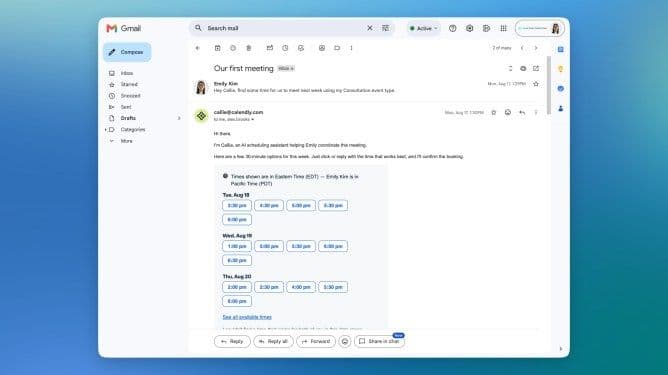
Calendly throws its hat into meeting note-taker circus
Note-taking has quickly turned into a critical part of the productivity space, with many workplace software companies chasing the dream of having AI automate tasks based on action items created from meeting transcripts. Calendly, known for its scheduling and meeting booking software, is now entering the fray with a note-taking product. Like others in the space, Calendly’s note-taker also joins meetings, records the audio and video, and transcribes it, after which it can generate a summary and action items, and draft follow-up emails. The company said it is also testing a Granola-like feature that uses system audio to transcribe meetings. Calendly is also planning to release an AI assistant named Callie that taps the company’s existing meeting and scheduling stack to set up meetings, check peoples’ availability, and surface context from prior meetings. (Meeting note-taking startup Read AI launcheda similar email-based assistant earlier this year.) Calendly CEO Tope Awotona said the company wanted to automate workflows for its top users: people in outward-facing roles like sales and marketing whose workday is typically inundated with meetings. But the competition in this space is intense. On one end, you have meeting note-taking apps likeGranola,Fireflies,Read AI,Otter, andFathom; on the other, productivity companies like Notion, ClickUp, and Wispr have also added note-taking assistants and features to their suites. Still, Awotona says there’s big opportunity in automating tasks after the meeting is transcribed. “There’s a litany of note-takers, and all of them do a great job of recording and transcribing notes. But a lot of work happens after the meetings. And we think that really that’s where the opportunity for our note-takers to be efficient,” he said. Given that some companies in this space, likeOtterandGranola, are facing allegations of violating privacy, Awotona said Calendly’s note-taker will inform users that their meeting is being recorded. The recording assistant sends a message in the chat to inform everyone of its presence and activity, and any user can ask the app to leave the conversation. It can even inform people before the meeting starts that the call will be recorded, thanks to its integration with Calendly’s scheduling system.
View

Amazon makes its AI-powered Alexa+ free on Fire TV, no Prime required
AI is coming to your TV, whether you want it or not. On Wednesday, Amazon said its AI assistant, Alexa+, will be rolled out to all compatible Fire TV devices in the U.S. for free, whether or not the customer has a Prime subscription. The update brings conversational search, smart home controls, and AI-powered recommendations, the company says. Previously,Alexa+cost $19.99 per month for anyone who didn’t have an Amazon Prime membership, and was initially made available to thenew Fire TV devicesthe company announced last fall. Now,Amazon saysthat everyone will be upgraded to Alexa+ automatically. They won’t need to download an app or sign up for a subscription. Compatible devices include all the current-generation Amazon Fire TV Sticks, the Fire TV Cube, Amazon Ember smart TVs, and other smart TVs that have Alexa+ built in, including Hisense and Panasonic. The move follows an industry-wide push to make AI services available on more consumer electronic devices, often through non-optional upgrades like this. Google, for instance, rolled outGemini to its Google TV platform earlier this year,replacing simple search features with AI-powered conversational modes. Rokuupgraded its voice assistant to AIlast year, too. The companies point to metrics like time spent with the features to suggest positive consumer adoption trends. For instance, Amazon says that Alexa+ customers now have nearly twice as many conversations on Fire TV as they did with the original Alexa, which apparently suggests that customers with Alexa+ are no longer using their TV only as a lean-back source of entertainment, and are instead engaging with the AI, too. Whether or not that’s a good thing is debatable. Amazon says that with Alexa+, users don’t have to ask for shows by title, but can instead ask for suggestions based on other factors such as theme, age or popularity — for example, “a top-rated thriller” or “a historical drama with a strong female lead.” The AI bot can also help customers manage and control their smart home, including displaying their Ring camera feeds on the TV.
View

TerraPower’s nuclear reactor has a secret weapon for powering AI data centers
Nuclear power startups have been pitching themselves as the antidote to what ails AI data centers: power that’s always available. Bill Gates-foundedTerraPoweris one of the latest to throw its hat that into that ring, with Bloombergreportingthat the startup plans to announce its first data center project this year. TerraPower did not say who the customer will be, though in January, it announced that Meta hadagreed to buyeight of its Natrium power plants. The data center project, expected to break ground in 2027, would be the company’s second power plant, with its first alreadyunder constructionin Wyoming. Not every nuclear reactor is suited to data center duty, but TerraPower possesses one key advantage — energy storage — that promises to give it an edge over competitors. And it’s all thanks to renewable power sources like wind and solar. Nuclear reactors, TerraPower’s included, work best when they’re running at full tilt. Of all the different types of power plants, nuclear reactors have the highest capacity factor —92.5% of the time, they generate at maximum power in the U.S. But in a way, they need to be. Existing reactors are slow to ramp up and down, capable of increasing or decreasing only about 5% of their total rated output per minute,accordingto the National Laboratory of the Rockies. New small modular reactors (SMRs), which many startups are pursuing, can react faster, about 10% of their rated output per minute, per NRL. But running at reduced capacity isn’t ideal — it’s hard to make money when you’re not generating electrons. That’s true of any power plant, but it’s especially true of nuclear, which has thehighest capital expendituresof any generating technology. Startups are hoping that mass manufacturing of SMRs will bring capex down, but that has yet to be proven. And if it does work, it could take adecade or moreto reap the benefits. Every startup acknowledges that its early power plants will be expensive, so it makes sense to operate it them at peak capacity as often as possible. For data centers, especially those that rely on behind-the-meter power, that poses a challenge. Their loads, especially when training AI or responding to prompts, can sink and soar quickly as GPUs respond to the tasks. The swings are so demanding that natural gas turbineshave been breaking under the stress. To smooth the curve, they need to use large banks of batteries, which increase costs further. TerraPower designed its 345-megawatt molten salt-cooled reactor to work around those challenges. One of the key considerations was ensuring the reactor could complement intermittent sources of electricity like wind and solar — the power plant needed to ramp up and down quickly. While TerraPower had renewable power, not data centers, in mind when it sketched its plans, the two are similarly intermittent, just on different sides of the equation. To ramp quickly, TerraPower doesn’t increase or decrease the power output of its reactor. Rather, it keeps on splitting atoms, and the extra heat gets stored in a giant vat of molten sodium. When power demand spikes, the power plant can tap that reservoir to generate more steam to spin the turbines. The expensive equipment keeps working even when demand is low, allowing the company to amortize its investment over more operational hours. The approach takes the best of nuclear power — high capacity factor — and pairs it with an energy storage technology that allows TerraPower to play nicely on a renewable-heavy grid or when connected to an data center. It’s a flexible approach that could give the startup an advantage in the race to power AI.
View
Submit your Tool


PoweredByAI.app is an AI Tools Directory helping individuals, businesses, and creators discover the best AI tools for writing, coding, design, productivity, and more.
© 2026 , Product of011BQ. All rights reserved.