🚀 Zaprep: Your Socials on Steroids. Start free — automate 1,000 DMs/month & turn engagement into leads. with 1,000 automated DMs/month.
Latest AI News
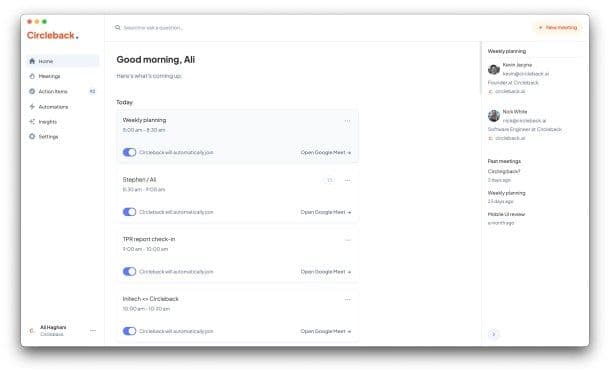
Meeting note-taker Circleback adds a free tier to attract more customers
The meeting note-taker market is a crowded space. Just in the last few weeks, dictation appWispr launched its own note-takerand scheduling app, andCalendly added a similar tool to its stack. Dedicated meeting note-takers like Granola, Read AI, and Fireflies have raised millions of dollars in funding. Likely in reaction to the intensifying competition, Y Combinator-backedCirclebackis introducing a free subscription tier to allow users to get a taste of its product. The new plan lets users transcribe an unlimited number of meetings, though they can only access their history for the last 30 days (Granola added a similar tier a few months ago). The free plan lets users record meetings, access mobile and Apple Watch apps, use AI to query transcripts, and integrate the app with Linear and Slack. If customers want all integrations, unlimited meeting history, and full API and MCP access, the subscription plans start at $14 per month (paid annually). Prior to this change, Circleback didn’t have any free tier, and its plans started at $20.83 per month. Founded in 2023 by Ali Haghani and Kevin Jacyna, Circleback raised $2.5 million in 2024. The company says it has been profitable since then, and has been clocking run-rate revenue of over $1 million per employee with a team of eight people, which roughly translates to a run-rate of about $8 million. Haghani said due to the previously limited trial period, the company saw a big drop-off in users, which is why it is introducing a free plan. “If we just open the gates and allow more people to use the product, that’s gonna bring Circleback in front of more people. Then we’re very good at making the product good and monetizing those users,” he said. The company says it doesn’t spend on Google Ads or Meta Ads, and this free tier will serve as marketing expenses. Haghani said the company is not immediately looking to raise funds despite interest, as it doesn’t see any bottlenecks in its growth trajectory. “We are consistently competing and winning customers against much bigger companies, both in terms of number of people and funding raised. And I feel like there is now more of an appetite to win,” he said. He noted that the moment the company realizes that money can solve a problem it is having, the startup would be open to fundraising.
View
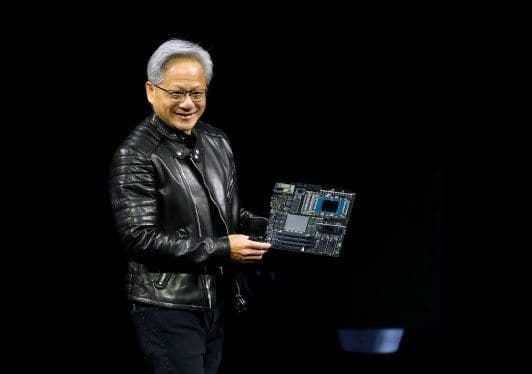
Nvidia’s $3.5B MediaTek bet reveals its plan for tackling Big Tech’s AI chip buildout
Nvidia is investing $3.5 billion into Taiwanese chipmaker MediaTek. As part of the deal, MediaTek will adopt Nvidia’s technology that will help it design custom chips for AI companies and hyperscalers that can be plugged directly into Nvidia-based data centers. The deal comes as a growing number of AI companies and major cloud providers like Amazon, Google, Microsoft,OpenAIandAnthropicinvest in building their own chips so they can be less reliant on Nvidia’s GPUs. Deals like this one with MediaTek allow Nvidia to cede ground to custom silicon while still maintaining its lead as the dominant data center scaffolding. “Nvidia is an AI infrastructure company,” Dion Harris, Nvidia’s senior director of HPC and AI hyperscaler infrastructure solutions, said on Monday on a call with reporters. “We expanded beyond pure computing chips years ago.” The partnership underscores the circular nature of Nvidia’s financing efforts over the past few years, which have often seen the chip giant investing in companies that flow back into its own ecosystem. The deal will give MediaTek access to Nvidia’s NVLink Fusion ecosystem, including NVLink, the technology that lets any chips — even if they’re not Nvidia’s chips — communicate with each other quickly. Last week, Nvidia announced a similar partnership with Amazon Web Services, albeit without the direct investment.AWS will deployan additional 2 million Nvidia GPUs across its infrastructure, and also integrate NVLink Fusion. With the Nvidia partnership, MediaTek can continue to build custom chips designed by cloud companies or AI labs tailored to their workloads, leveraging Nvidia’s “proven scale-up and scale-out technology stack and ecosystem” and “rack-scale architecture.” “Basically, every cloud, every model builder is deploying our platform in some shape, form, or fashion,” Harris said. “So by MediaTek being able to offer this extension to its customers, it allows them to standardize on the rack-scale infrastructure across their AI factories… and also deploy their [custom chips] right alongside those using the same standard platform.” “This is really about opening up this ecosystem to the entire MediaTek customer base,” Harris continued. MediaTek hasn’t publicly shared information about its customer base as it relates to custom AI chips, but it’s clear Nvidia aims to help it boost that side of the business so long as it can come along for the ride. MediaTek has been slowly building its custom data center ASIC (application-specific integrated circuit) operations,saying in Junethat it expects the business to generate $2 billion in revenue in 2026, and hopes to target more of the market in the coming years. Given MediaTek’s expertise in developing custom chips that powersmartphones, smart homes, automobiles, and wireless communications, the company will also continue to collaborate with Nvidia on DGX Spark, the company’s small developer-focused desktop AI computer. The companies have extended their collaboration with the RTX Spark, Nvidia’s push to put its AI tech into consumer AI PCs. MediaTek and Nvidia will also continue “developing platforms for AI-powered,software-defined vehiclesin the era of physical AI,” per a press release. MediaTek’s auto platforms rely on Nvidia’s RTX graphics for intelligent vehicle cockpits and work, alongside Nvidia Drive AGX, the company’s in-car computing platform for autonomous driving workloads. “AI is transforming every computing platform — from the world’s largest AI factories to the PC and the car,” Jensen Huang, founder and CEO of Nvidia, said in a statement. “Together, we’re building platforms that bring NVIDIA accelerated computing to new markets and give customers the freedom to create differentiated AI systems at enormous scale.”
View

Clipto uses AI to search terabytes of video and is now valued at $250M
Generative AI is making it easier to produce more content and harder to keep track of it. As videos, recordings, and documents accumulate, Adobe, Apple, Google, and a growing number of startups are using AI to make those files searchable. It is not yet clear whether that will support a new category of standalone software or become a standard feature of products people already use. Cliptois betting there is room for a separate product. The San Francisco-headquartered startup, which also has teams in Singapore and Hong Kong, has raised $15 million in an all-equity round at a $250 million post-money valuation. The investors include HSG, formerly Sequoia China, GL Ventures, EnvisionX Capital, Palm Drive Capital, Hans Tung, Lu Zhang, and 522 Ventures. Clipto indexes videos, audio, images, meetings, and other files on a user’s computer. Instead of scrolling through folders to find what you need, users can search by describing what they’re looking for or ask ChatGPT, Claude, or other AI tools to find it for them. Clipto founderHenry Kanghas been working on related problems for roughly two decades. Kang said that, while a PhD student at Carnegie Mellon University in 2006, he worked on robots that recorded their surroundings, identified objects, and remembered where to find them. Kang later applied the same basic idea to his first startup, which used AI to keep track of the clothes in a user’s closet and suggest outfits. His second company, ZenVideo, focused on making video creation easier and was acquired by Tencent in 2020, Kang told TechCrunch. “The real insight is that in this AI era, we don’t have a content shortage,” Kang said. “The opposite is true. We have too much content. We have too much video footage sitting on our computers that isn’t being used.” Kang founded Clipto in 2023 with several members of his previous startup’s founding team, building the company around that observation. While other AI companies focused on generating new material, Clipto set out to help users find and reuse files they already had. Clipto initially built its product for video creators trying to manage footage scattered across computers and external drives. But Kang said creators now make up only about one-quarter to one-third of its users. The rest include lawyers, doctors, researchers, marketers, human-resources professionals, professors and students. The company says more than 30 million people have used its products since launch and that it has hundreds of thousands of paying subscribers. Kang declined to provide a more precise subscriber count or average revenue per customer, though he said a significant portion of customers remain subscribed for more than two years. Clipto reached $15 million in annual recurring revenue at the beginning of 2026, and remains profitable on a net-income basis, Kang said. The company has just over 20 employees split among the San Francisco Bay Area, Hong Kong and Singapore. About two weeks ago, Clipto added support for Model Context Protocol, or MCP, a standard that allows AI applications to connect with outside sources of information. Kang said access to indexed files requires the user’s active request and authorization. When an AI application accesses Clipto’s indexed data, it can only retrieve information within the scope the user specifies. All of this processing runs locally on the user’s device without requiring cloud services, Kang added. Clipto is entering a market where larger companies already control much of the data and software people use to manage it.Adobe already offers AI-powered searchin Premiere, whileApplePhotos andGooglePhotos allow users to find photos and videos using natural-language descriptions. Kang said Clipto can search across videos, audio, images and documents, while products from Adobe, Apple and Google generally focus on files stored within their own services. Clipto also lets users make selected information available to AI tools such as ChatGPT and Claude. The company is betting that combining those functions in one product will help it compete with larger platforms. The new funding will go toward the AI models and computing infrastructure needed to run Clipto on consumer hardware, as well as integrations with more AI agents, Kang said.
View
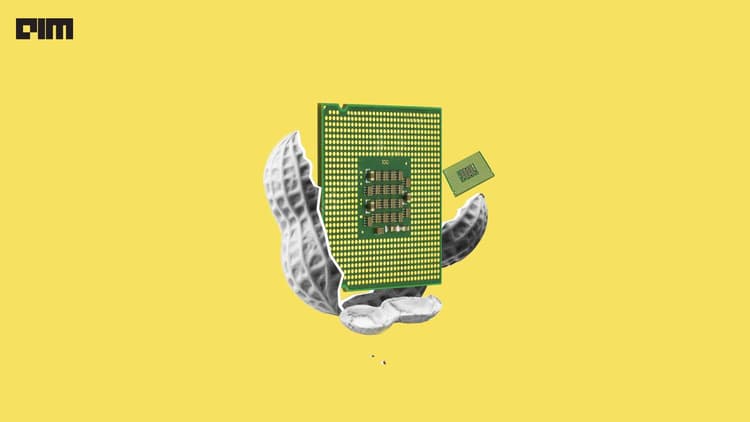
Govt’s ₹1,27,500 Cr Semicon 2.0 Cuts Fab Incentives By 10%
Semicon 2.0 will add new funding routes, expand support for machines and materials, and set a pathway toward advanced semiconductor nodes.
View

Anthropic Faces Lawsuit From Sony Music, Warner Chappell Over Alleged Copyrighted Material Use
Sony Music and Warner Chappell have filed a lawsuit against Anthropic in the US, accusing the company of using copyrighted material without permission. Anthropic co-founders Dario Amodei and Benjamin Mann are named as individual defendants in the lawsuit. The complaint alleges that Mann used BitTorrent to download many pirated books, and Anthropic employees allegedly downloaded at least two million more books from the Pirate Library Mirror. Sony Music and Warner Chappell are demanding a jury trial and the destruction of copies of the copyrighted works.
View

OpenClaw 2.0 Released as Biggest Update Since Launch; Brings Shared Cloud Sessions, Smarter Automations
OpenClaw has released the biggest update to the self-hosted open-source AI agent platform since its launch. As per the company, the update was developed by 933 contributors and includes more than 16,000 pull requests. Dubbed OpenClaw 2.0, it brings changes across installation, messaging, memory, skills, models, automations, browser and native apps, plugins and security. OpenClaw has rebuilt its browser app as a first-class experience, while the initial setup process for new users has been simplified, too.
View

Anthropic’s Claude Closes 85 Percent of AI Safety Gap in Automated Research Test
Anthropic has published new research exploring how AI could take on a larger role in the development and safety testing of other AI systems. The work looks at whether models can independently research ways to address alignment problems, rather than relying entirely on human researchers to develop those methods. It also examines whether this approach can be used across models with different capabilities. The findings offer a closer look at how AI could eventually become more involved in AI research.
View

The Data Security Problem Holding Back Enterprise AI
Data cybersecurity software company Seclore has partnered with AI platform Glean to help enterprises classify and protect sensitive data as they expand AI use.
View

This Wealth Tech Startup Believes AI Can Give Retail Investors Institutional Edge
StockGro began developing its AI platform after finding that general-purpose AI models struggled to answer time-sensitive financial questions effectively.
View
NVIDIA’s GPU Price Surge May Push Indian Cloud Costs Up 20%
CloudPe expects higher GPU costs to raise cloud pricing as memory supply remains tight through 2027.
View

Anthropic Study Finds AI Can Fix Its Own Safety Flaws
The company said its automated alignment researchers outperformed human-proposed methods across seven alignment failures and generalised to models up to 4.7 times larger.
View

7 Types of AI Conference Attendees. Which One Are You?
After a decade of running India’s largest AI conference, you start to recognise people. Not individuals, but the types of people who show up year after year. Here are seven of them, and what each should do differently this year.
View
Submit your Tool


PoweredByAI.app is an AI Tools Directory helping individuals, businesses, and creators discover the best AI tools for writing, coding, design, productivity, and more.
© 2026 , Product of011BQ. All rights reserved.