🚀 Zaprep: Your Socials on Steroids. Start free — automate 1,000 DMs/month & turn engagement into leads. with 1,000 automated DMs/month.
Latest AI News

Former TikTok execs built an app that uses AI to teach you how to pose for a photo
Companies have been increasingly using AI’s image generation chops to teach people photography skills. Google last year released a feature calledCamera Coach on Pixel phonesto guide users about framing and composition, and in July, Adobe released a new feature in its experimental camera app to use AI tocritique photos and suggest changes for capture. On the same slant, two former TikTok employees, Melody Chu and Jing Liu, are launching a new iOS app calledSuperposethat uses an AI guide to teach people how to pose for pictures. Superpose essentially is a camera app. Users can take a selfie or photo of a friend, and the app will generate four potential poses using AI. Some of the poses are extravagant, and, at times, the generation seems uncanny. Users can save generated poses, or use the match-pose feature to try to place themselves in the frame based on its suggestions. Prior to founding Superpose, Chu worked in various product roles in companies like Meta, Nextdoor, Roblox, TikTok, and Slack. Meanwhile, Liu was a founding engineer at a 3D face-scanning startup, and later worked on image and video models at TikTok. Chu said that the idea for the app stemmed from a personal problem: her husband wasn’t able to take good photos of her. “My husband just takes awful photos of me. It was a true pain point in our marriage where I don’t understand how he gets me to look just so terrible all the time. And I thought to myself, there has to be a way to solve this problem with advancements in computer vision and generative AI. And I decided to set out on my own,” Chu told TechCrunch. Superpose was launched in July, and has been downloaded over 22,000 times so far. The company says its users have generated more than 190,000 poses. The app gives users five generations for free every day, but they can buy a pack of five additional generations for $2.99, or 20 generations for $9.99. Loading the player… While Chu acknowledged that other companies are also entering the AI-guided photography space, she said Superpose wants to focus on becoming the best camera to take portrait photos by following directions from AI. The startup doesn’t want to get into creating AI backgrounds and images, and wants to focus on real-life photographs, she added. “We want to lean into the core of memory capture versus, say, putting you in a fantastical place that you’ve never been. I think there are so many apps that do that well already, but we really wanna focus on actually capturing the lived moment and experience,” Chu said. She also acknowledged that some of the pose suggestions might seem uncanny, and the company is working on improving that. The startup says it is working on improving its generation styles, personalization, and ways to better coach users directly from the viewfinder. Superpose has raised $2.2 million in funding from Khosla Ventures, Chinese smartphone and selfie app maker Meitu, and OVTR VC.
View
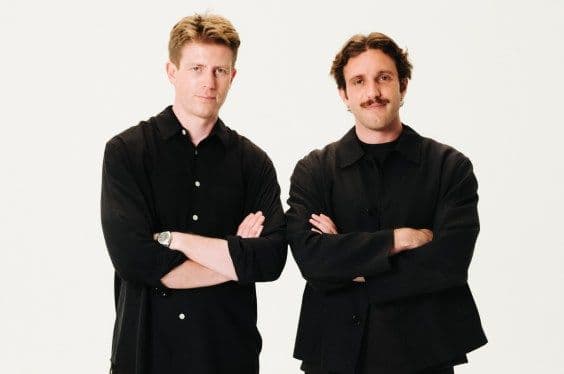
AEO startup Profound hits unicorn valuation, raises $180M Series D 7 months after last round
Profound, which builds marketing software to help brands appear in AI search results, on Tuesday said it has raised a $180 million Series D at a $1.8 billion valuation, less than seven months after it raised a $96 million Series C. Sequoia and Kleiner Perkins led the round, and existing investors — including Lightspeed Venture Partners, Khosla Ventures, and South Park Commons — also participated. Launched two years ago, Profound started as an analytics platform, and has since expanded to help companies research and create marketing strategies. The startup helps businesses understand how AI helps consumers discover their brands. It’s part of a wave of startups in theGEO/AEO space(generative engine optimization and answer engine optimization, respectively), where companies try to find ways to surface their products in the AI systems customers are increasingly using for search. The company says its revenue has increased by 3x in the past six months, and it now has more than 1,000 enterprise customers, which include Comcast, The Estée Lauder Companies, and Walmart.
View
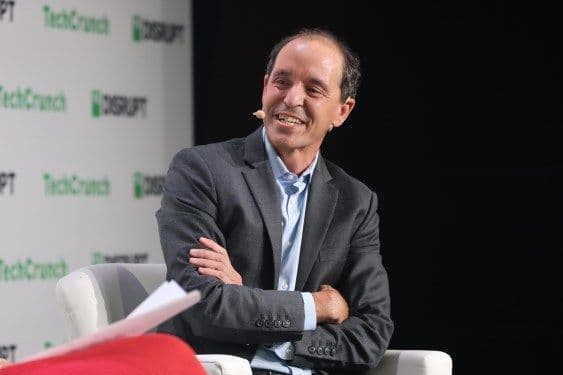
OpenAI, Anthropic, Google have been in talks on AI safety for weeks
Chris Lehane, OpenAI’s global policy chief, told reporters on Tuesday that the company has been working with rivals Anthropic and Google DeepMind on AI safety for weeks, as first reported byBloomberg. Lehane is reportedly in Washington to work with U.S. lawmakers addressing catastrophic risks associated with AI. The revelation comes in the wake ofAnthropic CEO Dario Amodei’s essay, published Saturday, which called for the industry to work together to slow the pace of frontier AI and avoid catastrophic risks. AI leaders across the industry, includingOpenAI’s Sam Altman,Google’s Demis Hassabis, andSpaceXAI’s Elon Musk, supported Amodei’s letter and call to action, with Altman saying that OpenAI would join Anthropic in embedding third-party evaluators into the company to monitor for safety. On Tuesday, Lehane admitted that the three companies have been in talks for several weeks regarding AI safety. Some, including Altman, have noted that such talks could put the companies at risk of violating antitrust law if the coordination is found to suppress competition. Amodei’s essay proposed a narrow government waiver allowing such safety coordination, but Lehane reportedly said the firms don’t need one. The news confirms earlier reporting and hints that the companies were working together. In an interview withFortune late last week, Altman hinted that he had been in private discussions with other AI leaders. This week,The Information reportedthat the three companies have been working together to create a standards body for the AI industry — something Altman reportedly told staff would need to happen without the support of the U.S. government. Hassabis called on the U.S. in July to establish anew standards bodyto act as an AI watchdog, with the power to screen the world’s most advanced models and coordinate industrywide slowdowns if dangers progressed. President Trump, for his part, hasdismissed safety concernsas ahoaxand pushed back on the need for tighter regulations, saying any slowdown would give China a leg up in the race. His key AI advisor David Sacks — a longtime investor with apersonal stakein much of the industry —echoed this, saying fears of existential risk from AI were overblown. At the same Tuesday meeting,Lehane saidthat OpenAI supports a provision in the FRONTIER Act that would force top frontier labs to allow “independent verification organizations” into their companies to ensure models are developed safely. TechCrunch has reached out to Anthropic, Google, and OpenAI for comment.
View

Why Oracle is Bringing Post-Quantum Security to Java
New features in Java 27 target secure enterprise communications, faster data processing, and lower JVM memory overhead.
View
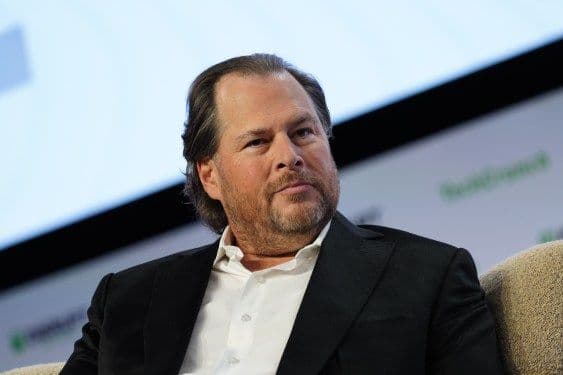
Salesforce and Nvidia’s new reasoning model is everything the AI labs should fear
A new AI model calledKoais one of the biggest announcements from Salesforce this week at its giant Dreamforce tech conference. Koa is the company’s first reasoning model, built on Nvidia’sopen-weight Nemotronmodel. The two companies worked together to post-train Koa to excel at sales, marketing, and customer-support-related tasks. Koa is a shining example of how the enterprise world’s needs for AI are diverging from what the frontier labs are offering. Proprietary AI labs would rather have enterprises uploading files, code, prompts, and feedback directly into their models and agents,and spending millionsto do so. But with the model, Salesforce is offering its enterprise customers: Koa will be provided as an alternative to the other models Salesforce offers in its Agentforce platform, where its customers build agents to handle rote tasks like answering customer service questions or scheduling appointments. “We’ve built many small task-specific language models, which are part of Agentforce’s portfolio,” Jayesh Govindarajan, EVP of Salesforce AI, told TechCrunch. “But reasoning has always been something that we’ve relied on the frontier model providers for. Until now.” Before Koa, if an agent needed to reason through a long-running or multi-step task, those prompts would be routed to a frontier model like Claude or ChatGPT through Agentforce’s AI gateway (the system that decides which model handles which request). “One of the reasons we hadn’t done this before, train our own enterprise-grade frontier model — we always wanted to — but the challenge has always been the lack of a pre-trained base model to start with. Until Nemotron came along, there was no sovereign American pre-trained model that was available, one, and two, that was state of the art, and, three, that had clear data provenance. We have no idea what Qwen trains on,” Govindarajan said, referring to the popular Chinese open-weight model produced by Alibaba. Post-training a model like this means taking it from a general-purpose system to one well-versed in sales and customer support knowledge, and to do that, Salesforce and Nvidia did not use any actual data from Salesforce’s customers. Instead, they crafted synthetic data that mimicked customers’ patterns. “We actually simulated a customer service environment with a persona customer service professional, including irate customers that call into the customer service center, all the way to a sales professional who’s trying to close a deal,” Govindarajan described. Koa is meant to be better at the work tasks Salesforce customers want an agent to do — and cheaper, in terms of tokens burned — than sending those same tasks to Claude or ChatGPT. With Nemotron, “we have a unique architecture for inference to be token efficient,” Kari Ann Briski, Nvidia’s VP of Generative AI Software for Enterprise, told TechCrunch. “It’s kind of the trifecta of things that you need to have: sovereign AI, time to first token, efficient reasoning, for the tokenomics of it all.” However, Salesforce isn’t exactly abandoning Anthropic or OpenAI. It just announced a partnership with Anthropiccalled ClaudeForcethat allows companies to use Claude as their AI interface, while their data remains in Salesforce’s system of records, secured by its infrastructure.
View

Teradyne Opens Bengaluru Office to Expand Semiconductor Support in India
The new office will support chipmakers and electronics manufacturers as India expands domestic fabrication, packaging and testing.
View

NVIDIA Expands CUDA-Q For Fault-Tolerant Quantum Computing
NVIDIA has added an orchestration layer and benchmark tools to help researchers develop practical quantum computing systems.
View
CoRover.ai Claims Its BharatGPT-Instruct Model Outperforms Sarvam 30B
CoRover.ai said its 2B-parameter BharatGPT-Instruct model has surpassed the much larger Sarvam 30B on several reasoning, fairness, and multilingual benchmarks.
View

HCLTech, CrowdStrike Deepen Cybersecurity Partnership as Enterprises Grapple with AI Risks
HCLTech and CrowdStrike are expanding their partnership to help enterprises secure AI applications, models, and agents.
View
A Single Industrial Simulation Would Take 10 Hours. AI is Cutting That Down to Seconds
Dassault Systèmes is pushing AI beyond design assistance, combining simulation, digital twins, and AI agents to help enterprises explore more designs.
View
Anthropic Says Claude Assisted Cyberattacks and Military Weapons Development
Anthropic says groups linked to Russia and China used Claude in cyber espionage campaigns and military weapons projects, including work on missiles, drones, electronic warfare and anti-torpedo systems. The company disclosed the findings in its September 2026 threat intelligence report, which describes several operations where Claude became part of broader technical workflows rather than serving only as a general-purpose assistant. The cases also show attackers using the models for vulnerability research, exploit development, intelligence gathering and software engineering across multiple stages of their operations.
View

Trump Belittles Anthropic CEO as Calls for Pacing Frontier AI Get Pushback
US President Donald Trump said the only control AI needs is a “strong and smart (high IQ) president”, which he claims the country already has.
View
Submit your Tool


PoweredByAI.app is an AI Tools Directory helping individuals, businesses, and creators discover the best AI tools for writing, coding, design, productivity, and more.
© 2026 , Product of011BQ. All rights reserved.