🚀 Zaprep: Your Socials on Steroids. Start free — automate 1,000 DMs/month & turn engagement into leads. with 1,000 automated DMs/month.
Latest AI News
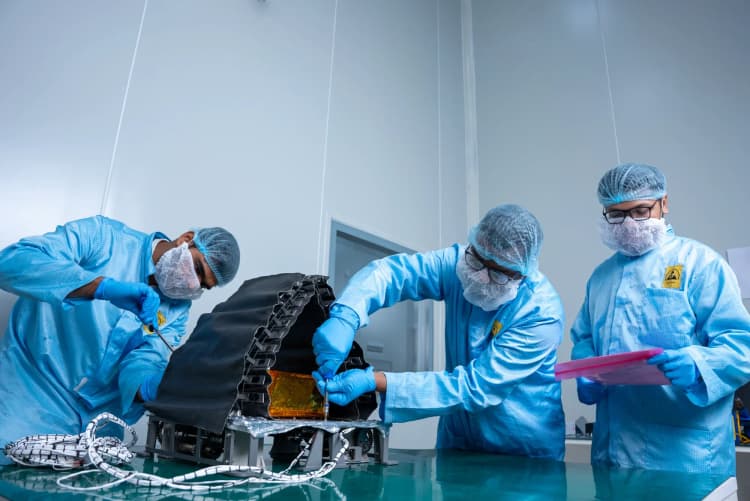
Hyderabad Startup Cosmoserve to Test Robotic Satellite Capture Aboard Skyroot Rocket
Cosmoserve plans an in-orbit demonstration of debris-removal technology during Vikram-1’s maiden launch. It is separately collaborating with Pixxel for a larger satellite platform.
View
Fable 5’s Return Was Supposed to be Exciting. What Happened?
The Fable 5 episode has exposed the hidden costs of proprietary AI, forcing enterprises to rethink trust, pricing, and long-term control.
View
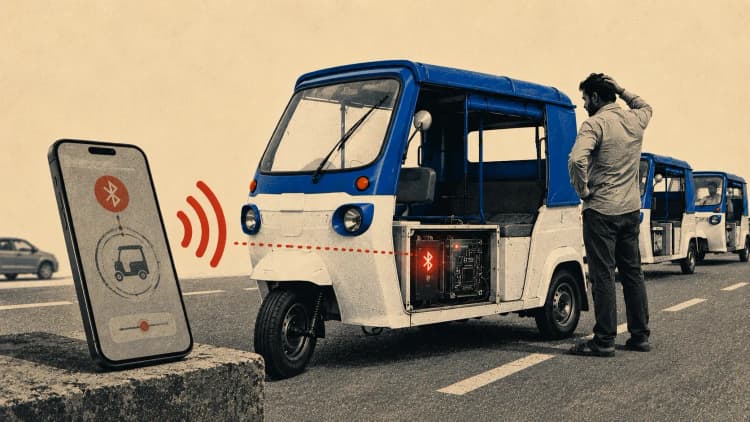
India's E-Rickshaw Shutdowns Exposed a Bigger Problem Than Chinese Apps
The recent e-rickshaw shutdowns revealed that the real security flaw wasn’t in the battery management apps but in battery packs that shipped with Bluetooth interfaces left open and unauthenticated.
View
Naukri Unveils AI REX to Help Recruiters Analyse, Shortlist Talent
With AI REX at the centre of its AI-first strategy, Naukri aims to build a more intelligent hiring ecosystem that reduces manual recruitment work while improving candidate discovery.
View
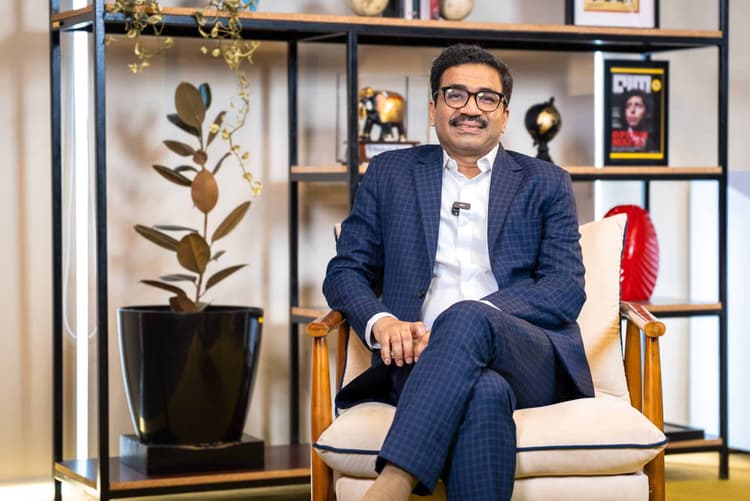
Yotta’s 85,000-GPU Bet Is Bigger Than the IndiaAI Mission
CEO Sunil Gupta says overseas customers now account for most of Yotta’s GPU business, with demand accelerating after introductions from NVIDIA
View
![[Exclusive] ekincare Acquires Superclaims to Expand Its Insurance Operations](/_next/image?url=https%3A%2F%2Fteenyfy-assets.s3.us-east-1.amazonaws.com%2Ftemp_exclusive_70de4a081f.jpg&w=750&q=75)
[Exclusive] ekincare Acquires Superclaims to Expand Its Insurance Operations
ekincare has acquired both Superclaims’ technology platform and team. However, Superclaims will continue to operate independently as a legal entity.
View
![[Webinar Alert] GenAI at Your Desk – Building Agentic AI with NVIDIA DGX Spark](/_next/image?url=https%3A%2F%2Fteenyfy-assets.s3.us-east-1.amazonaws.com%2Ftemp_webinar_al_97d7eb1ad4.jpg&w=750&q=75)
[Webinar Alert] GenAI at Your Desk – Building Agentic AI with NVIDIA DGX Spark
Rashi Peripherals, an NVIDIA partner, is hosting a session titled “GenAI at Your Desk: Building Agentic AI with NVIDIA DGX Spark”, focused on what it takes to move from experimentation to real-world AI systems.
View
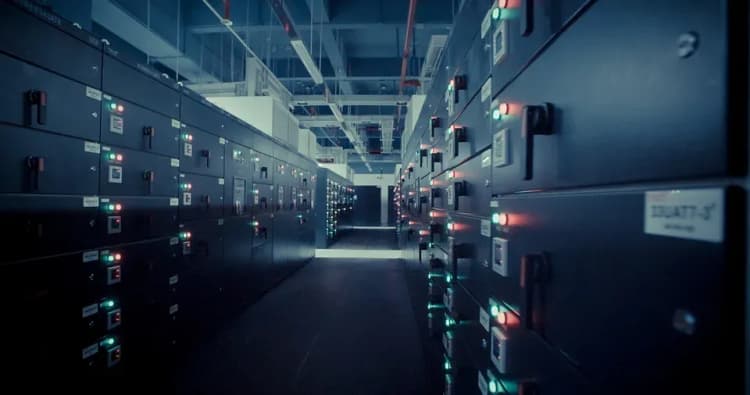
Ecolab Acquires CoolIT for $4.75bn to Strengthen AI Data Centre Cooling Business
With CoolIT’s expertise in liquid cooling, Ecolab aims to provide comprehensive solutions across the AI value chain, targeting $4 billion in annual revenue from its Global High Tech business by 2030.
View
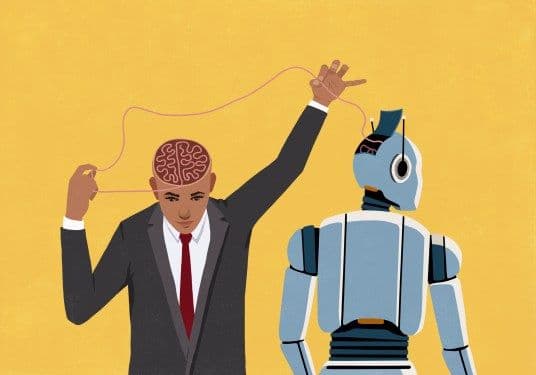
Amazon will stop accepting new customers for Mechanical Turk
These may be the last days of Amazon’s Mechanical Turk. An announcement onthe Mechanical Turk websitesays that on July 30, 2026, the crowdsourcing service will close to new customers.Amazon Web Services saysthe decision was made after “careful consideration,” adding, “Existing customers can continue to use the service as normal. AWS continues to invest in security and availability improvements for Mechanical Turk, but we do not plan to introduce new features.” In other words, Amazon isn’t completely pulling the plug, but the service is very much on life support. First launched in 2005, Mechanical Turk was a marketplace where people were paid tiny amounts to perform simple tasks that resisted full automation — things like completing CAPTCHA challenges or identifying the basic sentiment in a sentence. In its heyday, the service was at the center ofdebates around the ethics of crowdsourced labor, and it evenplayed a small rolein the early stages of the Facebook-Cambridge Analytica scandal. Beginning in 2018, Amazon also beganbilling it as a way for companies to annotate datato train neural networks as part of its SageMaker AI service. Less overtly, Mechanical Turk has also been described asthe hidden enablerfor companies taking afake-it-till-you-make-itapproach to AI, where products marketed as Ai are actually being performed by the Mechanical Turk workforce — all the more fitting sincethe original Mechanical Turkwas itself a hoax, with a hidden human chess player pretending to be a chess-playing machine Over time, the relationship between Mechanical Turk and AI models grew even more complicated. In asnake-eating-its-own-tail irony, a 2023 analysis found that between 33% and 46% of workers on the platform were using large language models to complete their tasks,raising questions about the reliability of data annotated on the platformand also about whether humans needed to be in the loop at all. This week, after Amazon’s decision became public, one Reddit user suggested the platform died “years ago,” with workers and researchers abandoning it due to bots and fraud. The userpredicted, “Someone at Amazon is going to decide keeping the Mturk servers running is a waste of time and resources and pull the plug entirely.”
View
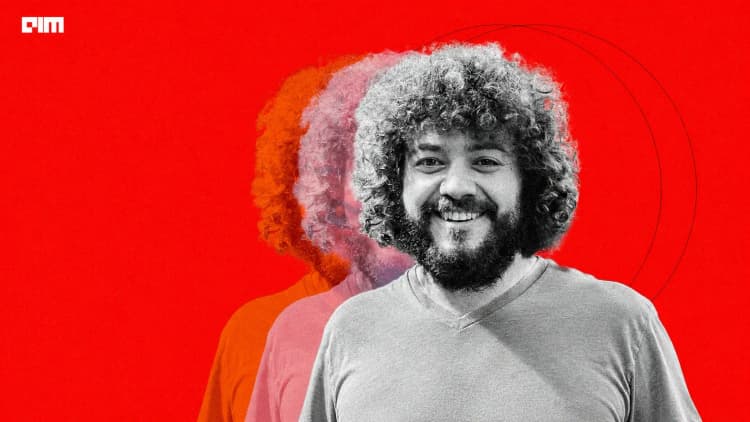
This Ex-Google Engineer Built a $3.5 Bn Startup to ‘Fix’ the Software Supply Chain
Raising more than $800 million, Dan Lorenc believes the biggest security problem in software lies in how enterprises consume open-source packages.
View

New Google commercial imagines a Declaration of Independence written with help from AI
Two hundred and fifty years after the signing of the Declaration of Independence,a new commercial from Google asks: What if the Founding Fathers had access to Google Workspace? With the tagline “Group project, but make it 1776,” the ad depicts a largely unseen Thomas Jefferson mid-draft when he gets a nagging text from Ben Franklin, leading to a very Google-centric collaboration process. Edits are suggested in Google Docs, a meeting gets scheduled in Google Calendar and conducted remotely via Google Meet (with every single attendee apparently turning their camera off?), then the whole thing is finalized with e-signatures; cue the fireworks. Of course, since this is an ad from a tech company in the year 2026, AI has a role to play. The fictionalized founders use Google’s “help me visualize” AI tool to try out different animals on the national seal, Gemini takes notes on the meeting, and the founders also ask the chatbot for advice before declining King George III’s document access request. The whole thing is very tongue-in-cheek (at one point, Sam Adams asks, “Can we settle this over beers?”), and the AI evangelism is relatively discreet when compared tomany other recent ads. And unlikethat infamous Google commercialin which a father uses Gemini to write a fan letter for his daughter, this one shies away from any suggestion that the actual text of the Declaration of Independence would be improved with AI. Perhaps the most AI-forward element of the ad is the footage itself, which to my eye has the uncanny glow of AI-generated video. While viewer comments onYouTubeandInstagramappear to be mostly positive, you may not be surprised to learn that the response on Bluesky has beenfar more critical. Posters declared the commercial “cringey” and “stunningly tone deaf,” and the AI angle was the biggest target — even as many users,including historian Angus Johnston, noted that it’s “amazing how little of this is actually AI.” “Even in a corny fantasy joke, it’s impossible to make the case that AI is a useful tool for political organizing, writing, or human collaboration,” Johnston said.
View
What is Mistral AI? Everything to know about the OpenAI competitor
Following the Trump directive that led Anthropic topull its latest AI models offlineand growing calls forsovereign tech that reduces reliance on the U.S.,Mistral AIhas been caught in a whirlwind of attention. But the French AI darling is often misunderstood, and the fact that it develops large language models (LLMs) has muddied the picture. Anyone who judges Mistral by how close it is to becoming ‘the OpenAI from Europe’ is in for disappointment. Its chat and agent Vibe, formerlyLe Chat, only has an ounce of ChatGPT’s brand recognition, and Claude is more popular than Mistral’s modelseven among founders based at Station F, Paris’ startup campus. On the other hand, casual observers tend to miss that the French decacorn is following the Palantir playbook, with forward-deployed engineers that help governments and large corporations adopt AI and tailor it for their use cases. This approach is also better suited for Mistral’s means. While the company is rumored to be raisingsome $3.5 billion at a $23.15 billion valuation, nearly doubling its current valuation, that’s still far less than U.S. frontier labs. But its revenues have also ramped up; in February, it disclosed that its annual recurring revenue was nowabove $400 million, up from $20 million just one year earlier, and claimed it was on track to surpass $1 billion in ARR this year. This has helped Mistral gain a seat at the table in places like Davos, and even in rooms where tech CEOs have a hard time getting their message across, such asthe French Parliament. Mistral CEO Arthur Mensch has becomea public ambassador for a certain vision of AI, but he still has some evangelizing to do when it comes to explaining his own company. In a lengthyLinkedIn post, Mensch broke down what the Paris-based company has been doing “for a living” — deploying its models and agent platform on the infrastructure of its Enterprise customers, and helping them build custom models withForge, a platform that lets them use their own data for training. However, misunderstandings and bigger hopes around Mistral don’t stem out of thin air. Named after a wind, the company pursues a grand vision. “We exist to make sure that everyone gets access to the best AI systems, outside of centralized control exercised by states or corporations that feel the need to control in-fine deployment of AI,” Mensch wrote. This vision means that Mistral is looking beyond the enterprise. It also aims to keep on making big investments into research to keep up with foundational AI rivals — and Mensch’s post also covered where he thinks the company stands in that regard. “Today, we do not yet own the best language models, but we’ve constantly reduced that gap. We have a very exciting model to come this summer – it will be open-weight, and we’re opening early access to it in July. In domains that are less compute bound, e.g. voice, vision and document processing, we have state-of-the-art solutions,” Mensch claimed. Mistral’s upcoming model has already generatedsome buzz on X, where Mensch and Mistral backer Marc Andreessen haveengaged with jokesand amplified memes on what we now know won’t be called “Le Chaton Fat.” That’s another sign that the world — especially “the rest of the world” — is keeping an eye out for whatever Mistral has in its bag. The most interesting part may be happening behind the scenes. Earlier this year, Mistralacquired infrastructure startup Koyebto further boost its plans to build “a true AI cloud. The company also announced a€4 billion investment strategy(around $4.56 billion) to build data centers in France and Sweden — and the sovereignty undertones are never very far. “We’re building under the premise that AI technology is a commodity technology that every organization needs a secured and affordable supply of,” Mensch wrote. If you are curious to learn more, keep on reading. Mistral’s three founders share a background in AI research at major U.S. tech companies that have operations in Paris. Before becoming Mistral’s CEO, Mensch used to work at Google’s DeepMind; CTO Timothée Lacroix and chief scientist officer Guillaume Lample are former Meta staffers. Mistral also granted the title of co-founding advisers to the cofounders of health insurance startupAlan, Charles Gorintin andJean-Charles Samuelian-Werve(also a board member). In addition, it recently appointed three new executives to support its growth: Johan Bergqvist as Chief Financial Officer, Brian Hall as Chief Marketing Officer and Kamal Brar as SVP, Partners & Alliances. Mistral has developed abroad suite of modelsranging from LLMs to multimodal, reasoning, audio andOCRmodels. Not all of its models emphasize size; there’s the tellingly named Mistral Small 4 and “Les Ministraux,” a family of modelsoptimized for edge devicessuch as phones. Some are open weights, and it alsomade code agent Leanstral open source. In 2024, Mistralsigned a deal with Microsoftthat included a €15 million investment and a strategic partnership for distributing the French company’s AI models through Microsoft’s Azure platform. In May 2025, Mistral said it would participate in the creation ofan AI Campus in the Paris region, as part of a joint venture with UAE investment firm MGX, NVIDIA, and France’s state-owned investment bankBpifrance. In June 2025, Mistral said it would launch a European platform dedicated to AI and powered by Nvidia processors,Mistral Compute, in 2026. The initiative washailed as “historic”by France’s president, Emmanuel Macron, who shared the stage with Mensch and Nvidia CEO Jensen Huang at the VivaTech conference shortly after the announcement. In July 2025, Mistral launchedAI for Citizens, an initiative that the company claimed could “help States and public institutions strategically harness AI for their people by transforming public services.” In September 2025, Mistral and chip company ASMLstruck a partnership“to explore the use of AI models across ASML’s product portfolio as well as research, development and operations.” Mistral also secured strategic partnerships with the likes ofAccenture,press agency Agence France-Presse, France’sarmyandjob agency,Luxembourg,shipping giant CMA, German defense tech startupHelsing,IBM,Orange, andStellantis. Most of Mistral AI’s funding to date wasdebt financing, but the company has also raised several venture funding rounds, with a grand total around $4 billion, according toCrunchbase. In June 2023, just one month after being founded, Mistral AI raised arecord $113 million seed roundled by Lightspeed Venture Partners. Sources at the time said the seed round,Europe’s largest ever, valued the startup at $260 million. Other investors in that round included Bpifrance, Eric Schmidt, Exor Ventures, First Minute Capital, Headline, JCDecaux Holding, La Famiglia, LocalGlobe, Motier Ventures, Rodolphe Saadé, Sofina, and Xavier Niel. Six months later, Mistral closed a€385 million Series A($415 million at the time), at a reported valuation of $2 billion. The round was led by Andreessen Horowitz (a16z) and saw participation from Lightspeed, as well as BNP Paribas, CMA-CGM, Conviction, Elad Gil, General Catalyst, and Salesforce. Microsoft’s$16.3 million convertible investmentin Mistral as part of a partnership announced in February 2024 was presented as a Series A extension, implying an unchanged valuation. In June 2024, Mistral raised€600 million (about $640 million) in a mix of equity and debt. Thelong-rumored roundwas led by General Catalyst at a $6 billion valuation, with notable investors including Cisco, IBM, Nvidia, and Samsung Venture Investment Corporation participating. In September 2025, Mistral closed a €1.7 billion Series C round (about $2 billion) led by ASML at a €11.7 billion valuation (approximately $13.8 billion), with participation from existing backers DST Global, a16z, Bpifrance, General Catalyst, Index Ventures, Lightspeed, and Nvidia. In addition toinfrastructure startup Koyeb, Mistral has also boughtEmmi, an Austrian startup focusing on physics AI, with the ambition to better support industrial enterprises in their AI transformation. While Mistral has yet to design its own chips, Menschisn’t ruling it out. “Owning the chips may come, I think it should come at some point, but for now we are relying on Nvidia, which is a great partner to us, and we’re testing a few things here and there,” he told CNBC. Mistral is “not for sale,”Mensch said in January 2025 at the World Economic Forum in Davos. “Of course, [an IPO is] the plan.” This makes sense, given how much the startup has raised so far: Even a sale to arumored prospective buyer like Applemay not provide high enough multiples for its investors, not to mention sovereignty concerns depending on the acquirer. This story was originally published on February 28, 2025, and will be regularly updated.
View
Submit your Tool


PoweredByAI.app is an AI Tools Directory helping individuals, businesses, and creators discover the best AI tools for writing, coding, design, productivity, and more.
© 2026 , Product of011BQ. All rights reserved.