🚀 Zaprep: Your Socials on Steroids. Start free — automate 1,000 DMs/month & turn engagement into leads. with 1,000 automated DMs/month.
Latest AI News

Vint Cerf is working on a plan to unleash AI agents on the open internet
Vint Cerf says his favorite place is where he’s never been before. One of the architects of the protocols behind the open internet, Cerfleft Googleafter 20 years last week, but he’s not done thinking about the digital future. Starting today, he’s advising Innovation Labs, an organization trying to create the open architecture for AI agents to identify themselves. Innovation Labs is a subsidiary of Identity Digital, a DNS registry company, which sees domain-name infrastructure as a practical way to hold AI agents accountable and position itself for a future where more online interaction happens between agents than people. Cerf joinsa handfulof other internet luminaries lending their names to the effort. Most AI agents today stay within proprietary systems, calling on internal resources for specific purposes. But businesses are already envisioning a world where they operate far more autonomously across the internet and interact directly with other agents. So far, a key road block has been a lack of a shared standard for identifying and auditing agents. A variety of standards are beginning to emerge, and Innovation Labs has proposedDNSid, aregistry for agent identificationthat links each one to an existing internet domain name and uses cryptographic proofs to log its registration over time. Innovation Labs’ interim CEO Allie Kline says the company is trialing the standards with several unnamed hyperscalers and identity companies. “I felt like I might be able to help them in a period of time when naming and identification is becoming increasingly important,” Cerf told TechCrunch. “This is largely triggered by the notion of AI agents and the question of what authorities they have, where they have derived those authorities, who is accountable for the behavior of an agent in this context, and where and how its identity is established, and why [you’d] trust it.” Those questions promise to be thorny, Cerf says, because AI agents are so much more active than domains, and it’s not yet clear what commitment an organization is making when they register one. “It’s going to be a fascinating — and at the same time maybe even exasperating — period in the evolution of the internet and the things that depend on it, because the functionality is so dramatically powerful,” Cerf said. With multiple solutions to the problem under consideration, Cerf says the key to a wide adoption of any protocol will be its functionality. “Company X uses agent Y’s technology, and company A uses agent C’s technology, and then they don’t interwork with each other,” Cerf said. “Nobody can do everything that you might want every agent to do… and so we’re going to have to rely on the pressure coming from the users. This is what happened with TCP/IP.” One key to Innovation Labs’ proposal is that it does not come with broader plans to do other kinds of AI business or own the registration data, Kline says. “I think there’s a lot of organ rejection to a hyperscaler releasing [a standard] and having that proprietary data,” she told TechCrunch. And does Cerf think the agentic economy is the internet’s destiny? “I don’t think it’s inevitable,” he said. “But what I do think is inevitable is that people will try to do that. We are fundamentally lazy creatures, and if we find a way to have an an agent do something for us, we’re very likely to choose to do that because [it’s] just easier.”
View
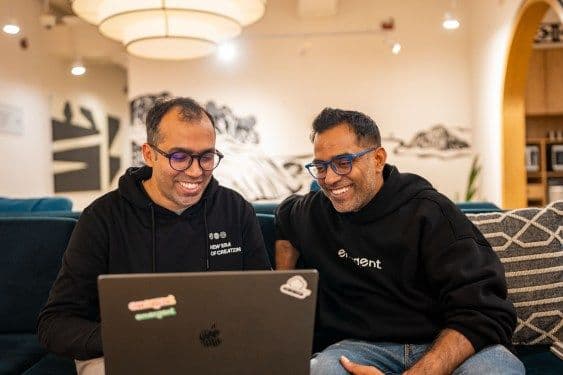
Indian AI coding startup Emergent becomes a unicorn with $130M Series C
Indian AI coding startupEmergenthas raised $130 million in a Series C funding round at a $1.5 billion post-money valuation, a five-fold jump in six months. The funding round was led by private equity firm Creaegis. New investors MNI Ventures-Claypond, Sentinel Global, and existing backers Khosla Ventures, SoftBank’s Vision Fund 2, Lightspeed, and Y Combinator also participated. The deal takes Emergent’s total funding to $230 million. The startup had previously raiseda $70 million Series Bat a $300 million valuation in January. AI coding has attracted hordes of investors, with startups such asLovable,Replit, andCursorraising billions in funding to develop tools that allow developers to speed up their work. AI labs such as OpenAI and Anthropic have alsopushed deeper into coding. Emergent is looking to gain a share of this crowded market by targeting entrepreneurs looking to start new businesses and small and medium-sized companies that have traditionally relied on email, spreadsheets, and messaging apps to run their operations. “Our thesis has always been to build a production-grade application for serious builders,” Emergent co-founder and chief executive Mukund Jha (pictured above, right) told TechCrunch in an interview. “So you’re basically getting an engineering team in a box.” Jha said the startup has reached an annual run-rate revenue of $120 million, up 70% in the last four months, and has more than 200,000 paying customers. Jha started Emergent with his brother Madhav Jha (CTO) in June last year. Customers include trucking companies building software to track shipments; factories; construction businesses creating enterprise resource planning systems; and property managers developing internal customer management tools. North American customers account for about a third of Emergent’s revenue, Europe makes up another third, and the rest comes from other markets, Jha told TechCrunch. India accounts for about 8% to 9%. Emergent’s focus on small businesses and entrepreneurs pits it directly against Replit, which Jha described as the startup’s closest rival. He sought to distinguish Emergent from developer-focused coding tools such asAnthropic’s Claude Code,OpenAI’s Codex, and Cursor, arguing that non-technical users need a platform that handles deployment, hosting, testing, and debugging alongside the work of programming. However, Jha acknowledged that design remains a weakness, pointing out that many websites built using AI tools tend to look similar. Emergent plans to use the fresh capital to accelerate product development and research, including improving the success rate of applications built on its platform and its core AI agent workflows. The company is working to support more complex AI applications, including those that use local and open source models, Jha said, adding that it will also invest in expanding its go-to-market operations. The company is also considering opening an office in Europe, where Jha said Emergent is seeing significant customer traction. Emergent has about 200 employees, most of whom work in Bengaluru, with a handful in San Francisco. The startup plans to expand its San Francisco office by 30 to 40 people by the end of the year, Jha said.
View
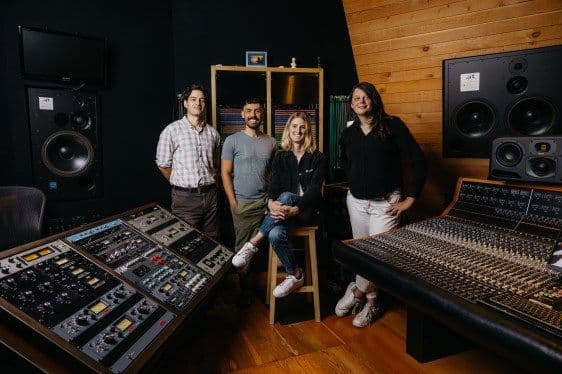
Rime picks up $24M Series A to help enterprises field customer calls
Voice AI startups’ biggest unlock has been handling calls for enterprises in areas like sales, marketing, and customer support. Large organizations are offloading calls to voice model developers likeElevenLabsandDeepgram; infrastructure companies likeVapi, Retell, and LiveKit; and dedicated customer support shops like Decagon and Sierra. San Francisco-basedRimeis trying to gain an edge in this crowded market with its voice AI models that are trained on conversational data that it records, aiming to reduce its clients’ customization load. Founded in 2022 by former Stanford PhD student Lily Clifford, ex-Amazon Alexa engineer Brooke Larson, and Stanford engineer Ares Geovanos, Rime has built a recording studio in San Francisco to collect its own conversational data rather than relying on scraping the web for audio. The startup said it focuses on tuning its voice models to nail the pronunciation of different brand entities and industry-specific terms. It employs a phoneme-based architecture to adapt to different pronunciations so that customers don’t have to retrain models for their specific industry. Rime on Wednesday said it has raised $24 million in a Series A funding round that was led by M13 Ventures. Twilio Ventures, Corazon Capital, Unusual Ventures, and other existing investors also participated. Clifford said that despite progress in voice AI development, enterprises still prefer legacy IVR (interactive voice response) implementations, as AI voice technology still can’t match up to IVR’s effectiveness. “The voice technology is still not there to automate the vast majority of enterprise phone calls. LLMs have made it a lot easier to build voice applications that work, but they haven’t changed how it feels to interact. Talking with a voice AI agent is not the most compelling experience for the end user. It’s kinda like a new IVR, but with a better voice,” she said. The startup began with a pipeline of separate models for speech-to-text, text-to-speech, and a large language model. But it is now shifting focus to develop better speech-to-speech models to reduce latency, improve turn-taking, and tackle issues like background noise. The new approach will also serve to decrease reliance on orchestration, so the company doesn’t have to manage a bunch of models. Rime says it has customers in food service, healthcare, airlines, and fintech. The company claims that because of its training data and model positioning, customers stay longer on the call, which has helped it win enterprise contracts from clients like Mayo Clinic, Dialpad, Upstart, and Asurion. With the new funding, Rime is planning to expand its team of 35 people, aiming to hire for model development, engineering, and partnerships. It recently brought on Rafael Valle, who worked on audio understanding at Meta Superintelligence Labs and Nvidia’s applied deep learning audio research team, as its chief scientist. “Companies like ElevenLabs have moved into being an orchestration and the application layer, going head to head with the Sierras and Decagons of the world. I think there’s just so much more to be done technically, and Rime’s approach of pushing forward on the best model with low latency and high reliability in a regulated environment stands out,” M13’s Morgan Blumberg told TechCrunch. It had previously raised $5.5 million ina seed round last May. Blumberg is joining the startup’s board as part of the fundraise.
View

Reelful’s AI turns your camera roll into short-form videos for social media
A newiOS app called Reelfuluses AI to automatically turn photos and video clips from your camera roll into polished TikTok- and Instagram Reels-style videos for social media. Reelful is designed for people who want to create social content, but find traditional video editing tools too complex or time-consuming. The app’s launch reflects a broader shift in video creation, as AI is allowing users to move beyond traditional creative tools to AI agents that are capable of automating content creation. Reelful joins a growing wave of AI startups that are reshaping how content is created, includingOpus ClipandCaptions. Reelful, which is currently participating in a16z’s Speedrun program, was founded by Kate Deyneka, a former machine learning engineer at Snapchat who helped develop video and image models. Deyneka left the social media giant to build an agentic video editor that helps people create short-form videos automatically, getting rid of the need to spend time selecting clips, adding effects, recording a voiceover, and fine-tuning edits. “I want to post more on Instagram, TikTok, YouTube Shorts, but video editing takes a lot of time, so much time that I do not even want to spend it because I have a lot of things going on in my life, especially now as an early-stage founder,” Deyneka said in an interview with TechCrunch. “I have a lot of events, I meet a lot of interesting people, and this is what I see for all my founder friends: they have a very active life, especially right now when AI is booming, but we do not have time to edit. I see Reelful as a tool that can help people build their online presence and their personal brand.” Reelful works by getting users to enter a prompt describing the story they want to tell, whether it’s a travel recap, product demo, or event highlight. Users then create a voice clone by recording a 30-second sample, and select photos and videos from their camera roll. Reelful will then plan the video, write the script, add an AI voiceover, and assemble the final edit, complete with captions, music, and sound effects. Reelful will turn still images into AI-generated video clips. For example, if a user includes a photo of someone cutting a mango, Reelful can animate the image into a short video showing the person slicing into the fruit. The AI-generated videos feature a watermark to inform users that it has been created with AI. After Reelful generates a complete video, users can continue editing it further by chatting with the app to do things like swap the soundtrack, revise the script, or adjust other aspects of the video. Deyneka says Reelful’s target audience, at least for now, is founders and business owners who need to consistently create content to build their online presence, personal brand, or company brand. For example, a salon in the Bay Area may have a lot of content on hand about its services and customer transformations, but not have the time or resources to turn that content into polished social media videos. That’s where Reelful comes in, Deyneka says. “My target use case is that you went to an event or you met some cool people, and you recorded a short interview with them and while you are driving back home you just uploaded everything to the app, and by the time you’re home, the video is ready,” Deyneka said. “So I want to make it very effortless for people to share their life, their content, their expertise without actively editing or setting up the things on their laptop.” Reelful offers both one-time purchases and subscription plans. Users can buy video credits in bundles of five videos for $15, 15 videos for $43, or 33 videos for $90. The “Creator” subscription costs $25 per month for 10 videos, while the “Pro” plan offers 25 videos per month for $50. The Studio plan includes 60 videos per month for $100. While Reelful is currently only available on iOS, Deyneka plans to launch Android and web versions in the future.
View

Anthropic, Blackstone bet the next trillion-dollar AI business is implementation, not just models
AI models are becoming ever more capable, but exactly what enterprise adoption will look like remains a big question. In a bid to shape that future, labs like Anthropic and OpenAI havespun up separate businessesdedicated to deploying AI engineers to their customers’ offices — a bet that assisting businesses in figuring out how to use their AI models is the next trillion-dollar category. One of those businesses now has a name: Ode with Anthropic is the $1.5 billion, AI implementation company that the AI lab launched in May as part of a joint venture with Blackstone, Hellman & Friedman, Goldman Sachs, and others. The move follows OpenAI’s own take on this, The Deployment Company, underscoring a growing acknowledgement among frontier AI labs that winning enterprise customers requires far more than shipping better models. Ode was originally conceived by Blackstone, which noticed a gap when it had roped in large consulting firms and small AI services boutiques to implement AI across its portfolio companies. One of those boutiques, AI engineering services startup Fractional AI, apparently stood out, and the joint venture acquired the startup shortly after it was announced. (Fractional ended an 11-month partnership with OpenAI when it was acquired.) Fractional has become the foundation of what is now Ode — a kind of “scaled boutique” AI services firm. And its leaders have ambitious goals. “It’s pretty easy to imagine this as a trillion-dollar company someday if we execute well,” Chris Taylor, CEO of Ode and co-founder of Fractional, told TechCrunch in an exclusive interview. “The key challenge of the business is how do you go through that phase of hyper growth without losing the emphasis on quality?” Ode currently employs 100 engineers, and works closely with Anthropic’s applied AI team to identify where the tech can have an impact on different businesses, and create systems tailored to each organization’s operations. Anthropic’s internal team will continue to focus on strategic, mission-aligned deployments, a spokesperson told TechCrunch. The private equity firms backing Ode will funnel their own portfolio companies to the joint venture as potential customers, though Ode will not limit sales of its services to those companies. For Ode, an ideal customer is one whose CEO buys into the promise, according to Taylor. “A lot of the work that we’re doing is the top one or two priority for the CEO of the company,” Taylor said. “It’s the most important product feature that the company is going to build over the course of the next two years, or it’s reworking the most important business process they have.” Ode will operate under a “Claude-first” principle, meaning it will implement Anthropic’s technology, including features likeClaude Tag in Slack, whenever possible. The company isn’t limited to Anthropic’s technology, though, and will use rival AI products if needed. Eddie Siegel, Ode’s chief technologist and a Fractional co-founder, says the venture’s secret sauce is its quality of implementation, and the ability to build custom solutions for business problems. “I think model selection matters, but it’s not where the majority of calories are spent,” Siegel said. “It’s one ingredient in a system that has to be engineered. It’s like the choice of programming language when you build a piece of software […] I would not define an enterprise transformation in terms of whether they choose Python or Java.” Taylor added the founding belief behind Ode is that “non-AI companies are going to be among the big winners of this whole AI moment if they adopt the technology the right way.” But to take AI, “this magic, hallucinating ingredient,” and rewire core business processes or customer experiences with it requires a lot of help, he said. “That requires top-caliber applied AI talent, which is not something most companies have,” Taylor said. Ode’s executives describe their team as elite generalist software engineers, over half of whom are former founders — the kind of people who can “juggle a really challenging technical problem, but also own something end-to-end,” per Siegel. Or as one Blackstone executive put it: a team of “grown-up” engineers, the “special forces” rather than an army of forward-deployed engineers (FDEs). As several people involved in the venture told TechCrunch, demand for such FDE teams far outstrips supply. Ode’s goal is to continue scaling, internationally too, while maintaining its boutique firm positioning — in other words, running constant evaluations to measure the business impact of AI implementations. But in a world where top engineering talent is already scarce, maintaining and growing such a team presents a real challenge. If becoming an elite applied AI engineer requires experience as an entrepreneur, systems-first thinking, AI chops, and enterprise product judgement, would Ode be able to train enough people to meet demand? Compound those difficulties with the fact that Ode will be competing not only with OpenAI’s The Deployment Company, but also with consulting giants likeDeloitteandAccenture, which have created their own FDE teams. Siegel isn’t too worried about a dwindling pool of grown-up generalist engineers. “It has never been an easier time to become an entrepreneur,” he said. “You learn so much by trying to own problems end-to-end, going to try and get product-market fit, move the needle on a business. You learn a lot there that you don’t learn from just solving a narrow problem. That’s the skill set that fits really well with Ode.” Whether enough of those engineers will show up remains an open question. But if Ode and its backers are right, the next great AI race won’t just be about the best models, but about who can successfully put those models to work inside the world’s largest companies.
View

Dhruva Space, MAHE Partner to Build Space Technology Centre in Manipal
The ASCENT facility will support satellite missions, research programmes and spacecraft testing infrastructure from late 2026.
View

Google’s AI Strategy Is to Win Without Locking Customers Into Gemini
Richard Seroter says enterprises should choose AI models based on workload rather than vendor loyalty, as costs rise and AI adoption matures.
View

Mozilla Flags Copilot as New Front in Browser Battle in New Report, Says Indian Users Face AI-Driven Browser Lock-In
According to the report, Copilot forces web links to open inside an Edge-rendered side panel.
View
![[Exclusive] Emergent Raises to $1.5 Bn, Wants to Become the Operating System for SMBs](/_next/image?url=https%3A%2F%2Fteenyfy-assets.s3.us-east-1.amazonaws.com%2Ftemp_exclusive_db9f966210.jpg&w=750&q=75)
[Exclusive] Emergent Raises to $1.5 Bn, Wants to Become the Operating System for SMBs
The funding values Emergent at $1.5 billion, marking a fivefold jump in valuation in just four months and pushing the company into the unicorn club barely a year after its public launch.
View

Zoho Launches AI-Powered Classes 2.0, Offers Free LMS to Govt Institutes Across India
The LMS supports all 22 scheduled Indian languages, enabling AI-generated teaching content, assessments, and learning materials in regional languages.
View

Why India Inc's AI Rollout Is Outrunning Its Own Workforce
Kyndryl's latest global study finds AI adoption accelerating across enterprises while workforce readiness continues to slide.
View
AWS Breaks Ground on New Hyderabad Data Centre as Part of $21 Bn India Cloud Push
AWS said it had invested more than $1.3 billion in the Hyderabad cloud region by the end of 2025.
View
Submit your Tool


PoweredByAI.app is an AI Tools Directory helping individuals, businesses, and creators discover the best AI tools for writing, coding, design, productivity, and more.
© 2026 , Product of011BQ. All rights reserved.