🚀 Zaprep: Your Socials on Steroids. Start free — automate 1,000 DMs/month & turn engagement into leads. with 1,000 automated DMs/month.
Latest AI News

embedUR Spins Off ModelNova to Simplify Edge AI Deployments
The new company launches with nine semiconductor partners, an open-source model library and production-ready AI tools aimed at simplifying deployment on resource-constrained edge devices.
View

Microsoft is reportedly training salespeople to talk down OpenAI and Anthropic
Microsoft appears to be prepping its sales team to get more competitive with the other major players in the AI industry. At an internal meeting on Tuesday, the company’s executives outlined a plan for salespeople to negatively compare AI products from companies like OpenAI, Google, and Anthropic to its own, according to anew reportfrom Bloomberg. The meeting, billed as a strategy session for the new fiscal year, reportedly leaned heavily on pitching the efficiency and cost-effectiveness of Microsoft’s in-house models against those of its rivals. “Everyone else is selling parts — we’re selling the full end-to-end system. That’s the story that we all need to get out there and tell in FY27,” Executive Vice President Jay Parikh reportedly told the room. Executive Vice President Jacob Andreou reportedly went further, delivering a presentation comparing Copilot directly to Anthropic’s chatbot Claude. According to Bloomberg, Andreou noted that, when it came to performance within Microsoft’s office apps, Anthropic’s model was “slower and less accurate, and lacked the proper security integrations,” Bloomberg writes. TechCrunch has reached out to Microsoft and Anthropic for comment and will update this story if we hear from either outfit. A company coaching its sales team on how to trash-talk competitors isn’t particularly surprising. What’s more notable is who Microsoft is now targeting — the same companies it has long depended on for the AI models powering its own products. It’s just the latest move in that direction. Areportearlier this month found that Microsoft has been swapping OpenAI and Anthropic’s models out of flagship apps like Word and Excel in favor of its own — a cost-cutting move, according to that report. There was a time when Microsoft and OpenAI were attached at the hip. The two companies entered into a very unique agreement years ago that saw Microsoft provide capital and compute to OpenAI while allowing Microsoft to enjoy exclusive access to OpenAI’s API and models. The companiesamendedthe partnership in April, dropping the exclusivity clause and clearing OpenAI to sell to Microsoft’s competitors. That revised relationship may help explain the sales team’s new pitch. Microsoft has been battling aless-than-optimalstock outlook over the past year, as investors question the company’s massive spending on thebuildout of its AI business. Talking up how competitive those products actually are is likely an attempt to calm those waters and build confidence in Microsoft’s long-term AI plan.
View

SpaceX falls to $135 IPO price ahead of Starship launch
SpaceX’s shares fell to just above $135 on Wednesday, the price that CEO Elon Musk and his company chose ahead of its blockbuster June 12 IPO that raked in nearly $86 billion. The company’s stock spent much of the day below that IPO price, at one point dipping beneath $133 per share, before it traded back up to finish at $135.27. The dip on Wednesday followed a steady decline in the month since the company went public. SpaceX initially saw its stock price rise to more than $200 in the days after it went public, briefly giving it a valuation that rivaled tech giants like Amazon and Microsoft. Its shares have lost value basically every week since reaching that high point. Some of the volatility is attributable to the fact that just 4% of the company’s total shares are trading on the Nasdaq. That small “float,” as it’s known, combined with an immense amount of constant attention on the company, has created wild swings during the first month of trading. The markets also appear to be sobering up on CEO Elon Musk’s grand vision for the company, part of a broader deflation in tech stocks over the last month. Not only has SpaceX’s stock traded down, but alsobonds the company soldin the wake of the IPO are suffering. A prolonged downturn for SpaceX could have wider effects because the company’s stock price is a sign of how investors view the (literal) otherworldly promises Musk has made about what his company can accomplish. SpaceX’s IPO has also set the table for other Big Tech companies like Anthropic and OpenAI to go public. Both of those companies have filed confidentially for an IPO. While neither has set a date to go public, SpaceX’s stock is being closely watched to gauge how successful those IPOs could be. SpaceX is about to face another early test of the durability of its stock price. On Thursday the company will test launch its Starship rocket for the first time since the IPO. Starship is still very much in development, which means it is prone to failures — the result of SpaceX’s “fly, fail, fix” approach. This will be the first Starship flight since it experienced a booster failure in May. And once again, the company does not plan to try to recover the Starship booster or upper stage on this flight, instead opting to have them simulate a landing in the Gulf of Mexico. That means both parts of the overall Starship rocket system will end in an explosion no matter what, even if they don’t run into any problems during the flight plan. This story has been updated to include the closing price.
View
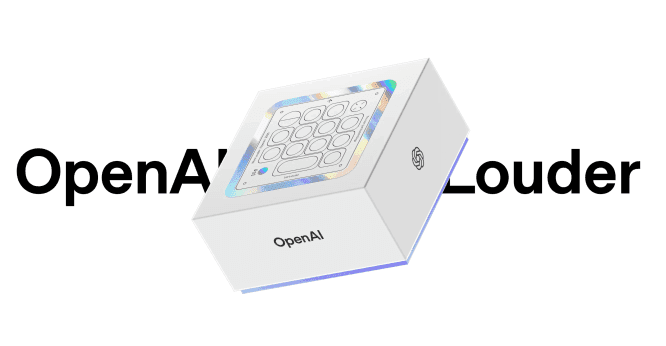
Amid hardware legal battle, OpenAI releases a $230 keyboard for Codex
OpenAI is officially entering the hardware market withthe launch of a$230 light-up keyboard designed to pair with its AI coding assistant, Codex. The Codex Micro, co-designed with specialty keyboard designer Work Louder, is being advertised as a fancy new way for ChatGPT users to manage their fleets of AI coding agents — the semi-autonomous bots that can write and execute code with little human input. The device comes equipped with light-up “Agent Keys” that show agent status, customizable Command Keys that act as shortcuts for frequent Codex actions, and a joystick for launching common workflows. It also has a dial that adjusts how much “reasoning” — essentially, how much time and computing power — an agent uses on a given task (agent reasoning level). The idea is that, instead of managing your agents through your phone or desktop app, you can now use the Micro as your “command center for agentic work,” as OpenAI puts it. It’ll also probably just look really cool sitting on your desk. The device is controllable and customizable via the ChatGPT desktop app. OpenAI told TechCrunch in an email that the Micro is a limited-run collaboration, signaling that it’s more of a novelty item than a product designed for mass appeal. It seems like a flashy bauble designed to herald the company’s entrance into the hardware market. The more consequential hardware news arrived Tuesday. A yet-to-be-released OpenAI device thatBloomberg revealedsounds like it is being designed for the long haul. It’s described as a portable, screenless smart speaker that integrates with ChatGPT and involves “mechanical elements that can move on their own.” At this juncture, it’s difficult to imagine how all of those disparate details — screenless, portable, moving parts — will come together into a coherent product (OpenAI isn’t saying). But it leaves an intriguing picture, to say the least. It also sounds like it’s not done yet. The Bloomberg report highlights that the item is still in development and subject to change. This new device is also reportedly being designed by former engineers from Apple — a company that is currently suing OpenAI for trade theft. That connection hasn’t gone unnoticed, least of all by Apple.Apple last week sued OpenAI, accusing the company’s senior leadership of a deliberate strategy to extract its confidential information; it alleges OpenAI used that information in developing its own hardware device. OpenAI has denied wrongdoing.
View
Inside Ode with Anthropic, the startup betting AI services are the future of enterprise
Can a handful of engineers really do the work of an army of consultants? That’s the bet behind Ode with Anthropic — the joint venture dedicated to embedding forward-deployed engineers in enterprise firms, backed by Anthropic, Blackstone, Hellman & Friedman, Goldman Sachs and others. On this episode of TechCrunch’sEquitypodcast, Rebecca Bellan sits down with Ode’s leadersChris TaylorandEddie Siegel,who founded Fractional AI, the applied AI services startup that Odeacquired earlier this yearto serve as the new venture’s core. The three discuss why so many enterprise AI pilots never make it to production and why they think AI-native services are about to become one of the biggest categories in tech. Subscribe to Equity onYouTube,Apple Podcasts,Overcast,Spotifyand all the casts. You also can follow Equity onXandThreads, at @EquityPod.
View
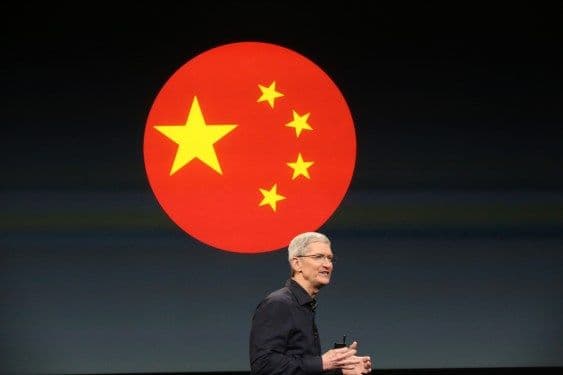
Apple Intelligence approved for launch in China with Alibaba’s Qwen AI
Apple Intelligence, the iPhone maker’s generative AI offering, is coming to China. On Wednesday, Reutersreportedthat China’s regulator, the Cyberspace Administration of China, approved Apple’s AI services in the country, on the back of a deal to integrate Alibaba’s Qwen AI model into Apple’s operating systems, including iOS, iPadOS, macOS, and visionOS. The deal, which wasrumored to be in the workslast year, marks an important step for Apple’s AI ambitions in a key market. In the second quarter, Apple sales in Greater Chinaincreased 28%to $20.5 billion. Apple also recentlyregained the No. 2 positionin China’s smartphone market after a recent shopping festival offered discounts on the iPhone lineup. Prior to working with Alibaba, Apple was reportedly exploring a deal with Baidu but faced issues adapting its models for Chinese customers. It also explored integrations with DeepSeek and with models from ByteDance, reports claimed. This led to delays in getting Apple Intelligence features, which debuted in 2024, to the Chinese market. Alibabaconfirmedthe company’s news to CNBC in a statement, saying that Qwen would be “integrated into Apple Intelligence experiences,” but did not provide a timeframe. It also said the integrations would involve AI capabilities like “text and image understanding and generation.” U.S. shares of Alibaba rose 4% in pre-market trading on news of the deal and are now up by over 6%, as of the time of publication.
View

Microsoft patches record number of security vulnerabilities, citing its use of AI
Microsoft released a record number of security patches for Windows, Office, and other tech product lines this week, citing the use of AI to aid the discovery of code vulnerabilities. The technology and cloud giant issued patches for 570 security flaws on Tuesday as part of its monthly scheduled release of fixes, which security researchers have long dubbed “Patch Tuesday.” At least two of the vulnerabilities are classified aszero-days, meaning that they were exploited before Microsoft was made aware of them. Onebugaffecting Windows Server allows hackers to escalate their privileges from a limited user to a system administrator. Another bug affects the SharePoint file sharing server — the U.S. government’s cybersecurity agency CISA has warned hackers wereactively exploitingthe bug to compromise organizations. Krebs on Security firstreportedthe news. The huge patch update comes a week afterMicrosoft said in a blog postthat it expected its usual batch of monthly security patches to be far higher in number than before. The company cited its use of AI to help its employees uncover previously undiscovered security bugs in its software. “As AI helps defenders discover more issues, customers will see a higher volume of security updates included in each security release,” said Windows boss Pavan Davuluri. As AI models become more advanced and focused on cybersecurity issues, security researchers are using them to uncover vulnerabilities that may have been dormant in software code for years, if not longer. Parts of Microsoft’s Windows code dates back decades.
View

Whatnot acquires Shaped to power real-time live shopping recommendations
Livestream shopping appWhatnotannounced Wednesday that it has acquiredShaped, a machine learning company that specializes in real-time recommendation and search systems. The deal is meant to strengthen Whatnot’s discovery and personalization capabilities as the platform continues to expand across new product categories and millions of buyers. According to the company, the acquisition helps Whatnot continue its investment in AI as it looks to solve one of live commerce’s biggest challenges: helping shoppers find the right products while inventory, auctions, and buyer demand change in real time. Unlike traditional e-commerce platforms, where product catalogs remain relatively stable, Whatnot’s marketplace is constantly evolving, and live auctions can end within minutes or last for hours. “By combining Shaped’s technology with Whatnot’s existing systems, we can make recommendations faster, more responsive, and more personalized,” Emmanuel Fuentes, VP of Data and AI at Whatnot, told TechCrunch. “That speed matters because live commerce is a uniquely hard recommendation problem. Inventory changes by the second, shows start and end continuously, and buyer intent shifts throughout a show.” Fuentes said the company has spent the last six years improving the speed of its recommendation engine, reducing recommendation latency from roughly a day to just minutes. Integrating Shaped’s technology is expected to push those recommendations even closer to real time. The company says its systems process more than 500,000 hours of live video and millions of real-time interactions every week, using that data to continuously improve recommendations. Founded to help businesses build AI-powered recommendation systems, Shaped developed technology that combines existing customer data with large language models and machine learning to deliver highly personalized search and discovery experiences. Its customer roster included companies such as Outdoorsy and QVC. As part of the acquisition, Shaped founder and CEO Tullie Murrell, along with nearly a dozen engineers and AI researchers, will join Whatnot. Murrell will lead the company’s newly formed Applied AI Research group. (Notably, Murrell worked at Meta before launching Shaped.) The acquisition comes as Whatnot experiences significant growth. Launched in 2019, the company recentlyrevealedthat sellers have surpassed 1 billion orders. Earlier this year, Whatnot raised$225 millionin Series F funding, giving the company a valuation of more than $11 billion after adding 20 million buyers over the past year. Whatnothas also significantly broadened its marketplace, launching more than 35 new categories last year — including art, golf, and vinyl — and more than 45 additional categories during the first half of 2025, with new subcategories continuing to roll out each month. Additionally, the move comes as resale giants race to integrate AI throughout their platforms, such aseBayandPoshmark.
View
Hack suggests AI music generator Suno scraped YouTube for training data
The AI music generator Suno was hacked, according to a report from404 Media. The hacker told the publication that they used a supply chain attack to access an employee’s credentials, allowing them to then access source code showing how Suno allegedly scraped decades of audio from YouTube Music, Deezer, Genius, stock music libraries, and podcast RSS feeds. Suno previouslyadmittedthat it trains its AI on “publicly available music files” on the open internet, arguing that it can train on copyrighted material under the fair use doctrine, a subjective carve-out of copyright law. But according to the major record labels activelysuingSuno, it isillegalunder the Digital Millennium Copyright Act (DMCA) to deliberately circumvent YouTube’s protections against data scraping; it also violates YouTube’s terms of service. Udio, a competitor to Suno, has also been accused of scraping YouTube data. Google, the parent company of YouTube, faces similar allegations ofcopyright infringementfrom a variety of major book publishers. The hacker reportedly accessed customer data includingcustomer emails, phone numbers, and partial credit card numbers in Stripe. Suno did not notify customers about the November 2025 breach and claims that this was a “limited security incident that was quickly contained.”
View

Thinking Machines amps up its bet against one-size-fits-all AI with its first open model, Inkling
Thinking Machines Lab, the AI startup founded by former OpenAI CTO Mira Murati, released its first in-house AI model Wednesday morning, calledInkling. And unlike the flagship models from OpenAI, Anthropic, or Google, it’s open-weight, meaning outside developers and companies can download it and modify it directly. Inkling is a mixture-of-experts system with 975 billion total parameters, though it only draws on a fraction of that — about 41 billion — for any given task, a common design that keeps very large models faster and cheaper to run. It was trained on 45 trillion tokens of text, image, audio, and video, and reasons natively across all four, according to the company’s own release materials. For now, though, its outputs are limited to text, including code, styled artifacts, and structured data. The model is Thinking Machines Labs’ first public proof point after a year and a half spent building AI infrastructure largely out of public view. Some of that work had already surfaced in aMay research previewof “interaction models” — AI designed to listen and speak (and even interrupt) instead of stop and wait as with typical chatbots. It’s also a test of the central bet behind the startup, which is that AI that organizations can adapt for themselves will outperform the one-size-fits-all models the biggest labs currently sell. Inkling is designed to give calibrated answers, including flagging uncertainty rather than guessing, and lets users dial “thinking effort” up or down when they want to trade for speed. On one benchmark, the company says, Inkling uses a third as many tokens as Nvidia’s Nemotron 3 Ultra — its latest generation open-weight model — to hit the same coding performance. Thinking Machines doesn’t claim Inkling is best-in-class. Its briefing materials state explicitly that Inkling is “not the strongest model available today, closed or open.” What it’s evidently going for instead is well-rounded performance and customizability. That raises the question of who, within the enterprise market it’s targeting, this product is really for. Thinking Machines is, for now, marketing Inkling less as a finished product than as a starting point, something for organizations to fine-tune themselves through Tinker, the company’s model-customization platform. This also means customers, not Thinking Machines, are responsible for making sure their customizations are safe, for example. (Fine-tuning requires serious machine-earning talent.) OpenAI, Anthropic, and Google have all taken a very different approach with ChatGPT, Claude, and Gemini, respectively, which were all built to compete as general-purpose chatbots first, with agentic, autonomous features layered on top. A post published by Thinking Machineslast weekwas clearly meant as the backdrop for this release. AI that’s trained centrally by one company and then set in stone, the company argued in that post, underperforms AI that organizations shape themselves because so much expertise is specific to the people who hold it. It’s an argument that’s gaining steam. In a blog post published Sunday, Microsoft CEO Satya Nadella — whose company has invested billions in both OpenAI and Anthropic — warned that enterprises using proprietary AI modelseffectively pay twice: once in subscription costs, and again by handing over business knowledge embedded in their prompts and corrections, which can be absorbed into future model versions. Hugging Face CEO Clem Delangue made asimilar predictionin conversation with TechCrunch last week. Frontier models, he said, will increasingly be reserved for experimentation and high-value tasks, while most production AI work shifts to private or open-source alternatives — the exact split Thinking Machines is building around. The clearest evidence for Thinking Machines’ argument came from arecent projectwith Bridgewater Associates, the world’s largest hedge fund (which is not, for what it’s worth, a Thinking Machines investor). Researchers from both companies took an existing open-source model and trained it further on Bridgewater’s own financial expertise. The result was said to score 84.7% on financial reasoning tests, beating top proprietary AI models, while costing roughly a fourteenth as much to run — though those results come from the two companies’ own evaluation, not an independent one. Either way, Thinking Machines is emphasizing how quickly it got here. OpenAI took roughly five years to bring its tech to market and show revenue, and Anthropic roughly three. Thinking Machines says it did the same in about nine months. Some will wonder whether Inkling was trained on outputs from competitors’ models, a practice known as “distillation” that hasdrawn scrutinyacross the industry. The short answer, per the company’s own materials, is partly. Thinking Machines pre-trained Inkling from scratch, but it says it used other open-weight models — including Moonshot AI’s Kimi K2.5 — to help generate some of its early post-training data before large-scale reinforcement learning took over. The next model, the company insists, will use fully self-contained post-training instead. On the cost side, Thinking Machines has been more guarded. It struck a partnership with Nvidia in March to deploy a gigawatt of Vera Rubin computing capacity and trained Inkling entirely on Nvidia’s GB300 NVL72 systems — but hasn’t said how it plans to cover those costs, and revenue, by most accounts, hasn’t been a priority. (A reported $50 billion fundraising round was said to be coming together last November but had stalled by January; the company has declined to talk about its funding picture since.) A related question is whether Thinking Machines’ spending will ever reach the scale of OpenAI’s or Anthropic’s, or whether its efficiency-driven approach means the economics look different. Put another way, the company’s bet may be less that it will eventually spend like its larger rivals than that it won’t need to at all — because once weights are public, nothing obligates anyone who downloads them to pay Thinking Machines to run them, unlike the metered access OpenAI and Anthropic sell. It’s Tinker, not the model itself, where the company’s revenue has to come from, via training, fine-tuning, and, now, a cut of the hosting ecosystem built around it. Headcount, at least, looks more settled. Thinking Machines now employs roughly 200 people, up from levels reported after a wave of departures earlier this year, includingtwo co-founders who left for OpenAIin January. Thinking Machines, for its part, doesn’t seem interested in playing up individual moves the way much of the industry does. According to a source inside the company, its culture, by design, favors continuity over reliance on any one personality. It makes sense: it’s less of a setback when people change teams if they were never put on a pedestal to begin with. It’s also a remarkable thing for a company to insist on, given how much of its own story is still associated with the name of its now-famous co-founder, whether she planned it or not.
View

SpaceX slips below its $135 IPO price ahead of Starship launch
SpaceX’s shares fell below $135, the price that CEO Elon Musk and his company chose ahead of its blockbuster June 12 IPO that raked in nearly $86 billion. After slipping below that price on Wednesday afternoon to beneath $133 per share, the stock traded back up to the $135 price, and occasionally hovered above it. The dip on Wednesday followed a steady decline in the month since the company went public. SpaceX initially saw its stock price rise to more than $200 in the days after it went public, briefly giving it a valuation that rivaled tech giants like Amazon and Microsoft. Its shares have lost value basically every week since reaching that high point. Some of the volatility is attributable to the fact that just 4% of the company’s total shares are trading on the Nasdaq. That small “float,” as it’s known, combined with an immense amount of constant attention on the company, has created wild swings during the first month of trading. The markets also appear to be sobering up on CEO Elon Musk’s grand vision for the company, part of a broader deflation in tech stocks over the last month. Not only has SpaceX’s stock traded down, but alsobonds the company soldin the wake of the IPO are suffering. A prolonged downturn for SpaceX could have wider effects because the company’s stock price is a sign of how investors view the (literal) otherworldly promises Musk has made about what his company can accomplish. SpaceX’s IPO has also set the table for other Big Tech companies like Anthropic and OpenAI to go public. Both of those companies have filed confidentially for an IPO. While neither has set a date to go public, SpaceX’s stock is being closely watched to gauge how successful those IPOs could be. SpaceX is about to face another early test of the durability of its stock price. On Thursday the company will test launch its Starship rocket for the first time since the IPO. Starship is still very much in development, which means it is prone to failures — the result of SpaceX’s “fly, fail, fix” approach. This will be the first Starship flight since it experienced a booster failure in May. And once again, the company does not plan to try to recover the Starship booster or upper stage on this flight, instead opting to have them simulate a landing in the Gulf of Mexico. That means both parts of the overall Starship rocket system will end in an explosion no matter what, even if they don’t run into any problems during the flight plan.
View

LatentView Analytics Appoints Former Wipro Executive Sonal Ramrakhiani as CEO
Ramrakhiani takes over from Rajan Sethuraman, who will remain as strategic advisor for up to six months to support the leadership transition.
View
Submit your Tool


PoweredByAI.app is an AI Tools Directory helping individuals, businesses, and creators discover the best AI tools for writing, coding, design, productivity, and more.
© 2026 , Product of011BQ. All rights reserved.