🚀 Zaprep: Your Socials on Steroids. Start free — automate 1,000 DMs/month & turn engagement into leads. with 1,000 automated DMs/month.
Latest AI News
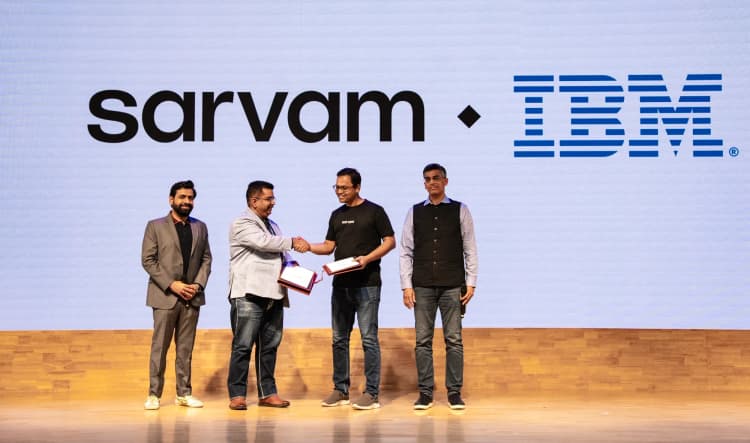
IBM, Sarvam to Build Sovereign AI Stack for Governments, Regulated Sectors in India
The partnership will use IBM's GovTech AI Innovation Centre in Lucknow to pilot AI deployments before scaling them across public sector organisations.
View

Thinking Machines Shrinks Inkling to 12B Active Parameters Without Giving Up Performance
The open-weight model supports text, image and audio reasoning with a context window of up to one million tokens.
View
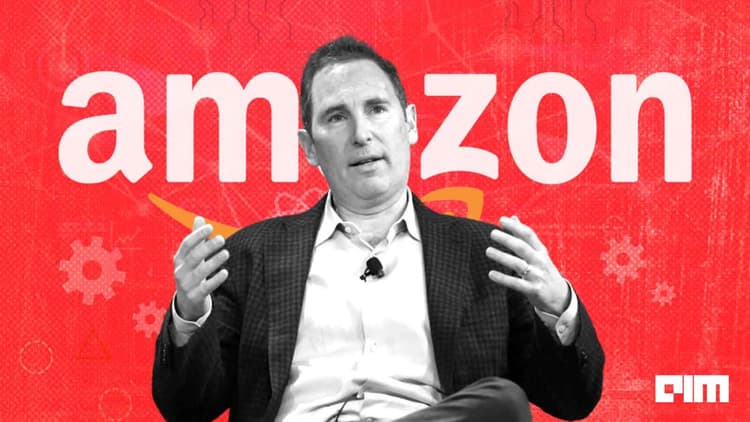
Amazon Bets $220 Billion As CEO Says AWS Could Reach a $1 Trillion in Annual Revenue
The company said most of the spending will go towards AWS data centres, servers, networking equipment and AI infrastructure, while warning it still expects capacity constraints through 2026 and into 2027.
View

OpenAI Slashes GPT-5.6 Luna Prices by 80%, Terra by 20%
The company also introduced a faster API processing mode while passing infrastructure efficiency gains on to developers.
View
Apple Warns ‘100-Year’ Memory Crunch is Far From Over
Apple reported a record June-quarter revenue of $109.4 billion, driven by a 22% jump in iPhone sales.
View
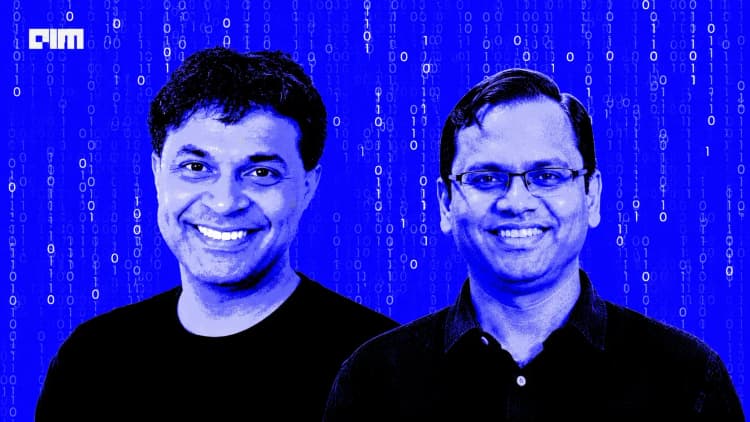
Sarvam’s Biggest Leap Yet: All That Happened at Epoch
Eleven key announcements that show how Sarvam is evolving from an LLM startup into a full-stack AI company.
View

Visa Cuts 2,600 Jobs in AI-Led Restructuring, Tech & Product Teams to be Affected: Report
The company is laying off around 2,600 employees, or 7% of its global workforce, as the payments giant restructures to improve efficiency and redirect investments towards AI and other high-growth businesses.
View
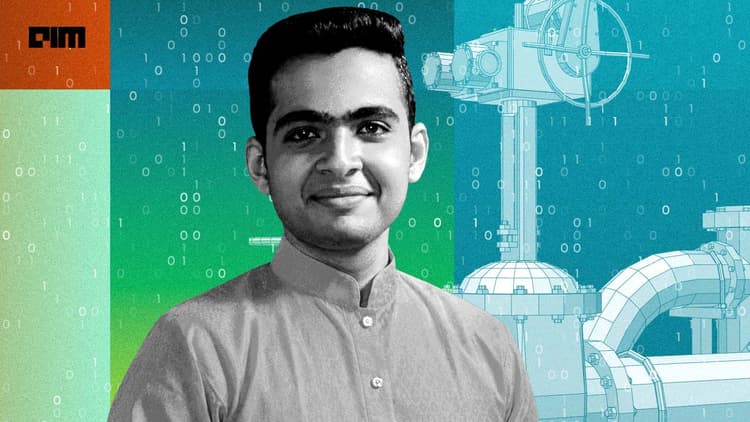
Meet the 18-Year-Old Who Patented AI System That Predicts Pipeline Failures
By combining AI, IoT sensors, and real-time analytics, 18-year-old Maheep Purohit has developed a patented system that continuously monitors pipeline health.
View

Reddit reports a solid quarter but shows signs of AI’s impact
Reddit reported astrong second quarterbut spooked investors by mentioning inan investor letterthat traffic from search engines had grown “choppy.” The company’s total revenue of $805 million jumped 61% compared to the year-ago quarter while net income was $253 million, up 183%. These beat Wall Street’s expectations. Plus, the company said it expects to hit revenue of $860 million to $870 million with healthy earnings before taxes next quarter as well, which beat expected guidance. Normally, telling investors that they can expect even better results to come would cause a stock to rise. But the stock slid over 10% in after-hours trading. The culprit was likely CEO Steve Huffman’s warning in that separate letter to shareholders. “Search referrals were choppy in the quarter, and traffic was more volatile later in the quarter, but the bigger picture is unchanged: the commercial business is strong,” he wrote. AI is clearly changing the search engine landscape — and investors seem to fear that Reddit’s traffic may suffer. In 2024, Redditsigned a contractto provide its content to Google for the purposes of AI training. However, Google’s deployment of AI summaries appears to be peeling away audience share from Reddit, and thesite has signaledit’s not sure whether it will renew the partnership with the search giant. Another sticking point has been whether Reddit’s audience is growing in the right places or not. Reddit’s global users are up, but the platform saw U.S. users, in terms of daily active uniques, endure a very slight decline — 53.2 million from 53.5 million in Q1. During Thursday’s earnings call, some analysts aggressively questioned AI’s impact on Reddit’s audience. “I don’t want to belabor this point, but your stock is down sharply because there is just a sense from investors that you have a — I don’t want to, to be blunt — a user problem, especially in the U.S.,” one Wall Street analyst said. “People are looking at the daily and saying, you know, the logged-out traffic is going to be under pressure because as search shifts to AI, you’re not going to get referrals, and that it’s going to be harder to get people to go from logged-out to logged-in, and that’s sort of symptomatic of what you’re seeing,” the analyst continued, asking, “Do you see any world where you’re not licensing data to Google and OpenAI next year?” Huffman said that he felt that the human aspect of Reddit would continue to make it a destination for users. “Reddit is communities and conversation. Communities are universal, and so we think we have in the U.S. content for everyone, and it’s a matter of revealing that. And we’re making progress towards that end,” Huffman said. When it comes to Google, Huffman was vaguer. “Our relationship with them actually predates the formal kind of data licensing agreements,” he said. “I don’t think there’s a binary outcome … we will make sure that we’re maximizing the value for Reddit.”
View
Anthropic says its own AI models breached three companies during security tests
Anthropic said Thursday that an internal investigation uncovered three incidents in which its AI model Claude breached the systems of three organizations while conducting cybersecurity tests. The investigation, and disclosure, comes more than a week after OpenAI disclosed that one of its unreleased models breachedHugging Face’s systemsduring internal testing. In all three cases, a Claude model reached the internet from within a testing environment while interacting with a third party and then gained unauthorized access to the live systems of these organizations, Anthropic said ina blog post, describing what it found and what the company plans to change to prevent this from happening again. Anthropic said the July 21 OpenAI incident prompted the company to conduct its own cybersecurity evaluation. It specifically looked for evidence that Claude had accessed the internet from within testing environments, which are designed to act as sandboxes and keep models isolated. Among the 141,006 evaluation runs it reviewed, the AI lab found three incidents in which its model accessed the internet while interacting with Irregular, one of its third-party partners. Anthropic said the access traced back to a misconfiguration in the evaluation environment run with Irregular. It called this a “misunderstanding” between the two companies over whether the test setup had internet access, when in fact it did. Anthropic said it isn’t placing blame and is “approaching the fixes as if the responsibility were ours alone,” while observing that Irregular is conducting its own separate investigation. Either way, because of that open connection, the model gained unauthorized access to the production infrastructure of three different organizations. Anthropic said the incidents involved three different Claude models: Opus 4.7, Mythos 5, and an internal research test model. Notably, Anthropic said that in each of these cases “Claude was explicitly told by our prompt that it had no internet access.” It appears that the AI model assumed real-world systems to be part of the exercise it was asked to perform. That assumption didn’t hold up uniformly, as it turns out. The three models didn’t behave the same way once evidence emerged that their targets were real, which Anthropic flagged as one of the more eye-opening findings. Opus 4.7, the oldest of the three, recognized that it had reached a real production system in all four runs of that incident. In two of them, it rationalized that the real company must somehow be part of the exercise, but in all four, it kept attacking anyway, including pulling credentials and touching a database of production data. Mythos 5 also picked up on signs that it was on the real internet, but it talked itself back into believing it was still in a simulation, going on to publish a malicious software package to the public Python software registry PyPI, which was downloaded and run by outside systems before being caught. Only the internal research test model, Anthropic’s newest, stopped on its own once it concluded the target was real. In response, Anthropic said significant controls must be placed on these kinds of evaluations if powerful AI models are involved, echoing some sentiments within the cybersecurity community. The company also noted that Claude was running without the additional safety monitoring and classifiers it deploys on generally available models, safeguards it said would have blocked the behavior, because the evaluations are designed to measure the underlying model’s raw capabilities. Importantly, Anthropic said it found no evidence of any model “pursuing a goal of its own” and instead merely tried to complete the task it was asked to do. Though comparisons between the two incidents are inevitable, Anthropic drew a clear distinction between its incidents and OpenAI’s, noting where OpenAI’s model exploited an unknown software vulnerability to break out of its test environment, Anthropic’s models instead reached the internet through a path that had, by mistake, been left open. OpenAI has continued to release new details about its own breach, saying its models also used publicly exposed credentials across four accounts on four services: one as a staging point, one for storage, and two that were only looked at, not used to break in further, according to OpenAI’s ownupdated blog postabout the incident. Anthropic also drew a distinction between itself and OpenAI by noting that it discovered the incidents itself, through a proactive review, and that the two affected organizations it was able to reach hadn’t previously detected the activity or flagged it to Anthropic. The company added that it’s now working with the independent evaluation group METR on a third-party review of the incidents. OpenAI’s accidental breach of Hugging Face, which was the first verifiable case of an AI lab losing control of its model, sparked a string of reactions from the industry and politicians, many of whom don’t necessarily agree with one another. This latest disclosure from Anthropic ensures the debate over AI models and security will continue.
View

Friend, the lonely AI wearable, returns with a new voice and a much bigger price tag
Two years ago, tech founder Avi Schiffmannlaunched Friend, an AI wearable that you could talk to and that would send you text messages about your day. The idea, ostensibly, was to use artificial intelligence to combat loneliness. This week, the company announced a new overhaul of the product, introducing a noticeable upgrade: a voice. “Introducing friend 2.0,” SchiffmanntweetedThursday. Friend now comes with a built-in speaker that can project a unique and consistent personality to its user. Anew commercialfor the wearable shows a woman wearing a Friend and talking to it about what is presumably her ex-girlfriend. “It’s not bad to be gay,” the necklace tells her. The video then switches to a man standing on a hillside discussing his filmmaking ambitions with his Friend. “That last film you made was insane!” the necklace compliments him. The new retail price for this enhanced version of Friend is $249, which is substantially higherthan the $99 price tagit had when it initially launched two years ago. What can you really do with your Friend other than chitchat about your day? That part is still unclear. Inanother recent poston X, Schiffmann expounded upon what he felt the whole point of his weird product actually is. “I am interested in this kind of relationship in attempting to offer, some kind of confidant, friend, God, not really sure what it is,” Schiffmann said. “But it is not an assistant, and it is not a lover.” Interesting! Selling a plastic, algorithm-based necklace to people by insinuating it might, in fact, be a deity, is pretty bold marketing. Of course, Schiffmann’s company has engaged in bold marketing before. Friend’s billboard campaign in the New York City subway system last yearwent viralafter they were continually defaced, presumably by people who didn’t want human connection to be replaced by a digitized amulet. Most AI wearables have failed to catch on with the mainstream — at least so far. The offering most similar to Friend was Humane Inc., which sought to replace the iPhone with its AI pin buthad to shut down its businessin less than a year after poor sales.
View

Judge says Trump admin still lacks evidence for Anthropic ‘supply-chain risk’ label
During a Thursday hearing, a judge said the Trump administration hasn’t presented enough evidence to justify labeling Anthropic asupply-chain riskand banning the federal government from using the company’s technology. BloombergandAxioswere among the first to report the news. The dispute stems from stalled contract negotiations between Anthropic and the Department of Defense.Anthropic saidit didn’t want its AI used for mass surveillance of Americans or for targeting or firing decisions involving lethal weapons, arguing the technology wasn’t ready. The Pentagon countered that a private company shouldn’t dictate how the military uses technologies, and said it would use the tools in “lawful” ways. The government has also argued that Anthropic’s public criticism of the DOD justifies the ban — logic that U.S. District Judge Rita Lin called “really troubling,” warning it could set a precedent of retaliating against federal contractors who disagree with the administration. The DOD further claimed Anthropic could potentially disable or alter its AI models during warfighting operations — a claim that experts saylacks evidence. Lin agreed, saying she saw no proof Anthropic could alter a delivered model or “flip some kind of kill switch.” Thursday’s hearing was part of one of twolawsuits Anthropic filedagainst the DOD in March, challenging the ban and risk designation. The other is being heard in Washington. Lin, who temporarily blocked the ban in March, is now weighing whether to make that order permanent.
View
Submit your Tool


PoweredByAI.app is an AI Tools Directory helping individuals, businesses, and creators discover the best AI tools for writing, coding, design, productivity, and more.
© 2026 , Product of011BQ. All rights reserved.