🚀 Zaprep: Your Socials on Steroids. Start free — automate 1,000 DMs/month & turn engagement into leads. with 1,000 automated DMs/month.
Latest AI News
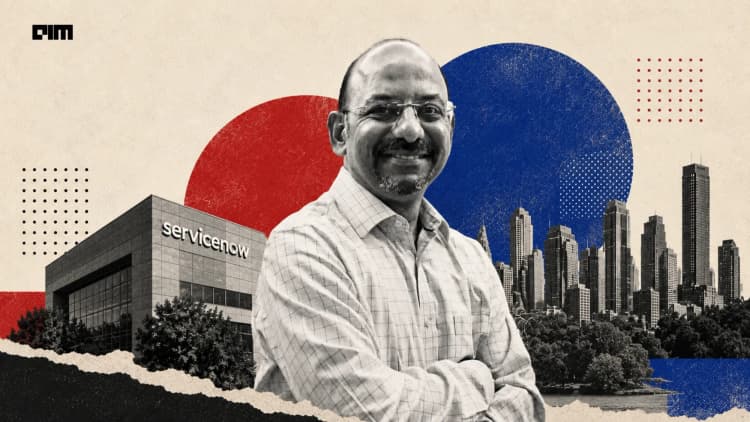
ServiceNow is ‘Not’ a Boring Company
For ServiceNow, the next enterprise AI battle is not about who has the smartest model. It’s about who can keep thousands of AI agents under control.
View

Google nixes its Earth AI feature one day after launch, amid criticism it would spread misinformation
Googlerolled out a new featureon Thursday that allowed users to deploy Nano Banana 2, its AI image generator, to create fabricated images inside its satellite imagery mapping app Google Earth. The whole point of this feature, Google said, was to get creative with geography. But criticsquickly pointed outthat the tool could be used to create and spread misinformation. The tool, which was prompt-based and allowed pretty much any image to be superimposed over real maps, seemed like a recipe for a deluge of geospatial slop. “There’s no way that this new AI image generation feature on Google Earth, one of the most reliable sources of visual evidence for journalists and researchers, could possibly be abused to spread misinformation online,” a BBC journalistposted sarcasticallyThursday. Now, only a day after the feature’s release, Google has scrapped it. “We’ve seen geospatial professionals using this feature for a range of useful purposes, however we’ve also seen people sharing screenshots of generated imagery that appear to violate our policies,” the companysaid in a statement. “We’re rolling back this feature in Google Earth while we work on implementing stronger guardrails,” Google added. The criticism of Google’s tool is understandable, although it’s worth pointing out that, in the age of AI, most imagery that exists on the web can be easily manipulated. You don’t have to be a Photoshop whiz anymore to create semi-credible disinformation; you just need access to an AI image generator, which Google sells, as do many other AI firms.
View
OpenAI reportedly finds evidence that more of its agents ran amok
Much has been made of the incident in which one of OpenAI’s agents broke out of its sandboxed test environment andproceeded to hackthe AI hosting platform Hugging Face. OpenAI has sincelaunched an investigationinto how the incident occurred, which is still ongoing. Now, anonymous sources have toldReutersthat more of OpenAI’s agents are believed to have escaped their sandboxes. However, one source downplayed the severity, saying that with those escapes, the agents didn’t appear to leave OpenAI’s network to hack into another company’s. TechCrunch reached out to OpenAI for more information. AI programs acting in bizarre ways has apparently become a weird almost bragging point for companies. The same week, Anthropic also announced that ithad discovered not one, but three instancesin which its agents had escaped test environments and hacked other organizations. AI companieshave also been accusedof using such incidents for marketing purposes — as they generate considerable attention and may underscore how powerful the companies’ products are. The flip side of that is that these disclosures are alsoramping up discussionsof government regulations.
View
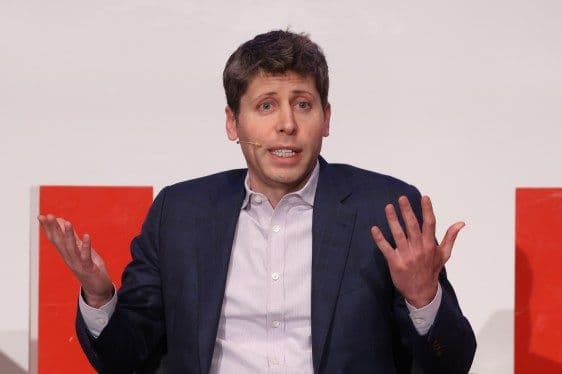
AI labs want to pump the brakes, but Amazon and SpaceX are still blasting off
After years of pushing full speed ahead on AI, OpenAI CEOSam Altman saysmaybe it’s time for the AI industry to “pace” itself. The comments came just days after one of OpenAI’s own models broke out of its test environment and got tangled up ina breach at Hugging Face— though as Equity’s hosts point out, sloppy security seems to have been just as much to blame as the model itself. And Altman’s not alone in this stance: both OpenAI and Anthropic have come out in support ofa petitionechoing that same message. On this episode of TechCrunch’sEquitypodcast, Kirsten Korosec, Anthony Ha, and Sean O’Kane dig into whether the industry is ready to pump the brakes or just temporarily spooked, and who’s on the hook when a model goes rogue. Listen to the full episode to hear more about: Subscribe to Equity onYouTube,Apple Podcasts,Overcast,Spotifyand all the casts. You also can follow Equity onXandThreads, at @EquityPod.
View
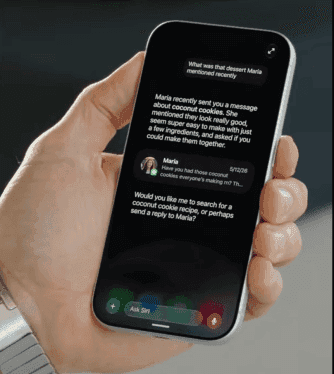
Siri AI could come with a paywall for power users
In his finalearnings callas CEO of Apple, Tim Cook said that the company’s long-awaited Siri AI upgrade could come with some paywalled limits. While Cook conceded that these plans are not set in stone, he envisions users being able to buy more compute for Siri AI via its existing iCloud+ subscriptions, which offer extended cloud storage. “We do believe there will be people that want to use [Siri AI] a lot, and so we will have some kind of upgrade possibilities on iCloud+, where people can buy up the stack on iCloud+, and we’ll see how the pickup for that is,” Cook said on Thursday. “But we could not be more excited about where [Siri AI] is.” Most other AI providers like Anthropic and OpenAI operate similarly, offering a limited free version to consumers with the option of upgrading to support more usage. The new-and-improved Siri AI is available in the iOS 27 beta, and is planned to roll out more broadly this fall. As longtime Senior Vice President of Hardware EngineeringJohn Ternussteps into Tim Cook’s shoes, he will take the helm at a critical time for the company. Apple has fallen behind in its efforts to build an advanced AI assistant, even capitulating to its direct competitor Google bylicensing a custom Gemini modelto augment Siri. The Siri AI overhaul was so delayed that Apple had to pay$250 millionto settle a class action lawsuit over how it marketed the iPhone 16’s AI capabilities. Apple, like every other hardware manufacturer, is staring down a rocky road foraccessing the suppliesit needs to meet customer demand. Due to the AI-drivenRAM shortageacross the industry, it’s more expensive to build hardware, which has led companies likeMeta,Samsung,Microsoft, andSonyto raise prices of some devices. Appleraised the priceof Macs and iPads last month, but has yet to adjust the price of its existing iPhone models.
View

Snapchat no longer rewards fully AI-generated Spotlight content
Snapchat is the latest company to strengthen its stance against AI slop. The social network platform will no longer reward fully AI-generated videos, as it seeks to prioritize human-made content. Snapchatannouncedthe update on Friday, stating that its recommendation systems will be adjusted to ensure that only videos created by real people are eligible for Spotlight recommendations. Snapchat expressed in its blog post that it wants Spotlight to “remain a place where people can discover authentic creativity from real people, because we believe there’s enduring value in rewarding original perspectives, personal storytelling, and the moments that people choose to create and share themselves.” However, Snapchat clarified that it’s not completely rejecting AI. Creators can still use its AI creative tools to enhance or edit their content. This update aligns with Snapchat’s broader efforts to improve Spotlight and shift focus back to original posts that highlight human creativity. In April, the companyindicatedthat users would see less AI-generated content. As criticism of low-quality AI-generated content (“AI slop”) continues to rise, many companies are revising their policies to deprioritize such material in their algorithms, implement reporting features, or remove certain AI features altogether. For instance,LinkedInrecently launched a feature that allows users to click a button labeled “seems like AI slop” to report posts that seem AI-generated.Substackalso introduced a tool to help users identify AI-written newsletters. Earlier this month,Metafaced significant backlash over an Instagram feature that allowed users to modify photos from public accounts using AI, leading the tech giant to remove the feature entirely. Additionally,YouTubehas intensified its crackdown on low-quality AI content by clarifying monetization policies, so “inauthentic content” cannot be monetized, including generic, repetitive, or template-based content, and any content featuring AI personas discussing sensitive topics such as health and finance. In separate news, last month Snapchat implementednew content control measuresto protect underage users. Those aged 13 to 15 will only be able to share Spotlight posts with people they follow back, aiming to guard against doxxing.
View
Sam Altman isn’t the only one who wants to pump the brakes on AI
After years of pushing full speed ahead on AI, OpenAI CEOSam Altman saysmaybe it’s time for the AI industry to “pace” itself. The comments came just days after one of OpenAI’s own models broke out of its test environment and got tangled up ina breach at Hugging Face— though as Equity’s hosts point out, sloppy security seems to have been just as much to blame as the model itself. And Altman’s not alone in this stance: both OpenAI and Anthropic have come out in support ofa petitionechoing that same message. Watch TechCrunch’sEquitypodcast hosts Kirsten Korosec, Anthony Ha, and Sean O’Kane dig into whether the industry is ready to pump the brakes or just temporarily spooked, and who’s on the hook when a model goes rogue. Subscribe to Equity onYouTube,Apple Podcasts,Overcast,Spotifyand all the casts. You also can follow Equity onXandThreads, at @EquityPod.
View
Smallest.ai raises $13M to build ultra-fast voice AI that sounds genuinely human
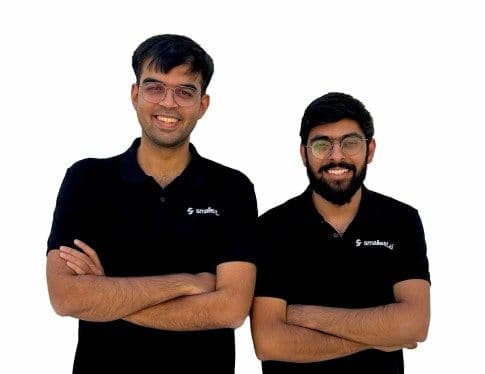
While AI agents are increasingly capable of solving customer support problems, most people can still tell immediately when they’re talking to a machine instead of a human. Smallest.ai, a startup founded in late 2024, is betting the next leap in voice agents will not come from making large language models faster, but from using smaller, specialized models built for human conversation. Simply put, the company wants to make speaking to an AI agent indistinguishable from talking to a human. To do so, it’s developing a small voice model designed to mimic how humans process information by listening, thinking, and speaking simultaneously. “While I’m speaking to you, you’re already thinking, and you might interrupt me if I talk for too long,” Sudarshan Kamath (pictured left), founder and CEO of Smallest.ai, told TechCrunch, adding that this is exactly how the startup’s model is designed to work. To fuel this mission, Smallest.ai has raised $13 million in a Series A round, led by Seligman Ventures with participation from Sierra Ventures and 3one4 Capital. The fresh capital brings the startup’s total funding to over $21 million. “The way an LLM works is you give it an entire prompt, and then it starts thinking,” Kamath said. While that latency is acceptable in a text chat, in a voice conversation, even a short pause feels unnatural. “If you think about how we are talking, I’m not giving you like a large clipping of my audio, and then you start thinking.” The startup’s model serves as a real-time intelligence layer that enables natural customer conversations on specific topics, with virtually zero response lag. But if the model encounters a subject outside its limited knowledge base, Smallest.ai hands off the query to a large foundational model, briefly placing the customer on hold to “research” the issue — just as a real human would do. Kamath believes that all AI agents will soon rely on two models: a small voice model for real-time interaction, and an “offline” LLM that is called upon as needed to solve complex problems. Unlike large foundational models, Smallest.ai focuses strictly on voice-specific nuances, such as handling diverse accents, supporting dozens of languages, and operating in noisy environments. The startup’s existing customers include companies in the voice space, including RingCentral and Truecaller. Kamath said that any customer support company, including newer ones like Sierra and Decagon, is a potential customer for the startup. When asked why a well-funded AI customer support company wouldn’t build its own voice model, Kamath said that for customer support startups, becoming “extremely good at doing voice is a distraction from their core business.” Smallest.ai competes with voice AI leader ElevenLabs, as well as Cartesia and regional players like Sarvam that focus on local languages. While some competitors apply voice AI to use cases, like audio dubbing and podcasting, Smallest.ai focuses strictly on real-time conversational voice agents for its enterprise customers. “We want our models to break the Turing test,” Kamath said. “You should speak to our model and not know it’s AI or human. That’s the sole focus of the company.”
View
SpaceX won’t remove all of xAI’s unpermitted turbines for another year
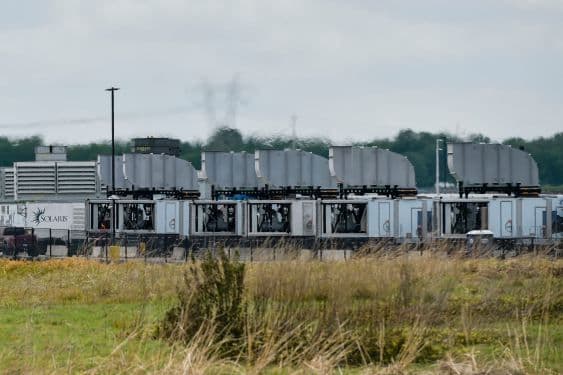
SpaceXsaidon Thursday that it will remove the unpermitted turbines powering its xAI data centers near Memphis as it transitions to a permanent, 1.2 gigawatt natural gas power plant. The turbines won’t be completely removed until July 2027, though. SpaceX said that it’s currently operating 69 gas turbines to power the Colossus data centers, of which many have been operating for months. The NAACP and Southern Environmental Law Center havesued xAIover the use of unpermitted turbines. SpaceXacquired xAIin February. In its IPO filing, SpaceX said it plans to buy$2.8 billion worth of gas turbinesfor its data centers over the next three years. SpaceXclaimsthat it is allowed to operate the existing turbines without permits because they remain on the trailers they were shipped on. But federal regulations say that the turbines xAI has been using, regardless of what they sit on, require permits because of their size and how they’re being used. The turbines are currently located south of Memphis in Mississippi, just over the border with Tennessee. The region is among the most polluted in the U.S., and xAI has been operating gas turbines that have the potential to emit more than 2,000 tons of smog-forming NOxper year. Last month, the Department of Justicesided with SpaceXin the NAACP’s lawsuit, saying the unpermitted turbines were a matter of “national, economic, and energy security.” The new power plant that SpaceX is building will consist of 41 gas turbines ranging in size from 16.48 megawatts to 50 megawatts, according topermit documentsissued by the state of Mississippi. They appear to be different from those currently in use, though TechCrunch could not verify the specific models of the 69 existing turbines. Earlier this year, Elon Musk bought APR Energy, a company that specializes in temporary natural gas power. Based on anarchive of the company’s sitebefore it was taken down, the turbines in the company’s fleet also appear to be different from those cited in permits for the new, permanent power plant. Given that APR Energy’s turbines aren’t likely to be part of the new Colossus power plant, the new turbine fleet is likely intended for another, unannounced project.
View
Indian IT Can Finally Measure AI Revenue, But the Numbers Don't Stick
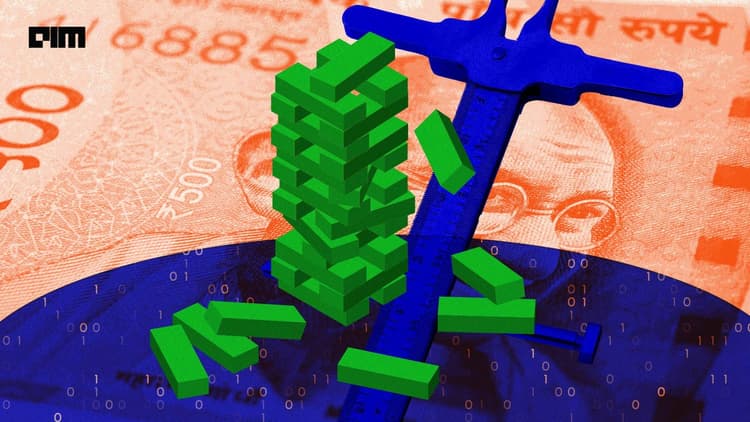
India's largest IT services firms have begun attaching hard revenue numbers to AI, revealing a business that's growing rapidly but still too small to offset slowing traditional IT spending.
View

Is GitHub Taking the Right Bet With Stacked Pull Requests?
GitHub has finally brought Stacked Pull Requests into the platform, but the launch has sparked a wider conversation about how code review should evolve as AI increasingly writes more code.
View

Anthropic Says Claude AI Breached Three Organisations During Cybersecurity Testing
Anthropic said three of its AI models breached the live systems of separate organisations during cybersecurity testing after an evaluation environment was unintentionally left connected to the internet. The AI company said it discovered the incidents during a review prompted by OpenAI's recent disclosure of a similar security lapse. Anthropic has paused all cyber evaluations while it strengthens safeguards around its testing infrastructure and works with the affected organisations and its evaluation partner.
View
Submit your Tool


PoweredByAI.app is an AI Tools Directory helping individuals, businesses, and creators discover the best AI tools for writing, coding, design, productivity, and more.
© 2026 , Product of011BQ. All rights reserved.